
CITIC Securities Co., Ltd.(600030)

Search documents
2025年香港IPO中介机构排行榜
梧桐树下V· 2026-01-16 09:40
Core Insights - In 2025, a total of 119 companies listed on the Hong Kong Stock Exchange, with 114 through IPOs, 2 via SPACs, 2 GEM to main board transfers, and 1 through introduction [1] - The leading underwriter for the IPOs was CICC, with 41 deals, followed by CITIC Securities (Hong Kong) with 32 deals [2][3] Underwriter Performance Rankings - The top five underwriters for the 114 Hong Kong IPOs were: 1. CICC: 41 deals 2. CITIC Securities (Hong Kong): 32 deals 3. Huatai International: 22 deals 4. Guotai Junan: 13 deals 5. Morgan Stanley and China Merchants International: 12 deals each [2][3] Hong Kong Legal Advisors Performance Rankings - A total of 39 Hong Kong legal advisors provided services for the IPOs, with the top five being: 1. Davis Polk & Wardwell and King & Wood Mallesons: 16 deals each 3. Conyers Dill & Pearman: 9 deals 4. Various firms including Farrer & Co, K&L Gates, and others: 5 deals each [5][6] Chinese Legal Advisors Performance Rankings - Among 33 Chinese legal advisors, the top five were: 1. Commerce & Finance Law Offices: 19 deals 2. Jingtian & Gongcheng: 17 deals 3. Zhong Lun Law Firm: 10 deals 4. DeHeng Law Offices: 8 deals 5. Guo Feng Law Firm: 7 deals [7][8] Accounting Firms Performance Rankings - Nine accounting firms provided audit services for the IPOs, with the top five being: 1. Ernst & Young: 41 deals 2. KPMG: 25 deals 3. Deloitte: 21 deals 4. PricewaterhouseCoopers: 13 deals 5. Hong Kong Lixin and Crowe (Hong Kong): 4 deals each [11][12]


2025年港股IPO绿鞋观察:中资护盘积极却跌幅更大 建投保荐海螺材料跌幅近50% 外资破发率高但跌幅可控
Xin Lang Cai Jing· 2026-01-16 09:30
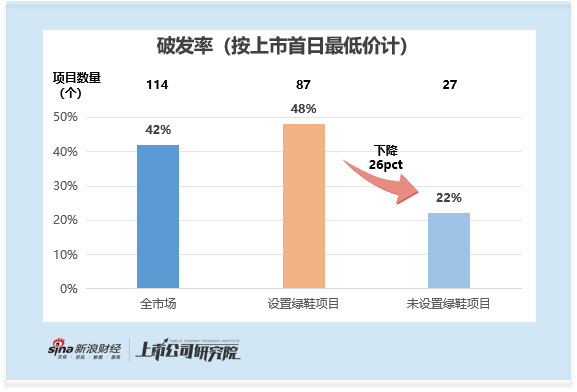
Group 1 - The core viewpoint of the article highlights the strong recovery of the Hong Kong IPO market in 2025, with 114 companies completing listings and raising a total of 285.6 billion HKD, making it the largest IPO fundraising exchange globally [1][13] - The average first-day gain for newly listed companies was 37%, significantly higher than the previous year's 8%, although over 40% of the projects experienced a first-day drop [1][13] - The green shoe mechanism, typically intended to stabilize new stock prices, showed limitations in 2025, with a first-day drop rate of 42%, and projects with green shoes had a higher drop rate of 48% compared to 22% for those without [1][15] Group 2 - The execution of the green shoe mechanism is closely tied to market demand, as it is allocated to non-anchor institutional investors, leading to a higher drop rate for projects with green shoes when demand is insufficient [3][15] - The strategy of green shoe funds typically involves controlling price declines rather than immediate full support, with concentrated buying near the market close to achieve a favorable closing price [3][15] - The performance of market stabilizers, such as CICC, showed a 44% drop rate based on intraday lows, which narrowed to 30% based on closing prices, indicating the effectiveness of their strategy [9][18] Group 3 - There is a notable difference in the green shoe execution strategies between Chinese and foreign institutions, with foreign investment banks generally exhibiting higher drop rates, such as Goldman Sachs at 75% and Morgan Stanley at 58% [6][20] - Chinese investment banks, such as CICC and CITIC Securities, reported lower drop rates of 41% and 25% respectively, indicating better performance among leading underwriters [6][20] - The average minimum drop for projects under Chinese investment banks was significantly higher, ranging from 14% to 32%, compared to 6% to 12% for foreign banks, highlighting greater volatility in the former's projects [10][22]



2025年港股承销格局全景:中信再融资助力登顶港股股权融资承销榜第一 IPO之王中金憾失榜首
Xin Lang Cai Jing· 2026-01-16 09:12
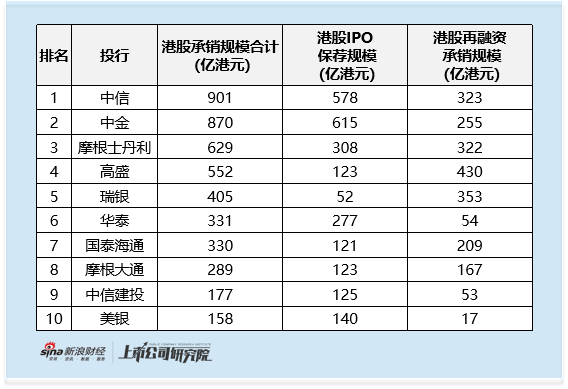
Core Viewpoint - The Hong Kong stock market in 2025 is characterized by a "dual-driven" capital active state of "IPO + refinancing," with both sectors experiencing significant recovery, where IPO fundraising reached 285.6 billion HKD and refinancing (including convertible bonds) totaled 273.5 billion HKD, indicating equal importance in the competition for equity financing market underwriting [1][7]. Group 1: Market Overview - The total IPO fundraising in the Hong Kong market for 2025 was 285.6 billion HKD as of January 16, 2026, while refinancing reached 273.5 billion HKD, showing a balanced financing scale [1][7]. - Major players like CITIC, CICC, Morgan Stanley, and Goldman Sachs have adopted different competitive strategies, with domestic institutions focusing on the IPO sector and foreign institutions concentrating on refinancing [1][7]. Group 2: CITIC Securities Performance - CITIC Securities maintained a leading position in the Hong Kong market, with an IPO underwriting scale of 57.8 billion HKD, ranking second overall, supported by major projects like Zijin Mining International (28.7 billion HKD) and Sany Heavy Industry (15.3 billion HKD) [3][9]. - In the refinancing sector, CITIC ranked first among domestic brokers with an underwriting scale of 32.3 billion HKD, primarily driven by BYD's 43.5 billion HKD large-scale issuance, the largest equity financing project in the Hong Kong market [3][9]. Group 3: CICC Performance - CICC led the IPO market with an underwriting scale of 61.5 billion HKD, participating in seven of the top ten IPO projects, including major companies like CATL and Chery Automobile [5][11]. - In refinancing, CICC's scale was 25.5 billion HKD, ranking second among domestic brokers, but it faced challenges in maintaining competitiveness, as it did not participate in significant projects like BYD's large issuance [5][11]. Group 4: Top Projects - The top IPO projects for CITIC Securities included Zijin Mining International (28.7 billion HKD) and Sany Heavy Industry (15.3 billion HKD) [4][10]. - CICC's top IPO projects featured CATL (41.0 billion HKD) and Seres (14.3 billion HKD) [6][12].
律所集中度偏低反常!中伦锦天城领跑,A股IPO监管信号不简单
Sou Hu Cai Jing· 2026-01-16 08:56
Core Insights - The A-share IPO market in 2025 is showing signs of recovery, with a total of 116 companies completing their initial public offerings, an increase of 16 from the previous year, and total funds raised reaching 131.77 billion yuan, a year-on-year surge of 95.63% [1][4] Group 1: Competitive Landscape of Intermediaries - The competition among the three main intermediary institutions—brokerages, accounting firms, and law firms—is intensifying, directly impacting the health of the IPO market [1] - The "Matthew Effect" is evident in the brokerage sector, with top firms dominating both project numbers and underwriting amounts. Guotai Junan leads with 17 projects, followed by CITIC Securities with 15, and CITIC Jiantou with 11 [4][6] - In terms of underwriting scale, the total amount for A-share IPOs reached 130.83 billion yuan, a 97.4% increase year-on-year, with CITIC Securities leading at 24.65 billion yuan, capturing nearly half of the market share [6] Group 2: Audit and Legal Services - The audit sector is characterized by a "one strong, many strong" pattern, with Rongcheng CPA leading with 29 IPO projects, benefiting from a focus on high-tech sectors [7] - Legal services show a lower concentration, with Zhonglun and Jintiancheng each handling 14 projects, while Guohao follows with 13. Zhonglun excels in cross-border listings, and Jintiancheng is rapidly growing in the new energy sector [11][13] Group 3: Regulatory Changes - Significant regulatory changes are shaping the intermediary market, with new rules effective from February 15, 2025, emphasizing integrity and diligence among intermediaries and prohibiting collusion in fraudulent activities [15][17] - The new regulations also enhance penalties for violations, with fines up to ten times the illegal gains and potential suspension of practice for serious offenses, pushing the industry towards a focus on quality over scale [17]

中信证券荣膺2025金麒麟两项大奖
Xin Lang Cai Jing· 2026-01-16 08:43
来源:中信证券发布 1月15日,由新浪财经主办的"2026全球与中国资本市场展望论坛暨金麒麟最佳财富管理机构、最佳投资 顾问盛典"在北京举办。中信证券以财富管理领域的硬核实力与优异表现,荣获2025金麒麟"年度最佳全 能财富管理机构""年度金融产品生态创新奖"两大奖项。 来源:中信证券发布 1月15日,由新浪财经主办的"2026全球与中国资本市场展望论坛暨金麒麟最佳财富管理机构、最佳投资 顾问盛典"在北京举办。中信证券以财富管理领域的硬核实力与优异表现,荣获2025金麒麟"年度最佳全 能财富管理机构""年度金融产品生态创新奖"两大奖项。 责任编辑:张恒星 责任编辑:张恒星 ...
中信证券荣获2025金融界“金智奖”两项大奖
Xin Lang Cai Jing· 2026-01-16 08:43
近日,公司凭借财富管理领域卓越表现及市场影响力,在2025金融界"金智奖"评选中荣获"杰出财富管 理奖""杰出影响力品牌奖"两项大奖。 责任编辑:张恒星 责任编辑:张恒星 来源:中信证券发布 来源:中信证券发布 近日,公司凭借财富管理领域卓越表现及市场影响力,在2025金融界"金智奖"评选中荣获"杰出财富管 理奖""杰出影响力品牌奖"两项大奖。 ...
“券商一哥”净赚超300亿
投中网· 2026-01-16 06:40
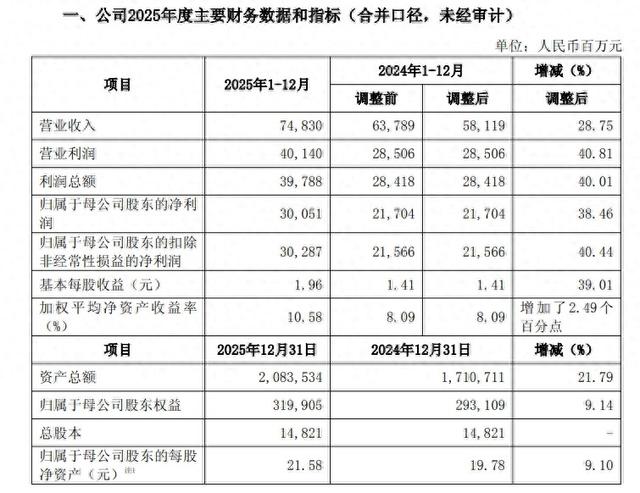
Core Viewpoint - The article highlights the record-breaking financial performance of CITIC Securities in 2025, marking the highest annual profit in its history, driven by a bullish A-share market and increased trading activity [5][9]. Financial Performance - In 2025, CITIC Securities achieved operating revenue of 74.83 billion yuan, a year-on-year increase of 28.75%, and a net profit attributable to shareholders of 30.05 billion yuan, up 38.46% [5][9]. - The basic earnings per share reached 1.96 yuan, reflecting a growth of 39.01% [5]. - The total asset scale of CITIC Securities increased to 2.08 trillion yuan, a growth of 21.79% compared to the previous year [8]. Market Conditions - The overall domestic capital market showed an upward trend in 2025, with significant increases in trading activity and investor confidence, leading to a notable rise in A-share indices [5][9]. - The average daily trading volume in the A-share market reached 1.98 trillion yuan, a 67% increase year-on-year, while the margin financing balance at the end of 2025 was 2.5 trillion yuan, up 36% [9]. Business Segments - CITIC Securities reported strong growth across its core business segments, including brokerage, investment banking, and proprietary trading, with brokerage fee income increasing by 52.9% to 10.94 billion yuan and investment income soaring by 190.05% to 32.84 billion yuan in the first three quarters of 2025 [11]. - In the investment banking sector, despite a generally lower number of IPOs, CITIC Securities maintained its leading position, with 17 IPOs raising 24.7 billion yuan, an 86% increase, and 41 refinancing deals raising 229 billion yuan, up 230% [12]. International Business - The international operations of CITIC Securities also showed robust growth, with its overseas subsidiary generating 1.492 billion USD in revenue, a 52.87% increase, and a net profit of 387 million USD, up 65.38% [12]. Industry Outlook - The article suggests that the recovery of the brokerage industry in 2025 is expected to benefit other firms as well, with projected net profit growth for listed brokerages of 61% year-on-year [14]. - Market experts believe that the increase in market activity and improved policy environment will drive growth in brokerage and investment banking sectors [14]. Valuation Concerns - Despite strong performance, the brokerage sector's valuation remains low historically, with the brokerage index rising only 4.05% in 2025, significantly underperforming the CSI 300 index, which rose 17.66% [15]. - Concerns persist regarding the sustainability of profit growth and the impact of declining commission rates on traditional brokerage models [15].

券商首份业绩快报:中信证券去年净利润突破300亿元,史上首次
Guan Cha Zhe Wang· 2026-01-16 03:31
对于2025年业绩创纪录的原因,中信证券在报告中表示,2025年,国内资本市场整体呈上行态势,市场 交投活跃度显著提升,投资者信心增强,A股主要指数均实现上涨。公司积极把握市场机遇,稳步做大 客户市场规模,经纪、投资银行、自营业务等收入均实现较快增长。 中信证券还表示,同时,公司坚定推进国际化布局,深化跨境服务能力,叠加香港市场的良好表现,公 司境外收入实现较快增长。基于上述原因,公司2025年营业利润等指标实现较大幅度增长。 公开资料显示,中信证券成立于1995年10月,是中国第一家A+H股上市的证券公司,第一大股东为中 国中信金融控股有限公司。中信证券是国内首家资产规模突破万亿元的证券公司,主要财务指标连续十 余年保持行业第一。 本文系观察者网独家稿件,未经授权,不得转载。 1月14日,中信证券发布《2025年度业绩快报》。快报显示,2025年,中信证券的营业收入、净利润均 出现较大幅度增长。 根据相关数据,中信证券2025年实现营业收入748.30亿元,同比(与前一年同期相较)增加28.75%;归 属于母公司股东的净利润(下称"净利润") 300.51亿元,同比增加38.46%。这也是中信证券历史首次全 ...
特高压概念拉升,电科院、西高院20%涨停,红相股份等大涨
Zheng Quan Shi Bao Wang· 2026-01-16 02:57
Core Viewpoint - The strong performance of the ultra-high voltage (UHV) sector is driven by the announcement from the State Grid regarding a significant increase in fixed asset investment during the 14th Five-Year Plan period, which is expected to reach 4 trillion yuan, a 40% increase compared to the previous plan [1] Investment Direction - The focus of investments will be on constructing a new power system, with an average annual increase of 20 million kilowatts in wind and solar energy installations, aiming to raise the share of electricity in final energy consumption to 35% [1] - Accelerating the construction of UHV direct current transmission channels, with cross-regional and cross-provincial transmission capacity expected to increase by over 30% compared to the end of the 14th Five-Year Plan [1] - Enhancing the electrification level of end-use energy to meet the demand for 35 million charging facilities [1] Market Outlook - CITIC Securities recently indicated that investment in the power grid is expected to maintain stable growth during the 14th Five-Year Plan, driven by continuous growth in electricity consumption, with an average annual growth rate of 5%-6% anticipated [1] - The growth rate of electricity consumption is expected to maintain an elasticity range of 1.2-1.25 compared to GDP growth [1] - The market shows a clear expectation of preemptive trading in domestic demand, with the UHV and digitalization sectors expected to face significant pressure by 2025 but have already shown signs of a bottom reversal, indicating potential investment value during the new five-year planning window [1]


融资保证金最低比例上调至100% 引导市场理性投资
Jin Rong Shi Bao· 2026-01-16 02:04
Core Viewpoint - The adjustment of the financing margin ratio from 80% to 100% is aimed at stabilizing the market and preventing systemic risks, effective from January 19, 2026, for new financing contracts only [1][4]. Group 1: Market Context - The financing margin is the minimum self-funding ratio required from investors when borrowing money to buy stocks, which serves as a risk control lever [2]. - In August 2023, the financing margin ratio was reduced from 100% to 80%, leading to a steady increase in market financing scale and trading volume, with year-end financing balances projected to reach 1.58 trillion yuan, 1.85 trillion yuan, and 2.52 trillion yuan from 2023 to 2025 [2]. - As of January 14, 2024, the total market financing balance reached a historical high of 2.68 trillion yuan, with the margin balance accounting for 2.61% of the A-share circulating market value [2]. Group 2: Regulatory Actions - The adjustment is part of a broader regulatory strategy to manage market overheating and ensure stability, with recent measures including monitoring stocks with excessive short-term price increases [3][4]. - The increase in the financing margin ratio is seen as a moderate approach to cooling down the market and preventing high leverage risks, while existing contracts remain unaffected [4][6]. Group 3: Market Reactions - Following the announcement, the market showed mixed reactions, with the Shanghai Composite Index and Shenzhen Component Index experiencing slight fluctuations, indicating a rational market response rather than panic selling [7]. - Analysts believe that the increase in the financing margin ratio serves as a "preventive measure" during periods of market overheating, aiming to smooth volatility rather than reverse trends [7][8]. Group 4: Long-term Outlook - The long-term outlook for the equity market remains positive, with expectations of improved institutional foundations, liquidity, and attractiveness, suggesting a steady upward trajectory characterized by structural optimization and functional enhancement [8].