上市公司理财

Search documents
骤降超1400亿!上市公司理财规模“腰斩”,为何突然 “降温”?
证券时报· 2026-03-26 11:58
Core Viewpoint - The scale of financial product subscriptions by listed companies has significantly decreased in 2026 compared to 2025, influenced by various macroeconomic and regulatory factors [1][5]. Group 1: Subscription Scale and Comparison - As of March 25, 2026, over 460 listed companies subscribed to financial products, with a total subscription amount close to 1391.70 billion RMB, a decrease of over 1400 billion RMB compared to the same period in 2025 [1][3]. - In 2025, 810 listed companies participated in subscriptions, with a total amount reaching 2819.19 billion RMB, indicating a near halving in the number of companies and a significant reduction in the overall scale of subscriptions [3][5]. Group 2: Reasons for Decrease in Subscription - The reduction in large financial product subscriptions is attributed to changes in market conditions, company operational needs, and stricter regulatory policies [5]. - Companies are increasingly prioritizing cash retention over long-term financial investments due to declining yields on financial products and a focus on reducing financial costs by repaying debts [5]. - The implementation of new asset management regulations has led to the withdrawal of guaranteed financial products, further constraining the scale of subscriptions [5][8]. Group 3: Changes in Financial Product Structure - Despite the overall decline in subscription amounts, the structure of financial products is becoming more diversified, with a shift towards asset management products and bank financial products [7][8]. - The amount subscribed to asset management products increased from 9.11 billion RMB in 2025 to 13.97 billion RMB in 2026, indicating a trend towards more varied investment strategies [7]. - Companies are moving away from solely relying on structured deposits to a more diversified approach that includes bank and securities company financial products, reflecting a fundamental shift in cash management strategies [8]. Group 4: Some Companies Increasing Financial Investment - Certain companies, such as Ningde Times and Shanghai Jahwa, have announced increases in their financial investment limits for 2026, indicating a strategic move to optimize fund usage and enhance returns [10]. - Ningde Times plans to use up to 1800 billion RMB for financial investments, significantly higher than the previous year's limit of 800 billion RMB [10]. - Shanghai Jahwa intends to increase its financial investment from 30 billion RMB in 2025 to 40 billion RMB in 2026, focusing on high-security, liquid low-risk financial products [10].


上市公司也成“韭菜”?圣元环保“踩雷”私募
Xi Niu Cai Jing· 2026-01-13 05:41
Core Viewpoint - The year 2025 was marked by a significant bull market in the A-share market, with major indices like the Shanghai Composite Index rising by 18.41% and the Shenzhen Component Index increasing by 29.87%. However, despite the overall positive market conditions, Saint Yuan Environmental experienced a severe loss due to a failed investment in a private equity fund, raising concerns about risk management and oversight in the investment process [2][3][22]. Group 1: Investment Loss Details - On December 26, 2025, Saint Yuan Environmental announced a shocking loss of approximately 46.92 million yuan from its investment in the "Deep Bo Hongtu Growth No. 1 Private Securities Investment Fund," which had a cumulative net value growth rate of -81.54%, exceeding 10% of the company's net profit from the previous year [3][12]. - The fund, managed by Shenzhen Deep Bo Xin Investment Management Co., was initially subscribed to by Saint Yuan Environmental for 60 million yuan in March 2025. However, by December 4, the fund's net value had already dropped by 7.85% [5][12]. - Following a communication on December 9, Saint Yuan Environmental attempted to redeem its investment, but the fund's net value plummeted by 71.83% within just five trading days, leading to a drastic decline to 0.2596 yuan [8][12]. Group 2: Fund Management and Oversight Issues - The fund management exhibited serious operational failures, including unauthorized trading and violations of disclosure obligations, which contributed to the significant losses incurred by investors [18]. - Saint Yuan Environmental's announcement indicated that the fund's management had failed to adhere to established risk control measures, which included setting a stop-loss line and ensuring proper asset management [15][18]. - The fund's custodian, China Merchants Securities, claimed to have fulfilled its supervisory responsibilities, but Saint Yuan Environmental pointed out lapses in oversight that led to substantial investor losses [19]. Group 3: Regulatory and Legal Actions - In response to the losses, Saint Yuan Environmental reported the incident to law enforcement and the China Securities Regulatory Commission, indicating the seriousness of the situation [13]. - The actual controllers of Saint Yuan Environmental committed to compensating for the losses incurred, promising to cover the original investment amount of 60 million yuan [19]. - The incident has drawn attention to the broader implications for corporate investment strategies, highlighting the need for more robust risk management practices in the context of a bull market [23][24].


多数公司捂紧钱袋,圣元环保闯私募高风险区,董监高集体领警示函
Sou Hu Cai Jing· 2026-01-09 13:18
Core Viewpoint - The incident involving Shengyuan Environmental Protection highlights significant risks associated with high-risk private equity investments made by publicly listed companies, leading to substantial financial losses and regulatory scrutiny [1][4][10]. Company Summary - Shengyuan Environmental Protection's subsidiary invested 60 million yuan in a high-risk private equity fund, which initially showed stable performance but plummeted in value following a redemption request, resulting in a cumulative loss of 74.04% [4][6]. - The company faced severe internal control issues, as the fund manager engaged in unauthorized trading and failed to disclose critical information, leading to regulatory actions against the company's executives [6][8]. - The actual loss of 46.92 million yuan from the investment represented 22% of the company's net profit for the first three quarters of 2025, exacerbating its existing financial difficulties [13][15]. Industry Summary - The overall trend in the A-share market shows a conservative shift in investment strategies among listed companies, with a significant reduction in the purchase of financial products, down over 230 billion yuan year-on-year [1]. - Regulatory bodies are intensifying their oversight of private equity investments, as evidenced by recent penalties imposed on firms for mismanagement and fraudulent activities [19]. - The incident with Shengyuan Environmental Protection is not isolated, as other companies have also faced severe repercussions from similar high-risk investment strategies, indicating a broader issue within the industry regarding the management of idle funds [17][19].
上市公司理财应“稳”字当头
Bei Jing Shang Bao· 2025-12-29 16:49
Core Viewpoint - The incident involving Shengyuan Environmental Protection highlights the significant negative impact that high-risk financial products can have on listed companies, emphasizing the need for a conservative approach to financial management and investment decisions [1][2]. Group 1: Financial Management Principles - The core principle for listed companies in financial management should be "stability," with capital preservation as the foundation [1][2][3]. - Listed companies should prioritize creating value through their main business operations and view financial management as a supplementary tool rather than a primary source of revenue [1][2]. Group 2: Risks of High-Risk Financial Products - Investing heavily in high-risk financial products can lead to severe negative impacts on a company's operational performance, especially if market conditions change or if the products fail [2][3]. - Companies may face risks of cash flow tightness or even a breakdown in their financial chain, which can severely affect normal operations and development [2]. Group 3: Decision-Making and Risk Control - Listed companies must conduct thorough research and evaluation when selecting financial products, avoiding the temptation of high returns while neglecting associated risks [2][3]. - Establishing a robust financial decision-making mechanism and risk control system is essential for effective management and protection of financial resources [2]. Group 4: Alternative Financial Strategies - For companies with long-term idle funds, besides conservative financial management, options include cash dividends to investors or share buybacks to support stock prices [3]. - Short-term idle funds could be used to repay short-term loans or invest in safer options like large bank certificates of deposit or government bonds, which, while not risk-free, offer higher safety [3].
圣元环保踩雷私募巨亏,上市公司理财应稳字当头
Bei Jing Shang Bao· 2025-12-29 15:04
Core Viewpoint - The article emphasizes that listed companies should prioritize stability in their financial management, particularly when investing idle funds in financial products, to protect shareholder interests and ensure sustainable development [1][2][3]. Group 1: Financial Management Principles - Listed companies should adopt a "stability first" principle in their financial management, ensuring capital preservation as a baseline [1][2]. - The primary task of listed companies is to create value through their core business operations, with financial management serving as a supplementary tool [1][3]. - High-risk financial products can lead to significant negative impacts on a company's performance and shareholder value, especially if market conditions change [2][3]. Group 2: Risk Awareness and Decision-Making - Companies must conduct thorough research and evaluation when selecting financial products, avoiding the temptation of high returns without considering associated risks [2][3]. - A robust financial decision-making mechanism and risk control system should be established to oversee the financial management process effectively [2]. - Companies should be cautious of any financial products offering returns exceeding the market's risk-free rate, as these are likely to carry high risks [2]. Group 3: Alternative Strategies for Idle Funds - For long-term idle funds, companies can consider cash dividends to reward investors or share buybacks to support stock prices [3]. - Short-term idle funds may be used to repay short-term loans or invest in safer options like large-denomination bank certificates or government bonds [3]. - The lessons from Saint Yuan Environmental Protection should serve as a warning for other listed companies to avoid high-risk financial products and focus on their core business [3].

侃股:上市公司理财应“稳”字当头
Bei Jing Shang Bao· 2025-12-29 12:41
Core Viewpoint - The recent significant losses incurred by Shengyuan Environmental Protection due to risky private equity products highlight the critical need for listed companies to prioritize stability and capital preservation in their financial management strategies [1][2]. Group 1: Financial Management Principles - Listed companies should adopt a "stability first" principle in their financial management, ensuring that capital preservation is the baseline and not blindly pursuing high-risk products [1][2]. - The primary responsibility of listed companies is to create value through their core business operations, with financial management serving as a supplementary tool rather than a primary source of revenue [1][2]. Group 2: Risks of High-Risk Investments - Investing a large amount of idle funds into high-risk financial products can lead to negative impacts on a company's operational performance, especially if market conditions change or if the products fail [2]. - Companies may face risks of cash flow tightness or even a breakdown in their funding chain, severely affecting normal operations and development [2]. Group 3: Decision-Making and Risk Control - Listed companies must conduct thorough research and evaluation when selecting financial products, considering factors such as the issuing institution, investment direction, and risk level [2]. - Establishing a robust financial decision-making mechanism and risk control system is essential for effective supervision and management of financial processes [2]. Group 4: Alternative Financial Strategies - For companies with long-term idle funds, besides prudent financial management, options such as cash dividends to investors or share buybacks to support stock prices should be considered [3]. - Short-term idle funds could be used to repay short-term loans, while safer investment options like large bank certificates of deposit or government bonds should also be explored [3].
踩雷私募产品巨亏超80% 圣元环保股价迎考!A股公司大额理财的还有谁
Bei Jing Shang Bao· 2025-12-28 14:12
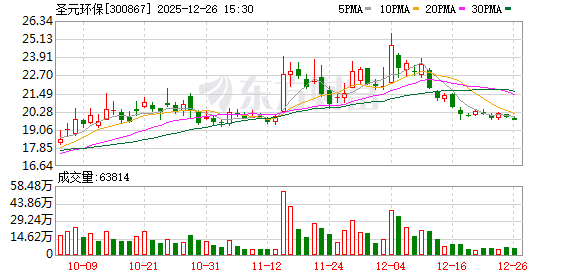
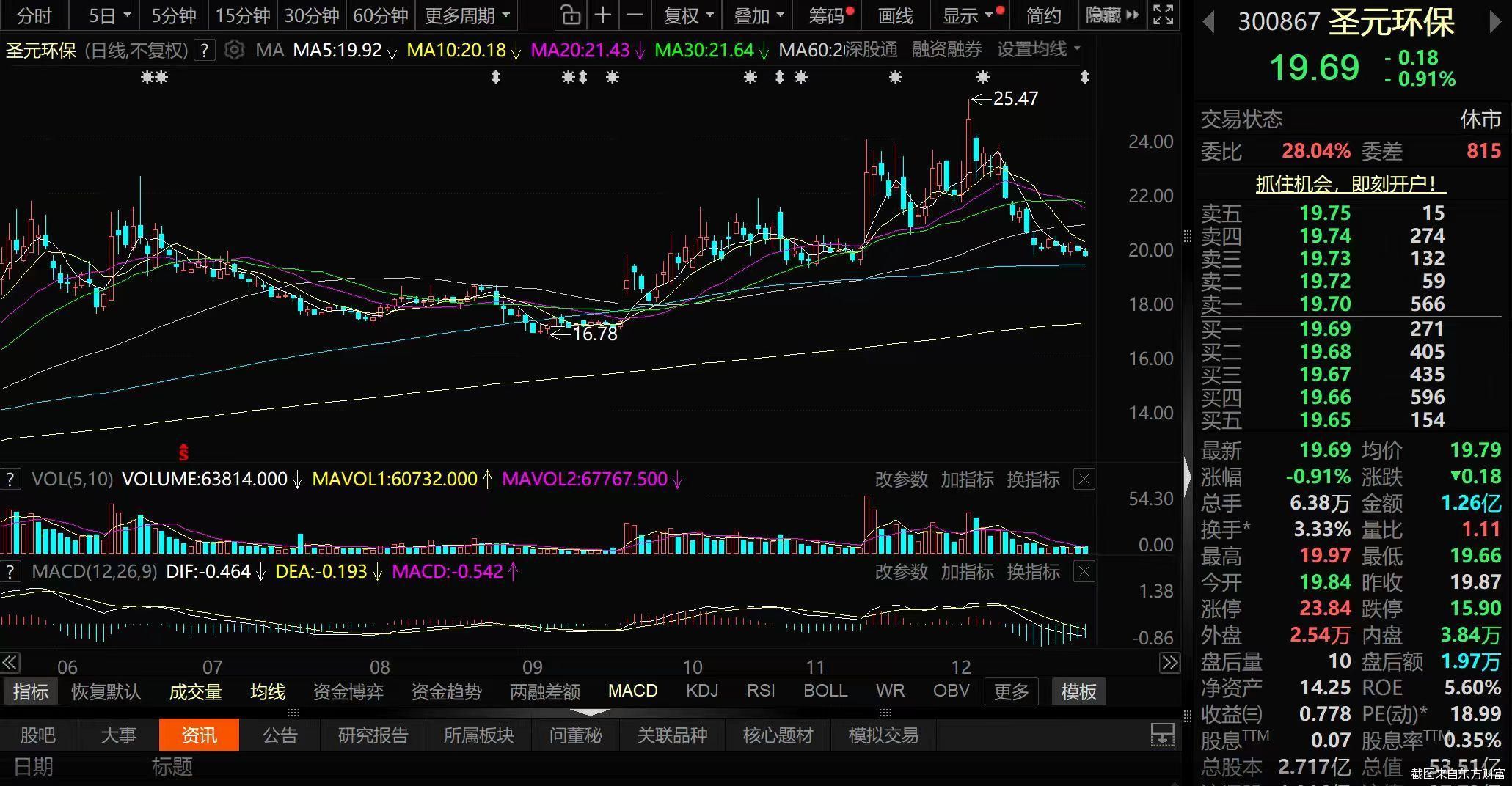
Core Viewpoint - Shengyuan Environmental's significant loss from a private equity product, exceeding 80%, has become a hot topic in the A-share market, with a loss amounting to approximately 46.92 million yuan [2][5][9]. Group 1: Incident Overview - On December 26, Shengyuan Environmental disclosed that its wholly-owned subsidiary, Xiamen Jinlingji Construction Engineering Co., Ltd., subscribed to a private equity fund product managed by Shenzhen Shenboxin Investment Management Co., Ltd., which reported a cumulative net value growth rate of -81.54% [5][9]. - Following the announcement, the Xiamen Securities Regulatory Bureau and the Shenzhen Stock Exchange took action, issuing a warning letter to Shengyuan Environmental and a regulatory letter from the Shenzhen Stock Exchange [6][7]. Group 2: Company Response - In response to the private equity product incident, Shengyuan Environmental's controlling shareholders, Zhu Yuxuan and Zhu Hengbing, committed to compensating for the investment principal loss [8]. - The company has reported that it discovered serious operational violations by the fund manager, including unauthorized trading and failure to disclose information, and has reported the matter to the police [8][9]. Group 3: Financial Performance - Shengyuan Environmental's revenue has been declining in recent years, with reported revenues of approximately 17.52 billion yuan in 2022, 17.48 billion yuan in 2023, and 15.82 billion yuan in 2024 [10]. - The company achieved a net profit of approximately 1.8 billion yuan in 2022, 1.47 billion yuan in 2023, and is projected to recover to 1.82 billion yuan in 2024 [10]. - For the first three quarters of this year, the company reported revenues of about 1.15 billion yuan, a year-on-year decrease of 0.67%, while net profit increased by 43.22% to approximately 211 million yuan [10]. Group 4: Industry Context - As of December 28, over 950 A-share companies had invested more than 1 billion yuan in financial products, with a total investment of approximately 969.89 billion yuan, a decrease of over 230 billion yuan compared to the previous year [13]. - The trend of companies investing idle funds in financial products is common, aimed at enhancing capital efficiency and profitability, but it also carries potential risks [14].
踩雷私募产品巨亏超80%,圣元环保股价迎考!A股公司大额理财的还有谁
Bei Jing Shang Bao· 2025-12-28 13:52
Core Viewpoint - Shengyuan Environmental (300867) faced significant losses exceeding 80% from a private equity product, amounting to approximately 46.92 million yuan, which has become a hot topic in the A-share market [1][4]. Group 1: Incident Overview - On December 26, Shengyuan Environmental disclosed that its wholly-owned subsidiary, Xiamen Jinlingji Construction Engineering Co., Ltd., subscribed to a private equity fund product managed by Shenzhen Shenboxin Investment Management Co., Ltd., which reported a cumulative net value growth rate of -81.54% [3][7]. - Following the announcement, the Xiamen Securities Regulatory Bureau and the Shenzhen Stock Exchange took action, issuing a warning letter to Shengyuan Environmental and its related personnel for failing to disclose the significant losses in a timely manner [4][5]. Group 2: Financial Impact - The reported losses from the private equity product exceeded 10% of the company's most recent audited net profit, highlighting the financial strain on Shengyuan Environmental [7]. - As of the third quarter, Shengyuan Environmental's total assets were 8.781 billion yuan, with total liabilities of 4.905 billion yuan, resulting in a debt-to-asset ratio of 55.85% [10]. Group 3: Company Performance - Shengyuan Environmental's revenue has been declining since 2022, with reported revenues of approximately 1.752 billion yuan in 2022, 1.748 billion yuan in 2023, and an estimated 1.582 billion yuan in 2024 [9]. - The company achieved a net profit of approximately 180 million yuan in 2022, 147 million yuan in 2023, and a projected recovery to 182 million yuan in 2024 [9]. Group 4: Market Context - As of December 28, over 950 A-share companies had invested more than 1 billion yuan in financial products, with a total investment of approximately 969.89 billion yuan, a decrease of over 230 billion yuan compared to the previous year [12]. - The trend of companies investing idle funds in financial products is common, but it carries potential risks, including market volatility and management distractions [13][14].
理财变“踩雷”!“券业一哥”中信证券被判赔偿2930万
Xin Lang Cai Jing· 2025-12-25 13:59
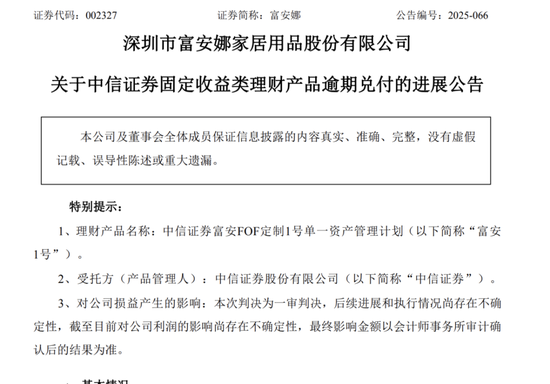
Group 1 - The core issue revolves around a legal dispute where CITIC Securities is ordered to compensate Fuanna for a principal loss of nearly 29.3 million yuan due to a financial management contract dispute [1][9][13] - The case, which began in 2022, has reached a significant milestone with the court's ruling after nearly three years of proceedings [2][10] - Fuanna invested 120 million yuan in a customized asset management plan from CITIC Securities, which faced overdue payments starting March 19, 2022, leading to substantial financial losses [4][12] Group 2 - As of the end of 2024, Fuanna has only recovered 14.3 million yuan from the investment, with 106 million yuan and expected fixed returns still unrecovered [4][12] - The asset management plan primarily invested in problematic projects, including a well-known "unfinished building" in Hangzhou, leading to significant bad debts [4][12] - The court ruling stipulates that CITIC Securities must compensate Fuanna within ten days and that any future recoveries from the asset management plan will be split equally between the two parties [5][13] Group 3 - There is a noticeable trend of declining investment in financial products by listed companies, with a reported 18.64% decrease in total subscription amounts year-on-year [6][14] - The preference for financial products has shifted towards more cautious and diversified options, with structured deposit products being the most popular among listed companies [6][14] - Regulatory concerns have been raised regarding companies investing heavily in non-core areas, suggesting a need for stricter oversight and limits on such financial activities [7][15]


中信证券被判赔偿富安娜本金损失近2930万元
Zhong Guo Ji Jin Bao· 2025-12-25 13:53
Group 1 - The court ruled that CITIC Securities must compensate Fuanna for a principal loss of nearly 29.3 million yuan due to a financial dispute related to a wealth management product [2][7] - The case, which began in 2022, has seen significant developments, culminating in this first-instance judgment [3] - Fuanna had invested 120 million yuan in CITIC Securities' customized asset management plan, but only managed to recover 14.3 million yuan, with the remaining principal of 106 million yuan and expected fixed income unrecovered [6][7] Group 2 - The asset management plan primarily invested in problematic real estate projects, leading to substantial losses, including a 100 million yuan bad debt from a project associated with a well-known "unfinished building" [6] - The court's decision also stated that Fuanna and CITIC Securities would split any future recoveries from the asset management plan equally [7] - The overall trend in the industry shows a decline in the scale of wealth management product purchases by listed companies, with a 34% drop in 2023 and a further 5.45% decrease in 2024 [8]