CM BANK(600036)

Search documents
招银投资在深圳开业 将有“收债转股”等四大业务模式
2 1 Shi Ji Jing Ji Bao Dao· 2025-12-02 12:49
Core Viewpoint - The establishment of Zhaoyin Investment, a wholly-owned subsidiary of China Merchants Bank with a registered capital of 15 billion yuan, marks a significant milestone in the bank's development and aims to enhance the financial service capabilities for the real economy in Shenzhen [1][5]. Group 1: Company Overview - Zhaoyin Investment was officially launched on December 2, with key figures from the Shenzhen government and China Merchants Bank present at the ceremony [1][5]. - The company aims to become a leading equity investment institution driven by value, innovation, and technology, aligning with China Merchants Bank's vision of becoming a world-class commercial bank [2][5]. - The investment team at Zhaoyin Investment includes many members with substantial equity investment experience from Zhaoyin International Capital [3][5]. Group 2: Funding Sources and Business Model - Zhaoyin Investment's funding will come from five main sources: registered capital, targeted reserve requirement funds from the central bank, interbank borrowing, issuance of private asset management products, and issuance of financial bonds [2]. - The company will operate under four business models: debt-to-equity swaps, equity-for-debt exchanges, issuance of asset management products, and establishment of private equity investment funds [2]. Group 3: Market Context and Opportunities - Since November, several asset investment companies (AICs) have been established in the Greater Bay Area, indicating a recognition of the local industrial base and promoting financial diversification in the region [1][4]. - The regulatory environment has evolved to support the establishment of AICs by various commercial banks, expanding the participation beyond state-owned banks to include several joint-stock banks [4]. - Local governments are actively seizing the opportunities presented by the expansion of AICs to enhance support for technology and industry finance [4][6].

招银投资正式开业 招商银行综合化经营再添新平台
Xin Hua Cai Jing· 2025-12-02 12:43
招银投资由招商银行全资发起设立,是国内首批获准设立的股份制银行系金融资产投资公司,注册资本 150亿元。据介绍,招银投资将聚焦于市场化债转股业务,并积极参与监管主导下的股权投资业务试 点,赋能科技创新,致力于通过多元化的金融工具和专业的投资管理能力,为客户提供全生命周期金融 支持,降低企业杠杆率、促进企业转型升级,赋能新质生产力发展。 新华财经北京12月2日电(记者吴丛司)记者2日从招商银行获悉,招银金融资产投资有限公司(简 称"招银投资")开业仪式2日在深圳举行。招商银行行长王良在仪式上表示,招银投资将把握国家和监 管的政策机遇、科技创新和产业变革的机遇、资本市场发展的机遇、深圳创新、创业和创投蓬勃发展的 机遇。 (文章来源:新华财经) 王良进一步表示,未来招银投资将聚焦科技创新,加快布局新兴产业和未来产业;坚持价值投资,做长 期资本、耐心资本,坚持长期主义,打造投贷联动新生态;强化协同联动,发挥好母行和招商局集团平 台优势,加强与集团投资板块及母行各分支机构的联动;深化合作共赢,做大投资朋友圈。 今年3月,国家金融监督管理总局发文,明确"支持符合条件的商业银行发起设立金融资产投资公司", 商业银行参与股权 ...
招商银行旗下AIC招银投资开业,投贷联动再添大招
Sou Hu Cai Jing· 2025-12-02 11:52
Core Viewpoint - The establishment of China Merchants Bank's financial asset investment company (招银投资) marks a significant step in enhancing the bank's capabilities in both debt-to-equity swaps and equity investment, aiming to transform from a traditional creditor to a comprehensive financial service provider [2][4]. Group 1: Company Overview - 招银投资 has a registered capital of 15 billion yuan and is one of the first batch of financial asset investment companies approved in China [3]. - The company will focus on market-oriented debt-to-equity swap business and actively participate in equity investment trials under regulatory guidance [4]. Group 2: Strategic Goals - 招银投资 aims to leverage national policies, technological innovation, and capital market development to become a leader in the financial asset investment industry [3]. - The company plans to enhance its capabilities in research, investment management, risk management, technology, innovation, and talent development [3]. Group 3: Industry Context - The establishment of 招银投资 aligns with the broader trend of commercial banks being encouraged to set up financial asset investment companies to support the development of technology-driven enterprises [5][6]. - The Greater Bay Area's favorable business environment and strong industrial foundation make it an ideal location for such investments, with a significant portion of investments targeting strategic emerging industries [6][7].


哪家商业银行最低持有期理财产品收益更高?
2 1 Shi Ji Jing Ji Bao Dao· 2025-12-02 10:37
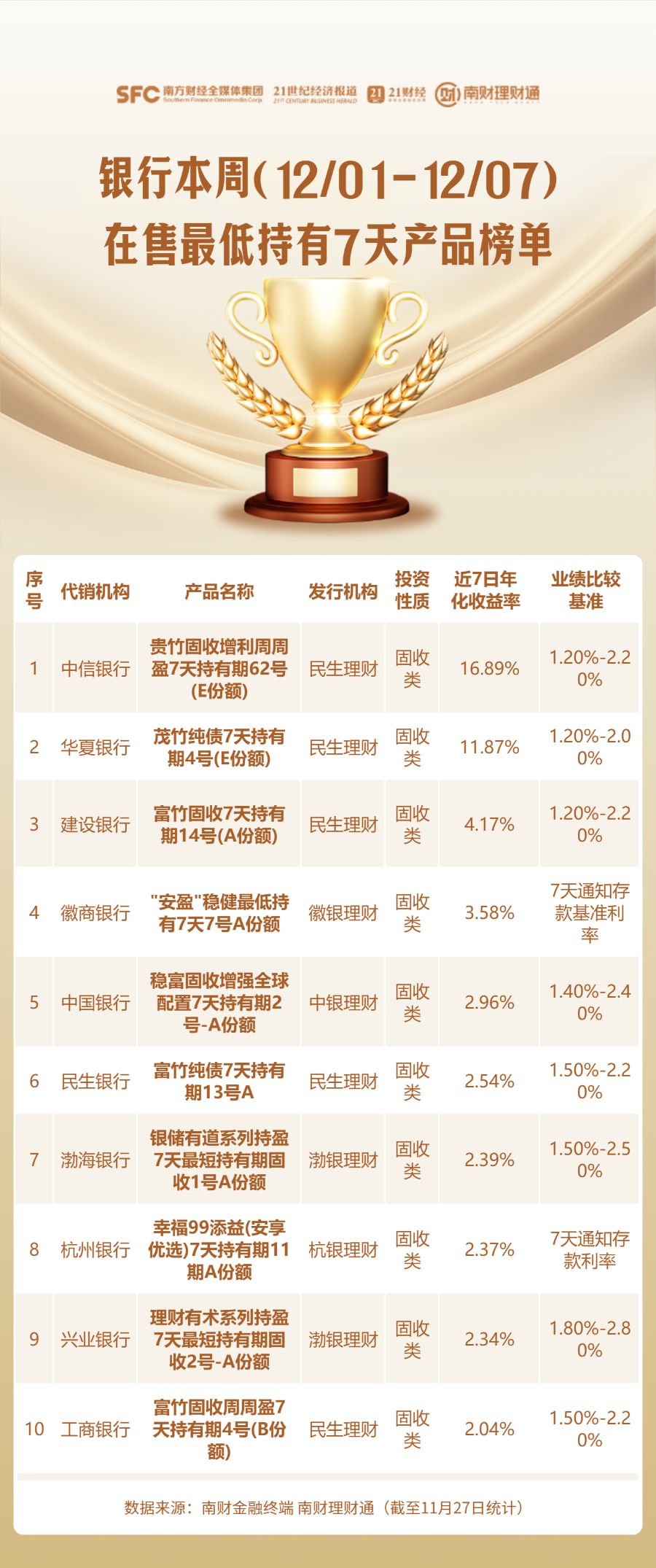
Core Insights - The article focuses on the performance of minimum holding period RMB public offering products, ranking them based on annualized returns for holding periods of 7, 14, 30, and 60 days [1][4][12] Group 1: 7-Day Holding Period Products - The top-performing product is from Minsheng Bank with an annualized return of 4.17% [3] - Other notable products include: - Huishang Bank with 3.58% [3] - Bank of China with 2.96% [3] - Minsheng Bank's Fuzhu Pure Bond with 2.54% [3] - Bohai Bank with 2.39% [3] Group 2: 14-Day Holding Period Products - Minsheng Bank's product "Jingxiang Fixed Income Incremental Dual-Week" leads with a return of 34.68% [5] - Other significant products include: - Minsheng Bank's Fuzhu Pure Bond with 5.66% [5] - WeBank's "Anying" Stable Income with 4.47% [5] - SPDB's "Wealth Management Series" with 2.33% [5] Group 3: 30-Day Holding Period Products - Minsheng Bank's "Guizhu Fixed Income Incremental Monthly" tops the list with a return of 21.23% [9] - Other key products include: - Minsheng Bank's Fuzhu Fixed Income with 13.53% [9] - Bank of China with 7.64% [9] - Huishang Bank's "Happiness 99" with 6.07% [9] Group 4: 60-Day Holding Period Products - The leading product is from Minsheng Bank with a return of 15.12% [13] - Other notable products include: - CITIC Bank's Fuzhu Pure Bond with 8.94% [14] - Bank of China with 4.57% [14] - Huishang Bank's product with 3.46% [14]






多城“烂尾”地标重获新生
第一财经· 2025-12-02 10:12
Core Viewpoint - The article discusses the recent progress in revitalizing previously stalled landmark projects in various cities, highlighting the potential for these "zombie projects" to be brought back to life through coordinated efforts from government, financial institutions, and private investors [3][4]. Group 1: Revitalization of Landmark Projects - Multiple previously stagnant landmark projects are showing signs of potential revitalization, including the Chongqing Bay project and the Shenzhen-Hong Kong International Center [5][6]. - The Chongqing Bay project, acquired by Sunac from Sunshine 100, is set to receive up to 2.476 billion yuan for debt restructuring and new financing, with plans for construction to commence soon [6][7]. - The Shenzhen-Hong Kong International Center, originally acquired by Shimao Group for approximately 23.9 billion yuan, is undergoing a zoning change to allow for mixed residential and commercial use, paving the way for future development [8]. Group 2: Factors Driving Revitalization - The revival of these projects is driven by a combination of policy support, market conditions, and financial backing from institutions, with local governments playing a crucial role in resource coordination [9]. - The 2025 government work report emphasizes the importance of revitalizing existing land and commercial properties, providing a policy basis for the resumption of stalled projects [9]. Group 3: Challenges to Overcome - Despite some projects making progress, others, like the Guangzhou Round Building, continue to face challenges, including failed auctions and complex debt situations [11][12]. - Key challenges for large project revitalization include funding gaps, legal disputes among creditors, and the need to rebuild market trust and brand value [13][14]. - Financial institutions are increasingly important in this process, providing expertise and resources for restructuring and risk management [14].


股份制银行板块12月2日跌0.26%,浦发银行领跌,主力资金净流出4.26亿元
Zheng Xing Xing Ye Ri Bao· 2025-12-02 09:05
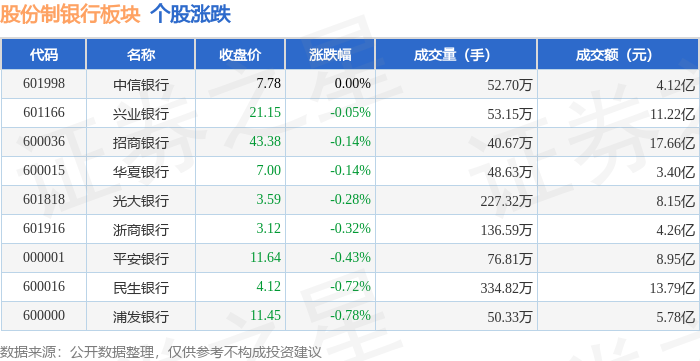
Market Overview - On December 2, the shareholding banks sector declined by 0.26% compared to the previous trading day, with Pudong Development Bank leading the decline [1] - The Shanghai Composite Index closed at 3897.71, down 0.42%, while the Shenzhen Component Index closed at 13056.7, down 0.68% [1] Individual Bank Performance - Citic Bank (601998) closed at 7.78 with no change in price, trading volume of 527,000 shares, and a transaction value of 412 million yuan [1] - Industrial Bank (601166) closed at 21.15, down 0.05%, with a trading volume of 531,500 shares and a transaction value of 1.122 billion yuan [1] - China Merchants Bank (600036) closed at 43.38, down 0.14%, with a trading volume of 406,700 shares and a transaction value of 1.766 billion yuan [1] - Huaxia Bank (600015) closed at 7.00, down 0.14%, with a trading volume of 486,300 shares and a transaction value of 340 million yuan [1] - Everbright Bank (601818) closed at 3.59, down 0.28%, with a trading volume of 2.2732 million shares and a transaction value of 815 million yuan [1] - Zhejiang Commercial Bank (601916) closed at 3.12, down 0.32%, with a trading volume of 1.3659 million shares and a transaction value of 426 million yuan [1] - Ping An Bank (000001) closed at 11.64, down 0.43%, with a trading volume of 768,100 shares and a transaction value of 895 million yuan [1] - Minsheng Bank (600016) closed at 4.12, down 0.72%, with a trading volume of 3.3482 million shares and a transaction value of 1.379 billion yuan [1] - Pudong Development Bank (600000) closed at 11.45, down 0.78%, with a trading volume of 503,300 shares and a transaction value of 578 million yuan [1] Capital Flow Analysis - The shareholding banks sector experienced a net outflow of 426 million yuan from main funds, while speculative funds saw a net inflow of 242 million yuan, and retail investors had a net inflow of 183 million yuan [1] - Citic Bank had a main fund net inflow of 56.67 million yuan, while retail investors contributed a net inflow of 8.34 million yuan [2] - Huaxia Bank saw a main fund net inflow of 20.20 million yuan, but retail investors had a net outflow of 1.99 million yuan [2] - Pudong Development Bank experienced a main fund net inflow of 0.89 million yuan, with a net outflow from retail investors of 32.71 million yuan [2] - Minsheng Bank had a significant main fund net outflow of 96.31 million yuan, while speculative funds saw a net inflow of 61.08 million yuan [2] - Industrial Bank faced a main fund net outflow of 101 million yuan, but retail investors contributed a net inflow of 82.80 million yuan [2]




稳中有进——中证红利指数2025年年度调样数据整理分析
雪球· 2025-12-02 08:58
Core Viewpoint - The article discusses the recent sample adjustment of the CSI Dividend Index, highlighting the reasons for the removal and addition of stocks, and the overall impact on the index's quality and dividend yield [3][9]. Sample Adjustment Information and Logic Analysis - The CSI Dividend Index underwent a sample adjustment involving 20 stocks, accounting for 20% of the total sample size [5]. - Stocks were removed primarily due to low dividend yields, liquidity issues, or excessively high payout ratios [6]. - Notably, many stocks were removed because their dividend yields fell below acceptable levels, often due to declining performance [6]. Stocks Removed from the Index - Stocks such as Aotai Biological, Baosteel, and Dashiang were removed due to low dividend yields, with Baosteel's yield at 3.68% and Aotai's at 5.62% [5]. - Other reasons for removal included liquidity issues for companies like Dashiang and Fuanna, and high payout ratios for companies like Huafa and Xiangzhong Energy [5]. Stocks Added to the Index - New additions included stocks like Anhui Construction and Baoxini, which had higher dividend yields, with Anhui's yield at 5.46% [7]. - The adjustment included a diverse range of industries, enhancing the index's overall sector representation [8]. Comparison of Basic Data Before and After Adjustment - The overall financial performance of stocks added to the index was superior to those removed, with net profit growth of -2.94% for new additions compared to -23.52% for those removed [11]. - The return on equity (ROE) for new additions was 12.93%, indicating stronger financial health [11]. Valuation and Performance Comparison - The average price-to-earnings (PE) ratio for stocks added to the index was significantly lower than those removed, suggesting improved valuation metrics [13]. - The average dividend yield for new additions increased by 36 basis points compared to those removed, reflecting a more attractive income potential [13]. Conclusion - The adjustments to the CSI Dividend Index are expected to enhance its dividend yield and overall quality, while also reducing the PE ratio, thereby maintaining its long-term investment value [15].



六大行,集体停售!
Jin Rong Shi Bao· 2025-12-02 07:16
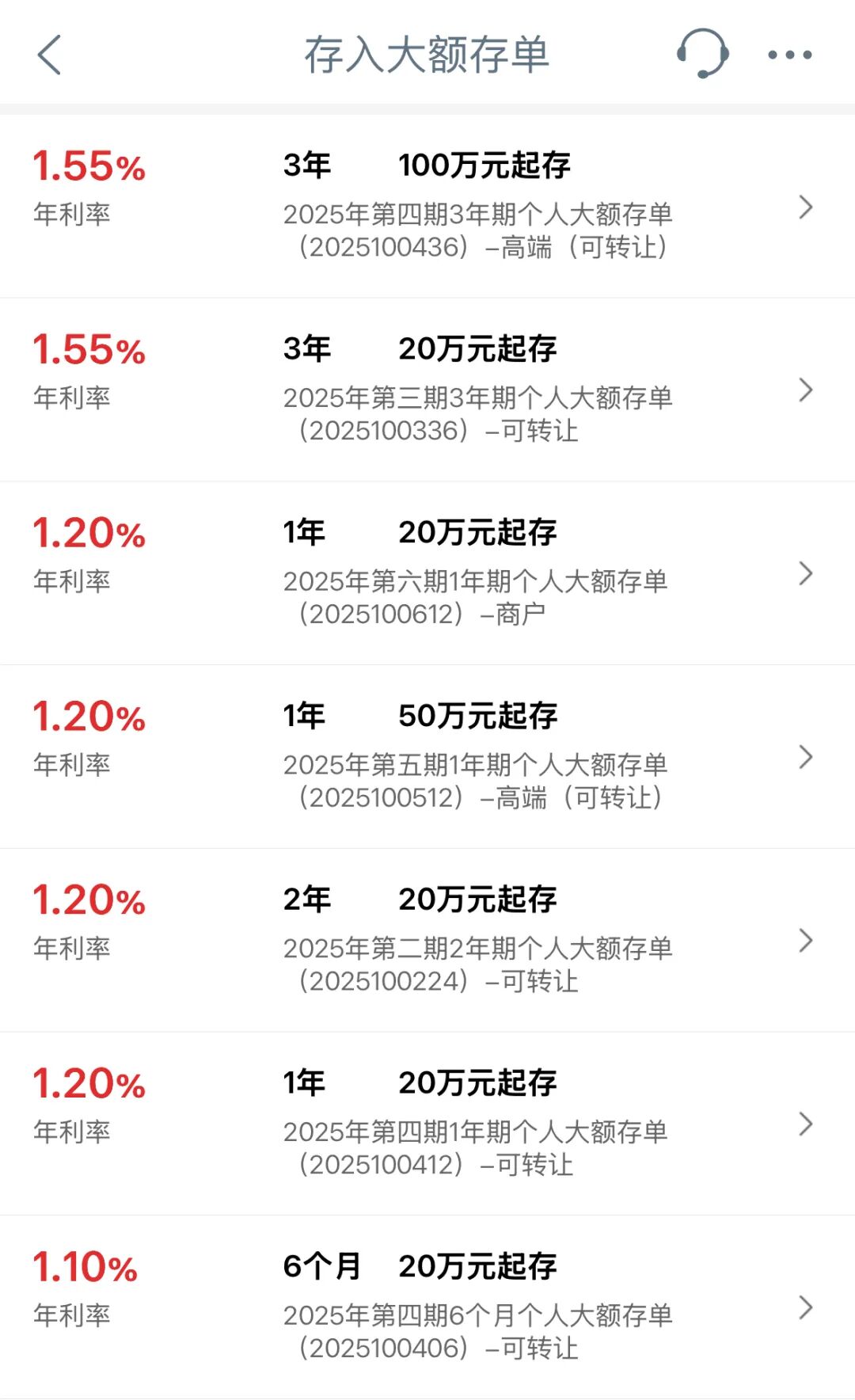
Core Viewpoint - The major state-owned banks in China have completely stopped offering 5-year large denomination certificates of deposit (CDs), leading to a significant reduction in the availability of long-term deposit products in the market [1][2][6]. Group 1: Bank Actions - Six major state-owned banks, including Industrial and Commercial Bank of China, Agricultural Bank of China, Bank of China, China Construction Bank, Bank of Communications, and Postal Savings Bank of China, have ceased the sale of 5-year large denomination CDs [1][2]. - The remaining available terms for large denomination CDs have shifted to shorter durations, with the longest being 3 years, which has a rate of 1.55% [2][6]. - The trend of discontinuing long-term deposit products is not limited to national banks; local commercial banks and private banks are also following suit, as seen with the announcements from banks in Inner Mongolia [10][11]. Group 2: Market Dynamics - The withdrawal of 5-year CDs is attributed to the current downward trend in interest rates, which discourages banks from offering higher rates for long-term deposits [10]. - There is a notable increase in the overall deposit scale due to high savings enthusiasm among residents, while the demand for loans remains weak, leading banks to be less inclined to attract long-term deposits [10]. - Many banks are also reducing deposit rates, with some institutions cutting rates by as much as 65 basis points, reflecting a broader strategy to optimize their liability structure under pressure from interest margins [10][11]. Group 3: Investor Sentiment - The reduction in long-term deposit products has created a dilemma for ordinary depositors, as they struggle to find stable investment options [11]. - A survey indicates a slight decline in the proportion of depositors preferring to save more, suggesting a shift in asset allocation strategies among investors in a low-interest-rate environment [11]. - Financial experts recommend that investors adjust their expectations for returns and consider diversifying their asset allocation to include cash management products, money market funds, and government bonds [11]. Group 4: Industry Implications - The decline of long-term deposit products is prompting banks to accelerate their transformation efforts, focusing on wealth management and custodial services to stabilize non-interest income [11]. - Banks are encouraged to enhance their strategies on both asset and liability sides to maintain net interest margins amidst changing market conditions [11].




6家AH股“倒挂”背后:流通股比例小,外资更爱行业龙头
第一财经· 2025-12-02 06:29
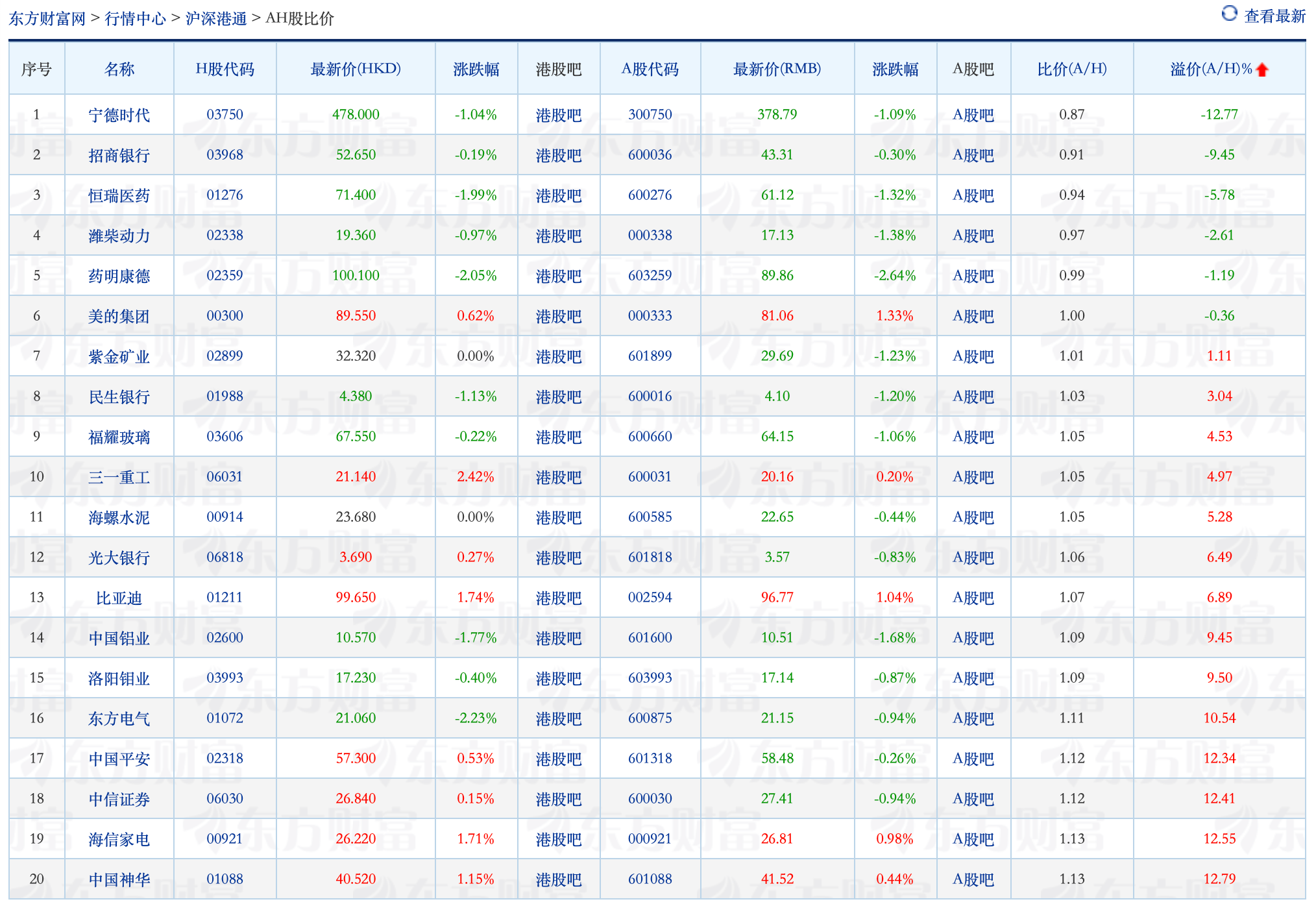
Core Viewpoint - A-shares have lower trading costs and better market liquidity compared to H-shares, with a current premium of about 20% for A-shares as indicated by the Hang Seng AH Premium Index (HSAHP) being above 120. However, certain companies like CATL have shown a reverse phenomenon where H-shares are priced higher than A-shares [2][4]. Group 1: Market Dynamics - The phenomenon of H-shares trading at a premium over A-shares is attributed to the smaller market capitalization of H-shares compared to A-shares, leading to relative scarcity in liquidity [5]. - Among the six companies exhibiting this "inversion," three are newly listed, resulting in lower liquidity for H-shares, which can lead to inflated prices due to concentrated holdings by large institutions [5][6]. - As institutional investors gradually exit their positions, the liquidity of H-shares is expected to increase, potentially narrowing the premium of H-shares over A-shares [5]. Group 2: Characteristics of A-H Share Companies - Companies with inverted pricing typically share common traits: they are large enterprises with stable operating histories and solid financials, often in traditional industries like finance and energy [6]. - The valuation of these companies tends to be higher in the A-share market, reflecting differing expectations from overseas investors regarding future growth potential [6][8]. Group 3: Foreign Investment Preferences - Foreign investors prefer industry leaders that have a competitive edge in the market, which are often scarce in the international market [8]. - These leading companies usually possess strong brand recognition, stable profitability, and good governance structures, aligning with foreign investors' long-term investment criteria [8][9]. - The preference for H-shares over A-shares is also influenced by the perceived monopolistic characteristics of certain companies, which can lead to higher valuations in the H-share market [9].


6家AH股“倒挂”背后:流通股比例小,外资更爱行业龙头
Di Yi Cai Jing· 2025-12-02 06:25
Core Viewpoint - The phenomenon of "AH share premium inversion" is observed in six companies, where H-shares are priced higher than A-shares, attributed to low liquidity and foreign investors' preference for industry leaders [1][2]. Group 1: Market Dynamics - The Heng Seng AH Share Premium Index (HSAHP) remains above 120, indicating a 20% premium of A-shares over H-shares [1]. - The six companies experiencing this inversion include CATL, China Merchants Bank, Hengrui Medicine, Weichai Power, WuXi AppTec, and Midea Group [2]. - The market sees a preference for newly listed stocks in the H-share market, which have lower liquidity, leading to higher valuations [2]. Group 2: Liquidity and New Listings - The "inversion" stocks are characterized by a high proportion of newly listed shares, with three of the six companies listed for less than a year [2]. - The market capitalization of H-shares is often significantly smaller than that of A-shares, contributing to the liquidity scarcity and price inversion [2]. - As institutional investors gradually exit their IPO allocations, the liquidity in the H-share market is expected to increase, potentially narrowing the premium [2]. Group 3: Foreign Investment Preferences - Foreign investors show a strong preference for industry leaders that have established market positions and stable financials [3][4]. - These companies typically operate in traditional sectors such as finance, energy, and infrastructure, which have predictable profit models [3]. - The preference for H-shares is also driven by the perception of higher growth potential and better governance structures in these companies [4]. Group 4: Examples of Inversion - BYD and China Merchants Bank are highlighted as typical examples of companies where H-shares occasionally exhibit a premium over A-shares [5]. - The presence of monopolistic characteristics in H-shares can attract foreign investment, as these companies are often seen as irreplaceable in the global market [5].