
Shanghai Jahwa(600315)

Search documents
净利润翻番后,上海家化在CS渠道下出一步新棋
FBeauty未来迹· 2025-11-27 14:10
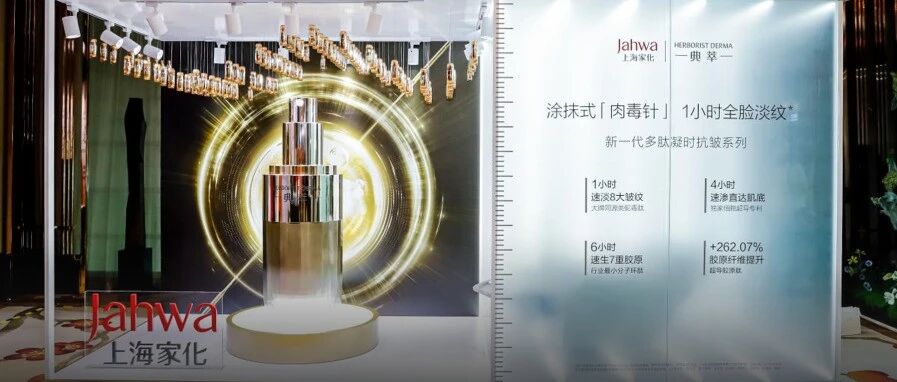
Core Viewpoint - Shanghai Jahwa is focusing on the CS channel after a significant increase in net profit in the first three quarters, aiming to leverage its product and channel strengths to reshape the entire value chain from brand to consumer [3][6]. Group 1: Market Insights - The CS channel has shown resilience and potential for growth, with many consumers still preferring in-store experiences and interactions with staff [4]. - The latest data indicates a recovery in the CS channel, with retail sales of cosmetics reaching 328.82 billion yuan in the first three quarters of 2025, a year-on-year increase of 3.9% [8]. - Despite a 2.8% decline in total sales, the decrease has narrowed significantly, indicating a shift towards the efficacy skincare era where in-store experiences are crucial for consumer trust [8][9]. Group 2: Strategic Initiatives - Shanghai Jahwa has recognized the importance of the CS channel and is implementing a dual strategy focusing on efficacy skincare and enhancing the in-store experience [11]. - The company has introduced the "Golden Chain Plan," a digital activation and incentive mechanism aimed at rebuilding the value chain of the CS channel [18][20]. - The plan addresses three key challenges: driving foot traffic to stores, simplifying product selection, and resolving pricing discrepancies between online and offline channels [19]. Group 3: Product Development - The new generation of peptide products from the brand "Dian Cui" is designed to meet the high demand for effective skincare solutions, drawing inspiration from medical beauty treatments [21]. - The unique technology behind the new products, such as the环二肽-1, offers significant advantages in terms of efficacy and penetration, enhancing the overall consumer experience [23][25]. - The comprehensive anti-aging system developed by the brand includes multiple active ingredients that work synergistically to improve skin quality, showcasing the brand's commitment to innovation [26]. Group 4: Future Outlook - The integration of the Golden Chain Plan and the new peptide series represents a systematic innovation around the CS channel, aiming to create a complete growth engine by aligning product, technology, experience, and data [29]. - This new operational structure is expected to enhance the CS channel's capabilities, making it more adaptable to modern retail demands [30]. - The anticipated launch of the new products in January 2026 is expected to generate significant market interest and potentially lead to the emergence of new bestsellers in the CS channel [30].


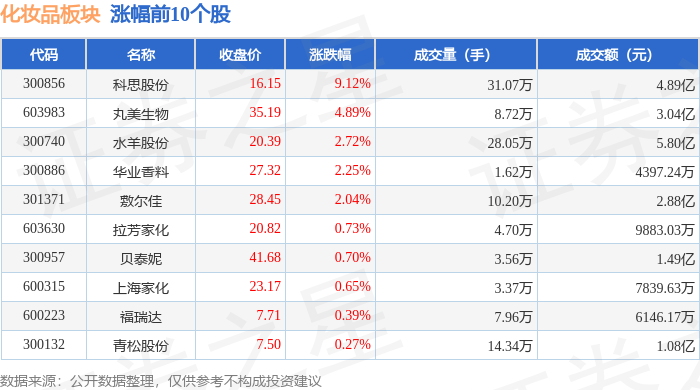
化妆品板块11月27日涨1.6%,科思股份领涨,主力资金净流出2533.51万元
Zheng Xing Xing Ye Ri Bao· 2025-11-27 09:13
Core Viewpoint - The cosmetics sector experienced a 1.6% increase on November 27, with Keshare leading the gains, while the overall market showed mixed results with the Shanghai Composite Index rising by 0.29% and the Shenzhen Component Index declining by 0.25% [1] Group 1: Market Performance - The Shanghai Composite Index closed at 3875.26, up 0.29% [1] - The Shenzhen Component Index closed at 12875.19, down 0.25% [1] - The cosmetics sector's individual stock performance is detailed in a table, highlighting significant gainers such as Keshare with a 9.12% increase [1] Group 2: Individual Stock Performance - Keshare (300856) closed at 16.15 with a 9.12% increase and a trading volume of 310,700 shares, amounting to a transaction value of 489 million yuan [1] - Marubi Biological (603983) closed at 35.19, up 4.89%, with a trading volume of 87,200 shares and a transaction value of 304 million yuan [1] - Other notable performers include Water Sheep (300740) with a 2.72% increase and a transaction value of 580 million yuan [1] Group 3: Capital Flow Analysis - The cosmetics sector saw a net outflow of 25.34 million yuan from institutional investors and 82.57 million yuan from retail investors, while individual investors contributed a net inflow of 108 million yuan [2] - A detailed table shows the capital flow for individual stocks, indicating that LaFang (603630) had a net inflow of 5.96 million yuan from institutional investors [3] - Other stocks like Shanghai Jahwa (600315) and Huaye Fragrance (300886) also experienced varying degrees of net inflow and outflow from different investor categories [3]



研判2025!中国爽肤水行业发展历程、市场政策、产业链图谱、市场规模、竞争格局及发展趋势分析:国产品牌加速突围,抢滩步伐加速[图]
Chan Ye Xin Xi Wang· 2025-11-27 01:48
Overview - The consumption of toner in China is expanding beyond female consumers as male skincare awareness increases, leading to a new growth point in the market [1][9] - The sales revenue of toner in China reached 20.863 billion yuan in 2021, with a year-on-year growth of 2.98%, but is projected to decline to 17.865 billion yuan in 2024, a decrease of 3.25% [1][10] - High-end toners account for approximately 55.47% of the market, while mass-market toners make up about 44.53% [1][10] Industry Development - The toner industry in China has evolved from basic cleansing products to a mature category with diverse sub-segments, entering a phase of high-quality development characterized by multiple innovations [4] - The rise of "ingredient-focused" consumers has led to the popularity of natural plant extracts and additive-free formulations, while new technologies like micro-ecological skincare and nano-encapsulation enhance product efficacy [4] - Online channels such as e-commerce and live streaming have emerged, allowing both domestic and international brands to expand their reach, while offline stores upgrade consumer experiences through smart skin testing [4] Market Policies - The Chinese government has implemented a series of regulations to enhance the development of the cosmetics industry, including guidelines for production quality management and safety assessments, pushing the toner industry towards standardization and sustainability [6] Industry Chain - The upstream of the toner industry includes suppliers of raw materials like glycerin, hyaluronic acid, and packaging materials, while the midstream involves research and production, and the downstream encompasses various sales channels including e-commerce and retail [4][8] Consumer Insights - The core consumer group for toners in China is predominantly female, accounting for 87.6%, but the male consumer segment is growing, with increasing acceptance of refreshing and non-greasy products [8] - The age demographic shows that consumers aged 18-35 represent over 68.3% of the market, with younger consumers particularly influenced by online marketing and product safety [8] Competitive Landscape - The toner market in China is highly competitive, featuring both international brands like L'Oréal and Shiseido, and domestic players such as Proya and Beitaini, with the latter gaining market share through high cost-performance ratios [10][11] - Proya, for instance, focuses on technology-driven skincare targeting young professional women, while Beitaini offers a range of skincare and cosmetic products, achieving significant revenue growth [11][12] Future Trends - The toner market is expected to move towards more specialized products catering to specific skin types and conditions, with a focus on "no-additive" formulations and the use of gentle, natural ingredients [14] - Brands will increasingly emphasize ingredient transparency and safety, enhancing consumer trust through clear sourcing and testing information [14]


化妆品板块11月26日跌1.1%,科思股份领跌,主力资金净流入795.52万元
Zheng Xing Xing Ye Ri Bao· 2025-11-26 09:12
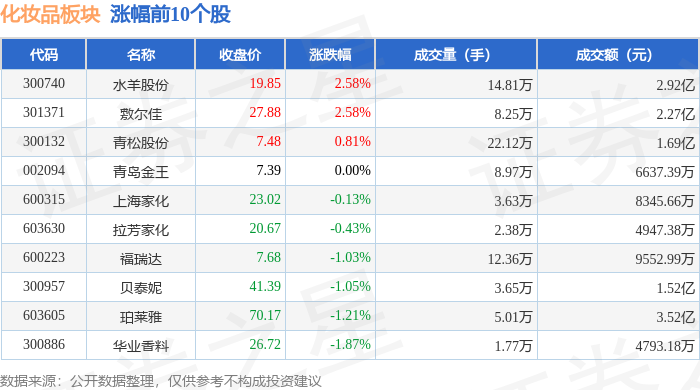
Market Overview - The cosmetics sector experienced a decline of 1.1% on November 26, with Kesheng Co. leading the drop [1] - The Shanghai Composite Index closed at 3864.18, down 0.15%, while the Shenzhen Component Index closed at 12907.83, up 1.02% [1] Individual Stock Performance - Notable gainers included: - Shuiyang Co. (300740) with a closing price of 19.85, up 2.58% [1] - Fulejia (301371) also rose by 2.58% to 27.88 [1] - Major decliners included: - Kesheng Co. (300856) fell by 4.88% to 14.80 [2] - Marubi Bio (603983) decreased by 2.95% to 33.55 [2] - Jiahen Home (300955) dropped by 2.85% to 37.84 [2] Trading Volume and Capital Flow - The cosmetics sector saw a net inflow of 7.95 million yuan from institutional investors, while retail investors contributed a net inflow of 7.35 million yuan [2] - However, there was a net outflow of 15.30 million yuan from speculative funds [2] Detailed Capital Flow Analysis - Key stocks with significant capital flow: - Jiahen Home (300955) had a net inflow of 18.65 million yuan from institutional investors, but a net outflow of 19.54 million yuan from retail investors [3] - Fulejia (301371) saw a net inflow of 12.12 million yuan from speculative funds, despite a net outflow from retail investors [3] - Other stocks like Qingdao King (002094) and Shanghai Jahwa (600315) also experienced mixed capital flows, indicating varied investor sentiment [3]


——美容护理行业25Q3业绩回顾:需求端稳健发展,业绩端分化加剧
Shenwan Hongyuan Securities· 2025-11-23 09:11
Investment Rating - The report maintains a "Positive" outlook on the beauty and personal care industry, highlighting robust demand and the continued rise of domestic brands [2]. Core Insights - The beauty care industry is experiencing a stable demand phase, with domestic leading brands expected to grow during the industry consolidation period [3]. - The cosmetics sector showed resilience during the off-peak season, with retail sales reaching 98.2 billion yuan from July to September, reflecting a single-digit year-on-year growth and an acceleration compared to the first half of 2025 [2][3]. - The report emphasizes the strong performance of domestic brands during the Double 11 shopping festival, with Proya ranking first in Tmall's beauty sales [2][11]. Summary by Sections Cosmetics Sector Performance - The cosmetics sector's key A-share companies reported an average revenue growth rate of around 3% in Q3 2025, with overall improvement in net profit [2]. - Proya's cumulative revenue for the first three quarters of 2025 was 7.098 billion yuan, a year-on-year increase of 1.89%, while its Q3 revenue was 1.736 billion yuan, down 11.63% year-on-year [16]. - Other notable performances include: - Ruifucheng: Q1-Q3 revenue of 2.138 billion yuan, up 85.3% year-on-year, with Q3 revenue of 819 million yuan, up 123.4% year-on-year [16]. - Marubi: Q1-Q3 revenue of 2.45 billion yuan, up 25.5% year-on-year, with Q3 revenue of 686 million yuan, up 14.28% year-on-year [16]. Medical Aesthetics Sector Performance - The medical aesthetics sector showed slight fatigue but experienced marginal improvements in Q3 2025 [2]. - Notable performances include: - Aimeike: Q1-Q3 revenue of 1.865 billion yuan, down 21.49% year-on-year, with Q3 revenue of 566 million yuan, down 21.27% year-on-year [2]. - Longzi: Q1-Q3 revenue of 4.328 billion yuan, up 0.9% year-on-year, with Q3 revenue of 1.539 billion yuan, up 11.9% year-on-year [2]. Investment Recommendations - The report recommends focusing on companies with a well-established channel and brand matrix, such as Maogeping, Shangmei, and Shanghai Jahwa, which are expected to see high GMV growth [2][20]. - Companies anticipated to show marginal improvements in performance include Proya, Marubi, and Ruifucheng [2]. - In the medical aesthetics sector, the report highlights Aimeike as a key recommendation, with Longzi suggested for further observation [2]. Market Trends - The domestic market share of leading brands is increasing, with the top ten domestic brands capturing 16.6% of the market share in skincare, up from 11.8% in 2023 [4]. - The report notes that the cosmetics retail sales in October 2025 grew by 9.6% year-on-year, indicating a recovery in demand driven by promotional events [10][11].

美容护理行业25Q3业绩回顾:需求端稳健发展,业绩端分化加剧
Shenwan Hongyuan Securities· 2025-11-23 07:43
Investment Rating - The report maintains a positive outlook on the beauty and personal care industry, indicating a "Buy" rating for key players in the sector [2]. Core Insights - The demand side of the beauty industry is showing robust growth, with domestic brands gaining market share and performing well during promotional events like Double 11 [3][4]. - The overall performance of the cosmetics sector is mixed, with some companies showing strong growth while others face challenges [3][4]. - The report highlights the increasing market share of domestic brands, with significant improvements in their competitive positioning against international brands [5][9]. Summary by Sections Industry Overview - The beauty industry is entering a stable growth phase, with domestic leading brands expected to grow during the industry consolidation period [4]. - The retail sales of cosmetics reached 98.2 billion yuan from July to September, showing a high single-digit year-on-year growth, and continued strong performance in October with a growth rate exceeding 9% [3][4]. Company Performance - **Polaire**: For the first three quarters of 2025, Polaire reported a cumulative revenue of 7.098 billion yuan (up 1.89% year-on-year) and a net profit of 1.026 billion yuan (up 2.65%) [18]. - **Ru Yuchen**: The company achieved a revenue of 2.138 billion yuan (up 85.3% year-on-year) in the first three quarters, with a net profit of 105 million yuan (up 81.6%) [18]. - **Marubi**: Reported a revenue of 2.45 billion yuan (up 25.5% year-on-year) for the first three quarters, with a net profit of 240 million yuan (up 2.1%) [19]. - **Shanghai Jahwa**: Revenue for the first three quarters was 4.961 billion yuan (up 10.8% year-on-year), with a net profit of 405 million yuan (up 149%) [20]. Market Trends - The report notes that domestic brands are increasingly capturing market share, with the top ten domestic brands holding five spots and a combined market share of 16.6%, up from 11.8% the previous year [5]. - The cosmetic sector's gross margin continues to improve, although rising sales expenses are impacting net profit margins [3][4]. Investment Recommendations - Key recommendations include focusing on companies with strong channel and brand matrices, such as Mao Ge Ping and Shangmei, and those expected to see marginal improvements in performance, like Polaire and Marubi [3][4]. - In the medical beauty sector, companies with high barriers to entry and strong profitability, such as Aimeike, are highlighted as potential investment opportunities [3][4].
上海家化(600315.SH):双十一全周期,公司线上GMV同比保持两位数增长
Ge Long Hui· 2025-11-21 08:00
Core Insights - The company anticipates a double-digit year-on-year growth in online GMV for the entire 2025 Double Eleven shopping period [1] - The Douyin channel is expected to see over 50% growth, while the Tmall channel's growth rate is projected to outperform the market average [1] Company Performance - Online GMV growth is projected to be in double digits for 2025 [1] - Douyin channel growth is forecasted to exceed 50% [1] - Tmall channel growth is expected to be better than the overall market growth [1]
化妆品板块11月20日跌2.85%,芭薇股份领跌,主力资金净流出3.77亿元
Zheng Xing Xing Ye Ri Bao· 2025-11-20 09:16
Market Overview - The cosmetics sector experienced a decline of 2.85% on November 20, with Bavi Co. leading the drop [1] - The Shanghai Composite Index closed at 3931.05, down 0.4%, while the Shenzhen Component Index closed at 12980.82, down 0.76% [1] Individual Stock Performance - Jiahen Home Cosmetics (300955) closed at 38.29, up 1.48% with a trading volume of 27,300 shares and a turnover of 103 million yuan [1] - Bavi Co. (920123) saw a significant drop of 9.28%, closing at 17.89 with a trading volume of 88,500 shares and a turnover of 163 million yuan [2] - Qingdao Kingway (002094) closed at 7.69, down 2.16%, with a trading volume of 214,700 shares and a turnover of 166 million yuan [1][2] Capital Flow Analysis - The cosmetics sector experienced a net outflow of 377 million yuan from institutional investors, while retail investors saw a net inflow of 323 million yuan [2] - The main capital inflow and outflow for various stocks indicate a mixed sentiment, with some stocks like Jiahen Home Cosmetics seeing a net inflow of 9.93 million yuan from institutional investors [3] Notable Stock Movements - Fuleida (600223) had a net outflow of 25.36 million yuan from institutional investors, but a net inflow of 9.99 million yuan from retail investors [3] - Kesheng Co. (300856) experienced a net outflow of 29.14 million yuan from institutional investors, while retail investors contributed a net inflow of 12.29 million yuan [3]


美容护理观察系列1:双11稳态与新变并存
Orient Securities· 2025-11-20 04:15
Investment Rating - The industry investment rating is "Positive (Maintain)" [6] Core Insights - The beauty and personal care sector is transitioning from "single functional consumption" to "composite efficacy + emotional consumption," indicating enhanced consumer resilience [4] - The beauty industry is no longer reliant on a single traffic window, with narratives around channel efficiency strengthening [4] - Leading brands exhibit stronger resilience, with a positive outlook on companies with robust brand assets that can capitalize on channel and product cycles [4] Summary by Sections Industry Overview - The Double 11 shopping festival saw a total e-commerce sales of 16,950 billion yuan, reflecting a year-on-year growth of 14.2% [8] - Beauty and personal care sales reached 991 billion yuan, growing by 11.65% [8] - Instant retail sales surged to 670 billion yuan, marking a remarkable growth of 138.4% [8] Market Dynamics - Tmall leads in high-end beauty sales, while Douyin is becoming a significant platform for domestic brands [8] - The top five beauty brands on Tmall include Proya, Estée Lauder, Lancôme, L'Oréal, and SkinCeuticals, with Proya maintaining the top position for three consecutive years [8] - Douyin's beauty sales rankings show Han Shu at the top, followed by Proya and L'Oréal [8] Company Performance - Leading brands like Up Beauty, Ruo Yu Chen, and Mao Ge Ping have shown impressive performance during the Double 11 event [8] - Up Beauty's sales increased by 145% year-on-year, with significant growth on both Tmall and Douyin [8] - Ruo Yu Chen's sales saw a staggering 35-fold increase year-on-year, with Douyin sales growing by over 100% [8]
上海家化跌2.00%,成交额5148.89万元,主力资金净流出550.92万元
Xin Lang Cai Jing· 2025-11-20 03:12
Core Viewpoint - Shanghai Jahwa's stock price has experienced fluctuations, with a year-to-date increase of 39.41% but a recent decline in the last five and twenty trading days [1][2]. Group 1: Stock Performance - As of November 20, Shanghai Jahwa's stock price was 23.52 CNY per share, with a market capitalization of 15.81 billion CNY [1]. - The stock has seen a net outflow of 5.51 million CNY in principal funds, with large orders accounting for 8.90% of total buying and 19.60% of total selling [1]. - Year-to-date, the stock has risen by 39.41%, but it has dropped by 4.39% in the last five trading days and 11.74% in the last twenty trading days [1]. Group 2: Financial Performance - For the period from January to September 2025, Shanghai Jahwa reported a revenue of 4.96 billion CNY, representing a year-on-year growth of 10.83%, and a net profit attributable to shareholders of 405 million CNY, which is a 149.12% increase year-on-year [2]. - The company has cumulatively distributed 3.595 billion CNY in dividends since its A-share listing, with 344 million CNY distributed in the last three years [3]. Group 3: Shareholder Information - As of September 30, 2025, the number of shareholders for Shanghai Jahwa was 29,600, a decrease of 21.58% from the previous period, while the average circulating shares per person increased by 27.52% to 22,704 shares [2]. - The second-largest circulating shareholder is Hong Kong Central Clearing Limited, holding 36.55 million shares, an increase of 3.77 million shares from the previous period [3].