Shanghai Jahwa(600315)

Search documents
化妆品板块1月26日跌1.56%,拉芳家化领跌,主力资金净流出1.18亿元
Zheng Xing Xing Ye Ri Bao· 2026-01-26 09:41
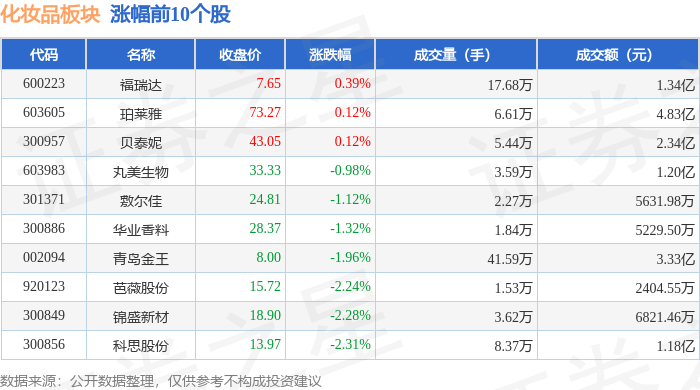
| 代码 | 名称 | 收盘价 | 涨跌幅 | 成交量(手) | 成交额(元) | | --- | --- | --- | --- | --- | --- | | 603630 | 拉芳家化 | 22.51 | -4.78% | 6.37万 | 1.45亿 | | 600315 | 上海家化 | 22.38 | -4.64% | 14.31万 | 3.24亿 | | 300740 | 水羊股份 | 23.72 | -3.58% | 15.25万 | 3.66亿 | | 300955 | 嘉亨家化 | 38.80 | -3.15% | - 3.76万 | 1.46亿 | | 300132 | 青松股份 | 8.72 | -2.46% | 25.95万 | 2.28亿 | | 300856 | 科思股份 | 13.97 | -2.31% | 8.37万 | 1.18亿 | | 300849 | 锦盛新材 | 18.90 | -2.28% | 3.62万 | 6821.46万 | | 920123 | 芭薇股份 | 15.72 | -2.24% | 1.53万 | 2404.55万 | | 002094 | 青岛金 ...




长城之下,共筑屏障:玉泽举办「修屏障 稳到底」新品发布会
Sou Hu Wang· 2026-01-26 09:18
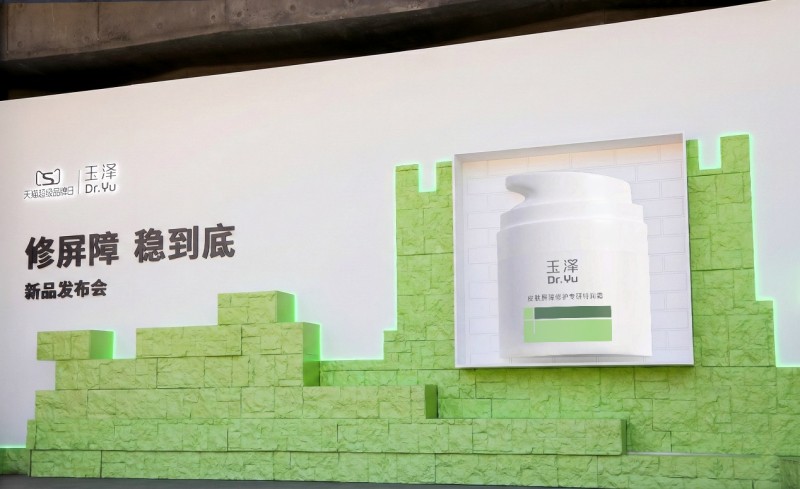
2026年1月20日,玉泽「修屏障 稳到底」新品发布会在金山岭长城脚下举行。在这一承载着中华文明守 护精神的重要地标前,玉泽以"屏障"为核心命题,将皮肤屏障研究、产品创新与文化象征融为一体,完 成了一次兼具科学深度与精神高度的品牌表达。 长城,作为守护疆域与文明的伟大工程,象征着稳固、坚守与延续;皮肤,作为人体最大的器官与第一 道防线,同样承担着抵御外界刺激、维系内在稳定的重要使命。玉泽将新品发布会选址于此,正是希望 通过这一跨越宏观文明与微观生命的隐喻,让"皮肤屏障"这一医学概念,被更直观、更深刻地理解与认 知。 一、玉泽23载笃行医研初心:从"医研长征"到"医研长城" 发布会现场,上海家化董事长兼首席执行官林小海在致辞中表示,长城所代表的守护精神,与上海家化 百余年来始终坚持的匠心与责任高度契合。自1898年创立以来,上海家化始终以匠心为根基,以科研创 新为脉络,守护一代代中国家庭的健康与美丽,而玉泽正是这百年匠心在新时代的延续与创新。 玉泽对皮肤屏障的系统研究始于2003年。彼时,上海家化与上海交通大学医学院附属瑞金医院皮肤科展 开深度医研合作,围绕皮肤屏障这一基础而关键的医学课题持续探索。首款屏障修护 ...
化妆品医美行业周报20260125:化妆品12月社零高增,Q4需求端景气度明显提升-20260125
Shenwan Hongyuan Securities· 2026-01-25 14:44
Investment Rating - The report maintains a "Positive" outlook on the cosmetics and medical beauty industry, indicating strong performance compared to the market [2]. Core Insights - The cosmetics and medical beauty sector has outperformed the market recently, with the Shenwan Beauty Care Index rising by 2.0% from January 16 to January 23, 2026, surpassing the Shenwan A Index by 0.8 percentage points [4][5]. - December 2025 saw a significant increase in social retail sales for cosmetics, reaching 38 billion yuan, with a growth rate of 8.8%, indicating robust demand even in the off-season. The overall growth rate for Q4 was 9.9%, significantly higher than the annual growth of 5.1% for 2025, driven by promotional events like Double 11 [10][17]. - The report anticipates continued high consumer demand in Q1 2026, supported by new product launches and regulatory approvals in the medical beauty sector [10]. Summary by Sections Industry Performance - The cosmetics and medical beauty sector has shown strong performance, with the Shenwan Cosmetics Index increasing by 2.6% and the Shenwan Personal Care Index rising by 4.2%, both outperforming the Shenwan A Index [4][5]. Key Company Reviews - Lin Qingxuan (2657HK) is highlighted as a benchmark in the high-end domestic skincare market, with revenue projected to grow from 690 million yuan in 2022 to 1.21 billion yuan in 2024, representing a CAGR of 32.7%. The company is expected to turn a profit of 187 million yuan in 2024, a 120% increase year-on-year [11][12]. - Langzi Co., Ltd. (002612.SZ) forecasts a net profit of 900 million to 1.05 billion yuan for 2025, reflecting a year-on-year growth of 245.25% to 302.80% [4]. - Qingsong Co., Ltd. (300132.SZ) anticipates a net profit of 130 million to 165 million yuan for 2025, with a growth rate of 137.73% to 201.74% [4]. Market Trends - The report notes that the high-end skincare market is expanding, with the market size expected to reach 218.5 billion yuan by 2029. The concept of "oil-based skincare" is becoming mainstream, driving growth in the facial oil segment, which is projected to grow at a CAGR of 42.8% from 2019 to 2024 [12][14]. - E-commerce channels are increasingly important, with Lin Qingxuan achieving a 65.4% online revenue share in H1 2025, leveraging platforms like Douyin and Tmall for growth [13]. Sales Data - In December 2025, the total retail sales of cosmetics reached 38 billion yuan, with a year-on-year growth of 8.8%. The overall retail sales for cosmetics in 2025 were 465.3 billion yuan, reflecting a 5.1% increase [17][21].



美妆品牌抢滩药店新渠道
经济观察报· 2026-01-25 04:58
Core Viewpoint - The OTC channel presents significant opportunities for beauty brands, offering professional endorsements, precise targeting of skincare needs, and immediate product experiences, but it also poses challenges due to strict professional requirements and a talent shortage in the industry [1][2][3]. Group 1: Market Entry and Growth - By 2025, over six domestic cosmetic companies are expected to enter the OTC channel, marking it as the "Year of Domestic Beauty OTC Layout" [2]. - Leading domestic beauty brand Proya (603605.SH) announced its entry into the OTC channel in January 2026, joining a growing list of companies [2]. - Brands like Winona and Kefu Beauty have been early entrants into the OTC channel, with Winona's sales nearing 1 billion yuan in 2023, capturing over 60% of the market share in this channel [5]. Group 2: Strategic Developments - In April 2025, Furuida Bio announced plans to accelerate its OTC channel development, aiming to cover 10,000 drugstore chains and launch 100 "cosmetic and medicinal" SKUs [5]. - Companies are increasingly focusing on integrating with the professional environment of pharmacies rather than merely distributing products [5]. - Proya is preparing multiple products for the OTC channel, emphasizing the importance of medical device products as a foundation for entry [6]. Group 3: Market Potential and Challenges - The OTC channel has approximately double the growth potential, with Winona targeting to cover 250,000 pharmacies [8]. - As of December 2024, there are about 705,000 licensed drug retail enterprises in China, with Winona covering over 110,000, representing about one-seventh of the total retail pharmacy stores [9]. - The demand for beauty products in pharmacies is rising due to pressures on traditional pharmacy profits and the need for transformation [9]. Group 4: Profitability and Talent Shortage - Medical device products have a significantly higher gross margin, averaging 77%-83%, compared to regular cosmetic products [9]. - The beauty industry faces a talent shortage in the pharmacy channel, as many brands rely on pharmacists who must understand both pharmaceuticals and cosmetics [10]. - Companies like Betaini are addressing this by training pharmacy staff to enhance customer trust and provide professional consultations [10][11].


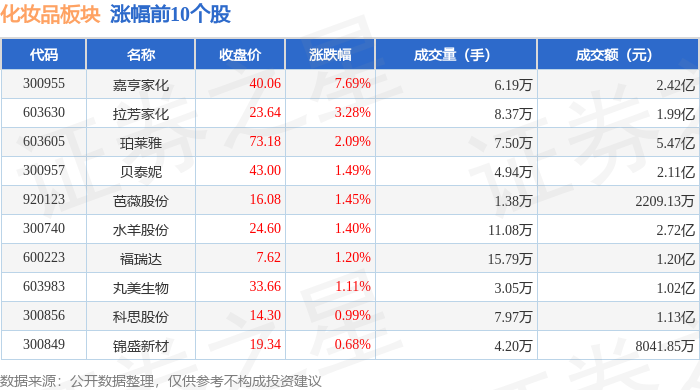
化妆品板块1月23日涨1.34%,嘉亨家化领涨,主力资金净流出3535.3万元
Zheng Xing Xing Ye Ri Bao· 2026-01-23 09:07
Group 1 - The cosmetics sector experienced a rise of 1.34% on January 23, with Jiaheng Jiahua leading the gains [1] - The Shanghai Composite Index closed at 4136.16, up 0.33%, while the Shenzhen Component Index closed at 14439.66, up 0.79% [1] - Jiaheng Jiahua's stock price increased by 7.69% to 40.06, with a trading volume of 61,900 shares and a transaction value of 242 million yuan [1] Group 2 - The cosmetics sector saw a net outflow of 35.35 million yuan from institutional investors, while retail investors had a net inflow of 31.72 million yuan [2] - Key stocks in the sector included Qingdao Jinwang, which had a net inflow of 13.85 million yuan from institutional investors, but a net outflow of 21.21 million yuan from speculative funds [3] - Jiaheng Jiahua had a net inflow of 11.11 million yuan from institutional investors, but also saw a net outflow of 1.77 million yuan from speculative funds [3]


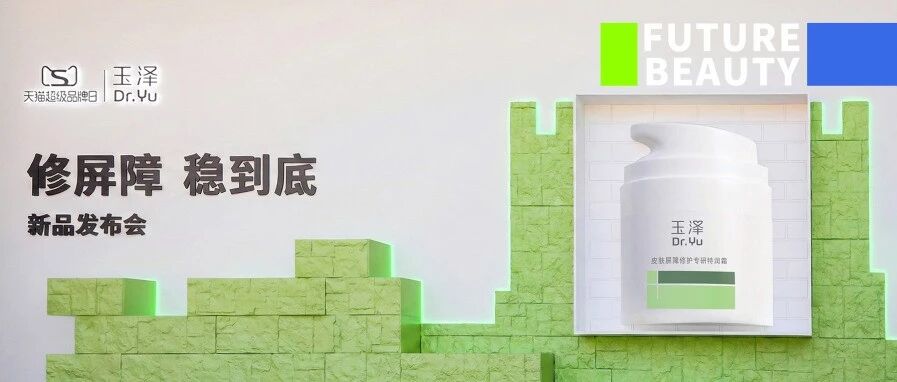
深耕皮肤屏障23年,玉泽如何造出“医研长城”?
FBeauty未来迹· 2026-01-23 09:03
Core Viewpoint - The article emphasizes the importance of skin barrier repair in the skincare industry, positioning it as a long-term commitment akin to the Great Wall of China, which symbolizes protection and stability [4][12][36]. Group 1: Company Development and Research - Yuze has been focused on skin barrier repair for 23 years, undergoing a long phase of high investment and slow returns, which has not been fully understood by the market [6][10]. - The initial research was based on clinical practices at Ruijin Hospital, where skin barrier issues were not yet mainstream, highlighting the need for scientific and sustainable daily care [6][8]. - The first skin barrier repair product took six years to develop, involving 1,386 clinical validations, and over 5,000 clinical studies have been conducted in collaboration with more than 40 top-tier hospitals [8][12]. Group 2: Product Development Stages - Yuze's development is divided into four stages: 1. Medical research origin phase, focusing on establishing evidence-based standards [10]. 2. Product and application expansion phase, validating the skin barrier repair concept [10]. 3. Formation of a technical system, marked by the patent of PBS technology, transitioning to systematic technical accumulation [11]. 4. Current phase centered on systematic and long-term principles, emphasizing clinical insights and evidence-based standards [11][12]. Group 3: Market Position and Strategy - Yuze's commitment to skin barrier repair has created a competitive advantage in a rapidly changing industry, allowing for sustained output and continuous validation [14][36]. - The launch of the second-generation skin barrier repair cream in 2025 achieved over 100 million yuan in sales in its first year, becoming a significant growth driver for the company [12][36]. - The brand's long-term focus on skin barrier repair is seen as a strategic choice that aligns with public health values, addressing chronic skin conditions that require ongoing care [34][36]. Group 4: Public Health and Social Responsibility - The establishment of the "Shanghai Jahwa-Ruijin Guangci Skin Disease Charity Fund" aims to assist economically disadvantaged patients with skin diseases, creating a positive feedback loop between public health, research, and brand development [32][34]. - The article highlights the need for a comprehensive understanding of skin health as a public health issue, emphasizing the importance of stable skin barrier maintenance over quick fixes [34][36]. Group 5: Cultural and Educational Initiatives - Yuze's collaboration with the Great Wall Small Station for the "Barrier Art Exhibition" aims to elevate the understanding of skin health and repair as a cultural action, reinforcing the brand's image as a protector of life [35][36]. - The release of the "National Skin Barrier Health Green Book" seeks to establish a framework for understanding skin barriers that is accessible to the public while remaining grounded in medical logic [24][32].
2026年中国化妆品展望:为高质量增长重置,ROI改善利好品牌领导者
Goldman Sachs· 2026-01-22 07:45
Investment Rating - The report upgrades MGP to Buy from Neutral, highlighting its sustainable growth and resilient margins in the premium beauty market [10] - Giant Biogene is rated Buy, with expectations of a gradual recovery in sales and strong long-term growth potential [16] - Shanghai Jahwa is also rated Buy, indicating a turnaround in its skincare business and solid growth prospects [22] Core Insights - The China cosmetics industry is expected to see sustained momentum driven by higher-quality channels and a focus on new product cycles [3] - The government's anti-involution measures are likely to increase traffic acquisition costs, impacting sales on platforms like Douyin [3] - There is a shift towards reliability and brand trust in consumer preferences, prompting companies to innovate and upgrade their product offerings [4] Summary by Sections Key Trends - Higher-quality channels are expected to maintain momentum, particularly on Tmall, supported by government measures [3] - The product landscape is shifting towards proven efficacy and brand trust, with companies innovating to create new value propositions [4] Company-Specific Insights - MGP is positioned for sustainable growth with a projected 34%/38% sales/NI CAGR from 2021-2025, and 23%/22% from 2025-2027 [10][11] - Giant Biogene anticipates a sales decline in the short term but expects recovery driven by its leading brand position and product pipeline [16] - Shanghai Jahwa is experiencing strong growth in its key brands, with a projected CAGR of 2%/34% for its personal care/cosmetics segment from 2025-2027 [22] Valuation Methodology - MGP's target price is set at HK$105 based on a 28x 2027E P/E, reflecting its high growth profile [12] - Giant Biogene's target price is HK$46, based on a 22x 2027E P/E, indicating a recovery in its sales profile [17] - Shanghai Jahwa's target price is RMB 28, based on a 30x 2027E P/E, reflecting its improving sales and net profit profile [23]
2025年中国化妆品交易额突破1.1万亿元 国货品牌竞争力持续领跑
Zheng Quan Ri Bao Wang· 2026-01-21 11:41
Core Insights - The 2025 China Cosmetics Industry Data Release Conference highlighted the industry's significant growth and transformation, emphasizing the importance of high-quality development amidst global economic uncertainties [1][2] Group 1: Market Overview - By 2025, the Chinese cosmetics market is projected to reach a record high of 1.1 trillion yuan (approximately 1104.25 billion yuan), with a year-on-year growth of 2.83% [1] - Domestic brands continue to lead in competitiveness, increasing their market share to 57.37% [1] - Online sales are expected to reach 721.77 billion yuan, growing by 4.45% and accounting for 65.36% of total sales, while offline sales remain stable at 382.47 billion yuan [1] Group 2: Industry Trends - The market concentration is increasing, with over 60% of the top 500 brands experiencing positive growth, while only 26% of brands ranked below 500 show growth [2] - The industry is transitioning from total expansion to structural optimization, focusing on depth competition rather than breadth [2] - The number of eliminated brands reached 26,900, indicating a rationalization of competition within the industry [2] Group 3: Innovation and Development - The conference featured discussions on the integration of AI and other technologies in the cosmetics industry, highlighting innovative practices that drive brand growth [3] - Media's role in promoting high-quality development in the beauty industry was also emphasized, showcasing innovative pathways for industry growth [2][3]


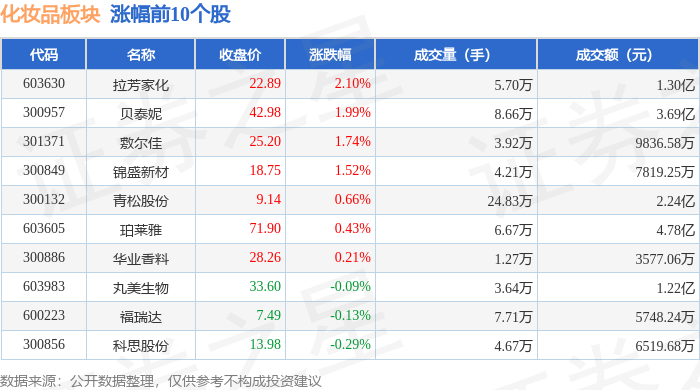
化妆品板块1月21日涨0.25%,拉芳家化领涨,主力资金净流出5552.25万元
Zheng Xing Xing Ye Ri Bao· 2026-01-21 09:08
Group 1 - The cosmetics sector experienced a slight increase of 0.25% on January 21, with Lafang Jiahua leading the gains [1] - The Shanghai Composite Index closed at 4116.94, up 0.08%, while the Shenzhen Component Index closed at 14255.12, up 0.7% [1] - Lafang Jiahua's closing price was 22.89, reflecting a rise of 2.10%, with a trading volume of 57,000 shares and a transaction value of 130 million yuan [1] Group 2 - The cosmetics sector saw a net outflow of 55.52 million yuan from institutional investors, while retail investors had a net inflow of 30.86 million yuan [2] - The trading data for various companies showed mixed performance, with some companies like Betaini and Lafang Jiahua experiencing net outflows from institutional investors [3] - Betaini had a net outflow of 14.09 million yuan from institutional investors, while Lafang Jiahua saw a net inflow of 13.43 million yuan [3]

化妆品板块1月20日涨1.11%,上海家化领涨,主力资金净流入3030.2万元
Zheng Xing Xing Ye Ri Bao· 2026-01-20 08:59
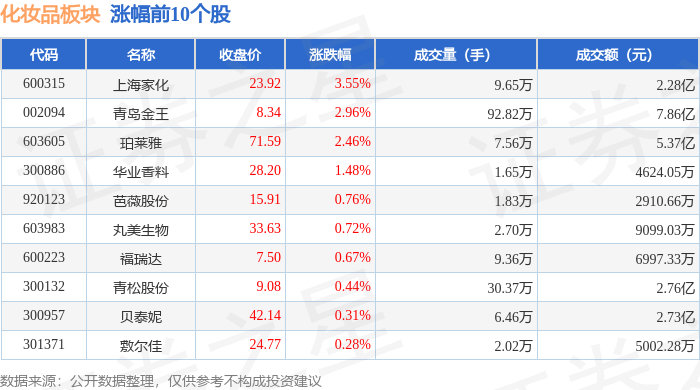
Group 1 - The cosmetics sector experienced a rise of 1.11% on January 20, with Shanghai Jahwa leading the gains [1] - The Shanghai Composite Index closed at 4113.65, down 0.01%, while the Shenzhen Component Index closed at 14155.63, down 0.97% [1] - Key stocks in the cosmetics sector showed varied performance, with Shanghai Jahwa closing at 23.92, up 3.55%, and Qingdao Kingking at 8.34, up 2.96% [1] Group 2 - The cosmetics sector saw a net inflow of 30.3 million yuan from institutional investors, while retail investors experienced a net outflow of 54.5 million yuan [2] - Notable individual stock performances included Shanghai Jahwa with a net inflow of 20.5 million yuan from institutional investors, and Qingdao Kingking with a net inflow of 23.3 million yuan [3] - The overall market sentiment reflected a mixed response, with some stocks like Banlaya experiencing significant net outflows from both institutional and retail investors [3]