Zhongtai Securities(600918)

Search documents
建信上海金ETF(518860)近10日净流入超1.7亿元,12月降息预期升温,机构:中长期来看黄金仍具备显著配置价值
Sou Hu Cai Jing· 2025-11-27 02:20
Core Insights - The recent trend shows significant inflows into the Jianxin Shanghai Gold ETF, with a total of 172 million yuan over the past 10 trading days, indicating strong investor interest in gold assets [1] - The Federal Reserve is leaning towards a rate cut in December, which could further support gold prices, as multiple institutions predict an increase in gold prices if a 50 basis point cut is confirmed [1] - The demand for safe-haven assets like gold is expected to persist due to geopolitical tensions, high U.S. debt, and elevated stock valuations, despite potential short-term price adjustments [1] Group 1 - The Jianxin Shanghai Gold ETF (518860) has seen net inflows for 7 out of the last 10 trading days, totaling 172 million yuan [1] - Federal Reserve Governor Christopher Waller supports a rate cut in December, citing stable inflation and concerns about the labor market [1] - Goldman Sachs predicts that the Fed may initiate a rate cut in December, with further cuts expected in 2025, potentially lowering the benchmark rate to the 3%-3.25% range [1] Group 2 - According to Zhongjin Company, gold prices have been rising since 2022 due to geopolitical factors and increasing U.S. debt, with central bank purchases being a major demand driver [2] - Some central banks are temporarily reducing gold holdings as their gold-to-reserve asset ratio exceeds targets, but overall, there is still potential for increased gold allocation by global central banks [2] - The outlook for 2026 suggests that cyclical demand and structural trends will continue to drive gold and silver prices upward [2]


中泰证券:首予奇瑞汽车(09973)“买入”评级 国内电动、智能化整合初见成效
智通财经网· 2025-11-27 01:23
Core Viewpoint - Zhongtai Securities initiates a "Buy" rating for Chery Automobile (09973), highlighting its strong export capabilities and first-mover advantage, with expectations for simultaneous growth in volume and profit due to orderly advancement of domestic new energy brands and deep collaboration with Huawei [1] Group 1: Industry Insights - The shift in core capabilities for automakers emphasizes demand control and the pace of electrification as critical for market share growth, moving away from traditional product cycles [2] - The competitive landscape has evolved post-2021, with domestic and joint venture brands increasing their market share through strategic adjustments [2] Group 2: Growth Review - Chery's market share has significantly increased since 2017, transitioning from reliance on low-cost small cars to a focus on quality and export growth [3] - The company has experienced a resurgence and growth phase from 2017 to 2021, marked by improved product strength and successful sub-brand strategies [3] - The current explosive growth phase (2022-present) is characterized by technological advancements and a rapid transition to new energy vehicles, leading to record sales [3] Group 3: Current Development Status - Chery's internal combustion vehicle lineup, particularly the Aiyre and Ruihu series, continues to perform well, supporting overall growth [4] - The Wind and Cloud sub-brand is beginning to show results in the new energy transition, while the Jietu and Zhijie brands are developing independently [4] - Financially, Chery is projected to achieve revenues of 269.9 billion yuan in 2024, a year-on-year increase of 65.4%, and a net profit of 14.14 billion yuan, up 18.3% year-on-year [4] Group 4: Core Competitiveness - Chery's first-mover advantage in exports has created a strong competitive moat, with leading engine technology and smart capabilities enhanced by Huawei [5] - The company has established a stable increase in export volumes, focusing on regions such as Europe, Latin America, and Southeast Asia, with overseas production capacity reaching approximately 1 million units [5] - The new Kunpeng engine boasts a thermal efficiency of 48%, the highest globally, with production capacity expected to double by 2026 [5] Group 5: Future Outlook - Chery plans to focus on the Wind and Cloud brands for market penetration, with significant advancements in technology and product offerings [6] - The company aims to enhance its domestic oil vehicle market share, which has increased by 4.1 percentage points over the past three years, positioning it as the second-largest among domestic brands [6] - Continued expansion in key overseas markets is anticipated to contribute positively to profits [6]
中泰证券:首予奇瑞汽车“买入”评级 国内电动、智能化整合初见成效
Zhi Tong Cai Jing· 2025-11-27 01:21
Core Viewpoint - Zhongtai Securities initiates a "Buy" rating for Chery Automobile, highlighting its strong export capabilities and first-mover advantage, with expectations for simultaneous growth in volume and profit due to orderly domestic new energy brand advancement and deep collaboration with Huawei [1] Group 1: Industry Analysis - The shift in core capabilities for automakers emphasizes demand control and the pace of electrification as critical for market share growth, moving away from traditional product cycles [2] - The competitive landscape has evolved post-2021, with domestic and joint ventures increasing market share through strategic adjustments [2] Group 2: Growth Review - Chery's market share has significantly increased since 2017, transitioning from reliance on low-cost vehicles to a focus on quality and exports, leading to record sales [3] - The company has experienced a growth phase from 2022 onwards, marked by technological advancements and a strong export performance, making it the top Chinese brand in exports [3] Group 3: Current Development - Chery's internal combustion engine (ICE) vehicles continue to perform well, with the Wind and Cloud series contributing to both volume and profit growth [4] - Financially, Chery is projected to achieve revenues of 269.9 billion yuan in 2024, a year-on-year increase of 65.4%, and a net profit of 14.14 billion yuan, up 18.3% [4] Group 4: Competitive Advantages - Chery's first-mover advantage in exports has created a strong competitive moat, with leading engine technology and collaboration with Huawei enhancing its smart capabilities [5] - The new Kunpeng engine boasts a thermal efficiency of 48%, with production capacity expected to reach 1 million units by 2026 [5] Group 5: Future Outlook - Chery plans to focus on the Wind and Cloud brands for market capture, with significant improvements in technology and product offerings aimed at meeting consumer demands [6] - The company has seen a 4.1 percentage point increase in domestic market share for ICE vehicles over the past three years, positioning it as the second-largest domestic brand [6] - Continued expansion in key overseas markets such as Europe, Latin America, and Southeast Asia is expected to contribute to profit growth [6]
中泰证券助恒坤新材成功上市
Da Zhong Ri Bao· 2025-11-26 22:34
Group 1 - Xiamen Hengkang New Materials Technology Co., Ltd. successfully listed on the Shanghai Stock Exchange's Sci-Tech Innovation Board, raising 1.01 billion yuan [1] - Hengkang New Materials focuses on the research, production, and sales of key materials for integrated circuits, including photoresists and precursors, and is one of the few companies capable of developing and mass-producing 12-inch integrated circuit wafer manufacturing materials [1] - The company has contributed significantly to the domestic integrated circuit industry by addressing critical material challenges and is expected to expand its market share amid the domestic production wave [1] Group 2 - Zhongtai Securities played a key role in Hengkang's successful IPO, completing the process in less than 11 months and ranking third in the industry for both the number and scale of Sci-Tech Innovation Board IPOs since 2025 [2] - The firm has established multiple industry groups focused on "hard technology" and has provided comprehensive financial services to technology innovation enterprises [2] - Zhongtai Securities aims to enhance its investment banking capabilities and continue supporting the real economy by offering a full-chain, one-stop financial service [2]
中泰证券:公司高度重视市值管理工作
Zheng Quan Ri Bao Wang· 2025-11-26 13:41
Core Viewpoint - The company emphasizes the importance of market value management and has implemented various strategies to enhance shareholder returns and transparency [1] Group 1: Market Value Management - The company has established a market value management system and an action plan titled "Improving Quality, Efficiency, and Returns" [1] - Continuous cash dividends have been implemented since the company's listing, totaling 1.833 billion yuan [1] - The company has initiated a share repurchase program with a total amount of 300 million yuan [1] Group 2: Transparency and Investor Relations - The company is committed to improving the quality of information disclosure [1] - There is an active effort to strengthen investor relations management [1] - The company aims to enhance transparency to foster better understanding and recognition among investors [1]
中泰证券60亿定增落地,年内多家上市券商再融资提速,监管审慎把关风向不改
Sou Hu Cai Jing· 2025-11-26 12:56
Core Viewpoint - Zhongtai Securities has successfully completed its first equity refinancing since its listing in June 2020, raising a total of 6 billion yuan, with a net amount of 5.919 billion yuan after deducting issuance costs [2][5] Group 1: Fundraising Details - The issuance price was set at 6.02 yuan per share, attracting 15 investors, with the largest being the controlling shareholder, Zaozhuang Mining Group, which subscribed for approximately 360 million shares, amounting to 2.165 billion yuan [3][4] - Other notable investors included public funds and private equity, with significant subscriptions from Caitong Fund and Nord Fund, among others [3][4] Group 2: Shareholder Structure Changes - Following the completion of the issuance, Zaozhuang Mining Group's shareholding increased from 32.84% to 33.25%, while other state-owned entities also saw increases in their shareholding percentages [4] Group 3: Use of Proceeds - The net proceeds of 5.919 billion yuan will be used to increase the company's capital, focusing on alternative investments, bond investments, market-making, and wealth management, aiming to optimize revenue structure and enhance profitability [5] Group 4: Industry Context and Regulatory Environment - The successful completion of Zhongtai Securities' fundraising reflects a broader trend of accelerated refinancing among listed securities firms since 2025, with several firms announcing similar plans [6] - Regulatory scrutiny has intensified, emphasizing the necessity of fundraising and the alignment of capital use with business development, as seen in the inquiries faced by Zhongtai Securities prior to the issuance [7]


15名投资者认购,中泰证券60亿元定增“尘埃落定”
Shang Hai Zheng Quan Bao· 2025-11-26 09:19
Core Viewpoint - Zhongtai Securities successfully completed a private placement of A-shares, raising nearly 6 billion yuan, with significant participation from its controlling shareholder and various institutional investors [2][3]. Group 1: Fundraising Details - The issuance price was set at 6.02 yuan per share, with a total of 996,677,740 shares issued, raising approximately 6 billion yuan [3]. - The controlling shareholder, Zaomining Group, subscribed for about 360 million shares, amounting to approximately 2.165 billion yuan [3]. - A total of 15 investors participated in the subscription, including notable institutions like E Fund and Caitong Fund [3][4]. Group 2: Use of Proceeds - The net proceeds from the fundraising will be used to increase the company's capital, focusing on alternative investment, bond investment, market-making, and wealth management businesses [4][5]. - Specific allocations include up to 1.5 billion yuan for information technology and compliance risk control, up to 1 billion yuan for alternative investment and market-making, and up to 500 million yuan for purchasing government bonds and wealth management [5][7]. Group 3: Industry Context - The securities industry has seen a revival in refinancing activities this year, with other firms like Nanjing Securities and Tianfeng Securities also making progress in their private placements [8]. - The recent trend indicates that refinancing policies for securities firms may experience moderate relaxation, provided that the financing is deemed reasonable and necessary [8].
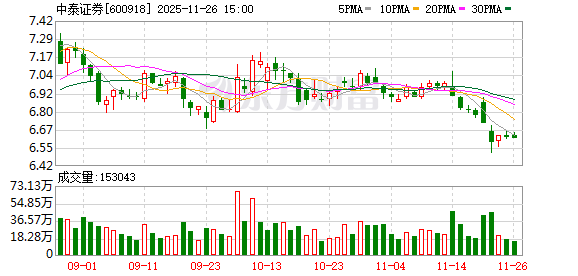
60亿,中泰证券再融资完成
Zhong Guo Ji Jin Bao· 2025-11-26 05:35
Core Viewpoint - Zhongtai Securities has successfully completed a private placement of 6 billion yuan, significantly enhancing its capital strength and attracting investments from various institutional investors, including its controlling shareholder, Zaozhuang Mining Group [1][2]. Group 1: Fundraising Details - The private placement involved issuing 996.68 million shares at a price of 6.02 yuan per share, raising nearly 6 billion yuan [1]. - The controlling shareholder, Zaozhuang Mining Group, subscribed for approximately 2.165 billion yuan worth of shares, with a lock-up period of 60 months [2]. - Other investors include public funds, private funds, and securities asset management companies, with a lock-up period of 6 months for their investments [1][2]. Group 2: Use of Proceeds - The net proceeds from the fundraising will be used to increase the company's capital, focusing on alternative investment, bond investment, market-making, and wealth management businesses [2][3]. - Specific allocations include up to 1.5 billion yuan for information technology and compliance risk control, up to 1 billion yuan each for alternative investment and market-making, and up to 500 million yuan each for purchasing government bonds and wealth management [3][4]. - The total planned investment amounts to no more than 6 billion yuan, which will also include debt repayment and supplementing other operating funds [4]. Group 3: Financial Impact - As of the third quarter, Zhongtai Securities reported a net asset of 42.335 billion yuan and net capital of 27.272 billion yuan, indicating that the new fundraising will significantly bolster these figures [4]. - The trend of refinancing among securities firms is evident, with several firms, including Tianfeng Securities and Nanjing Securities, also completing or advancing their fundraising efforts this year [4].
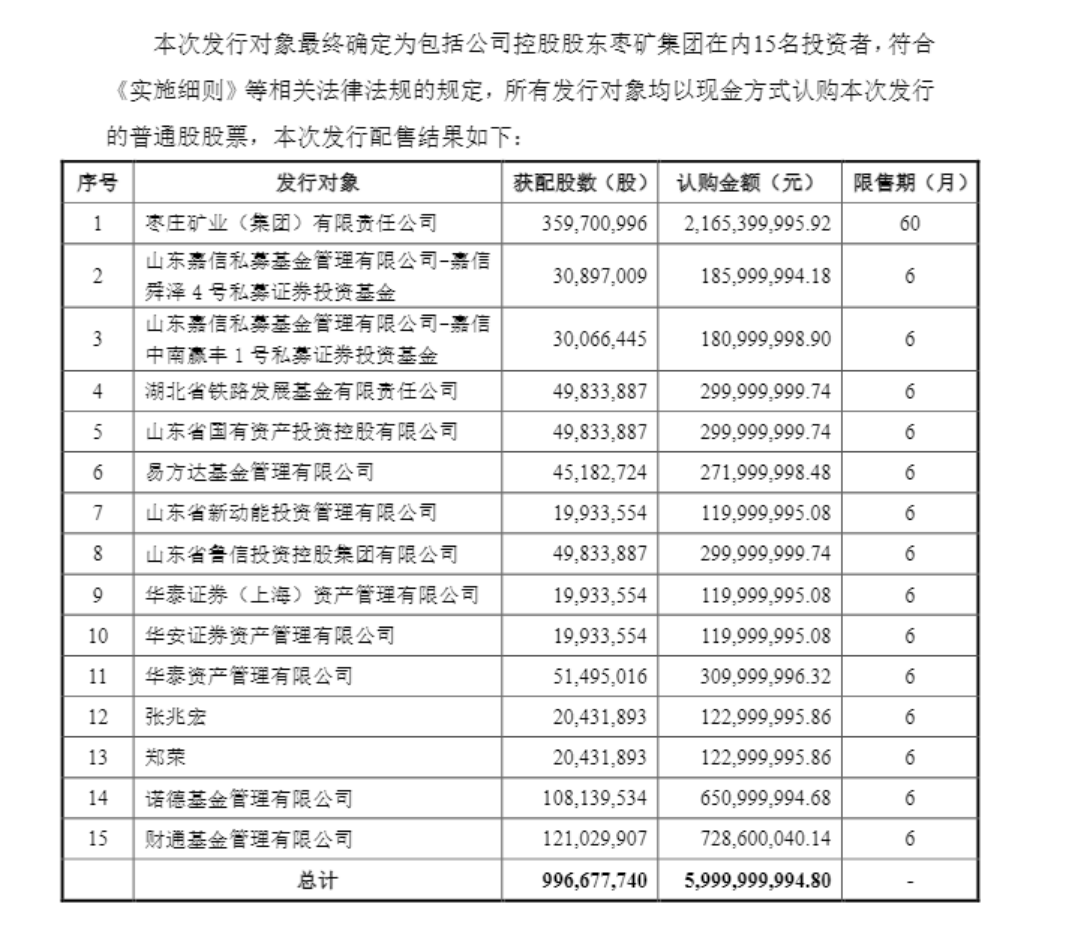
60亿!中泰证券再融资完成
Zhong Guo Ji Jin Bao· 2025-11-26 04:49
Core Viewpoint - Zhongtai Securities has successfully completed a private placement of 6 billion yuan, significantly enhancing its capital strength and attracting investments from various institutional investors, including its controlling shareholder, Zaozhuang Mining Group [2][3]. Group 1: Fundraising Details - The private placement involved issuing 996.68 million shares at a price of 6.02 yuan per share, raising nearly 6 billion yuan [2]. - The controlling shareholder, Zaozhuang Mining Group, subscribed for approximately 2.165 billion yuan worth of shares, with a lock-up period of 60 months [3]. - Other investors include public funds, private funds, and securities asset management companies, all with a lock-up period of 6 months [2][3]. Group 2: Use of Proceeds - The net proceeds from the fundraising will be used to increase the company's capital, focusing on alternative investment, bond investment, market-making, and wealth management businesses [2][5]. - Specific allocations include up to 1.5 billion yuan for information technology and compliance risk control, up to 1 billion yuan each for alternative investment and market-making, and up to 500 million yuan each for purchasing government bonds and wealth management [4][5]. Group 3: Financial Impact - Following the fundraising, Zhongtai Securities' net assets and net capital are expected to increase significantly, with the company's net assets reported at 42.335 billion yuan and net capital at 27.272 billion yuan prior to the placement [5]. - The private placement is part of a broader trend in the brokerage industry, with several firms, including Tianfeng Securities and Nanjing Securities, also pursuing similar fundraising efforts this year [5].
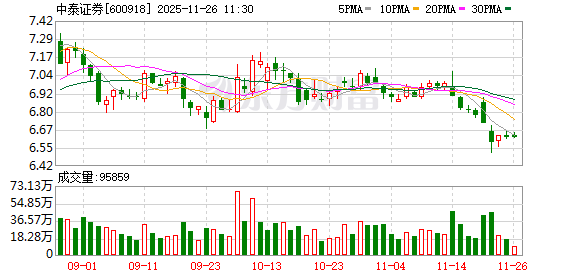
60亿!中泰证券再融资完成
中国基金报· 2025-11-26 04:45
Core Viewpoint - Zhongtai Securities has successfully completed a private placement of 6 billion yuan, significantly enhancing its capital strength, with major investments from its controlling shareholder and various institutional investors [2]. Summary by Sections Private Placement Details - The private placement involved issuing approximately 996.68 million shares at a price of 6.02 yuan per share, raising nearly 6 billion yuan [2]. - The controlling shareholder, Zaozhuang Mining Group, subscribed for about 2.165 billion yuan worth of shares, with a lock-up period of 60 months [3]. - Other investors include public funds, private funds, and securities asset management companies, with a lock-up period of 6 months for their shares [2][3]. Fund Utilization - The net proceeds from the fundraising will be used to increase the company's capital, focusing on alternative investment, bond investment, market-making, and wealth management businesses [2][4]. - Specific allocations include up to 1.5 billion yuan for information technology and compliance risk control, up to 1 billion yuan each for alternative investment and market-making, and up to 500 million yuan each for purchasing government bonds and wealth management [4][5]. Financial Impact - As of the third quarter, Zhongtai Securities reported a net asset of 42.335 billion yuan and a net capital of 27.272 billion yuan, indicating that the 6 billion yuan fundraising will significantly enhance these figures [5]. - The private placement is part of a broader trend in the securities industry, with several firms, including Tianfeng Securities and Nanjing Securities, also pursuing similar fundraising efforts this year [5].