
Bank Of Jiangsu(600919)

Search documents
A股银行股走弱,浦发银行跌超3%
Ge Long Hui A P P· 2025-09-12 05:51
Group 1 - A-shares of bank stocks weakened, with notable declines in several banks including Shanghai Pudong Development Bank, which fell over 3% [1] - Qilu Bank experienced a decline of 2%, while other banks such as Chongqing Rural Commercial Bank, Chengdu Bank, and others saw drops exceeding 1% [1] - The overall market performance for these banks indicates a bearish trend in the banking sector [1] Group 2 - Shanghai Pudong Development Bank reported a decline of 3.68%, with a total market capitalization of 414.8 billion [2] - Qilu Bank's stock decreased by 2.07%, with a market value of 35 billion [2] - Other banks like Chongqing Rural Commercial Bank and Chengdu Bank also reported declines of 1.81% and 1.67% respectively, with market capitalizations of 73.8 billion and 77.6 billion [2]







“城商行一哥”易主 北京银行为何被超越
Nan Fang Du Shi Bao· 2025-09-11 23:09
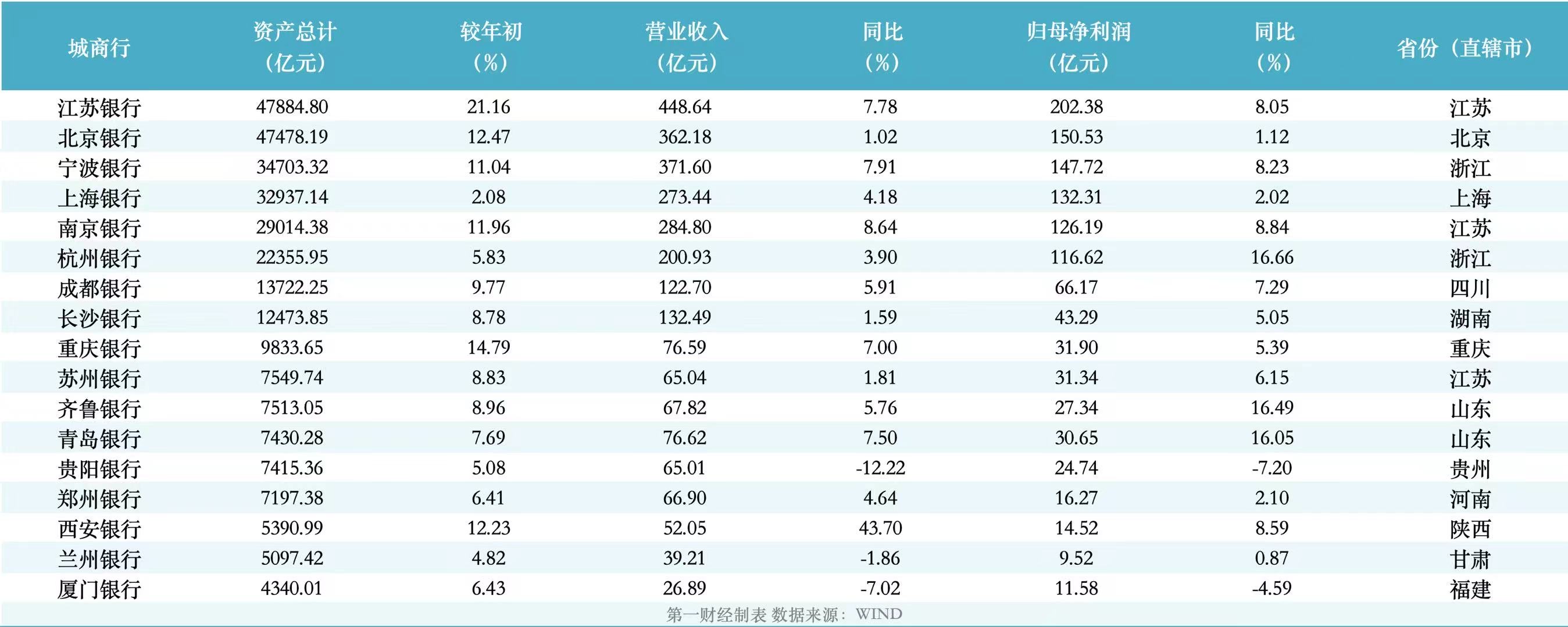
Core Viewpoint - Beijing Bank has been surpassed by Jiangsu Bank as the new leader among city commercial banks, marking a significant shift in the competitive landscape [4][5][12]. Financial Performance Comparison - As of mid-2025, Beijing Bank's total assets reached 4.75 trillion yuan, growing by 12.53% year-to-date, while Jiangsu Bank's total assets were 4.79 trillion yuan, with a year-on-year growth rate of 26.99% [6]. - Beijing Bank reported operating income of 36.218 billion yuan, a year-on-year increase of 1.02%, and a net profit attributable to shareholders of 15.053 billion yuan, up 1.12% [6]. - Jiangsu Bank achieved operating income of 44.864 billion yuan, a 7.78% increase, and a net profit of 20.238 billion yuan, growing by 8.05% [6]. Loan and Asset Quality - As of June 2025, Beijing Bank's total loans and advances amounted to 2.39 trillion yuan, with a growth of 8.18% year-to-date, while Jiangsu Bank's total loans reached 2.43 trillion yuan, reflecting a year-on-year growth of 15.98% [6]. - Jiangsu Bank's non-performing loan (NPL) ratio was 0.84%, a historical low, with a provision coverage ratio of 331.02%, indicating stronger asset quality compared to Beijing Bank's NPL ratio of 1.30% and provision coverage ratio of 195.74% [7][16]. Profitability and Efficiency - Jiangsu Bank's net interest margin (NIM) stood at 1.78%, compared to Beijing Bank's 1.31%, although both are on a downward trend [7]. - Despite a lower average deposit cost of 1.59% for Beijing Bank, Jiangsu Bank's average loan interest rate was significantly higher at 4.45%, indicating better asset pricing and revenue generation capabilities [7][15]. Strategic Focus and Future Outlook - Under the leadership of Chairman Huo Xuewen, Beijing Bank is focusing on technology finance and digital transformation, aiming to enhance operational efficiency and asset quality [8][10]. - Jiangsu Bank's growth strategy is deeply tied to regional economic development, particularly in the Yangtze River Delta, although this has led to a concentration risk in its loan portfolio [12][13].


江苏银行的最大优势何在?答案藏在中国经济最活跃的版图里
Huan Qiu Lao Hu Cai Jing· 2025-09-11 13:49
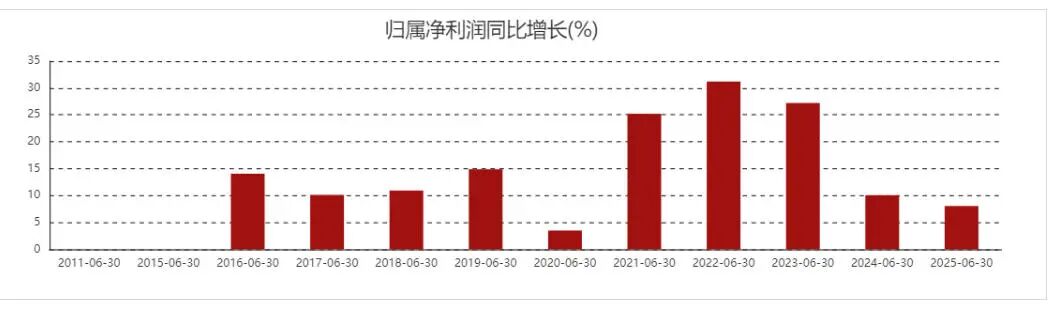
Core Viewpoint - Jiangsu Bank has achieved significant financial growth in the first half of 2025, with a focus on regional economic collaboration and high-quality development, evidenced by a 7.78% increase in operating income and an 8.05% rise in net profit [1][2]. Financial Performance - Jiangsu Bank reported operating income of 44.864 billion yuan, a year-on-year increase of 7.78% - Net profit attributable to shareholders reached 20.238 billion yuan, up 8.05% year-on-year - Total assets amounted to 4.79 trillion yuan, reflecting a growth of 21.16% compared to the end of the previous year [1][3]. Asset Quality and Growth - As of June 2025, total assets reached 4.79 trillion yuan, with a loan balance of 2.43 trillion yuan, marking a 15.98% increase year-on-year - Corporate loan balance was 1.63 trillion yuan, growing by 23.30%, outperforming peers [1][3][10]. - The bank's manufacturing loans increased by 18.90% to 360.6 billion yuan, while infrastructure loans surged by 31% to 691.2 billion yuan [3]. External Economic Environment - Jiangsu Bank benefits from the robust economic environment of Jiangsu province, which recorded a GDP of 6.7 trillion yuan, growing by 5.7% year-on-year, surpassing the national average [2]. - The high-tech industry in Jiangsu saw a 9.2% increase in added value, indicating a shift towards high-tech sectors [2]. Strategic Focus and Diversification - The bank emphasizes serving small and medium enterprises and has developed a diversified business model, focusing on small microfinance, technology finance, green finance, and cross-border finance [3][5]. - Retail deposits reached 948.4 billion yuan, a 15.25% increase, with retail assets under management exceeding 1.59 trillion yuan [6]. Risk Management - Jiangsu Bank has implemented a comprehensive risk management system, achieving a non-performing loan ratio of 0.84%, the lowest in its history, and a provision coverage ratio of 331.02% [10]. - The bank aims to maintain asset quality while enhancing shareholder returns, with a return on average equity of 15.64% [10].
中小行半年报:有银行房地产不良率超21%
Di Yi Cai Jing· 2025-09-11 12:52
Core Insights - The operating conditions of small and medium-sized banks in China have shown significant differentiation and competition, with new changes emerging in their performance during the first half of the year [2][5]. Group 1: Performance of Listed Banks - As of mid-2023, the total asset scale of 42 A-share listed banks reached approximately 321 trillion yuan, with 27 city commercial banks and rural commercial banks accounting for about 36 trillion yuan, an increase of over 3 trillion yuan compared to the end of last year [3]. - City and rural commercial banks have seen their share of total assets among listed banks rise from less than 11% at the end of last year to approximately 11.21% [4]. - Jiangsu Bank has overtaken Beijing Bank to become the new leader among city commercial banks, with an asset scale of 4.79 trillion yuan, growing at a rate of 21.16%, the highest among all listed banks [5][6]. Group 2: Financial Metrics - Jiangsu Bank reported revenue of 448.64 billion yuan and a net profit of 202.38 billion yuan for the first half of the year, with growth rates of 7.08% and 8.05% respectively, while Beijing Bank's revenue and net profit growth were only 1.02% and 1.12% [5][6]. - The net interest margin (NIM) among listed banks shows significant variation, with the highest being 2.58% for Changshu Bank and the lowest at 1.08% for Xiamen Bank [9][10]. - The overall NIM for commercial banks was reported at 1.42%, with city commercial banks at 1.37% and rural commercial banks at 1.58% [9]. Group 3: Asset Quality and Risks - The non-performing loan (NPL) ratio for city and rural commercial banks remains a critical risk factor, with the highest NPL ratio reported at 1.81% for Lanzhou Bank, and several banks exceeding 1.7% [10][12]. - Qingnong Bank's NPL ratio for real estate loans surged from 7.17% to 21.32%, indicating significant risk exposure in this sector [12][13]. - The report highlights that personal loans and loans to the real estate sector are primary areas of risk exposure for banks [12]. Group 4: Non-Listed Banks - Non-listed small and medium-sized banks have also experienced changes, with some rural commercial banks seeing significant declines in asset scale, such as Ningbo Yinzhou Rural Commercial Bank, which dropped by 15.45% [14]. - The reliance on financial investments has increased among banks, particularly rural commercial banks, with some reporting financial investments constituting over 45% of their total assets [14][15].


中小行半年报:有银行房地产不良率超21%
第一财经· 2025-09-11 12:23
Core Viewpoint - The article discusses the operational performance of small and medium-sized banks in the first half of the year, highlighting the ongoing differentiation and competitive landscape among these banks, as well as some new developments in the sector [3]. Group 1: Performance of Listed Banks - As of mid-2023, the total asset scale of 42 A-share listed banks reached approximately 321 trillion yuan, with 27 city commercial banks and rural commercial banks accounting for about 36 trillion yuan, an increase of over 3 trillion yuan compared to the end of last year [4]. - City and rural commercial banks have seen their share of total assets among listed banks rise from less than 11% at the end of last year to around 11.21% [5]. - Jiangsu Bank has overtaken Beijing Bank to become the new "leader" among city commercial banks, with an asset scale of 4.79 trillion yuan, while Beijing Bank has 4.75 trillion yuan [6][7]. - Jiangsu Bank's revenue and net profit for the first half of the year were 448.64 billion yuan and 202.38 billion yuan, respectively, with growth rates of 7.08% and 8.05%, while Beijing Bank's figures were 362.18 billion yuan and 150.53 billion yuan, with growth rates of 1.02% and 1.12% [6][8]. Group 2: Profitability and Asset Quality - The net interest margin (NIM) among listed city and rural commercial banks varies significantly, with the highest NIM at 2.58% for Changshu Bank and the lowest at 1.08% for Xiamen Bank [12]. - The overall NIM for commercial banks was reported at 1.42%, with city commercial banks at 1.37% and rural commercial banks at 1.58% [12]. - The article notes that the asset quality remains a critical factor affecting the risks of small and medium-sized banks, with several banks reporting high non-performing loan (NPL) ratios, particularly in the real estate sector [14][15]. - Qingnong Bank's real estate loan NPL ratio surged from 7.17% at the end of last year to 21.32%, indicating significant risk exposure in this area [15]. Group 3: Changes in Non-Listed Banks - Non-listed small and medium-sized banks have also experienced notable changes, with some rural commercial banks seeing significant declines in asset scale, such as Ningbo Yinzhou Rural Commercial Bank, which saw a decrease of 15.45% [16]. - The reliance on financial investments has increased among banks, particularly rural commercial banks, with some banks reporting financial investments accounting for over 45% of their total assets [16].

江苏银行9月10日现1笔大宗交易 总成交金额2962.3万元 其中机构买入2962.3万元 溢价率为0.55%
Xin Lang Cai Jing· 2025-09-11 10:09
责任编辑:小浪快报 第1笔成交价格为10.88元,成交272.27万股,成交金额2,962.30万元,溢价率为0.55%,买方营业部为机 构专用,卖方营业部为机构专用。 进一步统计,近3个月内该股累计发生5笔大宗交易,合计成交金额为9672.13万元。该股近5个交易日累 计上涨0.65%,主力资金合计净流出3.74亿元。 炒股就看金麒麟分析师研报,权威,专业,及时,全面,助您挖掘潜力主题机会! 9月10日,江苏银行收跌0.55%,收盘价为10.82元,发生1笔大宗交易,合计成交量272.27万股,成交金 额2962.3万元。 ...
盘点中小行半年报:净息差普遍承压,有银行房地产不良率超21%
Di Yi Cai Jing· 2025-09-11 09:33
Core Insights - The operational performance of most small and medium-sized banks in the first half of the year shows a continued trend of differentiation and competition among them [1] - The overall asset scale of listed city and rural commercial banks has expanded rapidly, with three new members joining the "500 billion club" [2][5] - The net interest margin (NIM) among listed city and rural commercial banks varies significantly, with some banks experiencing a sharp increase in non-performing loans (NPLs) in the real estate sector [1][7] Group 1: Asset Growth and Rankings - As of mid-2023, the total asset scale of 42 A-share listed banks is approximately 321 trillion yuan, with 27 city and rural commercial banks accounting for about 36 trillion yuan, an increase of over 3 trillion yuan from the end of last year [2] - Jiangsu Bank has overtaken Beijing Bank to become the new leader among city commercial banks, with an asset scale of 4.79 trillion yuan, reflecting a growth rate of 21.16%, the highest among all listed banks [3][4] - The number of city and rural commercial banks with assets exceeding 500 billion yuan has increased by three, including Xi'an Bank, Lanzhou Bank, and Qingnong Bank [5] Group 2: Profitability and Performance Metrics - Jiangsu Bank reported revenue of 44.864 billion yuan and a net profit of 20.238 billion yuan in the first half of the year, while Beijing Bank's figures were 36.218 billion yuan and 15.053 billion yuan, respectively [3] - Six city and rural commercial banks achieved over 10 billion yuan in net profit, with Jiangsu Bank leading at 20.238 billion yuan [5] - The net interest margin for city commercial banks averages 1.37%, while for rural commercial banks it is 1.58%, with significant disparities among individual banks [7] Group 3: Asset Quality and Non-Performing Loans - The highest non-performing loan rate among listed banks is 1.81% for Lanzhou Bank, with several other banks exceeding 1.7% [8][10] - Qingnong Bank's non-performing loan rate in the real estate sector surged from 7.17% to 21.32%, indicating a significant risk exposure [11] - Overall, the asset quality remains a critical factor affecting the risk profile of small and medium-sized banks, with some banks experiencing a rise in overdue loans [12][14]
小微企业融资平台市场洞察:政策赋能与模式创新双轮驱动下的服务升级与增长空间头豹词条报告系列
Tou Bao Yan Jiu Yuan· 2025-09-11 05:06
Investment Rating - The report does not explicitly state an investment rating for the small and micro enterprise financing platform industry Core Insights - The small and micro enterprise financing platform industry is experiencing continuous expansion driven by policy support and market demand, with innovative service models emerging to address financing challenges [3][21] - The industry is characterized by a concentration of leading players, with a significant market share held by top companies, while smaller firms are adopting differentiated strategies to capture market share [20][23] - The transition towards the "drip irrigation" model is anticipated, as it aligns better with the financing needs of small and micro enterprises compared to traditional credit models [56][57] Summary by Sections Industry Definition - Small and micro enterprise financing platforms integrate resources from financial institutions, government, data technology, and industry ecosystems to provide customized financing solutions, addressing issues like information asymmetry and insufficient collateral [4] Industry Characteristics - The market is expanding rapidly, with the balance of inclusive small and micro loans reaching 32.9 trillion yuan by Q3 2024, a year-on-year increase of 14.5% [21] - Continuous product and service innovation is evident, with platforms like Drip Irrigation Group utilizing the Revenue-Based Financing (RBF) model to enhance service efficiency [22] - The competitive landscape shows a concentration of market share among leading firms, with state-owned banks holding 42.77% of the inclusive small and micro loan market [23] Development History - The industry has evolved through various stages, from initial support for small enterprises in the 1990s to the rapid development phase post-2000, and now to a high-quality development phase characterized by digitalization and green finance [24][30] Industry Chain Analysis - The industry chain consists of upstream funding sources, midstream financing service providers, and downstream small and micro enterprises, with a focus on addressing structural mismatches in financing needs [31][32] - Upstream funding is characterized by a dual structure of policy-driven and market-driven sources, with commercial banks being the primary funding providers [37] - Midstream service providers are leveraging technology to enhance risk assessment and improve service delivery, transitioning from traditional asset-based evaluations to cash flow-based assessments [43] Market Size and Growth - The small and micro enterprise financing platform industry has seen rapid growth from 2019 to 2024, driven by policy support, technological advancements, and improvements in the credit system [53] - The market is expected to continue expanding as new tools like digital currency and cross-border payment systems are introduced [54] Future Trends - The industry is shifting towards the Drip Irrigation model due to mismatches between traditional credit models and the financing needs of small enterprises, with a focus on real-time cash flow monitoring and digital infrastructure [56][58]



给新晋“城商行一哥”挤挤水分:资产暴增靠政金业务?
3 6 Ke· 2025-09-11 04:01
Core Viewpoint - Jiangsu Bank has achieved significant asset growth, reaching a total of 4.79 trillion yuan, making it the leading city commercial bank. However, concerns arise regarding the sustainability and quality of this growth due to declining profit margins, increasing reliance on non-core income, and regulatory pressures [1][2][22]. Financial Performance - In the first half of 2025, Jiangsu Bank reported operating income of 44.864 billion yuan, a year-on-year increase of 7.78%, and a net profit attributable to shareholders of 20.238 billion yuan, up 8.05% [2]. - The profit growth appears inflated due to a significant reduction in income tax expenses, which fell from 5.044 billion yuan to 2.384 billion yuan, a decrease of 26.6 billion yuan [2]. - The bank's revenue growth has shown a declining trend over the past three years, with operating income growth rates of 10.66%, 5.28%, and 8.78% from 2022 to 2024 [2]. Interest Margin and Income Structure - The net interest margin has decreased to 1.78% in the first half of 2025, down from 2.32% in 2022, indicating a shrinking profit space for interest income [4]. - Non-interest income has also declined significantly, with a 14.6% drop in the first half of 2025, primarily due to poor performance in investment income and fair value changes [4][5]. Asset Growth and Composition - Jiangsu Bank's total assets surged by 26.99% year-on-year to 4.79 trillion yuan, with loans and advances reaching 2.37 trillion yuan, a growth of 18.79% [5]. - The rapid asset expansion is largely driven by non-loan business, particularly financial investments, which increased by 35.66% [7]. - The bank's reliance on traditional credit business raises concerns about its ability to withstand market fluctuations, as non-interest income has not developed into a significant growth driver [5][12]. Capital Adequacy and Regulatory Compliance - As of June 30, 2025, Jiangsu Bank's core Tier 1 capital adequacy ratio was 8.49%, just above the regulatory minimum of 7.75%, indicating potential challenges in maintaining capital adequacy [13][15]. - The bank has issued perpetual bonds to supplement capital, but this approach does not effectively enhance core capital levels [15]. Asset Quality and Risk Management - The non-performing loan (NPL) ratio stood at 0.84%, but this figure may be misleading due to significant asset transfers and write-offs [16][18]. - The bank's provision coverage ratio has declined, indicating a weakening risk buffer, with a drop from 389.53% to 331.02% [19]. Governance and Compliance Issues - Jiangsu Bank has faced multiple regulatory penalties due to compliance failures, reflecting a culture that prioritizes business over compliance [20]. - The bank's ESG performance is notably low, with a score of 21 out of 100, ranking last among its peers [21]. Conclusion - Jiangsu Bank's rapid ascent to the top of the city commercial banking sector raises questions about the sustainability of its growth model, particularly in light of declining margins, capital pressures, and governance challenges [22].
金融活水精准滴灌,民营经济发展强劲
Xin Hua Ri Bao· 2025-09-10 23:28
Group 1 - The core viewpoint emphasizes the importance of addressing the financing difficulties faced by private enterprises in Jiangsu, as highlighted by President Xi Jinping during the private economy symposium [1] - Jiangsu's private economy plays a crucial role in entrepreneurship, employment, technological innovation, and fiscal revenue, significantly contributing to the province's economic and social development [1] - As of mid-2023, the loan balance for the private economy in Jiangsu reached 7.02 trillion yuan, marking an 8% year-on-year increase [1] Group 2 - Jiangsu's financial institutions have introduced a diverse range of products to support private enterprises, including various loan types and insurance products [2] - The "Equipment Update Loan" launched by Jiangsu Bank has provided 6.5 billion yuan across 317 transactions, demonstrating the bank's commitment to facilitating equipment upgrades for private enterprises [2] - Approximately 90% of high-tech enterprises and 70% of provincial R&D institutions in Jiangsu are private enterprises, indicating their significant role in innovation and development [2] Group 3 - Jiangsu Bank has innovatively launched the "1650" industry chain digital customer acquisition system, providing 779.8 billion yuan in credit to 30,500 industry chain clients [3] - The insurance sector, represented by Zijin Insurance, has introduced innovative insurance products to mitigate risks for technology-driven enterprises, providing over 800 million yuan in risk coverage for autonomous driving companies [3] - Zijin Insurance has also provided more than 6.5 billion yuan in risk coverage for the new energy private economy [3] Group 4 - The A-share market has seen significant performance from Jiangsu-listed companies, with 52 companies doubling their stock prices this year, reflecting the province's strategic focus on emerging industries [4] - Jiangsu Bank's "Equity Option Loan" aims to support technology-driven private enterprises by providing credit while allowing for equity stake options, with 1.2 billion yuan allocated to nearly 30 companies [4] - The establishment of new investment divisions by Yida Capital indicates a strategic shift to better align with future technology and industry trends [4] Group 5 - A promotional event for the Jiangsu Strategic Emerging Industry Fund Cluster was held in Shenzhen, aiming to attract top investment institutions to support Jiangsu's emerging industries [5] Group 6 - The establishment of financial service centers for private enterprises in Jiangsu aims to provide comprehensive financial services, including consultations and policy promotion [6] - Nearly 100 "Financial Services for the Real Economy" events have been organized across Jiangsu, enhancing the outreach of financial support to private enterprises [6] Group 7 - As of August 2025, the Jiangsu Financial Services platform has registered over 2.02 million enterprises, with 84% being private enterprises, facilitating credit access of 6.49 trillion yuan [7] - The development of the "Jiangsu Small and Micro Enterprises Financing One-Stop" system aims to streamline financing processes for small enterprises [7] - Financial institutions in Jiangsu have conducted visits to over 4.03 million enterprises, providing credit support of 3.02 trillion yuan to 582,900 enterprises [7]