CHINA MOBILE(600941)

Search documents
中国移动旗下基金、北京人工智能产投基金等入股因时机器人
Xin Lang Cai Jing· 2026-02-04 01:55
Group 1 - The core point of the article is that Beijing Yinshi Robot Technology Co., Ltd. has undergone a business change, adding new shareholders including China Mobile's Beijing Zhongyi Digital New Economy Industry Fund Partnership and Beijing Artificial Intelligence Industry Investment Fund [1] - Yinshi Robot was established in 2016 and its business scope includes basic software services, application software services, and computer system services [1] - The company focuses on the research and development of micro-precision motion components and breakthroughs in servo control technology, with typical products including micro servo cylinders and dexterous robotic hands [1]

中国移动链长基金领投苇渡C1轮融资
Xin Lang Cai Jing· 2026-02-04 00:36
Group 1 - The company Windrose has announced the initiation of a Series C financing round exceeding $100 million [1] - The C1 round is led by China Mobile Chain Long Fund, with participation from Windrose's founder Han Wen and French industrial real estate firm PRD [1] - The financing round has also received credit support from major banks including Industrial and Commercial Bank of China, China Construction Bank, and Agricultural Bank of China [1] Group 2 - The funds from the Series C financing will primarily be used to accelerate the mass production and delivery of the company's pure electric heavy trucks after obtaining certifications in China, the US, and Europe [1] - The company plans to promote the establishment of assembly delivery bases and supporting infrastructure for wind and solar energy, energy storage, and fast charging in Belgium, France, and the United States [1]

证券账户能买分红险 办手机卡推销健康险 跨界玩家密集进场卖保险
Nan Fang Du Shi Bao· 2026-02-03 23:16
Core Viewpoint - The insurance industry is experiencing an innovative trend of "cross-industry collaboration," with various sectors such as securities firms and telecommunications companies entering the insurance market, leading to a multi-channel integration of insurance sales [2][3][10]. Industry Trends - Multiple securities firms have quietly launched "insurance sections" in their official apps, with one leading firm offering 18 insurance products, including 13 dividend-type products [3]. - China Mobile has opted for a "offline trial sales" model, starting in January 2026, selling insurance products directly in its service outlets [3]. - Other capital players, such as Guangzhou Yuexiu Group and Midea Group, are also making significant investments in the insurance sector through acquisitions [3][4]. Market Impact - The entry of cross-industry players is reshaping traditional insurance sales channels, with a notable shift in market dynamics. The insurance sales market may evolve into a layered structure, where cross-industry platforms focus on standardized products while traditional agents emphasize complex risk management [6][10]. - The insurance sales channels are undergoing a profound transformation, with the bancassurance channel surpassing individual insurance channels in new premium scale for the first time in 14 years [5]. Opportunities - The current scale of insurance sales through cross-industry channels remains relatively small, with securities firms' insurance sales accounting for less than 5% of their total sales revenue [9]. - The integration of insurance into daily life through cross-industry platforms is seen as a strategic move to enhance user engagement and create new revenue streams for companies facing growth pressures in their core businesses [9][10]. Challenges - While cross-industry collaboration makes purchasing insurance easier, it also complicates the process of selecting the right insurance, as consumers may overlook their actual needs due to the convenience of embedded insurance offerings [10][11]. - There are concerns regarding the potential dilution of sales professionalism and service responsibilities, which could undermine consumer trust in the insurance industry [11][12].



2025年中国移动游戏发行市场现状分析:VIVO 游戏中心为最活跃的移动游戏联运渠道【组图】
Qian Zhan Wang· 2026-02-03 13:08
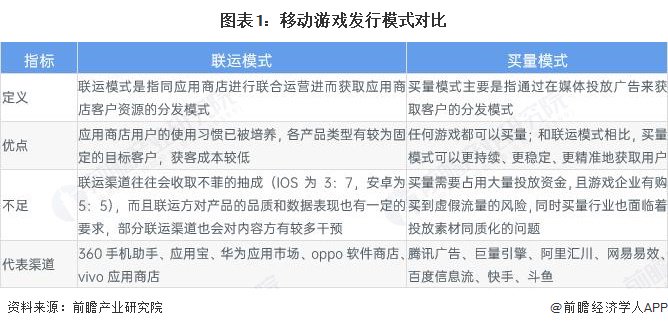
Core Insights - The report provides an analysis of the Chinese mobile gaming industry, focusing on distribution models, active channels, and advertising strategies. Distribution Models - The mobile gaming distribution models are categorized into two main types: cooperation (联运) and user acquisition (买量) [1][2]. - Cooperation model involves game developers partnering with platforms to share revenue, while user acquisition model focuses on direct advertising to attract users [2][3]. Active Channels - Major active distribution channels for mobile games include hardware official stores, third-party app stores, super apps, advertising platforms, and niche apps [5]. - VIVO Game Center, TapTap, and Huawei Game Center are identified as the most active channels, each with an activity rate exceeding 14% [6]. User Acquisition Trends - Role-playing games (RPGs) dominate the user acquisition market, with 1,147 products on Android and 178 on iOS, highlighting a strong preference for RPGs among users [8]. - The overall number of mobile game apps launched in 2024 is reported at 20,054, reflecting a 12.35% decline year-on-year, indicating intense competition in the mobile gaming sector [10].
中移软件取得步态识别方法专利提升识别准确性
Sou Hu Cai Jing· 2026-02-03 11:57
Group 1 - The State Intellectual Property Office of China has granted a patent for a "gait recognition method, device, electronic equipment, and computer-readable storage medium" to China Mobile (Suzhou) Software Technology Co., Ltd. and China Mobile Communications Group Co., Ltd. The patent announcement number is CN116778567B, with an application date of September 2022 [1] - China Mobile (Suzhou) Software Technology Co., Ltd. was established in 2014 and is primarily engaged in software and information technology services. The company has a registered capital of 317.2 million RMB and has participated in 5,000 bidding projects, holds 112 trademark records, and has 2,689 patents, along with 28 administrative licenses [1] - China Mobile Communications Group Co., Ltd. was founded in 1999 and focuses on telecommunications, broadcasting, television, and satellite transmission services. The company has a registered capital of 30 billion RMB, has invested in 55 enterprises, participated in 5,000 bidding projects, holds 2,211 trademark records, and has 5,000 patents, along with 50 administrative licenses [1]
中移软件取得消息队列集群智能管理专利
Sou Hu Cai Jing· 2026-02-03 10:36
Group 1 - The State Intellectual Property Office of China granted a patent to China Mobile (Suzhou) Software Technology Co., Ltd. and China Mobile Communications Group Co., Ltd. for a method and device for managing message queue clusters, with the announcement number CN120881014B and application date of September 2025 [1] - China Mobile (Suzhou) Software Technology Co., Ltd. was established in 2014, located in Suzhou, and primarily engages in software and information technology services, with a registered capital of 317.2 million RMB [1] - The company has participated in 5,000 bidding projects, holds 112 trademark records, and has 2,689 patent records, along with 28 administrative licenses [1] Group 2 - China Mobile Communications Group Co., Ltd. was founded in 1999, based in Beijing, and focuses on telecommunications, broadcasting, and satellite transmission services, with a registered capital of 30 billion RMB [1] - The company has invested in 55 enterprises, participated in 5,000 bidding projects, holds 2,211 trademark records, and has 5,000 patent records, along with 50 administrative licenses [1]
小摩:内地电讯商增值税调高 料中国移动受影响最小
Xin Lang Cai Jing· 2026-02-03 09:56
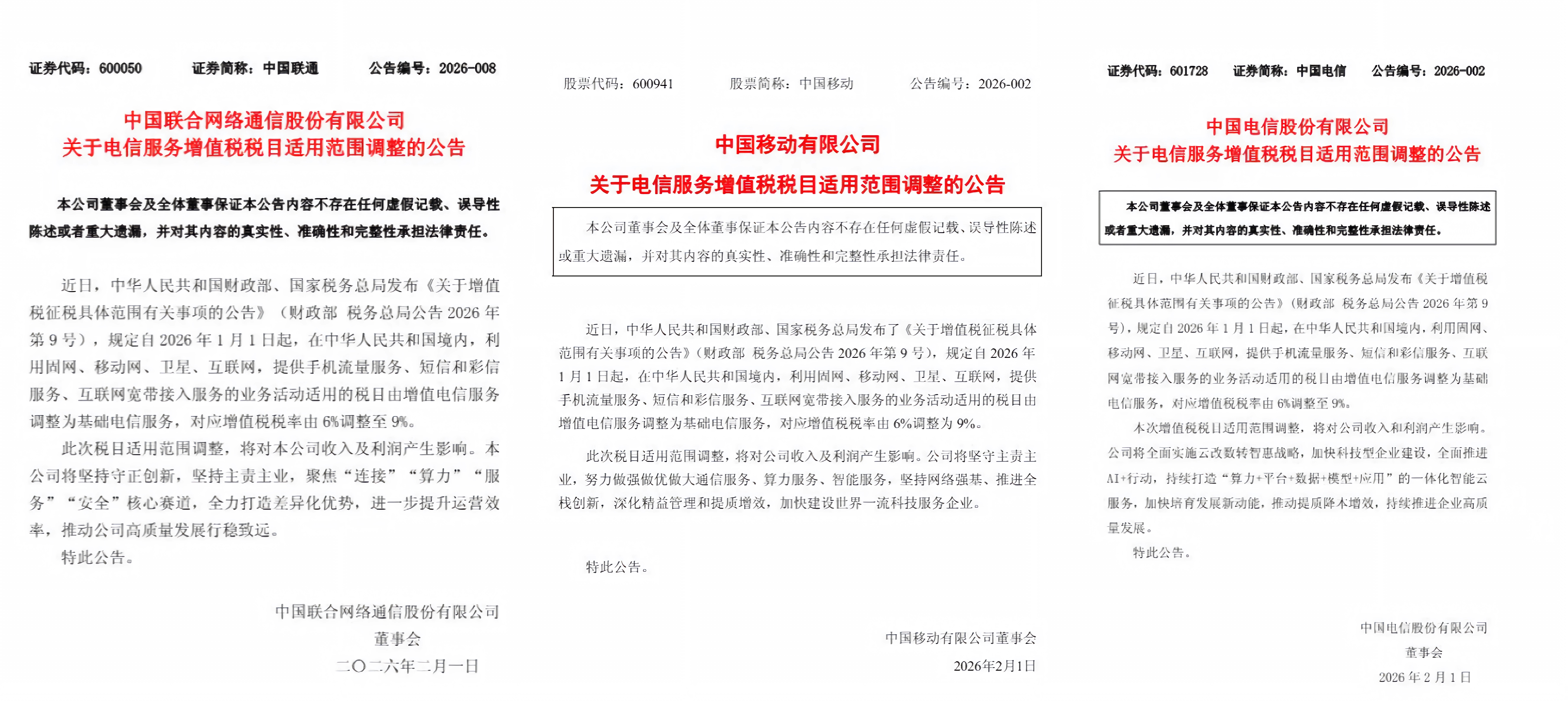
Core Viewpoint - Morgan Stanley reports that the three major telecom operators in mainland China have announced an adjustment in value-added tax, increasing the tax rate on mobile data, SMS/MMS, and internet broadband services from 6% to 9% [1][2] Group 1: Impact on Companies - The tax adjustment is expected to impact the net profits of China Mobile (00941), China Telecom (00728), and China Unicom (00762) in 2026 by 7.1%, 12.6%, and 11.9% respectively [1] - Among the three operators, the impact on China Mobile is estimated to be the smallest due to its higher gross margin [1] Group 2: Mitigation Measures - The actual profit impact may be milder than estimated, as the telecom operators are undergoing state-owned enterprise reforms, with authorities setting financial KPIs for profit growth, return on equity improvement, and healthy cash flow [2] - Telecom operators are expected to offset the impact of the VAT adjustment through various measures, including optimizing operating expenses, increasing prices, and controlling capital expenditures [2]


地方两会聚焦消费扩内需 传统消费与新型消费双轨并进
Sou Hu Cai Jing· 2026-02-03 09:53
Group 1 - The core viewpoint emphasizes the importance of consumption as a key driver for expanding domestic demand and building a strong domestic market, with various local governments implementing measures to enhance consumption capabilities and optimize supply [2] - Traditional consumption quality enhancement and the cultivation of emerging consumption are progressing simultaneously, supported by advancements in digital technology that enrich consumption supply [2] - Operators leverage their digital advantages and robust infrastructure to actively engage in the entire consumption chain, enhancing basic consumption quality and creating new digital consumption scenarios [2] Group 2 - The upgrade of basic consumption is crucial for market stability, with digitalization and intelligence being core paths for traditional industries' transformation [3] - Operators utilize technologies like 3D modeling and big data analysis to assist traditional manufacturers in offering personalized services, thus meeting diverse consumer demands [3] - The shift from standardized to personalized products enhances production efficiency and resource utilization, catering to consumers' desire for unique products [3] Group 3 - The application of humanoid robots in traditional service models represents a significant breakthrough, improving service efficiency and customer satisfaction [4] - Operators are injecting "digital intelligence" into traditional industries, promoting their transformation towards smart, customized, and service-oriented models [4] Group 4 - New technologies, particularly AI, are rapidly reshaping consumption scenarios and fostering a new "AI + consumption" ecosystem [5] - Operators are focusing on family digital consumption needs, launching diverse AI products to enhance the digital experience at home [5] - Initiatives like the "AI+" action plan and AI smart screens are designed to provide personalized and convenient services for families [5] Group 5 - The silver economy is a new growth point, with operators developing AI products tailored for the elderly to bridge the digital divide [6] - Customized services for seniors, such as AI phones and smart monitoring products, are being introduced to enhance their digital consumption experience [6] Group 6 - Operators are optimizing digital consumption service processes through AI technology, significantly improving service efficiency [7] - Innovations like AI customer assistants and smart service agents are enhancing customer service quality and enriching the digital consumption supply [7] Group 7 - Service consumption is rapidly expanding, driven by rising income levels and changing consumer attitudes, with a focus on sectors like education, culture, and health [8] - Operators are utilizing advanced technologies to ensure robust communication support for high-traffic events, enhancing user experience [8] Group 8 - In the cultural and tourism sectors, operators are employing technologies like 5G, AI, and VR/AR to develop smart applications that enrich visitor experiences [9] - Continuous advancements in digital technology and operator engagement are expected to drive new developments in China's consumption market, contributing to a sustainable economic growth model [9]

南向资金丨盈富基金逆势遭净卖出37.63亿港元
Xin Lang Cai Jing· 2026-02-03 09:50
Group 1 - Southbound funds recorded a net purchase of 9.52 billion HKD [1] - Tencent Holdings, Southern Hang Seng Technology, and China Mobile were the top three net purchases, with net buys of 19.55 billion HKD, 6.69 billion HKD, and 4.08 billion HKD respectively [1] - On the sell side, the Yingfu Fund, SMIC, and Alibaba-W experienced net sales of 37.63 billion HKD, 15.77 billion HKD, and 11.98 billion HKD respectively [1]



手机套餐要涨价了?中国移动们税率上调,eSIM或缓解成本压力
3 6 Ke· 2026-02-03 09:45
Core Viewpoint - The recent adjustment of the value-added tax (VAT) rate from 6% to 9% for telecom services by China's three major operators is expected to impact their revenue and profit, leading to potential price increases for consumers in the future [1][3][12]. Group 1: Tax Rate Adjustment - The adjustment of the VAT rate will affect the income and profit of telecom companies, as they have explicitly stated in their announcements [3][5]. - The classification of telecom services will change from "value-added telecom services" to "basic telecom services" starting January 1, 2026, indicating that services like mobile data and broadband are now considered essential [3][5]. - The increase in VAT does not mean an immediate price hike for consumers, but it will reduce the net income that operators can retain from the same amount of revenue [5][14]. Group 2: Pricing Dynamics - Despite the tax increase, the overall trend in mobile data pricing has been downward, making it challenging for operators to raise prices without risking customer dissatisfaction [8][9]. - The competitive landscape among telecom operators, including the ease of number portability, complicates the decision to increase prices, as it could lead to customer churn [8][12]. - Historical data shows that high pricing strategies have not been sustainable, as seen with the introduction of 5G services, which initially had high costs but have since seen significant reductions in pricing to encourage adoption [9][11]. Group 3: Future Growth Strategies - The operators are facing pressure to find new growth avenues due to limited user growth and shrinking profit margins, exacerbated by rising operational costs and tax adjustments [12][14]. - Innovations like eSIM technology are being explored as potential new revenue streams, allowing for more flexible pricing models and the ability to attract new users without the need for physical SIM cards [14][15]. - The market is cautious about any price increases, as consumer sensitivity to pricing has heightened, making it essential for operators to carefully consider their strategies moving forward [12][14].