
Bank Of Shanghai(601229)

Search documents
对话上海银行郑涵:商业银行须自我革命,从放贷者转向赋能者
2 1 Shi Ji Jing Ji Bao Dao· 2025-11-25 06:12
Core Viewpoint - Traditional credit logic is mismatched with the needs of technology innovation enterprises, necessitating a self-revolution in commercial banks to transition from "lenders" to "enablers" [1][4] Group 1: Financial Needs of Technology Enterprises - Technology innovation enterprises exhibit characteristics of light capital, light assets, high growth, and high risk, leading to a composite financing demand for both equity and low-cost bank debt [3] - These enterprises require financial services throughout their lifecycle, including initial loans, credit, and medium to long-term financing solutions [3] Group 2: Challenges in Financial Support - The key challenges in providing financial support to technology innovation enterprises include the difficulty in value assessment due to traditional credit evaluation methods relying on financial statements and collateral, which do not suit the characteristics of tech firms [3] - There is also a challenge in balancing risk and return, as traditional fixed loan rates do not adequately compensate for the risks associated with lending to technology enterprises [3][4] Group 3: Shanghai Bank's Transformation Strategy - Shanghai Bank is focusing on two main transformations: reshaping the risk evaluation logic for technology enterprises and balancing the risk-return logic in financial products [4] - The bank aims to create a dedicated evaluation method for tech enterprises, design collaborative financing solutions, and engage in active management to support enterprise growth [4] Group 4: Innovative Service Models in Shenzhen - In Shenzhen, Shanghai Bank is implementing a three-pronged service model that includes a specialized organizational structure, industry-specific operations, and an ecosystem for service innovation [6][7] - The bank has established partnerships with local research and investment institutions to provide comprehensive services to over 2,500 enterprises, positioning itself as a key node in the innovation resources of the Guangdong-Hong Kong-Macao Greater Bay Area [7] Group 5: Future Vision and Planning - Shanghai Bank aims to serve national strategies and become the preferred bank for technology transformation and incubation, focusing on early-stage technology enterprises and innovative products [8] - The bank plans to enhance its service capabilities by concentrating on strategic industries, conducting in-depth research, and building a collaborative ecosystem with various partners [8]

长三角6家上市城商行的韧性增长:息差承压之下营收净利双增,对公业务成信贷投放“主引擎”
Mei Ri Jing Ji Xin Wen· 2025-11-25 06:00
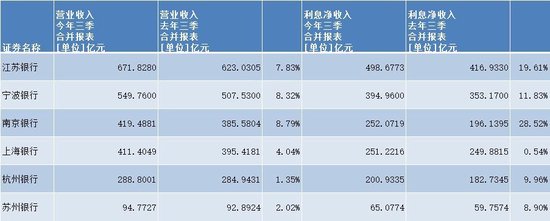
Core Viewpoint - The six A-share listed city commercial banks in the Yangtze River Delta region are demonstrating resilient growth, achieving increases in both revenue and net profit despite the pressure of narrowing interest margins [1][2]. Revenue and Profit Growth - All six city commercial banks reported year-on-year growth in both revenue and net profit for the first three quarters, with five banks achieving profits exceeding 10 billion yuan, except for Suzhou Bank, which is relatively smaller [2]. - Jiangsu Bank led with a revenue of 67.183 billion yuan and a net profit of 30.583 billion yuan, ranking first among A-share city commercial banks [2]. Interest Income Performance - Despite the overall pressure on interest margins, all six banks achieved year-on-year growth in net interest income, with Nanjing Bank and Jiangsu Bank showing significant increases of 28.52% and 19.61%, respectively [3]. - Nanjing Bank attributed its growth in net interest income to increased credit investment and optimized asset allocation strategies, alongside a reduction in deposit costs [3]. Asset Expansion - The six banks are steadily expanding their asset scales, with Jiangsu Bank holding the largest total assets of 4.93 trillion yuan, marking a 24.68% increase from the beginning of the year, the fastest growth among A-share listed banks [6]. - All banks exhibited strong growth in both deposits and loans, with Jiangsu Bank's total deposits reaching 2.54 trillion yuan, a 20.22% increase, and total loans growing by 17.87% to 2.47 trillion yuan [6]. Corporate Lending Growth - Corporate lending has become the main driver of credit expansion for these banks, with significant growth in loans for technology finance, inclusive finance, and green finance [9]. - For instance, Nanjing Bank's corporate loans increased by 14.63%, with notable growth in green finance (33.03%), technology finance (17.47%), and inclusive finance (16.16%) [9]. Asset Quality - The asset quality of the six banks remains stable, with non-performing loan (NPL) ratios either holding steady or declining. Jiangsu Bank's NPL ratio decreased by 0.05 percentage points to 0.84% [10]. - Nanjing Bank's NPL ratio remained stable at 0.83%, reflecting effective risk management and asset disposal strategies [10]. Capital Adequacy - Shanghai Bank reported a high core Tier 1 capital adequacy ratio of 10.52%, up 0.17 percentage points from the beginning of the year, supported by improved profitability and capital management [11]. - Both Hangzhou Bank and Nanjing Bank completed convertible bond conversions, with their core Tier 1 capital ratios rising to 9.64% and 9.54%, respectively [11]. Dividend Distribution - Several banks, including Shanghai Bank and Suzhou Bank, have completed mid-term dividend distributions, with Jiangsu Bank and Ningbo Bank also advancing their mid-term dividend plans [12]. - Hangzhou Bank has consistently increased its cash dividend ratio, with a projected mid-term dividend of 2.755 billion yuan for 2025, reflecting a commitment to enhancing shareholder returns [13].





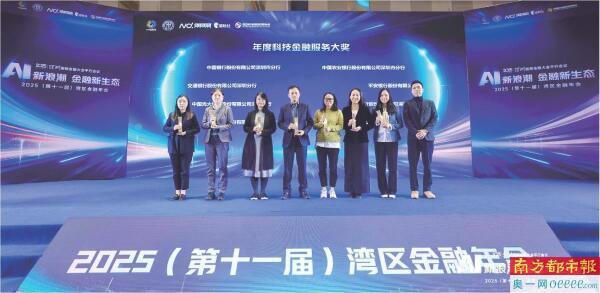
年度科技金融服务大奖
Nan Fang Du Shi Bao· 2025-11-24 23:11
Core Insights - The article highlights the recognition of various banks in Shenzhen for their contributions to providing high-quality financial services to technology innovation enterprises, thereby supporting the development of new industries and economic models [2][3][4][5]. Group 1: Awarded Institutions - The awarded institutions include major banks such as Bank of China, Agricultural Bank of China, Bank of Communications, Ping An Bank, China Everbright Bank, Shanghai Bank, Guangfa Bank, and Zhuhai Huaren Bank [2]. Group 2: Contributions of Awarded Banks - **Bank of China Shenzhen Branch**: Focused on inclusive finance and key industries, serving over 15,000 local tech enterprises with technology loans exceeding 270 billion yuan, and loans for strategic emerging industries and manufacturing surpassing 200 billion yuan each [2]. - **Agricultural Bank of China Shenzhen Branch**: Innovated multiple financial products, including the first knowledge property asset-backed note and a customized loan product for drone technology enterprises [2]. - **Bank of Communications Shenzhen Branch**: Developed the "Kechuang Pengfei Loan" to address financing difficulties for small and medium-sized tech enterprises by integrating 12 lending dimensions into the assessment system [3]. - **Ping An Bank**: Established a technology finance center to create a comprehensive financial service system covering the entire lifecycle of tech enterprises, with specialized teams in key branches [3]. - **China Everbright Bank Shenzhen Branch**: Built a specialized service team and innovative "Sunshine Innovation" products to support enterprises throughout their lifecycle [3]. - **Shanghai Bank Shenzhen Branch**: Focused on providing diversified financial support for tech innovation enterprises, establishing a unique "12345" technology finance service system [3]. - **Guangfa Bank Shenzhen Branch**: Emphasized customer-centric high-quality development and created a comprehensive technology finance service system [4]. - **Zhuhai Huaren Bank**: Engaged in the Bay Area development, focusing on integrating finance with industry to create a technology-driven specialty industrial bank [5].

24家A股银行将现金分红超2600亿元
2 1 Shi Ji Jing Ji Bao Dao· 2025-11-24 12:56
Core Viewpoint - The recent surge in stock prices of major Chinese banks is driven by their mid-term dividend announcements, with a total cash dividend amounting to 2637.90 billion yuan for 2025, indicating significant investment potential in the banking sector [2][4]. Dividend Announcements - As of November 24, 2025, 24 A-share listed banks have disclosed their mid-term dividend plans, with a total cash dividend of 2638 billion yuan [4]. - Notably, seven banks, including Industrial Bank, Changsha Bank, and Ningbo Bank, are implementing mid-term dividends for the first time since their listings [2]. - The six major state-owned banks are expected to distribute over 2046 billion yuan in dividends [5]. Dividend Yield - The average dividend yield for listed banks as of November 24 is 4.48%, with 12 banks yielding over 5% and 26 banks exceeding 4% [6]. - Specific banks like Bank of Communications and China Construction Bank have dividend yields of 4.18% and 3.93%, respectively [6]. Shareholder and Executive Buybacks - There has been a notable increase in share buybacks by major shareholders and executives of listed banks, signaling positive market sentiment [8]. - For instance, Chengdu Bank's major shareholders have collectively bought approximately 34.25 million shares, investing 6.11 billion yuan from August 27 to November 21 [8]. - Nanjing Bank reported that foreign shareholder BNP Paribas increased its stake by over 128 million shares, raising its ownership to 18.06% [9]. Overall Market Sentiment - The banking sector has seen a net increase in holdings exceeding 9 billion yuan, with significant buybacks from shareholders and executives across multiple banks [10]. - The proactive buyback activities reflect confidence in the banks' future strategies and growth prospects, with the banking sector ranking second in shareholder buybacks this year, only behind the transportation sector [10].



24家A股银行将现金分红超2600亿元
21世纪经济报道· 2025-11-24 12:38
Core Viewpoint - The recent surge in stock prices of major banks in China is driven by their mid-term dividend announcements, with a total cash dividend amounting to 2638 billion yuan for 2025, indicating significant value potential in the banking sector [2][3][4]. Dividend Announcements - As of November 24, 2025, 24 A-share listed banks have disclosed their mid-term dividend plans, with a total cash dividend of 2638 billion yuan, including first-time mid-term dividends from seven banks [2][4]. - Notably, Wuxi Bank announced a cash dividend of 0.11 yuan per share, totaling 2.41 billion yuan, with the ex-dividend date on November 25, 2025 [4]. - Hangzhou Bank plans to distribute a cash dividend of 0.38 yuan per share, amounting to 27.55 billion yuan, reflecting a 24.10% increase from the previous year [4]. Dividend Yields - The average dividend yield for listed banks as of November 24 is 4.48%, with 12 banks yielding over 5% and 26 banks over 4% [5]. - Major banks like Bank of Communications and Agricultural Bank of China have lower yields, ranging from 3% to 4.18% [5]. Shareholder and Executive Buybacks - There has been a notable increase in share buybacks by major shareholders and executives, signaling positive market sentiment [7][8]. - For instance, Chengdu Bank's major shareholders increased their holdings by approximately 34.24 million shares, investing 611 million yuan [7]. - The banking sector has seen a total of 126.30 billion yuan in buybacks this year, ranking second among industry sectors [8]. Market Performance and Outlook - The banking sector has experienced a net increase in holdings exceeding 90 billion yuan, with significant support for stock prices from shareholder buybacks [6][9]. - Analysts suggest that the upcoming long-term capital allocation period at year-end will further enhance the market performance of bank stocks [9].



城商行板块11月24日跌0.54%,上海银行领跌,主力资金净流入5649.9万元
Zheng Xing Xing Ye Ri Bao· 2025-11-24 09:12
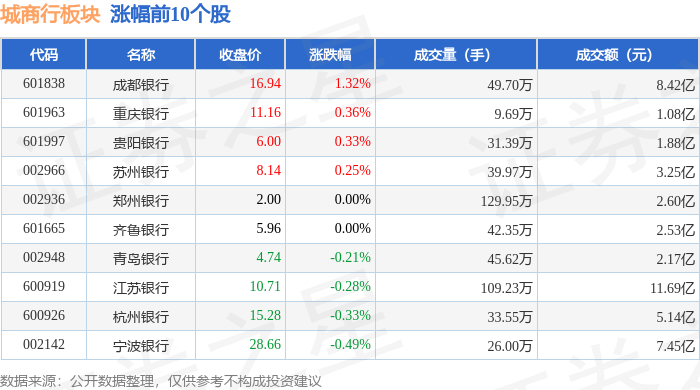
Core Viewpoint - The city commercial bank sector experienced a decline of 0.54% on November 24, with Shanghai Bank leading the drop, while the overall market indices showed slight increases [1][2]. Group 1: Market Performance - The Shanghai Composite Index closed at 3836.77, up 0.05%, and the Shenzhen Component Index closed at 12585.08, up 0.37% [1]. - The city commercial bank sector's individual stock performance varied, with Chengdu Bank rising by 1.32% to a closing price of 16.94, while Shanghai Bank fell by 1.70% to 9.84 [1][2]. Group 2: Trading Volume and Turnover - Chengdu Bank had a trading volume of 497,000 shares and a turnover of 842 million yuan, while Shanghai Bank had a trading volume of 655,100 shares and a turnover of 649 million yuan [1][2]. - The overall net inflow of funds in the city commercial bank sector was 56.49 million yuan, with retail investors showing a net outflow of 70.16 million yuan [2][3]. Group 3: Fund Flow Analysis - Chengdu Bank saw a net inflow of 97.44 million yuan from major funds, while retail investors had a net outflow of 51.42 million yuan [3]. - Suzhou Bank experienced a net inflow of 40.11 million yuan from major funds, but a net outflow of 32.86 million yuan from retail investors [3].
上海银行深圳分行发起科技金融生态合作倡议
Zhong Guo Jin Rong Xin Xi Wang· 2025-11-24 03:35
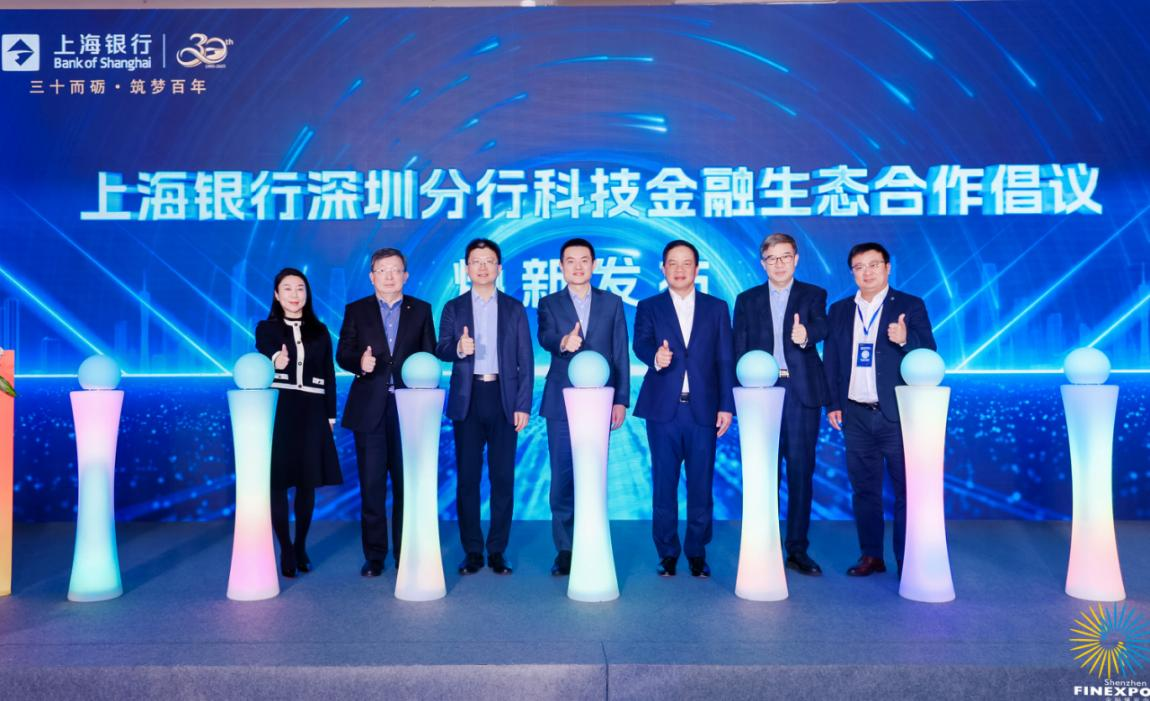
Core Viewpoint - The Shanghai Bank Shenzhen Branch launched a technology finance ecological cooperation initiative aimed at exploring new collaborative paths for technology finance and promoting the transition of technological achievements from laboratories to the market [1][3]. Group 1: Initiative Overview - The initiative is a collaboration among various stakeholders, including government, industry, academia, and finance, to enhance the synergy in technology finance [1][5]. - The initiative emphasizes the transition from isolated efforts to a collaborative ecosystem, described as a "symphony" rather than a "solo" performance [3]. Group 2: Collaborative Paths - Three main collaborative paths were proposed: 1. Connecting universities, research institutes, and venture capital to accelerate the alignment of cutting-edge technologies with industry needs and capital perspectives [3]. 2. Implementing seamless integration of debt and equity financing through models like "investment-loan linkage" and "equity-debt combination" to provide comprehensive financial solutions across the business lifecycle [3]. 3. Facilitating effective communication among scientists, entrepreneurs, and financiers through regular roadshows, salons, and industry matchmaking events [3]. Group 3: Local Development and Financial Support - The Shanghai Bank Shenzhen Branch focuses on serving technology innovation as a core strategy, integrating deeply into Shenzhen's "20+8" industrial cluster development, targeting strategic industries such as new-generation information technology, new energy vehicles, semiconductors, artificial intelligence, and low-altitude economy [4]. - As of September 2025, the bank has served over 2,500 technology enterprise clients, with a technology loan balance exceeding 22 billion yuan, reflecting a 114% increase from the end of 2022 [4]. Group 4: Shared Experiences and Future Plans - Several technology enterprise representatives shared their experiences of growth supported by the bank, highlighting the importance of long-term collaboration [4]. - The Shanghai Bank Shenzhen Branch aims to deepen its technology finance service system and build a sustainable technology finance ecosystem that shares risks and rewards, injecting stronger financial momentum into technology innovation in Shenzhen and the Greater Bay Area [5].
本周在售纯固收理财榜单:互联网银行代销产品收益相对偏低
2 1 Shi Ji Jing Ji Bao Dao· 2025-11-24 01:16
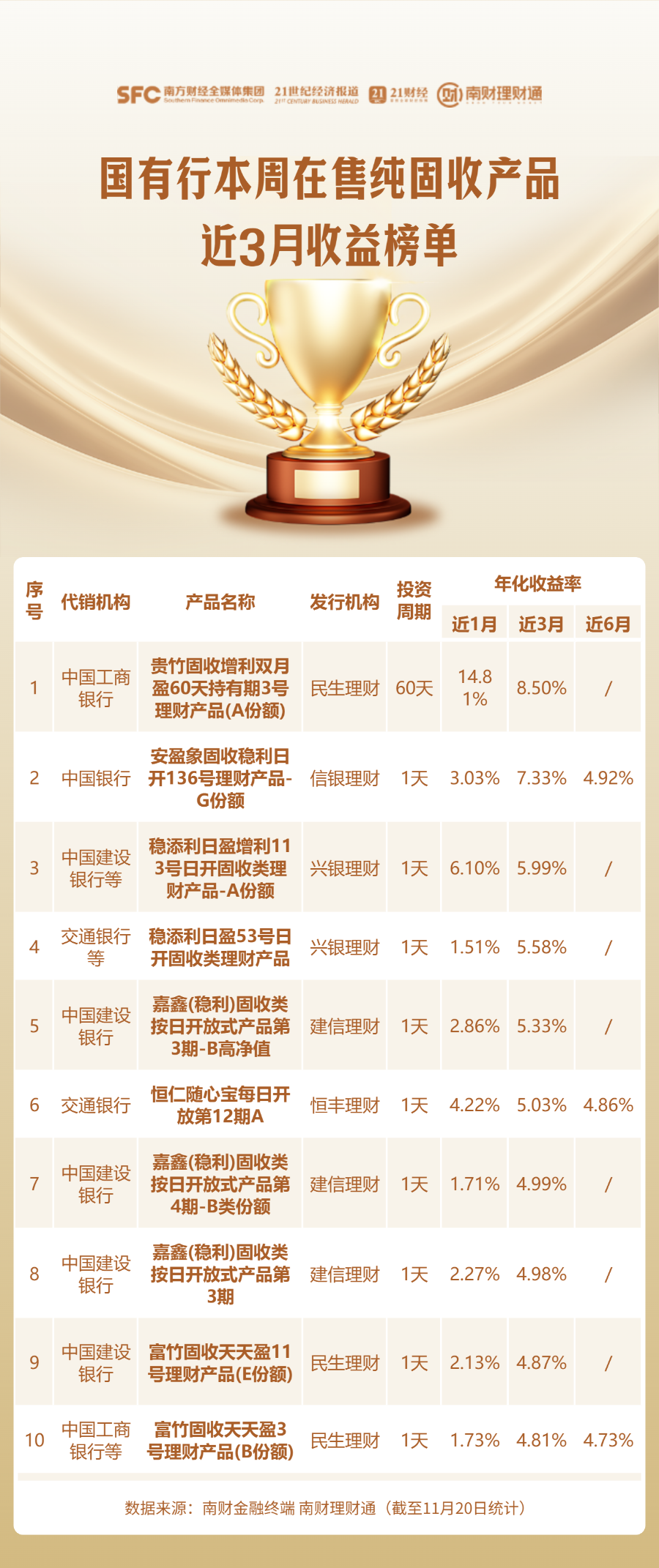
Core Insights - The article emphasizes the abundance of bank wealth management products with similar names and vague characteristics, urging investors to carefully select and differentiate among them [1] - The focus is on pure fixed-income products issued by wealth management companies, providing a performance ranking of these products based on their annualized returns over the past month, three months, and six months [1] Summary by Category Product Performance - The ranking showcases products with outstanding performance, sorted by annualized returns over the past three months to reflect their multidimensional yield performance amid recent market fluctuations [1] - Specific products highlighted include those from Huaxia Bank, which achieved annualized returns of 9.89% over 1 month and 10.92% over 3 months for a 180-day holding period [7] - Other notable products include those from China Bank and China Construction Bank, with varying annualized returns across different holding periods [5][8] Distribution Channels - The article lists 28 distribution institutions, including major banks such as Industrial and Commercial Bank of China, Bank of China, and Agricultural Bank of China, among others [2] - It notes that the availability of products may vary due to factors like sold-out quotas or differences in product listings for different customers, advising investors to refer to the actual displays on bank apps [2] Data Source - The performance data is sourced from the Nanfang Financial Terminal and Nanfang Wealth Management, with statistics as of November 20 [5][12]





撕开“飞单”的三张画皮:揭秘藏身于银行、保险与温情背后的金融镰刀
Xin Lang Cai Jing· 2025-11-21 00:37
Core Viewpoint - The Shanghai Financial Court has highlighted the emerging trends and potential risks associated with financial "fly single" behavior, emphasizing the need for enhanced compliance and consumer protection in the financial industry [1] Group 1: Financial "Fly Single" Behavior - "Fly single" refers to financial institution employees using their positions to privately promote and sell unapproved third-party products, often revealing multiple risks such as employee misconduct and regulatory gaps [1] - The court's reiteration of the "fly single" issue serves as a review of recent financial disputes and sends a clear signal to the industry to strengthen compliance and protect consumer rights [1] Group 2: Case Analysis - The case involving Shanghai Bank's employee selling unauthorized private funds illustrates the clear delineation of institutional responsibilities under the "industrialized promotion" model, with significant losses incurred by clients, particularly elderly individuals [3][4] - The court found that the bank failed to fulfill its supervisory responsibilities, leading to a ruling that the bank must compensate the affected client for a substantial loss [4] - The case also revealed the typical characteristics of "industrialized fly single," where bank employees collude with external entities to misrepresent products, harming investor interests and undermining compliant financial institutions [4] Group 3: Risks in Partnerships - The "hollow sales" case involving a non-licensed platform, Thick Ben Financial, highlights the risks associated with partnerships between unqualified platforms and licensed institutions, leading to significant investor losses [6][7] - The court ruled that the licensed institution, China Insurance, was not liable for investor losses due to its fulfillment of basic management obligations after terminating cooperation with the unlicensed platform [8] Group 4: Targeting Vulnerable Groups - The "precision hunting" model targets vulnerable elderly individuals, exploiting established trust relationships to perpetrate fraud through fake insurance contracts and misleading investment products [10][11] - The court emphasized the need for financial institutions to strengthen management and ethical education for employees, particularly those dealing with elderly clients, to prevent exploitation [12] Group 5: Common Causes of "Fly Single" Risks - The three cases reflect common causes of "fly single" risks, including gaps in employee behavior management, inadequate scrutiny of partner qualifications, and insufficient consumer risk awareness [14] - Regulatory bodies have adopted stringent measures to enhance governance, maintaining a "zero tolerance" approach towards employee misconduct [14][15] - Financial institutions must improve internal controls and adhere to suitability management obligations to prevent internal exploitation of positions for "fly single" activities [15]
银行ETF指数(512730)涨超1.6%,银行估值仍处于历史偏低水平
Xin Lang Cai Jing· 2025-11-20 03:43
Group 1 - The core viewpoint indicates a strong performance in the banking sector, with the China Securities Bank Index rising by 1.73% and individual stocks like Bank of China and Construction Bank showing significant gains [1] - The banking sector is experiencing a defensive style resurgence, with the total market capitalization of A-shares surpassing 2.25 trillion [1] - Current credit growth is slowing down, and social financing growth is also retreating from high levels, although policies are in place to support demand recovery [1] Group 2 - The banking sector's retail risk has increased but remains manageable, supported by substantial provisioning and stable dividend policies [1] - The advantages of banks in areas such as gold markets, wealth management, and investment banking contribute to differentiated valuations within the sector [1] - The valuation of banks is still at historically low levels, and there is potential for medium to long-term capital allocation, making increased investment in the banking sector a favorable choice [1] Group 3 - The Bank ETF Index closely tracks the China Securities Bank Index and serves as an analytical tool for investors [2] - As of October 31, 2025, the top ten weighted stocks in the China Securities Bank Index account for 64.87% of the index, highlighting the concentration of investment in major banks [2]