
PICC(601319)

Search documents
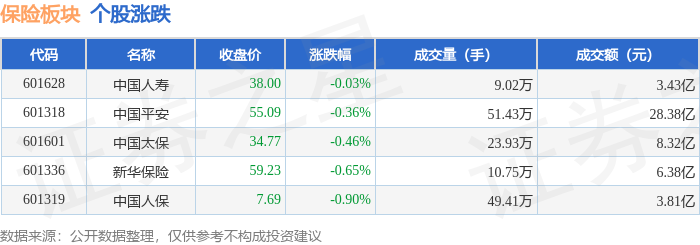
保险板块9月25日跌0.33%,中国人保领跌,主力资金净流出2.74亿元
Zheng Xing Xing Ye Ri Bao· 2025-09-25 08:37
证券之星消息,9月25日保险板块较上一交易日下跌0.33%,中国人保领跌。当日上证指数报收于 3853.3,下跌0.01%。深证成指报收于13445.9,上涨0.67%。保险板块个股涨跌见下表: 从资金流向上来看,当日保险板块主力资金净流出2.74亿元,游资资金净流出4946.39万元,散户资金净 流入3.23亿元。保险板块个股资金流向见下表: | 代码 | 名称 | 主力净流入 (元) | 主力净占比 游资净流入 (元) | | 游资净占比 散户净流入 (元) | | 散户净占比 | | --- | --- | --- | --- | --- | --- | --- | --- | | 601628 中国人寿 | | 1462.03万 | 4.27% | -1235.89万 | -3.61% | -226.14万 | -0.66% | | 601319 中国人保 | | -4068.55万 | -10.68% | 528.42万 | 1.39% | 3540.14万 | 9.30% | | 601601 中国太保 | | -5835.77万 | -7.01% | -4177.25万 | -5.02% | 1 ...






2025上半年度10家上市寿险公司分析
Sou Hu Cai Jing· 2025-09-25 05:38
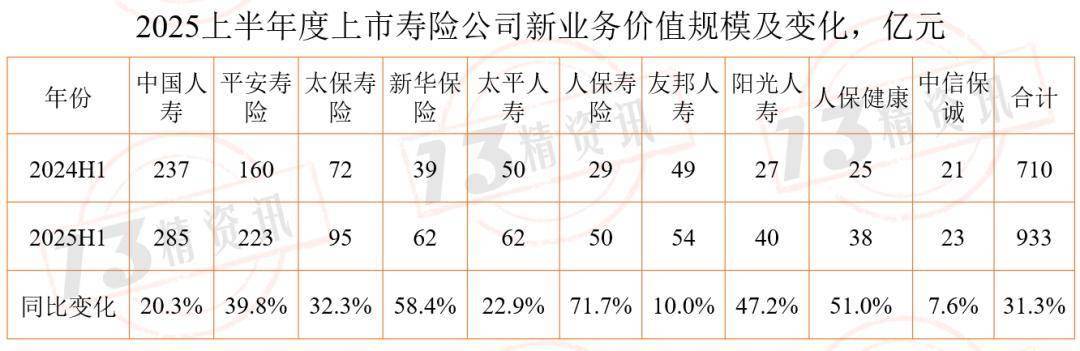
Core Insights - The new business value of listed life insurance companies in China saw a significant increase of 31.3% in the first half of 2025, with all but one company achieving double-digit growth [1][24][26]. New Business Value - In the first half of 2025, the new business value for listed life insurance companies totaled 933 billion yuan, with notable growth from major players such as China Life (285 billion yuan, +20.3%) and Ping An Life (223 billion yuan, +39.8%) [24][25]. - The overall new business value rate for the industry increased by 6.7 percentage points, reaching a weighted average of 27.8% [30][34]. New Single Premiums - The total new single premium income for listed life insurance companies in the first half of 2025 was 5,227 billion yuan, reflecting a year-on-year growth of 7.8% [38]. - However, the agent channel saw a decline of 13.8% in new single premiums, while the bancassurance channel experienced a robust growth of 61.1% [8][16][40]. Factors Influencing Growth - The increase in new business value and value rate is attributed to the adjustment of preset interest rates and the implementation of cost control policies under the "reporting and operation integration" framework [4][14][34]. - The shift from guaranteed products to floating yield products has increased sales difficulty, impacting the attractiveness of insurance products [6][47]. Agent Channel Performance - The number of agents decreased by 2.9% to 1.605 million, with average productivity dropping by 11.3% to 139,000 yuan per agent [51][55]. - Despite the decline in agent numbers, the overall industry is showing resilience through the growth in the bancassurance channel, which compensates for the downturn in the agent channel [64].
保险业屡迎巨灾大考,通用大风险模型能否构建风险管理新格局?
2 1 Shi Ji Jing Ji Bao Dao· 2025-09-25 04:37
Core Insights - The insurance industry faces significant challenges due to frequent climate risks, highlighted by the impact of Typhoon "Hagupit" on southern China, necessitating improved risk management capabilities [1][3] - The establishment of a multi-layered risk-sharing mechanism involving direct insurance companies, catastrophe co-insurance, reinsurance companies, catastrophe bonds, special funds, and government support is crucial for building a "climate-adaptive society" [1][3] - The development of Large Risk Models (LRM) leveraging artificial intelligence is essential for enhancing risk visibility and management in the insurance sector [2][8] Group 1: Climate Risks and Insurance - Typhoon "Hagupit" has caused significant economic losses, with the insurance industry expected to face increasing claims as natural disasters become more frequent [3] - Guangdong province has pioneered catastrophe insurance, accumulating premiums of 860 million yuan and payouts of 1.93 billion yuan during the pilot phase from 2022 to 2024 [1] - The insurance sector is transitioning from post-disaster compensation to a comprehensive risk management approach that includes prevention and mitigation strategies [3][7] Group 2: Technological Advancements in Risk Management - Companies like Ping An have developed advanced systems, such as the "Eagle Eye" system, which utilizes AI and big data for real-time flood forecasting and risk management [4][6] - The insurance industry is increasingly adopting digital tools, including satellite remote sensing and IoT, to enhance risk identification and monitoring capabilities [3][6] - The emergence of AI-driven models is expected to transform risk assessment and management, allowing for real-time monitoring and dynamic evaluation of risks [9][11] Group 3: Future Directions and Opportunities - The integration of AI into risk modeling is seen as a key area for future development, enabling more accurate and responsive risk assessments [8][9] - The potential for LRM to provide real-time pricing mechanisms for catastrophe bonds and enhance climate risk diversification is being explored [9] - The government's push for AI applications in risk prevention indicates a strategic direction for the insurance industry to leverage technology for improved risk management [11]
2025上半年度10家上市寿险公司分析:新业务价值大增31.3%的背后是量价齐升,而新单保费涨7.8%的背后则是渠道切换!
13个精算师· 2025-09-24 11:01
Core Viewpoint - The insurance industry is experiencing a significant recovery in new business value, with a year-on-year increase of 31.3% in the first half of 2025, driven by both volume and price growth across various companies [1][16][18]. Summary by Sections New Business Value - In the first half of 2025, all listed life insurance companies, except for CITIC Prudential, achieved double-digit growth in new business value, with the overall industry growth rate reaching 31.3% [1][16]. - The new business value for major companies includes China Life at 28.5 billion yuan (20.3% increase), Ping An Life at 22.3 billion yuan (39.8% increase), and others showing significant growth rates [18]. New Business Value Rate - The new business value rate for most listed life insurance companies increased significantly, with an overall rise of 6.7 percentage points in the first half of 2025 [3][22]. - Notable increases in new business value rates include Ping An Life at 26.1% (up 8.8 percentage points) and China Life at 32.4% (up 9.2 percentage points) [22][24]. New Policy Premiums - The overall new policy premium for listed life insurance companies reached 522.7 billion yuan, reflecting a year-on-year growth of 7.8% [28]. - However, there was a notable decline in new policy premiums from the agent channel, which dropped by 13.8%, while the bank insurance channel saw a substantial increase of 61.1% [31][39]. Market Dynamics - The insurance sector is transitioning from a "volume and price decline" phase (2018-2022) to a "volume and price increase" phase in 2025, indicating a healthier growth trajectory [48][51]. - The shift in market dynamics is attributed to the effectiveness of the "reporting and operation integration" policy and the adjustment of premium rates, which have improved the new business value rates significantly [40][41]. Agent Channel and Bank Insurance Channel - The agent channel is facing challenges with a decline in the number of agents and average productivity, while the bank insurance channel is experiencing robust growth, indicating a shift in sales strategy [42][39]. - The average productivity of agents decreased by 11.3%, highlighting the ongoing transformation within the agent channel [46]. Conclusion - The insurance industry is showing resilience and adaptability, with a clear trend towards high-quality development characterized by simultaneous growth in new business value and premiums, driven by strategic channel shifts and improved operational efficiencies [51][52].
保险业AI进行时:业务核心环节已渗透,“价值创造”深水区未至
Xin Lang Cai Jing· 2025-09-24 08:46
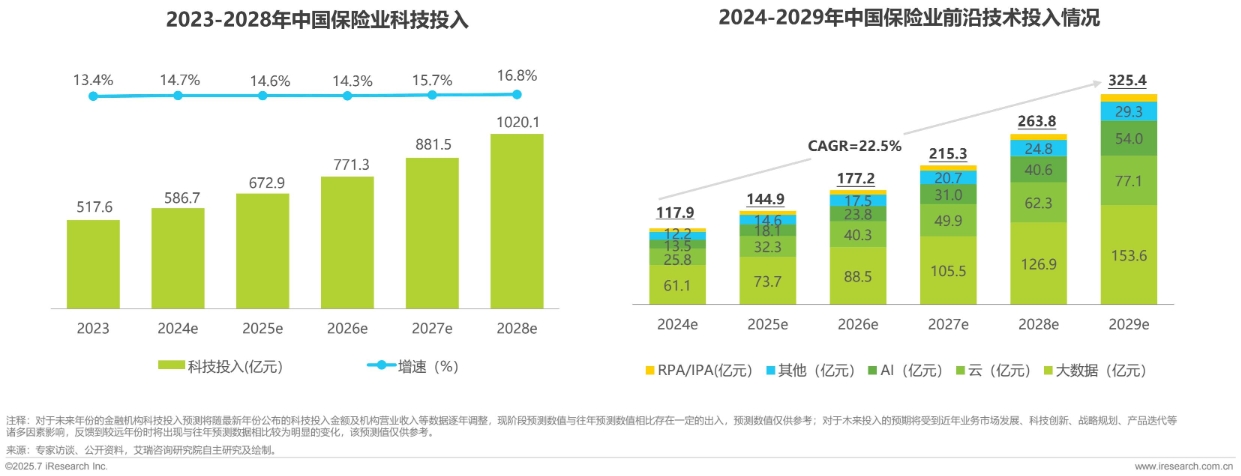
Core Insights - The insurance industry is rapidly adopting AI technologies, with a strategic shift from "ALL in AI" to "AI in ALL" becoming evident this year [1][2] - McKinsey estimates that generative AI could generate productivity gains of up to $70 billion for the insurance sector and $260 billion for the closely related health and wellness industry [2] - The year 2025 is projected to be a turning point for AI applications in the insurance industry, enhancing the capabilities of insurance professionals and automating repetitive tasks [2] Industry Investment and Growth - According to iResearch, total technology investment in the insurance industry is expected to exceed 67 billion yuan by 2025, with a compound annual growth rate of 22.5% [3] - The investment structure is heavily focused on cutting-edge technologies such as big data, cloud computing, and AI, which will optimize business models and drive digital transformation [3] AI Integration in Business Processes - AI has penetrated core business processes in the insurance sector, enhancing customer interaction, underwriting, claims processing, and fraud detection [6][8] - Major insurance companies like China Life, Ping An, and China Pacific Insurance have reported significant improvements in operational efficiency and customer service through AI applications [8][9] Performance Metrics - China Life's digital underwriting has achieved a 95.8% automation rate, while Ping An's instant underwriting accounts for 94% of its policies [10] - Claims automation rates have reached 16% for China Pacific, with a 99% accuracy rate in liability determination [11] - AI-driven sales support has generated 661.57 billion yuan in sales for Ping An, with an 18% increase in policy renewal rates [10] Challenges and Limitations - Despite advancements, the overall progress of AI in the insurance industry remains slow, with only a few leading companies fully implementing AI solutions [12][13] - Data quality, privacy concerns, and the need for continuous model iteration are significant barriers to broader AI adoption [13][14] - The complexity of insurance operations and the high costs associated with training AI models hinder smaller companies from leveraging AI effectively [14] Future Outlook - The future of AI in insurance is expected to drive integration with health management and retirement services, creating new "product + service" models [15] - By 2026, it is predicted that 15% of insurance companies will appoint AI coordinators to enhance the success rate of generative AI projects [15] - The industry is anticipated to see a significant shift towards digital self-service interactions, improving customer satisfaction and operational efficiency [15]
11位牛散征战中国人保:神秘人三年赚上亿
投中网· 2025-09-24 07:17
Core Viewpoint - The article discusses the investment behavior of individual investors in China Life Insurance, highlighting the persistence of investor Kong Fengquan despite significant stock price fluctuations and the overall performance of the company in recent years [6][7][25]. Group 1: Investment Behavior of Individual Investors - Kong Fengquan has consistently appeared among the top ten shareholders of China Life Insurance, increasing his holdings from 16.63 million shares in Q3 2022 to 50.96 million shares, maintaining his position even during a 45% decline in stock price [6][7]. - As of September 15, 2024, the stock price of China Life Insurance reached 8.15 yuan, resulting in a market value of approximately 415 million yuan for Kong Fengquan's holdings, which were acquired at an estimated cost of 265 million yuan, yielding a floating profit of 150 million yuan over three years [7][8]. - Other individual investors have also entered and exited the top ten shareholders list, but none have shown the same level of commitment as Kong Fengquan [8][20]. Group 2: Company Performance and Shareholder Dynamics - China Life Insurance has experienced significant fluctuations in its performance since its A-share listing, with net profits showing a pattern of ups and downs, including a notable increase of 83.8% in 2024, reaching 57.82 billion yuan [25][28]. - The company’s original insurance premium income has steadily increased from 600 billion yuan in 2022 to 693.015 billion yuan in 2024, with a 6.4% year-on-year growth in the first half of 2024 [27][28]. - The article notes a shift in the company’s business strategy, focusing on transforming its operations and expanding into new areas such as life and health insurance, which has contributed to its recent performance improvements [28]. Group 3: Management Changes - The company has undergone multiple leadership changes, with significant shifts in management impacting its strategic direction. Notably, after the departure of Chairman Luo Xi, who aimed for substantial reforms, the company appointed Wang Tingke, who also resigned within a year and a half, leading to the appointment of Ding Xiangqun as the first female chairman [28][29].

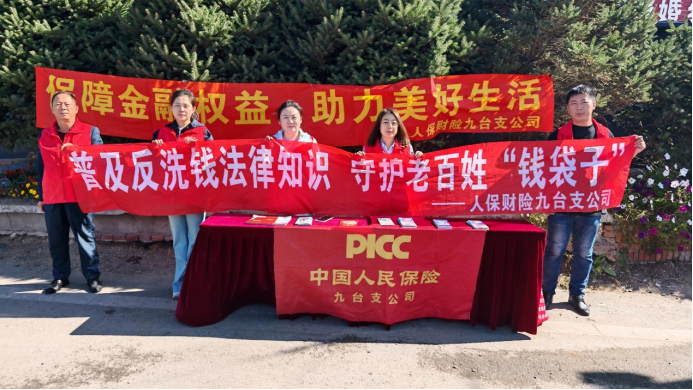
人保财险九台支公司:联动协作+精准触达 扎实开展金融教育周宣传活动
Zhong Guo Jin Rong Xin Xi Wang· 2025-09-24 07:03
Core Viewpoint - The company actively participated in the "Financial Education Promotion Week" to enhance financial knowledge and fraud prevention awareness among the public, focusing on the theme "Protecting Financial Rights to Support a Better Life" [1] Group 1: Workplace Promotion - The company established the workplace as the main venue for financial consumer protection promotion, displaying posters and brochures on key topics such as telecom fraud prevention and insurance consumer rights [3] - One-on-one explanations were provided to clients to guide them in rationally selecting insurance products, thereby strengthening the financial safety net [3] Group 2: Market Engagement - The company collaborated with the life insurance division to conduct outreach at local markets, using banners and brochures to educate the public on identifying false insurance promotions and protecting personal information [4] - Special attention was given to vulnerable groups, such as the elderly and merchants, through personalized communication to help them avoid financial pitfalls [4] Group 3: Community Outreach - The company organized teams to visit rural areas, integrating financial consumer protection education with agricultural insurance services [6] - Farmers were informed about insurance claim processes and how to prevent financial fraud in agriculture, addressing their specific questions and concerns [4][6] Group 4: Overall Impact - The financial education activities effectively filled the gap in financial knowledge dissemination in rural areas, enhancing the public's financial literacy and risk awareness [6] - The company plans to continue integrating financial education with daily services, exploring more grassroots-oriented promotional methods to contribute to a safe financial environment and local economic development [6]
银保渠道崛起!低利率时代,险企如何深耕实现业务增长?
Huan Qiu Wang· 2025-09-24 05:20
Core Insights - The life insurance industry is undergoing significant changes due to a continuous decline in preset interest rates and the implementation of the "reporting and operation integration" policy, leading to a shift towards a transparent fee structure and a focus on dividend insurance products [1][4]. Group 1: Sales Channel Dynamics - The bancassurance channel has seen a substantial transformation, with major insurance companies reporting significant growth in premium income from this channel. For instance, China Life's bancassurance premiums reached 72.44 billion yuan, a year-on-year increase of 45.7% [2]. - In the first half of 2025, New China Life's bancassurance premiums totaled 46.19 billion yuan, up 65.1%, while Taiping Life's premiums grew by 82.6% to 41.66 billion yuan [2]. - The individual insurance channel's performance has lagged, with some companies experiencing a decline in new business volume, highlighting the need for large insurers to reassess the value of the bancassurance channel [2][4]. Group 2: New Business Value - New business value, a key indicator of an insurance company's profitability and sustainability, has shown remarkable growth in the bancassurance channel, with companies like Taiping Life and New China Life reporting over 100% year-on-year growth in this area [3]. - The contribution of new business value from the bancassurance channel for New China Life and People’s Insurance has exceeded 50%, indicating its critical role in overall business performance [3]. Group 3: Product Strategy - The decline in product attractiveness due to lower interest rates has prompted insurers to adjust their product structures, with dividend insurance emerging as a strategic option due to its combination of guaranteed and floating returns [6]. - Dividend insurance is particularly suited for the bancassurance channel, as it aligns with customer preferences for stable returns and is easier for bank staff to sell compared to more complex products [8]. Group 4: Challenges for Smaller Insurers - Smaller insurers face heightened challenges in the current environment, struggling to compete for bancassurance resources due to the transparency of fees and the preference of banks for larger, more established companies [9]. - To navigate these challenges, smaller insurers are encouraged to focus on product differentiation, establish exclusive partnerships with regional banks, and leverage digital tools to enhance channel efficiency [9]. Group 5: Strategic Recommendations - The bancassurance channel is seen as a vital growth engine, complementing the individual insurance channel, which requires a professional transformation to enhance customer experience [10]. - Insurers are advised to promote multi-channel collaboration, ensuring that both bancassurance and individual channels work synergistically to maximize market potential [10].

平均赔付率45%,你买的短期健康险真的赔到了吗?
经济观察报· 2025-09-24 02:30
Core Viewpoint - The comprehensive claim ratio of short-term health insurance in the industry is low, with a median of 42.12% and an average of 45%, indicating insufficient consumer protection and trust in insurance companies [1][3][4]. Summary by Sections Comprehensive Claim Ratio - The comprehensive claim ratio is a crucial indicator of insurance product protection, with a higher value indicating more payouts to consumers [4]. - The current ratio of around 45% is considered low, with industry professionals suggesting a more reasonable range of 50%-70% for better consumer experience and sustainable operations [4][11]. Trends Over Time - From 2023 to the first half of 2025, the median claim ratio for life insurance companies increased from 38.83% to 42.12%, while for property insurance companies, it rose from 38.70% to 42.30% [6]. - Among the insurers reporting data, 11 had negative claim ratios, and 9 exceeded 100%, with 44 companies falling between 0%-40% and 33 between 40%-60% [6]. Company Performance - Major insurers like China Life, Ping An Health, and others have claim ratios above 50%, while companies like Zhong An Insurance and Tai Kang Online have significantly lower ratios [11]. - The disparity in claim ratios among companies is influenced by their product focus, with those offering broader coverage typically having higher ratios [14]. Cost Structure and Profitability - Low claim ratios do not necessarily equate to high profits for insurance companies, as high operational costs can offset potential gains [13]. - The competitive landscape for acquiring customers, especially through digital channels, has led to increased costs, impacting claim ratios [13]. Market Dynamics - The importance of commercial health insurance is growing, especially with reforms in payment methods that open new opportunities for development [16]. - The current short-term health insurance products primarily cover out-of-pocket expenses after basic insurance reimbursements, often with high deductibles [16]. Future Outlook - There is a recognized need to improve the claim ratio by at least 20 percentage points to enhance consumer satisfaction and trust [16]. - Strategies to increase consumer engagement and expand coverage are being explored, including targeting sub-healthy and sick populations [18][19]. - Government initiatives to support group health insurance purchases may provide a significant boost to the commercial health insurance market [20].




健康管理赛道悄然升温
Zhong Guo Zheng Quan Bao· 2025-09-23 20:16
Core Insights - The insurance industry is increasingly investing in health insurance products and services, with a notable growth in mid-to-high-end medical insurance, which has become a highly competitive area [1][2] - Medical insurance has significantly outperformed critical illness insurance, emerging as a new pillar in the health insurance market [2][3] - Health management services are becoming more integrated with insurance offerings, with companies establishing specialized health management firms to enhance their service capabilities [1][3] Group 1: Medical Insurance Development - Medical insurance is now the main battleground for major insurance companies, leading to a structural change in the health insurance market [2] - The introduction of DRG (Diagnosis-Related Group) and DIP (Disease-Related Payment) reforms is creating new opportunities for product innovation in commercial health insurance [1][2] - Companies are focusing on one-year health insurance products, particularly in the mid-to-high-end medical insurance segment [1] Group 2: Integration of Health Management Services - Insurance companies are embedding health management services into health insurance products to encourage self-health management among clients [2][3] - The new "National Ten Articles" policy encourages the integration of commercial health insurance with health management services, aiming to enhance service levels [2] Group 3: Building a Health Ecosystem - Leading insurance companies are establishing specialized health management firms to create a comprehensive health ecosystem that supports their core business [3][4] - The focus is on transitioning from traditional reimbursement models to managed care, enhancing the synergy between various business segments [4] - The future of the health ecosystem is expected to be more robust, with improved health management functions and increased competitiveness of health insurance products [4]