ICBC(601398)

Search documents
专属存款利率“反超” 银行抢滩压岁钱生意
Bei Jing Shang Bao· 2026-02-23 16:26
Core Viewpoint - The increasing focus of banks on children's financial products, particularly for managing "lucky money" during the Spring Festival, reflects a strategic move to secure long-term low-cost funding and engage younger customers, ultimately enhancing banks' long-term profitability and customer loyalty [1][4]. Group 1: Bank Initiatives - Multiple banks, including major state-owned and joint-stock banks, have launched dedicated savings and investment products for minors, addressing the financial management needs of parents and children during the Spring Festival [2][3]. - Industrial and Commercial Bank of China (ICBC) introduced a "parent-child exclusive account" that allows children to plan their investments while parents can monitor account activities, promoting financial literacy from a young age [2]. - Other banks, such as Huaxia Bank and China Merchants Bank, have developed differentiated products like the "Sunshine Growth Plan" and "Golden Little Sun" to cater to children's savings and investment needs [3]. Group 2: Product Features and Benefits - Children's savings products often feature lower entry thresholds and higher interest rates compared to adult products, with some banks offering rates as high as 1.9% for deposits starting at 50 yuan [5][6]. - The "Sunshine Baby Card" from Beijing Rural Commercial Bank offers competitive rates for minors, outperforming adult savings accounts, highlighting the banks' strategy to attract long-term customers [5][6]. - The pricing strategy for children's accounts is seen as a customer acquisition subsidy, providing banks with a long-term customer base that can yield high returns over 50-60 years [6]. Group 3: Market Trends and Analysis - Analysts suggest that banks are shifting from traditional corporate and retail banking to a more segmented approach that includes all age groups, focusing on children's financial products as a means to secure stable funding and enhance customer engagement [4]. - The children's financial market is viewed as a strategic opportunity for banks to build relationships with entire families, potentially leading to increased demand for related financial services such as insurance and education funds [4][6]. - The operational costs associated with managing children's accounts are lower due to reduced transaction frequency and lower fraud risk, making them an attractive segment for banks [6].



孩子压岁钱存款利率竟比成人“香”?多家银行扎堆争抢“小客户”
Bei Jing Shang Bao· 2026-02-23 10:53
Core Viewpoint - The article discusses the increasing trend of banks launching specialized savings and investment products for minors, particularly targeting the management of "lucky money" received during the Spring Festival, which reflects a growing focus on financial education and long-term customer engagement in the banking sector [1][5]. Group 1: Bank Initiatives - Multiple banks, including major state-owned and joint-stock banks, have introduced dedicated savings and investment products for minors to meet the financial management needs of parents and children during the Spring Festival [3][4]. - For instance, Industrial and Commercial Bank of China has launched a "parent-child exclusive account" that allows children to plan their investments while parents can monitor the account [3][4]. - Other banks like Huaxia Bank and China Merchants Bank have also rolled out unique products, such as the "Sunshine Growth Plan" and "Golden Little Aui Manager," which offer various savings and investment options tailored for minors [4][5]. Group 2: Product Features and Benefits - The current offerings focus on three main types: exclusive savings or card accounts for minors, specialized fixed deposits or unique savings products, and parent-child co-management financial solutions [4][5]. - Some children's savings products have interest rates that surpass those of adult products, with examples like Guangxi Beibu Gulf Bank offering a maximum annual interest rate of 1.9% for a minimum deposit of 50 yuan [6][7]. - The interest rates for children's products are often more attractive than those for adults, which can help banks attract long-term customers and their families [7][8]. Group 3: Strategic Rationale - The push into children's financial products is driven by banks facing pressure on net interest margins and the need to explore new profit avenues [5][8]. - Children's financial products allow banks to secure low-cost, long-term funding while also binding the entire family as customers, which can lead to increased business in areas like wealth management, insurance, and education funds [5][8]. - The emotional connection formed with a child's first bank can foster long-term brand loyalty, making it a strategic move for banks to invest in this demographic [8][9].


工行成都分行探路银发经济金融服务
Zhong Guo Jin Rong Xin Xi Wang· 2026-02-23 01:52
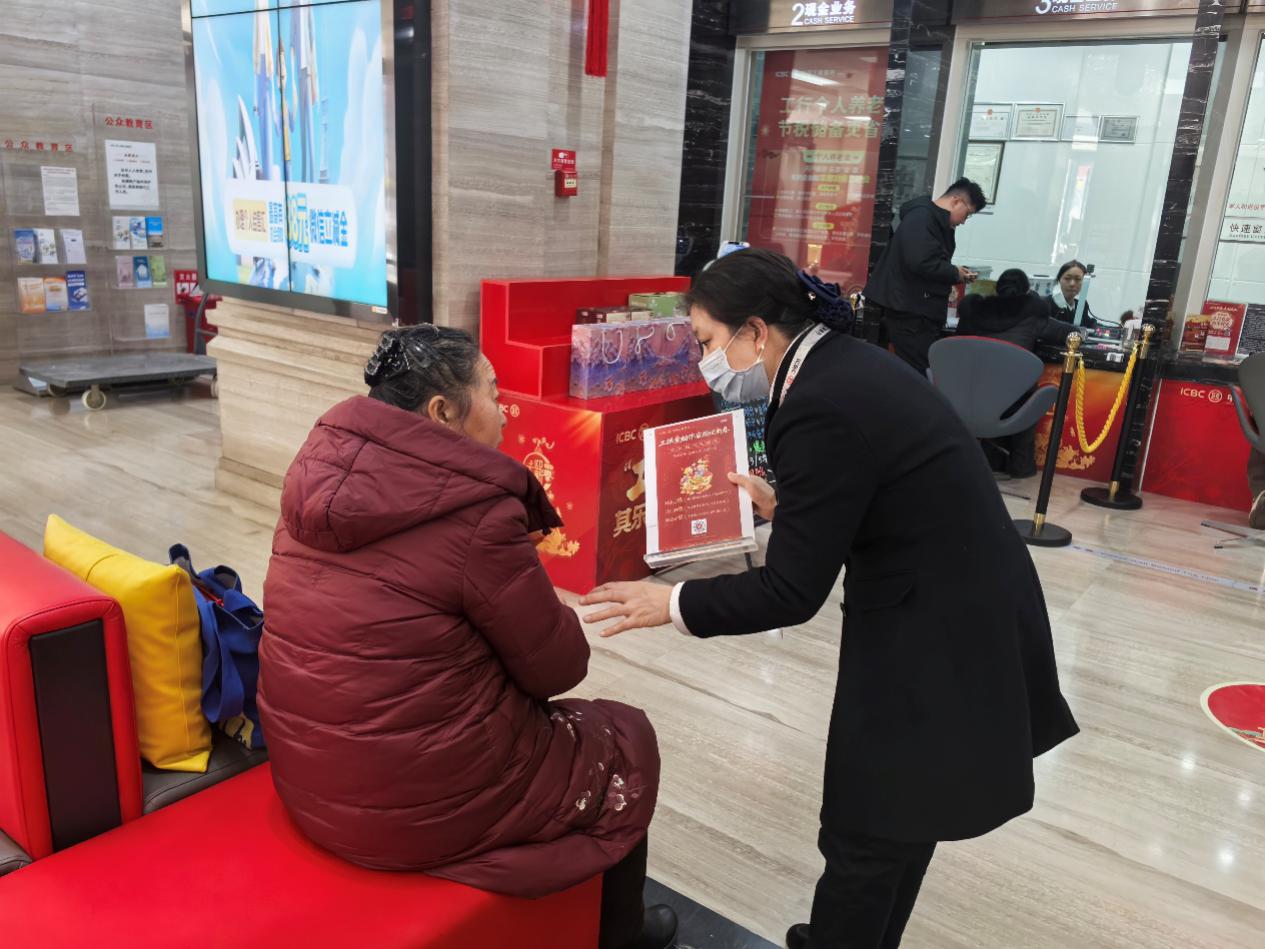
转自:新华财经 马年新春期间,工行成都分行启动"温暖年"新春敬长周活动。活动聚焦老年客群日常高频生活场景,通过社区食堂满减、网点零钱兑换领立减金等务实举 措,将金融服务嵌入长者"一日三餐"与"家门口"的便民场景。 在成华区一社区食堂,持工行卡用餐可享受每餐立减优惠。居民李婆婆算了一笔账:"一个月下来,省出来的钱够再吃好几顿。"工行成都沙河支行与辖内社 区食堂合作的满减活动,让金融优惠直达消费末端。大年初二,在工行网点兑换零钱的王阿姨,也在工作人员指导下现场领到微信立减金。 网点内工作人员细心指导王阿姨领取敬老日权益 突破养老金融落地"最后一公里",是此次活动的核心目标。在工行总行"工银爱相伴"战略框架下,工行成都分行推出本地化养老金融服务品牌"安颐悦成 都",以网点为支点,联动街道、社区及银龄友好商户,逐步构建多方协同的区域养老服务生态。 在成都老龄化程度持续加深、银发经济规模快速扩大的背景下,金融机构如何从"适老改造"走向"体系化服务",已成为普惠金融的重要命题。"这次以社区 为最小单元、以支付优惠为切口的活动就是一次很好的探索。"工行成都分行相关负责人说,该行针对老年客群的服务并非阶段性活动,而是已纳入网 ...
透过交易数据看清表象背后的真实经济
李迅雷金融与投资· 2026-02-22 23:38
Core Insights - The article emphasizes the importance of data analysis in understanding economic trends and correcting cognitive biases, highlighting that market behavior can be categorized into real economy transactions and virtual economy transactions [1][2]. Group 1: Foreign Trade and Economic Insights - In 2025, China's net export contribution to GDP growth is projected to reach 32.7%, yet the export share of global markets is expected to decline compared to 2024, with the peak occurring in 2021 [3][5]. - The decline in China's export price index (in USD) by approximately 19% from 2023 to 2025, coupled with a stagnant PPI over the past 15 years, indicates a significant issue of overcapacity in the country [5][8]. - The anticipated 0.5% growth in imports by 2025 suggests a strong external demand but weak internal demand, reflecting a supply-demand imbalance in the economy [8]. Group 2: Investment Opportunities in Africa - From 2019 to 2025, China's export share to emerging economies like ASEAN and Africa has increased, with Africa showing a 26.3% growth in exports in the first 11 months of 2025, indicating strong demand [9][12]. - Africa's demographic advantage, with a youthful population and low urbanization rates, presents significant investment opportunities, contrasting with India's declining fertility rates [12]. Group 3: Stock Market Analysis - In 2024, 63.4% of A-share trading volume came from companies with a market cap below 30 billion RMB, while only 17.7% came from companies above 100 billion RMB, indicating a speculative nature in the A-share market [13][14]. - The disparity in return on equity (ROE) between U.S. and Chinese markets is notable, with U.S. companies averaging 9.96% ROE compared to 18.5% for Chinese companies from 2020 to 2024 [14][15]. - The concentration of wealth in the U.S. stock market is evident, with 12.5% of companies generating all net wealth growth, highlighting a significant disparity in wealth distribution [17][18]. Group 4: Real Estate Market Trends - The article discusses the correlation between luxury goods sales and real estate trends, suggesting that changes in luxury consumption may serve as leading indicators for the housing market [27][31]. - The decline in population mobility since 2015 indicates a slowdown in urbanization, negatively impacting the real estate market, with a shift from a broad bull market to a structural bull market [31][33]. - The article argues against the notion that rising second-hand home transaction volumes indicate a market bottom, emphasizing the need for a comprehensive analysis of valuation metrics like rental yield [33][34]. Group 5: Economic and Employment Challenges - The article highlights that while the labor force is declining, employment pressure remains high, with significant increases in social security and employment-related expenditures projected for the coming years [19][21]. - The rise of AI and its potential to replace jobs in various sectors poses a significant challenge for future employment, particularly in industries like software and consulting [18][19].



工行成都分行全链路布局“一卡畅游”马年春节
Zhong Guo Jin Rong Xin Xi Wang· 2026-02-22 11:22
Core Insights - The article highlights the seamless payment experience facilitated by Industrial and Commercial Bank of China (ICBC) in Chengdu during the Spring Festival, enhancing the festive atmosphere through integrated payment solutions [1][2] Group 1: Payment Solutions - ICBC Chengdu has implemented a comprehensive payment system that connects various services such as airports, hotels, scenic spots, and shopping districts, allowing for a smooth transaction experience for users [1] - Tourists can use ICBC cards for various payments, including ski equipment rentals and dining at mountain restaurants, making the payment process feel effortless [1] - The bank has set up smart terminals that integrate payment processes into the customer journey, enhancing the overall experience without the need for cash [1] Group 2: Benefits for Local and Foreign Tourists - The payment solutions are not only beneficial for local tourists but also cater to foreign visitors arriving at Chengdu's airports, allowing them to use international cards for public transport and other services [2] - ICBC Chengdu has made Chengdu the first city in China to support direct card payments for public transport for both domestic and international cards, enhancing the convenience for travelers [2] - The integration of foreign card payments with instant tax refund services in shopping areas provides a seamless experience for international tourists, contributing to a warm and welcoming atmosphere in the city [2]
银行股分红大比拼!谁才是真现金奶牛?
Sou Hu Cai Jing· 2026-02-22 08:54
Core Viewpoint - The article highlights the significant cash dividends offered by major Chinese banks, positioning them as reliable investment options compared to traditional financial products in a volatile market [2][10]. Dividend Overview - In 2024, the total dividends from China's six major state-owned banks are expected to exceed 420 billion yuan, accounting for 78% of the entire banking sector's dividends [6]. - Industrial and Commercial Bank of China (ICBC) leads with a total dividend payout of 109.8 billion yuan, followed by China Construction Bank (CCB) with nearly 100 billion yuan [6]. - Agricultural Bank of China (ABC) and Bank of China (BOC) each exceed 60 billion yuan in annual dividends, showcasing strong performance [6]. Dividend Policy and Stability - The China Securities Regulatory Commission encourages cash dividends, with state-owned banks maintaining a dividend payout ratio of over 30% [9]. - Some joint-stock banks, like China Merchants Bank, have even higher payout ratios exceeding 35% [9]. - The introduction of mid-year dividends alongside annual dividends effectively doubles the cash flow for investors [9]. Yield Comparison - The average dividend yield for major state-owned banks ranges from 4.2% to 5.8% in A-shares, with Hong Kong shares reaching around 7% [9]. - Agricultural Bank of China boasts an average dividend yield of 6.41% over the past five years, significantly outperforming the current one-year fixed deposit rate of approximately 1.5% [9]. Investment Characteristics - Bank stocks are characterized by consistent dividends, making them suitable for conservative investors and long-term holdings [10]. - The article emphasizes that bank stocks are not about capital gains but rather about stable cash flow and dividends, providing a sense of security for investors [10]. - The low volatility of bank stocks makes them ideal for retirement planning and managing family savings [10].


黄金跌价,金条降价,2026年02月19日,国内黄金最新价格,各大银行黄金金条最新价格
Sou Hu Cai Jing· 2026-02-21 06:02
Core Viewpoint - The domestic gold market experienced slight fluctuations on February 19, 2026, with gold prices showing a minor decline, impacting the prices of gold bars and various gold products [1] Group 1: Gold Purity Standards and Prices - Gold products with a gold content greater than 990‰ are classified as "foot gold," with various purity levels available in the market, including ≥990‰, ≥999‰, ≥99.99%, and ≥99.999% [1] - High-purity gold, such as 99.99% and 99.999%, is ideal for high-end jewelry due to its excellent color and malleability, while 9999 gold is favored by investors for its higher value retention [1] - The latest prices for various gold products are as follows: - Domestic gold 9995: 1103.80 CNY/gram - Domestic gold 9999: 1103.80 CNY/gram - Domestic 9999 foot gold: 1110.40 CNY/gram - Domestic foot gold: 1124.00 CNY/gram - Domestic gold: 1108.50 CNY/gram - Domestic investment gold bars: 1122.00 CNY/gram [1] Group 2: Bank Gold Bar Quotes - The latest gold bar prices from various banks are as follows: - Industrial and Commercial Bank of China: 1105.14 CNY/gram for Ru Yi gold bars [2] - China Construction Bank: 1109.80 CNY/gram for Long Ding gold bars [3] - Minsheng Bank: 1127.50 CNY/gram for gold bars [4] - Bank of Communications: 1129.20 CNY/gram for gold bars [5] - Ping An Bank: 1129.50 CNY/gram for He Xie Ping An gold bars [6] - The gold bar prices from banks are subject to real-time fluctuations, and it is recommended to consult the respective banks for the most accurate pricing [7][8]

“村糖会”里看振兴 工行服务暖“赶场”
Xin Lang Cai Jing· 2026-02-20 03:08
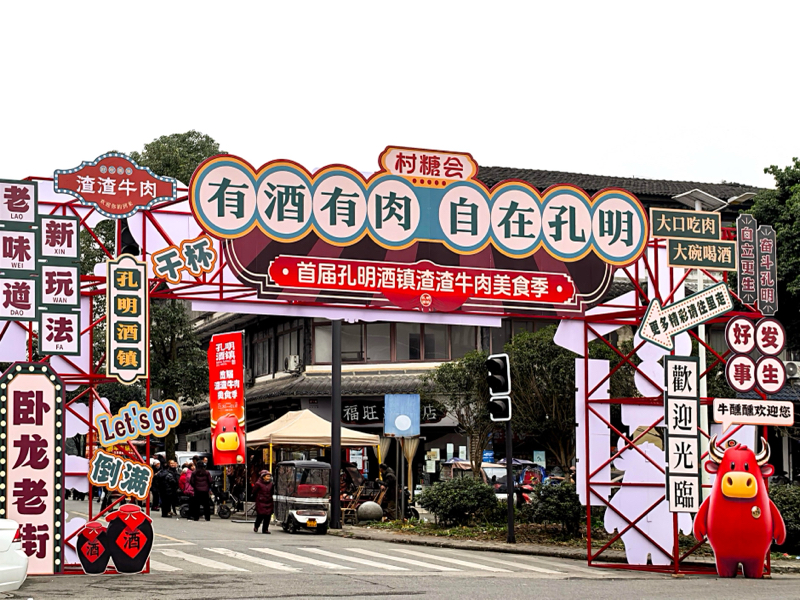
Group 1 - The core idea of the articles revolves around the integration of financial services into rural areas through events like "Village Sugar Meetings," which aim to stimulate consumption and support local economies [1][2][4][6] - The Industrial and Commercial Bank of China Chengdu Branch (ICBC Chengdu Branch) is actively implementing the "Strong County and Active District" strategy by incorporating convenient payment methods and consumer incentives into local markets [1][4] - The "Village Sugar Meetings" serve as a platform for promoting local products, such as "Kongming Wine" and "Zhazha Beef," while also providing financial education and fraud prevention to protect consumers [2][4][7] Group 2 - The "Spring Festival Ecological New Year Goods Festival" extends the "Village Sugar Meetings" from rural areas to urban settings, facilitating the sale of local specialties like Ya'an Tibetan tea and Daliangshan freeze-dried apples [6][7] - ICBC Chengdu Branch's initiatives include the "Credit Card Shopping Discount" campaign, which aims to boost urban consumption and provide a stage for returning entrepreneurs to showcase local products [6][9] - The bank is committed to empowering rural revitalization by offering tailored financial products, such as the "Planting e-loan," which supports farmers in upgrading their industries and enhancing their market reach [7][9]
中国手机银行用户规模见顶,行业逻辑转向存量提升
Xin Lang Cai Jing· 2026-02-18 05:56
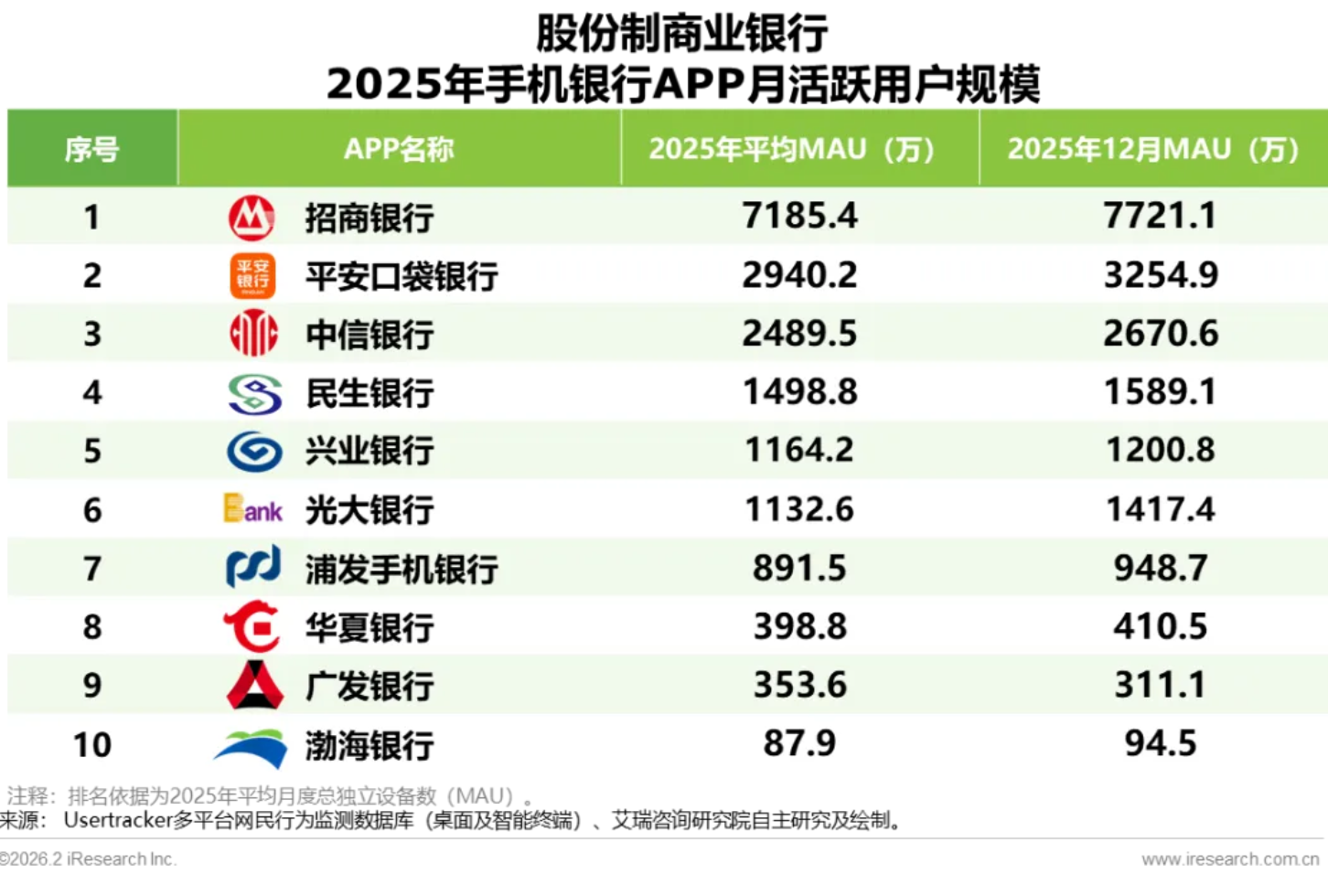
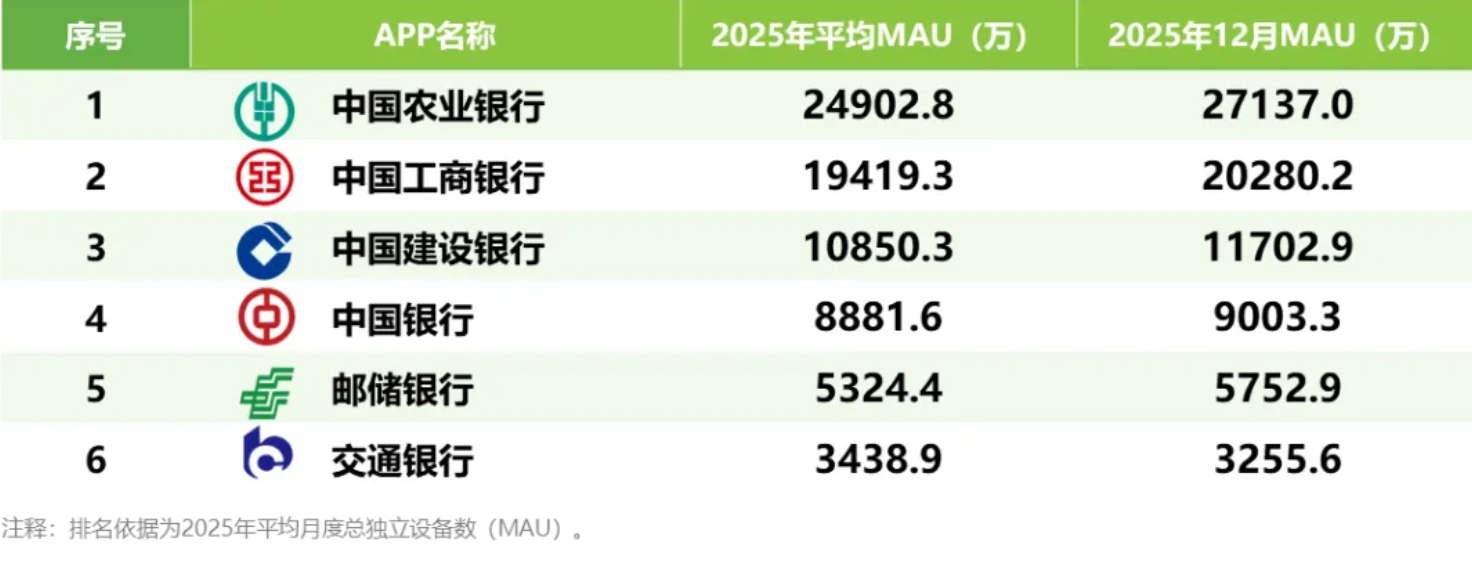
Core Insights - The report indicates that the average monthly active users (MAU) for major Chinese mobile banking apps in 2025 shows a significant user base, with the Agricultural Bank of China leading at approximately 24.9 million users [1]. Group 1: User Metrics - The average MAU for the top five mobile banking apps in 2025 are as follows: Agricultural Bank of China (24.9 million), Industrial and Commercial Bank of China (19.4 million), China Construction Bank (10.9 million), Bank of China (8.9 million), and Postal Savings Bank (5.3 million) [1]. - The total number of independent devices for mobile banking in China is projected to stabilize between 648 million and 739 million, indicating a plateau in user growth [1]. Group 2: Industry Trends - The report highlights a shift in industry dynamics from acquiring new users to enhancing existing user engagement, as the flow of new users has reached a ceiling [1]. - User behavior is changing structurally, with the effective daily usage time per device decreasing from 4.9 minutes in 2023 to around 2.7 minutes by mid-2025, stabilizing at approximately 3 minutes [1]. - The trend towards high-frequency, short-duration, and function-oriented usage is prompting financial institutions to streamline processes and focus on core transaction scenarios [1].


国有大行主导手机银行市场,生态嵌入构筑护城河
Jing Ji Guan Cha Wang· 2026-02-18 05:47
Core Insights - The Chinese mobile banking market is entering a stage of stock competition in 2025, with monthly active users (MAU) stabilizing between 648 million and 739 million [2] - State-owned commercial banks dominate the market due to their ecological embedding advantages, with Agricultural Bank of China leading at 249 million MAU, followed by Industrial and Commercial Bank of China (194 million) and China Construction Bank (109 million) [2] - Private banks are expected to collectively exit the top 50 MAU rankings in 2025 due to a lack of offline branch support and local living ecosystems [2] Group 1: Major Players - Agricultural Bank of China has the highest MAU at 249 million, followed by Industrial and Commercial Bank of China with 194 million and China Construction Bank with 109 million, forming the first tier of banks [2] - China Bank and Postal Savings Bank have MAUs exceeding 50 million, constituting the second tier [2] - China Merchants Bank leads the joint-stock banks with 71.85 million MAU, while Ping An Bank and CITIC Bank form the second tier, with other joint-stock banks generally below 20 million MAU [2] Group 2: Market Dynamics - The core advantage of state-owned banks lies in their "full-scenario integration" capabilities, embedding services deeply into high-frequency life scenarios such as government affairs, social security, healthcare, and education [2] - Agricultural Bank of China extends its services to rural areas through intelligent service matching and customer customization, while Industrial and Commercial Bank of China utilizes its "Gong Xiao Zhi" model for interactive service [2] - Regional banks like Jiangsu Bank, Beijing Bank, and Ningbo Bank show stable performance by focusing on local markets, with some rural commercial banks like Fujian Rural Credit exceeding 4.5 million MAU, indicating the sustainability of localized operations in the stock market [2]