PSBC(601658)

Search documents
邮储银行(01658) - 截至2026年1月31日股份发行人的证券变动月报表
2026-02-04 08:30
本月底法定/註冊股本總額: RMB 120,095,053,492 FF301 2. 股份分類 普通股 股份類別 A 於香港聯交所上市 (註1) 否 證券代號 (如上市) 601658 說明 A股(上海證券交易所) 法定/註冊股份數目 面值 法定/註冊股本 上月底結存 100,238,886,492 RMB 1 RMB 100,238,886,492 增加 / 減少 (-) RMB 本月底結存 100,238,886,492 RMB 1 RMB 100,238,886,492 1. 股份分類 普通股 股份類別 H 於香港聯交所上市 (註1) 是 證券代號 (如上市) 01658 說明 H股 法定/註冊股份數目 面值 法定/註冊股本 上月底結存 19,856,167,000 RMB 1 RMB 19,856,167,000 增加 / 減少 (-) RMB 本月底結存 19,856,167,000 RMB 1 RMB 19,856,167,000 截至月份: 2026年1月31日 狀態: 新提交 致:香港交易及結算所有限公司 公司名稱: 中國郵政儲蓄銀行股份有限公司 呈交日期: 2026年2月4日 I. 法定/註 ...
黄金白银继续暴跌 轮到银行股机会了?
Di Yi Cai Jing· 2026-02-04 01:02
Core Viewpoint - The A-share market experienced significant declines in various sectors, particularly in metals and banks, with a notable focus on bank stocks as a safe haven amid volatility in precious metals prices [1][3][4]. Group 1: Market Performance - On February 2, A-share non-ferrous metals led the decline with a drop of 7.62%, while steel, chemicals, coal, and oil and gas sectors also fell over 5% [1]. - The Shanghai Composite Index closed down 2.48%, with over 4,600 stocks declining and a trading volume of approximately 2.61 trillion yuan, a decrease of nearly 250 billion yuan from the previous trading day [3][4]. - The banking sector showed resilience, with certain banks like Citic Bank and Shanghai Bank posting gains of 2.64% and 1.62%, respectively, amidst the overall market downturn [4]. Group 2: Bank Sector Analysis - The banking sector has seen a significant correction, with the China Securities Bank Index dropping 6.76% as of January 30, with major banks like Pudong Development Bank and Agricultural Bank of China experiencing declines of 19.29% and 12.5%, respectively [4][5]. - Analysts believe that the peak of fund outflows from the banking sector has passed, with the sector's valuation becoming more attractive, as the median price-to-book (PB) ratio is around 0.57 and the median dividend yield has risen to over 4.5% [5][6]. - Recent reports indicate that passive fund outflows have been a major factor in the banking sector's recent adjustments, but the selling pressure is expected to diminish, allowing for potential recovery in bank stock prices [6][7]. Group 3: Institutional Insights - Institutions are starting to show interest in bank stocks, with reports indicating that active funds had reduced their holdings in bank stocks by 1.3 billion shares by the end of the fourth quarter [7]. - Several regional banks have announced stock buyback plans, which have been positively received by the market, reinforcing confidence in the banking sector's fundamentals [7].





丈量地方性银行(2):浙江163家区域性银行全梳理-20260203
GF SECURITIES· 2026-02-03 13:31
Investment Rating - The industry investment rating is "Buy" [2] Core Insights - The report provides a comprehensive analysis of 163 regional banks in Zhejiang Province, highlighting their asset and liability structures, profitability, and asset quality [6][20] - The asset growth rate for major city commercial banks in Zhejiang is 9.4%, which is lower than the 14.2% growth rate of listed city commercial banks, while major rural commercial banks show an asset growth rate of 8.0%, exceeding the 6.7% growth rate of listed rural commercial banks [6][25] - The report indicates that the loan-to-asset ratio for city commercial banks is projected to reach 55.5% in 2024, an increase of 95 basis points year-on-year, while rural commercial banks will see a decrease to 59.3%, down 19 basis points [31] - Profitability metrics show that the average Return on Assets (ROA) for city commercial banks in Zhejiang is 0.78%, slightly above the average of listed city commercial banks, while rural commercial banks have an average ROA of 0.82%, which is below the average of listed rural commercial banks [6][31] - The asset quality of regional banks in Zhejiang is reported to be better than that of listed banks, with non-performing loan ratios lower by 16 basis points for city commercial banks and 9 basis points for rural commercial banks compared to their listed counterparts [6][31] Summary by Sections Section 1: Economic Structure of Zhejiang Province - Zhejiang Province is focused on high-quality development and aims to become a model for common prosperity [13] - The province's GDP is heavily concentrated in cities like Hangzhou, Ningbo, and Wenzhou, with Hangzhou accounting for 24.3% of the total GDP in 2025 [15] Section 2: Overview of 163 Regional Banks - The report categorizes the banks into city commercial banks, rural banks, and others, with a total of 163 banks in the region [20] - The distribution of registered capital among these banks is relatively balanced, with 63 banks having over 500 million yuan in registered capital [22] Section 3: Asset and Liability Structure - The asset growth of major city and rural commercial banks has been declining since 2019, with city banks showing a growth rate of 9.4% in the first half of 2025 [25] - The liability structure indicates that customer deposits account for 77.5% of liabilities for city commercial banks, which is higher than the 66.2% for listed city banks [44] Section 4: Profitability and Asset Quality - The average ROE for city commercial banks in Zhejiang is 11.98%, slightly lower than the average of listed city banks [6][31] - The report highlights that the non-performing loan ratio for city commercial banks is lower than that of listed banks, indicating better asset quality [6][31]



前员工诈骗获刑储户向银行索赔 邮储银行呼伦贝尔市分行:将充分尊重并依法履行法院判决
Cai Jing Wang· 2026-02-03 10:20
经查,日前,内蒙古呼伦贝尔市中级人民法院作出二审判决,孟某(扎兰屯市支行前员工)犯诈骗罪,被判处有期徒 刑并对全部受害人损失金额进行赔偿。此案涉及的部分人员认为损失金额及利息应由银行进行赔付,故对该分行提起 民事起诉。民事诉讼是厘清责任的必要程序,也是保障当事人合法权益、维护社会公平正义的法律途径。目前,相关 民事诉讼正在审理过程中,该分行将充分尊重并依法履行法院判决。 邮储银行呼伦贝尔市分行表示,衷心感谢广大客户及社会各界的关注与监督,同时提示广大客户,邮储银行不会以任 何理由要求客户将个人资金转至他人账户,也严禁内部工作人员代客操作。如有相关情形,请拨打95580客户服务热 线进行投诉。 (邮储银行呼伦贝尔市分行) 近期,有媒体报道称,内蒙古一银行员工因转走11名储户220万存款无法追回以诈骗罪获刑12年。有储户起诉银行索 赔,一审败诉、二审尚未宣判。 对此,邮储银行呼伦贝尔市分行表示,该分行高度重视并迅速展开全面核查。 ...

邮储银行许昌市分行开展反诈宣教 守护群众财产安全
Huan Qiu Wang· 2026-02-03 09:15
来源:环球网 为遏制电信网络诈骗高发态势,守护群众财产安全,近日,邮储银行许昌市分行以"反诈护民生,保护 群众'钱袋子'"为主题,组织宣传分队深入地铁站、公交车站等人员密集场所,开展多维度反诈宣传活 动,将防诈知识送到市民身边,全面提升辖内公众防诈识诈能力。 活动现场,工作人员通过发放《防范电信网络诈骗安全知识宣传手册》向市民普及当前常见的十大诈骗 手段,面对面指导市民设置手机防范功能、识别可疑链接。针对老年群体、通勤族等不同人群风险特 点,宣传人员开展精准宣教,提醒老年人警惕"冒充银行工作人员""高息养老理财"等骗局,向年轻群体 讲解刷单引流、游戏账号交易等诈骗陷阱。 同时,工作人员还详细介绍96110专线的预警劝阻、防骗咨询、涉诈举报三大功能,明确"紧急止损先拨 96110,后续报案补手续"的处置流程。 据悉,此次活动进一步深化了群众对反诈工作的认识,让辖内部分群众对反诈带来的相关危害有了更深 层次理解,筑牢了防诈反诈安全底线。下一步,邮储银行许昌市分行将持续响应反诈工作要求,创新宣 传方式,开展针对性反诈宣传,精准守护群众资金安全。 ...
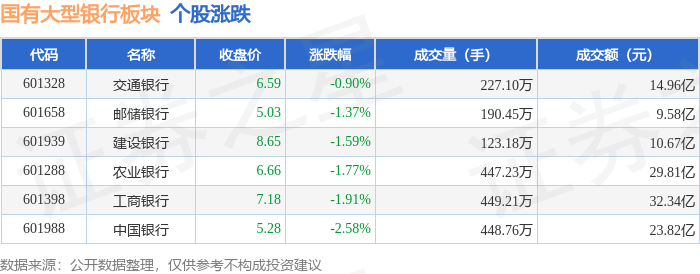
国有大型银行板块2月3日跌1.92%,中国银行领跌,主力资金净流出7.26亿元
Zheng Xing Xing Ye Ri Bao· 2026-02-03 09:03
| 代码 | 名称 | 主力净流入 (元) | 主力净占比 游资净流入 (元) | | 游资净占比 散户净流入 (元) | | 散户净占比 | | --- | --- | --- | --- | --- | --- | --- | --- | | 601328 交通银行 | | 6691.67万 | 4.47% | -5627.93万 | -3.76% | -1063.74万 | -0.71% | | 601939 建设银行 | | -2547.18万 | -2.39% | 5019.38万 | 4.71% | -2472.21万 | -2.32% | | 601658 邮储银行 | | -3853.57万 | -4.02% | 5012.98万 | 5.23% | --1159.41万 | -1.21% | | 601988 中国银行 | | -2.16 Z | -9.06% | 1.28亿 | 5.39% | 8757.12万 | 3.68% | | 601398 工商银行 | | -2.44亿 | -7.54% | 8495.26万 | 2.63% | 1.59亿 | 4.91% | | 601288 ...



邮储银行呼伦贝尔市分行:前员工犯诈骗罪已获刑 分行充分尊重并将依法履行相关民事诉讼判决
Xin Lang Cai Jing· 2026-02-03 07:58
来源:中国银行保险报 经查,日前,内蒙古呼伦贝尔市中级人民法院作出二审判决,孟某(扎兰屯市支行前员工)犯诈骗罪, 被判处有期徒刑并对全部受害人损失金额进行赔偿。此案涉及的部分人员认为损失金额及利息应由银行 进行赔付,故对该分行提起民事起诉。民事诉讼是厘清责任的必要程序,也是保障当事人合法权益、维 护社会公平正义的法律途径。目前,相关民事诉讼正在审理过程中,该分行将充分尊重并依法履行法院 判决。 近日,网络上出现了有关"内蒙古11名储户存款被转走,涉案员工获刑12年,多人状告银行索赔"相关讨 论。《中国银行保险报》记者从邮储银行呼伦贝尔市分行处获悉,该分行高度重视并迅速展开全面核 查。 邮储银行呼伦贝尔市分行表示,衷心感谢广大客户及社会各界的关注与监督,同时提示广大客户,邮储 银行不会以任何理由要求客户将个人资金转至他人账户,也严禁内部工作人员代客操作。如有相关情 形,请拨打95580客户服务热线进行投诉。 经查,日前,内蒙古呼伦贝尔市中级人民法院作出二审判决,孟某(扎兰屯市支行前员工)犯诈骗罪, 被判处有期徒刑并对全部受害人损失金额进行赔偿。此案涉及的部分人员认为损失金额及利息应由银行 进行赔付,故对该分行提 ...
220万元存款不翼而飞?邮储支行回应:前员工私下交易,与银行无关
Xin Lang Cai Jing· 2026-02-03 05:13
2月3日金融一线消息,近日有媒体报道称,内蒙古呼伦贝尔扎兰屯市11名储户相继发现,其在邮储银行 扎兰屯市支行的存款合计220余万元"不翼而飞",涉案资金指向该行原大堂经理孟某芝。 针对此事,金融一线咨询了上述支行,工作人员表示:"这是个人(孟某芝)私下交易的,是个人行 为,与银行没有任何关系,而且银行这边已经胜诉了。" 相关新闻:220余万元不翼而飞!邮储银行原职工将11名储户存款转走挥霍,获刑12年 责任编辑:潘翘楚 2月3日金融一线消息,近日有媒体报道称,内蒙古呼伦贝尔扎兰屯市11名储户相继发现,其在邮储银行 扎兰屯市支行的存款合计220余万元"不翼而飞",涉案资金指向该行原大堂经理孟某芝。 针对此事,金融一线咨询了上述支行,工作人员表示:"这是个人(孟某芝)私下交易的,是个人行 为,与银行没有任何关系,而且银行这边已经胜诉了。" 相关新闻:220余万元不翼而飞!邮储银行原职工将11名储户存款转走挥霍,获刑12年 责任编辑:潘翘楚 ...
黄金巨震下的积存金:有人连续补仓12次,银行纷纷出手防风险
Jing Ji Guan Cha Wang· 2026-02-03 03:43
"补仓!补仓!还是补仓!"近日,京东金融平台博主"黄金蛋炒饭"的"金友圈"被这几个字刷屏。 2026年2月2日下午,伦敦现货黄金价格跌破4500美元/盎司,国内积存金价格同步下探,他在京东金融 平台上果断以1016.27元/克买入近200克黄金积存金。这已是自今年1月29日金价创新高以来,他的第12 次补仓。 建设银行也发布了关于调整个人黄金积存业务定期积存起点金额的公告,自2月2日9:10起,该行个人黄 金积存业务定期积存起点金额(包括日均积存及自选日积存)上调至1500元。 不过,跌势并未止步。1月30日至1月31日凌晨,伦敦现货黄金价格再次跳水,跌至4710美元/盎司。市 场恐慌情绪开始出现,这一轮下跌也让博主"黄金蛋炒饭"陷入犹豫。1月31日晚,他谨慎完成两次买入 操作,节奏明显放缓。直至2月2日的再度抄底,他的持仓成本均价从最初的1200元/克上方摊薄至 920.05元/克。 谈及12次补仓操作,他感慨地说:"心理防线一破再破,只能逢低加仓,不要妄想抄底。" 选择补仓的投资者还有"买在高点"的单彤。1月29日,金价冲高时,她受朋友圈赚钱热潮影响,盲目跟 风冲入市场,在1237元—1248元/克的高位 ...
银行股逆势下跌,工农中建四大行均跌超1%
Ge Long Hui· 2026-02-03 01:48
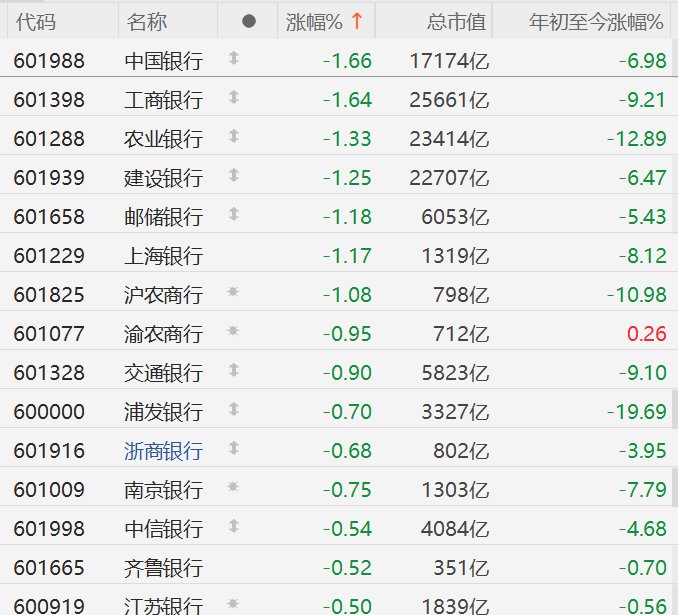
2月3日,A股市场银行(核心股)股逆势下跌,其中,中国银行、工商银行、农业银行、建设银行、邮 储银行、上海银行、沪农商行跌超1%。 股票频道更多独家策划、专家专栏,免费查阅>> 责任编辑:栎树 | 代码 | 名称 | | 涨幅% ↑ | 总市值 | 年初至今涨幅% | | --- | --- | --- | --- | --- | --- | | 601988 | 中国银行 | 1 | -1.66 | 17174亿 | -6.98 | | 601398 | 工商银行 | 1 | -1.64 | 25661亿 | -9.21 | | 601288 | 农业银行 | 1 | -1.33 | 23414 乙 | -12.89 | | 601939 | 建设银行 | 1 | -1.25 | 22707亿 | -6.47 | | 601658 | 邮储银行 | 1 | -1.18 | 6053 Z | -5.43 | | 601229 | 上海银行 | | -1.17 | 1319亿 | -8.12 | | 601825 | 沪农商行 | 美 | -1.08 | 798亿 | -10.98 | | 601077 | 渝 ...