PSBC(601658)

Search documents
六大国有行官宣,2026年起数字人民币实名钱包按活期利率计息
Di Yi Cai Jing· 2025-12-31 07:40
Core Insights - The People's Bank of China has announced that starting January 1, 2026, interest will be paid on the balances of real-name digital RMB wallets at the current demand deposit rate of 0.05% [2][3] - Digital RMB wallets are categorized into four types, with only the first three types (real-name wallets) eligible for interest payments, while the fourth type (anonymous wallets) will not earn interest [2] - The digital RMB management service system and related financial infrastructure will officially launch on January 1, 2026, with banks required to comply with self-regulatory agreements on deposit interest rates [3] Group 1 - The current demand deposit rate is set at 0.05% [2] - Six major state-owned banks will implement interest payments on digital RMB real-name wallet balances according to the demand deposit rate [2] - The designated operating institutions for digital RMB currently include 10 banks, comprising six state-owned commercial banks, two joint-stock commercial banks, and two internet banks [2] Group 2 - The new digital RMB management framework will include a measurement framework, management system, operational mechanism, and ecosystem [3] - Banks will be allowed to conduct asset-liability management for digital RMB wallet balances, with deposit insurance providing the same level of security as traditional deposits [4]







智引新程 价值共生 金融业绘写高质量发展新蓝图
Cai Jing Wang· 2025-12-31 06:59
Group 1: Financial Industry Development - The Chinese financial industry is focusing on five key areas: technology finance, green finance, inclusive finance, pension finance, and digital finance, aiming for high-quality development and openness by 2025 [1] - Financial institutions are expected to direct funds towards key sectors encouraged by the state, such as technology and green initiatives, transitioning from quantity to quality in financial services [1] Group 2: Insurance Product Innovation - AIA Life is optimizing its medical insurance product system by launching the "Smart Choice Medical Insurance," which allows customers to customize their medical coverage through a modular product approach [2] - Fude Life Insurance is enhancing its product offerings in health insurance, annuities, and floating income products to meet diverse customer needs, focusing on health and quality of life [2] Group 3: Aging Population and Pension Finance - The financial industry is innovating products and models to build a multi-tiered pension security system in response to the aging population [3] - Dehua Angu Life has developed a comprehensive insurance product system for the elderly, achieving over 90% market share in disability insurance products [3] Group 4: Digital Transformation in Banking - Ningbo Bank is implementing a systematic, digital, and intelligent approach to enhance service efficiency and risk management through digital banking models [6] - Suzhou Bank has achieved an asset custody scale of 281.32 billion yuan by focusing on process optimization and technology empowerment [6] Group 5: Digital Claims and Service Efficiency - China Life is building a comprehensive digital claims service system, with over 160 million registered users on its insurance app, enhancing service accessibility [7] - Taikang Online has achieved a 99% automation rate in underwriting and a 97% automation rate in claims processing, showcasing significant advancements in digital transformation [8] Group 6: Green Finance Initiatives - Jiangxi Bank is pioneering green finance by offering "Green Transition Loans" to support traditional industries in their low-carbon transformation [9] - Xinhua Insurance has invested over 31.6 billion yuan in green projects, serving over 6,000 green enterprises to enhance their sustainable development capabilities [11] Group 7: Social Responsibility and Inclusive Finance - Xinhua Insurance has developed over 50 affordable insurance products targeting vulnerable groups, enhancing public satisfaction and access to insurance [12] - Sunshine Property Insurance has integrated consumer rights protection into its core strategy, focusing on transparency and proactive risk reduction [14] Group 8: Public Awareness and Education - Dehua Angu Life has actively participated in public insurance awareness campaigns, reaching over 1.02 million viewers in 2025 [15] - Financial institutions are increasingly focusing on consumer rights protection as a core value, enhancing trust and long-term relationships with clients [14]





工行、农行、建行、交行、邮储银行发布公告
Xin Jing Bao· 2025-12-31 06:49
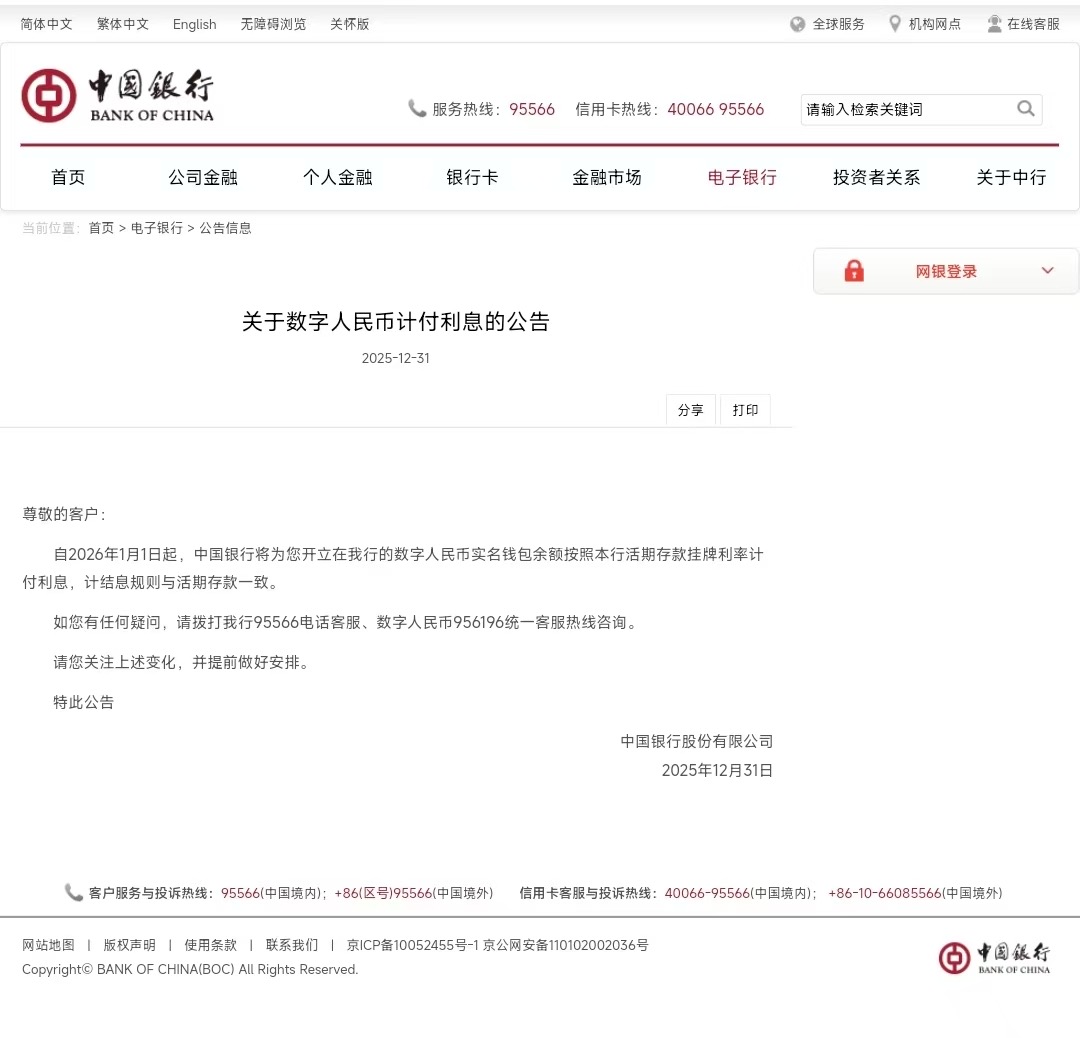
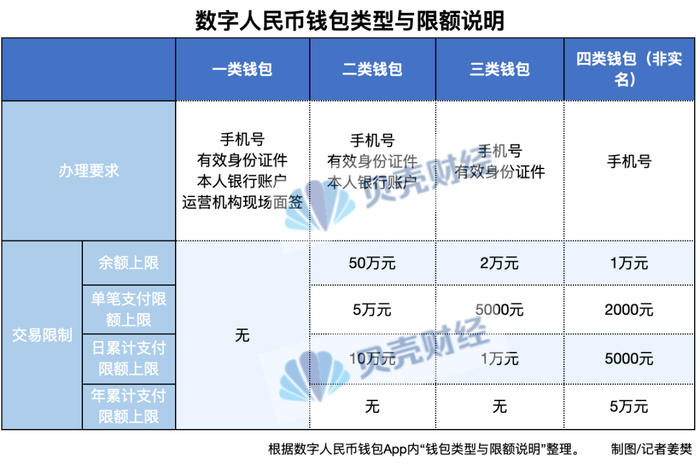
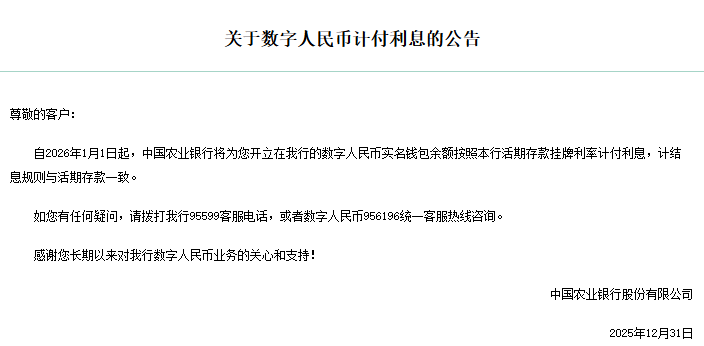
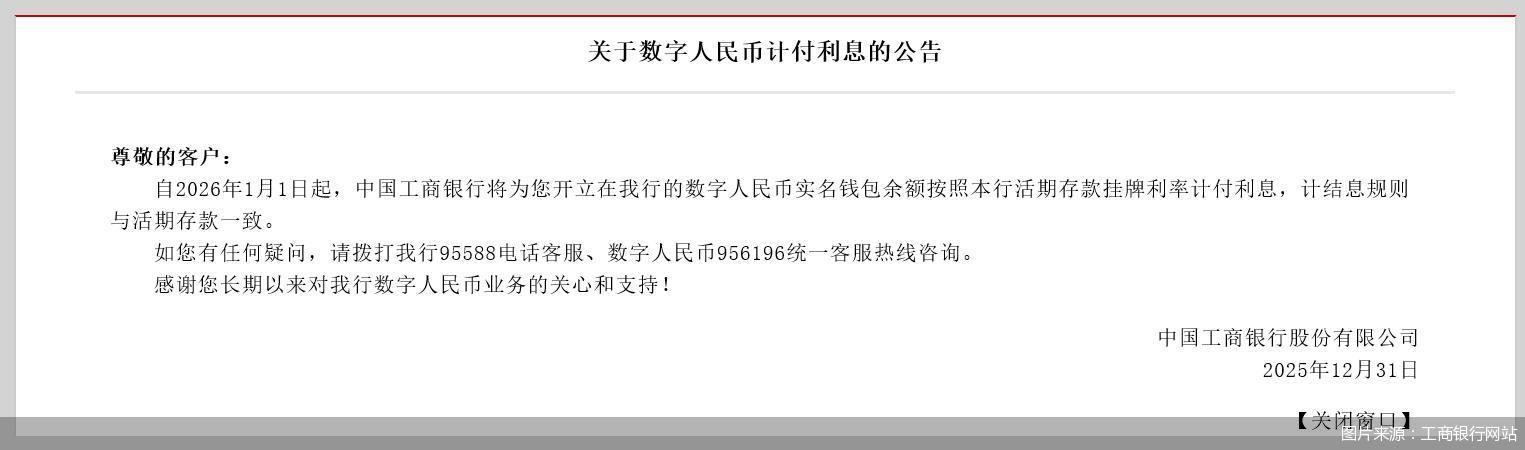
新京报贝壳财经记者 姜樊 编辑 陈莉 校对 杨利 本周一(12月29日),人民银行出台的《关于进一步加强数字人民币管理服务体系和相关金融基础设施 建设的行动方案》(以下简称《行动方案》)明确,从明年起,数字人民币钱包余额将计付利息。 明日起,数字人民币实名钱包余额将开始计息。12月31日,工行、农行、建行、交行、邮储银行等国有 银行公布了数字人民币钱包余额计息的规则。 工行、农行、建行、交行、邮储银行均发布公告称,自2026年1月1日起,银行将为客户开立的数字人民 币实名钱包余额按照本行活期存款挂牌利率计付利息,计结息规则与活期存款一致。 值得注意的是,数字人民币钱包分为四类钱包。其中,一类、二类、三类钱包未实名钱包,四类钱包为 非实名钱包。因此四类钱包不属于各家银行计息的"实名钱包"范畴。交行在公告中明确,如客户开立的 数字人民币钱包为四类个人钱包,则钱包内的余额不计付利息。 数字人民币是指人民银行发行的法定数字货币和相关支付体系,采用双层运营架构,由中国人民银行向 数字人民币业务运营机构发行,再由数字人民币业务运营机构兑换给公众。 ...
多家银行宣布:2026年起数字人民币钱包余额可计付利息
Sou Hu Cai Jing· 2025-12-31 05:40
Group 1 - The core announcement is that starting from January 1, 2026, major Chinese banks including Agricultural Bank of China, Postal Savings Bank, and others will pay interest on digital RMB wallet balances according to the same rates as regular demand deposits [1][4][8] - The interest calculation rules for digital RMB wallets will align with those of demand deposits, indicating a significant shift in how digital currency is treated [1][8] - This transition marks the evolution of digital RMB from a "digital cash era" to a "digital deposit currency era," following a decade of research and pilot programs [8] Group 2 - The People's Bank of China has introduced a plan to enhance the management and service system for digital RMB, which will officially launch on January 1, 2026 [8] - The new framework will include a measurement system, management structure, operational mechanism, and ecosystem for digital RMB [8]
多家银行官宣:2026年1月1日起,为数字人民币实名钱包余额计付利息
Bei Jing Shang Bao· 2025-12-31 05:25
Core Viewpoint - Major Chinese banks including Industrial and Commercial Bank of China, Agricultural Bank of China, Postal Savings Bank of China, Bank of Communications, and China Construction Bank will start paying interest on digital RMB wallet balances at the same rate as current deposit rates from January 1, 2026, marking a significant transition in the digital currency landscape in China [1][4][5] Group 1: Bank Announcements - Industrial and Commercial Bank of China, Agricultural Bank of China, and Postal Savings Bank of China will apply interest to digital RMB wallet balances according to the current deposit rate, with interest calculation rules consistent with those for current deposits [4] - Bank of Communications will also apply the current deposit rate to digital RMB wallet balances, including various types of personal and corporate wallets, while balances in type four wallets will not earn interest [4] - China Construction Bank will revise its customer service agreement to reflect that digital RMB wallet balances will earn interest based on the current deposit rate starting January 1, 2026 [4] Group 2: Digital RMB Framework - The People's Bank of China has introduced a plan to enhance the management and service system for digital RMB, which will officially implement a new measurement framework and operational mechanism on January 1, 2026 [5] - This transition signifies a shift from the "digital cash era" to the "digital deposit currency era" after a decade of research and pilot programs [5]
中信银行少帅转战邮储,国有行股份行间高管流动折射何种变化
Nan Fang Du Shi Bao· 2025-12-31 04:36
Core Viewpoint - The recent appointment of Lu Wei as the president of Postal Savings Bank after his resignation from CITIC Bank highlights the increasing trend of executive mobility between state-owned and joint-stock banks in China, reflecting a shift towards breaking down institutional barriers and fostering financial innovation [2][9][12]. Group 1: Executive Changes - Lu Wei resigned from his positions at CITIC Bank, including president and executive director, due to work adjustments, and has been appointed as the president of Postal Savings Bank [3][5]. - Lu Wei has over 20 years of experience at CITIC Bank, having held various significant roles, including vice president and secretary of the board [3][4]. - Following Lu Wei's departure, CITIC Bank's chairman, Fang Heying, will temporarily assume the role of president [8]. Group 2: Industry Trends - The movement of executives between state-owned and joint-stock banks has become increasingly common, with several high-profile cases in recent years, indicating a trend towards more fluid talent mobility in the banking sector [9][10]. - Experts suggest that this trend is part of a broader strategy to enhance capital and talent flow, shift performance metrics from "loan scale" to "ecological value," and stimulate financial innovation [10][11]. - The transition of executives like Lu Wei poses challenges, as they must adapt their skills and experiences to different banking environments, particularly in rural contexts [11][12].


“不赚钱也要抢单”低息经营贷背后的银行账本
Zhong Guo Zheng Quan Bao· 2025-12-30 21:11
Core Viewpoint - The personal operating loan interest rates have generally entered the "2" range, with some banks offering rates as low as 2.3%, driven by competition and a strategy of attracting customers through lower prices [1][4]. Group 1: Current Loan Rates - Many banks are now offering personal operating loan rates below 2.5%, with slight variations based on region and product type [1][2]. - For instance, the lowest rate for personal mortgage operating loans at one bank is 2.35%, with a loan term of 3 years and a credit limit of up to 30 million yuan [1]. - Another bank reports that the minimum rate for collateralized personal operating loans is 2.5%, while credit-based products start at 2.55% [2]. Group 2: Loan Approval Criteria - Borrowers must meet strict criteria, including having a local household registration and a minimum duration of social security payments [3]. - The collateral property must be within the local jurisdiction, not older than 35 years, and the borrower must have owned it for at least 3 months [3]. - Additionally, the borrowing entity must be a small or micro enterprise with a good credit record and normal operating cash flow [3]. Group 3: Market Dynamics and Risks - The current low interest rates are a result of multiple factors, including policy guidance, industry competition, and reduced funding costs for banks [4][5]. - While lower rates can stimulate demand and reduce interest expenses for borrowers, there are concerns about potential risks, such as narrowing interest margins and the possibility of unhealthy competition [4][5]. - Experts warn that aggressive pricing strategies could lead to a decline in banks' profitability and their ability to support the real economy effectively [4][5]. Group 4: Strategic Responses from Banks - Different banks have varying perspectives on the sustainability of low-interest operating loans, with some viewing it as a necessary strategy to gain market share despite thin margins [5][6]. - Larger banks may benefit from cross-selling additional services to clients attracted by low rates, while smaller banks face challenges in maintaining competitiveness without engaging in price wars [6][7]. - There is a call for financial institutions to adopt differentiated strategies and focus on enhancing product quality and service rather than solely competing on price [6][7].

中国邮政储蓄银行股份有限公司关于召开2026年第一次临时股东会的通知
Shang Hai Zheng Quan Bao· 2025-12-30 19:38
证券代码:601658 证券简称:邮储银行 公告编号:临2025-067 中国邮政储蓄银行股份有限公司 关于召开2026年第一次临时 股东会的通知 中国邮政储蓄银行股份有限公司董事会及全体董事保证本公告内容不存在任何虚假记载、误导性陈述或 者重大遗漏,并对其内容的真实性、准确性和完整性承担法律责任。 重要内容提示: (一)股东会类型和届次 2026年第一次临时股东会 (二)股东会召集人 中国邮政储蓄银行股份有限公司(以下简称中国邮政储蓄银行或本行)董事会 (三)投票方式 本次股东会所采用的表决方式是现场投票和网络投票相结合的方式 (四)现场会议召开的日期、时间和地点 召开的日期时间:2026年1月19日 15点00分 召开地点:北京市西城区金融大街3号金鼎大厦A座 (五)网络投票的系统、起止日期和投票时间。 网络投票系统:上海证券交易所股东会网络投票系统 网络投票起止时间:自2026年1月19日 至2026年1月19日 采用上海证券交易所网络投票系统,通过交易系统投票平台的投票时间为股东会召开当日的交易时间 段,即9:15-9:25,9:30-11:30,13:00-15:00;通过互联网投票平台的投票时间为 ...
“消失”的银行监事长
Shang Hai Zheng Quan Bao· 2025-12-30 19:26
Core Viewpoint - The bank supervisory board system, in operation for nearly 30 years, is approaching its end as banks begin to abolish this structure in favor of audit committees, following new regulations from the China Securities Regulatory Commission (CSRC) and the Financial Regulatory Bureau [2][3][4]. Regulatory Framework for Reform - The new Company Law, effective from July 2024, allows financial institutions to replace supervisory boards with audit committees, fundamentally changing the requirement for supervisory boards as mandatory entities [3][4]. - The Financial Regulatory Bureau has issued policies that support the transition, allowing financial institutions to choose between retaining supervisory boards or establishing audit committees to perform supervisory functions [3][4]. Differences in Implementation - There is a differentiation in the approach to abolishing supervisory boards between listed and non-listed banks, with listed banks required to eliminate supervisory boards by 2026, while non-listed banks have the option to retain them [4][5]. - Major state-owned banks have already initiated the process of abolishing supervisory boards, with the five largest banks voting to remove them in April 2025 [5]. Effectiveness and Challenges of Supervisory Boards - The supervisory board has been criticized for its lack of independence, professionalism, and efficiency, often leading to overlapping functions and ineffective oversight [6][7]. - The costs associated with maintaining a supervisory board are significant, with estimates suggesting that listed banks could save millions annually by abolishing this structure [7]. Transition Paths for Supervisory Board Members - Former supervisory board members may transition to roles within the audit committee, take on positions in other financial institutions, or retire from the industry [8]. - The governance mechanism is expected to become more efficient, with fewer decision-making layers and a more direct oversight structure through audit committees [8].




官宣!中信银行行长芦苇辞任
中国基金报· 2025-12-30 16:29
Group 1 - The core point of the article is the resignation of Lu Wei as the President of CITIC Bank due to work adjustments, and his subsequent appointment as the President of Postal Savings Bank [2][4][5] - CITIC Bank's announcement highlights Lu Wei's 26 years of service, where he held various key positions and made significant contributions to the bank's financial management, capital replenishment, and international development [4] - Lu Wei, aged 54, has had a diverse career within CITIC Bank, including roles such as Deputy General Manager of the Beijing Branch and Secretary of the Board, before becoming the youngest Vice President in April 2021 [4] Group 2 - Lu Wei has officially taken up the role of President at Postal Savings Bank, following the board's decision on December 26, pending approval from the National Financial Regulatory Administration [5] - The previous President of Postal Savings Bank, Liu Jianjun, resigned due to reaching the statutory retirement age, effective immediately [5] - Financial data for Postal Savings Bank shows that for the first three quarters of 2025, the bank achieved revenue of 265.08 billion yuan, a year-on-year increase of 1.82%, and a net profit of 76.794 billion yuan, up 1.07%, continuing a trend of growth [6]