
PSBC(601658)

Search documents
金融润泽山海间 邮储银行广东省分行绘就普惠岭南新画卷
Nan Fang Du Shi Bao· 2025-11-27 23:14
Core Insights - Guangdong is leveraging its unique position as a pioneer in reform and opening up to drive inclusive finance through innovation, urban-rural integration, and coastal development [2] - The Postal Savings Bank of China (PSBC) in Guangdong is implementing a series of financial solutions targeting key sectors such as technology innovation, rural revitalization, and cultural tourism to address financing challenges [2][3] Group 1: Technology Innovation - PSBC Guangdong has introduced a "patent pledge + property mortgage" credit model to convert intangible assets into financing capital, supporting the growth of technology-driven enterprises [3] - The bank provided a credit line of 95 million yuan to a local company, significantly reducing financing costs by over 270,000 yuan through favorable interest rates [3] Group 2: Agricultural and Marine Financing - PSBC Guangdong has developed a comprehensive inclusive finance service system covering agriculture, fisheries, and specialty industries, addressing high financing costs and narrow channels for fishermen [4] - The bank has launched over 140 industry loan projects in specialty agriculture, achieving a loan balance exceeding 20 billion yuan [4] Group 3: Cultural and Tourism Financing - The bank has tailored financial services for the tourism sector, reducing loan approval times to 30 days and providing nearly 100 million yuan for upgrades in tourism infrastructure [5] - PSBC Guangdong has invested over 4 billion yuan in major cultural and tourism projects, contributing to a 25% increase in visitor numbers at upgraded sites [6] Group 4: Overall Financial Impact - As of September 2025, PSBC Guangdong's agricultural loan balance exceeded 130 billion yuan, with an annual increase of over 40 billion yuan in the past three years, reflecting a growth rate close to 50% [6] - The bank aims to continue enhancing product innovation and service processes to support Guangdong's modernization efforts and inclusive finance development [6]



多家银行下架中长期存款产品
Zheng Quan Ri Bao· 2025-11-27 15:49
Core Viewpoint - Major state-owned banks and some joint-stock banks in China have recently suspended the sale of 5-year large-denomination time deposits, with current offerings primarily focused on 1-month to 3-year products [1] Group 1: Bank Actions - Six major state-owned banks, including ICBC, ABC, BOC, CCB, BOCOM, and PSBC, along with several joint-stock banks, have withdrawn long-term deposit products [1] - Many small and medium-sized banks have also announced the suspension of 3-year and 5-year fixed deposit products while simultaneously lowering interest rates across various deposit terms [1] - The remaining large-denomination time deposits are mostly concentrated in 1-month, 3-month, and 3-year terms, with 3-year products becoming the primary long-term offering [1] Group 2: Interest Rate Trends - The interest rates for 3-year large-denomination time deposits generally range from 1.5% to 1.75%, with reports of "tight quotas" and "sold out" situations being common [1] - The average net interest margin for commercial banks has dropped to a historical low of 1.42% in Q3, reflecting the pressure on bank profitability [2] Group 3: Strategic Adjustments - The adjustments in long-term deposit products are a response to the narrowing net interest margin, aimed at alleviating profitability pressures [2][3] - The shift indicates a transition from a focus on scale expansion to a more refined approach that emphasizes the quality of liabilities [3] Group 4: Future Outlook - There is potential for further reductions in deposit rates as banks continue to adjust high-cost deposit products [4] - Investors are advised to monitor market dynamics closely, including LPR adjustments and regulatory changes, while diversifying their asset allocation based on risk preferences [4]





工行、农行、中行、建行、交行、邮储,集体停售!
Mei Ri Jing Ji Xin Wen· 2025-11-27 13:40
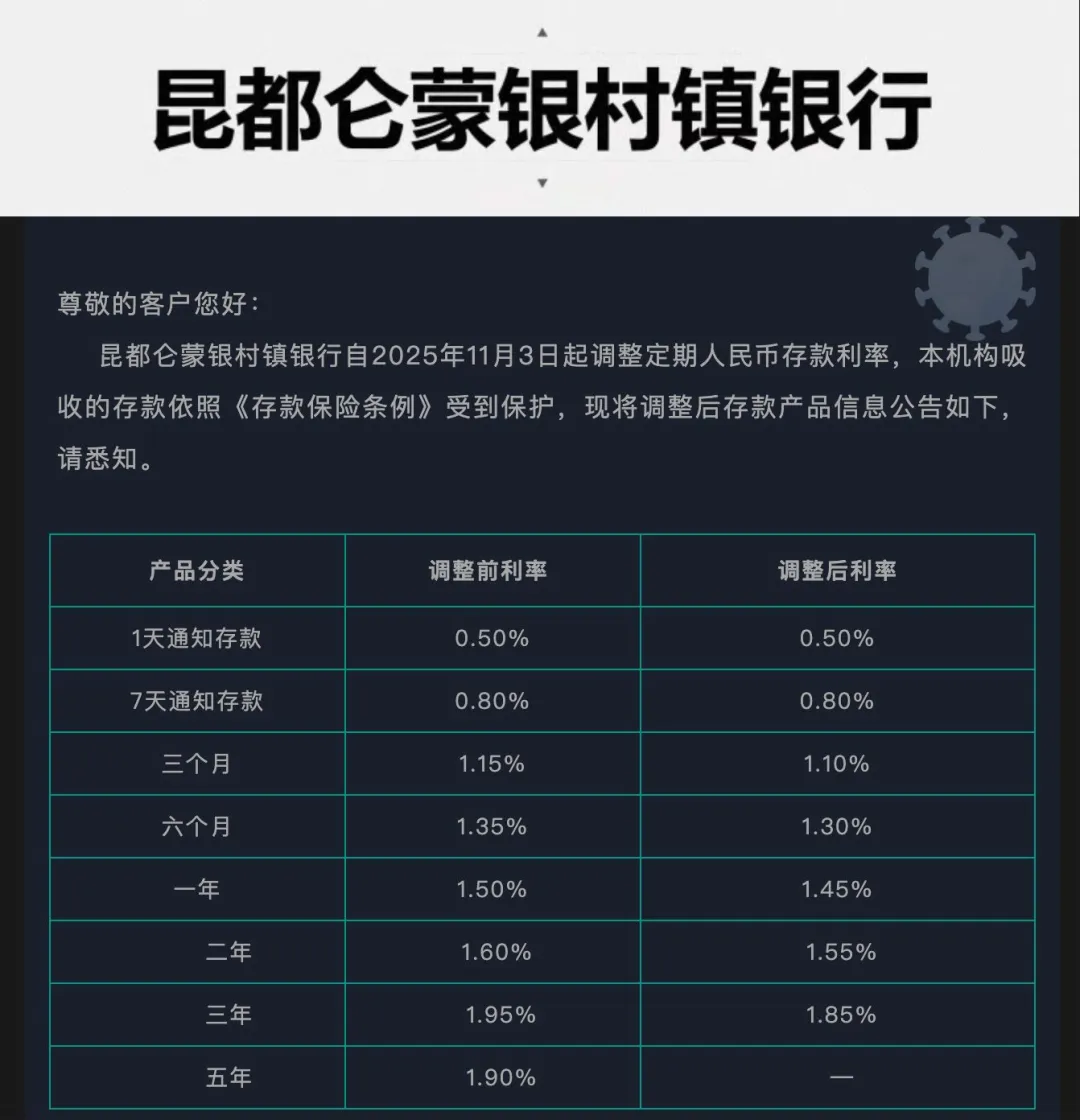
Core Viewpoint - The major state-owned banks in China have collectively removed five-year large-denomination time deposits, indicating a trend of declining long-term deposit products in the banking industry [1][2][4] Group 1: Changes in Deposit Products - The six major state-owned banks have eliminated five-year large-denomination time deposits, with only three-year products remaining, which have seen interest rates drop to between 1.5% and 1.75% [1] - The first bank to announce the cancellation of five-year time deposits was Tongyu County Mengyin Village Bank, which will stop offering this product starting November 5, 2025 [1] - Other banks, including at least seven private banks, have also begun to remove five-year time deposits, reflecting a broader trend in the industry [3][4] Group 2: Interest Rate Adjustments - The interest rates for various deposit products have been adjusted downwards, with one-year and two-year rates reduced by 5 basis points to 1.45% and 1.55%, respectively, and the three-year rate decreased by 10 basis points to 1.85% [3] - The adjustments are a response to the pressure on net interest margins faced by banks, as the yield on assets (like loan rates) is declining while the cost of liabilities (like deposit rates) remains rigid [2][4] Group 3: Industry Context and Implications - The banking industry is experiencing a "two-sided squeeze" where declining loan rates and high competition for deposits are pressuring net interest margins, leading to the reduction of long-term high-interest deposit products [4] - A survey indicated that 62.3% of urban depositors prefer to save more, a slight decrease from the previous quarter, suggesting a shift in savings behavior due to lower interest rates [4] - Analysts predict that while long-term deposits will not completely disappear, they will exhibit differentiated supply characteristics, with state-owned banks likely retaining five-year deposits as service tools but at potentially lower rates [5]
邮储银行连续三年荣获金融科技发展奖一等奖
Zhong Guo Xin Wen Wang· 2025-11-27 12:49
Core Insights - Postal Savings Bank of China (PSBC) won the "Financial Technology Development Award" for the third consecutive year, highlighting its strength in core system R&D and digital transformation [1][2] - The award is a significant recognition in China's financial sector, focusing on innovative technological achievements across various financial services [1] Group 1: Award Recognition - PSBC's project, "Intelligent and Digital-Driven Distributed Corporate Business Core System," achieved first place, marking a significant milestone in the bank's technological advancements [1][2] - The "Financial Technology Development Award" is the only ministerial-level technology award in China's financial industry, emphasizing the importance of technological innovation [1] Group 2: Technological Innovations - The core system represents a major innovation in implementing the national strategy for technological self-reliance, achieving full-stack domestic operation for corporate business among state-owned banks [2] - The system integrates AI, big data, and large models, creating a personalized service system and enhancing operational efficiency by over 10 times compared to previous versions [2] Group 3: Future Directions - PSBC plans to focus on key areas such as core technology autonomy, inclusive financial technology empowerment, and digital support for rural revitalization, aiming for continuous innovation and practical implementation [2]
全国首创!邮储银行扬州分行落地医院场景数字人民币“元管家”智能合约
Sou Hu Cai Jing· 2025-11-27 10:46
Group 1 - The article discusses the launch of China's first prepaid health check package service based on digital RMB "Yuan Manager" smart contracts in collaboration with Postal Savings Bank of China and Yangzhou Hanjing Hengbo Hospital [1][2] - The service aims to enhance consumer trust in medical services by ensuring the safety of prepaid funds through a transparent digital platform, allowing consumers to track their funds in real-time [2] - The initiative represents a significant step in the integration of finance and healthcare, with plans to extend the "Yuan Manager" model to more service scenarios in the future [2][3] Group 2 - Postal Savings Bank of China emphasizes "scene innovation" as a core direction for promoting digital RMB, having previously implemented "Yuan Manager" services in education and fitness sectors [3] - The collaboration with the hospital marks a breakthrough in the deep integration of finance and healthcare, with intentions to replicate the service model in other fields to better serve public welfare [3]


东兴证券晨报-20251127
Dongxing Securities· 2025-11-27 07:13
Core Insights - The report highlights the trend of the logistics industry shifting from quantity competition to quality development, driven by the "anti-involution" movement, which aims to improve profitability and service quality [8][10] - The company has adjusted its business volume guidance for the year to 38.2-38.7 billion pieces, reflecting a year-on-year growth of 12.3%-13.8%, down from the previous guidance of 38.8-40.1 billion pieces [8][10] - The company's single ticket revenue has shown a slight increase of 1.7% year-on-year, reaching 1.21 yuan per ticket, indicating a recovery in revenue despite previous declines [9][10] Company Performance - In Q3 2025, the company achieved a business volume of 9.573 billion pieces, a year-on-year increase of 9.8%, while its market share decreased by 0.6 percentage points to 19.4% [8] - The adjusted net profit for Q3 was 2.506 billion yuan, reflecting a year-on-year growth of 5.0% [8] - The company reported a decrease in single ticket core costs by 0.04 yuan, with transportation costs dropping from 0.39 yuan to 0.34 yuan, contributing to improved profitability [9][10] Industry Trends - The logistics industry is experiencing a decline in overall volume growth, with industry growth rates dropping from 12.7% in September to 7.9% in October [8] - The report notes that the "Double Eleven" shopping festival saw lower-than-expected volume growth, further impacting industry dynamics [8] - The focus on quality over quantity is expected to continue, with the company anticipating a decline in volume growth but an increase in single ticket profitability in Q4 [10]






金融推动农机产业发展的探索与提升路径 基于吉林省四平市农机产业的调查
Jin Rong Shi Bao· 2025-11-27 05:11
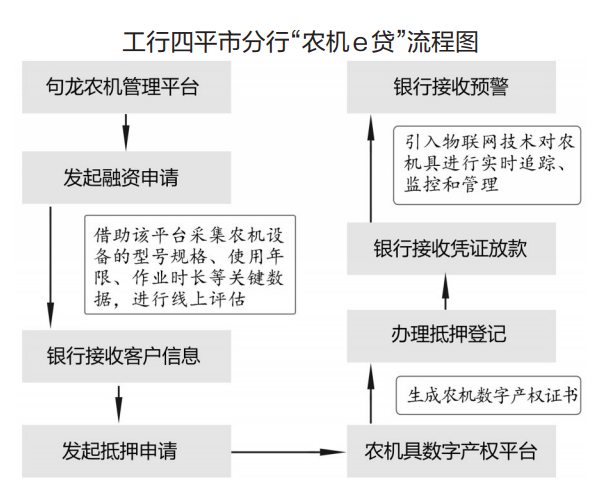
Core Viewpoint - The 2025 Central Document No. 1 emphasizes the promotion of high-quality development in agricultural machinery, highlighting its increasing role in agricultural production [1] Group 1: Current Development of Agricultural Machinery Industry in Siping - Siping is a significant agricultural machinery manufacturing base in China, with over 30 production enterprises, including 7 large-scale enterprises and 2 national-level specialized "little giant" enterprises. The total output value of large-scale agricultural machinery enterprises in 2024 is projected to be 800 million yuan, accounting for approximately 50% of the province's total [3] - The city is accelerating industrial clustering and platform construction, with a planned area of 4.4 square kilometers for the China Black Land Protection Agricultural Machinery Industry Innovation Demonstration Base, aiming for a total investment of 10.9 billion yuan [3] - Financial subsidies and policy support are being implemented, with the central government providing preferential subsidies for high-performance agricultural machinery, and Siping actively promoting enterprises to apply for various support policies [3] Group 2: Financial Support Practices for Agricultural Machinery Industry - Financial institutions in Siping have explored effective ways to support the agricultural machinery industry, with a total loan balance of 97.368 million yuan and cumulative investment of 181.517 million yuan as of September [5] - Four typical financing guarantee models have been established to support the agricultural machinery industry [5] Group 3: Financing Guarantee Models - The "Agricultural Machinery e-Loan" online mortgage model by ICBC Siping Branch utilizes a digital property rights platform to standardize and streamline the mortgage process, with a total of 30.266 million yuan disbursed [6] - The "Patent + Asset" combination pledge model by Jilin Bank Siping Branch allows for financing through the pledge of core patents and real estate, with a total of 75 million yuan in loans issued [7] - The "Real Estate Mortgage" loan model by Postal Savings Bank Siping Branch provides loans based on real estate collateral, with a total of 43 million yuan disbursed [8] - The "Online + Offline" credit quick loan model by Construction Bank Siping Branch offers flexible credit solutions for agricultural machinery enterprises, with a total of 21.062 million yuan disbursed [9] Group 4: Challenges Facing Financial Support for Agricultural Machinery Industry - The agricultural machinery industry faces significant cyclical risks, with a projected decline in output value of 16.7% in 2024 due to various factors, including reduced market demand and cash flow unpredictability [10] - Difficulties in valuing and disposing of collateral, particularly for rapidly depreciating agricultural machinery, pose risks for financial institutions [11][12] - Insufficient collaboration between financial institutions and government guarantee agencies leads to ineffective risk-sharing and support [13] - Poor information-sharing channels among agricultural departments, financial institutions, and enterprises hinder decision-making efficiency [14] Group 5: Recommendations - Establish a risk monitoring platform to predict industry risks and design differentiated credit products for cyclical enterprises [15] - Innovate mortgage methods and improve disposal channels for collateral to reduce loan loss risks [16] - Optimize cooperation between financial institutions and government guarantee agencies to clarify responsibilities and improve risk-sharing [17] - Create an information-sharing platform to enhance data accuracy and improve credit assessment efficiency [18]
最大保险代理持牌了,邮政卖保险背后:上半年代销收入超41亿元,两年降60%
3 6 Ke· 2025-11-27 04:57
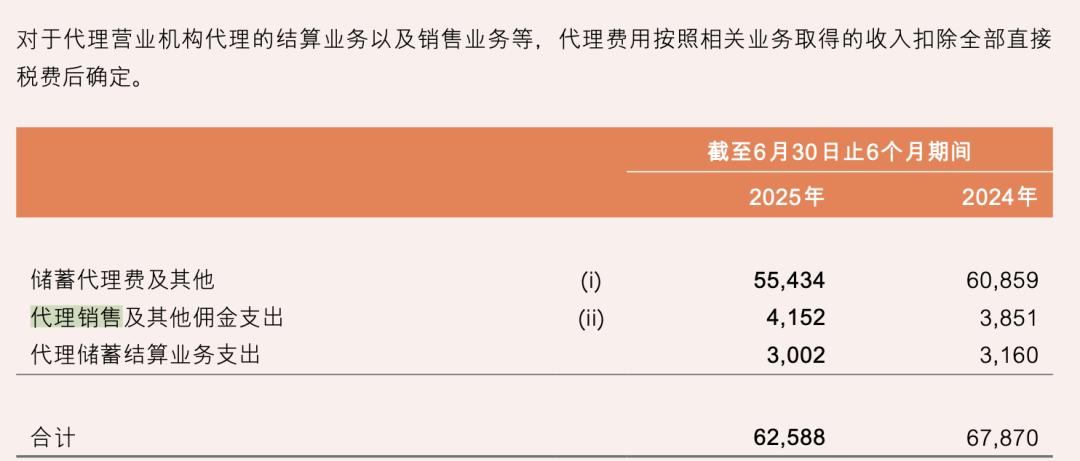
Core Insights - China Post Group has re-entered the insurance intermediary market by obtaining approval from the National Financial Regulatory Administration to operate insurance agency business, covering common property and personal insurance types [1][6] - The move comes amid a significant reduction in the number of insurance intermediaries, with China Post leveraging its extensive network of over 50,000 outlets to fill market gaps and tap into underdeveloped markets [1][7] - The reactivation of insurance agency operations is seen as a strategic response to the ongoing reshaping of the insurance intermediary sector, aiming to enhance competitive advantages in rural and county areas [1][7] Summary by Sections Insurance Agency License - China Post has received approval to operate as an insurance agent, marking its return to the insurance intermediary market after a two-year hiatus [1] - The approval follows similar licenses granted to other companies, indicating a potential shift in the regulatory landscape [1] Market Context - The insurance intermediary market has faced intense competition, leading to a significant decrease in the number of intermediaries [7] - China Post previously divested its insurance intermediary stakes, but is now re-entering the market to capitalize on the current reshaping of the industry [6][7] Financial Performance - In the first half of 2025, Postal Savings Bank reported commission expenses of 4.15 billion yuan to China Post, reflecting a year-on-year increase of 7.82% [3] - However, the commission received by China Post from Postal Savings Bank has decreased by over 60% compared to the same period in 2023 [3] Strategic Implications - Analysts suggest that China Post's re-entry into the insurance agency business is driven by compliance needs, resource integration, and strategic positioning to capture market opportunities during a period of industry consolidation [7] - The extensive network of China Post is expected to provide a competitive edge in reaching underserved markets, aligning with national financial inclusion goals [7][8] Network Advantage - As of the end of 2024, China Post operates 54,500 outlets, significantly outnumbering other major banks, which positions it favorably in the insurance market [8]
多家银行调整代销基金产品风险等级 强化投资者适当性管理
Jin Rong Shi Bao· 2025-11-27 03:30
Core Viewpoint - Several banks in China, including Minsheng Bank and China Construction Bank, have adjusted the risk ratings of certain publicly offered mutual funds to enhance investor protection and comply with regulatory requirements [1][2][3]. Group 1: Risk Rating Adjustments - Minsheng Bank announced on November 18 that it would change the risk ratings of eight mutual fund products from low risk to medium risk, effective November 19 [1]. - China Construction Bank has adjusted the risk ratings of 87 mutual fund products, with 32 products moving from "R2 - Medium-Low Risk" to "R3 - Medium Risk" and 55 products from "R3 - Medium Risk" to "R4 - Medium-High Risk" [1][2]. - Other banks, such as Postal Savings Bank and Citic Bank, have also made similar adjustments, with Postal Savings Bank raising the risk ratings of 80 mutual fund products and Citic Bank adjusting 17 asset management products [2][3]. Group 2: Regulatory Compliance - The adjustments are based on regulatory requirements, including the "Measures for the Management of Investor Suitability in Securities and Futures" and the "Implementation Guidelines for Investor Suitability Management by Fund Raising Institutions" [2]. - Banks are required to adhere to the principle of "higher risk rating" for similar products and must continuously evaluate product risk ratings in response to market and policy changes [3]. Group 3: Market Considerations - The adjustments reflect banks' responses to current market volatility, with increased net asset value fluctuations and liquidity risks in certain equity funds due to concentrated holdings [3]. - The changes are seen as proactive measures to enhance investor suitability management and do not indicate a general increase in risk across the mutual fund market [4].


商业银行共绘未来五年发展新蓝图
Jin Rong Shi Bao· 2025-11-27 02:22
Core Viewpoint - Agricultural Bank of China is inviting employees and the public to contribute ideas for its 15th Five-Year Plan, aligning with the national economic and social development strategy outlined by the Communist Party [1] Group 1: National Strategy Alignment - State-owned banks are prioritizing national strategies, focusing on supporting the real economy, expanding domestic demand, and facilitating foreign trade during the 15th Five-Year Plan [2] - Agricultural Bank will enhance rural financial services and support agricultural modernization while promoting domestic consumption and effective investment [2] - China Bank aims to improve its global competitiveness and service capabilities, supporting the internationalization of the Renminbi and the Belt and Road Initiative [2] - Construction Bank will support infrastructure development and modern industrial systems, focusing on new industrialization and productivity [2] Group 2: Strategic Planning and Implementation - Transportation Bank emphasizes a seamless transition between the 14th and 15th Five-Year Plans, refining strategic focus and priorities [3] - Postal Savings Bank is committed to implementing its unique financial strategies and responding to the evolving financial needs of the public [3] Group 3: Differentiated Transformation - Joint-stock and local banks are identifying their unique positions and competitive advantages to create a multi-tiered financial service structure during the 15th Five-Year Plan [4] - Industrial Bank, as a leader in green finance, will enhance its services to support carbon reduction goals and promote green operations [4] - Citic Bank is focusing on technology finance, providing comprehensive financial services to support industrial upgrades and innovation [4] Group 4: Future Development Planning - The 15th Five-Year Plan is guided by the goal of building a strong financial nation, with banks actively developing their strategic plans [6] - Construction Bank is engaging with grassroots feedback to address high-priority issues and enhance operational efficiency [6] - Transportation Bank is incorporating public and expert opinions into its planning process for the 15th Five-Year Plan [6] - Regional banks are also developing their plans, focusing on key performance indicators like ROE and adjusting their business structures to enhance revenue [7]

