QILU BANK(601665)

Search documents
1月金融数据前瞻:预计新增贷款5.1-5.25万亿元,社融增速为8.3%
ZHONGTAI SECURITIES· 2026-02-07 07:25
Investment Rating - The industry investment rating is maintained at "Overweight" [2] Core Insights - The report anticipates new RMB loans in January to be between 5.1 to 5.25 trillion yuan, with a corresponding loan growth rate declining to approximately 6.3% [4][6] - The expected new social financing scale for January is projected to be between 7.41 to 7.57 trillion yuan, maintaining a stock growth rate of around 8.3% [21][25] - The report highlights a strong performance in corporate activities, with expectations for increased credit supply due to a favorable lending environment and government policies [8][28] Summary by Sections 1. RMB Loans - New RMB loans are expected to be between 5.1 to 5.25 trillion yuan, with a growth rate declining to around 6.3% [4][6] - The monthly increase is projected to vary between a decrease of 300 million to an increase of 1.2 billion yuan [8] 2. Social Financing - The anticipated new social financing scale for January is between 7.41 to 7.57 trillion yuan, with a stock growth rate around 8.3% [21][25] - The report notes that the net financing scale of local government bonds and corporate credit bonds is expected to be 1.181 trillion yuan and 490.3 billion yuan respectively [25] 3. Liquidity - M1 and M2 growth rates are expected to rise due to a low base effect, with M1 projected at 4.0% and M2 at 8.7% [26] - The report indicates that the increase in government and credit bonds' net financing will impact market liquidity [26] 4. Investment Recommendations - The report suggests a shift in bank stock investment logic from "pro-cyclical" to "weak-cyclical," emphasizing the attractiveness of high-dividend bank stocks during economic stagnation [28] - Two main investment lines are recommended: regional banks with strong certainty and large banks with high dividends [28]





11家银行因虚增存贷款被罚、规模增7.5倍,违规考核问题突出
2 1 Shi Ji Jing Ji Bao Dao· 2026-02-06 10:36
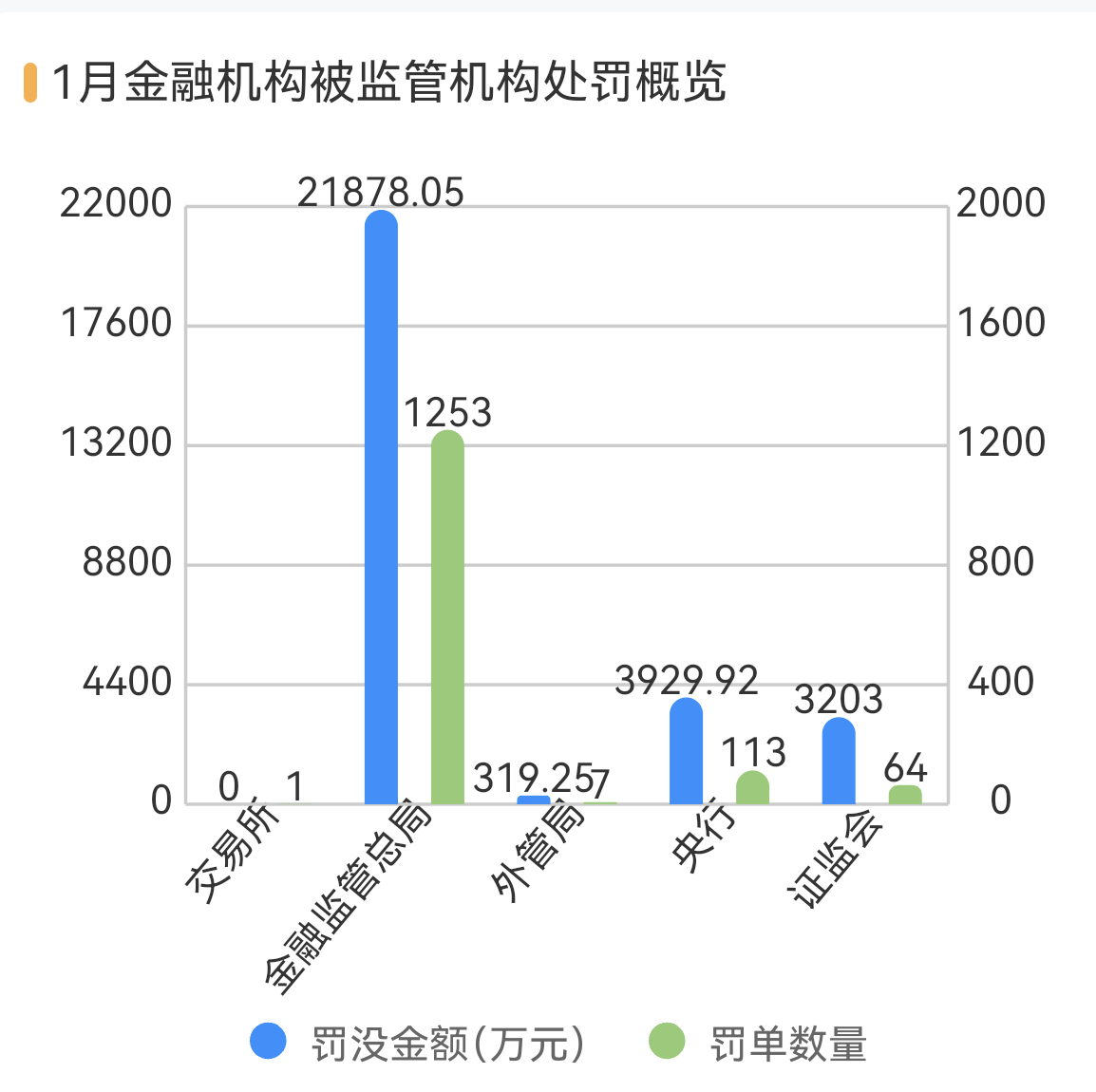
1月金融合规月报。当月,金融机构罚单数量同比大增,但罚没金额同比减少。金融机构共收到1438张罚单,同比大增54.13%,合计被罚没2.93亿元,同比 减少20.16%。 1、1月不同类型金融机构处罚情况 从不同监管机构处罚来看,1月金融监管总局开1253张罚单,同比增加83.19%,合计罚没金额2.19亿元,同比增幅15.87%,相比去年同期处罚力度有所上 升。 央行处罚力度则同比有所下降,1月开113张罚单,同比减少38.59%。证监会开64张罚单,同比增18.52%。 从不同类型金融机构处罚来看,银行收到830张罚单,同比增加41.88%,合计被罚没2.14亿元,同比减少25.95%。保险行业收到532张罚单,同比增加 84.08%,合计罚没金额则略减少。 券商1月收到12张罚单,期货公司收到9张罚单。私募罚单数量不少,收到44张罚单。 二、1月大额罚单 | 被罚对象 | 河及金额 | 处理机构 | 违规事项明 | | --- | --- | --- | --- | | | (万元) | | 细 | | 上海日赢股权投资基金有限公 | 1400.00 | 上海证监局 | 未按合同约 | | la | | ...





齐鲁银行(601665):2025年业绩快报点评:净息差同比提升,规模同比增速较去年更高
Guohai Securities· 2026-02-06 07:05
Investment Rating - The investment rating for Qilu Bank is "Buy" (maintained) [1] Core Insights - Qilu Bank reported a revenue growth of 5.12% year-on-year and a net profit attributable to shareholders growth of 14.58% for 2025, indicating accelerated revenue growth and improved net interest margin [5][6] - The bank's net interest income for 2025 reached 10.519 billion yuan, a year-on-year increase of 16.48% [5] - The asset quality indicators have shown continuous improvement for seven consecutive years, with a non-performing loan ratio of 1.05% at the end of 2025, down 4 basis points from the end of Q3 2025 [5] Summary by Sections Recent Performance - Qilu Bank's stock performance over the last 12 months shows a 7.4% increase, while the CSI 300 index increased by 23.1% [4] - The current stock price is 5.92 yuan, with a market capitalization of approximately 36.43 billion yuan [4] Financial Metrics - For 2025, the bank's total assets grew by 16.65%, loans by 13.55%, and deposits by 11.37% compared to 2024 [5] - The bank's return on equity (ROE) for 2025 is 12.17%, a slight decrease of 0.35 percentage points year-on-year [5] Earnings Forecast - Revenue growth forecasts for 2025-2027 are 5.12%, 11.26%, and 10.99% respectively, while net profit growth forecasts are 14.58%, 17.44%, and 10.74% [6] - The estimated earnings per share (EPS) for 2025, 2026, and 2027 are 1.11 yuan, 1.32 yuan, and 1.47 yuan respectively [6] Valuation Metrics - The price-to-earnings (P/E) ratios for 2025, 2026, and 2027 are projected to be 5.32x, 4.49x, and 4.03x respectively, while the price-to-book (P/B) ratios are expected to be 0.65x, 0.59x, and 0.53x [6][7]
齐鲁银行2025年业绩快报点评利润增速保持强劲,资产质量连续七年优化
GUOTAI HAITONG SECURITIES· 2026-02-06 04:30
利润增速保持强劲,资产质量连续七年优化 齐鲁银行(601665) 齐鲁银行 2025 年业绩快报点评 | [姓名table_Authors] | 电话 | 邮箱 | 登记编号 | | --- | --- | --- | --- | | 马婷婷(分析师) | 021-23185608 | matingting@gtht.com | S0880525100001 | | 陈惠琴(分析师) | 021-38676666 | chenhuiqin@gtht.com | S0880525100003 | [Table_Industry] 商业银行/金融 | [Table_Invest] 评级: | 增持 | | --- | --- | | [Table_Target] 目标价格(元): | 7.43 | | | | 齐鲁银行业务规模保持较快增长,同时主动加强负债成本管控,净息差同比改善, 资产质量持续向好,打开信用成本下行空间,利润增速快于同业。 投资要点: | [Table_Finance] 财务摘要(百万元) | 2023A | 2024A | 2025E | 2026E | 2027E | | --- | --- ...
开年险资调研忙 新质生产力受关注
Zhong Guo Zheng Quan Bao· 2026-02-06 03:50
Core Insights - Insurance capital management is increasingly focused on deep research of individual stocks and industries, with significant interest in A-share listed companies as indicated by over 300 companies being researched since the beginning of 2026 [1][2] Group 1: Research Trends - A total of 96 insurance companies and 32 insurance asset management companies have participated in the research of A-share listed companies since the beginning of 2026 [2] - Key players such as Taiping Pension, Changjiang Pension, and China Life Pension have conducted over 30 research sessions each within a month [2] - Regional banks and sectors like electronic components, semiconductor materials, and devices are receiving heightened attention from insurance capital [2] Group 2: Investment Strategies - Insurance capital views company research as a crucial part of investment strategy, often focusing on high-quality stocks with long-term growth potential [3] - The demand for high dividend stocks is driven by the need for stable cash flow in a low-interest-rate environment, with banks being a primary focus for insurance capital [4] - Insurance capital is increasingly adopting a dividend strategy, favoring high dividend stocks to stabilize returns amid pressure on fixed-income yields [4] Group 3: Focus on New Productive Forces - Insurance capital is aligning with long-term investments in new productive forces, particularly in technology innovation and emerging strategic industries [5] - There is a focus on investing in sectors with real technological barriers and clear business models that can deliver performance [5] Group 4: Investment Paths - For mature technology leaders, insurance capital is likely to invest directly for excess returns, while for emerging tech sectors, indirect investments through ETFs or industry funds are preferred to manage risks [6] - The insurance capital sector is particularly interested in AI-driven technology and high-end manufacturing, with a strategy to invest in companies with clear business models and strong competitive advantages [6]




12家区域性银行迎155家机构调研!“开门红”信贷投放等成关注焦点
Guo Ji Jin Rong Bao· 2026-02-06 03:21
Core Viewpoint - The enthusiasm for institutional research on listed banks has increased since the beginning of the year, with a focus on credit allocation and interest margin management for 2026 [1][3]. Group 1: Institutional Research Activity - As of February 5, 2026, 12 regional banks have received 155 institutional research visits, totaling 327 interactions [1][3]. - Zhangjiagang Rural Commercial Bank has been actively engaging with multiple institutions, receiving five visits in less than a week [2]. - Shanghai Bank has been the most scrutinized, with 75 institutions participating in nine rounds of research since January 12, 2026 [3]. Group 2: Credit Allocation Focus - The "opening red" credit allocation for 2026 is a key focus, with banks reporting a positive start and increased public loan allocations compared to previous years [5]. - Banks like Hangzhou Bank and Zhangjiagang Bank are targeting key industries and projects, including infrastructure and technological upgrades [5][6]. - Analysts expect that new RMB loans in January 2026 will be around 5 trillion yuan, with a growth rate of approximately 6.2% [6]. Group 3: Deposit Structure Adjustments - The net interest margin for banks has been narrowing, with a historical low of 1.42% as of Q3 2025 [7]. - Banks are planning to optimize their liability structures and control deposit costs to stabilize interest margins [7][8]. - Institutions like Zijin Bank and Shanghai Bank are focusing on adjusting deposit sources and terms to manage costs effectively [7][8]. Group 4: Future Outlook on Interest Margins - Shanghai Bank anticipates a continued decline in the Loan Prime Rate (LPR) in 2026, which may lead to a further decrease in interest margins [8]. - Regional banks are expected to maintain stable earnings, although there may be a divergence in performance based on regional economic vitality [8].
齐鲁银行(601665):齐鲁银行2025年业绩快报点评:利润增速保持强劲,资产质量连续七年优化
GUOTAI HAITONG SECURITIES· 2026-02-06 02:08
利润增速保持强劲,资产质量连续七年优化 齐鲁银行(601665) 齐鲁银行 2025 年业绩快报点评 | [姓名table_Authors] | 电话 | 邮箱 | 登记编号 | | --- | --- | --- | --- | | 马婷婷(分析师) | 021-23185608 | matingting@gtht.com | S0880525100001 | | 陈惠琴(分析师) | 021-38676666 | chenhuiqin@gtht.com | S0880525100003 | 本报告导读: 齐鲁银行业务规模保持较快增长,同时主动加强负债成本管控,净息差同比改善, 资产质量持续向好,打开信用成本下行空间,利润增速快于同业。 投资要点: | [Table_Finance] 财务摘要(百万元) | 2023A | 2024A | 2025E | 2026E | 2027E | | --- | --- | --- | --- | --- | --- | | 营业收入 | 11,952 | 12,496 | 13,125 | 14,259 | 15,809 | | (+/-)% | 8.0% | 4. ...
开年险资调研忙 新质生产力受关注
Zhong Guo Zheng Quan Bao· 2026-02-05 22:23
Group 1 - The core viewpoint of the articles highlights the increasing interest of insurance capital in specific sectors and companies, particularly in regional banks and new productivity sectors, as indicated by their extensive research activities [1][2][3] - Since the beginning of 2026, over 300 A-share listed companies have been researched by insurance companies and asset management firms, with significant participation from 96 insurance companies and 32 asset management companies [2] - Key areas of focus for insurance capital include regional banks such as Shanghai Bank and Nanjing Bank, as well as sectors like electronic components, semiconductor materials, and devices [2][3] Group 2 - Insurance capital is increasingly favoring high-dividend stocks as a stable source of cash flow, particularly in a low-interest-rate environment, which drives the demand for equity assets [4] - The strategy of investing in high-dividend stocks is seen as a way to enhance returns and stabilize portfolios, with a focus on long-term holdings and dividend yields [4][5] - The shift towards high-dividend stocks is also a response to new accounting standards that increase profit statement volatility, making these investments more attractive [4] Group 3 - Insurance capital is aligning with the new productivity sector, which relies on technological innovation and strategic emerging industries, requiring long-term and stable capital support [5][6] - Investments are being directed towards technology leaders with clear business models and performance track records, while emerging tech sectors may be approached through industry-themed ETFs or funds to mitigate risks [6] - The focus on AI-driven technology and high-end manufacturing is expected to be central to future technological revolutions, with a commitment to direct investments in companies with strong competitive advantages [6]

风格切换进行时?银行连续走强,厦门银行罕见涨停!机构:历史春节前银行胜率最高
Xin Lang Ji Jin· 2026-02-05 12:36
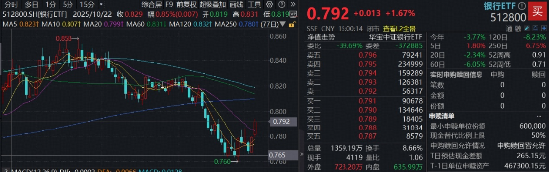
Core Viewpoint - The banking sector continues to show strong performance, with significant gains in individual bank stocks and a notable increase in the banking ETF, indicating a potential market style shift towards large-cap and quality stocks [1][3][5]. Group 1: Market Performance - On February 5, the banking sector saw collective gains, with Xiamen Bank hitting a trading limit and reaching its highest price since June 2021 [1]. - Major banks such as Chongqing Bank and Shanghai Bank also experienced significant increases, with gains of nearly 6% and over 4% respectively [1]. - The largest banking ETF (512800) opened high and further surged, closing up 1.67% with a trading volume of 1.071 billion yuan, reflecting a substantial increase in market activity [1]. Group 2: Fund Flows and Style Shift - There was a rapid influx of main funds into the banking sector, with a net inflow of 5.502 billion yuan, ranking second among all Shenwan first-level industries [3]. - Institutions suggest that the current strength in the banking sector may indicate a style shift in the market, moving from small-cap to large-cap stocks and from thematic to quality investments [3]. - Historical data shows that the banking sector has a high success rate before the Spring Festival, with an 80% win rate for absolute and excess returns over the past decade [3]. Group 3: Financial Performance of Banks - As of the 2025 reporting season, 10 listed banks that have disclosed performance reports achieved positive growth in net profit, with 9 of them reporting both revenue and net profit increases [5]. - Despite a challenging environment characterized by declining interest rates and narrowing interest margins, the banking sector is demonstrating stable growth, providing fundamental support for valuation recovery [5]. - The banking ETF (512800) and its linked funds are effective investment tools tracking the overall performance of the banking sector, with the ETF's latest scale exceeding 12.2 billion yuan and an average daily trading volume of over 800 million yuan since 2025 [5].


2026 银行人事第一波!4 位高管兼任首席合规官,履历太耀眼!
Xin Lang Cai Jing· 2026-02-05 12:18
Group 1: Qilu Bank - Qilu Bank announced a board resolution on February 4, approving the appointment of current president Zhang Hua as Chief Compliance Officer, with a term ending on August 10, 2026 [1][6] - Zhang Hua, born in June 1966, holds a bachelor's and master's degree, and has extensive practical experience in banking, having risen through the ranks at Qilu Bank [1][6] - His career includes key positions such as branch manager and head of credit management, as well as experience in local government financial oversight, enhancing his compliance management expertise [1][6] Group 2: Chongqing Rural Commercial Bank - On January 29, Chongqing Rural Commercial Bank's board approved the appointment of president Sui Jun as Chief Compliance Officer, with unanimous support from the board [2][7] - Sui Jun, born in December 1968, is a member of the Communist Party and holds a doctoral degree in economics, with a rich background in banking [2][7] - His previous roles include various leadership positions in both Chongqing Rural Commercial Bank and China Construction Bank, showcasing his extensive experience in the financial sector [2][7] Group 3: Xiamen Bank - Xiamen Bank announced on January 28 that its board approved the appointment of assistant president and Chief Risk Officer Chen Song as Chief Compliance Officer, pending regulatory approval [3][8] - Chen Song, born in May 1974, has a strong background in risk management and compliance, having held various positions in banking [3][8] - His experience includes roles at Industrial Bank and Ping An Bank, contributing to his qualifications in risk control and compliance management [3][8] Group 4: Pudong Development Bank - On January 24, Pudong Development Bank's board approved the appointment of Cui Bingwen as Chief Risk Officer, Chief Compliance Officer, and General Counsel, with a term aligned with the current board [4][8] - Cui Bingwen, born in 1969, holds a doctoral degree and has extensive banking experience, having served in various leadership roles [4][8] - His career includes significant positions at Industrial and Commercial Bank of China and Pudong Development Bank, enhancing his expertise in legal and compliance matters [4][8]