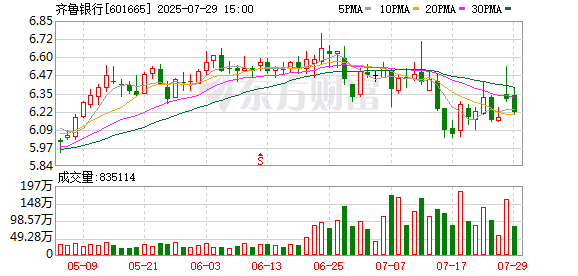
QILU BANK(601665)

Search documents
如何看待近期银行股调整?
Ge Long Hui· 2025-07-30 10:24
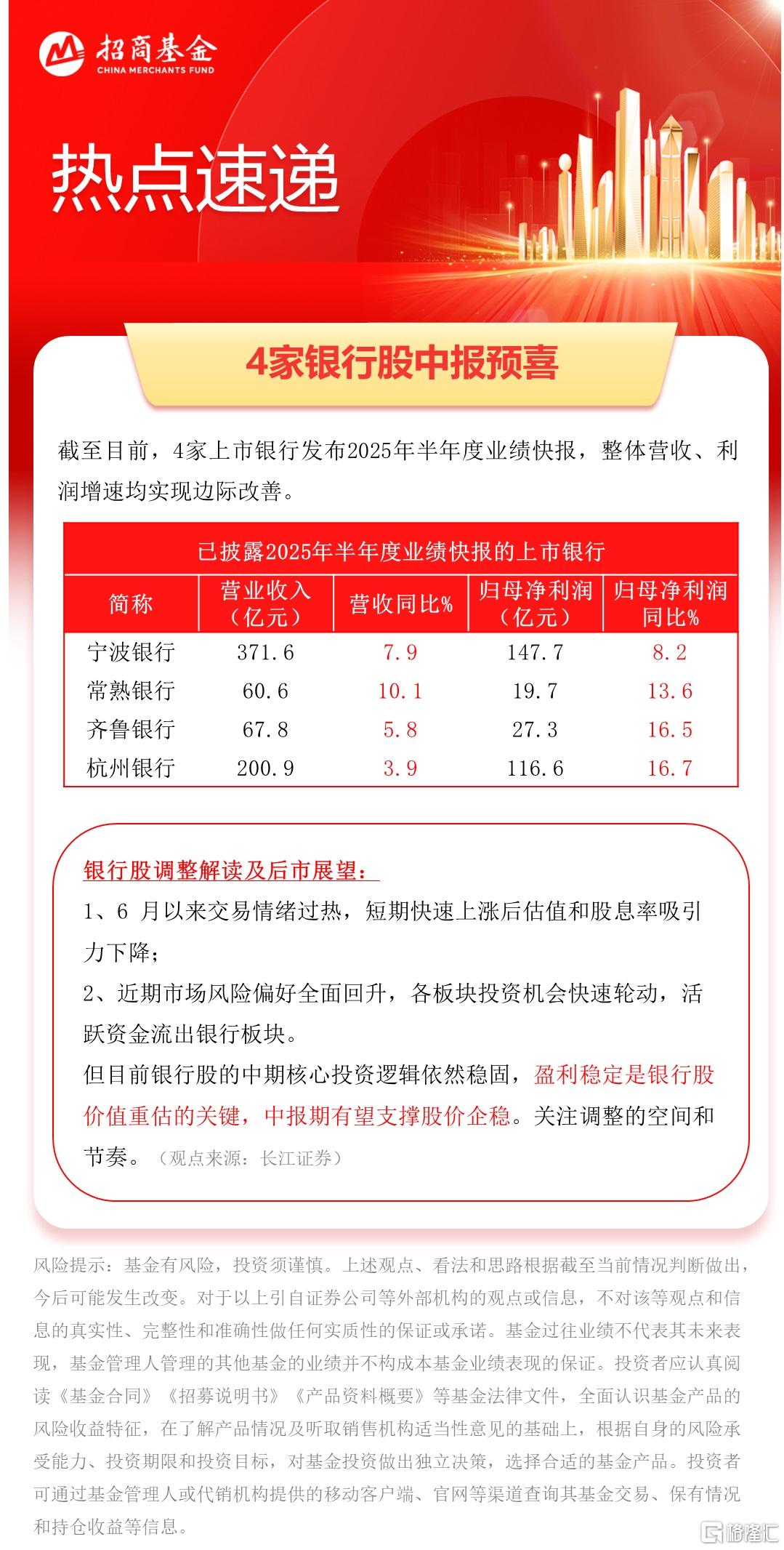
如何看待近期银行股调整❓ 机构解读:6 月以来交易情绪过热,短期快速上涨后估值和股息率吸引力下降;近期市场风险偏好全面回升,各板块投资机会快速轮动,活跃资 金流出银行板块。 | | | 已披露2025年半年度业绩快报的上市银行 | | | | --- | --- | --- | --- | --- | | 简称 | 营业收入 | 营收同比% | | 归母净利润 归母净利润 | | | (亿元) | | (亿元) | 同比% | | 宁波银行 | 371.6 | 7.9 | 147.7 | 8.2 | | 常熟银行 | 60. 6 | 10. 1 | 19.7 | 13.6 | | 齐鲁银行 | 67.8 | 5.8 | 27.3 | 16. 5 | | 杭州银行 | 200. 9 | 3.9 | 116. 6 | 16. 7 | 2、近期市场风险偏好全面回升,各板块投资机会快速轮动,活 跃资金流出银行板块。 但目前银行股的中期核心投资逻辑依然稳固,盈利稳定是银行股 价值重估的关键,中报期有望支撑股价企稳。关注调整的空间和 节奏。(观点来源:长江证券) 风险提示:基金有风险,投资须谨慎。上述观点、看法和思路根据 ...




齐鲁银行:金融赋能生态供暖 低碳“点燃”东营温度
Qi Lu Wan Bao· 2025-07-30 09:41
Group 1 - Shandong is a major energy production and consumption province, accounting for nearly 10% of the national energy consumption and carbon emissions, with a historical reliance on coal [1] - The Huatai Financial Center - Wuyue Plaza heating project, a demonstration project for geothermal energy development in Shandong, is set to operate in the 2024 heating season, playing a significant role in energy structure transformation and achieving carbon neutrality goals in Dongying [1] - The project utilizes an innovative "geothermal + coal-fired boiler peak-shaving" operation mode, which is expected to save 11,100 tons of standard coal and reduce carbon dioxide emissions by 27,300 tons each heating season, along with significant reductions in particulate matter, sulfur dioxide, and nitrogen oxides [1] Group 2 - Qilu Bank Dongying Branch has prioritized green finance, forming a dedicated team to provide comprehensive financial services for the project, optimizing loan processes, and completing the entire evaluation to approval process in the shortest time [2] - The project is expected to enhance Dongying's energy structure transformation and ecological protection, improving the city's competitiveness and overall image [2] - Qilu Bank Dongying Branch plans to continue supporting ecological protection projects by optimizing financial products and services, and exploring new models for green finance development in collaboration with local governments and enterprises [2]
齐鲁银行威海分行:金融活水畅流,赋能民营经济发展
Qi Lu Wan Bao· 2025-07-30 09:41
Core Insights - The article highlights the digital transformation and financial support provided to Jin Hou Group, a shoe manufacturing company, by Qilu Bank's Weihai branch, emphasizing the importance of financial services in enhancing operational efficiency and production capacity [1] Group 1: Digital Transformation - Jin Hou Group's digital workshop features fully automated production lines with robotic arms, showcasing advanced industrial technology [1] - The introduction of a new intelligent shoe production line has increased efficiency by 50% [1] - The company exports products to over 30 countries and regions globally [1] Group 2: Financial Support - Qilu Bank Weihai branch has included Jin Hou Group in its key service "white list" and formed a specialized service team to assess the company's financial needs [1] - The bank has provided over 100 million yuan in credit to Jin Hou Group, facilitating smooth operations and raw material procurement [1] - The innovative "Quanxin Chain" accounts receivable financing solution allows suppliers to convert receivables into liquid funds quickly, improving cash flow across the supply chain [1]
齐鲁银行(601665) - 齐鲁银行股份有限公司关于实施“齐鲁转债”赎回暨摘牌的第十三次提示性公告
2025-07-30 09:17
证券代码:601665 证券简称:齐鲁银行 公告编号:2025-046 可转债代码:113065 可转债简称:齐鲁转债 齐鲁银行股份有限公司 关于实施"齐鲁转债"赎回暨摘牌的 第十三次提示性公告 本公司董事会及全体董事保证本公告内容不存在任何虚假记载、误导性陈述 或者重大遗漏,并对其内容的真实性、准确性和完整性承担法律责任。 截至 2025 年 7 月 30 日收市后,距离 2025 年 8 月 13 日("齐鲁转债"最后 转股日)仅剩 10 个交易日,2025 年 8 月 13 日为"齐鲁转债"最后一个转股日。 本次提前赎回完成后,"齐鲁转债"将自 2025 年 8 月 14 日起在上海证 券交易所摘牌。 投资者所持"齐鲁转债"除在规定时限内通过二级市场继续交易或按 5.00 元/股的转股价格进行转股外,仅能选择以 100 元/张的票面价格加当期应计利息 (合计人民币 100.7068 元/张)被强制赎回。若被强制赎回,可能面临较大投资 损失。 特提醒"齐鲁转债"持有人注意在限期内实施转股或卖出交易,以避免 可能面临的投资损失。 敬请广大投资者详细了解可转债有关规定,理性决策,注意投资风险。 根据《齐鲁银行 ...
A股站上3600点,可转债市场再迎“赎回潮”
2 1 Shi Ji Jing Ji Bao Dao· 2025-07-30 05:03
Core Viewpoint - The convertible bond market in A-shares is experiencing a significant contraction, with expectations that the market size may shrink to below 600 billion yuan in the second half of the year due to a lack of new issuance and increased forced redemptions [1][6][9] Group 1: Market Trends - The A-share market has shown strength, with the Shanghai Composite Index surpassing 3600 points, leading to a rise in the convertible bond market [1] - Over 10 convertible bonds have stopped trading in July alone, with a notable trend of forced redemptions occurring [2][3] - The new regulations for convertible bonds now include a "Z" identifier for the last trading day, alerting investors to act promptly [3] Group 2: Supply and Demand Factors - The supply side is affected by tightened refinancing policies, leading to longer review periods for bond issuance and a decrease in new supply [5][9] - Demand is also impacted as many convertible bonds are triggering forced redemption clauses, with issuers looking to optimize their financial structures [5][6] Group 3: Bank Convertible Bonds - The banking sector has seen a significant number of convertible bonds exit the market, with at least six bonds leaving this year, primarily through forced redemptions [6][8] - The total balance of bank convertible bonds has decreased from nearly 300 billion yuan to below 150 billion yuan, with market share dropping from 40% to about 20% [8][9] - The exit of bank convertible bonds is expected to exceed 90 billion yuan this year, contributing to the overall market contraction [9]
齐鲁银行股份有限公司 关于实施“齐鲁转债”赎回暨摘牌的第十二次提示性公告
Zhong Guo Zheng Quan Bao - Zhong Zheng Wang· 2025-07-29 23:47
本公司董事会及全体董事保证本公告内容不存在任何虚假记载、误导性陈述或者重大遗漏,并对其内容 的真实性、准确性和完整性承担法律责任。 重要内容提示: 截至2025年7月29日收市后,距离2025年8月8日("齐鲁转债"最后交易日)仅剩8个交易日,2025年8月8 日为"齐鲁转债"最后一个交易日。 ● 最后转股日:2025年8月13日 截至2025年7月29日收市后,距离2025年8月13日("齐鲁转债"最后转股日)仅剩11个交易日,2025年8 月13日为"齐鲁转债"最后一个转股日。 ● 本次提前赎回完成后,"齐鲁转债"将自2025年8月14日起在上海证券交易所摘牌。 ● 投资者所持"齐鲁转债"除在规定时限内通过二级市场继续交易或按5.00元/股的转股价格进行转股外, 仅能选择以100元/张的票面价格加当期应计利息(合计人民币100.7068元/张)被强制赎回。若被强制赎 回,可能面临较大投资损失。 ● 特提醒"齐鲁转债"持有人注意在限期内实施转股或卖出交易,以避免可能面临的投资损失。 ● 敬请广大投资者详细了解可转债有关规定,理性决策,注意投资风险。 根据《齐鲁银行股份有限公司公开发行A股可转换公司债券募集说 ...
齐鲁银行股份有限公司关于实施“齐鲁转债”赎回暨摘牌的第十二次提示性公告
Shang Hai Zheng Quan Bao· 2025-07-29 17:44
证券代码:601665 证券简称:齐鲁银行 公告编号:2025-045 可转债代码:113065 可转债简称:齐鲁转债 齐鲁银行股份有限公司 关于实施"齐鲁转债"赎回暨摘牌的第十二次提示性公告 本公司董事会及全体董事保证本公告内容不存在任何虚假记载、误导性陈述或者重大遗漏,并对其内容 的真实性、准确性和完整性承担法律责任。 重要内容提示: 截至2025年7月29日收市后,距离2025年8月8日("齐鲁转债"最后交易日)仅剩8个交易日,2025年8月8 日为"齐鲁转债"最后一个交易日。 ● 最后转股日:2025年8月13日 截至2025年7月29日收市后,距离2025年8月13日("齐鲁转债"最后转股日)仅剩11个交易日,2025年8 月13日为"齐鲁转债"最后一个转股日。 ● 本次提前赎回完成后,"齐鲁转债"将自2025年8月14日起在上海证券交易所摘牌。 ● 投资者所持"齐鲁转债"除在规定时限内通过二级市场继续交易或按5.00元/股的转股价格进行转股外, 仅能选择以100元/张的票面价格加当期应计利息(合计人民币100.7068元/张)被强制赎回。若被强制赎 回,可能面临较大投资损失。 ● 特提醒"齐鲁转债 ...
齐鲁银行: 齐鲁银行股份有限公司关于实施“齐鲁转债”赎回暨摘牌的第十二次提示性公告
Zheng Quan Zhi Xing· 2025-07-29 16:12
证券代码:601665 证券简称:齐鲁银行 公告编号:2025-045 可转债代码:113065 可转债简称:齐鲁转债 齐鲁银行股份有限公司 关于实施"齐鲁转债"赎回暨摘牌的 第十二次提示性公告 本公司董事会及全体董事保证本公告内容不存在任何虚假记载、误导性陈述 或者重大遗漏,并对其内容的真实性、准确性和完整性承担法律责任。 重要内容提示: ? 赎回登记日:2025 年 8 月 13 日 ? 最后交易日:2025 年 8 月 8 日 截至 2025 年 7 月 29 日收市后,距离 2025 年 8 月 8 日("齐鲁转债"最后 交易日)仅剩 8 个交易日,2025 年 8 月 8 日为"齐鲁转债"最后一个交易日。 ? 最后转股日:2025 年 8 月 13 日 截至 2025 年 7 月 29 日收市后,距离 2025 年 8 月 13 日("齐鲁转债"最后 转股日)仅剩 11 个交易日,2025 年 8 月 13 日为"齐鲁转债"最后一个转股日。 ? 本次提前赎回完成后,"齐鲁转债"将自 2025 年 8 月 14 日起在上海证 券交易所摘牌。 ? 赎回价格:100.7068 元/张 ? 赎回款发放日:2 ...
红利银行时代系列十七:年度分红落幕,展望中期分红
Changjiang Securities· 2025-07-29 15:18
Investment Rating - The report maintains a "Positive" investment rating for the banking sector [11]. Core Insights - The banking sector has completed its 2024 dividend distribution, with a shift towards 2025 where the expected dividend yield for quality city commercial banks is projected to rise to approximately 4.5% to 5.0% [2][6]. - After recent market adjustments, leading city commercial banks such as Chengdu Bank and Jiangsu Bank have seen their expected dividend yields rebound to 5.1% and 4.9%, respectively, making them attractive for investment [7]. - The average static dividend yield for state-owned banks in A-shares is 4.02%, which still offers a 230 basis points (BP) spread over the 10-year government bond yield [7][20]. Summary by Sections Dividend Distribution - As of July 28, 2024, all 42 listed banks in A-shares have completed their dividend distributions for the year [6]. - For 2025, the expected average dividend yields for state-owned banks, joint-stock banks, city commercial banks, and rural commercial banks are projected at 4.04%, 4.27%, 4.05%, and 3.94%, respectively [6]. Market Dynamics - Recent market sentiment has shifted, leading to a significant recovery in risk appetite, which has resulted in capital outflows and price adjustments in the banking sector [7]. - The stable performance of banks is supported by recent interim reports from Hangzhou Bank, Ningbo Bank, Qilu Bank, and Changshu Bank, all of which exceeded expectations [7]. Mid-term Dividend Planning - In 2024, 24 listed banks are expected to implement mid-term dividends, with several banks like China Merchants Bank, Changshu Bank, and Su Nong Bank announcing their first mid-term dividends [8]. - The timing of mid-term dividends is expected to be similar to the previous year, influencing the allocation rhythm within the sector [8]. Dividend Ratios - The overall dividend ratio for banks in 2024 is expected to increase compared to the previous year, with limited room for further increases in 2025 [9]. - Attention is drawn to banks like Hangzhou Bank and Qilu Bank, which may have incentives to raise their dividend ratios post-conversion of convertible bonds [9]. Valuation Recovery - The report expresses optimism regarding the valuation recovery of banking stocks, particularly favoring quality city commercial banks such as Hangzhou Bank, Jiangsu Bank, Qilu Bank, Chengdu Bank, Nanjing Bank, and Qingdao Bank [10]. - The report highlights that various capital sources, including insurance and state-owned capital, have been increasing their holdings in banking stocks, indicating a positive outlook for the sector [27].


齐鲁银行:关于实施“齐鲁转债”赎回暨摘牌的第十二次提示性公告
Zheng Quan Ri Bao· 2025-07-29 14:06
(文章来源:证券日报) 证券日报网讯 7月29日晚间,齐鲁银行发布公告称,特提醒"齐鲁转债"持有人注意在限期内实施转股或 卖出交易,以避免可能面临的投资损失。 ...