
CSCEC(601668)

Search documents
晚间公告|12月19日这些公告有看头
第一财经网· 2025-12-19 10:55
Major Events - Changfei Fiber announced that the global optical fiber and cable industry market environment is normal, and the proportion of new products related to data centers in total demand is relatively small [1] - GuoDun Quantum appointed director Ying Yong to temporarily perform the duties of chairman and legal representative following the passing of chairman Lü Pin [1] - Huati Technology clarified that it does not engage in commercial aerospace-related businesses, focusing instead on smart city solutions and cultural lighting [1] Corporate Changes - Kuangda Technology's controlling shareholder changed from Shen Jialiang to Zhuzhou City State-owned Assets Supervision and Administration Commission after a share transfer of 412 million shares, representing 28% of the total share capital [2] Termination of Transactions - Geer Software announced the termination of its planned acquisition of over 51% of Shenzhen Weipin Zhiyuan Information Technology due to failure to reach agreement on key terms [3] - Bohai Chemical terminated its major asset restructuring plan involving the sale of Bohai Petrochemical and the acquisition of control over Taida New Materials due to disagreements on core terms [4] Investment Projects - Qingdao Port plans to invest in two terminal projects with a total estimated investment of 15.7 billion yuan, including 9.097 billion yuan for the first phase of the Dongjiakou Port area container terminal [5] - Sichuan Chengyu's wholly-owned subsidiary plans to acquire 85% of Hubei Jingyi Highway Co., Ltd. for 2.409 billion yuan, which will enhance the company's highway project portfolio [6] Performance Updates - China State Construction reported a 0.9% year-on-year increase in new contracts signed in the first 11 months of 2025, totaling 4.0408 trillion yuan [7] - SF Holding's logistics business revenue grew by 9.88% year-on-year in November, with total revenue from logistics and supply chain services reaching 27.173 billion yuan [8] - YTO Express reported a 11.08% year-on-year increase in express product revenue in November, amounting to 6.474 billion yuan [9] Major Contracts - Dongfang Cable announced it won contracts totaling 3.125 billion yuan, representing 34.37% of its audited revenue for 2024 [10] - Huadian Technology signed contracts worth approximately 815 million yuan with China Huadian Engineering Group for a wind power and green methanol project [11]





中国建筑公布前11月经营情况,业务总体稳中向好
Zheng Quan Shi Bao Wang· 2025-12-19 10:42
Core Viewpoint - China State Construction Engineering Corporation (CSCEC) has shown stable growth in new contract signings and operational performance for the first eleven months of 2025, supported by favorable macroeconomic policies from the central government [1][2]. Group 1: Operational Performance - In the first eleven months of 2025, CSCEC achieved a total new contract amount of 40,408 billion yuan, representing a year-on-year increase of 0.9% [1]. - The construction business contributed 37,162 billion yuan in new contracts, with a year-on-year growth of 1.9%. This includes 24,622 billion yuan from housing construction (up 3.1%) and 12,429 billion yuan from infrastructure [1]. - Domestic business accounted for 35,303 billion yuan (up 1.8%), while overseas business reached 1,858 billion yuan (up 4.4%), indicating a dual growth in domestic and international operations [1]. - Physical indicators show a construction area of 161,439 million square meters, new construction area of 23,699 million square meters, and completed area of 18,261 million square meters, with the latter up 11.4% year-on-year [1]. Group 2: Real Estate Business - CSCEC reported a contract sales amount of 3,246 billion yuan and a contract sales area of 1,215 million square meters for the same period [1]. - The company acquired 831 million square meters of land, with a total land reserve of 7,190 million square meters at the end of the reporting period [1]. Group 3: Recent Projects and Policy Support - CSCEC recently secured significant projects totaling 10.67 billion yuan, including two housing projects focused on infrastructure construction in Sichuan and Guangdong, and one infrastructure project for the Dalian Jinzhou Bay International Airport [2]. - The recent Central Economic Work Conference has provided clear support signals for the construction and real estate sectors, emphasizing investment stabilization, urban renewal, and the promotion of quality housing [2]. - With its comprehensive strength and alignment with national strategies, CSCEC is positioned to play a crucial role in stabilizing the market and leading the modernization of the construction industry [2].
12月19日晚间重要公告一览
Xi Niu Cai Jing· 2025-12-19 10:19
Group 1 - Sichuan Chengyu's wholly-owned subsidiary plans to acquire 85% equity of Hubei Jingyi Company for 2.409 billion yuan, enhancing the company's control over highway projects [1] - Huadian Technology signed contracts worth approximately 815 million yuan with Huadian Technology Group for a wind power hydrogen production project [2] - Dongfang Cable and its subsidiary won projects totaling approximately 3.125 billion yuan, accounting for 34.37% of the company's audited revenue for 2024 [3] Group 2 - Heng Rui Medicine received approval for clinical trials of SHR-2906 injection, a self-developed biopharmaceutical aimed at weight control and metabolic regulation [4] - Qingdao Port plans to invest approximately 15.7 billion yuan in two terminal projects [5] - Jingu Co. received a notification to supply low-carbon wheels for two export models to a major domestic car manufacturer, with production expected in 2026 [6] Group 3 - ST Xingguang won a procurement project worth approximately 22.955 million yuan, accounting for 11.96% of the company's revenue for 2024 [7] - Xinbo Co. plans to jointly invest in an alloy materials research institute with partners, focusing on high-performance materials for various industries [8] - Tianqi Lithium's third-phase lithium concentrate expansion project has been completed and is undergoing trial production, with a total capacity of 2.14 million tons per year [9] Group 4 - Changfei Fiber reported that new fiber optic products related to data centers represent a small proportion of total demand [10] - Dongfang Bio's subsidiaries obtained multiple medical device registration certificates, including various testing kits [11] - Xiugang Co. plans to use up to 500 million yuan of idle fundraising for cash management in safe, liquid investment products [12] Group 5 - Jifeng Co. received a project designation for passenger car seat assemblies from a European luxury brand, with a total lifecycle value of approximately 9.8 billion yuan [13] - CanSino initiated Phase I clinical trials for a combined vaccine, completing the first subject enrollment [14] - Dayu Water-saving's subsidiary pre-won a drainage project worth 140 million yuan and another project worth 1 billion yuan [15] Group 6 - Yutong Pharmaceutical's subsidiary received clinical trial approval for YKYY032 injection for treating hyperlipoproteinemia [17] - Diweier announced the departure of a core technical personnel, impacting its technical leadership [18] - Weilang Co.'s controlling shareholder received regulatory measures from the Shandong Securities Regulatory Bureau for failing to fulfill a commitment [19] Group 7 - Xiehe Electronics invested 5 million yuan in a private equity fund focusing on hard technology sectors [20] - Phoenix Optical received a government subsidy of 4.7053 million yuan, representing 35% of its projected net profit for 2024 [21] - China State Construction reported a 0.9% year-on-year increase in new contracts signed in the first 11 months of 2025, totaling 4.0408 trillion yuan [22] Group 8 - Nanguang Energy's pumped storage power station units 1 and 2 have entered trial operation, with units 3 and 4 expected to follow by year-end [23] - Jindalai plans to invest 280 million yuan to acquire a 34% stake in Yunnan Jici Medical Technology [24] - Geer Software terminated its planned acquisition of a majority stake in Weipin Zhiyuan due to failure to reach agreement on key terms [25] Group 9 - Ningbo Fubang completed the absorption merger of its wholly-owned subsidiary, inheriting all assets and liabilities [26] - Zhongyuan Neipei signed a strategic cooperation framework agreement with Ningbo Puzhi Company for humanoid robot-related business [28] - Gongyuan Co. announced a business integration and relocation of its production lines in the East China region [29] Group 10 - Chlor-alkali Chemical's subsidiary plans to invest 2.975 billion yuan in a comprehensive utilization project for waste salt [30] - Kain Technology announced the departure of a core technical personnel, impacting its research capabilities [31] - ST Renfu received approval for clinical trials of a new drug for idiopathic pulmonary fibrosis [32] Group 11 - Sanbo Brain Science's established brain science fund has completed registration with the Asset Management Association of China [33] - Tongyou Technology plans to apply for a 70 million yuan credit line from Beijing Bank, using its property as collateral [34] - Bai Ao Intelligent signed a significant equipment sales contract worth approximately 27.5021 million yuan [35] Group 12 - ST Xinyan received all restructuring investment funds totaling 2.239 billion yuan, entering the execution phase of its restructuring plan [36] - Dalu Real Estate's subsidiary decided to terminate a planned acquisition of a 60% stake in Beijing Chengzhu Real Estate [38] - Huiyu Pharmaceutical's products received marketing approval in Italy and Norway [39]


中国建筑国际附属中建国际投资订立保理安排
Zhi Tong Cai Jing· 2025-12-19 09:17
Core Viewpoint - China State Construction International (03311) has entered into a factoring arrangement to enhance liquidity and diversify financing channels, which is expected to optimize the company's asset structure and improve operational efficiency [1] Group 1: Factoring Arrangement - On December 19, 2025, China State Construction International's indirect wholly-owned subsidiary, China State Construction International Investment, established a factoring arrangement [1] - The company signed an accounts receivable transfer contract with Wenzhou Haisheng and a factoring contract with China State Commercial Factoring [1] - Under the factoring contract, China State Commercial Factoring will provide a principal amount of RMB 300 million at a discount rate of 91% for a period not exceeding 24 months [1] Group 2: Benefits of the Arrangement - The factoring arrangement is expected to provide immediate available funds for operational and business development needs [1] - It allows the company to meet its working capital development requirements and diversify its financing channels [1] - The arrangement aims to optimize the company's asset structure, enhance fund efficiency, and strengthen operational capabilities [1]
中国建筑(601668) - 中国建筑2025年1-11月经营情况简报
2025-12-19 08:30
1 | | 项 目 | | | 数 额 比上年同期增长 | | --- | --- | --- | --- | --- | | | 二、地产业务情况 | | | | | 1. | 合约销售额(亿元 | RMB) | | 3,246 -9.9% | | 2. | 合约销售面积(万 m | 2) | | 1,215 -4.1% | | 3. | 期末土地储备(万 m | 2) | | 7,190 | | 4. | 新购置土地储备(万 | m | 2) | 831 | 注:由于存在各种不确定性,上述经营指标和数据与定期报告披露的数据可能 存在差异,因此相关数据为阶段性数据,仅供参考。 证券代码:601668 证券简称:中国建筑 公告编号:临 2025-079 2025 年 1-11 月经营情况简报 本公司董事会及全体董事保证本公告内容不存在任何虚假记载、误导性陈述 或者重大遗漏,并对其内容的真实性、准确性和完整性承担法律责任。 现将本公司 2025 年 1-11 月主要经营情况公布如下,供各位投资者参阅。 | 项 目 | 数 额 比上年同期增长 | | --- | --- | | 新签合同总额(亿元 RMB) | ...
中国建筑(601668.SH)1-11月新签合同总额同比增长0.9%
智通财经网· 2025-12-19 08:24
智通财经APP讯,中国建筑(601668.SH)发布公告,公司2025年1-11月新签合同总额为40408亿元,同比 增长0.9%。 ...
中国建筑:前11月新签合同总额同比增长0.9%
Zheng Quan Shi Bao Wang· 2025-12-19 08:20
人民财讯12月19日电,中国建筑(601668)12月19日公告,公司2025年1—11月新签合同总额40408亿 元,同比增长0.9%。 ...
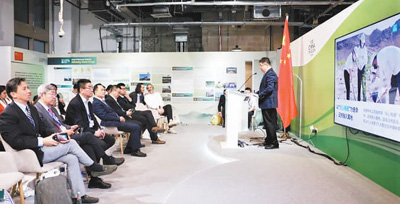
助力海外基建 服务民生发展
Ren Min Ri Bao· 2025-12-18 22:17
多年来,中企在海外致力于推动行业绿色发展。《联合国 气候变化框架公约》第二十八次缔约方大会(COP28)在 迪拜举行期间,中建中东公司在COP28蓝区中国角主办主 题为"建筑企业在可持续发展领域所作出的贡献"边会。图 为中建中东公司相关负责人在该边会上发言。 本报中东中心分社 纳达尔·达乌德摄 中建中东公司连续13年向迪拜拉希德残障儿童中心捐赠, 助力改善残障儿童教育条件。图为今年6月,中建中东公 司相关负责人(右一)前往拉希德残障儿童中心交流。 朱 丹摄 "鲁班工匠计划"是中国建筑推出的一项属地员工培训计 划。中建中东公司在承接各项工程时,通过师带徒和现场 教学方式,开展技能实操、安全生产、理论知识等各项培 训。图为中方员工(左一)在施工现场进行教学。 本报中东中心分社 塔里克·易卜拉欣摄 在中建中东公司承建的沙特德拉伊耶皇家歌剧院项目现 场,工作人员正在施工。德拉伊耶皇家歌剧院建成后将成 为沙特首个世界级歌剧院。 本报记者 任皓宇摄 迪拜朱美拉棕榈岛是世界上最大的填海造地项目之一,外 形为棕榈树形状,由"主干"和17条"枝干"组成,外加一个 圆环挡水岛。中建中东公司参与建设了分布在棕榈岛11 条"枝干"上 ...

从延庆到丰台,低调的中建方程要在北京楼市“大干一场”?
Xin Jing Bao· 2025-12-18 15:05
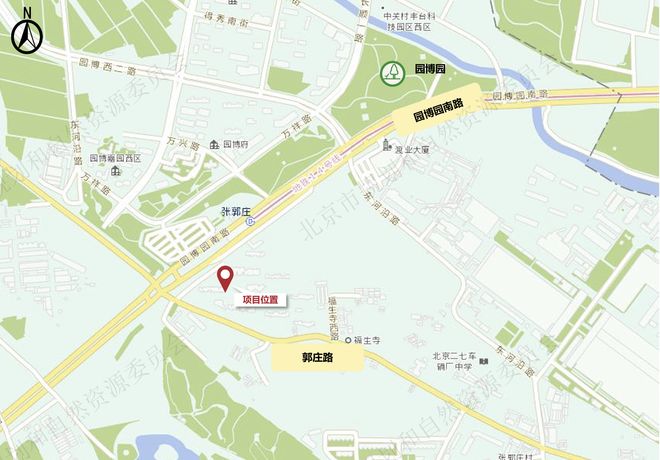
Core Viewpoint - China State Construction Engineering Corporation's subsidiary, China State Construction Equation, is making significant moves in the Beijing real estate market, having acquired land in both the suburban and urban areas within six months, indicating a strategic shift towards more aggressive development [1][5]. Group 1: Recent Land Acquisitions - In December 2023, China State Construction Equation, in partnership with China State Construction Intelligence, acquired a land development project in Fengtai District for a base price of 1.354 billion yuan, marking its second land acquisition in six months [1][5]. - The recent acquisition follows a previous purchase in July 2023, where the company secured a plot in Yanqing District for 560 million yuan, which has seen strong sales performance with 272 out of 318 residential units sold [5][6]. Group 2: Company Background and Strategy - China State Construction Equation, established in 2014, focuses on urban comprehensive development and operates over 30 large-scale projects across major cities, with a total investment of nearly 300 billion yuan and land area of approximately 178 square kilometers [3][4]. - The company has recently hired a senior executive from China Overseas Property to enhance its marketing and operational capabilities, indicating a commitment to strengthening its position in the competitive Beijing market [6]. Group 3: Market Conditions and Challenges - The newly acquired Zhang Guozhuang plot has a planned construction area of approximately 47,800 square meters and is expected to be developed into a low-density residential community [8]. - Despite the potential advantages of the location, including proximity to subway lines, the project faces challenges due to high inventory levels in the Fengtai area and competitive pricing pressures from nearby developments [10].
中国建筑:公司开展核电工程建设业务
Zheng Quan Ri Bao Wang· 2025-12-18 09:43
Group 1 - The company, China State Construction Engineering Corporation (601668), is involved in nuclear power engineering construction [1] - The company has participated in the construction of projects such as the Guangdong Taipingling Nuclear Power Plant Phase II and the Guangxi Fangchenggang Nuclear Power Plant [1]