Bank of Chengdu(601838)

Search documents
成都银行(601838) - 成都银行股份有限公司关于职工监事辞职的公告
2025-07-30 10:00
证券代码:601838 证券简称:成都银行 公告编号:2025-041 特此公告。 成都银行股份有限公司监事会 2025 年 7 月 31 日 成都银行股份有限公司 关于职工监事辞职的公告 本公司监事会及全体监事保证本公告内容不存在任何虚假记载、 误导性陈述或者重大遗漏,并对其内容的真实性、准确性和完整性承 担法律责任。 成都银行股份有限公司(以下简称"公司")监事会于 2025 年 7 月 30 日收到职工监事张蓬女士的书面辞职报告。张蓬女士因工作 调动,辞去公司第八届监事会职工监事、监事会提名委员会委员职务。 经张蓬女士确认,其与监事会无不同意见,亦无任何与其辞职有关的 事项需要通知公司股东及债权人。 张蓬女士担任本行职工监事期间,恪尽职守、勤勉履职,主动作 为,积极开展监督工作,依法维护职工合法权益,为公司稳健运营和 高质量发展发挥了积极作用。本公司监事会对张蓬女士在任职期间的 辛勤付出和突出贡献表示衷心感谢! 1 ...
42家上市银行分红大比拼:华夏银行股息率超5%,郑州银行“垫底”
Sou Hu Cai Jing· 2025-07-30 07:38
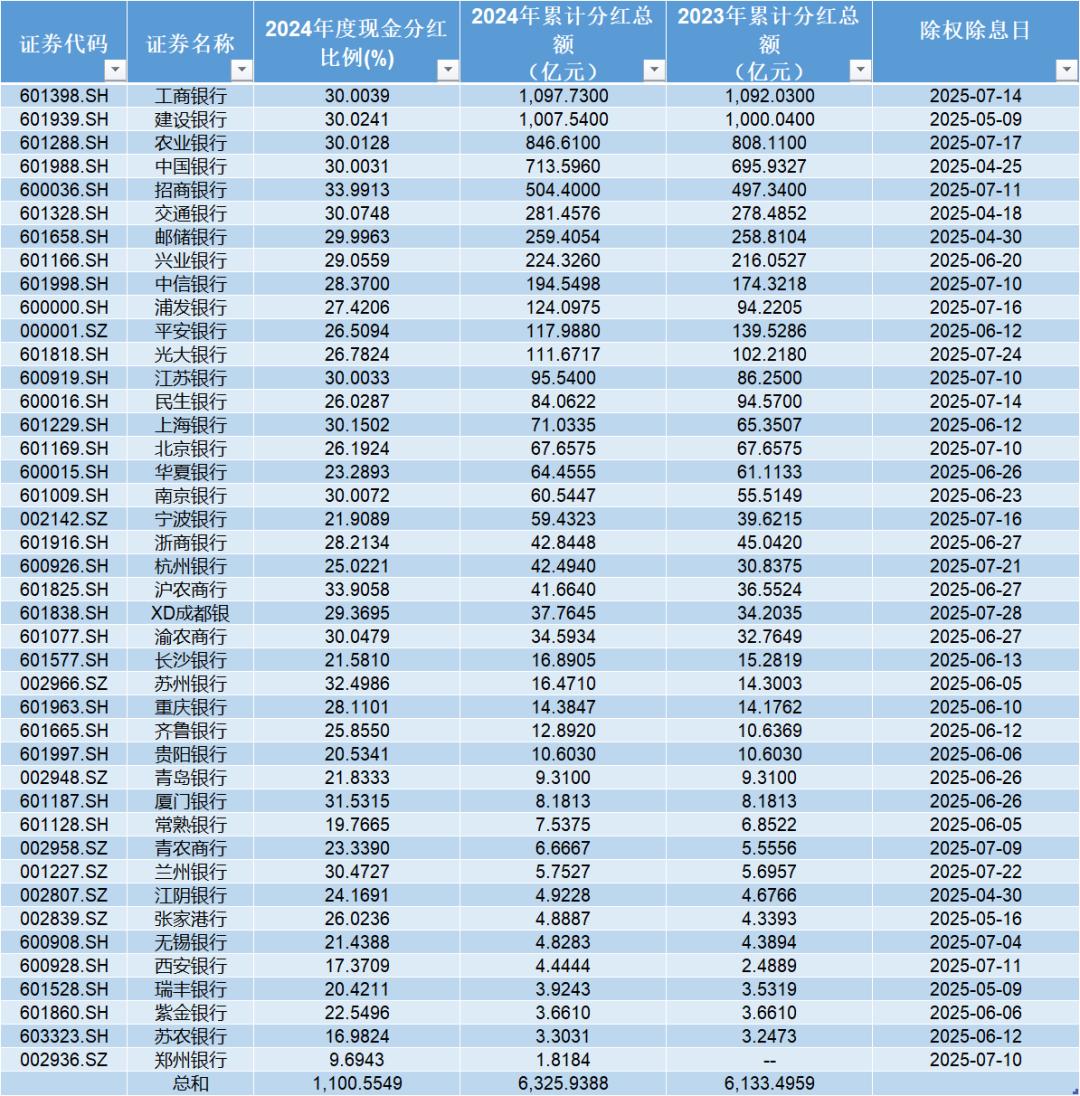
经济导报记者 刘勇 与此同时,多家银行已经披露2025年中期分红计划。 受访的业内人士认为,银行推出中期分红可以让投资者更早享受银行成长红利。"从已披露2025年半年度业绩快报看,部分银行上半年营业收入和归母净 利润均有所增长,因此中期分红的总额也会有一定程度的增长。"银行业分析师张鹏博表示。 7月22日,成都银行发布2024年年度权益分派实施公告。根据公告,本次利润分配以总股本42.38亿股为基数,每股派发现金红利0.891元(含税),合计派 发现金红利约37.76亿元。股权登记日为7月25日,除权(息)日及现金红利发放日均为7月28日。 | 证券代码 | 证券名称 | 2024年度分红总额(亿元) | 2024年度现金分红比例(%) | | --- | --- | --- | --- | | 000001.SZ | 平安银行 | 117.9880 | 26.5094 | | 001227.SZ | 兰州银行 | 5.7527 | 30.4727 | | 002142.SZ | 宁波银行 | 59.4323 | 21.9089 | | 002807.SZ | 江阴银行 | 4.9228 | 24.1691 ...





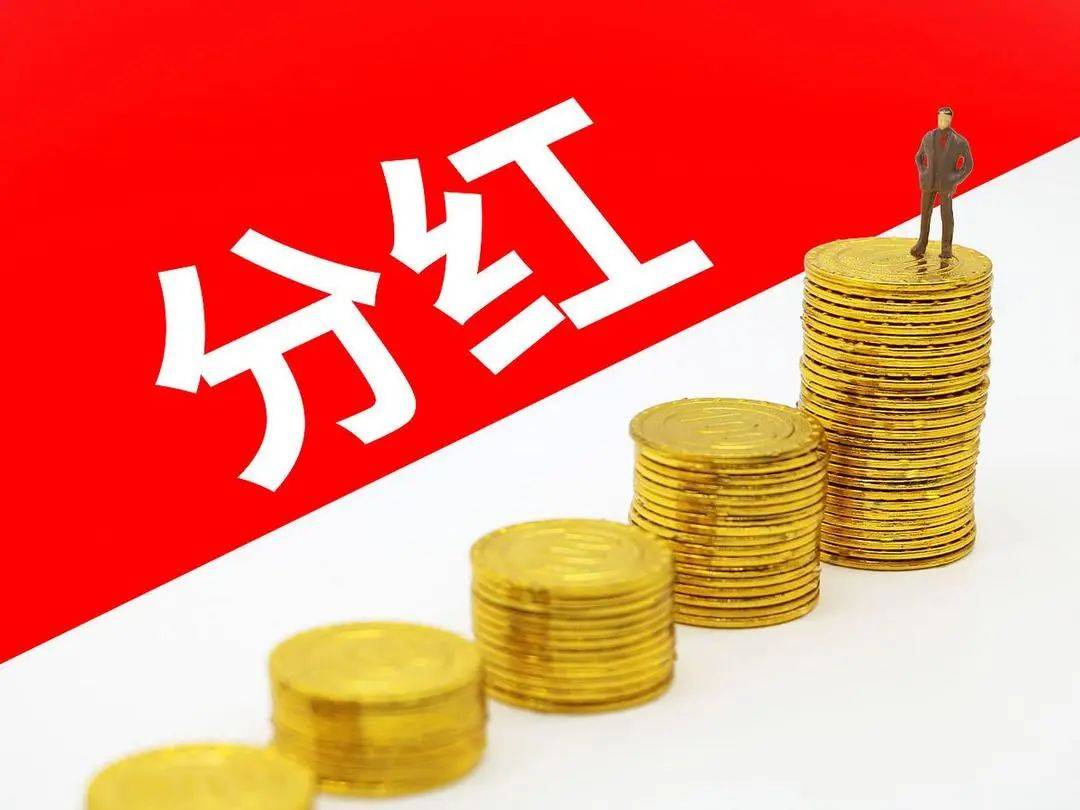
42家上市银行分红大比拼:共计派现6325.94亿元,郑州银行分红比例最低
Da Zhong Ri Bao· 2025-07-30 03:58
7月28日,随着成都银行(601838.SH)2024年分红到账,A股上市银行的"分红季"正式收官。从2024年度累计分红总额来看,42家A股上市银行派发现金 共计6325.94亿元,相较2023年度增加近200亿元,同比增长3.14%。 与此同时,多家银行已经披露2025年中期分红计划。 受访的业内人士认为,银行推出中期分红可以让投资者更早享受银行成长红利。"而且从已披露2025年半年度业绩快报看,部分银行上半年营业收入和归 母净利润均有所增长,因此中期分红的总额也会有一定程度的增长。"银行业分析师张鹏博表示。 分红总额创新高 7月22日,成都银行发布2024年年度权益分派实施公告。根据公告,本次利润分配以总股本42.38亿股为基数,每股派发现金红利0.891元(含税),合计派 发现金红利约37.76亿元。股权登记日为7月25日,除权(息)日及现金红利发放日均为7月28日。 从2024年度累计分红总额来看,42家A股上市银行派发现金共计6325.94亿元,相较2023年度增加近200亿元,同比增长3.14%。 按2024年全年总派息额计算,工商银行(601398.SH)分红金额最高,为1097.73亿元;建 ...




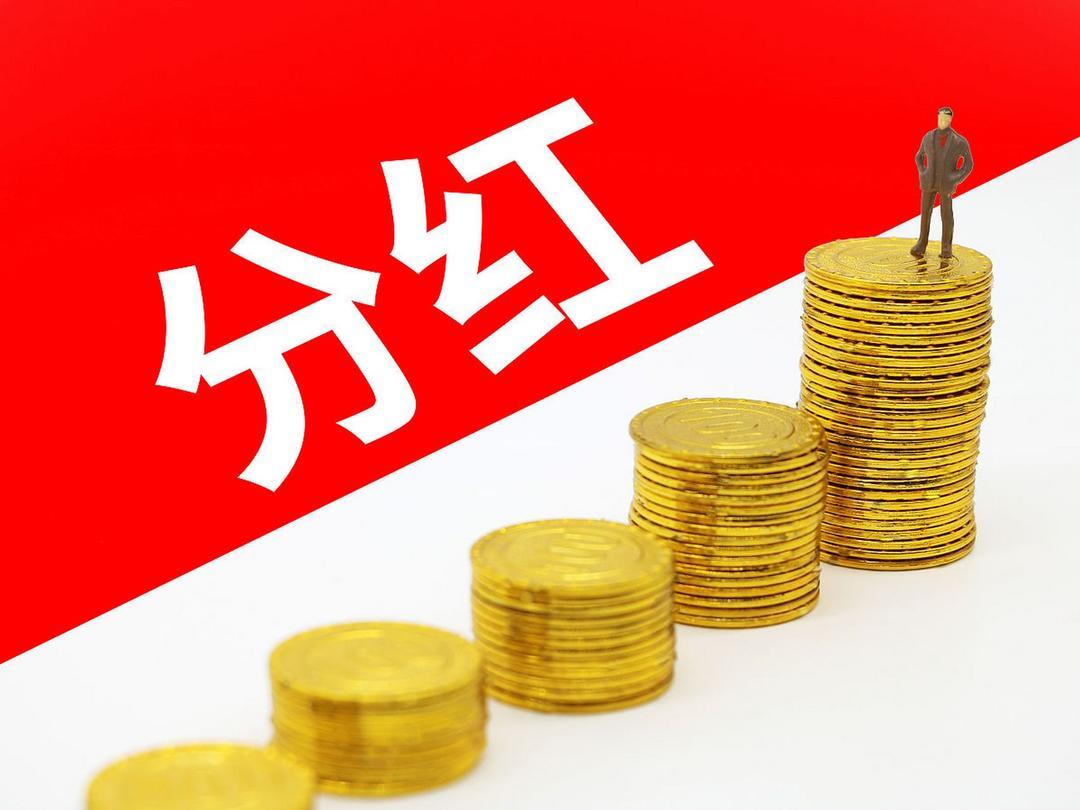
红利银行时代系列十七:年度分红落幕,展望中期分红
Changjiang Securities· 2025-07-29 15:18
Investment Rating - The report maintains a "Positive" investment rating for the banking sector [11]. Core Insights - The banking sector has completed its 2024 dividend distribution, with a shift towards 2025 where the expected dividend yield for quality city commercial banks is projected to rise to approximately 4.5% to 5.0% [2][6]. - After recent market adjustments, leading city commercial banks such as Chengdu Bank and Jiangsu Bank have seen their expected dividend yields rebound to 5.1% and 4.9%, respectively, making them attractive for investment [7]. - The average static dividend yield for state-owned banks in A-shares is 4.02%, which still offers a 230 basis points (BP) spread over the 10-year government bond yield [7][20]. Summary by Sections Dividend Distribution - As of July 28, 2024, all 42 listed banks in A-shares have completed their dividend distributions for the year [6]. - For 2025, the expected average dividend yields for state-owned banks, joint-stock banks, city commercial banks, and rural commercial banks are projected at 4.04%, 4.27%, 4.05%, and 3.94%, respectively [6]. Market Dynamics - Recent market sentiment has shifted, leading to a significant recovery in risk appetite, which has resulted in capital outflows and price adjustments in the banking sector [7]. - The stable performance of banks is supported by recent interim reports from Hangzhou Bank, Ningbo Bank, Qilu Bank, and Changshu Bank, all of which exceeded expectations [7]. Mid-term Dividend Planning - In 2024, 24 listed banks are expected to implement mid-term dividends, with several banks like China Merchants Bank, Changshu Bank, and Su Nong Bank announcing their first mid-term dividends [8]. - The timing of mid-term dividends is expected to be similar to the previous year, influencing the allocation rhythm within the sector [8]. Dividend Ratios - The overall dividend ratio for banks in 2024 is expected to increase compared to the previous year, with limited room for further increases in 2025 [9]. - Attention is drawn to banks like Hangzhou Bank and Qilu Bank, which may have incentives to raise their dividend ratios post-conversion of convertible bonds [9]. Valuation Recovery - The report expresses optimism regarding the valuation recovery of banking stocks, particularly favoring quality city commercial banks such as Hangzhou Bank, Jiangsu Bank, Qilu Bank, Chengdu Bank, Nanjing Bank, and Qingdao Bank [10]. - The report highlights that various capital sources, including insurance and state-owned capital, have been increasing their holdings in banking stocks, indicating a positive outlook for the sector [27].



鑫闻界|A股银行超6300亿分红完成,2家超千亿,2025中期分红已在路上
Qi Lu Wan Bao· 2025-07-29 12:50
齐鲁晚报·齐鲁壹点记者 黄寿赓 随着成都银行分红到账,A股42家上市银行共计6325.94亿元的2024年度利润分配完成。从分红总额来看,工商银行、建设银行超千亿元,招商银行、江苏银 行分别以504.40亿元、95.54亿元"领衔"全国性股份制银行、中小银行分红。从现金分红占比来看,有14家银行超30%,招商银行最高,接近34%。郑州银 行、苏农银行、西安银行、常熟银行分红占比不足20%,尤其是郑州银行仅9.69%。 较高的每股红利带动股息率"水涨船高"。在银行股上半年市值已经涨了2万亿的背景下,截至7月28日,仍有28家银行股息率超4%。值得关注的是,在监管 强调增强投资者回报背景下,越来越多银行对2025中期分红作出安排,沪农商行、杭州银行、常熟银行等已对相关事项进行披露。 工行、建行总额超千亿 郑州银行时隔4年再分红 成都银行是A股42家上市银行2024年年度权益分派中,最后一家到账的。根据公告,本次成都银行利润分配以总股本42.38亿股为基数,每股派发现金红利 0.891元(含税),合计派发现金红利约37.76亿元。股权登记日为7月25日,除权(息)日及现金红利发放日均为7月28日。 随着成都银行红利 ...

6325.94亿,A股42家上市银行分红全部到账,工行、建行千亿领跑
3 6 Ke· 2025-07-29 11:22
随着成都银行发放现金红利,A股上市银行的"分红季"迎来收官。 7月22日,成都银行(601838.SH)发布2024年年度权益分派实施公告。根据公告,本次利润分配以总股本42.38亿股为基数,每股派发现金红利0.891元 (含税),合计派发现金红利约37.76亿元。股权登记日为7月25日,除权(息)日及现金红利发放日均为7月28日。 在成都银行股吧中,不少股民表示分红已经到账。 时代周报记者注意到,截至7月28日,在A股42家上市银行中,所有银行2024年年度现金"红包"已全部派发到账。 从2024年度累计分红总额来看,42家A股上市银行派发"红包"共计6325.94亿元,相较去年度增加近200亿元,同比增长3.14%。 具体来看,42家A股上市银行中,仅3家银行2024年度累计分红金额较2023年下滑,分别是浙商银行、民生银行和平安银行;5家银行去年度分红金额与 2023年持平,分别是北京银行、贵阳银行、青岛银行、厦门银行和紫金银行;分红总额上涨的银行共34家,占比超八成。 在今年的业绩会上,招商银行董事长缪建民表示,该行自2013年起就把保持30%以上的分红率写入了公司章程。去年现金分红比例达到了35.3 ...
33家银行上榜《财富》中国500强 成都银行排名提升35位
Jing Ji Guan Cha Wang· 2025-07-29 09:01
Core Insights - The 2025 Fortune China 500 list shows a significant increase in the number of commercial banks, rising from 28 to 33, marking a record high [1] - Regional banks are demonstrating strong performance, reflecting the deep empowerment of China's regional economic development strategies [2] - State-owned and joint-stock banks remain the backbone of the banking sector, with total revenues of approximately $1.33 trillion and profits exceeding $266.2 billion, accounting for about 35% of the overall profits of the Fortune 500 [3] Commercial Banks Performance - The total revenue of the 33 commercial banks in the list reached approximately $1.33 trillion, with a combined profit of over $266.2 billion [3] - Major state-owned banks like ICBC, ABC, and CCB maintained stable rankings, with ICBC leading at $221.46 billion in revenue [3][4] - Joint-stock banks showed mixed results, with China Merchants Bank improving its ranking to 49th with $70.39 billion in revenue [3][4] Regional Banks Highlights - Regional banks such as Jiangsu Bank, Beijing Bank, and Ningbo Bank performed well, with Jiangsu Bank ranking 162nd with $21.88 billion in revenue [5] - Chengdu Bank emerged as the "progress king" in the banking sector, climbing 35 places to rank 324th with $6.56 billion in revenue [6][7] - New entrants like Guangzhou Rural Commercial Bank and Chengdu Rural Commercial Bank made notable debuts, ranking 354th and 383rd respectively [7] Strategic Insights - The performance of regional banks is attributed to their ability to align with local economic strategies, providing ample credit demand and diverse opportunities [2][7] - Continuous improvement in corporate governance and a focus on differentiated services are essential for regional banks to achieve long-term value growth [7]

上证西部大开发龙头企业指数上涨0.2%,前十大权重包含伊利股份等
Jin Rong Jie· 2025-07-23 15:59
Core Viewpoint - The A-share market showed mixed performance with the Shanghai Western Development Leading Enterprises Index rising by 0.2% to 6529.57 points, with a trading volume of 62.957 billion yuan [1] Group 1: Index Performance - The Shanghai Western Development Leading Enterprises Index increased by 4.75% over the past month and 3.46% over the past three months, but has decreased by 2.45% year-to-date [1] - The index is composed of leading companies from various secondary industries in selected regions, providing a reference for investors interested in China's regional economic development [1] Group 2: Index Holdings - The top ten weighted companies in the index are: Shaanxi Coal and Chemical Industry (15.2%), Kweichow Moutai (14.42%), Yili Industrial Group (14.27%), Seres (13.44%), TBEA (6.64%), Chengdu Bank (4.23%), Chongqing Rural Commercial Bank (3.33%), Sichuan Changhong (3.06%), Northern Rare Earth (2.83%), and Sichuan Road and Bridge (2.77%) [1] - The index's holdings are entirely composed of companies listed on the Shanghai Stock Exchange [1] Group 3: Industry Composition - The industry composition of the index includes: Consumer Staples (29.48%), Discretionary Consumer (16.92%), Energy (16.30%), Industrials (14.69%), Materials (12.04%), Financials (7.96%), Utilities (1.53%), Healthcare (0.76%), Information Technology (0.15%), Communication Services (0.14%), and Real Estate (0.02%) [2] - The index samples are adjusted biannually, with adjustments occurring on the next trading day after the second Friday of June and December [2]





“退名单”平台成信贷新风口,多家银行政务类贷款占比超四成
Xin Lang Cai Jing· 2025-07-23 13:02
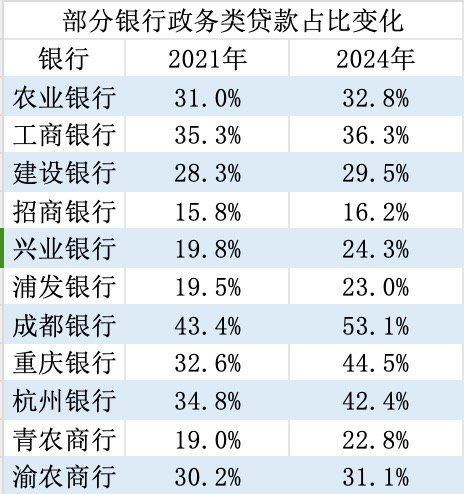
Core Viewpoint - Since 2022, the real estate market has been adjusting, leading to a contraction in real estate loans, while government-related loans have been on the rise, particularly in city commercial banks where the proportion of government loans has exceeded 40% in some cases [1][6] Group 1: Loan Market Dynamics - The "exit list" platform has emerged as a new growth point for bank credit, allowing financing platforms that have exited the list to operate as market entities without financing restrictions [2][3] - Government-related loans have seen a significant increase, compensating for the decline in real estate loans, with banks focusing on infrastructure projects and local government financing [6][10] - The exit of financing platforms from the list is part of a broader reform, with over 7,000 platforms expected to be reduced, which may lead to increased credit demand in the market [3][4] Group 2: Bank Strategies and Performance - Different types of banks have varying strategies for government-related loans, with state-owned banks focusing on major national and provincial projects, while city commercial banks target county-level projects [7][9] - City commercial banks have seen a significant increase in the proportion of government-related loans, with some banks like Chengdu Bank exceeding 53% [7][10] - The capital market has responded positively to banks with a high proportion of government loans, with notable increases in market value for banks like Chengdu Bank and Hangzhou Bank [10]
25Q2银行板块持仓数据点评:资金增配银行股,主动型基金青睐低估值股份行和高成长性城商行
Orient Securities· 2025-07-23 10:42
Investment Rating - The report maintains a "Positive" outlook on the banking industry [6] Core Insights - Active equity funds have increased their holdings in A-share banks, with a total of 4.90% of their heavy positions in the banking sector as of Q2 2025, up by 1.14 percentage points from Q1 2025 [10][12] - Passive funds have also seen an increase, with their heavy positions in A-share banks rising to 11.15%, an increase of 2.02 percentage points [10][19] - The report highlights a preference for low-valuation joint-stock banks and high-growth city commercial banks among active funds [12] Summary by Sections Active Equity Funds - As of Q2 2025, active equity funds held 4.90% of their heavy positions in banks, with a total of 49.17 billion shares, an increase of 6.64 billion shares from Q1 2025 [10][12] - The market value of these holdings reached 640.78 billion yuan, up by 135.08 billion yuan [10][12] - The top five stocks favored by active funds include China Merchants Bank (1.01%), Jiangsu Bank (0.54%), Ningbo Bank (0.51%), Hangzhou Bank (0.45%), and Chengdu Bank (0.41%) [10][12] Passive Equity Funds - Passive funds increased their holdings to 71.47 billion shares, a rise of 16.23 billion shares from Q1 2025 [10][19] - The market value of these holdings reached 1,332.61 billion yuan, an increase of 288.32 billion yuan [10][19] - Key stocks with significant inflows include China Merchants Bank and Industrial Bank, while Bank of China and Qingdao Bank saw reductions in holdings [10][19] Investment Recommendations - The report suggests focusing on two main investment lines: 1. High-dividend banks in anticipation of a potential reduction in insurance premium rates, recommending stocks like China Construction Bank, Industrial and Commercial Bank of China, and Chongqing Rural Commercial Bank [10][12] 2. Strong-performing small and medium-sized banks, with recommendations for Industrial Bank, CITIC Bank, Nanjing Bank, Jiangsu Bank, and Hangzhou Bank [10][12]