Zheshang Securities(601878)

Search documents
研报掘金丨浙商证券:维持徐工机械“买入”评级,海外业务和矿山机械业务是未来增长亮点
Ge Long Hui A P P· 2025-12-29 06:19
Core Viewpoint - XCMG Machinery is positioned as a leading player in China's construction machinery sector, with significant benefits from mixed-ownership reform and enhanced global competitiveness, indicating a potential revaluation of its value [1] Group 1: Market Position and Performance - According to the Yellow Table 2025 rankings, XCMG Group is projected to hold a global market share of 5.4% by 2025, ranking fourth globally and maintaining its position as the number one in China [1] - The company's return on equity (ROE) has consistently ranked among the top in the industry, with a forecasted ROE of 10.4% for 2024 [1] - Profitability is on the rise, with the net profit margin increasing from 4.6% in 2022 to 7.8% in the first three quarters of 2025 [1] Group 2: Growth Drivers - The upward cycle in the construction machinery sector is supported by both domestic and overseas demand, with export growth driven by increased market share abroad and infrastructure demands in emerging markets such as Africa and Latin America [1] - The demand from the mining sector is also contributing positively to the company's growth [1] Group 3: Incentives and Future Outlook - The company has initiated a stock option and restricted stock incentive plan, with the first grant date set for December 25, 2025, involving 4,545 employees, which represents 16% of the total workforce for 2024 [1] - The total number of shares granted in this plan is 420 million, accounting for approximately 3.6% of the company's current total share capital, marking the largest equity incentive grant in the history of the A-share machinery industry [1] - The company aims to become a global leader in construction machinery, with overseas operations and mining machinery business identified as key growth areas [1]


中国证券行业2025年十大新闻
券商中国· 2025-12-29 04:28
Core Viewpoint - 2025 is a pivotal year for the Chinese securities industry, focusing on deepening functional positioning and high-quality development, with an emphasis on mergers and acquisitions, international expansion, and technological innovation, particularly through AI applications [1][2]. Mergers and Acquisitions - The year marks a critical phase for mergers and acquisitions in the securities industry, with major firms like Guotai Junan and Haitong Securities merging to form Guotai Haitong Securities, and other significant consolidations such as Guolian Securities and Minsheng Securities [3][4]. - The competitive landscape is shifting, with Guotai Haitong leading in net profit, and Guolian Minsheng's ranking improving significantly from around 40th to the top 20 [3]. - New merger cases are emerging, such as CICC's plan to merge with Xinda Securities and Dongxing Securities, potentially creating a new entity with over 1 trillion yuan in total assets [3]. Industry Integration Logic - Two main integration strategies are evident: resource consolidation under the same actual controller and market-driven mergers aimed at enhancing national influence [4]. - Analysts suggest that resource integration may become the most important way for securities firms to quickly enhance scale and comprehensive strength [4]. Classification Evaluation Reform - A significant revision of the classification evaluation for securities firms is underway, emphasizing the need for firms to enhance their functional roles and professional capabilities [5][6]. - The new regulations aim to shift focus from revenue expansion to improving operational efficiency and professional skills, thereby enhancing overall industry competitiveness [5]. Margin Trading Market - The margin trading market is heating up, with a record balance of 2.54 trillion yuan, reflecting a 36.6% increase from the beginning of the year [7]. - Several firms have raised their margin trading limits, and a price war on interest rates has begun, with some firms offering rates below 4% [8][9]. Investment Banking and Technology - The securities industry is adapting to a new era of "hard technology," with reforms aimed at providing more inclusive financing paths for tech companies [10][11]. - Securities firms are establishing research institutes focused on emerging industries and enhancing their service capabilities through collaboration and talent development [11]. AI Integration - The adoption of AI technologies is rapidly transforming the industry, with applications expanding across various business functions, significantly improving efficiency [12][13]. - Firms are moving towards an "AI-native" model, enhancing client engagement and operational management through AI tools [12]. Internationalization of Securities Firms - The internationalization of Chinese securities firms is accelerating, with a focus on comprehensive service capabilities and participation in global market competition [14][15]. - This trend is driven by the growing demand for cross-border services and the strategic goal of building first-class investment banks [14]. Asset Management Transformation - The public offering process for asset management is at a turning point, with firms reassessing their positioning in the broader asset management landscape [16][17]. - The industry is witnessing a decline in the rush for public fund licenses, with many firms withdrawing applications, indicating a shift in focus towards existing business optimization [16]. Impact of Fund Fee Reforms - The implementation of public fund fee reforms is pushing securities firms to enhance their research and wealth management capabilities, with a notable decline in commission revenues [18]. - Firms are transitioning towards a buyer advisory model, focusing on asset management and providing comprehensive solutions rather than merely selling products [18]. Regulatory Environment - Regulatory signals indicate a potential easing of capital requirements for high-quality institutions, aimed at improving capital utilization efficiency [19]. - Analysts suggest that enhancing leverage and capital efficiency could drive growth in high-value capital-intensive businesses [19]. Name Changes Reflecting Strategic Shifts - A wave of name changes among securities firms signifies strategic realignments and resource restructuring following mergers and acquisitions [20][21]. - These changes reflect deeper integration and the influence of new stakeholders, indicating a shift in strategic focus and operational capabilities [20].




原财通证券毕春晖出任浙商证券研究所副所长
Xin Lang Cai Jing· 2025-12-29 03:10
Group 1 - The core point of the article is the announcement of Bi Chunhui joining Zheshang Securities Research Institute as the Deputy Director, leading the macro cycle group and serving as the Chief Analyst for construction, building materials, and new materials [1] Group 2 - Bi Chunhui previously worked at Caifeng Securities, indicating a significant shift in talent within the securities industry [1] - The move is expected to enhance Zheshang Securities' research capabilities in the construction and materials sectors, reflecting a strategic focus on these industries [1] - The appointment highlights the competitive nature of the securities research field, as firms seek to attract experienced analysts to strengthen their market positions [1]

华虹公司股价涨5.16%,浙商证券资管旗下1只基金重仓,持有4000股浮盈赚取2.22万元
Xin Lang Cai Jing· 2025-12-29 02:11
资料显示,华虹半导体有限公司位于上海张江高科技园区哈雷路288号,香港中环夏悫道12号美国银行中 心2212室,成立日期2005年1月21日,上市日期2023年8月7日,公司主营业务涉及华虹半导体有限公司 是一家主要从事特色工艺晶圆代工的中国投资控股公司。该公司提供包括嵌入式/独立式非易失性存储 器、功率器件、模拟与电源管理、逻辑与射频等多元化特色工艺平台的晶圆代工及配套服务。该公司还 从事提供包括知识产权(IP)设计、测试等配套服务。该公司主要在国内市场从事其业务。主营业务收 入构成为:集成电路晶圆代工94.60%,其他4.78%,租赁收入0.62%。 12月29日,华虹公司涨5.16%,截至发稿,报112.94元/股,成交6.08亿元,换手率1.34%,总市值 1960.64亿元。 从基金十大重仓股角度 数据显示,浙商证券资管旗下1只基金重仓华虹公司。浙商鼎盈事件驱动混合(LOF)(169201)三季度 持有股数4000股,占基金净值比例为5%,位居第三大重仓股。根据测算,今日浮盈赚取约2.22万元。 浙商鼎盈事件驱动混合(LOF)(169201)基金经理为张雷。 截至发稿,张雷累计任职时间291天,现任 ...
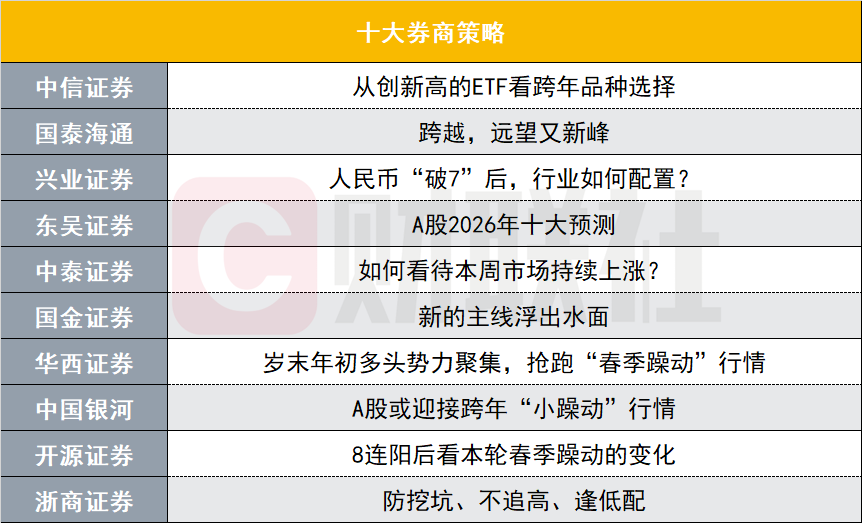
跨越2025 年终行情能否连涨收官?请看本周十大券商策略
智通财经网· 2025-12-28 23:37
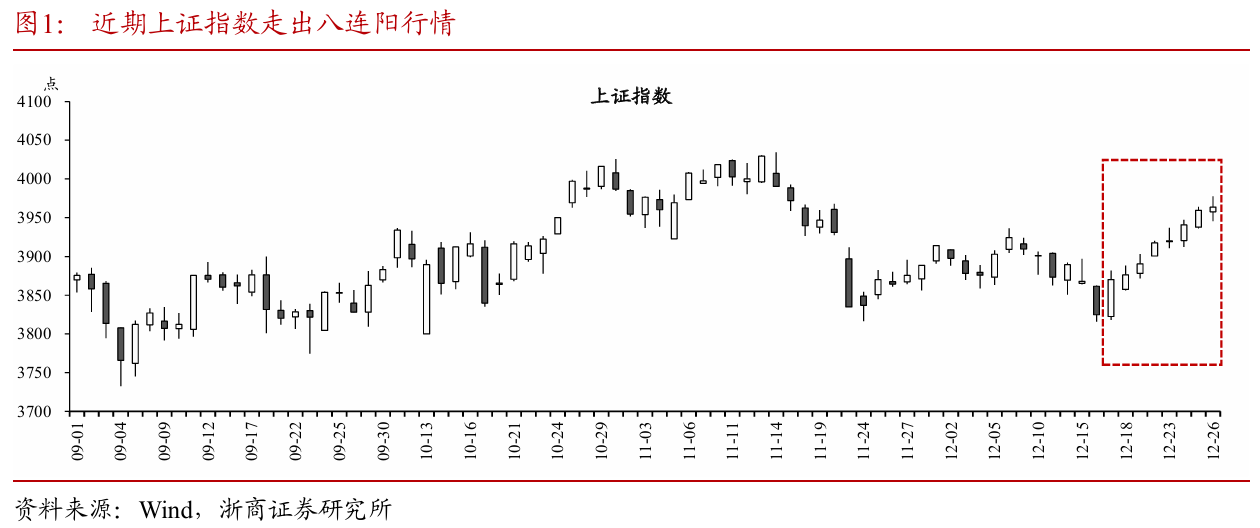
Core Viewpoint - The Chinese stock market is experiencing a positive trend as it approaches the end of 2025, with significant movements in various sectors and a focus on potential investment opportunities for 2026 [1][30]. Group 1: Market Trends and Predictions - The Shanghai Composite Index has achieved an "eight consecutive days of gains" [1]. - The total scale of Chinese ETFs has surpassed 6 trillion, setting a new historical high [1]. - Major brokerages have provided insights on market trends, with predictions for 2026 focusing on sectors that may dominate [2][5][13]. Group 2: Sector Analysis - Citic Securities highlights that 39 out of 360 industry/theme ETFs reached new highs in December, with a focus on telecommunications, non-ferrous metals, and commercial aerospace as key sectors [3]. - Industry sectors such as chemicals, engineering machinery, and new energy are expected to see increased attention and potential growth due to their long-term return on equity (ROE) improvement [4]. - Guotai Junan emphasizes the importance of capital markets in driving social confidence and investment, marking a shift from traditional investment methods to more capital-intensive approaches [5]. Group 3: Currency and Economic Factors - The recent appreciation of the Renminbi is attributed to a weaker US dollar and seasonal capital inflows, which may support the Chinese stock market [9][30]. - The potential for a significant influx of capital back into China is anticipated, driven by the reversal of previous trends in currency valuation and investment sentiment [9][10]. - The structural transformation of the Chinese economy is expected to reduce uncertainty and enhance investment opportunities, particularly in technology and manufacturing sectors [7][24]. Group 4: Investment Strategies - Investment strategies are shifting towards sectors that benefit from the current economic environment, including AI hardware, renewable energy, and consumer services [19][31]. - Brokers suggest focusing on thematic trading opportunities in sectors like robotics, commercial aerospace, and healthcare, which are expected to gain traction in the upcoming year [19][31]. - The market is advised to adopt a cautious approach, emphasizing low-cost entry points and avoiding high-risk positions as the market stabilizes [35][36].



浙商证券:“未分胜负”变“利于多方” 防挖坑、不追高、逢低配
Xin Lang Cai Jing· 2025-12-28 08:51
Core Viewpoint - The market is experiencing a gradual upward trend driven by the strong performance of the A500 ETF, the booming commercial aerospace sector, and the continued strength of optical modules. The conclusion of a medium-term bullish outlook for A-shares, characterized as a "systematic slow bull," is deemed to have high confidence, although the sustainability of the driving factors needs to be verified in the short term [1][4][9]. Market Overview - Major indices collectively rose, with the CSI 500 leading in gains during the week of December 22 to December 26, 2025. The market showed broad-based gains, although the dividend consumption sector remained generally weak. Trading volume in Shanghai and Shenzhen saw a slight decline, and most stock index futures contracts were trading at a discount. The margin financing balance increased slightly, with a higher proportion of financing purchases and net inflows into stock ETFs. The valuation of the ChiNext index is relatively low, and the downward energy model is at a normal level [2][7]. Market Attribution - The IPO guidance status of Blue Arrow Aerospace has changed to "guidance work completed," and SpaceX has confirmed preparations for a potential IPO in 2026. The central bank has released a one-time personal credit repair policy to help individuals rebuild credit. Additionally, the central bank's monetary policy committee held its fourth-quarter meeting, emphasizing the need to "maintain the stability of the capital market" [3][8]. Future Market Outlook - The market has shifted from a state of indecision to one favorable for bulls, primarily due to three driving factors: the strong performance of the CSI A500 ETF, which saw total shares increase by 39.89 billion and 67.23 billion over the past week and two weeks, respectively; the ongoing boom in commercial aerospace, which has significantly boosted growth indices; and the continued strength of optical modules, which supports the innovation index. While these factors have shifted the market towards a bullish trend and laid the foundation for upward movement in the first half of the following year, their sustainability remains uncertain. The medium-term bullish outlook for A-shares is supported, but short-term developments require careful observation [4][9]. Investment Strategy - Based on the assessment of a medium-term bullish outlook and the need for short-term observation, it is advised to maintain current positions and avoid chasing after high-performing stocks, especially those with significant gains this year. If a situation similar to the "golden pit" seen earlier this year arises, it is recommended to actively increase allocations at lower prices. The focus should be on the brokerage sector, which has shown signs of lagging and potential for share expansion. Additionally, attention should be given to the Hang Seng Technology Index, which has undergone sufficient adjustments and formed a daily MACD divergence. A strategy of "light index, heavy stock" is suggested, with a focus on low-performing stocks above the annual line [5][10].
浙商证券:权益市场跨年行情对债市影响几何?
Zhi Tong Cai Jing· 2025-12-27 09:30
Group 1 - The core viewpoint of the article suggests that the equity market's year-end rally may have started, influenced by a strong commodity market led by precious metals, which could further impact the logic of asset scarcity in the bond market [1][14]. - The report indicates that the 10-year government bond yield has remained stable, with recent fluctuations reflecting a broader trend of liquidity in the market [2][18]. - The equity market has shown signs of a year-end rally, with the Shanghai Composite Index experiencing a series of gains, suggesting a potential upward trend similar to past market behaviors [3][6][13]. Group 2 - The article highlights that the core asset rally has driven the Shanghai Composite Index, with historical comparisons showing significant gains during previous year-end rallies [6][9]. - Multiple factors are driving the strength of the equity market, including a globally accommodative monetary policy, a K-shaped economic recovery, and increased investor preference for stable earnings from leading companies [9][10][13]. - The article notes that the current low interest rate environment is favorable for equity market valuations, and there is a potential for a positive feedback loop in the market as funds flow into core assets [13][14]. Group 3 - The bond market is facing challenges as the equity market gains momentum, with the article suggesting that the logic of asset scarcity may weaken, leading to potential outflows from bonds [14][18]. - The report emphasizes that the importance of coupon income is increasing in the current volatile bond market, making a buy-and-hold strategy for high-coupon credit bonds more attractive [18][19]. - The average yield of pure bond funds for the year is reported at 1.44%, indicating that achieving standout performance in the bond market is becoming increasingly difficult [18][19].
新恒泰过会:今年IPO过关第108家 浙商证券过3单
Zhong Guo Jing Ji Wang· 2025-12-27 06:47
新恒泰的保荐机构为浙商证券股份有限公司,保荐代表人为蒋根宏、潘洵。这是浙商证券今年保荐 成功的第3单IPO项目。7月4日,浙商证券证券保荐的浙江锦华新材料股份有限公司过会;8月28日,浙 商证券证券保荐的纳百川新能源股份有限公司过会。 中国经济网北京12月27日讯 北京证券交易所上市委员会2025年第49次审议会议于2025年12月26日 下午召开,审议结果显示,浙江新恒泰新材料股份有限公司(简称"新恒泰")符合发行条件、上市条件 和信息披露要求。这是今年过会的第108家企业(其中,上交所和深交所一共过会60家,北交所过会48 家)。 公司专注于功能性高分子发泡材料的研发、制造和销售,经过十余年的发展,现已成为国内知名的 具备多种发泡材料规模化生产能力的供应商。 截至招股说明书签署日,陈春平、金玮夫妇及其儿子陈俊桦合计控制公司75.04%的表决权,系公 司控股股东,其中:陈春平直接持有公司36.41%的股份,通过嘉兴熙宏间接控制公司1.22%的股份;金 玮直接持有公司30.24%的股份,通过嘉兴力权间接控制公司2.43%的股份;陈俊桦直接持有公司4.74% 的股份。同时,陈春平任公司董事长、总经理,金玮任公司 ...
研报掘金丨浙商证券:维持盛达资源“买入”评级,黄金优质资产有望使公司估值提升
Ge Long Hui A P P· 2025-12-26 05:57
Group 1 - The core point of the article is that Shengda Resources plans to acquire 60% of Yichun Jinshi Mining for 500 million in cash, with significant copper and molybdenum resources identified [1] - The inferred and controlled resource amounts include 1.54 million tons of copper with a grade of 0.15% and 460,000 tons of molybdenum with a grade of 0.046% [1] - The acquisition of Jinshi Mining is emphasized not only for copper but also for gold, as the I-type copper-molybdenum deposit primarily consists of primary sulfide ores, which have a high recovery rate and are easy to process [1] Group 2 - The company has received approval for the delayed trial production application of the Caiyuzi copper-gold mine and will proceed with obtaining the safety production license as required [1] - The production volume is not expected to be affected, and full production is anticipated to be achieved next year [1] - As a leading player in the silver industry, the company is entering the gold/copper mining sector, benefiting from the recent significant rise in gold and silver prices, which is expected to enhance the company's product offerings and valuation [1]

绩效新规下,公募基金经理的“最大化薪酬打法”
Hua Er Jie Jian Wen· 2025-12-26 01:51
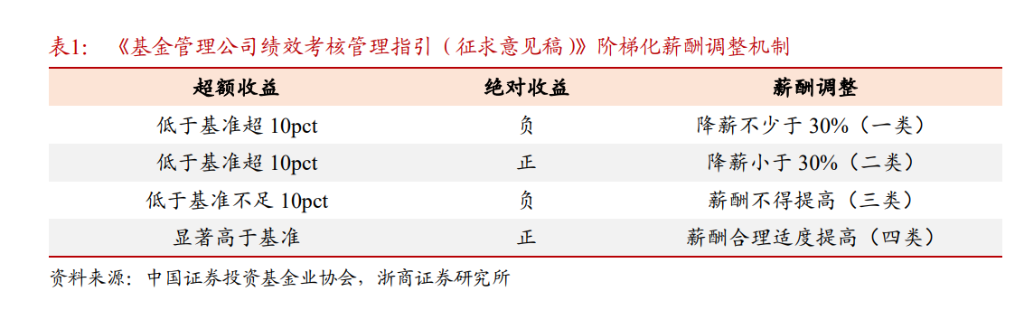
Core Insights - The new regulations linking fund manager compensation to long-term performance have become a central issue in the public fund industry, emphasizing the need to maximize market outperformance while minimizing the risk of salary reductions [1] Group 1: Performance Assessment and Compensation - The new performance assessment system has established a "tiered salary adjustment mechanism," directly linking fund manager compensation to the rolling performance of the funds they manage over the past three years [1] - If a fund's performance lags the benchmark by more than 10 percentage points and has a negative profit margin, the performance compensation must decrease significantly, by no less than 30% [1][2] - The report indicates that this rigid constraint requires fund managers to pursue relative returns while tightly controlling downside risks, particularly avoiding significant underperformance against benchmarks [1] Group 2: Market Conditions and Fund Performance - The ability of funds to outperform benchmarks is closely tied to macroeconomic conditions, with data showing that the proportion of ordinary equity funds underperforming benchmarks from 2022 to 2025 fluctuated significantly [3] - In 2024, the market's rolling annualized growth rate was the lowest at 11.6%, corresponding to the highest underperformance rates for funds, reaching 72.3% [3] - Interestingly, the first year of a bear market (2022) saw the highest outperformance rates due to prior bull market performance supporting results [3] Group 3: Fund Types and Performance - Active management funds have a significantly higher underperformance rate compared to quantitative funds, with active funds showing underperformance rates of 6.2%, 48.1%, 74.5%, and 50.0% from 2022 to 2025, while quantitative funds had lower rates of 3.5%, 39.4%, 52.3%, and 27.1% [5] - The report attributes the better performance of quantitative funds to their highly diversified holdings and systematic trading strategies, which mitigate irrational behavior and individual stock risks [6] Group 4: Diversification and Fund Size - The report highlights that funds with more than 200 stocks in their portfolio and a maximum weight of the largest holding below 2% have lower underperformance rates compared to the overall market [10] - Funds with over 500 stocks show even better performance, completely outperforming benchmarks in weaker market conditions from 2022 to 2023 [10] - Fund size is inversely related to underperformance rates, with larger funds (over 5 billion) consistently showing lower underperformance rates compared to smaller funds [16][18] Group 5: Manager Stability and Performance - The frequency of fund manager changes significantly impacts long-term performance, with funds that frequently change managers exhibiting higher underperformance rates [22] - Conversely, funds with stable management teams tend to have lower underperformance rates, benefiting from consistent investment strategies and reduced transaction costs [22] Group 6: Benchmark Changes and Risk Management - Changing performance benchmarks can effectively reduce compensation risk, as funds that adjust their benchmarks show lower significant underperformance rates, which are critical for avoiding salary reductions [19] - Selecting a benchmark that aligns with the fund manager's investment strategy is crucial for managing relative performance and compensation under the new regulations [19]