CCB(601939)

Search documents
数字人民币启动计息 银行加速场景生态布局
Zhong Guo Jing Ying Bao· 2026-01-09 18:33
Core Viewpoint - The introduction of interest on the balance of real-name digital RMB wallets by major Chinese banks marks a significant shift from digital currency to digital deposits, enhancing the attractiveness of digital RMB as a store of value and promoting its active use [2][3][4][5]. Group 1: Interest Payment on Digital RMB Wallets - Starting January 1, 2026, major banks in China will pay interest on the balances of real-name digital RMB wallets at the same rate as their demand deposit rates, currently set at 0.05% [2][5]. - Interest will be calculated and credited on specific dates throughout the year, and only real-name wallets will be eligible for interest, excluding anonymous wallets due to regulatory compliance [2][3]. Group 2: Transition to Digital Deposits - The People's Bank of China has initiated a transition from digital cash to digital deposit currency, with a new framework and management system set to launch in 2026 [3][5]. - This transition allows users to enjoy both payment convenience and interest income, integrating digital RMB into the banking system and enhancing wealth management opportunities [3][4]. Group 3: Impact on Commercial Banks - The shift to interest-bearing digital RMB balances will convert these funds into stable liabilities for banks, improving their lending capacity and profitability [4][5]. - The digital RMB will now be treated as a direct liability of commercial banks, allowing them to manage these balances within their asset-liability frameworks [4][5]. Group 4: Expansion of Digital RMB Applications - The digital RMB is expected to expand its application beyond simple payments to include savings, loans, and investments, enhancing its role in the financial ecosystem [4][6]. - Banks are encouraged to develop comprehensive financial products around interest-bearing wallets, targeting various sectors such as supply chain finance and cross-border payments [8]. Group 5: Internationalization of the RMB - The current global trend towards "de-dollarization" presents a unique opportunity for the internationalization of the RMB, with digital RMB facilitating innovative cross-border payment solutions [9]. - Enhancing user willingness to hold and use digital RMB, along with encouraging banks to promote its adoption, is crucial for its success in international markets [9][10].







深圳建行原资深副经理陈坤雄被“双开”,曾纵容亲属借权谋利
Nan Fang Du Shi Bao· 2026-01-09 13:42
按照通报,陈坤雄严重违反党的政治纪律、组织纪律、廉洁纪律,构成严重职务违法并涉嫌受贿犯罪, 性质严重,影响恶劣,应予严肃处理。依据有关规定,经研究,决定给予陈坤雄开除党籍处分;决定给 予其开除公职处分;收缴其违纪违法所得。 记者注意到,去年4月,陈坤雄"落马",接受纪律审查和监察调查。公开资料显示,陈坤雄生于1968 年,从中南财经大学会计系毕业后进入建行深圳分行,扎根金融领域超过30年,曾任建设银行深圳罗湖 支行行长、深圳市分行副行长等职。 1月9日傍晚,中央纪委国家监委网站发布消息,日前,中央纪委国家监委驻中国建设银行(601939)纪 检监察组、山东省聊城市监委对中国建设银行深圳市分行原资深副经理陈坤雄严重违纪违法问题进行了 立案审查调查。 经查,陈坤雄丧失理想信念,背弃初心使命,对抗组织审查;无视中央八项规定精神,接受可能影响公 正执行公务的宴请;违反组织原则,不按规定如实报告个人有关事项;廉洁底线失守,收受可能影响公 正执行公务的礼品,纵容、默许亲属利用本人职权谋利;利用职务便利,在贷款、授信等方面为他人谋 取利益并非法收受巨额财物。 ...
建设银行深圳市分行原资深副经理陈坤雄被开除党籍和公职
Bei Jing Shang Bao· 2026-01-09 12:02
Core Viewpoint - The article reports on the investigation and disciplinary actions taken against Chen Kunxiong, a former senior deputy manager of the Shenzhen branch of China Construction Bank, for serious violations of discipline and law [1] Group 1: Investigation Findings - Chen Kunxiong was found to have lost his ideals and beliefs, resisted organizational review, and ignored the spirit of the Central Eight Regulations by accepting banquets that could influence the impartial execution of duties [1] - He violated organizational principles by failing to report personal matters truthfully and accepted gifts that could affect the impartial execution of his duties [1] - Chen utilized his position to benefit others in loan and credit matters and illegally accepted substantial amounts of money [1] Group 2: Disciplinary Actions - The China Construction Bank's Party Committee decided to expel Chen Kunxiong from the Party and the public office due to his severe violations of political, organizational, and integrity disciplines [1] - His illegal gains will be confiscated, and the Shandong Province Liaocheng Municipal Supervisory Committee has transferred his suspected criminal activities to the prosecutorial authorities for legal review and prosecution [1]
建行取得资源调度记录修正方法专利
Sou Hu Cai Jing· 2026-01-09 11:47
Group 1 - China Construction Bank Corporation has obtained a patent for a method, device, equipment, and storage medium for correcting resource scheduling records, with authorization announcement number CN115564553B, and the application date is September 2022 [1] - China Construction Bank, established in 2004 and located in Beijing, primarily engages in monetary financial services, with a registered capital of approximately 26.16 billion RMB [1] - The bank has invested in 36 companies, participated in 5,000 bidding projects, holds 1,896 trademark records, and has 5,000 patent records, along with 149 administrative licenses [1] Group 2 - Jianxin Financial Technology Co., Ltd., established in 2018 and located in Shanghai, focuses on software and information technology services, with a registered capital of approximately 1.73 billion RMB [1] - The company has invested in 6 enterprises, participated in 4,257 bidding projects, holds 297 trademark records, and has 5,000 patent records, along with 10 administrative licenses [1]
银行短期大额存单利率进入0字头
2 1 Shi Ji Jing Ji Bao Dao· 2026-01-09 11:46
Core Viewpoint - Major state-owned banks in China have launched new large-denomination time deposit products in early 2026, but short-term product interest rates have generally entered the "0" range, indicating a downward trend in deposit rates across the banking sector [1][2]. Group 1: State-Owned Banks - The annual interest rates for 1-month and 3-month large-denomination time deposits from major state-owned banks such as Bank of China, Agricultural Bank of China, Industrial and Commercial Bank of China, and China Construction Bank are all at 0.9%, with a minimum deposit requirement of 200,000 yuan [1]. - Some products from these banks have interest rates lower than those of regular fixed-term deposits of the same duration [1]. - Since December 2025, these banks have collectively removed 5-year large-denomination time deposits, with available products now generally limited to 3 years or less, and interest rates ranging from 1.10% to 1.55% [1]. Group 2: Other Banks - In contrast to state-owned banks, some joint-stock banks, city commercial banks, and rural commercial banks are still offering short-term large-denomination time deposits with interest rates above 1%. For instance, Citic Bank's 1-month large-denomination time deposit has an interest rate of 1.1% [1]. - Tianjin Bank's first 3-month large-denomination time deposit for 2026 has an interest rate of 1.15%, while Liu'an Rural Commercial Bank offers a similar product at 1.1% [1]. - However, smaller banks are also experiencing downward pressure on short-term interest rates, with some entering the "0" range, such as Yunnan Tengchong Rural Commercial Bank, which has set a 3-month deposit rate at 0.95% [2]. Group 3: Market Analysis - Industry experts suggest that the recent interest rate adjustments are closely related to banks' ongoing efforts to manage net interest margins and reduce funding costs [2]. - The current market environment indicates that the downward trend in deposit rates may continue [2].

银行短期大额存单利率进入0字头
21世纪经济报道· 2026-01-09 11:41
Group 1 - Major state-owned banks have launched new large-denomination time deposit products, but short-term product interest rates have generally entered the "0" range, with rates for 1-month and 3-month deposits at 0.9% [1] - Compared to state-owned banks, some joint-stock banks and city commercial banks still offer short-term large-denomination time deposits with interest rates above 1%, such as CITIC Bank's 1.1% for a 1-month deposit [1] - The interest rates for large-denomination time deposits from state-owned banks have been reduced, with the current rates for products with a term of 3 years or less ranging from 1.10% to 1.55% [1] Group 2 - Smaller banks are also experiencing downward pressure on short-term interest rates, with some entering the "0" range, as seen with Yunnan Tengchong Rural Commercial Bank offering a 0.95% rate for a 3-month deposit [2] - The adjustment in interest rates is closely related to banks' ongoing efforts to manage net interest margins and reduce funding costs, indicating a potential continuation of the downward trend in deposit rates in the current market environment [2]

建行上海市分行巧解跨境贸易难题,助力上海打造世界级咖啡产业名片
Zhong Guo Jin Rong Xin Xi Wang· 2026-01-09 11:25
Core Insights - The article discusses the innovative "Coffee Production Internet Service Platform" developed by China Construction Bank's Shanghai branch, which utilizes blockchain and big data to enhance the coffee industry's operational efficiency and financial accessibility [1][2]. Group 1: Industry Challenges - Coffee importers in Shanghai face significant cash flow issues due to high upfront costs like tariffs and VAT, which can account for over 20% of the goods' value, while customer payment cycles can take several months [2]. - The coffee import trade is characterized by small transaction amounts and high frequency, leading to high costs associated with traditional payment methods and difficulties in obtaining flexible bank financing due to complex procedures and lack of collateral [2][3]. Group 2: Technological Solutions - The "Coffee Production Internet Service Platform" employs blockchain technology to create a transparent and trustworthy record of each coffee batch's journey from overseas farms to domestic warehouses, enhancing the visibility of the supply chain [3]. - The platform allows for seamless cross-border payment processes and enables banks to provide tailored financing solutions based on real-time data from the blockchain, significantly improving efficiency and reducing costs for small and medium-sized enterprises [3][4]. Group 3: Ecosystem Development - The initiative aims to create a healthier and more efficient coffee industry ecosystem by connecting government, industry, technology, and consumers through financial services [4]. - The platform not only offers financial tools but also focuses on optimizing the entire value chain from sourcing to marketing, thereby enhancing the overall coffee trade environment [4][5]. Group 4: Market Impact - Since the platform's launch, it has attracted 120 registered coffee businesses and 2,700 users, with projected transaction volumes exceeding 100 million yuan by 2025 and over 20 million yuan in credit extended to businesses in the coffee supply chain [5]. - The initiative is expected to strengthen Shanghai's position as a key coffee trading hub in the Asia-Pacific region, with plans to expand the model nationally and globally [5].
银行短期大额存单利率进入“0字头”,专家称下行趋势或将延续
Xin Lang Cai Jing· 2026-01-09 10:57
Core Viewpoint - In early 2026, several major state-owned banks in China have launched new large-denomination time deposit products, but short-term product interest rates have generally entered the "0" range [1][3]. Group 1: State-Owned Banks - The annual interest rates for 1-month and 3-month large-denomination time deposits from major state-owned banks such as Bank of China, Agricultural Bank of China, Industrial and Commercial Bank of China, and China Construction Bank are all at 0.9%, with a minimum deposit requirement of 200,000 yuan [1][3]. - The China Construction Bank has only launched a special one-year product for the Beijing area with an interest rate of 1.4%, while Postal Savings Bank has not yet issued large-denomination time deposits [1][3]. - Since December 2025, the six major state-owned banks have collectively removed five-year large-denomination time deposits, with available products now generally limited to three years or less, and interest rates ranging from 1.10% to 1.55% [1][3]. Group 2: Other Banks - In contrast to state-owned banks, some joint-stock banks, city commercial banks, and rural commercial banks still offer short-term large-denomination time deposits with interest rates above 1%. For instance, Citic Bank's 1-month large-denomination time deposit has an interest rate of 1.1%, while Tianjin Bank's 3-month product offers 1.15% [1][3]. - Some smaller banks are also experiencing downward pressure on short-term interest rates, with certain rates entering the "0" range. For example, Yunnan Tengchong Rural Commercial Bank plans to issue a three-month large-denomination time deposit with an interest rate of 0.95% [2][4]. - Industry experts indicate that the recent interest rate adjustments are closely related to banks' ongoing efforts to manage net interest margins and reduce funding costs, suggesting that the downward trend in deposit rates may continue in the current market environment [2][4].
中国建设银行深圳市分行原资深副经理陈坤雄被“双开”
Yang Shi Wang· 2026-01-09 10:44
Core Viewpoint - The investigation into Chen Kunxiong, a former senior deputy manager of China Construction Bank's Shenzhen branch, reveals serious violations of party discipline and law, leading to severe disciplinary actions against him [1] Group 1: Investigation Findings - Chen Kunxiong lost his ideals and beliefs, opposed organizational review, and ignored the spirit of the Central Eight Regulations by accepting potentially compromising invitations [1] - He violated organizational principles by failing to report personal matters truthfully and accepted gifts that could influence his official duties [1] - Chen utilized his position to benefit others in loan and credit matters while illegally accepting substantial amounts of money [1] Group 2: Disciplinary Actions - The China Construction Bank's Party Committee decided to expel Chen Kunxiong from the party due to his serious violations [1] - The Central Commission for Discipline Inspection and the National Supervisory Commission decided to dismiss him from public office and confiscate his illegal gains [1] - The case has been referred to the procuratorial authorities for legal review and prosecution, along with the involved assets [1]
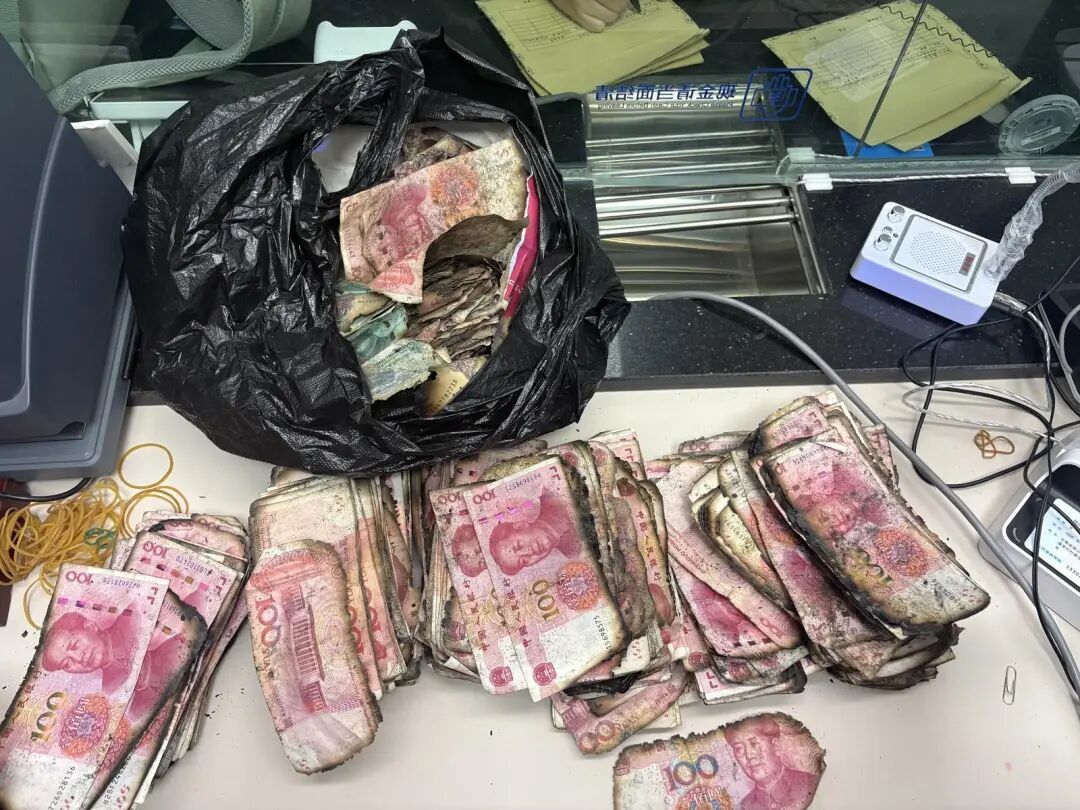
云南一女子20余万元现金被烧成残币,银行员工清点5小时兑换11.9万元
Huan Qiu Wang· 2026-01-09 10:42
Core Viewpoint - The article highlights a remarkable incident where a customer was able to recover a significant amount of money from severely damaged banknotes after a fire, thanks to the dedicated efforts of the staff at the Bank of China branch. Group 1: Incident Overview - A customer, Ms. Zhao, brought in a bag of severely damaged banknotes, totaling over 200,000 yuan, which were salvaged from a fire [2][4]. - The banknotes were heavily charred, blackened, and some were carbonized, leading to uncertainty about their recoverability [2][4]. Group 2: Bank's Response - Upon learning about the situation, the Bank of China branch quickly established a "green channel" to assist the customer, ensuring minimal disruption to other clients [5]. - Staff members were trained to handle the delicate task of separating and cleaning the damaged banknotes, treating the process with the care akin to artifact restoration [6]. Group 3: Recovery Outcome - After over five hours of meticulous work, the bank was able to exchange 11.9 million yuan of the damaged currency for the customer, despite many notes being irreparably damaged [8]. - The customer expressed deep gratitude, having initially feared that most of her savings would be lost [8]. Group 4: Bank's Commitment to Service - The branch emphasized its commitment to understanding and addressing the unique circumstances of each customer, reflecting a broader trend in the banking industry towards enhanced customer service [8]. - The Bank of China has established emergency response mechanisms for special cases, having handled over a hundred similar damaged currency exchanges in 2025 alone, recovering over one million yuan for citizens [8].