
CCB(601939)

Search documents
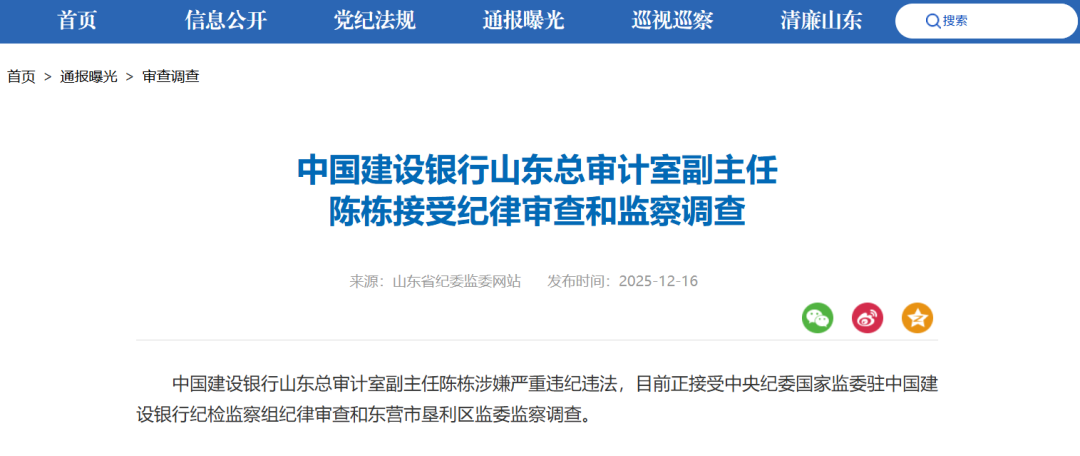
建行山东总审计室副主任被查
Xin Lang Cai Jing· 2025-12-17 14:19
公开资料显示:陈栋早年入职建设银行,从基层岗位做起,凭借突出的业务表现逐步走上管理岗位,还曾获评德州市"诚信之星"等荣誉称号,是业内认可 的业务骨干。曾任建行德州分行党委书记、行长,期间始终聚焦普惠金融与乡村金融服务领域;2023年4月,他调任建行江苏省分行行长助理,负责相关 业务管理工作,任职期间积极投身多项重点工作——2023年9月带队与宜兴市供销社座谈乡村金融服务,推动农户金融产品创新;2024年3月参与"3·15"金 融消费者权益保护活动,提出金融知识普及应与传统文化相结合的理念;2024年7月参与嘉泽镇政银座谈会,为乡村振兴合作事宜建言献策;2025年6月任 建设银行山东总审计室副主任,主持部分审计相关工作,肩负起辖区内银行合规监督、风险防控的重要职责。 就在上个月,11月11号,建行山东省分行办人工智能大赛决赛,陈栋还以山东总审计室副主任的身份出席了活动。 据山东纪委监委消息:2025年12月16日,中国建设银行山东总审计室副主任陈栋涉嫌严重违纪违法,目前正接受中央纪委国家监委驻中国建设银行纪检监 察组纪律审查和东营市垦利区监委监察调查。 | | | 公开资料显示:陈栋早年入职建设银行,从基层岗位 ...

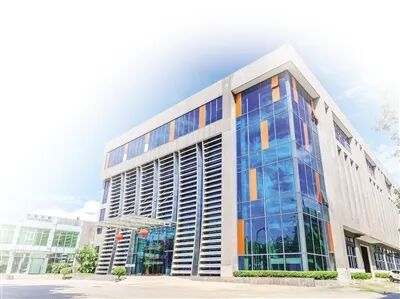
建设银行广州分行:科技金融赋能 “专精特新”破浪前行
Xin Lang Cai Jing· 2025-12-17 14:19
Core Viewpoint - China Construction Bank's Guangzhou branch has issued the first "Yueke Yidai" loan in the province, aiming to support the development of technology-driven enterprises and enhance the "Made in China" initiative [2][10]. Group 1: Financial Support for Technology Enterprises - The Guangzhou branch of China Construction Bank focuses on the financing needs of technology enterprises throughout their lifecycle, providing innovative financial services to address financing pain points and enhance service efficiency [2][10]. - As of the end of November, the bank has provided over 47 billion yuan in loans to technology enterprises, serving more than 10,000 companies and injecting strong financial momentum into the regional innovation ecosystem [2][10]. Group 2: Case Study of a Technology Enterprise - Guangzhou Fama Jia Intelligent Equipment Co., Ltd., a national-level "specialized and innovative" small giant enterprise, has faced challenges such as tight raw material procurement and increased R&D investment due to growing domestic and international orders [3][11]. - The bank's Guangzhou Development Zone branch proactively engaged with the company, assessing its operational challenges and quickly determining eligibility for the "Yueke Yidai" loan, resulting in a 15 million yuan loan being issued within just seven working days [3][11]. Group 3: Innovative Financing Solutions - The "Yueke Yidai" loan targets the entire lifecycle of technology enterprises, offering flexible and efficient financing solutions to address issues of difficulty, slowness, and high costs in obtaining loans [4][12]. - Guangzhou Yun Jian Technology Co., Ltd. exemplifies the bank's approach to breaking traditional financing constraints by leveraging intellectual property as collateral, resulting in a customized financing solution that increased its credit limit from 3.7 million yuan to 7 million yuan [6][14]. Group 4: Impact of Financial Support - Following the financial support, the company expanded its R&D team and increased procurement efforts, leading to a 125.2% year-on-year growth in order volume and an expected annual revenue exceeding 60 million yuan [7][14]. - The bank remains committed to deepening its innovative financial services for technology enterprises, aiming to foster high-quality development in the regional innovation ecosystem and assist more specialized and innovative companies in becoming industry benchmarks [7][14].
历史收益率远超近期表现 部分银行理财收益展示反差大,有何影响?
Mei Ri Jing Ji Xin Wen· 2025-12-17 13:47
Core Viewpoint - Some banks are displaying higher annualized returns for their wealth management products than the actual recent returns, leading to concerns about transparency and accuracy in financial reporting [1][3]. Group 1: Discrepancy in Reported Returns - Investors have reported discrepancies between the annualized returns displayed on bank apps and the actual returns, with some banks showing significantly higher returns since the product's inception compared to recent performance [1][2]. - The discrepancy is attributed to a decline in bond market performance, which has affected the recent yields of wealth management products, while historical yields remain elevated due to previous market conditions [1][3]. Group 2: Regulatory and Compliance Issues - Current regulations do not explicitly prohibit banks from showcasing higher historical returns, which may lead to a preference for displaying more favorable figures [1][4]. - The China Banking Association's guidelines emphasize that past performance should accurately reflect the investment manager's capabilities and inform investors, but the current practices may inflate perceived product performance [4]. Group 3: Market Trends and Performance Analysis - The overall trend in fixed-income assets, which form the basis of many wealth management products, is downward, with recent yields significantly lower than historical averages [3][4]. - For instance, the annualized yield for bonds has dropped to 0.46% year-to-date, while the annualized yield over the past three years is 4.90% [3].

建设银行:现金业务严格遵循法律法规 维护客户权益
Zheng Quan Ri Bao· 2025-12-17 13:45
Core Viewpoint - The company emphasizes its commitment to adhering to relevant laws and regulations in cash business operations, ensuring the protection of customer rights and inviting customer supervision [1] Group 1 - The company has responded to investor inquiries on its interactive platform regarding its cash business operations [1] - The company maintains that it strictly follows legal and regulatory requirements in its cash business [1] - The company encourages customers to supervise its operations to ensure their rights are upheld [1]
清理“不动户”、推进标准化……银行贵金属业务迎变局
Guo Ji Jin Rong Bao· 2025-12-17 13:43
Core Viewpoint - Recent adjustments in the banking precious metals business indicate a shift towards enhanced risk control and cost management, with banks focusing on cleaning up inactive accounts and promoting standardized products [1][2][4]. Group 1: Adjustments in Banking Precious Metals Business - Several banks, including Industrial and Commercial Bank of China (ICBC) and China Construction Bank, have announced the cleaning of long-term inactive accounts in personal precious metals business at the Shanghai Gold Exchange [1][3]. - ICBC will transfer the balances of inactive margin accounts to settlement accounts and close related business functions starting December 19, 2025 [2]. - Other banks, such as China CITIC Bank and Industrial Bank, have also announced similar measures to clean up inactive accounts or halt their personal precious metals business [3]. Group 2: Risk Control and Cost Management - Banks are enhancing risk control and liquidity management by clearing high-risk, long-idle deferred delivery accounts and promoting low-risk standardized products like accumulated gold [4]. - Experts predict that more small and medium-sized banks will follow suit, gradually reducing their proprietary gold business and shifting towards agency sales and standardized products [4]. Group 3: Marketing of Standardized Products - As the 2026 Spring Festival approaches, banks are ramping up marketing efforts for gold products, offering promotional activities for physical gold and accumulated gold [5][6]. - ICBC has launched a promotional campaign reducing the handling fee for accumulated gold from 0.5% to 0.2% [5]. - Other banks, such as China Merchants Bank, are also promoting gold products with significant returns, while advising investors to be cautious of market volatility [6].

建设银行:2025年10月31日普通股股东总数为313109户
Zheng Quan Ri Bao Wang· 2025-12-17 12:47
证券日报网讯 12月17日,建设银行(601939)在互动平台回答投资者提问时表示,2025年10月31日, 本行普通股股东总数为313109户,其中A股股东277330户,H股股东35779户。 ...
建设银行(601939) - 建设银行境内优先股股息派发实施公告
2025-12-17 10:15
股票代码:601939 股票简称:建设银行 公告编号:临 2025-071 中国建设银行股份有限公司 境内优先股股息派发实施公告 本行董事会及全体董事保证本公告内容不存在任何虚假记载、误导性陈述或 者重大遗漏,并对其内容的真实性、准确性和完整性承担法律责任。 重要内容提示: 股票方案的议案》,授权董事会根据发行方案的约定,决定并办理向 境内优先股股东支付股息事宜。本次境内优先股股息派发方案已于 2025 年 10 月 30 日经本行董事会审议通过,董事会会议决议公告已 刊 载 在 上 海 证 券 交 易 所 网 站 (www.sse.com.cn) 及 本 行 网 站 (www.ccb.cn、www.ccb.com)。 二、境内优先股股息派发方案 1.计息期间:2024 年 12 月 26 日至 2025 年 12 月 25 日 2.最后交易日:2025 年 12 月 24 日 3.股权登记日:2025 年 12 月 25 日 4.除息日:2025 年 12 月 25 日 5.股息发放日:2025 年 12 月 26 日 一、通过境内优先股股息派发方案的董事会会议情况 中国建设银行股份有限公司(以下简称本行) ...
建设银行将于12月26日派发“建行优1”每股优先股现金股息3.57元
Zhi Tong Cai Jing· 2025-12-17 10:13
建设银行(00939)发布公告,将于2025年12月26日派发"建行优1"每股优先股现金股息人民币3.57元(含税) 。追加内容 本文作者可以追加内容哦 ! 建设银行(00939)发布公告,将于2025年12月26日派发"建行优1"每股优先股现金股息人民币3.57元(含税) 。 ...
建设银行(00939.HK)将于12月26日派发“建行优1”每股优先股现金股息3.57元
Jin Rong Jie· 2025-12-17 09:48
建设银行(00939.HK)发布公告,将于2025年12月26日派发"建行优1"每股优先股现金股息人民币3.57元 (含税) 。 本文源自:金融界AI电报 ...
建设银行(00939) - 境内优先股股息派发实施公告
2025-12-17 09:15
• 優先股代碼:360030 • 優先股簡稱:建行優1 • 每股優先股派發現金股息人民幣3.57元(含稅) • 最後交易日:2025年12月24日 • 股權登記日:2025年12月25日 • 除息日:2025年12月25日 • 股息發放日:2025年12月26日 香港交易及結算所有限公司及香港聯合交易所有限公司對本公告之內容概不負責,對其準確性 或完整性亦不發表任何聲明,並明確表示,概不對因本公告全部或任何部分內容而產生或因依 賴該等內容而引致之任何損失承擔任何責任。 00939 境內優先股股息派發實施公告 重要內容提示: 一、通過境內優先股股息派發方案的董事會會議情況 中國建設銀行股份有限公司(「本行」)2015年6月15日舉行的2014年度股東大 會、2015年第一次A股類別股東大會及2015年第一次H股類別股東大會審議通 過了《關於本行境內發行優先股股票方案的議案》,授權董事會根據發行方案 的約定,決定並辦理向境內優先股股東支付股息事宜。本次境內優先股股息 派發方案已於2025年10月30日經本行董事會審議通過,董事會會議決議公告 - 1 - 已刊載在香港交易及結算所有限公司「披露易」網站(www.hk ...