
BANK OF CHINA(601988)

Search documents
大涨超4%,创历史新高!中国银行独家回应
Zhong Zheng Wang· 2025-11-20 07:55
针对股价异动,中国银行董事会办公室投资者关系团队相关工作人员对中国证券报·中证金牛座记者表 示:"公司基本面未发生重大变化,目前正持续关注股价波动情况。此次股价上涨,一方面得益于银行 板块整体上涨趋势的带动,并非我行个例;另一方面,公司三季报披露的主要经营数据保持稳健,基本 面支撑下股价得到合理反映。" 11月20日,银行板块表现强势。截至13:56,中国银行涨4.17%,创历史新高。建设银行、邮储银行、民 生银行等多只个股涨幅均超2%。 ...

超3800只个股下跌
第一财经· 2025-11-20 07:33
Market Overview - The A-share market experienced a decline, with the Shanghai Composite Index falling by 0.40% to 3931.05, the Shenzhen Component Index dropping by 0.76% to 12980.82, and the ChiNext Index decreasing by 1.12% to 3042.34 [3][4]. Sector Performance - The banking sector showed strong performance, with notable gains: China Bank increased by 4%, Construction Bank and Postal Savings Bank both rose over 3%, and Minsheng Bank gained over 2% [5][6]. - In contrast, the organic silicon, BC battery, and coal sectors performed poorly, indicating a mixed market sentiment [3][4]. Trading Volume and Market Activity - The total trading volume in the Shanghai and Shenzhen markets was 1.71 trillion yuan, a decrease of 17.7 billion yuan compared to the previous trading day, with over 3800 stocks declining [7][8]. Capital Flow - Main capital inflows were observed in the banking, energy metals, and basic chemicals sectors, while semiconductor, battery, and cultural media sectors experienced net outflows [10]. - Specific stocks that saw significant net inflows included Xinyi Technology (9.61 billion yuan), Dazhong Public Utilities (8.12 billion yuan), and Tianfu Communication (7.06 billion yuan) [10]. Institutional Insights - Open Source Securities suggests that the brokerage industry is likely to maintain its favorable outlook, with valuations still at low levels, indicating strategic allocation opportunities [11]. - Huaxin Securities believes that the A-share market is still in the mid-stage of a bull market, with adjustments seen as a consolidation rather than a peak [11]. - Dongguan Securities notes that the market is currently in a phase of oscillation and consolidation, with the Shanghai Index expected to stabilize around 4000 points, while a long-term upward trend remains likely [11].





大消费概念,集体回调
财联社· 2025-11-20 07:21
Market Overview - The A-share market experienced fluctuations, with the ChiNext index dropping over 1% after previously rising more than 1.5% [1] - The total trading volume in the Shanghai and Shenzhen markets was 1.71 trillion, a decrease of 17.7 billion compared to the previous trading day [6] - Over 3,800 stocks in the market declined, indicating a broad market weakness [1] Sector Performance - The banking sector showed resilience, with major banks like China Bank and Industrial and Commercial Bank reaching historical highs [1] - The computing hardware concept saw localized activity, with Zhongfu Circuit hitting the daily limit [1] - The optical photoresist sector continued its strong performance, with Guofeng New Materials achieving two consecutive limit-ups and Baichuan Shares hitting the daily limit [1] - Conversely, sectors such as beauty care, tourism and hotels, food, and retail experienced significant declines, with stocks like Nanjiao Food and Tianma Technology hitting the daily limit down [1][2] Index Performance - At the close, the Shanghai Composite Index fell by 0.4%, the Shenzhen Component Index dropped by 0.76%, and the ChiNext Index decreased by 1.12% [3][4]


A股收评 | 沪指收跌0.40% 银行护盘!中国银行大涨4%创新高
智通财经网· 2025-11-20 07:20
Market Overview - The market opened high but closed lower, with sectors like Hainan, lithium battery concepts, and banks showing strong gains. The total market turnover was approximately 1.7 trillion, slightly lower than the previous trading day, with over 3,800 stocks declining [1] - The banking sector continued its strong performance, with China Bank rising 4% to reach a historical high, and other banks like Industrial and Commercial Bank of China also hitting new highs. The increase in stock prices is attributed to the overall upward trend in the banking sector and stable operational data disclosed in the Q3 report [1] Key Stocks - Hezhong China resumed trading and hit the limit up again, achieving 13 limit-ups in 15 trading days, with a cumulative increase of over 290%. The company stated there are no additional favorable information or undisclosed news regarding the stock price surge [2][5] - The LPR (Loan Prime Rate) for November remained unchanged at 3.5% for 5-year and above loans and 3% for 1-year loans, indicating a stable monetary policy environment [6] Sector Performance - The Hainan sector became active again, with Hainan Haiyao achieving three limit-ups in five days. The lithium mining concept continued to strengthen, with stocks like Beijiete and Shengxin Lithium Energy hitting limit-ups [1] - The real estate sector saw significant gains in the afternoon, with stocks like I Love My Home hitting limit-up, while consumer sectors like tourism, pre-made dishes, and dairy continued to weaken [1] Fund Flow - Main funds focused on sectors such as components, banks, and communication equipment, with notable net inflows into stocks like Fangzheng Technology and Dazhong Public [3] Market Sentiment and Future Outlook - Analysts from Huatai Securities suggest that the market's breakthrough momentum may still need to accumulate, with a focus on low-position sectors for short-term rebound opportunities [10] - The overall market is expected to maintain a positive long-term trend, with attention on the rotation of sectors and potential opportunities in anti-involution and dividend themes [8][9]

收盘丨A股三大指数高开低走,银行板块全线走强
Di Yi Cai Jing· 2025-11-20 07:16
Market Overview - The total trading volume in the Shanghai and Shenzhen markets reached 1.71 trillion, a decrease of 17.7 billion compared to the previous trading day [1][7] - The three major A-share indices closed lower, with the Shanghai Composite Index down 0.40%, the Shenzhen Component Index down 0.76%, and the ChiNext Index down 1.12% [1][2] Sector Performance - The banking sector showed strong performance, with major banks like Bank of China rising by 4%, China Construction Bank and Postal Savings Bank both increasing by over 3%, and Minsheng Bank up by over 2% [3][4] - Conversely, the shipbuilding sector experienced a decline, with all stocks in the sector showing negative performance, notably China Shipbuilding Special Gas down over 5% [5][6] Capital Flow - Main capital inflows were observed in the banking, energy metals, and basic chemicals sectors, while outflows were noted in semiconductors, batteries, and cultural media sectors [10] - Specific stocks that saw significant net inflows included Xinyi Technology, Dazhong Public Utilities, and Tianfu Communication, with inflows of 9.61 billion, 8.12 billion, and 7.06 billion respectively [10] - Stocks that faced substantial net outflows included Molybdenum, Shannon Chip Creation, and CATL, with outflows of 13.77 billion, 13.71 billion, and 8.25 billion respectively [10] Analyst Insights - According to Kaiyuan Securities, the brokerage industry is expected to maintain its favorable outlook, with valuations still at low levels, indicating strategic allocation opportunities in the sector [10] - Huaxin Securities believes that the A-share market is still in the mid-stage of a bull market, with adjustments seen as a consolidation rather than a peak, focusing on low-position rebounds, profit recovery, and technology themes [10] - Dongguan Securities suggests that the current market is in a phase of oscillation and consolidation, with the Shanghai Index likely to stabilize around the 4000-point mark, while a long-term upward trend remains promising [10]


中国银行股价创历史新高,回应称基本面稳健
Cai Jing Wang· 2025-11-20 06:50
Core Viewpoint - China Bank's stock price has reached a historical high, attributed to the overall strong performance of the banking sector and stable operational data from its recent quarterly report [1] Group 1: Stock Performance - The banking sector is showing strong performance, with China Bank's stock rising over 4% [1] - China Bank's stock price increase is not an isolated event but part of a broader trend in the banking sector [1] Group 2: Company Fundamentals - The company stated that its fundamental business conditions have not undergone significant changes [1] - The main operational data disclosed in the third-quarter report remains robust, supporting the stock price increase [1]

中国银行回应股价创新高
Jing Ji Guan Cha Wang· 2025-11-20 06:42
Core Viewpoint - China Bank (601988) has seen a 4.17% increase in stock price, reaching a historical high, attributed to overall trends in the banking sector and stable operational data from its Q3 report [1] Group 1: Stock Performance - The stock price increase is part of a broader upward trend in the banking sector, not isolated to China Bank [1] - The company’s Q3 report shows that key operational data remains robust, providing a solid foundation for the stock price [1] Group 2: Company Response - The investor relations team stated that there have been no significant changes in the company's fundamentals, and they are monitoring stock price fluctuations [1]
红利股发力!港A银行股联动暴走,中国银行创历史新高
Ge Long Hui· 2025-11-20 06:30
Group 1 - The A-share market sees a collective rise in bank stocks, with China Bank standing out, experiencing a peak increase of over 5% and reaching a historical high, with a market capitalization surpassing 2 trillion yuan [1][2] - Other banks such as Construction Bank, Postal Savings Bank, and Minsheng Bank also saw increases of over 3% [1] - Since October 9, China Bank has accumulated a rise of 20% [2] Group 2 - In the Hong Kong stock market, Minsheng Bank led the gains with an increase of over 3%, while Zhejiang Bank and Postal Savings Bank also rose by more than 2%, indicating a synchronized upward trend in bank stocks across both markets [4][5] - The November LPR (Loan Prime Rate) remains unchanged, with the 1-year LPR at 3.0% and the 5-year LPR at 3.5%, maintaining stability for six consecutive months [6][7] - Analysts suggest that the stability of the LPR helps alleviate pressure on banks' net interest margins, which have been under strain due to declining market rates and rigid deposit costs [7] Group 3 - A "dividend wave" is occurring as 24 out of 42 listed banks have announced mid-term dividends, totaling nearly 263.8 billion yuan, with the pace of dividends being notably earlier than in previous years [8][9] - Major state-owned banks are the primary contributors to dividends, with Industrial and Commercial Bank of China leading with a proposed distribution of 50.4 billion yuan [9] - The overall performance of the banking sector remains robust, with the six major banks achieving revenue and net profit growth in the first three quarters, collectively surpassing 2.7 trillion yuan in revenue [10] Group 4 - The banking sector is viewed positively for its dividend revaluation logic, with analysts highlighting the attractiveness of state-owned banks as dividend assets compared to risk-free rates [12] - The banking sector is expected to enter a new cycle of stable profitability, with long-term funds continuing to flow into the market, making it an optimal choice for balanced investment strategies [12]
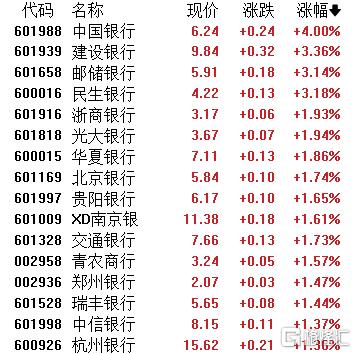
股价创历史新高 中国银行回应:基本面未发生重大变化
Mei Ri Jing Ji Xin Wen· 2025-11-20 06:26
每经AI快讯,银行板块11月20日表现强势。截至13:56,中国银行涨4.17%,创历史新高。建设银行、邮 储银行、民生银行等多只个股涨幅均超2%。针对股价异动,中国银行董事会办公室投资者关系团队相 关工作人员对记者表示:"公司基本面未发生重大变化,目前正持续关注股价波动情况。此次股价上 涨,一方面得益于银行板块整体上涨趋势的带动,并非我行个例;另一方面,公司三季报披露的主要经 营数据保持稳健,基本面支撑下股价得到合理反映。" (中证金牛座) ...
中国银行回应股价创历史新高:公司基本面未发生重大变化,目前正持续关注股价波动情况
Xin Lang Cai Jing· 2025-11-20 06:21
今日,银行板块表现强势,中国银行涨超4%,创历史新高。针对股价异动,中国银行董事会办公室投 资者关系团队相关工作人员表示:"公司基本面未发生重大变化,目前正持续关注股价波动情况。此次 股价上涨,一方面得益于银行板块整体上涨趋势的带动,并非我行个例;另一方面,公司三季报披露的 主要经营数据保持稳健,基本面支撑下股价得到合理反映。" (中证金牛座) ...