
CNCB(601998)

Search documents
中信银行南昌广场南路支行持续开展减费让利宣传活动
Zhong Guo Jin Rong Xin Xi Wang· 2025-09-08 12:19
Core Viewpoint - The article highlights the proactive measures taken by China CITIC Bank's Nanchang Square South Road branch to implement the policy of reducing fees and providing benefits to support the real economy, thereby enhancing the quality and efficiency of financial services [1] Group 1: Policy Implementation - The branch actively promotes the fee reduction and benefit policy through various channels to lower financial service costs for businesses and individual customers [1] - Staff members at the branch inform customers about the reduction of multiple fees, including account management fees, transfer fees, and bill business fees [1] Group 2: Community Engagement - The bank organizes outreach efforts to local businesses and communities, distributing promotional materials to small business owners and residents [1] - In Hengmao Community, staff set up consultation desks to explain how the policy can help residents save on daily financial service expenses [1] Group 3: Future Plans - The branch plans to continue implementing the fee reduction policy, further optimizing service processes to enhance customer experience [1] - The goal is to contribute more to the development of the real economy and meet the financial needs of the public [1]
摒弃规模情结 专注于效益和质量并重增长
Jin Rong Shi Bao· 2025-09-08 02:01
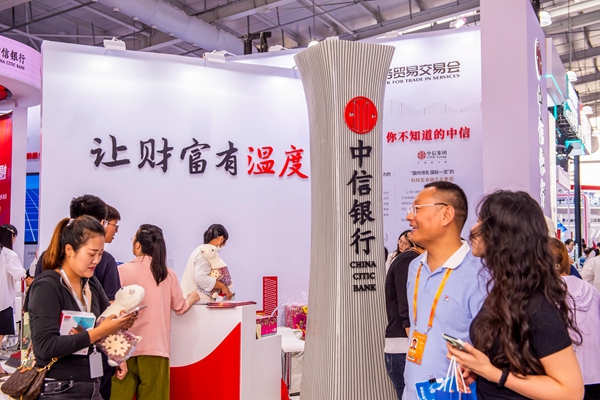
"我们已经摒弃了规模情结,更专注于效益和质量并重增长,这构成了我们财务业绩背后的业务支 撑。"8月28日,在中信银行(601998)召开的2025年中期业绩发布会上,中信银行执行董事、行长芦苇 表示。 据芦苇介绍,报告期内,中信银行实现合理而且有质量的增长。"今年上半年,表外综合融资规模增长 快于表内资产的增长,一般贷款规模增长快于总贷款、总资产的增长,存款规模增长快于总负债的增 长,财富管理规模增长快于总存款增长,这些都是有质量增长的体现。"芦苇表示。 中信银行2025年中期业绩报告显示,截至报告期末,该行资产总额98584.66亿元,比上年末增长 3.42%;报告期内实现归属于该行股东的净利润364.78亿元,同比增长2.78%。 对此,中信银行高级管理层表示,该行会继续坚持"量价平衡"的经营理念。 IIIIIIIII 億银行 | | and I Hood 让财富有温度 你不知道的中信 @ 2555 E LL 1984年 2004-2014 11月25日 11月26日 11:15 ID 6 ITNA CTIC 近段时间以来,一系列金融行业"反内卷"要求纷纷加快推进。作为银行业金融机构,中信银行"反内 卷" ...

中信银行北京分行携手中信金租、海博思创 共筑“储能 + 金融”产融协同新生态
Bei Jing Qing Nian Bao· 2025-09-07 18:19
Core Viewpoint - The collaboration between CITIC Bank Beijing Branch, Haibo Sichuang Technology Co., Ltd., and CITIC Financial Leasing Co., Ltd. aims to leverage the integration of industry and finance in the "energy storage + finance" sector, targeting the trillion-level energy storage asset market to support the construction of a new power system and the achievement of carbon neutrality goals [1][2]. Group 1: Industry Context - China's dual carbon goals are advancing, with the National Development and Reform Commission's Document No. 136 being implemented, leading to a shift in the energy storage industry from policy-driven to market-led growth [1]. - The construction costs of energy storage stations are decreasing, and the electricity spot market is gradually opening, enhancing the economic viability of energy storage assets [1]. Group 2: Company Profiles - Haibo Sichuang is a leading company in China's energy storage industry, focusing on the research, production, and application of new energy storage technologies, with a market capitalization exceeding 10 billion [2]. - CITIC Bank, one of the earliest commercial banks established during China's reform and opening-up, has been actively involved in domestic and international financing, providing differentiated financial services to enterprises [2]. - CITIC Financial Leasing is a strategic component of CITIC Group and CITIC Bank, focusing on financing leasing in various sectors, including green business, and has accumulated rich experience in financing projects related to wind, solar, water, storage, and hydrogen [3]. Group 3: Strategic Collaboration - The three parties will leverage their respective resources and strengths in industry, technology, financial innovation, and leasing to create a financing model that integrates "energy storage assets + specialized operations + comprehensive financial solutions" [3]. - This strategic partnership reflects CITIC Bank Beijing Branch's commitment to green finance and supporting national energy strategies, aiming to innovate financial products and services to enhance the vitality of the energy storage industry [3].

银行业周报(20250901-20250907):1H25商业银行资产质量表现如何?-20250907
Huachuang Securities· 2025-09-07 12:45
Investment Rating - The report maintains a "Recommended" investment rating for the banking sector, expecting the sector index to outperform the benchmark index by over 5% in the next 3-6 months [4][24]. Core Insights - The overall asset quality of commercial banks has improved in the first half of 2025, with a slight decrease in the non-performing loan (NPL) ratio to 1.49% [7][8]. - Retail loan asset quality remains under pressure, particularly in specific areas such as credit cards and personal business loans, due to ongoing economic recovery challenges [8]. - The report emphasizes the importance of long-term capital inflows and public fund reforms, suggesting that banks with high dividend yields and solid asset quality present good investment opportunities [8][9]. Summary by Sections Corporate Sector - The corporate lending sector shows improved asset quality, driven by government policies aimed at stabilizing growth, with a focus on high-tech manufacturing and key policy-supported areas [3]. - The NPL ratio in the corporate real estate sector has increased by 10 basis points to 3.59%, but the peak risk exposure phase is considered to have passed [3][8]. Retail Sector - Retail loan quality is closely linked to employment, income expectations, and consumer confidence, with the NPL ratio for mortgages, credit cards, and consumer loans showing increases of 10bp, 9bp, and 6bp respectively [8]. - The report highlights that the recovery of household balance sheets may take longer, impacting the retail loan sector's performance [8]. Investment Recommendations - The report suggests a diversified investment strategy focusing on state-owned banks and robust regional banks with high provisioning coverage, such as China Merchants Bank and CITIC Bank [8][9]. - It also recommends attention to undervalued joint-stock banks with potential for return on equity (ROE) improvement, specifically mentioning浦发银行 (Shanghai Pudong Development Bank) [8]. Performance Metrics - The banking sector's absolute performance over the past month is reported at 5.0%, with a 17.3% increase over six months and 17.7% over twelve months [5]. - The report provides earnings per share (EPS) and price-to-earnings (PE) ratios for key banks, indicating a positive outlook for banks like 宁波银行 (Ningbo Bank) and 招商银行 (China Merchants Bank) [10].


本周聚焦:2025上半年银行确认了多少金融资产处置收益?OCI浮盈有多少?
GOLDEN SUN SECURITIES· 2025-09-07 08:20
Investment Rating - The report maintains an "Increase" rating for the banking sector, indicating a positive outlook for the industry [1]. Core Insights - In the first half of 2025, the contribution of financial asset disposal gains from AC and OCI accounts to revenue reached 5.2%, an increase of 2.9 percentage points compared to 2024 [1][2]. - The investment income growth rate for 42 listed banks was 23.6%, with AC, OCI, and TPL gains showing year-on-year growth rates of 134.7%, 79.0%, and -8.4% respectively [1]. - The report highlights that the increase in disposal gains does not necessarily indicate a significant increase in asset disposal scale, as market conditions and strategies vary among banks [2]. Financial Asset Disposal Gains - The contribution of AC and OCI financial asset disposal gains to revenue was 5.2%, up 2.9 percentage points from 2024, with AC asset disposal gains contributing 2.6% [2]. - Among different types of banks, rural commercial banks had the highest contribution from AC and OCI disposal gains, reaching 11.0%, an increase of 6.2 percentage points from 2024 [2]. - Specific banks such as Jiangyin Bank, Sunong Bank, and Zijin Bank had high disposal gain ratios relative to their revenue, at 28.9%, 26.7%, and 22.7% respectively [2]. OCI Floating Profit Situation - The overall OCI floating profit decreased compared to the end of the previous year, accounting for 12.6% of the estimated profit for 2025 [3]. - Major state-owned banks like CCB and ABC reported significant OCI floating profits, with balances exceeding 30 billion [3]. - The average contribution of OCI floating profits to profits for city and rural commercial banks was notably high, with Ningbo Bank's ratio reaching 35% [3][6]. Sector Trends - The banking sector is expected to benefit from expansionary policies aimed at stabilizing the economy, with a focus on real estate and consumer spending [7]. - The report suggests a focus on banks with improving fundamentals, such as Ningbo Bank, and those with dividend strategies like Jiangsu Bank and Chengdu Bank [7]. - Attention is also drawn to banks with potential convertible bond conversion expectations, including Shanghai Bank and Industrial Bank [7].





中信银行股份有限公司深圳南山支行迁址公告
Sou Hu Cai Jing· 2025-09-06 23:35
Core Viewpoint - Citic Bank's Shenzhen Nanshan Branch has relocated to a new address, enhancing its service capabilities and operational efficiency [1] Group 1: Relocation Details - The Shenzhen Nanshan Branch has moved to 286 Nanguang Road, Shui Mu Yi Fang Building, Shops 101, 1901, and 1902, effective September 4, 2025 [1] - The original location will cease operations simultaneously [1] Group 2: Business Scope - The branch will continue to offer a range of services including RMB deposits, loans, settlement services, bill discounting, and the issuance of financial bonds [1] - Additional services include foreign exchange deposits, loans, remittances, currency exchange, international settlements, and foreign exchange trading through the head office [1] Group 3: Customer Engagement - The bank expresses gratitude to its customers for their ongoing support and encourages both new and existing clients to visit the new location for banking services [1] - A contact number is provided for customer inquiries: 0755-86213841 [1]
14家银行上半年信用卡余额“缩水”2000亿元,年轻人不爱用信用卡了
Sou Hu Cai Jing· 2025-09-06 09:20
Group 1 - The core viewpoint of the articles highlights a significant decline in credit card usage among the younger generation, with a notable decrease in credit card loan balances and transaction volumes across major banks in China [1][2][4] - As of mid-2025, the total credit card loan balance of six major state-owned banks and eight joint-stock banks reached 7.52 trillion yuan, a decrease of 197.57 billion yuan or 2.56% compared to the beginning of the year [1] - Major banks reported declines in credit card transaction volumes, with China Merchants Bank leading at 2.02 trillion yuan but experiencing an 8.54% year-on-year drop [1] Group 2 - The changing mindset of cardholders is evident, with many individuals opting to cancel excess credit cards, preferring to maintain only a few essential ones [2][4] - The People's Bank of China reported that by the end of 2024, the total number of credit cards and credit card-like products issued in the country was 727 million, reflecting a year-on-year decline of 5.14% [4] - The decline in credit card issuance is attributed to new regulations that have shifted the credit card business from rapid expansion to a more refined and high-quality development phase [4]

零售银行鏖战AUM
21世纪经济报道· 2025-09-05 15:40
Core Viewpoint - The retail banking sector is under pressure, with declining revenue and profit, while retail credit risks are on the rise. Banks are exploring new retail transformation paths, focusing on expanding retail AUM (Assets Under Management) to enhance non-interest income and reshape their business models towards wealth management [1][3][12]. Retail Banking Performance - In the first half of 2025, three banks (Postal Savings Bank, China Merchants Bank, Agricultural Bank) reported retail revenue contributions exceeding 50%, while most banks with a focus on corporate banking had contributions below 40% [3]. - Among the 12 sample banks, 10 reported a decline in retail revenue, and 7 saw a decrease in total profit. However, three banks (Industrial and Commercial Bank, China CITIC Bank, and China Everbright Bank) showed positive changes in retail profit [3][5]. - The retail revenue and profit statistics for major banks indicate a mixed performance, with some banks like ICBC showing a profit increase of 46.05% [5]. Retail AUM Insights - Retail AUM has become a key indicator for banks, with the top three banks (ICBC, CCB, ABC) exceeding 20 trillion yuan in AUM. ICBC leads with 24 trillion yuan [7]. - All 13 banks reported positive growth in retail AUM compared to the beginning of the year, with notable increases from banks like SPD Bank [7][8]. - Retail AUM is defined as a measure of a bank's comprehensive retail financial capabilities, including personal deposits, wealth management, and insurance [7][8]. Wealth Management Transition - The shift towards retail AUM signifies a transition from traditional deposit-based models to wealth management-focused strategies, enhancing non-interest income [8][12]. - Banks are emphasizing the importance of retail AUM in their earnings reports, with many highlighting their strategies to grow this metric [9][12]. - The growth of retail AUM is expected to support the increase in intermediary business income, as banks focus on expanding their customer base [12][14]. Strategic Focus of Banks - Different banks are adopting varied strategies for wealth management. For instance, China Merchants Bank emphasizes retaining customers over merely selling products, while Ping An Bank aims to enhance its insurance business as a growth engine [14][15]. - ICBC highlights its extensive customer base and wealth management coverage, while China Bank focuses on its infrastructure advantages [15][16]. - The overall trend indicates a move away from high-risk retail asset strategies towards building a sustainable wealth management framework [16].

金融行业双周报:上半年上市险企归母净利润“四升一降”,银行业绩边际改善-20250905
Dongguan Securities· 2025-09-05 11:52
Investment Ratings - Securities: Market Perform (Maintain) [1] - Insurance: Overweight (Maintain) [2] Core Insights - The securities industry showed robust performance in the first half of the year, with 42 listed brokerages achieving total revenue of CNY 251.87 billion, a year-on-year increase of 11.37%, and net profit of CNY 104.02 billion, up 65.09% [3][47] - The banking sector demonstrated marginal improvement, with 42 listed banks reporting revenue of CNY 2.92 trillion, a year-on-year growth of 1.04%, and net profit of CNY 1.10 trillion, an increase of 0.80% [6][45] - The insurance sector's five listed companies achieved revenue of CNY 1.33 trillion, a 4.7% increase, and net profit of CNY 178.19 billion, up 3.7% [49] Summary by Sections Market Review - As of September 4, 2025, the banking, securities, and insurance indices experienced declines of -1.93%, -3.56%, and -3.89% respectively, while the CSI 300 index rose by 1.80% [6][14] Valuation Situation - The banking sector's price-to-book (PB) ratio stood at 0.76, with state-owned banks at 0.81, joint-stock banks at 0.64, city commercial banks at 0.72, and rural commercial banks at 0.63 [23] - The securities sector's PB ratio was 1.56, indicating potential for valuation recovery [25] Recent Market Indicators - The average daily trading volume in A-shares was CNY 2.64 trillion, a decrease of 10.79% week-on-week, reflecting a cooling investor sentiment [33] - The one-year medium-term lending facility (MLF) rate was 2.0%, with the one-year and five-year Loan Prime Rates (LPR) at 3.0% and 3.5% respectively [32] Industry News - The insurance sector is encouraged to return to its core protection role, with policies supporting increased equity investment, which is expected to enhance long-term growth [49] - The banking sector is seeing a shift in capital towards high-dividend, low-valuation stocks, driven by a low-interest-rate environment and asset scarcity [45]




中信银行呼和浩特分行以绿色金融助力节水行动
Zhong Guo Jin Rong Xin Xi Wang· 2025-09-05 10:39
Core Viewpoint - The bank is committed to enhancing green financial services to support water conservation initiatives and promote sustainable development in the region [1][2] Group 1: Policy Guidance - The bank has established a Green Finance Service Work Plan and formed leadership and working groups to ensure effective implementation of green finance initiatives [1] - Collaboration with water management departments, environmental agencies, and relevant enterprises is emphasized to accurately assess funding needs for water conservation projects [1] - An efficient internal coordination mechanism has been set up to streamline project approval and funding processes, enhancing operational efficiency [1] Group 2: Innovative Measures - The bank actively supports the financing of large-scale water conservation projects by simplifying approval processes and providing interest rate subsidies to address financing challenges faced by water resource enterprises [1] - As of the end of July, the bank has provided loan support of 111 million yuan to eligible green finance projects in water resource recycling [1] Group 3: Diverse Services - The bank offers a range of financial services to water conservation enterprises, including assistance in issuing green bonds to expand financing channels and reduce costs [2] - Financial advisory services are provided to help enterprises optimize financial management and improve fund utilization efficiency [2] - The bank aims to deepen financial innovation and strengthen collaboration with government, enterprises, and society to explore more financial service models for water conservation [2]