DEPPON(603056)
Search documents
【读财报】快递行业2025年中报:营收普遍增长 快递业务“量增价减”
Xin Hua Cai Jing· 2025-09-11 23:12
Core Insights - The express delivery sector in A-shares shows a mixed performance in revenue and net profit for the first half of 2025, with total revenue reaching 253.15 billion yuan, a year-on-year increase of 9.95%, while net profit slightly decreased by 0.03% to 8.60 billion yuan [1][2]. Revenue Performance - In H1 2025, SF Express led the revenue rankings with 146.86 billion yuan, followed by YTO Express with 35.88 billion yuan and Shentong Express with 25.03 billion yuan [5][6]. - Shentong Express exhibited the fastest revenue growth at 16.02% year-on-year, while Debon Express and YTO Express grew by 11.43% and 10.19%, respectively [5][12]. Net Profit Analysis - SF Express and YTO Express achieved net profits of 5.74 billion yuan and 1.83 billion yuan, respectively, while the other three companies reported net profits below 600 million yuan, with Debon Express experiencing a significant decline of 84.34% [8][9]. - SF Express and Shentong Express saw net profit increases of 19.37% and 3.73%, while YTO Express, Yunda Express, and Debon Express reported declines [8][9]. Market Trends - The express delivery industry is experiencing a "volume increase, price decrease" trend, with total express business volume reaching 95.64 billion pieces, a 19.3% increase year-on-year, but the average price per piece dropped by 8% to 7.5 yuan [9][12]. - In H1 2025, YTO Express led in business volume with 14.86 billion pieces, followed by Yunda Express and Shentong Express with 12.73 billion and 12.35 billion pieces, respectively [9][11]. Single Ticket Revenue - The single ticket revenue for major companies has shown a downward trend, with SF Express reporting a decline of 12.43% to 13.67 yuan in June compared to January, and YTO Express declining by 10.64% to 2.10 yuan [9][13].
刘强东,“买买买”
创业家· 2025-09-11 10:18
Core Viewpoint - Liu Qiangdong is actively pursuing international expansion through significant acquisitions, including logistics assets in Singapore and consumer electronics retailers in Europe and Hong Kong, totaling approximately 200 billion yuan [5][12][13]. Group 1: Recent Acquisitions - Liu Qiangdong's recent acquisition of logistics assets in Singapore involves a transaction price of 306 million SGD, approximately 1.7 billion yuan [5]. - The logistics assets include properties located in key industrial areas of Singapore, with a total building area of about 186,346 square meters and an average remaining land lease of 27 years [22]. - The largest asset in the acquisition is a logistics hub on Pandan Avenue, valued at 14 million SGD, accounting for half of the total transaction price [19]. Group 2: Strategic Partnerships - The acquisition is a collaborative effort with Swiss investment firm UBS and Eza Hill, which is backed by Hillhouse Capital [24][25]. - Eza Hill has been actively acquiring logistics assets in Southeast Asia, including a recent purchase of logistics properties in Jakarta valued at 148 million USD [29]. - The partnership aims to establish a REIT with a target scale exceeding 1 billion USD, marking a significant move in the Singapore REIT market [33]. Group 3: International Expansion Strategy - Liu Qiangdong emphasizes internationalization as a key direction for JD's future, with over 2,000 employees and logistics networks covering 19 countries [16]. - Successful acquisitions in Europe and Hong Kong will serve as strategic footholds for JD's internationalization efforts [17]. - The logistics sector is identified as a critical area for JD's future growth, with plans to enhance supply chain capabilities globally [18][39]. Group 4: Supply Chain Development - Liu Qiangdong's logistics investments are seen as foundational to his business empire, with four out of six listed companies under his control related to logistics [41]. - Recent investments include a 50 billion yuan logistics infrastructure fund targeting key urban areas in China [36]. - The goal is to achieve over 100% growth in global self-operated overseas warehouse space by the end of 2025 [39].
刘强东,“买买买”
投中网· 2025-09-07 07:02
Core Viewpoint - Liu Qiangdong is actively pursuing international expansion through significant acquisitions, including logistics assets in Singapore and consumer electronics retailers in Europe and Hong Kong, indicating a strategic focus on enhancing JD's global supply chain capabilities [6][11]. Group 1: Recent Acquisitions - JD's infrastructure investment platform, JD Chanfang, is set to acquire logistics assets in Singapore for approximately 306 million SGD (about 1.7 billion CNY), marking another significant investment by Liu Qiangdong [3][5]. - The logistics assets include properties located in key industrial areas of Singapore, such as Ubi Avenue and Changi South, which are strategically advantageous for JD's operations [7][10]. - The largest asset in this acquisition is a logistics hub on Pandan Avenue, valued at 14 million SGD, which constitutes about half of the total transaction price [7]. Group 2: Strategic Partnerships - The acquisition is a collaborative effort with Swiss investment firm Partners Group and Eza Hill, a platform backed by Hillhouse Capital, highlighting a trend of partnerships in large-scale investments [9][10]. - Eza Hill has been actively acquiring logistics assets in Southeast Asia, indicating a broader strategy to build a robust logistics network in the region [10]. Group 3: International Expansion Strategy - Liu Qiangdong's recent acquisitions, including a 18 billion CNY purchase of European electronics retailer CECONOMY and a potential 4 billion HKD acquisition of Hong Kong's Jia Bao Foods, reflect a commitment to internationalization [6][11]. - JD has established a logistics network covering 19 countries and regions, with over 2,000 employees overseas, positioning itself for further growth in international markets [6][11]. - The company plans to integrate the newly acquired logistics assets into a Real Estate Investment Trust (REIT) with a target size exceeding 1 billion USD (approximately 7.2 billion CNY), which would be the largest new fund in Singapore's REIT market in over a year [10].
极兔市值赶超京东物流,满帮挺进前三,闪送缩水超60%,物流科技重构资本叙事 | 2025物流市值排位赛倒计时
Mei Ri Jing Ji Xin Wen· 2025-09-05 10:57
Core Insights - The logistics capital market has seen significant recovery after a prolonged period of decline, with nearly 80% of the 25 logistics companies analyzed experiencing substantial market value restoration [1][3] - Notably, logistics technology companies have shown remarkable growth, with the total market value of logistics technology stocks increasing by over 64% year-to-date [9][12] - Despite the overall market recovery, some companies, particularly in the "Tongda" system, have faced declines in market value, highlighting the competitive pressures within the industry [3][6] Market Performance - Shentong Express has the highest market value increase among express companies at 64.3%, reaching a total market value of 25.3 billion yuan [3][5] - Jitu Express follows with a 55.95% increase, achieving a market value of 77.2 billion yuan, surpassing JD Logistics, which saw a slight decline of 0.78% to 76.1 billion yuan [3][5] - YTO Express and Debon Logistics also reported market value increases of 27.55% and 10.53%, respectively, while Zhongtong Express experienced a decline of 4.23% [4][5][6] Financial Performance - Jitu Express reported a total revenue of $5.5 billion for the first half of 2025, a 13.1% year-on-year increase, with a net profit of $160 million, up 147.1% [3][6] - Shentong Express achieved a revenue of 25.02 billion yuan, a 16.02% increase, with a net profit of 453 million yuan, up 3.73% [3][4] - SF Express maintained its position as the market leader with a market value of 210.2 billion yuan, reporting a revenue of 146.86 billion yuan, a 9.26% increase, and a net profit of 5.738 billion yuan, up 19.37% [6][8] Industry Trends - The logistics industry is experiencing a "反内卷" (anti-involution) trend, with companies adjusting pricing strategies to combat the long-standing issue of "volume-price inversion" [7][8] - The average revenue per package has declined across major express companies, contributing to lower profit margins [7][8] - The logistics technology sector is gaining attention, with companies like Dongjie Intelligent and Zhongyou Technology leading in market value growth, indicating a shift towards technological innovation in logistics [9][10][12]
国货美妆下半场 海外市场成关键
Bei Jing Shang Bao· 2025-09-04 16:11
Core Viewpoint - The performance of various domestic beauty brands in the first half of the year shows a mixed picture, with some brands experiencing growth while others struggle with declining revenues and profits as the industry faces intensified competition and the end of the traffic dividend era [1][3][5]. Financial Performance - Up to now, several domestic beauty brands have reported their half-year results, with Proya, Shangmei, Mao Geping, and Shuiyang showing increases in both revenue and net profit [1]. - Shangmei's revenue reached 4.108 billion yuan, a year-on-year increase of 17.3%, with a net profit of 524 million yuan, up 30.65% [3]. - Mao Geping reported revenue of 2.588 billion yuan, a 31.3% increase, and a net profit of 670 million yuan, up 36.1% [3]. - Shuiyang's revenue was 2.5 billion yuan, growing 9.02%, with a net profit of 123 million yuan, up 16.54% [3]. - Proya's revenue was 5.362 billion yuan, a 7.21% increase, and a net profit of 799 million yuan, up 13.8%, but growth rates have slowed compared to previous years [3][4]. - Conversely, Beitaini and Yixian E-commerce continue to face growth challenges, with Beitaini's revenue down 15.43% to 2.372 billion yuan and net profit down 49.01% to 247 million yuan [4][5]. Strategic Adjustments - Beitaini is focusing on strategic adjustments and operational optimization, emphasizing high-value products and quality growth, which has led to improved gross margins and cash flow despite short-term revenue impacts [4][5]. - Yixian E-commerce is pursuing a strategic transformation driven by innovation, aiming to enhance product competitiveness through collaborative innovation among multiple brands [4][5]. - Proya is adopting a multi-brand strategy, acquiring various brands to strengthen its market position, including cosmetic brands and medical supplies [5][6]. Market Trends - The domestic beauty industry is witnessing a shift from high marketing-driven growth to a focus on strategic brand positioning and international expansion as the traffic dividend diminishes [5][9]. - Brands are increasingly looking for overseas growth opportunities, with Proya planning to issue H-shares for international expansion and Beitaini establishing regional headquarters in Thailand [9][10]. - Water Sheep is also pursuing a high-end transformation by acquiring luxury brands to enhance its market presence [6][10]. Competitive Landscape - The beauty industry is facing intensified competition, with brands needing to adapt to changing consumer behaviors and market dynamics [5][9]. - The low-price competition strategy adopted by Shangmei has raised concerns about its long-term sustainability as consumer rationality increases [7][9]. - Experts suggest that domestic beauty brands must enhance their brand structure and user value to compete effectively on a global scale [10].
十强换血、双百亿在望:国货美妆加速全球抢位
FBeauty未来迹· 2025-09-04 15:30
Core Viewpoint - The article discusses the recent developments in the domestic beauty market, highlighting the completion of a Series B funding round for HuazhiXiao, led by domestic beauty giant Proya, and the strategic shifts among the top ten domestic beauty companies as they seek new growth avenues amid a slowing market [3][4]. Group 1: Financial Performance of Top Domestic Beauty Companies - Proya, Shangmei, and Shanghai Jahwa ranked as the top three domestic beauty companies, with Proya achieving a revenue of 5.362 billion yuan in the first half of the year, surpassing half of last year's total revenue [5][6]. - Shangmei's revenue grew by 17.3% year-on-year to 4.108 billion yuan, with net profit increasing by 34.7% [5][6]. - The top ten domestic beauty companies saw eight achieve revenue growth, and seven companies reported positive net profit growth, indicating a robust overall performance [6][8]. Group 2: Strategic Shifts and Market Positioning - The top domestic beauty companies are rapidly building multi-brand matrices and advancing overseas strategies to adapt to the slowing domestic market [3][4]. - Proya's skincare segment remains dominant, while its hair care and color cosmetics categories have shown significant growth, with hair care growing by 131.25% and color cosmetics by 25.79% [11]. - Shangmei's main brand, Han Shu, generated 3.344 billion yuan in revenue, while its new brand, newpage, focusing on children's skincare, achieved a remarkable 146.5% growth [14][16]. Group 3: International Expansion and Investment Strategies - Proya aims to enter the top ten global cosmetics companies by 2035, targeting a revenue of at least 50 billion yuan, and is actively pursuing international market opportunities [22][23]. - The investment in HuazhiXiao is a strategic move for Proya to enhance its multi-brand strategy and recognize HuazhiXiao's global potential [23]. - Water Sheep Co. is also focusing on international expansion, with a goal to become a global luxury beauty brand management group, launching a "10+3" global strategy [26][28]. Group 4: Challenges and Future Outlook - The domestic beauty market is facing challenges such as slowing growth and increased competition, prompting companies to seek international opportunities to escape price wars [29]. - Companies that possess product originality, brand narrative capabilities, and cross-market operational efficiency are more likely to transition from "Chinese leaders" to "global players" [29].
德邦股份(603056):业绩表现短期承压,关注公司经营优化效果
Guoxin Securities· 2025-09-04 03:32
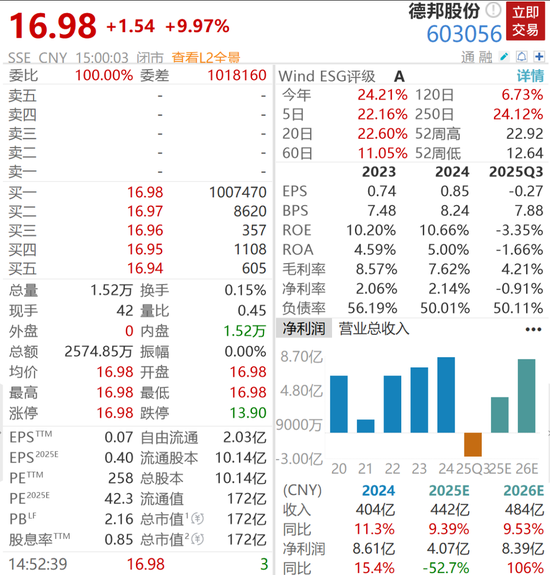
Investment Rating - The investment rating for the company is "Outperform the Market" [5][19][3] Core Views - The company's performance is under short-term pressure, with a focus on the effectiveness of operational optimization [1] - Despite a challenging macroeconomic environment, the company achieved double-digit revenue growth in both Q1 and Q2 of 2025, driven by a layered strategy for express delivery products and improvements in delivery quality [1][9] - The integration project with JD Logistics is expected to optimize settlement mechanisms in the second half of 2025, potentially leading to significant revenue contributions [1][9] Summary by Relevant Sections Financial Performance - In the first half of 2025, the company reported revenue of 20.55 billion yuan, an increase of 11.4%, while net profit attributable to shareholders was 52 million yuan, a decrease of 84% [1][9] - The second quarter saw revenue of 10.15 billion yuan, up 10.9%, with net profit of 121 million yuan, down 50% [1][9] - The gross margin for the first half of 2025 was 5.33%, a decrease of 2.29 percentage points year-on-year, while the net profit margin was 0.25%, down 1.55 percentage points [2][17] Cost Structure - Labor costs increased by 5.6% year-on-year in the first half of 2025, but their proportion of revenue decreased by 2.04 percentage points [2][17] - Transportation costs surged by 30.2% year-on-year, raising their share of revenue by 6.485 percentage points [2][17] - The company is optimizing its product structure and controlling resource input, leading to a sequential improvement in gross margin to 6.69% in Q2 [2][17] Profit Forecast - The profit forecast for 2024-2026 has been adjusted, with expected net profits of 620 million yuan, 860 million yuan, and 1.07 billion yuan respectively, reflecting a significant downward adjustment of -45.9% and -38.9% for 2025 and 2026 [3][19] - The company is expected to maintain growth potential in the medium to long term despite the current challenges [3][19] Financial Metrics - Projected revenue for 2025 is 44.803 billion yuan, with a year-on-year growth rate of 11% [4] - The projected net profit for 2025 is 618 million yuan, reflecting a year-on-year decline of 28.2% [4] - The company’s earnings per share for 2025 is estimated at 0.61 yuan [4]
德邦物流股份有限公司 关于以集中竞价交易方式回购股份的进展公告
Zhong Guo Zheng Quan Bao - Zhong Zheng Wang· 2025-09-02 23:39
Group 1 - The company plans to repurchase shares using its own funds, with a budget between RMB 75 million and RMB 150 million, at a maximum price of RMB 16.00 per share [2] - After the 2024 annual equity distribution, the maximum repurchase price was adjusted to RMB 15.85 per share, effective from June 11, 2025 [3] - As of August 31, 2025, the company has not yet started the share repurchase process [4] Group 2 - The company has provided guarantees for its subsidiaries, including a non-financing guarantee of RMB 700,000 for Dongguan Debang and RMB 61,300 for Ningbo Xuande, among others [9][13] - The board approved a total external guarantee limit of RMB 700 million for 2025, with specific allocations based on the subsidiaries' debt ratios [10][11] - As of August 31, 2025, the total external guarantees amounted to RMB 1,847.56 million, representing 21.83% of the company's latest audited net assets, with no overdue guarantees reported [15]
德邦股份:关于为控股子公司提供担保的进展公告
Zheng Quan Ri Bao· 2025-09-02 14:09
Core Viewpoint - Debon Holdings announced that it has provided guarantees for its subsidiaries, involving a total amount of RMB 81.43 million [2] Group 1: Company Guarantees - The company has applied for bank guarantees for its subsidiaries Dongguan Debon, Xuande Supply Chain, and Tianjin Debon, with amounts of RMB 700,000, RMB 61,300, and RMB 53,000 respectively [2] - As of August 31, 2025, the total external guarantees provided by the company and its subsidiaries amount to RMB 1,847.56 million [2] - The guarantees to subsidiaries account for 100% of the total external guarantees, which is 21.83% of the company's latest audited net assets attributable to shareholders [2]
德邦股份:关于以集中竞价交易方式回购股份的进展公告
Zheng Quan Ri Bao· 2025-09-02 14:09
Core Viewpoint - Debon Holdings announced plans to repurchase shares using self-owned funds between May 16, 2025, and May 15, 2026, with a budget of no less than 75 million and no more than 150 million yuan, at a price not exceeding 16 yuan per share [2] Summary by Sections - **Share Repurchase Plan** - The company intends to utilize between 75 million and 150 million yuan for the share repurchase [2] - The repurchase will be conducted through centralized bidding [2] - The maximum price for the repurchase is set at 16 yuan per share [2] - **Implementation Timeline** - The repurchase is scheduled to occur from May 16, 2025, to May 15, 2026 [2] - As of August 31, 2025, the company has not yet commenced the repurchase [2]