
Putailai(603659)

Search documents
璞泰来涨2.12%,成交额2.04亿元,主力资金净流入10.72万元
Xin Lang Cai Jing· 2025-10-20 02:10
Core Viewpoint - Puxin Technology Co., Ltd. has shown significant stock performance with a year-to-date increase of 71.16%, despite a recent slight decline in the last five trading days [1] Financial Performance - For the first half of 2025, Puxin achieved a revenue of 7.088 billion yuan, representing a year-on-year growth of 11.95%, and a net profit attributable to shareholders of 1.055 billion yuan, up 23.03% year-on-year [2] - Cumulative cash dividends since the A-share listing amount to 2.196 billion yuan, with 1.129 billion yuan distributed over the last three years [3] Shareholder Information - As of June 30, 2025, the number of shareholders is 69,000, a decrease of 1.86% from the previous period, with an average of 30,957 circulating shares per person, an increase of 1.89% [2] - The top ten circulating shareholders include Hong Kong Central Clearing Limited, which holds 92.5404 million shares, a decrease of 135,600 shares from the previous period [3] Stock Market Activity - On October 20, Puxin's stock price rose by 2.12% to 26.94 yuan per share, with a trading volume of 204 million yuan and a turnover rate of 0.36% [1] - The stock has appeared on the "Dragon and Tiger List" twice this year, with the most recent instance on October 10, where it recorded a net buy of -235 million yuan [1]

璞泰来(603659) - 上海璞泰来新能源科技股份有限公司2025年度第二期超短期融资券发行结果公告
2025-10-15 09:47
上海璞泰来新能源科技股份有限公司 董 事 会 2025年10月16日 上海璞泰来新能源科技股份有限公司(以下简称"公司")于2025年6月13 日召开第四届董事会第六次会议、2025年6月30日召开2025年第三次临时股东会 审议通过了《关于拟注册发行债务融资工具的议案》,同意公司向中国银行间 市场交易商协会申请注册发行不超过人民币20亿元(含20亿元)的债务融资工 具 。 具 体 内 容 详 见 公 司 于 2025 年 6 月 14 日 在 上 海 证 券 交 易 所 网 站 (www.sse.com.cn)及指定媒体披露的《上海璞泰来新能源科技股份有限公司 关于拟注册发行债务融资工具的公告》(公告编号:2025-046)。 2025年8月28日,公司收到中国银行间市场交易商协会核发的《接受注册通 知书》(中市协注[2025]SCP234号),中国银行间市场交易商协会决定接受公 司超短期融资券注册,公司超短期融资券注册金额为20亿元,注册额度自通知 书落款之日起2年内有效,公司在注册有效期内可分期发行超短期融资券。 公司根据自身经营状况、资金使用计划和银行间市场情况,于2025年10月 13日在全国银行间 ...
锂电池产业链跟踪点评:9月电池销量同比环比双增
Dongguan Securities· 2025-10-15 09:04
Investment Rating - The report maintains an "Overweight" rating for the lithium battery industry, expecting the industry index to outperform the market index by over 10% in the next six months [5]. Core Insights - In September 2025, the production and sales of new energy vehicles (NEVs) reached historical highs, with production and sales of 1.617 million and 1.604 million units respectively, representing year-on-year growth of 23.7% and 24.6%, and month-on-month growth of 16.25% and 14.98% [4]. - The penetration rate of NEVs in September was 49.7%, up 0.9 percentage points month-on-month, while the year-to-date penetration rate was 46.1% [4]. - Battery sales also saw significant growth, with total battery production reaching 151.2 GWh in September, a month-on-month increase of 8.3% and a year-on-year increase of 35.4% [4]. - The report highlights strong demand for energy storage in both domestic and international markets, with leading battery companies operating at full capacity [4]. Summary by Sections New Energy Vehicle Market - In September 2025, NEV sales reached 1.604 million units, with pure electric vehicle sales at 1.058 million units, showing a year-on-year increase of 36.4% [4]. - Year-to-date NEV sales totaled 11.224 million units, with pure electric vehicles accounting for 7.22 million units, reflecting a year-on-year growth of 44.7% [4]. Battery Production and Sales - In September, the total battery sales were 146.5 GWh, with power batteries accounting for 110.5 GWh, representing 75.5% of total sales [4]. - The report notes that the export of batteries in September was 26.7 GWh, with power batteries making up 17.6 GWh of that total [4]. Investment Recommendations - The report suggests focusing on leading companies in the lithium battery supply chain, particularly those with technological and production advantages in solid-state electrolytes and new materials [4]. - Key companies to watch include CATL, EVE Energy, and others that are actively developing solid-state battery technologies [4].




璞泰来涨2.02%,成交额9.55亿元,主力资金净流出6137.38万元
Xin Lang Cai Jing· 2025-10-15 07:00
Core Viewpoint - Puxin Technology Co., Ltd. has shown significant stock price fluctuations and financial performance, with a notable increase in stock price year-to-date and recent declines in the short term [1][2]. Financial Performance - For the first half of 2025, Puxin achieved operating revenue of 7.088 billion yuan, representing a year-on-year growth of 11.95%, and a net profit attributable to shareholders of 1.055 billion yuan, up 23.03% year-on-year [2]. - Cumulatively, the company has distributed 2.196 billion yuan in dividends since its A-share listing, with 1.129 billion yuan distributed over the past three years [3]. Stock Market Activity - As of October 15, Puxin's stock price was 26.83 yuan per share, with a market capitalization of 57.32 billion yuan. The stock has increased by 70.46% year-to-date but has seen a decline of 13.23% over the last five trading days [1]. - The company has appeared on the "Dragon and Tiger List" twice this year, with the most recent instance on October 10, where it recorded a net buy of -235 million yuan [1]. Shareholder Structure - As of June 30, 2025, Puxin had 69,000 shareholders, with an average of 30,957 circulating shares per person, reflecting a 1.89% increase from the previous period [2]. - The top ten circulating shareholders include Hong Kong Central Clearing Limited and several mutual funds, with notable changes in their holdings [3].
高端材料出口遇管制,多家锂电企业回应
2 1 Shi Ji Jing Ji Bao Dao· 2025-10-15 00:23
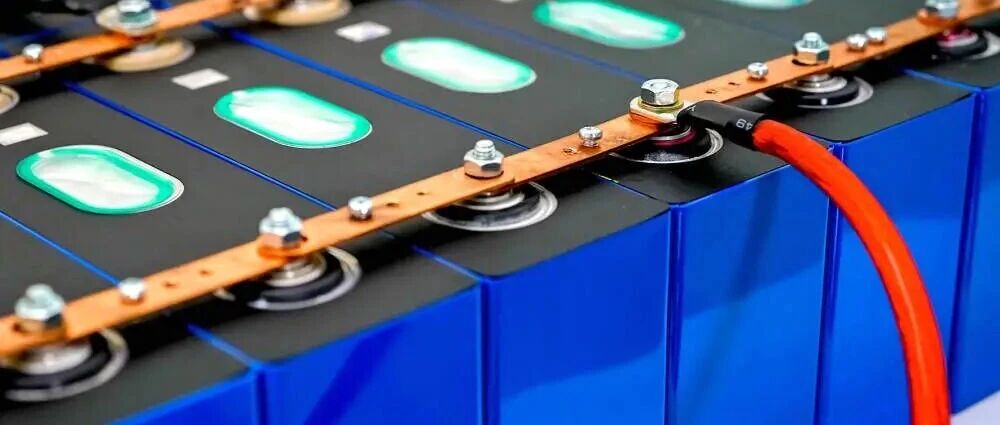
Core Viewpoint - China's export control on lithium batteries and key materials is set to take effect on November 8, 2025, targeting products with energy density ≥300Wh/kg, which includes critical production technologies and materials [1][12]. Industry Impact - The announcement has led to significant market reactions, with major companies like CATL and Yiwei Lithium Energy experiencing stock declines of 6.82% and 10.96% respectively on October 10 [3]. - The Shenwan Battery Index fell over 4% after three consecutive trading days of decline following the announcement [3]. Company Responses - Companies like Siengda Intelligent and Liyuanheng stated that the new policy's impact on their overall business is minimal, as their overseas orders primarily come from domestic battery manufacturers, which are not subject to the new controls [5][6]. - Rongbai Technology emphasized that the policy is a regulation rather than a prohibition, and it mainly affects products related to semi-solid and solid-state batteries, which do not significantly impact their supply [6][11]. - Companies such as Dingsheng Technology noted that their exports mainly consist of multi-element positive materials, which are not included in the control scope [7]. Market Dynamics - The Chinese lithium battery industry is projected to produce 1170 GWh in 2024, with a total industry output value exceeding 1.2 trillion yuan, reflecting a 24% year-on-year growth [9]. - China supplies approximately 90% of the global lithium battery market, making exports a crucial part of capacity digestion [9]. Long-term Outlook - The export control is expected to reshape the global lithium battery industry landscape, shifting focus from capacity to high-end technology [11]. - The policy may lead to increased emphasis on the domestic market and accelerate the application of high-end battery technologies within China [12].


高端材料出口遇管制,多家锂电企业回应
21世纪经济报道· 2025-10-15 00:14
Core Viewpoint - China's export control on lithium batteries and key materials is set to take effect on November 8, 2025, targeting high-energy-density batteries and critical production equipment, which reflects a shift towards high-end technology in the lithium battery industry [1][10]. Industry Impact - The new regulations have triggered a market reaction, with significant declines in stock prices for major lithium battery companies, including a 6.82% drop for CATL and a 10.96% drop for EVE Energy on October 10 [4][6]. - The Shenwan Battery Index fell over 4% after three consecutive trading days of decline, indicating market concerns about the impact of export restrictions [4][9]. Company Responses - Several companies, including Siengda Intelligent and Rongbai Technology, have stated that the new policy will have a minimal impact on their operations, as their primary overseas orders do not fall under the restricted categories [6][7]. - Companies like Dingsheng Technology emphasized that their exports mainly consist of materials not affected by the new regulations, suggesting a focus on domestic markets moving forward [7][9]. Market Dynamics - The Chinese lithium battery industry has a significant production capacity, with a total output expected to reach 1,170 GWh in 2024, a 24% increase year-on-year, and an industry value exceeding 1.2 trillion yuan [9]. - China supplies approximately 90% of the global lithium battery market, making export a crucial aspect of capacity utilization [9]. Long-term Outlook - The export control is seen as a strategic move to maintain China's leading position in high-end battery technology, potentially reshaping the global supply chain and encouraging domestic market focus [10]. - Analysts suggest that while there may be short-term market adjustments, the long-term implications could favor Chinese companies in the high-end battery sector [10].
高端材料出口遇管制 多家锂电企业回应
2 1 Shi Ji Jing Ji Bao Dao· 2025-10-14 23:13
Core Viewpoint - China's export control on lithium batteries and key materials is set to take effect on November 8, 2025, targeting products with energy density ≥300Wh/kg, which includes critical production technologies and materials [1] Group 1: Export Control Announcement - The Ministry of Commerce and the General Administration of Customs announced the export control measures, emphasizing the dual-use nature of the targeted items and aligning with international practices to safeguard national security [1] - The measures are not aimed at any specific country or region, and legitimate export applications will be reviewed and potentially approved [1] Group 2: Market Reactions - On October 10, several listed companies in the lithium battery sector experienced significant stock declines, with CATL down 6.82%, EVE Energy down 10.96%, and other second-tier leaders dropping over 8% [2] - The Shenwan Battery Index fell for three consecutive trading days, closing down over 4% on October 14 [2] Group 3: Company Responses - Companies like Siengda Intelligent stated that the policy's impact on their overall business is minimal, as their overseas orders primarily come from domestic battery manufacturers, which are not subject to the export control [3] - Li Yuanheng, a lithium battery equipment supplier, mentioned that they have established a robust R&D and manufacturing base overseas to mitigate potential trade policy changes [3] - Rongbai Technology held an investor communication meeting, clarifying that the export policy is a control rather than a ban, and it mainly affects products related to semi-solid and solid-state batteries [4] Group 4: Industry Insights - The lithium battery industry in China has developed a vast capacity and complete supply chain, with a projected total production of 1170GWh in 2024, representing a 24% year-on-year increase [5] - China supplies approximately 90% of the global lithium battery market, with domestic sales of power and other batteries reaching 920.7GWh in the first eight months of the year, including 173.1GWh in exports, a 48.5% increase year-on-year [6] - The recent export control is seen as a shift in the lithium battery competition from capacity to high-end technology, potentially reshaping the global industry landscape [7]
璞泰来股价连续4天下跌累计跌幅14.55%,易方达基金旗下1只基金持5.44万股,浮亏损失24.48万元
Xin Lang Cai Jing· 2025-10-14 07:25
Core Viewpoint - Puxin Technology's stock has experienced a significant decline, with a cumulative drop of 14.55% over the past four days, reflecting broader market concerns and potential investor sentiment shifts [1] Company Overview - Puxin Technology, established on November 6, 2012, and listed on November 3, 2017, is located in Shanghai and specializes in the production and sales of materials for new energy batteries, including negative electrode materials and graphite processing [1] - The company's revenue composition is as follows: 77.26% from new energy battery materials and services, 26.08% from new energy automation equipment and services, and 7.85% from industrial investment trade management and others [1] Fund Holdings - According to data, E Fund has one fund heavily invested in Puxin Technology, specifically the E Fund CSI 500 Enhanced Strategy ETF (563030), which held 54,400 shares as of the second quarter, accounting for 0.79% of the fund's net value [2] - The fund has incurred a floating loss of approximately 58,800 yuan today, with a total floating loss of 244,800 yuan during the four-day decline [2] Fund Manager Performance - The fund manager of E Fund CSI 500 Enhanced Strategy ETF, Guan Zefan, has been in position for 9 years and 23 days, managing assets totaling 641 million yuan [3] - During his tenure, the fund has achieved a best return of 81.87% and a worst return of 17.96% [3]
璞泰来:对锂电池和人造石墨负极材料相关物项实施出口管制事项 公司初步评估认为对公司业务的影响较小
Ge Long Hui A P P· 2025-10-13 08:14
Core Viewpoint - The recent export control policy on lithium batteries and artificial graphite anode materials issued by the Ministry of Commerce on October 9 has a minimal impact on the company's business and performance [1] Summary by Relevant Sections Export Control Policy Impact - The new export control regulations do not prohibit exports, and the company will prepare the necessary materials to apply for licenses as required [1] - The company's automation equipment business is primarily domestic, with overseas revenue accounting for less than 0.5% of total revenue, indicating a minimal impact [1] - The main products in the automation equipment segment, such as mixing, coating, and slitting equipment, are not included in the export control scope [1] Anode Material Business - From 2006 to 2023, domestic artificial graphite exports have been conducted in accordance with export control regulations, with export volumes significantly increasing based on market supply and demand [1] - The policy is expected to relax starting December 2023, allowing for the resumption of export license applications, which is anticipated to restore the original export model without negative impacts on the anode material export business [1] Production Equipment and Technology Transfer - The company currently does not have overseas factories, thus it is not affected by the need to import domestic production equipment for overseas operations [1] - The company's business model does not involve technology transfer, so it remains unaffected by related export control measures [1]
璞泰来:初步评估出口管制措施对公司业务影响较小
Xin Lang Cai Jing· 2025-10-13 07:49
Core Viewpoint - The company has assessed the recent export control announcement by the Ministry of Commerce and the General Administration of Customs regarding lithium batteries and artificial graphite anode materials, concluding that the impact on its business will be minimal [1] Group 1: Automation Equipment Business - The company's automation equipment business is primarily domestic, with overseas revenue accounting for less than 0.5% of total revenue from January to August 2025, indicating a very small proportion [1] - The main products in the automation equipment segment include slurry, coating, and slitting equipment, which are not subject to the recent export controls [1] - Current overseas orders for mid-stage equipment, such as stacking and liquid injection, are limited in value, suggesting a minimal impact from the new regulations [1] Group 2: Anode Materials Business - From 2006 to 2023, domestic exports of artificial graphite have been conducted in accordance with export control regulations, with export volumes significantly increasing in response to market supply and demand [1] - There is no indication of a large-scale ban on exports, and the new regulations set to take effect in December 2023 will relax previous restrictions, allowing for the resumption of export license applications [1] - The company anticipates that the anode materials export business will not face negative impacts due to the expected return to previous operational models [1]