
Bestore(603719)

Search documents
良品铺子卖身,徐新套现4亿
创业家· 2025-07-24 09:57
Core Viewpoint - The article discusses the significant changes in the snack food industry in China, focusing on the strategic investment by Wuhan's state-owned enterprise, Changjiang Guomao, in Liangpinpuzi, marking a pivotal moment in the company's history and reflecting broader industry transformations [4][17]. Group 1: Strategic Investment - Liangpinpuzi announced a strategic investment from Changjiang Guomao, with a total transaction amount of 1.49 billion yuan [4][6]. - The deal involves the transfer of 21% of shares from the controlling shareholder and 8.99% from the second-largest shareholder, Today Capital, making Changjiang Guomao the new controlling shareholder with a 29.99% stake [6][7]. - The company aims to enhance its core competitiveness and transition from "quality snacks" to a "quality food" ecosystem through this partnership [7][15]. Group 2: Company Performance - Liangpinpuzi's market value has drastically decreased from over 34 billion yuan at its peak in 2020 to approximately 5.5 billion yuan, losing over 28 billion yuan [11]. - The company's revenue for 2023 was 8.046 billion yuan, a year-on-year decline of 14.76%, with net profit dropping by 46.26% to 180 million yuan [11]. - The company is projected to face a net loss of 46.1 million yuan in 2024, with further losses expected in the first half of 2025 [11][12]. Group 3: Industry Competition - The competitive landscape has shifted dramatically, with discount snack stores like "Mingming Hen Mang" rapidly gaining market share, achieving a GMV of 55.5 billion yuan in 2024 [12][13]. - Liangpinpuzi previously held a 3% stake in "Zhao Yiming," which merged with "Mingming Hen Mang," leading to a significant loss of market share for Liangpinpuzi [13]. - In response to competitive pressures, Liangpinpuzi initiated a large-scale price reduction strategy, lowering prices on 300 products by an average of 22% [13][14]. Group 4: Future Outlook - The entry of state-owned capital is seen as a crucial attempt for Liangpinpuzi to break through in a consolidating industry [15]. - Analysts suggest that the partnership with Changjiang Guomao could help Liangpinpuzi address supply chain challenges and enhance its competitive position [15][16]. - However, the company still faces risks, including regulatory approvals and ongoing competitive pressures in the market [16].



零食行业“大变局”:谁猛打价格战,谁撑不住了?
3 6 Ke· 2025-07-24 09:20
Core Viewpoint - The snack industry is undergoing significant changes, with traditional brands like Liangpinpuzi facing challenges from new players adopting a low-cost, high-volume model, leading to a re-evaluation of brand value and market strategies [7][10]. Group 1: Liangpinpuzi's Situation - Liangpinpuzi announced a plan to introduce Wuhan Yangtze International Trade Group as an investor, with the latter acquiring a 29.99% stake for 1.49 billion yuan, making it the controlling shareholder [1][10]. - The company reported a projected net loss of 75 million to 105 million yuan for the first half of 2025, a stark contrast to a net profit of 23.89 million yuan in the same period of 2024 [4][7]. - In 2024, Liangpinpuzi experienced a revenue decline of 11.02% to 7.159 billion yuan and recorded its first annual net loss of 46.1 million yuan since its IPO in 2020 [5][10]. - The company initiated its first major price reduction in 17 years, lowering prices on 300 products by an average of 22%, with some items seeing discounts of up to 45% [10][11]. - Despite these efforts, the price reduction strategy did not yield the desired results, further compressing profit margins as consumers gravitated towards cheaper alternatives [11][13]. Group 2: Industry Dynamics - The snack industry is witnessing a divide, with traditional brands struggling while new mass-market players like Mingminghenmang and Wancheng Group thrive, reporting significant revenue growth and extensive store networks [6][21]. - Mingminghenmang projected a revenue of 39.3 billion yuan for 2024, with a gross merchandise volume (GMV) of 55.5 billion yuan and a store count of 14,394 across 28 provinces [6][21]. - The rise of mass-market snack brands is attributed to their ability to offer lower prices through economies of scale, with average prices being approximately 25% lower than traditional retail channels [22][25]. - However, the intense competition among these new players is leading to price wars and reduced profit margins, with Mingminghenmang reporting a gross margin of only 7.6% in 2024 [25][26]. - The industry is shifting towards a more complex competitive landscape, where success will depend on balancing cost control, product innovation, and user experience [27].
关于良品铺子「卖身」国资的五个问题|氪金·大事件
3 6 Ke· 2025-07-24 08:27
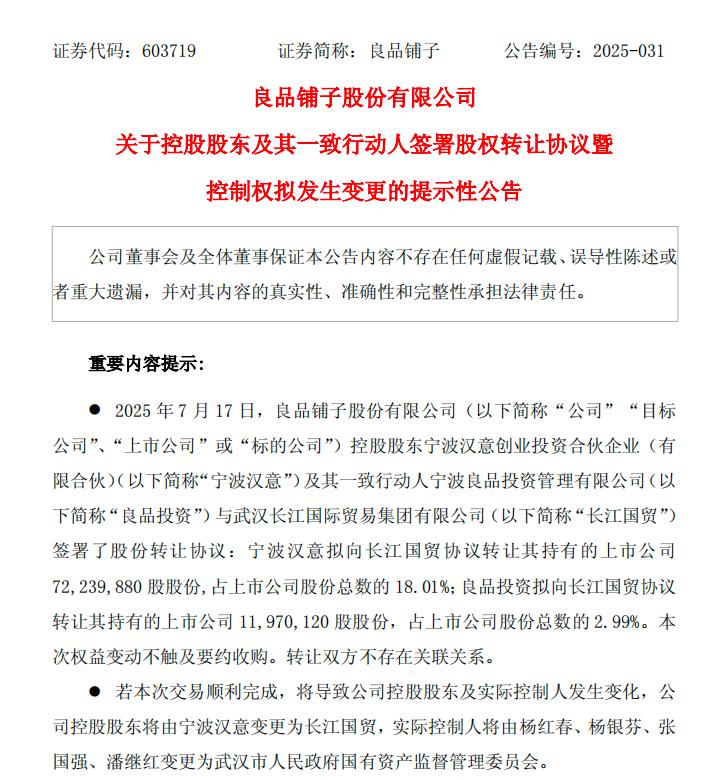
Core Viewpoint - After a series of unsuccessful self-rescue measures including leadership changes, price reductions, and business transformations, "the first stock of high-end snacks" has chosen to sell itself [1] Group 1: Share Transfer Details - On July 17, the company announced that its controlling shareholder, Ningbo Hanyi, plans to transfer 72.24 million shares (18.01% of total shares) and 11.97 million shares (2.99% of total shares) to Changjiang Guomao at a price of 12.42 CNY per share, totaling 1.046 billion CNY [1] - The second-largest shareholder, Dayong Limited, also intends to transfer 8.99% of its shares to Changjiang Guomao at a price of 12.34 CNY per share, amounting to 445 million CNY [2] - If the transfer is successful, the Wuhan State-owned Assets Supervision and Administration Commission will hold 29.99% of the shares, becoming the largest shareholder [2] Group 2: Legal Issues and Uncertainties - On the same day as the announcement, Guangzhou Light Industry filed a lawsuit against Ningbo Hanyi regarding a share transfer dispute, seeking to freeze 19.89% of the company's shares held by Ningbo Hanyi [2][3] - The company indicated that the share freeze and lawsuit may create uncertainties regarding the control transfer to Changjiang Guomao [3] - Legal experts noted that the agreement with Guangzhou Light Industry is a preliminary contract and does not have the same binding effect as the formal transfer agreement with Changjiang Guomao [6] Group 3: Financial Performance and Challenges - From 2020 to 2022, the company's revenue was 7.894 billion CNY, 9.324 billion CNY, and 9.44 billion CNY, showing a significant slowdown in growth [9] - Despite efforts to rescue performance, including a major price reduction initiative, the company reported an expected net loss of between 75 million CNY and 105 million CNY for the first half of 2025 [12] - The company has faced challenges in optimizing its supply chain, leading to increased costs and inevitable losses [14] Group 4: Strategic Shift and Future Prospects - The company aims to leverage Changjiang Guomao's experience in supply chain services to transform into a comprehensive food ecosystem [15][17] - The entry of state-owned capital is expected to provide financial support, potentially alleviating short-term debt pressures [15] - However, there are concerns that state-owned enterprises may not significantly improve operational performance, as seen in other cases [18] Group 5: Market Competition and Positioning - The competitive landscape for snack brands has shifted, with emerging low-cost brands capturing market share from traditional high-end brands [24] - The company has struggled to adapt to changing consumer preferences and market dynamics, leading to a decline in its market position [26] - Analysts suggest that focusing on brand recognition and high-quality products may be a better strategy for the company moving forward [26]
广州、武汉两地国资“争夺”良品铺子 控股股东一股两卖被起诉
2 1 Shi Ji Jing Ji Bao Dao· 2025-07-24 06:53
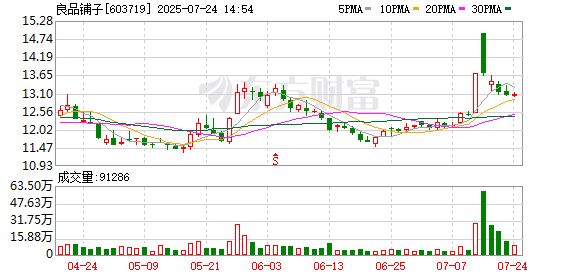
Core Viewpoint - The control of the snack company, Liangpinpuzi, is contested between two state-owned enterprises, Guangzhou Light Industry Group and Wuhan Yangtze International Trade Group, leading to a legal dispute over a share transfer agreement [2][3][4]. Group 1: Legal Dispute - Guangzhou Light Industry Group has filed a lawsuit against Ningbo Hanyi, the controlling shareholder of Liangpinpuzi, for breach of contract regarding a share transfer agreement worth approximately 996 million yuan [2][3]. - The lawsuit arose after Ningbo Hanyi initially signed a share transfer agreement with Guangzhou Light but later breached it by transferring shares to Wuhan Yangtze International Trade Group, resulting in a "one share sold twice" situation [2][3]. - The court has accepted the case, and Guangzhou Light has taken measures to freeze 19.89% of Ningbo Hanyi's shares, which has hindered new transactions [4][5]. Group 2: Acquisition Interests - Both Guangzhou Light and Wuhan Yangtze International Trade Group are interested in acquiring Liangpinpuzi, with Guangzhou Light's earlier engagement with Ningbo Hanyi being documented in a signed agreement in May [3][8]. - The acquisition prices proposed by both parties are below the market price, with Guangzhou Light offering 12.42 yuan per share and Wuhan Yangtze offering 12.34 yuan per share, while the market price was 13.05 yuan per share as of July 23 [5][8]. Group 3: Strategic Importance - Guangzhou Light aims to enhance its presence in the snack market through Liangpinpuzi, which aligns with its strategy to become a competitive fashion consumer goods group [8][11]. - Wuhan Yangtze International Trade Group, established in 2022, focuses on modern logistics and supply chain management, which could provide Liangpinpuzi with significant supply chain advantages [9][10]. - The competition between the two state-owned enterprises reflects the strategic value of Liangpinpuzi in the snack industry, despite its recent performance challenges [11][12].
食品饮料行业报告(2025.07.14-2025.07.18):白酒迎来情绪修复,大众品关注个股机会
China Post Securities· 2025-07-24 03:22
Industry Investment Rating - The investment rating for the food and beverage industry is "Outperform the Market" and is maintained [1] Core Insights - The report highlights that the liquor sector has faced challenges due to the implementation of the "Regulations on Strict Economy and Opposition to Waste" by the central government, leading to a decline in revenue and profits for most liquor companies in Q2 2025. However, recent media corrections have stabilized the sector, and a gradual recovery is expected [3][20] - The report emphasizes the importance of individual stock opportunities within the consumer goods sector, particularly in the context of the liquor market's recovery and the introduction of innovative products [4][21] Summary by Sections Industry Overview - The closing index for the food and beverage sector is 17226.07, with a 52-week high of 19809.29 [1] - The sector has shown a relative performance decline compared to the CSI 300 index, with a year-on-year retail sales growth of 4.8% in June 2025 [14] Liquor Sector Analysis - The report notes that major liquor companies like Moutai, Wuliangye, and Luzhou Laojiao have varying price-to-earnings ratios, indicating a mixed valuation landscape [20] - The introduction of new products, such as the "Jiu Gui Free Love" by Jiu Gui Jiu and its collaboration with the retail channel "Pang Dong Lai," is expected to drive sales and innovate marketing strategies [5][18] Fund Holdings and Market Sentiment - As of Q2 2025, the food and beverage sector's fund holding ratio is 6.75%, reflecting a decrease of 2.12 percentage points, indicating cautious sentiment among investors [4][20] - The liquor segment's fund holding ratio is 4.98%, also down by 2.42 percentage points, suggesting a trend of risk aversion in the market [20] Company Performance Highlights - Dongpeng Beverage reported stable revenue growth, with significant increases in electrolyte water and fruit tea segments [22] - The report mentions that companies like Youfei Foods and Guoquan are focusing on channel optimization and product innovation to drive growth [23] - The performance of companies such as Zhou Hei Ya and Jiahe Foods is noted, with both showing signs of recovery despite facing challenges [23] Market Trends and Price Movements - The food and beverage sector index increased by 0.68% in the latest week, ranking 13th among 30 sectors, while the dynamic PE ratio stands at 21.26 [24] - The report highlights that soft drinks and dairy products have shown the highest growth rates among sub-sectors [24]




良品铺子易主惹诉讼 广州国资欲“讨回”控股权
Zhong Guo Jing Ying Bao· 2025-07-22 13:10
中经记者 蒋政 北京报道 良品铺子易主事宜再起波澜。 7月21日,良品铺子发布关于控股股东涉及诉讼的公告。广州市中级人民法院受理了广州轻工工贸集团 有限公司(以下简称"广州轻工")与公司控股股东宁波汉意创业投资合伙企业(有限合伙)(以下简 称"宁波汉意")的股权转让纠纷一案。广州轻工就股权转让纠纷对宁波汉意提起诉讼,并申请财产保 全,冻结宁波汉意所持良品铺子7976.39万股股份。 诉讼焦点在于良品铺子控股权变更。在7月18日,良品铺子发布公告表示,控股股东宁波汉意与武汉国 资旗下的武汉长江国际贸易集团有限公司(以下简称"长江国贸")签署股权转让协议,或将涉及控股权 变更。而在此之前,宁波汉意曾与广州轻工就协议转让上市公司股份的事项进行磋商,后者将投资、控 制良品铺子。不过,此次合作遭遇武汉国资"截胡"。 《中国经营报》记者注意到,两次股权转让,除了接盘方不同之外,良品铺子股权转让方也不尽相同。 在同广州轻工磋商时,只有宁波汉意筹划减持相应股权。而易主武汉国资的方案中,良品铺子的二股东 ——达永有限公司(SUMDEXLIMITED,以下简称"达永有限"),同样在减持之列。该股东背后是投资机 构今日资本,其在良 ...
良品铺子拟引入武汉国资,曾与广州国企接触
Xi Niu Cai Jing· 2025-07-22 10:56
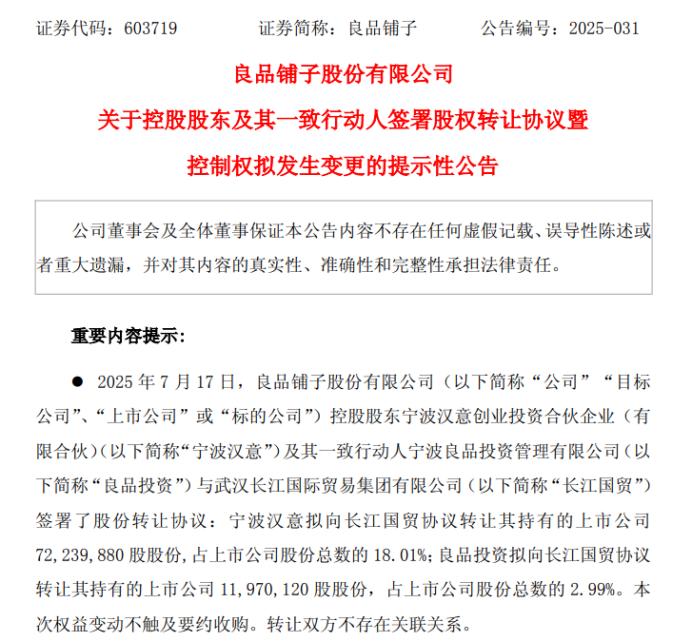
Core Viewpoint - The announcement indicates a significant change in the control of Liangpinpuzi, with the major shareholders transferring their stakes to Wuhan Changjiang International Trade Group, potentially altering the company's strategic direction and governance structure [2][4][5] Shareholder Changes - Ningbo Hanyi plans to transfer 72,239,880 shares, representing 18.01% of the total shares, while Liangpin Investment will transfer 11,970,120 shares, accounting for 2.99% of the total shares [4] - After the transfer, the combined shareholding of Ningbo Hanyi and Liangpin Investment will decrease from approximately 38.22% to 17.22%, moving the founding team from a controlling position to the second-largest shareholder [5] Financial Implications - The total amount involved in the share transfer is approximately 1.046 billion RMB [5] Legal Issues - Ningbo Hanyi has been notified of a lawsuit from Guangzhou Light Industry and Trade Group regarding the share transfer dispute, which includes a request for asset preservation [5] - As a result, 79,763.962 shares held by Ningbo Hanyi have been frozen, representing 56.46% of their holdings and 19.89% of Liangpinpuzi's total share capital, introducing uncertainty to the control transfer [5] Strategic Considerations - The introduction of state-owned assets from Wuhan may open new opportunities for Liangpinpuzi, but the company still faces challenges in quality competition and must address issues related to supply chain, costs, and distribution channels [5]
良品铺子卖身国资,零食暴利时代结束
36氪· 2025-07-22 10:21
Core Viewpoint - The article discusses the recent transfer of control of the high-end snack company, Liangpinpuzi, to state-owned enterprise Changjiang Guomao, highlighting the challenges and potential opportunities this change brings to the company and the industry as a whole [3][4][5]. Company Overview - Liangpinpuzi's controlling shareholder, Ningbo Hanyi, has agreed to transfer 21% of its shares to Changjiang Guomao at a price of 12.42 yuan per share, totaling 1.046 billion yuan [3]. - This marks Liangpinpuzi as the first national snack food platform controlled by local state-owned assets, with the actual control shifting from the founders to the Wuhan State-owned Assets Supervision and Administration Commission [3][4]. Market Challenges - The high-end snack market has shifted from "incremental competition" to "stock competition," reflecting broader anxieties among traditional consumer brands in the face of changing market dynamics [5]. - Liangpinpuzi has faced declining performance, with revenue dropping by 14.76% and 11.02% in 2023 and 2024, respectively, while its net profit plummeted by 46.26% and 125.57% during the same period [17][18]. Financial Performance - The company anticipates a loss exceeding 100 million yuan for the first half of 2025, with a non-recurring net profit loss estimated between 100 million to 130 million yuan [15]. - Liangpinpuzi's revenue and net profit have consistently underperformed compared to industry peers, with the median revenue growth for A-share snack companies being significantly higher [17][18]. Strategic Shifts - The company has initiated a price reduction strategy, marking its first significant price cut in 17 years, with an average reduction of 22% across 300 products [20]. - Despite initial sales growth following the price cuts, the effectiveness of this strategy has waned, with subsequent quarters showing significant declines in sales and profit margins [22][23]. Future Prospects - The entry of Changjiang Guomao is seen as a potential lifeline, providing a more stable funding source and access to a broader resource network, which could enhance Liangpinpuzi's resilience against market fluctuations [3][36]. - However, the effectiveness of this transition remains uncertain, as the company must address fundamental issues such as brand rebuilding and consumer trust amidst ongoing quality concerns [4][31]. Industry Context - The snack food industry is experiencing intense competition, with low-cost brands rapidly gaining market share by offering comparable quality at lower prices [28]. - The shift towards e-commerce is significant, with online sales of snacks projected to continue growing, emphasizing the need for Liangpinpuzi to adapt its distribution strategy [39].
广州国资“硬刚”武汉国资!良品铺子股权之争闹上法庭
Guo Ji Jin Rong Bao· 2025-07-22 04:21
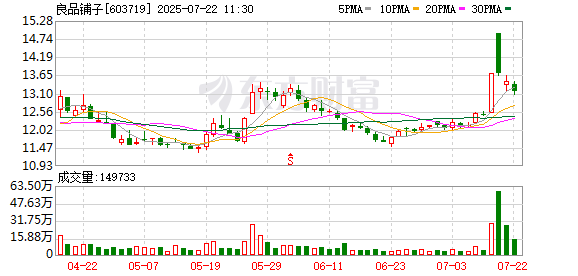
Core Viewpoint - The control dispute over Liangpin Shop (603719) has escalated, with a lawsuit filed by Guangzhou Light Industry against Ningbo Hanyi regarding a share transfer dispute involving an amount of 996 million yuan [2][6]. Group 1: Background of the Dispute - The dispute originated from an agreement signed in May 2023, where Ningbo Hanyi planned to transfer part of its shares in Liangpin Shop to Guangzhou Light Industry to resolve its debts [4]. - The agreement included terms for due diligence, investment arrangements, and a right of first refusal for Guangzhou Light Industry, with a share price set at 12.42 yuan per share or the average price over the preceding trading days multiplied by 1.05, whichever is lower [4]. Group 2: Legal Actions and Claims - Ningbo Hanyi did not sign the share transfer agreement with Guangzhou Light Industry and instead announced a transfer of control to Changjiang Guomao, a state-owned enterprise in Wuhan, leading to the lawsuit from Guangzhou Light Industry [5]. - Guangzhou Light Industry filed a lawsuit on July 14, seeking three main claims: enforcement of the original agreement, payment of a breach of contract penalty of 5 million yuan, and coverage of legal fees, totaling approximately 996 million yuan [6][8]. Group 3: Current Status and Implications - The lawsuit has resulted in the freezing of 79.76 million shares held by Ningbo Hanyi, which constitutes 56.46% of its holdings and 19.89% of Liangpin Shop's total shares, effectively pausing the share transfer to Changjiang Guomao [6][8]. - With the frozen shares, Ningbo Hanyi's remaining shares are insufficient to proceed with the planned transfer, creating uncertainty regarding the control transfer to Changjiang Guomao [8].
武汉国资将控股良品铺子;利洁时剥离部分业务;宇树科技开启上市辅导
Sou Hu Cai Jing· 2025-07-22 02:10
Investment Dynamics - Wuhan State-owned Assets will become the controlling shareholder of Liangpinpuzi, with a total transaction value of 1.046 billion yuan, resulting in a 21% stake in the company [3] - This transaction is viewed as a long-term strategic choice for Liangpinpuzi, aimed at preparing for development over the next decade [3] Brand Dynamics - Reckitt Benckiser announced the divestiture of its Essential Home business to Advent International for $4.8 billion, retaining a 30% stake, with projected 2024 net revenue of approximately £2 billion [6] - This divestiture aligns with Reckitt's strategy to focus on high-growth, high-margin brands [6] Financial Data - Mango reported a revenue of €1.728 billion for the first half of the year, a 12% increase year-on-year, with international markets contributing 78% of total revenue [17] - Burberry's retail revenue for the first fiscal quarter was £433 million, a 6% decline at reported rates but a significant improvement compared to previous double-digit declines [21] Personnel Dynamics - Shiseido Americas announced layoffs as part of a business transformation to restore growth, with a 19% sales decline in the Americas region [23] - Nordstrom appointed Kelly Dilts as CFO, effective August 29, to oversee core financial functions and strategic initiatives [26] - Burberry appointed four regional presidents to its executive committee, aiming to bring leadership closer to customer decision-making [30]
