
UIH(688271)

Search documents
富国医疗产业混合发起式A:2025年第二季度利润15.75万元 净值增长率1.46%
Sou Hu Cai Jing· 2025-07-22 01:57
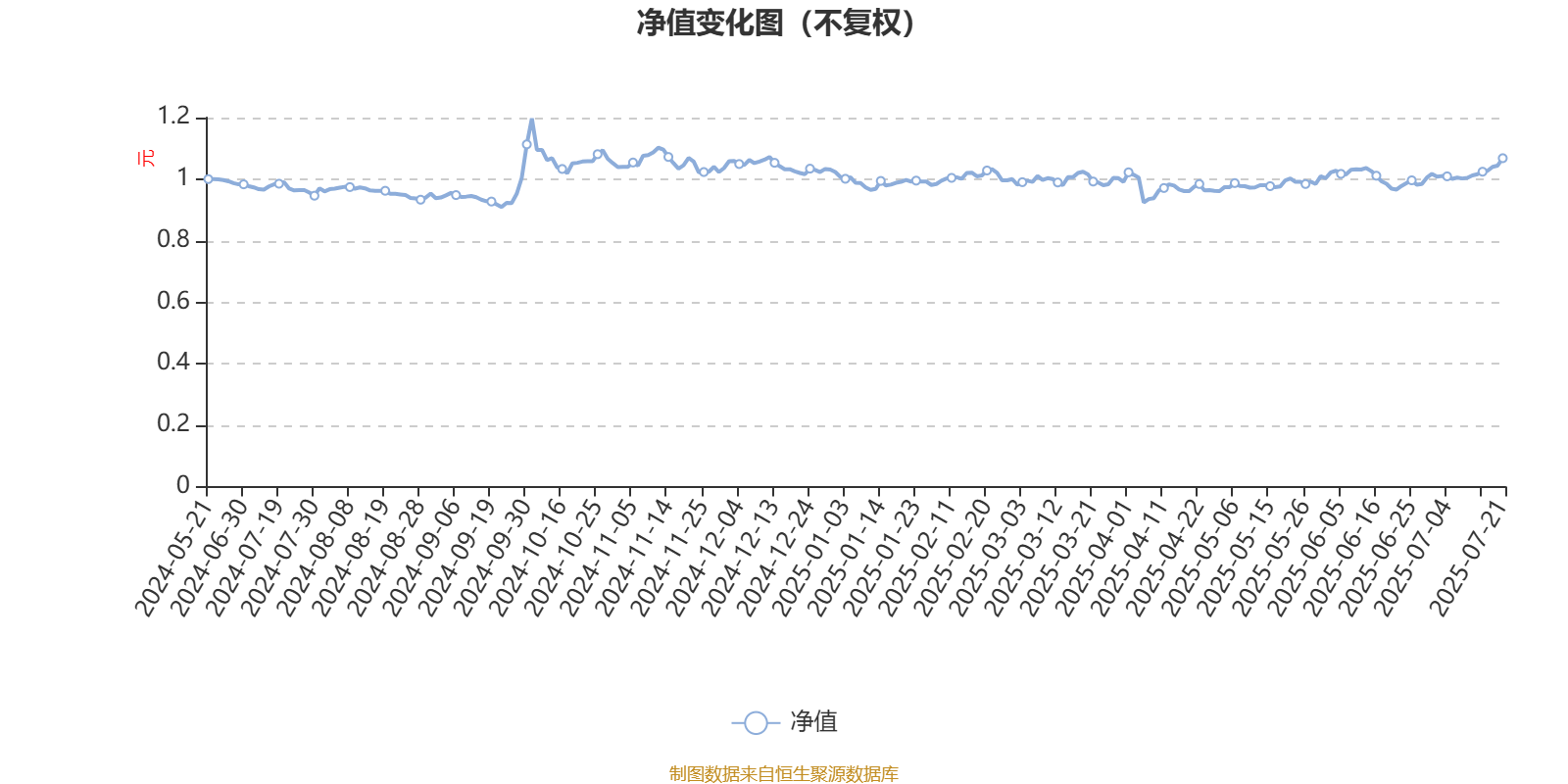
AI基金富国医疗产业混合发起式A(021450)披露2025年二季报,第二季度基金利润15.75万元,加权平均基金份额本期利润0.0147元。报告期内,基金净值 增长率为1.46%,截至二季度末,基金规模为1101.36万元。 该基金属于偏股混合型基金,长期投资于医药医疗股票。截至7月21日,单位净值为1.068元。基金经理是孙笑悦,目前管理3只基金近一年均为正收益。其 中,截至7月21日,富国医药成长30股票近一年复权单位净值增长率最高,达81.88%;富国医疗产业混合发起式A最低,为8.42%。 基金管理人在二季报中表示,本基金旨在差异化深耕医疗器械和医疗服务板块,尤其是医疗器械板块。我们看好国内医疗器械产业的长期发展,虽然其短期 受到医院合规运动的影响、DRGS/DIP 等政策影响,业绩短期承压,但国内医工结合蓬勃发展、制造业和供应链的优势明显,皆有利于国内医疗器械行业的 长足发展。因此我们将继续深挖医疗器械股票标的,继续对该板块保持关注。 通过所选区间该基金净值增长率分位图,可以观察该基金与同类基金业绩比较情况。图为坐标原点到区间内某时点的净值增长率在同类基金中的分位数。 截至6月27日,基金成立以来 ...





AMAC专用设备指数上涨1.29%,前十大权重包含北方华创等
Jin Rong Jie· 2025-07-21 14:37
Group 1 - The AMAC Specialized Equipment Index increased by 1.29%, closing at 3496.58 points with a trading volume of 81.175 billion [1] - The AMAC Specialized Equipment Index has risen by 5.85% in the past month, 8.72% in the past three months, and 7.57% year-to-date [1] - The index is based on the classification guidelines from the China Securities Association and includes 43 industry classification indices [1] Group 2 - The top ten holdings of the AMAC Specialized Equipment Index include: North China Innovation (6.49%), Mindray Medical (6.42%), Sany Heavy Industry (5.43%), and others [1] - The market share of the AMAC Specialized Equipment Index is 57.23% from the Shenzhen Stock Exchange and 42.77% from the Shanghai Stock Exchange [1] Group 3 - The industry composition of the AMAC Specialized Equipment Index shows that industrials account for 53.32%, healthcare for 24.75%, and information technology for 17.44% [2] - Other sectors include energy (1.75%), consumer discretionary (0.89%), financials (0.59%), materials (0.51%), utilities (0.39%), real estate (0.24%), and consumer staples (0.13%) [2]






联影医疗_ Risk Reward Update
2025-07-21 14:26
Summary of Shanghai United Imaging Healthcare Co. Conference Call Company Overview - **Company**: Shanghai United Imaging Healthcare Co (688271.SS) - **Industry**: Healthcare, specifically medical imaging equipment - **Current Stock Price**: Rmb127.90 (as of July 18, 2025) - **Price Target**: Rmb140.00, revised from Rmb145.00 [1][2] Key Financial Insights - **Revenue Growth**: Projected to grow by 15% in 2Q25 [1] - **Net Profit Growth**: Expected to grow by only 1% due to significant price cuts amid intense competition in provincial Value-Based Purchasing (VBP) programs, leading to a decline in Operating Profit Margin (OPM) [1] - **Long-term Revenue Forecast**: Revenue estimates for 2025-27 have been increased by 2.4%, 2.8%, and 2.8% respectively [2] - **Net Profit Estimates**: 2025 net profit estimate lowered by 12% due to lower Gross Profit Margin (GPM) assumptions and higher operating expenses; 2026 and 2027 estimates trimmed by 8% and 7% respectively [2] Market Position and Growth Potential - **Market Growth**: The China medical imaging equipment market is expected to grow at a 7.4% CAGR from 2020 to 2030, driven by low penetration rates [8] - **Competitive Advantage**: UIH is expected to benefit from favorable policies and maintain a cost advantage over global peers [8] - **International Sales**: Sales outside of China are anticipated to outpace domestic growth in the near term [8] - **Recurring Revenue**: Expected to expand due to increased installations of high-end equipment and penetration into top-tier clients, which is favorable for margin expansion [8] Risk Factors - **Regulatory Risks**: Potential unfavorable changes in anti-graft campaign timelines and fiscal stimulus rollouts could impact growth [14] - **Geopolitical Risks**: Global expansion may be hindered by geopolitical tensions or local political issues [14] - **Market Competition**: Intense competition in the domestic market could further pressure margins [1][21] Investment Thesis - **Valuation**: The current price target of Rmb140.00 is based on a discounted cash flow (DCF) methodology, with key assumptions including a WACC of 8.8% and a terminal growth rate of 4.0% [6] - **Earnings Projections**: EPS estimates for 2025 are 1.5 Rmb, with projections increasing to 3.3 Rmb by 2027 [3] - **Stock Rating**: The stock is rated as Equal-weight, indicating that its expected performance is in line with the average total return of the industry [3][16] Additional Insights - **AI Integration**: The company is a pioneer in integrating AI through its sister company, which may enhance its competitive edge [9] - **Market Share Gains**: UIH is expected to gain market share through favorable regulatory developments and margin expansion strategies [21] This summary encapsulates the key points from the conference call regarding Shanghai United Imaging Healthcare Co, highlighting its financial outlook, market position, risks, and investment thesis.
冒名推广“优必选商业版”App以实施诈骗?优必选:已报案
Xi Niu Cai Jing· 2025-07-21 08:07
Core Viewpoint - The company, UBTECH Robotics, has issued a warning to the public regarding fraudulent activities using its name, urging users to be vigilant against scams [2][10]. Group 1: Fraudulent Activities - Fraudsters are using deceptive apps and social media tactics, such as "team incentives" and "red envelope draws," to lure users into providing sensitive personal information like phone numbers and ID numbers [4][10]. - Scammers are promoting a fake app called "UBTECH Business Version" through various platforms, enticing users with promises of high returns and investment rebates, ultimately leading to financial loss [10]. Group 2: Official Communication and Verification - The company has provided official contact methods, including its website and verified social media accounts, to help users distinguish between legitimate and fraudulent communications [5][6]. - UBTECH emphasizes that it will never request sensitive information such as bank card verification codes and that all business processes will be clearly communicated through official channels [6]. Group 3: Legal Actions and User Protection - The company has reported the fraudulent activities to law enforcement and is committed to taking legal action against those misusing its name [7][10]. - UBTECH reassures users of its dedication to protecting their rights and maintaining the integrity of its brand [10]. Group 4: Company Background and Financial Performance - UBTECH was founded in March 2012 and went public on December 29, 2023 [11]. - In 2024, the company achieved a revenue of 1.305 billion yuan, a year-on-year increase of 23.7%, with a gross profit of 374 million yuan, up 12.4%, and a net loss of 1.16 billion yuan, narrowing by 8.3% compared to the previous year [12].

医药行业2025年中期投资策略:BD加速创新药重估,后续持续看好创新药及产业链、AI医疗、脑机接口等结构性机会
Southwest Securities· 2025-07-20 12:32
Core Viewpoints - The pharmaceutical and biotechnology sector is experiencing a turning point and structural market trends in the first half of 2025, with a focus on innovative drugs and their supply chain, AI healthcare, and brain-computer interfaces as structural opportunities [3][5] - The A-share pharmaceutical and biotechnology index has increased by 10.10% since the beginning of 2025, outperforming the CSI 300 index by 8.90 percentage points, ranking 4th in industry performance [3][22] - Among 480 listed pharmaceutical and biotechnology companies, 348 have seen their stock prices rise, accounting for 72.5%, with 17 stocks doubling in value [3][40] Investment Logic - The innovative drug sector is accelerating its value reconstruction through business development (BD) overseas, research and commercialization progress, and policy support. In the first half of 2025, over 50 BD transactions for innovative drugs occurred, totaling over $48 billion [5] - Significant clinical data releases and commercialization progress for major drug candidates are expected to drive stock price increases [5] - Policy initiatives, such as the March 2025 government work report emphasizing the support for innovative drugs and medical devices, are providing strong backing for the industry's long-term development [5] Market Performance - The pharmaceutical sector's valuation has seen a short-term recovery but remains at a long-term low, with a PE ratio of 29 times as of mid-2025, slightly above the 50th percentile of the past four years [3][43] - Public fund holdings in the pharmaceutical sector have increased, with the proportion of public funds in A+H shares rising to 9.05% in Q1 2025, a 0.37 percentage point increase [3][58] Sub-industry Performance - The best-performing sub-industries in the pharmaceutical sector include chemical preparations and other biological products, with increases of 25.8% and 24.0%, respectively [3][22] - The pharmaceutical industry is witnessing a structural market trend, with innovative drugs leading the charge, while traditional sectors like vaccines and traditional Chinese medicine have seen slight declines [3][29] Recommended Stocks - A robust portfolio is suggested, including companies such as Heng Rui Medicine, BeiGene, and United Imaging Healthcare, among others [10]




联影医疗: 联影医疗2024年年度权益分派实施公告
Zheng Quan Zhi Xing· 2025-07-18 16:16
Core Viewpoint - The company, Shanghai United Imaging Healthcare Co., Ltd., has announced a differentiated cash dividend distribution plan for the year 2024, which was approved at the annual shareholders' meeting on June 30, 2025 [1][2]. Dividend Distribution Plan - The company plans to distribute a cash dividend of 0.08 yuan per share (including tax) to all shareholders, with a total cash dividend amounting to approximately 65.6 million yuan (including tax) based on a total share capital of 824,157,988 shares [2][3]. - The distribution will not include capital reserve transfers to increase share capital or stock dividends [2][3]. Relevant Dates - The key dates for the dividend distribution are as follows: - Record date for shareholding: To be determined - Ex-dividend date: To be determined - Cash dividend payment date: To be determined [4]. Tax Implications - For individual shareholders holding shares for more than one year, the dividend income is exempt from personal income tax, resulting in a net cash dividend of 0.08 yuan per share [5][6]. - For shares held for less than one year, the company will not withhold personal income tax at the time of distribution; however, tax will be calculated and withheld upon the transfer of shares [5][6]. - For qualified foreign institutional investors (QFIIs), a 10% corporate income tax will be withheld, resulting in a net cash dividend of 0.072 yuan per share [7][8]. Implementation Method - The cash dividends will be distributed through the China Securities Depository and Clearing Corporation Limited, Shanghai Branch, to shareholders registered on the record date [4]. - Shareholders who have completed designated transactions can receive their cash dividends on the payment date at their designated securities firms [4].
联影医疗(688271) - 中信证券股份有限公司、中国国际金融股份有限公司关于上海联影医疗科技股份有限公司差异化分红事项的核查意见
2025-07-18 10:31
中信证券股份有限公司、中国国际金融股份有限公司 关于上海联影医疗科技股份有限公司 差异化分红事项的核查意见 中信证券股份有限公司(以下简称"中信证券"、"保荐人")、中国国际金 融股份有限公司(以下简称"中金公司"、"保荐人")为上海联影医疗科技股份 有限公司(以下简称"公司"、"联影医疗")首次公开发行股票并上市的保荐人。 根据《中华人民共和国公司法》(以下简称"《公司法》")《中华人民共和 国证券法》(以下简称"《证券法》")及《上海证券交易所上市公司自律监 管指引第 7 号——回购股份》等有关规定,对公司 2024 年度利润分配所涉及的 差异化分红(以下简称"本次差异化分红")进行了审慎核查,具体情况如下: 一、本次差异化分红的原因 2023 年 8 月 22 日,公司召开了第一届董事会第二十二次会议,审议通过 了《关于以集中竞价交易方式回购公司股份方案的议案》,同意公司以集中竞 价交易方式回购公司股份,回购资金总额不低于人民币 4 亿元(含),不超过 人民币 8 亿元(含),回购股份将在未来适宜时机全部用于公司员工持股计划 或股权激励,回购期限自董事会审议通过本次回购方案之日起 12 个月内。截至 2 ...
联影医疗(688271) - 联影医疗2024年年度权益分派实施公告
2025-07-18 10:30
上海联影医疗科技股份有限公司 2024年年度权益分派实施公告 本公司董事会及全体董事保证公告内容不存在任何虚假记载、误导性陈述或 者重大遗漏,并对其内容的真实性、准确性和完整性依法承担法律责任。 证券代码:688271 证券简称:联影医疗 公告编号:2025-029 重要内容提示: | 股权登记日 | 除权(息)日 | 现金红利发放日 | | --- | --- | --- | | 2025/7/24 | 2025/7/25 | 2025/7/25 | 一、 通过分配方案的股东会届次和日期 本次利润分配方案经上海联影医疗科技股份有限公司(以下简称"联影医疗" 或"公司")2025 年 6 月 30 日的2024年年度股东会审议通过。 二、 分配方案 1. 发放年度:2024年年度 是否涉及差异化分红送转:是 每股分配比例 每股现金红利0.08元(含税) 相关日期 案》,公司拟以实施权益分派股权登记日登记的总股本扣减公司回购专用证券账户 中的股份为基数,向全体股东每 10 股派发现金红利 0.80 元(含税),不进行资本 公积转增股本,不送红股。根据《关于公司 2024 年年度利润分配预案的议案》, 在实施权益 ...
全球医疗科技百强榜发布!12家中国企业上榜!2025 Global MedTech TOP100
思宇MedTech· 2025-07-18 06:22
Core Viewpoint - The 2025 Global MedTech Top 100 (GMT100) list highlights the dominance of major players in the medical technology industry while showcasing the rise of Chinese and Asia-Pacific companies in the global market [3][4][5]. Global Overview - The top 10 companies continue to dominate the market, with Medtronic leading at a revenue of 239.45 billion RMB for 2024. The total revenue of the top 10 exceeds 1.6 trillion RMB, accounting for over 60% of the total revenue of the list [5][14]. - The list reflects a "pyramid" structure in the medical technology industry, where smaller companies focus on niche markets but show significant innovation and growth potential [10][11]. Regional Distribution - North American companies hold a significant share of the list, with the top 10 generating over 16 trillion RMB in revenue. Asian companies, particularly from China, are increasingly making their presence felt [11][14]. - Chinese companies have shown remarkable performance, with 12 firms making it to the top 100, collectively generating over 200 billion RMB in revenue for 2024, marking a further increase from the previous year [4][14]. Industry Concentration and Future Outlook - The medical technology industry exhibits a "Matthew Effect," where the top 10 companies control over 60% of the market share, while emerging companies challenge traditional players with innovative technologies [13][14]. - The future of the industry is expected to witness significant technological changes and market reshuffling, with the GMT100 serving as a record of these developments [13][14].



联影医疗(688271):医学影像国产龙头,向世界级医疗创新引领者阔步迈进
Guotou Securities· 2025-07-17 03:39
Investment Rating - The report assigns a "Buy-A" investment rating to the company with a 6-month target price of 161.52 CNY, representing a dynamic price-to-earnings ratio of 60 times for 2025 [4][9]. Core Viewpoints - The company is positioned as a leading domestic player in medical imaging, with a strong focus on innovation and technology, comparable to top international manufacturers [1][14]. - The medical imaging industry is experiencing sustained growth, with China's market expected to grow at a compound annual growth rate (CAGR) of around 10% until 2030, significantly outpacing global growth [2][3]. - The company is witnessing a notable increase in both domestic and international market shares, with a CAGR of 93% in overseas revenue from 2018 to 2024 [3][9]. Summary by Sections Company Overview - The company has established itself as a leader in the domestic medical imaging sector since its inception in 2011, with a focus on high-quality product offerings and a robust R&D capability [14][16]. - The product line includes high-end medical imaging diagnostic products and radiation therapy products, aligning closely with offerings from international competitors like GE Healthcare and Siemens [1][21]. Core Growth Logic 1: Industry Growth - The global medical imaging equipment market surpassed 43 billion USD in 2020 and is projected to reach 63 billion USD by 2030, with a CAGR of nearly 4% [2]. - China's medical imaging market is expected to capture nearly 20% of the global market share by 2030, driven by high-end product demand and expanding market needs [2]. Core Growth Logic 2: Market Share Increase - The company has been rapidly increasing its market share domestically, with significant room for growth as current market shares for various product categories hover around 20% [3]. - The company's international strategy has led to a substantial increase in overseas revenue, which now accounts for approximately 20% of total revenue [3]. Marginal Catalysts - The medical equipment industry is experiencing a recovery in procurement and bidding processes, with a notable increase in tender amounts observed in early 2025 [4][8]. - The anticipated recovery in the industry is attributed to several factors, including a reasonable base for 2024, the revival of routine procurement, and accelerated construction of medical community systems [8]. Financial Forecast and Valuation - The company is expected to achieve revenue growth rates of 24.1%, 21.5%, and 20.2% for the years 2025 to 2027, with net profit growth rates of 75.8%, 19.8%, and 23.6% respectively [9][10].