Biwin Storage Technology (688525)

Search documents
科创板收盘播报:科创综指跌1.84% 半导体股跌幅靠前
Zhong Guo Jin Rong Xin Xi Wang· 2025-11-14 07:51
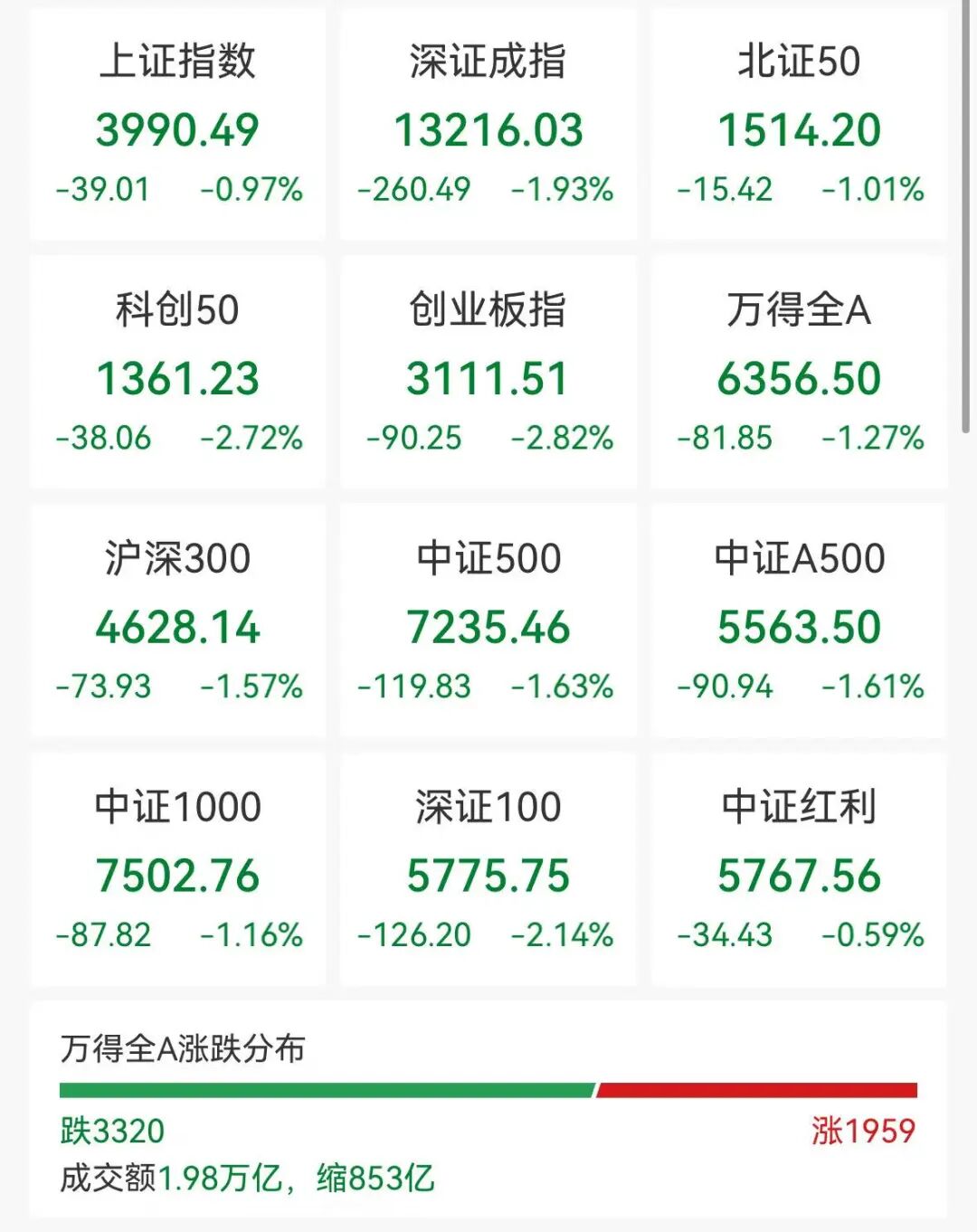
Market Performance - The Sci-Tech Innovation Board indices opened significantly lower on November 14, with the Sci-Tech Comprehensive Index closing at 1602.11 points, down 1.84%, and the Sci-Tech 50 Index at 1361.23 points, down 2.72% [1][2] - The total trading volume for the Sci-Tech Comprehensive Index was approximately 185.6 billion yuan, showing a slight decrease compared to the previous trading day [1][2] Stock Performance - A total of 394 stocks on the Sci-Tech Board declined, accounting for about 66.55% of the total [1] - In specific sectors, stocks related to lithium batteries and the new energy industry, such as Huasheng Lithium Battery and CITIC Bo, remained relatively strong, while storage stocks like Baiwei Storage and Purun Co. experienced significant declines, negatively impacting the semiconductor sector [1] Weekly Summary - For the week from November 10 to 14, the Sci-Tech Comprehensive Index fell by 2.30%, and the Sci-Tech 50 Index decreased by 3.85% [2] - On November 14, the average decline for 592 stocks on the Sci-Tech Board was 0.88%, with an average turnover rate of 2.77% and a total trading volume of 185.6 billion yuan [2] Individual Stock Highlights - Jindike saw a significant increase, closing with a 20% limit up, marking the highest gain [3] - Baiwei Storage recorded the largest decline, falling by 10.96% [3] Trading Activity - The stock with the highest trading volume was SMIC, with a turnover of 9.433 billion yuan [4] - The stock with the lowest trading volume was *ST Guandian, with a turnover of 1.16706 million yuan [4] Turnover Rate - Kangpeng Technology had the highest turnover rate at 39.46% [5] - Zhongfu Shenying had the lowest turnover rate at 0.17% [5]


佰维存储跌10.96% 中泰证券昨刚喊买入就跌
Zhong Guo Jing Ji Wang· 2025-11-14 07:40
11月13日,中泰证券(600918)股份有限公司研究员王芳、杨旭、康丽侠发布研报《佰维存储 (688525):Q3利润亮眼存储涨价+AI眼镜+先进封装驱动发展》称,此前预计25-27年归母净利润为 4.6/6.8/9.0亿元,考虑股份支付费用影响,调整为25-27年归母净利润为3.5/6.8/9.0亿元,PE估值 168/87/65倍,维持"买入"评级。 中国经济网北京11月14日讯佰维存储(688525.SH)今日收报127.08元,跌幅10.96%。 ...

沪指失守4000点,存储器大回调,多股跌超9%,海南、福建板块大爆发
2 1 Shi Ji Jing Ji Bao Dao· 2025-11-14 07:34
Market Overview - The A-share market experienced a day of volatility, with the Shanghai Composite Index falling by 0.97% and closing below 4000 points, while the Shenzhen Component Index and the ChiNext Index dropped by 1.93% and 2.82% respectively [1][2] - The total trading volume in the Shanghai and Shenzhen markets was 1.96 trillion yuan, a decrease of 85.3 billion yuan compared to the previous trading day [1] Sector Performance - The market saw over 3300 stocks decline, indicating a broad-based sell-off [3] - The lithium battery sector continued its strong performance, with stocks like Fujian Holdings (002083) achieving a seven-day limit-up and Shida Shenghua (603026) hitting a three-day limit-up [3] - The gas sector also showed resilience, with Shouhua Gas (300483) reaching a 20% limit-up [3] - Conversely, the computing hardware sector faced a collective pullback, and the CPO concept stocks experienced fluctuations [3] Memory Chip Sector - The memory chip sector faced significant declines, with stocks such as Tongyou Technology (300302) and Baiwei Storage dropping over 10% [5] - The memory index fell by 5.93%, closing at 3527.86 points [6] Regional Highlights - The Hainan Free Trade Zone is set to officially launch its full island closure operation on December 18, 2025, which is expected to enhance regional economic development and industrial upgrades [7][9] - The new policies will expand the range of zero-tariff goods from 1900 to approximately 6600 items, covering about 74% of products, and will optimize tax policies to reduce costs for enterprises [7][9]


科创50指数日内跌超2%,佰维存储跌近10%领跌成分股。
Xin Lang Cai Jing· 2025-11-14 06:34
Core Viewpoint - The Sci-Tech Innovation 50 Index experienced a decline of over 2% during the day, with Baiwei Storage leading the drop among constituent stocks, falling nearly 10% [1] Group 1 - The Sci-Tech Innovation 50 Index is a key indicator of the performance of technology-focused companies [1] - Baiwei Storage's significant decline indicates potential challenges within the storage sector [1]
A股异动丨铠侠暴雷,存储芯片股集体重挫,佰维存储跌11%
Ge Long Hui A P P· 2025-11-14 03:54
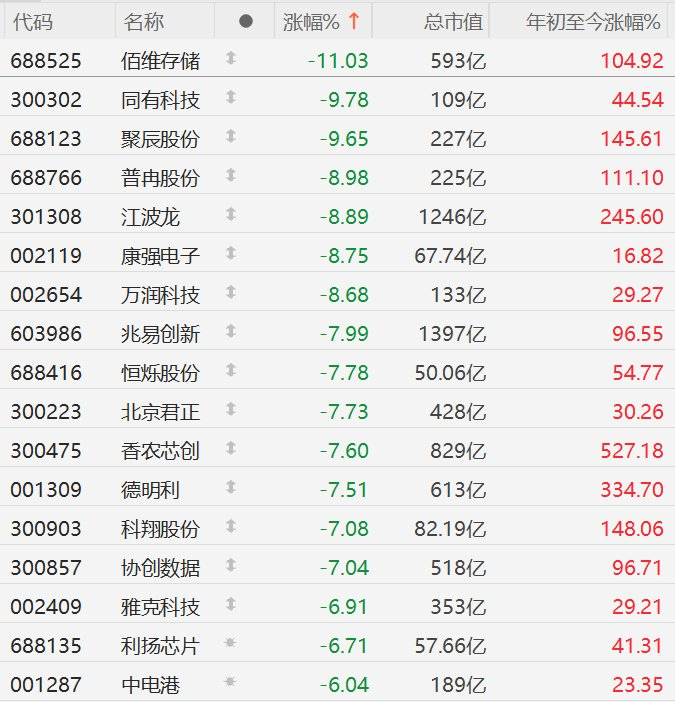
Core Viewpoint - Kioxia's poor performance has negatively impacted the A-share market, leading to a significant decline in storage chip concept stocks, raising concerns about the overall health of the storage industry [1] Company Performance - Kioxia's adjusted net profit for the second fiscal quarter plummeted over 60% year-on-year, amounting to 41.7 billion yen (approximately 284 million USD), a substantial drop compared to the same period last year [1] - The company is facing dual pressures of declining revenue and rising costs, which has triggered market worries regarding the storage industry's outlook [1] Market Reaction - Following Kioxia's earnings report, several storage-related stocks in the A-share market experienced sharp declines, with notable drops including: - Baiwei Storage down 11% - Tongyou Technology and Jucheng Co. down over 9% - Other companies like Purang Co., Jiangbolong, and Kangqiang Electronics down over 8% [2] - The overall market sentiment reflects a lack of confidence in the storage sector, influenced by Kioxia's performance [1][2] Pricing Mechanism Impact - Analysts suggest that Kioxia's disappointing results may be attributed to its fixed-price agreements for supplying mobile NAND chips to Apple, which prevented the company from benefiting from the significant increases in spot prices [1]


创新基因加速转化为增长动能 科创板公司前三季度整体业绩重拾升势
Shang Hai Zheng Quan Bao· 2025-11-13 17:55
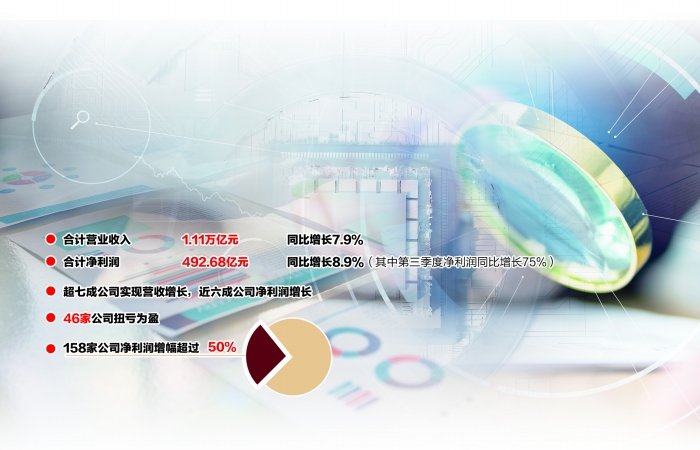
Core Insights - The overall performance of companies listed on the Sci-Tech Innovation Board (STAR Market) has shown a strong rebound in the first three quarters, with a significant year-on-year net profit growth of 75% in Q3 [2] - The focus on "hard technology" has led to increased R&D investments, particularly in key industries such as integrated circuits, artificial intelligence, and biomedicine, contributing to the foundation for high-level technological self-reliance [2] Performance Overview - In the first three quarters, STAR Market companies achieved a total revenue of 1.11 trillion yuan, a year-on-year increase of 7.9%, and a net profit of 49.268 billion yuan, up 8.9% [2] - Excluding four leading photovoltaic companies, overall revenue and net profit growth rates were 14.6% and 30.6%, respectively, indicating an amplified growth momentum [2] - Over 70% of companies reported revenue growth, and nearly 60% saw net profit increases, with 158 companies experiencing net profit growth exceeding 50% [2] Industry Highlights - The STAR Market's top enterprises and growth-oriented companies complement each other well, with the Sci-Tech 50 Index companies accounting for 46% of revenue and 50% of net profit [3] - The Sci-Tech 100 Index companies demonstrated high growth elasticity, with revenue and net profit increasing by 12% and 134%, respectively, becoming the "vanguard" of performance growth [3] R&D Investment - Total R&D investment by STAR Market companies reached 119.745 billion yuan, 2.4 times the net profit, with a median R&D intensity of 12.4%, leading A-share sectors [4] - The biomedicine sector saw revenue growth of 11% and net profit growth of 48%, driven by the rapid commercialization of innovative drugs [4] - Nine first-class new drugs were approved for market entry during the reporting period, with significant international business development transactions totaling over 13 billion USD [4] Growth of Emerging Companies - 35 unprofitable companies in the Sci-Tech Growth Layer reported a revenue increase of 39% and a significant reduction in net losses by 65% [5] - These companies are focusing on R&D with a median R&D intensity of 44.3%, indicating a promising development trend [5] Competitive Advantages in Key Industries - The integrated circuit industry, crucial for technological self-reliance, saw 121 related companies achieve a revenue growth of 25% and a net profit growth of 67% [6] - Major players like SMIC and Huahong Semiconductor maintained high capacity utilization rates, with record sales revenue [6] - The AI industry has emerged as a new growth pillar, with significant revenue increases across the supply chain, particularly in computing and data transmission sectors [7] Renewable Energy Sector - In the photovoltaic sector, 17 related companies significantly reduced their net losses by 28% [7] - The lithium battery industry experienced a revenue growth of 7% and a net profit of 1.02 billion yuan, marking a return to profitability [7]


实探华强北:内存条炒成“黑色金条” 有人待价而沽有人开始回笼资金
Zheng Quan Shi Bao· 2025-11-13 17:49
Core Viewpoint - The memory market is experiencing a significant price surge, with some products seeing price increases of up to three times since April 2023, driven by supply shortages and rising demand from AI infrastructure investments [1][2][4]. Price Surge Details - Prices for various memory products have doubled or tripled, with a 64GB LPDDR5 memory module increasing from around 1000 yuan to 4200 yuan [2]. - The price of 16GB DDR4 memory has risen from under 200 yuan to over 400 yuan as of November 13, 2023 [2]. - Many shop owners in Huaqiangbei have seen their paper wealth increase by millions within six months due to this price surge [2]. Market Dynamics - The price increase is attributed to a mismatch between supply and demand, primarily driven by the expansion of AI data centers [4][6]. - Major tech companies like Alibaba and Microsoft are significantly increasing their investments in AI infrastructure, further driving demand for high-capacity memory products [4][5]. - The demand for memory in AI servers is reported to be 3 to 8 times higher than that of regular servers, leading to tight supply for high-end storage products [4]. Supply Chain Adjustments - Major memory manufacturers such as SK Hynix, Samsung, and Micron are prioritizing high-margin products and reducing production of lower-margin items like DDR4 [6]. - The current price increase cycle is expected to last until supply and demand reach equilibrium, potentially extending for 1 to 2 years [6]. Impact on Consumer Electronics - The rising prices of memory products are affecting the costs of consumer electronics, leading to increased prices for assembled computers and smartphones [7]. - For instance, the price of the Redmi K90 series smartphones has increased significantly due to higher storage costs, with some models seeing price hikes of up to 600 yuan [7]. - Companies like Xiaomi have publicly acknowledged the impact of rising memory costs on their pricing strategies [7]. Opportunities for Domestic Manufacturers - The current shortage in the memory market presents a valuable opportunity for domestic manufacturers to capture market share as global supply chains face disruptions [8]. - The low domestic production rates of NAND and DRAM products indicate potential for growth as local firms enhance their technology and product offerings [8].

佰维存储现2笔大宗交易 合计成交36.66万股
Zheng Quan Shi Bao Wang· 2025-11-13 13:59
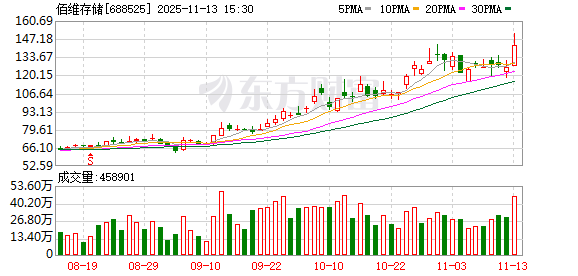
佰维存储11月13日大宗交易平台共发生2笔成交,合计成交量36.66万股,成交金额4631.62万元。成交价 格均为126.34元,相对今日收盘价折价11.48%。从参与大宗交易营业部来看,机构专用席位共出现在2 笔成交的买方或卖方营业部中,合计成交金额为4631.62万元,净买入4631.62万元。 进一步统计,近3个月内该股累计发生23笔大宗交易,合计成交金额为3.51亿元。 证券时报·数据宝统计显示,佰维存储今日收盘价为142.73元,上涨13.21%,日换手率为13.01%,成交 额为65.57亿元,全天主力资金净流出1.68亿元,近5日该股累计上涨11.51%,近5日资金合计净流出2.93 亿元。 两融数据显示,该股最新融资余额为21.09亿元,近5日增加1.82亿元,增幅为9.47%。 机构评级来看,近5日共有2家机构给予该股评级,预计目标价最高的是国泰海通证券,11月12日国泰海 通证券发布的研报预计公司目标价为151.85元。 据天眼查APP显示,深圳佰维存储科技股份有限公司成立于2010年09月06日,注册资本46670.8301万人 民币。(数据宝) 11月13日佰维存储大宗交易一览 | ...
科创板今日大宗交易成交8.33亿元
Zheng Quan Shi Bao Wang· 2025-11-13 13:59
Summary of Key Points Core Viewpoint - On November 13, a total of 20 stocks from the STAR Market experienced block trading, with a cumulative transaction amount of 833 million yuan, indicating active trading in the sector [1]. Group 1: Trading Activity - There were 52 block trades executed, with a total trading volume of 11.58 million shares [1]. - The stock with the highest transaction amount was Zhongwei Company, which had 6 block trades totaling 1.5856 million shares and a transaction amount of 442 million yuan [1]. - Other notable stocks in terms of transaction amounts included Aojie Technology and Baiwei Storage, with block trading amounts of 124 million yuan and 46.3162 million yuan, respectively [1]. Group 2: Price and Discount Analysis - Among the stocks that underwent block trading, the highest discount rates relative to the closing prices were observed in Lexin Technology, Jiahua Technology, and Yunyong Technology, with discount rates of 20.81%, 19.58%, and 15.64% respectively [1]. - The average increase for the stocks involved in block trading was 3.47%, with 419 stocks rising, representing 70.78% of the total [1]. Group 3: Institutional Participation - Institutional trading accounted for 17 transactions involving 7 stocks, with the highest buying amounts in Zhongwei Company, Aojie Technology, and Baiwei Storage, at 126 million yuan, 75.3651 million yuan, and 46.3162 million yuan respectively [2]. - In terms of net capital flow, 9 stocks saw net inflows, with the highest inflows in Huasheng Lithium, Kangpeng Technology, and Hanwujing, amounting to 88.8353 million yuan, 86.4675 million yuan, and 80.2518 million yuan respectively [2]. Group 4: Stock Performance - The STAR 50 Index rose by 1.44% on the same day, reflecting positive market sentiment [1]. - The top gainers among the stocks involved in block trading included Kangpeng Technology, Huasheng Lithium, and Baiwei Storage, with increases of 20.02%, 20.00%, and 13.21% respectively [1]. - Conversely, the largest declines were seen in Hangzhou Kelin, Jiahua Technology, and Aerospace Hongtu, with decreases of 4.46%, 0.52%, and 0.28% respectively [1].


【太平洋科技-每日观点&资讯】(2025-11-14)
远峰电子· 2025-11-13 12:57
Market Performance - The main board led the gains with notable increases in stocks such as Shiji Information (+10.02%), Yongding Co. (+9.99%), and Data Port (+9.99%) [1] - The ChiNext board saw significant growth with stocks like Zhidema (+20.00%) and Chaoping San (+13.68%) [1] - The Sci-Tech Innovation board was led by Baiwei Storage (+13.21%) and Changguang Huaxin (+9.60%) [1] - Active sub-industries included SW Portal Websites (+2.98%) and SW Communication Application Value-Added Services (+2.68%) [1] Domestic News - Yiwentech launched the second generation of AR glasses, Even G2, featuring advanced specifications such as 640×350 resolution and 1200 nits peak brightness, with a 75% increase in display area compared to the previous generation [1] - Baidu announced the new Kunlun chip M100, optimized for large-scale reasoning scenarios, set to launch in 2026, and the M300 for ultra-large multimodal model training, expected in 2027 [1] - Cambricon announced its embrace of the FlagOS ecosystem, an open-source software stack supporting over 20 mainstream AI chip models [1] - UMC and Metalenz have entered mass production of the Polar ID facial recognition solution, which significantly reduces costs and complexity compared to existing methods [1] Company Announcements - SMIC reported Q3 2025 revenue of 17.162 billion yuan, a 6.9% increase quarter-on-quarter, with a gross margin of 25.5%, up 4.8 percentage points [3] - Hengyin Technology announced a significant shareholder reduction of 5% through block trading, with 5.7 million shares sold, representing 1.10% of total shares [3] - Hengshuo Co. completed its share reduction plan, selling 573,857 shares, which is 0.69% of total shares [3] - Zhixin Electronics received a patent for a heat shrink device, enhancing its production automation capabilities [3] Overseas News - Infineon reported a fiscal year 2025 revenue of 14.662 billion euros, a 2% year-on-year decline, with a profit of 2.56 billion euros and a profit margin of 17.5% [1] - Microchip Technology launched a new series of optical Ethernet PHY transceivers, offering 25 Gbps and 10 Gbps options [1] - The global smartphone panel market saw a significant quarterly growth, with Q3 2025 shipments reaching 580 million units, a year-on-year increase of approximately 5.2% [1] - Kioxia expects NAND demand to exceed supply, projecting a 15% growth in bit shipments for fiscal year 2025 [1]