Hymson(688559)

Search documents
“太空光伏”概念走热 部分企业触发交易异常 业内:目前仍处于0到1阶段
Di Yi Cai Jing· 2026-01-30 12:05
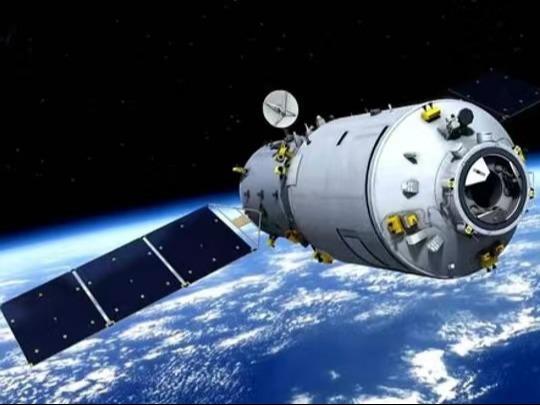
Core Viewpoint - The "space photovoltaic" concept has become a major focus in the secondary market, significantly influenced by Tesla CEO Elon Musk's endorsements, with the relevant index rising 19.83% in the past month, outperforming the CSI 300 index by 18.65% [1] Market Performance - The space photovoltaic concept index has shown strong performance, with notable stock increases: JunDa Co., Ltd. up 84.62%, Mingyang Smart Energy up 60.22%, Jiejia Weichuang up 44.04%, Dier Laser up 41.54%, and Tuori New Energy up 35.94% over the past 20 days [1] - Several photovoltaic companies have experienced significant stock price surges, triggering trading anomalies, such as Dongfang Risheng and Laplace, both exceeding a cumulative price deviation of 30% within a short period [2] Industry Insights - Space photovoltaic energy refers to utilizing solar photovoltaic technology in outer space to generate and supply energy, with the potential to transmit power wirelessly to Earth or supply satellites and space stations [2] - The rationale for space photovoltaics includes abundant sunlight in space and the feasibility of deploying photovoltaic components on satellites, with near-Earth satellites experiencing over 60% sunlight exposure [2] Challenges in Industrialization - Despite the rising stock prices, the industry faces significant uncertainties regarding the industrialization of space photovoltaics, including technological maturity and economic viability for large-scale commercialization [3] - Current applications of space photovoltaics are still exploratory, with many companies in the secondary market not yet supplying products to commercial space satellite companies [3] - Analysts indicate that space photovoltaics are in the early stages of development, requiring validation of technology and economic benefits for large-scale applications [3] Technological Considerations - Gallium arsenide is the mainstream material for space photovoltaics, but its high cost (approximately 1000 RMB per watt) poses challenges for large-scale deployment [4] - Perovskite technology shows promise but has stability concerns in extreme space conditions, necessitating further validation [4] - Multiple technological routes are being explored, with a focus on solving power and cost issues as critical for the commercialization of space energy solutions [4] Cost Analysis - Current estimates suggest that the cost of electricity from space photovoltaics is around $2-3 per kilowatt-hour, compared to $0.03-0.05 per kilowatt-hour for ground-based photovoltaics, indicating a potential cost disparity of up to 100 times [5] - Companies like Trina Solar and HaiMuxing express optimism about the future of space photovoltaics, citing collaborations with leading aerospace institutions and advancements in reusable rocket technology [5] Commercialization Timeline - Predictions indicate that space photovoltaics may gradually commercialize over the next 10 to 15 years, contingent on decreasing launch costs and breakthroughs in battery technology [6]




“太空光伏”概念走热,部分企业触发交易异常,业内:目前仍处于0到1阶段
Di Yi Cai Jing Zi Xun· 2026-01-30 11:37
Core Viewpoint - The "space photovoltaic" concept has gained significant attention in the secondary market, largely influenced by Tesla CEO Elon Musk's endorsements, with the relevant index rising 19.83% in the past month, outperforming the CSI 300 index by 18.65% [1] Market Performance - The space photovoltaic concept index has seen a notable increase, with specific stocks like JunDa Co., Ltd. rising by 84.62%, Mingyang Smart Energy by 60.22%, and Jiejia Weichuang by 44.04% over the past 20 days [1] - Several photovoltaic companies have experienced stock price surges, triggering trading anomalies, such as Dongfang Risheng and Laplace, which saw price deviations exceeding 30% [3] Technology and Feasibility - Space photovoltaic energy involves utilizing solar photovoltaic technology in outer space to generate and supply energy, with the potential for direct power transmission to Earth [3] - The advantages of space photovoltaic systems include abundant sunlight and reduced atmospheric interference, making them a viable option for satellite power supply [3] Industry Challenges - Despite the market enthusiasm, the space photovoltaic industry faces significant uncertainties regarding technological maturity, long-term reliability, and economic viability for large-scale commercialization [4][5] - Current applications are still in the exploratory phase, with many companies not yet supplying products to commercial space satellite firms [5] Technological Development - Various technological routes are being explored, with gallium arsenide being the mainstream material, but its high cost poses challenges for large-scale deployment [5][6] - The cost of space photovoltaic energy is currently estimated at $2-3 per kilowatt-hour, significantly higher than ground-based photovoltaic costs of $0.03-0.05 per kilowatt-hour, indicating a need for cost reduction and efficiency improvements [6] Future Outlook - Companies like Trina Solar and HaiMuxing express optimism about the future of space photovoltaic technology, citing collaborations with leading aerospace institutions and advancements in reusable rocket technology [6][7] - The commercial viability of space photovoltaic systems is projected to develop over the next 10 to 15 years, contingent on decreasing launch costs and breakthroughs in battery technology [7]

国泰海通证券每日报告精选-20260129
GUOTAI HAITONG SECURITIES· 2026-01-29 08:13
Group 1: Macroeconomic Insights - The Federal Reserve paused interest rate cuts, with a 10:2 vote indicating internal disagreement on future rate adjustments[3] - The Fed expressed optimism about the U.S. economy and employment, although labor supply growth has stagnated[3] - Inflation is not seen as a major issue, with expectations of a peak impact from tariffs on goods in 2026[3] Group 2: Silver Market Analysis - Historical silver price surges occurred in four distinct phases, with the latest driven by geopolitical risks and monetary system instability[6] - Industrial demand for silver is expected to provide strong support for prices, particularly from emerging sectors like photovoltaics and electric vehicles[7] - Short-term price volatility is influenced by speculative trading and ETF mechanisms, with potential for significant price fluctuations[8] Group 3: Industry Trends - 2026 is designated as the "Year of Data Element Value Release," with policies aimed at enhancing data flow and market ecology[10] - The AI sector is driving a massive increase in data consumption, with daily token usage rising from 100 billion to over 30 trillion in just 18 months[11] - The 3D printing market is projected to grow from $21.9 billion in 2024 to $115 billion by 2034, with a CAGR of 18%[19] Group 4: Company-Specific Reports - China Railway (601390) maintains a target price of 9.07 CNY, with a projected EPS of 0.98 CNY for 2025, reflecting a 13% decline year-on-year[24] - Qingdao Bank (002948) reported a 22% year-on-year increase in net profit, with a non-performing loan ratio dropping below 1%[34] - Longying Precision (300115) is expected to see stable growth in its core business, with a target price of 54.45 CNY based on a projected EPS of 0.83 CNY for 2026[30]





海目星(688559)25年业绩预告点评:25Q4业绩扭亏 多领域持续发力
Xin Lang Cai Jing· 2026-01-28 10:29
Core Viewpoint - The company faced overall pressure on its performance in 2025, but it turned profitable in Q4 2025, indicating a potential turning point. With sufficient orders on hand and ongoing expansion in non-lithium battery sectors, future performance is expected to improve [1]. Group 1: Investment Highlights - The company's performance in 2025 was impacted by cyclical fluctuations in downstream industries, but it achieved profitability in Q4 2025, marking a turning point. Given the company's leading position in domestic lithium battery laser equipment and a robust order backlog, along with active expansion into non-lithium sectors, significant performance elasticity is anticipated in the future. Revenue projections for 2025-2027 are estimated at 4.372 billion, 6.012 billion, and 7.482 billion yuan respectively, with a target price set at 88.22 yuan based on a cautious 5x PS valuation for 2025 [2][3]. - The company released a performance forecast for 2025, estimating a net profit attributable to shareholders of between -910 million and -850 million yuan, with a non-recurring net profit forecast of -980 million to -920 million yuan. Quarterly losses narrowed in Q3 2025, and Q4 is expected to turn profitable, with an estimated net profit of 3 million to 63 million yuan [2]. Group 2: Factors Affecting Performance - The primary reasons for the losses in 2025 include overcapacity in the lithium battery and photovoltaic industries leading to sustained price pressure, increased difficulty in cost control, and a decline in the profitability of core business operations. The company also made provisions for asset impairment losses based on a cautious approach, which directly impacted current profits. Additionally, rising expenses for overseas market expansion and strategic R&D have temporarily eroded profit margins [3]. - As the lithium battery market continues to recover, the company's order scale has rebounded significantly, with new orders of approximately 4.421 billion yuan (including tax) in the first half of 2025, representing a year-on-year increase of 117.5%. As of June 30, 2025, the backlog of orders stood at approximately 10.085 billion yuan (including tax), up 46% year-on-year [3]. Group 3: Growth Opportunities - The company is actively diversifying across multiple sectors: 1. In the photovoltaic sector, it is collaborating with leading solar cell manufacturers to develop perovskite tandem batteries, which are expected to enhance photoelectric efficiency and weight-to-power ratios, with potential applications in low-orbit satellites and space computing power generation [4]. 2. In the solid-state battery sector, the company is the first in the industry to pursue dual technology routes of "oxide electrolyte + lithium metal anode" and "sulfide electrolyte + silicon-carbon anode," and it has secured commercial mass production orders for solid-state battery equipment [4]. 3. In other sectors, the company has received orders for laser drilling equipment in HDI and PCB fields, which are expected to benefit from the growth of the AI computing industry [4].
海目星股价跌5.01%,汇安基金旗下1只基金重仓,持有10.55万股浮亏损失33.85万元
Xin Lang Cai Jing· 2026-01-28 06:10
Group 1 - The core point of the news is that HaiMuxing's stock price has dropped by 5.01%, currently trading at 60.80 CNY per share, with a total market capitalization of 15.064 billion CNY [1] - HaiMuxing Laser Technology Group Co., Ltd. is based in Longhua District, Shenzhen, Guangdong, and was established on April 3, 2008, with its IPO on September 9, 2020 [1] - The company's main business involves the research, design, production, and sales of laser and automation equipment across various sectors, including consumer electronics, power batteries, and sheet metal processing [1] Group 2 - The revenue composition of HaiMuxing includes 60.28% from power battery laser and automation equipment, 18.04% from 3C consumer electronics laser and automation equipment, 10.52% from sheet metal laser cutting equipment, 7.98% from the photovoltaic industry, and 3.17% from other sectors [1] - From the perspective of fund holdings, Hui'an Fund has a significant position in HaiMuxing, with its Hui'an Quantitative Selected A fund holding 105,500 shares, representing 7.58% of the fund's net value, making it the seventh-largest holding [2] - The Hui'an Quantitative Selected A fund has experienced a floating loss of approximately 338,500 CNY today [2]
海目星:25 年业绩预告点评:25Q4 业绩扭亏,多领域持续发力-20260128
GUOTAI HAITONG SECURITIES· 2026-01-28 05:45
Investment Rating - The investment rating for the company is "Buy" [6][19] Core Views - The company's performance in 2025 is under pressure, but it is expected to turn profitable in Q4 2025, indicating a potential inflection point. The company has a sufficient order backlog and is expanding in non-lithium sectors, which may lead to improved performance in the future [2][12]. Financial Summary - Total revenue for 2023 is projected at 48.05 billion, with a decrease to 45.25 billion in 2024, followed by a further decline to 43.72 billion in 2025. However, revenue is expected to rebound to 60.12 billion in 2026 and 74.82 billion in 2027, reflecting a growth rate of 37.5% and 24.4% respectively [4][13]. - The net profit attributable to the parent company is forecasted to be 322 million in 2023, dropping to -163 million in 2024 and -857 million in 2025, before recovering to 483 million in 2026 and 803 million in 2027 [4][13]. - Earnings per share (EPS) is expected to be 1.30 in 2023, dropping to -0.66 in 2024 and -3.46 in 2025, then recovering to 1.95 in 2026 and 3.24 in 2027 [4][13]. - The return on equity (ROE) is projected to be 13.7% in 2023, declining to -5.1% in 2024 and -36.5% in 2025, before improving to 17.1% in 2026 and 22.1% in 2027 [4][13]. Market Data - The current stock price is 64.01, with a target price set at 88.22, indicating a potential upside [6][7]. - The market capitalization is approximately 15.86 billion, with a total share count of 248 million [7][8]. Summary of Business Outlook - The company is experiencing pressure due to cyclical fluctuations in downstream industries, but it is expected to achieve profitability in Q4 2025. The recovery is supported by a significant increase in orders, particularly in the lithium battery sector, with new orders amounting to approximately 4.42 billion, a year-on-year increase of 117.5% [12][13]. - The company is diversifying its business across multiple sectors, including photovoltaic technology and solid-state batteries, which are anticipated to contribute to future growth [12][13].
海目星(688559):25 年业绩预告点评:25Q4 业绩扭亏,多领域持续发力
GUOTAI HAITONG SECURITIES· 2026-01-28 05:17
Investment Rating - The investment rating for the company is "Buy" [6][19] Core Views - The company's performance in 2025 is under pressure, but it is expected to turn profitable in Q4 2025, indicating a potential inflection point. The company has a sufficient order backlog and is expanding in non-lithium sectors, which may lead to improved performance in the future [2][12] Financial Summary - Total revenue for 2023 is projected at 4,805 million, with a decrease to 4,525 million in 2024, followed by a further decline to 4,372 million in 2025. However, revenue is expected to rebound to 6,012 million in 2026 and reach 7,482 million in 2027, reflecting a growth rate of 37.5% and 24.4% respectively [4][13] - The net profit attributable to the parent company is forecasted to be 322 million in 2023, but it is expected to decline to -163 million in 2024 and -857 million in 2025. A recovery is anticipated in 2026 with a net profit of 483 million and further growth to 803 million in 2027 [4][13] - Earnings per share (EPS) is expected to be 1.30 in 2023, dropping to -0.66 in 2024 and -3.46 in 2025, before recovering to 1.95 in 2026 and 3.24 in 2027 [4][13] - The return on equity (ROE) is projected to be 13.7% in 2023, turning negative at -5.1% in 2024 and -36.5% in 2025, but recovering to 17.1% in 2026 and 22.1% in 2027 [4][13] Order and Market Dynamics - The company has seen a significant increase in new orders, with approximately 44.21 billion in new orders (including tax) in the first half of 2025, representing a year-on-year increase of 117.5%. As of June 30, 2025, the order backlog stands at about 100.85 billion (including tax), up 46% year-on-year [12][13] - The decline in profitability in 2025 is attributed to overcapacity in the lithium and photovoltaic industries, leading to sustained price pressure on products. Additionally, increased costs and asset impairment losses have negatively impacted profits [12][13] Business Expansion - The company is actively expanding into multiple sectors, including: 1. In the photovoltaic sector, it is collaborating with leading manufacturers to develop perovskite tandem batteries, which are expected to enhance efficiency and be used in low-orbit satellites and space computing power generation [12] 2. In the solid-state battery sector, the company is the first in the industry to pursue dual technology routes and has secured commercial production orders for solid-state battery equipment [12] 3. In other areas, the company has received orders for laser drilling equipment in HDI and PCB sectors, which are expected to benefit from the growth in AI computing power [12]
海目星2025年预亏超8.5亿:毛利率陷历史低位,四季度扭亏难消分歧|看财报
Tai Mei Ti A P P· 2026-01-27 11:13
Core Viewpoint - The company, HaiMuxing, is expected to report a net loss of 850 million to 910 million yuan for the fiscal year 2025, indicating a further deterioration in performance compared to the previous year due to multiple factors including declining gross margins and increased impairment provisions [2][3] Group 1: Financial Performance - The gross margin has significantly declined from 34.22% in Q3 2022 to 17.76% in Q3 2025, representing a drop of over 48% [3] - The company reported a gross margin of 30.50% for the entire year of 2022, which decreased to 15.20% in the first half of 2025, with a slight recovery to 17.76% in the first three quarters of 2025 [3] - The company has accumulated over 500 million yuan in impairment losses in the first three quarters of 2025, attributed to inventory write-downs and bad debts [5] Group 2: Operational Challenges - The company faces increased operational challenges, reflected in rising inventory turnover days, which reached 526.73 days in 2025 compared to 335.23 days in 2022, and accounts receivable turnover days, which increased to 186 days from 75.61 days in 2022 [5] - The capital liability ratio has risen to 82.36% by Q3 2025, indicating increased debt pressure due to declining operational efficiency and ongoing investments in R&D and overseas expansion [6] Group 3: Market Conditions and Future Outlook - The company has reported a potential turnaround in Q4 2025, with an expected net profit of 2.518 million to 62.52 million yuan, marking a year-on-year increase of 100.76% to 118.92% [7] - The company has over 10 billion yuan in orders on hand, which may support performance in 2026, but confirmation of a sustainable recovery will depend on Q1 2026 data [7] - The company is exploring new technologies in collaboration with industry leaders, but faces challenges in resource allocation across multiple business segments and the need for effective market positioning [8]

招商证券:锂电池新一轮扩产进入加速阶段 锂电设备厂商有望迎来新增量
智通财经网· 2026-01-27 06:47
Group 1 - The lithium battery industry is entering an accelerated expansion phase, with major companies starting a new round of capital expenditures in 2025, and 2026 is expected to see record-high capex investments [1] - The demand for lithium batteries has consistently exceeded expectations in recent years, leading to order overflow from major manufacturers due to insufficient capacity, with an estimated additional production capacity of nearly 1 TWh expected in 2026 [1] - Major lithium battery manufacturers are currently initiating equipment tenders, with hundreds of GWh of orders already visible, and further orders of around 100 GWh are anticipated [1] Group 2 - Orders for lithium battery equipment have reached new highs, with most equipment manufacturers showing positive year-on-year growth in contract liabilities, and many have surpassed historical peaks [2] - The strong order situation in the lithium battery equipment sector is expected to continue into 2026, although profitability improvements may not be realized until 2026 [2] Group 3 - Progress has been made in the research and development of solid-state batteries, with a shift in focus towards cost reduction and efficiency improvements in equipment, laying the groundwork for future testing of solid-state batteries [3] - Major battery manufacturers are expected to begin constructing pilot lines for solid-state batteries in 2026, which will create additional demand and opportunities for equipment companies [3] Group 4 - Companies to watch in this sector include XianDao Intelligent (300450.SZ), XianHui Technology (688155.SH), LianYing Laser (688518.SH), HaiMuXing (688559.SH), DeLong Laser (688170.SH), ST YiFei (688646.SH), YingHe Technology (300457.SZ), HangKe Technology (688006.SH), and XinYuRen (688573.SH) [4]



自动化设备板块1月26日跌1.43%,海目星领跌,主力资金净流出18.67亿元
Zheng Xing Xing Ye Ri Bao· 2026-01-26 09:41
证券之星消息,1月26日自动化设备板块较上一交易日下跌1.43%,海目星领跌。当日上证指数报收于 4132.61,下跌0.09%。深证成指报收于14316.64,下跌0.85%。自动化设备板块个股涨跌见下表: 以上内容为证券之星据公开信息整理,由AI算法生成(网信算备310104345710301240019号),不构成投资建议。 | 代码 | 名称 | 主力净流入 (元) | 主力净占比 游资净流入(元) | | 游资净占比 散户净流入(元) | | 散户净占比 | | --- | --- | --- | --- | --- | --- | --- | --- | | 300024 | 机器人 | 1.21亿 | 5.43% | -3104.23万 | -1.39% | -8990.41万 | -4.03% | | 688097 | 博众精工 | 1.10亿 | 13.15% | 716.51万 | 0.86% | -1.17亿 | -14.01% | | 300461 | 田中精机 | 4561.10万 | 4.68% | -1122.20万 | -1.15% | -3438.90万 | -3.53% | ...