Shenzhen Energy(000027)

Search documents
深圳能源:拟投资建设深能涿鹿县65万千瓦风电项目 总投资49.58亿元
Xin Lang Cai Jing· 2025-08-27 14:05
Core Viewpoint - Shenzhen Energy announced plans to invest in a 650,000 kW wind power project in Zhuolu County, with a total investment of 4.958 billion yuan, aligning with the company's development strategy and enhancing its influence in the Beijing-Tianjin-Hebei region [1] Investment Details - The total investment for the wind power project is 4.958 billion yuan, with 992 million yuan sourced from the company's own funds, while the remaining amount will be financed through external funding [1] - The company plans to increase its capital by 500 million yuan to Northern Holdings, which in turn will inject 990 million yuan into Zhuolu Energy [1] Strategic Implications - This investment is expected to help optimize the energy structure in the Beijing-Tianjin-Hebei region, supporting the company's strategic goals and expanding its market presence [1]

深圳能源(000027) - 2025 Q2 - 季度财报
2025-08-27 13:45
深圳能源集团股份有限公司 2025 年半年度报告全文 深圳能源集团股份有限公司 2025 年半年度报告 2025 年 8 月 1 深圳能源集团股份有限公司 2025 年半年度报告全文 第一节 重要提示、目录和释义 公司董事会、监事会及董事、监事、高级管理人员保证半年度报告内容 的真实、准确、完整,不存在虚假记载、误导性陈述或者重大遗漏,并承担 个别和连带的法律责任。 公司负责人李英峰、主管会计工作负责人王超及会计机构负责人(会计主 管人员)敬红声明:保证本半年度报告中财务报告的真实、准确、完整。 除下列董事外,其他董事亲自出席了审议本次半年报的董事会会议 | 未亲自出席董事 | 未亲自出席董事 | 未亲自出席会议 | 被委托人姓名 | | --- | --- | --- | --- | | 姓名 | 职务 | 原因 | | | 黄朝全 | 副董事长 | 因公务安排 | 危剑鸣 | 本半年度报告涉及的未来计划、发展战略等前瞻性陈述不构成公司对投 资者的实质承诺,敬请投资者注意投资风险。 公司已在本报告中详细描述存在的燃料价格波动风险、境外投资环境风 险、应收账款管理风险、电力市场交易风险,敬请查阅本报告"第三节 ...
深圳能源:2025年上半年净利润17.05亿元,同比下降2.80%
Xin Lang Cai Jing· 2025-08-27 13:43
深圳能源公告,2025年上半年营业收入211.39亿元,同比增长6.77%。净利润17.05亿元,同比下降 2.80%。公司计划不派发现金红利,不送红股,不以公积金转增股本。 ...
申万公用环保周报(25/08/18~25/08/22):7月全国用电量首超万亿度,全球燃气供需偏宽松-20250825
Shenwan Hongyuan Securities· 2025-08-25 07:37
Investment Rating - The report provides a positive investment outlook for the electricity and natural gas sectors, recommending specific companies for investment based on their performance and market conditions [4][16]. Core Insights - In July, the national electricity consumption exceeded 1 trillion kWh for the first time, reaching 10,226 billion kWh, a year-on-year increase of 8.6% [4][7]. - The increase in electricity consumption was primarily driven by urban and rural residents, contributing 38% to the total growth, with significant contributions from the secondary and tertiary industries as well [8][9]. - The report highlights the impact of high temperatures on electricity demand, noting that July was the hottest month since 1961, which significantly boosted residential electricity usage [8][9]. - Natural gas prices in Europe have rebounded due to geopolitical tensions, while prices in Asia and the US have decreased, indicating a mixed market environment [16][20]. - The report emphasizes the potential for improved profitability in the biomass energy sector following the introduction of new methodologies for carbon emissions reduction [4][16]. Summary by Sections Electricity - July's total electricity consumption reached 10,226 billion kWh, marking a historic milestone with an 8.6% year-on-year growth [4][7]. - The first, second, and third industries, along with urban and rural residents, contributed to the overall electricity consumption growth, with the second industry showing a recovery in electricity usage [8][9]. - Recommendations include investing in hydropower, green energy, nuclear power, and thermal power companies such as Guodian Power and Huaneng International [14][15]. Natural Gas - The report notes a stable supply-demand balance in the natural gas market, with US prices dropping to $2.76/mmBtu, while European prices have seen fluctuations due to geopolitical risks [16][20]. - Recommendations for investment include companies in the city gas sector and integrated natural gas traders, highlighting firms like Kunlun Energy and New Hope Energy [41][42]. Environmental Sector - The introduction of new methodologies for biomass energy projects is expected to enhance profitability, with a focus on companies like Evergreen Group and China Everbright [4][16]. Market Performance - The report reviews market performance from August 18 to August 22, indicating that the gas, public utility, electricity, and environmental sectors underperformed compared to the Shanghai and Shenzhen 300 index [43][44].





申万公用环保周报:7月全国用电量首超万亿度,全球燃气供需偏宽松-20250825
Shenwan Hongyuan Securities· 2025-08-25 05:57
Investment Rating - The report maintains a positive outlook on the electricity and gas sectors, indicating a favorable investment environment [5]. Core Insights - In July, the national electricity consumption exceeded 1 trillion kWh for the first time, reaching 10,226 billion kWh, a year-on-year increase of 8.6% [10][11]. - The increase in electricity consumption was primarily driven by urban and rural residents, contributing 38% to the total growth, while the secondary and tertiary industries contributed 33% and 25%, respectively [11]. - The report highlights the impact of high temperatures in July, which were 1.3°C above the historical average, leading to increased electricity demand from residential sectors [11]. - In the gas sector, European gas prices have rebounded due to geopolitical tensions, while Asian and US gas prices have declined [19][30]. - The report suggests that the gas supply-demand balance remains loose, with US gas production at historical highs, contributing to lower prices [22][23]. Summary by Sections 1. Electricity: July National Electricity Consumption Exceeds 1 Trillion kWh - The national electricity consumption reached 10,226 billion kWh in July, marking a historic milestone [10]. - The first industry saw a 20.2% increase in electricity consumption, while the second and third industries grew by 4.7% and 10.7%, respectively [12]. - Cumulative electricity consumption from January to July was 58,633 billion kWh, a 4.5% year-on-year increase [14]. 2. Gas: Gas Supply-Demand Remains Loose, Geopolitical Tensions Affect European Gas Prices - As of August 22, the Henry Hub spot price in the US was $2.76/mmBtu, a weekly decrease of 7.19% [19]. - The TTF spot price in Europe rose to €33.10/MWh, reflecting an 8.17% increase due to geopolitical tensions [20]. - The report notes that European gas inventories are significantly lower than last year and the five-year average, raising concerns about supply stability [30]. 3. Weekly Market Review - The report indicates that the gas, public utilities, electricity, and environmental sectors underperformed relative to the CSI 300 index during the period from August 18 to August 22 [47]. 4. Company and Industry Dynamics - The report mentions the release of a notice regarding the bidding arrangement for new energy projects in Gansu Province, indicating ongoing developments in the renewable energy sector [54]. - Key announcements from companies such as Guodian Power and Kunlun Energy highlight their financial performance and strategic initiatives [55][58]. 5. Key Company Valuation Table - The report includes a valuation table for key companies in the public utility sector, indicating buy ratings for several firms, including China Nuclear Power and Huaneng International [59].


深圳能源:“闯”进垃圾堆,“试”出新路子
Ren Min Wang· 2025-08-25 02:09
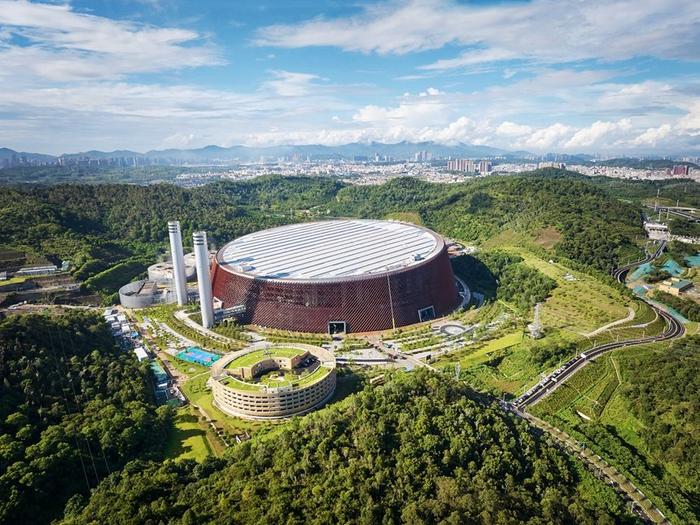
Core Insights - Shenzhen has pioneered the waste-to-energy industry in China, achieving significant milestones in waste management and energy production [2][4][5] - The city has transitioned from landfill-based waste disposal to full-scale incineration, establishing itself as a model for urban waste management [2][6] - Shenzhen Energy Group has played a crucial role in developing and expanding waste incineration projects across the country, with a total of 54 projects in 21 provinces by the end of 2024 [2][8] Group 1: Historical Development - Shenzhen built China's first modern waste incineration plant in 1985, marking the beginning of its journey in waste management [4][5] - The establishment of Shenzhen Energy in 2000 and subsequent projects led to the development of multiple waste-to-energy plants, including the Nanshan, Yantian, and Baoan plants [5][6] - By 2006, the Shenzhen government recognized waste treatment facilities as public infrastructure, which helped stabilize funding for waste management projects [6][9] Group 2: Expansion and Growth - Shenzhen Energy has expanded its operations beyond the city, establishing projects in various provinces, including Dalian, Yiwu, and Qinghai [8][9] - The company has significantly increased its waste processing capacity, ranking fourth nationally with a daily processing capacity of 50,515 tons by the end of 2024 [9][10] - The company has diversified its services to include the treatment of kitchen waste, sludge, and construction debris, creating a comprehensive waste management ecosystem [10][12] Group 3: Innovation and Technology - Shenzhen Energy has focused on domestic innovation, achieving significant advancements in waste incineration technology and equipment [12][13] - The company has developed a series of proprietary incineration technologies, resulting in 58 patents and a robust equipment manufacturing capability [13] - The establishment of modern energy eco-parks has helped mitigate the "not-in-my-backyard" effect, promoting community acceptance of waste management facilities [12][14] Group 4: Future Directions - Shenzhen Energy aims to continue enhancing its environmental services, contributing to a cleaner environment and sustainable urban development [14]

天风证券:料明年广东煤电机组整体电价水平相对平稳 建议关注粤电力A(000539.SZ)等标的
智通财经网· 2025-08-21 07:56
Core Viewpoint - The report from Tianfeng Securities highlights the significant differentiation in profitability among thermal power units in Guangdong Province due to low electricity prices, with high-capacity coal power units performing better. It also anticipates limited downward space for electricity prices by 2025, predicting a relatively stable overall electricity price level for coal power units in 2026 [1][2][3]. Group 1: Current Situation - The profitability of thermal power assets is showing clear differentiation under low electricity prices [1]. - There are significant regional differences in electricity demand within Guangdong, leading to variations in spot electricity prices based on local consumption capabilities [1]. Group 2: Asset Differentiation - High-efficiency coal power units, particularly those with a capacity of 1 million kilowatts, exhibit the best profitability, with net profit per kilowatt-hour exceeding 0.01 yuan, and some units reaching over 0.02 yuan [2]. - Smaller capacity units, such as those below 300,000 kilowatts, are generally facing losses, indicating higher profitability pressure [2]. Group 3: Outlook - The annual long-term electricity price in Guangdong is nearing its bottom, with limited potential for further decline. The average transaction price for electricity in 2025 is reported at 0.392 yuan per kilowatt-hour, with a downward adjustment of 15.67% [3]. - Starting in 2026, the capacity price for coal power units is set to be adjusted to 165 yuan per kilowatt per year, which is expected to stabilize overall profitability for coal power units in Guangdong [3].




天风证券:料明年广东煤电机组整体电价水平相对平稳 建议关注粤电力A等标的
Zhi Tong Cai Jing· 2025-08-21 07:53
Core Viewpoint - The report from Tianfeng Securities highlights a significant divergence in the profitability of coal-fired power plants in Guangdong Province due to low electricity prices, with high-capacity coal power units performing better. The long-term electricity price for coal power plants is expected to stabilize by 2026, with limited downside potential in the near term [1][2][3]. Group 1: Current Situation - The profitability of thermal power assets is showing clear differentiation under low electricity price conditions [1]. - There are significant regional differences in electricity demand within Guangdong, leading to variations in spot electricity prices based on local consumption capabilities [1]. - The spot electricity prices in the Pearl River Delta region are notably higher compared to other areas, with the western region facing more pricing pressure [1]. Group 2: Asset Differentiation - High-efficiency coal power units, particularly those with a capacity of 1 million kilowatts, exhibit the best profitability, with net profits exceeding 0.01 yuan/KWh [2]. - Smaller coal power units (30,000 kilowatts and below) are generally operating at a loss, indicating greater profitability pressure [2]. - Gas-fired power units face higher fuel costs and lower average utilization hours, contributing to their profitability challenges compared to coal units [2]. Group 3: Outlook - The annual long-term electricity price in Guangdong is nearing its bottom, with limited room for further decline [3]. - The average transaction price for electricity in Guangdong is 0.392 yuan/KWh, with a downward adjustment of 15.67%, indicating proximity to the price floor [3]. - Starting in 2026, the capacity price for coal power units is set to increase to 165 yuan per kilowatt per year, which is expected to support stable profitability for coal power plants in the long term [3].
如何看待广东火电资产盈利差异?
Tianfeng Securities· 2025-08-21 07:46
Investment Rating - Industry Rating: Outperform the market (maintained rating) [4] Core Viewpoints - The profitability of thermal power assets in Guangdong is differentiated under low electricity prices, with significant regional disparities in electricity demand affecting node prices [1][10] - High-efficiency coal power units are expected to perform better in profitability compared to lower capacity units, with 1 million kW units showing net profits above 0.01 yuan/KWh [2][30] - The average electricity price in Guangdong is expected to remain stable, with limited downward potential, while capacity prices are anticipated to increase, enhancing profitability for coal power units [3][51] Summary by Sections Current Situation: Profitability Differentiation of Thermal Power Assets - Regional differences in electricity demand lead to varying node prices across Guangdong, with the Pearl River Delta region experiencing higher prices compared to other areas [1][15] - Different capacity levels of coal power units exhibit significant differences in profitability, with 1 million kW units showing the best performance [2][30] - Gas power units face greater profitability pressure due to higher fuel costs and lower utilization hours compared to coal units [2][32] Outlook: Stable Electricity Price Expectations - The annual long-term electricity price in Guangdong is nearing its bottom, with limited room for decline, as the average transaction price for 2025 is projected at 0.392 yuan/KWh [3][51] - Capacity price adjustments are expected to positively impact the profitability of coal power units starting in 2026 [3][51] Investment Recommendations - Focus on high-capacity coal power units in Guangdong, as they are expected to maintain better profitability under the current low electricity price environment [4][30] - Recommended stocks include Baoneng New Energy, China Resources Power (H shares), Guangdong Power A, Guangzhou Development, Shenzhen Energy, and Suihengyun A [4]

电力天然气周报:长江电力延续高分红承诺,7月份我国天然气产量同比增长7.4%
Xin Lang Cai Jing· 2025-08-18 07:35
Market Performance - The utility sector declined by 0.5% as of August 15, underperforming the broader market, while the Shanghai-Shenzhen 300 index rose by 2.4% to 4202.35 [2][4] - The electricity sector fell by 0.78%, while the gas sector increased by 1.75% [2][4] Electricity Industry Data Tracking - As of August 15, the price of Qinhuangdao port thermal coal (Q5500) was 695 CNY/ton, up 17 CNY/ton week-on-week [2][3] - Thermal coal inventory at Qinhuangdao port increased by 200,000 tons week-on-week to 5.67 million tons as of August 15 [3][6] - Daily coal consumption at inland power plants decreased by 12.61% week-on-week to 3.576 million tons as of August 14 [6] - The outflow from the Three Gorges Reservoir decreased by 12.26% year-on-year and 0.73% week-on-week to 13,600 cubic meters per second as of August 15 [6] - The average price in the Guangdong electricity market increased by 29.40% week-on-week to 274.24 CNY/MWh as of August 9 [6] Natural Gas Industry Data Tracking - As of August 15, the national index for LNG ex-factory prices was 4,172 CNY/ton, down 15.60% year-on-year and 1.14% week-on-week [6] - The EU natural gas supply for week 29 of 2025 was 6.08 billion cubic meters, up 4.2% year-on-year but down 2.8% week-on-week [6][7] - Domestic natural gas consumption in June 2025 was 35.05 billion cubic meters, up 1.9% year-on-year [7] Industry News - In July, the national industrial power generation was 926.7 billion kWh, a year-on-year increase of 3.1%, with a daily average of 29.89 billion kWh [7] - The Gansu Development and Reform Commission issued a document regarding the market-oriented reform of renewable energy pricing [7] Investment Recommendations - The electricity sector is expected to see profit improvement and value reassessment following multiple rounds of supply-demand tensions [6] - The gas sector may benefit from stable margins and high sales volume due to the recovery of domestic natural gas consumption [6]