
SACL(000089)

Search documents
出圈了!大湾区世界级机场群为什么能成为流量王?
2 1 Shi Ji Jing Ji Bao Dao· 2025-12-06 23:14
Core Insights - Guangzhou Baiyun International Airport has reported a total of 76.52 million passengers from January 1 to December 2 this year, surpassing the total passenger throughput of 76.37 million for the entire year of 2024 [1] - The airport has seen a 19.01% year-on-year increase in international passengers, reaching 15.84 million, which constitutes 20.70% of total passengers [1] Group 1: Airport Expansion and Upgrades - Shenzhen Airport has launched its 60th international passenger route, marking a return to the historical peak level of international and regional routes seen in 2019 [2] - The third runway at Shenzhen Airport became operational on November 29, enhancing its hub capabilities and supporting a projected annual passenger throughput of over 60 million in 2024 and 65 million in 2025 [2][5] - Guangzhou Baiyun International Airport's T3 terminal has been operational for a month, contributing to a steady increase in passenger flow [5] Group 2: Cultural and Commercial Development - Baiyun Airport's T3 terminal features a 1,200 square meter observation platform that has become a popular spot for visitors, with over 100,000 visitors recorded since its opening [6][9] - The terminal integrates cultural elements and has launched immersive travel experiences, enhancing its appeal as a cultural and commercial destination [6][7] - Hong Kong Airport has developed a sky corridor connecting terminals, becoming a popular attraction, while Shenzhen Airport has upgraded its retail and dining facilities [9] Group 3: Integrated Transportation Network - The Greater Bay Area is developing a multi-modal transportation network centered around airport hubs, with Baiyun Airport's T3 set to integrate various transport modes including high-speed rail and metro [12] - The "Yue Che Nan Xia" policy has facilitated seamless connections for travelers, enhancing the operational efficiency of Hong Kong International Airport [10] - The region's airports are increasingly collaborating to enhance connectivity and support economic growth, marking a shift towards a more integrated airport cluster development model [12]


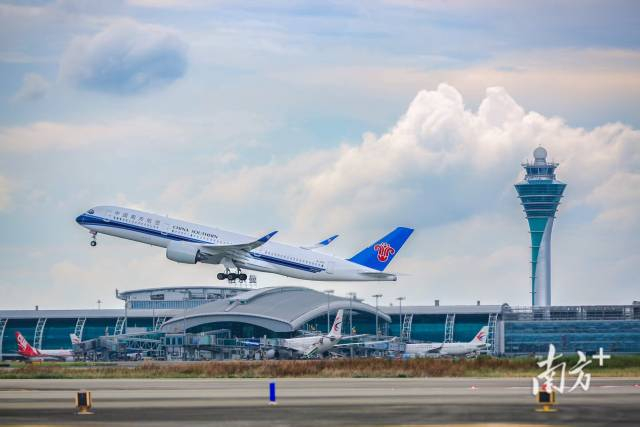
深圳机场迈入“三跑道时代”
2 1 Shi Ji Jing Ji Bao Dao· 2025-12-06 16:02
Core Viewpoint - The official operation of the third runway at Shenzhen Airport marks the beginning of the "three-runway era," enhancing the airport's capacity and operational efficiency [1][2]. Group 1: Third Runway Operations - The third runway is 3,600 meters long and 45 meters wide, classified as a 4F level, accommodating various large aircraft [2]. - The runway will operate in conjunction with the existing two runways, optimizing flight operations with eight different modes based on flight volume [2]. - The introduction of the third runway is expected to alleviate operational pressure, increase flight frequency, and enhance cargo and passenger capacity [2]. Group 2: Future Projections - By 2024, Shenzhen Airport's annual passenger flow is projected to exceed 60 million, with expectations to reach 65 million by 2025, alongside a cargo throughput surpassing 2 million tons [2]. - The airport's infrastructure will evolve into a "3+3+3+1" model, including three terminals, three cargo areas, and three runways, aiming to support an annual passenger throughput of 80 million and cargo of 4.5 million tons [2]. Group 3: Regional Airport Expansion - The Greater Bay Area is witnessing a collective expansion of airports, with significant projects like the new T3 terminal and fifth runway at Baiyun International Airport, which can handle 120 million passengers annually [3]. - Other airports in the region, such as Huizhou, Hong Kong, and Foshan, are also undergoing expansions to enhance their passenger and cargo capacities [3][4]. - The development aligns with the Guangdong-Hong Kong-Macao Greater Bay Area plan to establish a world-class airport cluster, improving the competitive position of airports in the region [4].
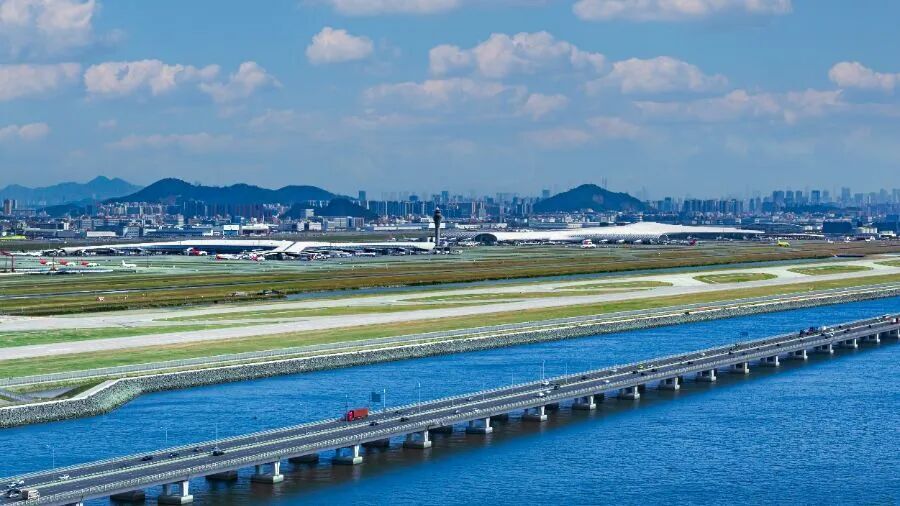
深圳机场迈入“三跑道时代”
21世纪经济报道· 2025-12-06 15:56
Core Viewpoint - The official operation of the third runway at Shenzhen Airport marks the beginning of the "three-runway era," enhancing the airport's capacity and operational efficiency [1][3]. Group 1: Shenzhen Airport Developments - The third runway is 3,600 meters long and 45 meters wide, classified as a 4F level, accommodating various large aircraft [3]. - The new runway will work in conjunction with the existing two runways, optimizing operational modes to handle different flight volumes, allowing for a total of eight operational modes [3]. - The airport's annual passenger traffic is projected to exceed 60 million in 2024 and 65 million in 2025, with cargo throughput expected to surpass 2 million tons for the first time [3]. Group 2: Greater Bay Area Airport Expansion - Other airports in the Greater Bay Area are also undergoing significant expansions, including the opening of the T3 terminal and fifth runway at Baiyun International Airport, which can accommodate 120 million passengers annually [4]. - The expansion of Huizhou Airport will increase parking spaces from 8 to 14, while Hong Kong International Airport's new runway system will enhance its annual passenger capacity to 120 million and cargo capacity to 10 million tons [5]. - The development plan for the Guangdong-Hong Kong-Macao Greater Bay Area aims to establish a world-class airport cluster, enhancing the international competitiveness of airports in Guangzhou and Shenzhen [5].
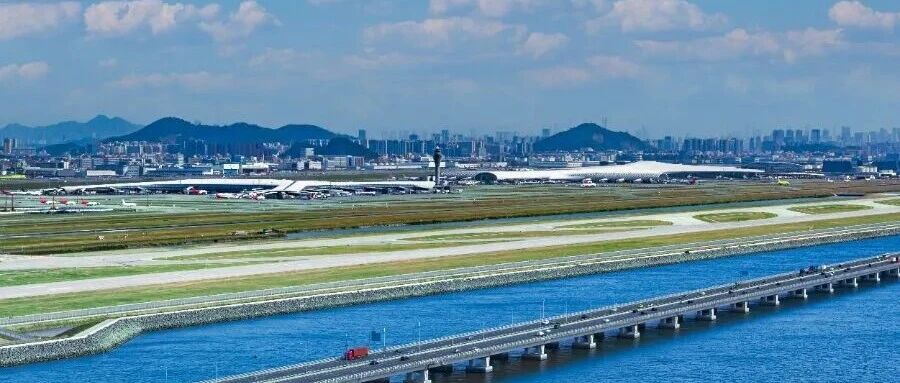
深圳机场国际及地区客运航点达60个
Zhong Guo Xin Wen Wang· 2025-12-06 14:05
Core Points - Shenzhen Airport has officially launched its 60th international passenger route, marking a recovery to the historical peak level of 2019 [1] - The new route connects Shenzhen to Tawau, Malaysia, operated by Zhejiang Long Airlines using an Airbus A320, with a high passenger load factor of 90.6% [1] - In 2023, Shenzhen Airport has opened and enhanced 27 international and regional routes, expanding its network to 60 cities across five continents [1] Summary by Sections - **New Route Launch**: The inaugural flight from Shenzhen to Tawau, Malaysia, took off successfully, indicating the airport's growth in international connectivity [1] - **Passenger Volume Growth**: In the first 11 months of this year, Shenzhen Airport's international and regional passenger volume exceeded 5.7 million, representing a year-on-year increase of 23% [3] - **Future Developments**: New routes to Melbourne, Australia, are expected to be launched within the month, further enhancing the airport's international offerings [2]
深圳机场第60条国际客运航线正式首航
Mei Ri Jing Ji Xin Wen· 2025-12-06 13:58
Core Insights - Shenzhen Airport has officially launched its 60th international passenger route, marking a significant milestone in its recovery to pre-pandemic levels [2] Group 1 - The new route connects Shenzhen directly to Tawau, Malaysia, indicating an expansion in international connectivity [2] - This development follows the recent operationalization of the airport's third runway at the end of November, enhancing its capacity [2] - The total number of international and regional passenger routes at Shenzhen Airport has now returned to the historical peak levels seen in 2019 [2]
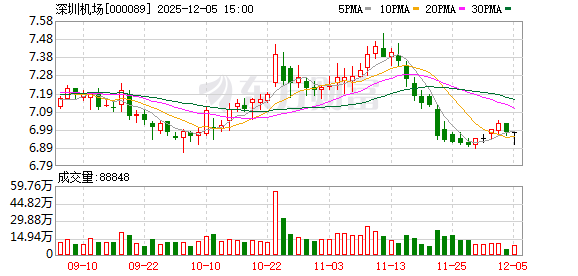
深圳机场(000089) - 关于收回投资理财产品本金及收益的公告
2025-12-05 08:00
证券代码:000089 证券简称:深圳机场 公告编号:2025-055 具体如下表: 三、备查文件 本公司及董事会全体成员保证信息披露的内容真实、准确、完整,没有虚假记载、误导 性陈述或重大遗漏。 一、本次投资理财产品到期收回情况 公司于 2024 年 12 月 2 日,分别与农业银行深圳福田支行、北京银行深圳分 行营业部签订购买投资理财产品协议及相关文件,公司以自有资金人民币共 30,000 万元认购投资理财产品,具体内容详见公司于 2024 年 12 月 4 日刊登在 《中国证券报》《证券时报》和巨潮资讯网(http://www.cninfo.com.cn)上的 《深圳市机场股份有限公司关于使用自有资金购买投资理财产品的进展公告》。 近日,上述全部理财产品本金和收益已按协议约定到期赎回,赎回本金共 30,000 万元,收回相应收益共 481 万元。 二、公告日前十二个月购买理财产品情况 | 受托人名称 | 资金 | 产品类 | 委托理 | | | 实际收回 | 实际投资 | | --- | --- | --- | --- | --- | --- | --- | --- | | | 来源 | 型 | 财金额 ...
世界级机场群要来了
中国基金报· 2025-12-05 07:35
Core Viewpoint - The article discusses the significant transformation occurring in the Greater Bay Area's airport infrastructure, highlighting the expansion and modernization of major airports to enhance their global competitiveness and support regional economic growth [5][21]. Infrastructure Developments - Hong Kong International Airport has fully operationalized its third runway system and is progressively opening its expanded second passenger terminal, with the departure hall expected to be operational by 2026 [2][12]. - Guangzhou Baiyun International Airport's T3 terminal and fifth runway have commenced operations, making it the first airport in China with five commercial runways [2][3]. - Shenzhen Bao'an International Airport has officially launched its third runway, enhancing operational efficiency and capacity to accommodate large aircraft [10]. Capacity and Demand Response - The expansion of the Greater Bay Area airport cluster is a direct response to the increasing demand for air travel, with projections indicating that the total passenger throughput for the seven airports in the region will exceed 200 million by 2024 [14][15]. - The airports in Guangzhou, Shenzhen, and Hong Kong have all reported over 8% growth in passenger throughput in the first three quarters of the year [15]. Economic Impact - The airport expansions are expected to significantly boost the regional economy, with the Greater Bay Area's economic output projected to surpass 14.79 trillion yuan in 2024, contributing to nearly one-fifth of the national foreign trade [15]. - The enhanced airport infrastructure will facilitate a shift from broad coverage to high-density, high-quality air route networks, supporting the region's logistics and trade needs [15][19]. Strategic Importance - The development of the airport cluster is crucial for strengthening the competitive advantage of the Greater Bay Area's real economy, particularly in high-value industries such as electronics, biomedicine, and cross-border e-commerce [17][18]. - Upgraded airport facilities will improve cargo transport capabilities, essential for maintaining supply chain resilience and supporting the region's manufacturing and global trade ambitions [19]. Connectivity and Integration - The article emphasizes the importance of creating a seamless transportation network, with plans for integrated air-rail transport systems to enhance connectivity among the airports in the Greater Bay Area [26]. - The collaborative development of the airport cluster aims to transition from competition to cooperation, ensuring that each airport can leverage its unique strengths to form a complementary network [27][29]. Future Outlook - The ongoing enhancements in both hardware and software aspects of the airport cluster are expected to significantly elevate the Greater Bay Area's global resource allocation capabilities, positioning it as a key node in international supply chains and innovation networks [30].
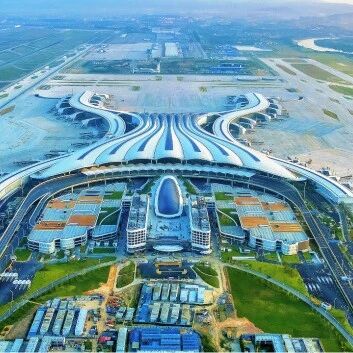
中信证券:继续看好未来两年航司业绩释放
Di Yi Cai Jing· 2025-12-05 00:22
Core Viewpoint - The report from CITIC Securities indicates that the capacity release of the civil aviation fleet is constrained by factors such as low introduction of new aircraft, engine maintenance, and spare parts availability, with the capacity utilization rate nearing its limit during peak season [1] Group 1: Capacity and Demand - The recent recovery in business and leisure travel demand is noted, with expectations for further policy stimulation for private travel by 2026 [1] - The capacity utilization rate of airlines is approaching its maximum limit, indicating a potential strain on operational efficiency [1] Group 2: Revenue and Profitability - In the third quarter, major airlines' revenue per passenger kilometer on international routes has matched that of domestic routes, marking a shift from the weak performance of international routes since 2015 [1] - The strategy of "flying further, flying internationally, and flying to emerging markets" is effectively reducing unit fuel costs against a backdrop of low oil prices and a weak recovery in domestic demand [1] - Major airlines are expected to achieve their first profit since the pandemic in 2025, marking the beginning of a profit release cycle, with positive performance anticipated over the next two years [1]


世界级机场群,呼之欲出
3 6 Ke· 2025-12-03 02:21
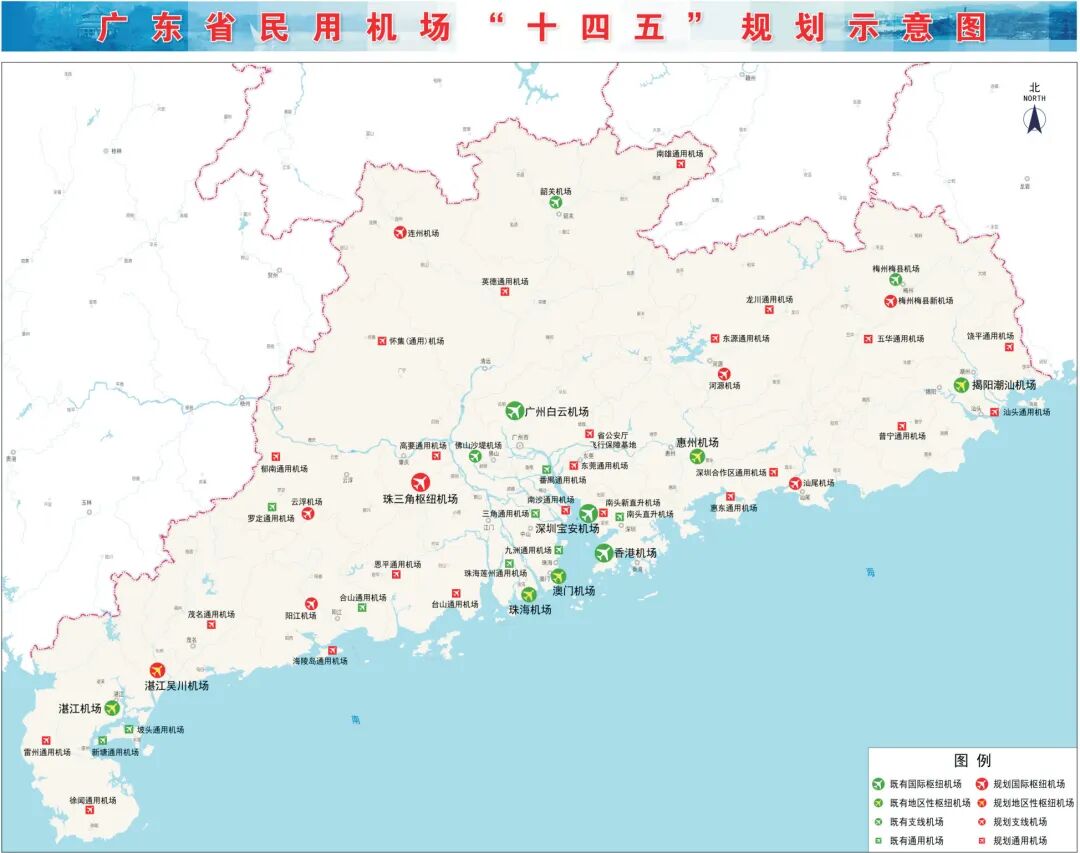
Group 1 - Shenzhen Airport has officially entered the "three-runway era," enhancing its role as a composite international aviation hub and injecting new vitality into the construction of a world-class airport cluster in the Guangdong-Hong Kong-Macao Greater Bay Area [1] - The passenger throughput at Shenzhen Airport is expected to exceed 60 million in 2024 and reach 65 million in 2025, with cargo throughput projected to surpass 2 million tons for the first time [1] - The airport is accelerating the construction of a "3+3+3+1" infrastructure layout, which includes three terminals, three cargo areas, three runways, and one satellite hall, aiming to meet an annual passenger throughput demand of 80 million and cargo throughput of 4.5 million tons [1] Group 2 - The Greater Bay Area is becoming one of the regions with the highest airport runway density globally, with seven airports and 15 runways across 56,000 square kilometers [2] - The development plan for the Greater Bay Area emphasizes the construction of a world-class airport cluster, with significant expansions at Shenzhen, Guangzhou, and Hong Kong airports expected to optimize industrial layout and activate regional resources [4] - The establishment of a collaborative mechanism among the five major airports in the Pearl River Delta aims to address competition and enhance cooperation, with each airport focusing on different market segments [4][5]
飞翔“三跑道” 机场“大扩容”
Shen Zhen Shang Bao· 2025-12-02 23:26
Core Viewpoint - The official launch of the third runway at Shenzhen Airport marks a significant enhancement in passenger and cargo capacity, supporting the development of a world-class airport cluster in the Guangdong-Hong Kong-Macao Greater Bay Area [1][2][3]. Group 1: Capacity and Infrastructure - The third runway will increase annual passenger throughput to 80 million, representing a growth of approximately 78% compared to current capacity [2]. - The annual takeoff and landing operations will rise from about 600,000 to 720,000, an increase of 20%, while peak hour capacity will grow from 65 to 80 aircraft [2]. - The runway is part of a national key project and is designed to accommodate large aircraft like the A380, enhancing operational safety and efficiency [2][3]. Group 2: Economic Impact - The enhanced capacity of Shenzhen Airport is expected to significantly boost the international influence of Shenzhen and contribute to the regional economy and the Greater Bay Area [3]. - The airport's infrastructure upgrade is seen as a milestone that will release potential for economic development and support high-quality growth in the region [3][4]. - The airport's annual cargo throughput is projected to reach 2.6 million tons, reflecting a 24% increase from current levels [2]. Group 3: Future Developments - Shenzhen Airport is accelerating the construction of a comprehensive infrastructure layout, including three terminals and three cargo areas, to further enhance its operational capabilities [4]. - The airport aims to support regional logistics, international trade, tourism, and high-end manufacturing, fostering closer collaboration with Hong Kong and Guangzhou airports [4].