
SWHY(000166)

Search documents
申万宏源展望2026:春季前科技成长还有机会,下半年A股有望迎普涨行情
Di Yi Cai Jing Zi Xun· 2025-11-19 02:49
Core Viewpoint - The upcoming year 2026 is anticipated to be a year of comprehensive reform and development, with new driving forces for economic growth emerging, particularly in technology and innovation [1][2][3]. Economic Outlook - The "14th Five-Year Plan" emphasizes accelerating high-level technological self-reliance and innovation, which is expected to drive new productivity in the economy [2]. - The accumulation of technological factors is projected to lead to breakthroughs in future industries such as AI, biomedicine, hydrogen energy, and sixth-generation mobile communications [2]. - The focus on expanding domestic demand is expected to strengthen under the reform framework, with a notable emphasis on structural economic recovery in 2026 [3]. A-Share Market Strategy - A-share market is currently experiencing a phase of high valuation and potential adjustment, particularly in the AI sector, but a significant upward trend is not yet concluded [6][7]. - A small rebound in technology growth is expected before the spring of 2026, with a potential comprehensive market rally in the second half of the year [7]. - Key investment themes for 2026 include recovery trades in basic chemicals and industrial metals, technology industry trends in humanoid robots and energy storage, and enhanced manufacturing influence [7]. Consumer and Investment Trends - The nominal GDP is expected to improve, leading to better profitability and a recovery in investment growth, with fixed asset investment projected to return to around 3% [4]. - Consumer retail growth is anticipated to be 4.5% in 2026, with service sector retail expected to perform better at 5.5% [3]. External Demand - Export resilience is expected to remain strong, with a narrowing decline in exports to the U.S. and an increase in trade with non-U.S. regions [5].

申万宏源展望2026:春季前科技成长还有机会 下半年A股有望迎普涨行情
Di Yi Cai Jing· 2025-11-19 02:48
2025年全球形势复杂多变,A股市场走出一波上涨行情。那么即将到来的2026年,宏观经济将会如何演 绎,A股市场上涨行情是结束还是蓄势待发? 对于A股策略方面,申万宏源研究A股策略首席分析师傅静涛认为,A股AI产业链股价已处于长期低性 价比区域,但大波段上涨行情尚未结束,2026年春季前科技成长可能还有小波段反弹,在达到阶段性高 点后可能震荡调整,2026年下半年,A股可能启动全面上涨行情。 "十五五"规划建议进一步明确,采取超常规措施,全链条推动集成电路、工业母机、高端仪器、基础软 件、先进材料、生物制造等重点领域关键核心技术攻关取得决定性突破。 赵伟称,这一表述凸显了当前科技竞争的严峻性与我国突破"卡脖子"难题的决心,超常规措施或将体现 在研发投入强度提升、科研体制机制改革、创新生态优化等多个维度。"人工智能+"行动的全面实施或 成重要抓手,旨在抢占人工智能产业应用制高点,全方位赋能千行百业。 同时,"十五五"规划建议首提"续写经济快速发展和社会长期稳定两大奇迹新篇章"。赵伟认为,续 写"两大奇迹",对未来一段时期的经济增速有基本要求,或意味着内需政策将在中长期改革框架下持续 加强。 从内需的角度来看,赵 ...
申万宏源“牛市两段论”:科技结构牛或在2026年春季达到高峰
2 1 Shi Ji Jing Ji Bao Dao· 2025-11-19 02:33
Core Insights - The conference held by Shenwan Hongyuan focused on investment opportunities during the "14th Five-Year Plan" period, emphasizing various sectors including asset allocation, high-end manufacturing, artificial intelligence, and consumption [1][3]. Group 1: Economic Development and Innovation - Liu Jian, Chairman of Shenwan Hongyuan, highlighted the shift in China's economic growth model towards innovation-driven development, with a focus on original innovation and technological breakthroughs [3]. - China's R&D expenditure is projected to exceed 3.6 trillion yuan in 2024, representing approximately 2.69% of GDP, surpassing Japan and South Korea in terms of R&D scale [3]. Group 2: Market Outlook and Bull Market Analysis - Zhao Wei, Chief Economist at Shenwan Hongyuan, indicated that 2026 will be a pivotal year for reform and development, suggesting that accelerating reforms will create significant opportunities [3][4]. - The "bull market two-stage theory" proposed by Fu Jingtao suggests that the first stage, characterized by a technology-driven market, may peak in spring 2026, followed by a comprehensive bull market in the second half of 2026 [4][5]. - Fu Jingtao noted that the current bull market is still in its early stages, with a shift in asset allocation towards equities expected to drive market growth [5].

申万宏源党委书记、董事长刘健:服务金融强国 做好金融“五篇大文章”
Zhong Guo Zheng Quan Bao· 2025-11-19 00:15
Core Viewpoint - The China Securities Regulatory Commission emphasizes the importance of capital markets in supporting five key financial areas: technology finance, green finance, inclusive finance, pension finance, and digital finance, with Shenyin Wanguo playing a crucial role in these initiatives [1] Group 1: Company Strategy and Development - Shenyin Wanguo is committed to integrating national strategies with its own development, focusing on high-quality economic growth and capital market evolution as it enters the 14th Five-Year Plan period [1][8] - The company has established a comprehensive network to serve the real economy, enhancing its role as a direct financing service provider and a wealth manager [1][8] Group 2: Governance and Talent Development - The company emphasizes governance, talent, and culture as foundational elements for sustainable development, integrating social responsibility into its core values [2] - Shenyin Wanguo has implemented a flexible talent management strategy, promoting a culture of accountability and innovation to support its financial services [3] Group 3: Innovation and Service to New Quality Productivity - The company aims to support high-level technological self-reliance and new quality productivity, with a projected underwriting scale exceeding 930 billion yuan in 2024 [4] - Shenyin Wanguo has actively engaged with specialized and innovative enterprises, enhancing its financial support for key technology sectors [5] Group 4: Professional Capabilities and Market Position - The company has developed a value management system to enhance the performance of quality listed companies, utilizing a unique diamond model for value assessment [6] - Shenyin Wanguo is building a one-stop service platform to facilitate multi-dimensional trading for enterprises, enhancing collaboration with various financial institutions [7] Group 5: Commitment to National Strategy - The company is dedicated to aligning its operations with national strategic needs, focusing on high-quality development in the financial sector and supporting the stability of the real economy [8]
夯实文化软实力 积极履责显担当 | 申万宏源党委书记、董事长刘健:服务金融强国,做好金融“五篇大文章”
Zhong Guo Zheng Quan Bao· 2025-11-18 23:34
编者按 日前,党的二十届四中全会审议通过"十五五"规划建议,明确提出"优化金融机构体系,推动各类金融 机构专注主业、完善治理、错位发展",这为包括证券公司在内的金融机构实现高质量发展指明了方 向。近年来证券公司在持续强化经营数据等"硬指标"的同时,纷纷发力文化建设并积极承担社会责任, 不断夯实"软实力",实现经营效益和社会效益双丰收。 为学习宣传贯彻党的二十届四中全会精神,中国证券报联合中国证券业协会推出"夯实文化软实力 积极 履责显担当"系列专题报道,旨在通过分享证券公司在加强文化建设以及服务经济、社会、环境和谐发 展方面的典型案例与先进经验,体现证券公司近年来在培育中国特色金融文化、践行行业文化理念、履 行社会责任的积极成效,共同推动证券行业高质量发展。本篇为系列报道第二篇。 2025年2月,证监会发布的《关于资本市场做好金融"五篇大文章"的实施意见》提出,积极发挥资本市 场功能,着力做好科技金融、绿色金融、普惠金融、养老金融、数字金融"五篇大文章"。申万宏源 (000166)党委书记、董事长刘健在接受中国证券报记者专访时表示,近年来,证券行业切实履行直接 融资"服务商"、资本市场"看门人"、社会财富"管 ...
申万宏源:明年年中或迎全面行情 看好科技和制造业板块
Zhong Guo Zheng Quan Bao· 2025-11-18 23:21
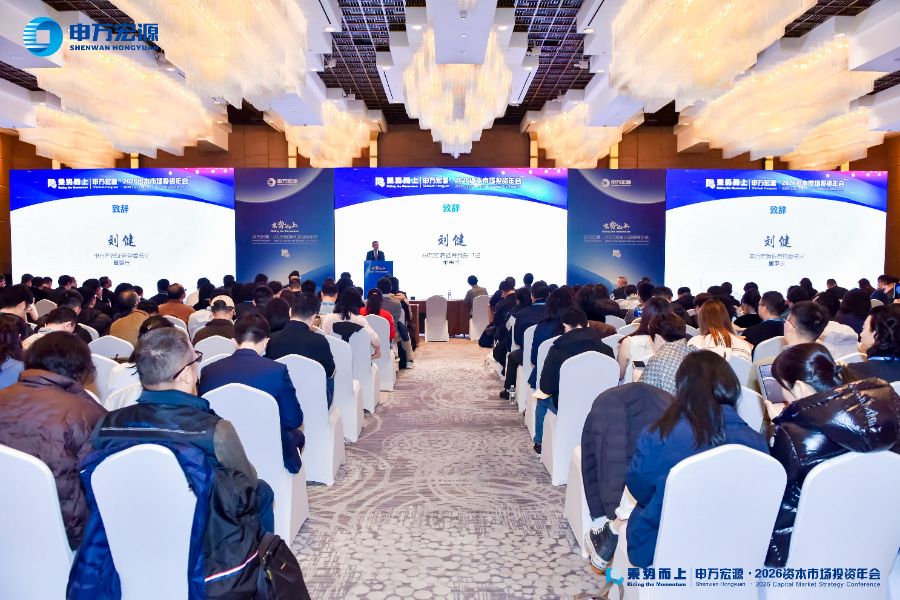
11月18日,申万宏源在上海举办2026资本市场投资年会。申万宏源认为,2026年将是改革与发展全 面发力的一年,2026年年中A股行情可能全面启动,科技产业趋势和我国制造业全球影响力提升将是市 场主线。 与会人士认为,2026年是"十五五"开启之年,中国经济和资本市场都将进入高质量发展的新阶段。 正成为经济增长的新动力 申万宏源党委书记、董事长刘健在致辞中表示,过去依靠投资和出口为双引擎,我国经济实现快速 赶超和发展。党的十八大以来,我国经济发展进入新常态,在科创驱动下,以知识、技术、数据、算 力、人才等为代表的新要素和新资产正成为推动我国经济增长的新动力。"未来中国经济的增长不再是 旧动能的延伸,而是新要素动能的拓展,这将为资本市场投资打开全新空间。" 在申万宏源证券首席经济学家赵伟看来,"十五五"时期或将是全面深化改革的攻坚突破期,2026年 或将是党的二十届三中全会以来改革全面加速的开始。随着扩内需政策持续深化,2026年名义GDP修复 过程中将带动企业盈利改善;消费需求中服务需求弹性更大,投资增速更容易"前低后高"。 从资本市场发展的角度来看,刘健认为,"十五五"规划强调坚持有效市场和有为政府相结合 ...
申万宏源: 明年年中或迎全面行情,看好科技和制造业板块
Xin Lang Cai Jing· 2025-11-18 23:10
11月18日,申万宏源在上海举办2026资本市场投资年会。申万宏源认为,2026年将是改革与发展全面发 力的一年,2026年年中A股行情可能全面启动,科技产业趋势和我国制造业全球影响力提升将是市场主 线。(中证报) ...
申万宏源: 明年年中或迎全面行情 看好科技和制造业板块
Zhong Guo Zheng Quan Bao· 2025-11-18 22:24
Core Viewpoint - The year 2026 is anticipated to be a pivotal year for reform and development in China's economy and capital markets, with a potential full-scale rally in A-shares expected by mid-2026, driven by trends in the technology industry and the enhancement of China's manufacturing global influence [1][5]. Economic Growth Drivers - New factors and assets are emerging as new drivers of economic growth, moving away from traditional reliance on investment and exports. The focus is shifting towards knowledge, technology, data, computing power, and talent as key growth enablers [2]. - The "14th Five-Year Plan" marks the beginning of a new phase of high-quality development for China's economy and capital markets, emphasizing the importance of effective markets and proactive government [2][3]. Reform and Investment Opportunities - The upcoming reforms during the "14th Five-Year Plan" period are expected to be systematic and effective, with a focus on enhancing macroeconomic governance and promoting self-reliance in technology [3][4]. - Key areas for potential investment include the construction of a unified market, development of new productive forces, reforms in social welfare, financial and tax systems, and acceleration of green transformation [4]. A-share Market Outlook - The A-share market is projected to experience a significant rally starting in mid-2026, supported by improvements in the fundamental economic cycle, strengthening trends in emerging industries, and a shift in household asset allocation towards equities [5][6]. - The market is expected to transition through different phases, with technology growth stocks likely to see short-term rebounds before a broader market rally led by cyclical sectors and the technology industry [6]. Investment Themes for 2026 - Three major investment themes are highlighted for 2026: 1. Recovery trades in cyclical sectors such as basic chemicals and industrial metals 2. Technology sectors including AI, humanoid robots, energy storage, photovoltaics, pharmaceuticals, and military industry 3. Manufacturing sectors that enhance China's global influence, such as chemicals and engineering machinery [6].
申万宏源党委书记、董事长刘健: 服务金融强国 做好金融“五篇大文章”
Zhong Guo Zheng Quan Bao· 2025-11-18 22:13
2025年2月,证监会发布的《关于资本市场做好金融"五篇大文章"的实施意见》提出,积极发挥资本市 场功能,着力做好科技金融、绿色金融、普惠金融、养老金融、数字金融"五篇大文章"。申万宏源 (000166)党委书记、董事长刘健在接受中国证券报记者专访时表示,近年来,证券行业切实履行直接 融资"服务商"、资本市场"看门人"、社会财富"管理者"的职责,积极响应党中央重大决策部署,通过业 务转型与综合金融服务升级,逐步构建起服务实体经济的立体化网络,成为做好金融"五篇大文章"的重 要力量。 ● 本报记者 徐昭 林倩 刘健表示,2026年是"十五五"开局之年,中国经济和资本市场都将进入高质量发展的新阶段。申万宏源 作为国有金融企业,积极响应政策号召,将服务国家战略与自身发展相结合,继续在推动金融"五篇大 文章"落地、助力实体经济高质量发展中主动担当、积极作为,助力金融强国建设。 夯实发展基石 为高质量发展注入内生动力 一直以来,申万宏源始终夯实"治理、人才、文化"三大发展基石,将社会责任融入公司核心价值框架, 为高质量发展注入内生动力。 据刘健介绍,多年来申万宏源在甘肃省、新疆维吾尔自治区、内蒙古自治区、贵州省等地开展 ...
服务金融强国 做好金融“五篇大文章”
Zhong Guo Zheng Quan Bao· 2025-11-18 20:05
Core Viewpoint - The China Securities Regulatory Commission emphasizes the importance of capital markets in supporting five key financial areas: technology finance, green finance, inclusive finance, pension finance, and digital finance, with Shenyuan Hongyuan playing a crucial role in these initiatives [1] Group 1: Company Strategy and Governance - Shenyuan Hongyuan has established a comprehensive network to serve the real economy, aligning its operations with national strategies and contributing to high-quality economic development [1][2] - The company focuses on governance, talent, and culture as foundational elements for sustainable development, integrating social responsibility into its core values [2] - During the 14th Five-Year Plan, Shenyuan Hongyuan has emphasized compliance and risk management, enhancing its governance framework to ensure robust operational standards [2] Group 2: Talent and Cultural Development - The company prioritizes talent development as a key resource for high-quality growth, implementing flexible mechanisms for talent promotion and fostering an innovative workforce [3] - Shenyuan Hongyuan is launching a cultural renewal initiative in 2025 to celebrate its 40th anniversary, aiming to strengthen its corporate culture and align it with national strategies [3] Group 3: Innovation and Service to New Quality Productivity - The company is committed to supporting innovative enterprises, particularly those classified as "specialized, refined, distinctive, and innovative," by enhancing its financial services across their lifecycle [4] - Shenyuan Hongyuan has successfully facilitated the listing of several high-tech companies and has significantly increased its bond underwriting scale [5] Group 4: Professional Capabilities and Market Position - The company has developed a value management system to enhance the performance of listed companies, utilizing a unique evaluation model to drive value creation [5] - Shenyuan Hongyuan is expanding its institutional service capabilities, integrating various financial products and services to better serve its clients [6] Group 5: International Business and Cross-Border Services - The company is enhancing its international business operations, focusing on cross-border financing and investment needs, and has achieved significant growth in its cross-border derivatives business [6] - Shenyuan Hongyuan ranks among the top domestic securities firms in terms of IPO underwriting and bond distribution, reflecting its strong market position [6] Group 6: Commitment to National Strategy - The company is dedicated to advancing the financial sector's high-quality development and supporting the national strategy through professional services and value creation [7]