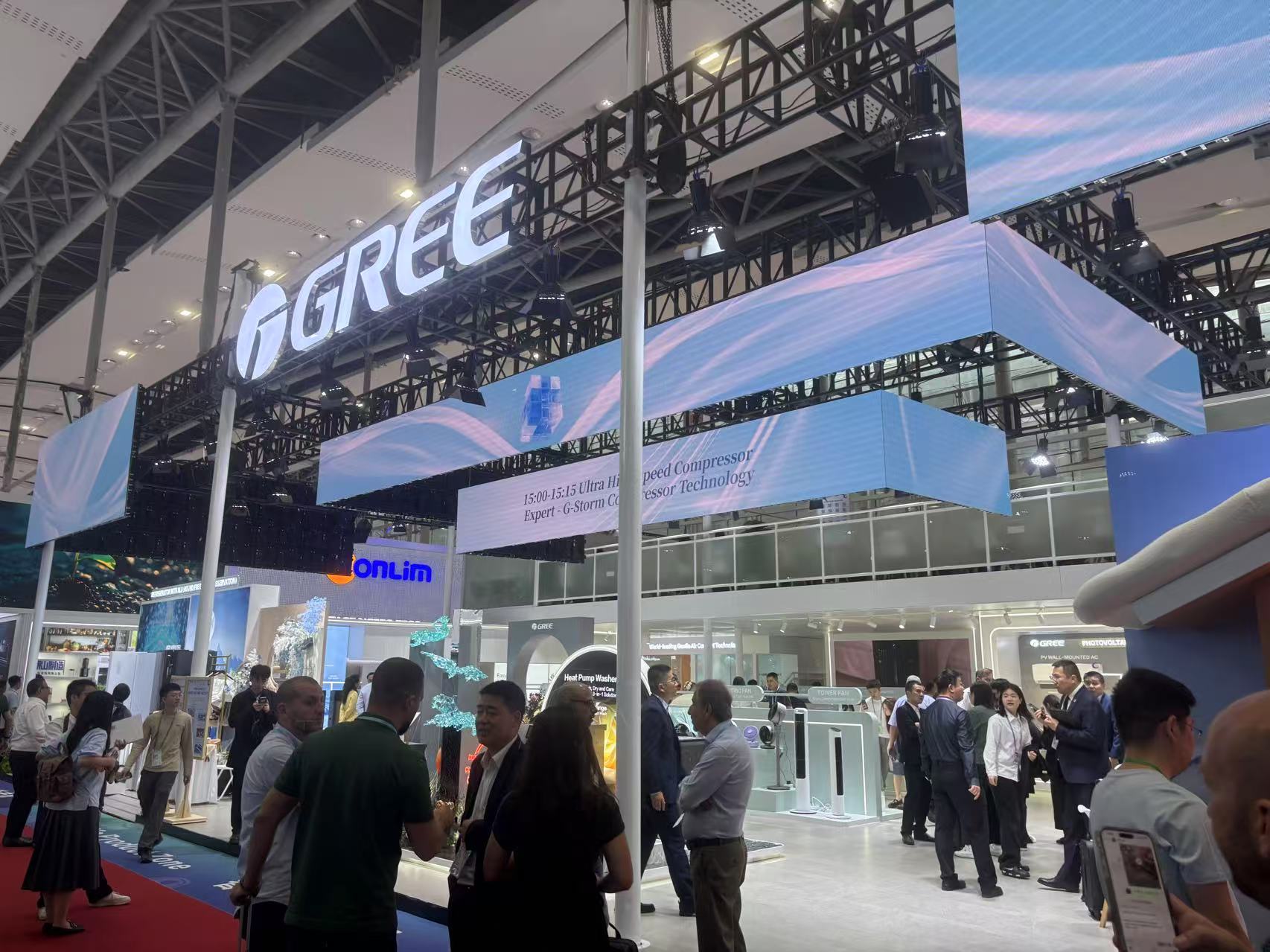
GREE(000651)

Search documents
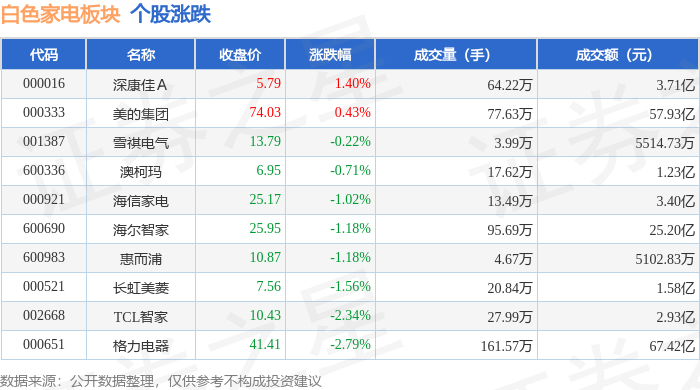
白色家电板块9月1日跌0.71%,格力电器领跌,主力资金净流出10.83亿元
Zheng Xing Xing Ye Ri Bao· 2025-09-01 08:39
Group 1 - The white goods sector experienced a decline of 0.71% on September 1, with Gree Electric Appliances leading the drop [1] - The Shanghai Composite Index closed at 3875.53, up 0.46%, while the Shenzhen Component Index closed at 12828.95, up 1.05% [1] - Major stocks in the white goods sector showed mixed performance, with Midea Group slightly up by 0.43% and Gree Electric Appliances down by 2.79% [1] Group 2 - The net outflow of main funds in the white goods sector was 1.083 billion yuan, while retail investors saw a net inflow of 1.037 billion yuan [1] - Midea Group had a net inflow of 77.01 million yuan from main funds, while Gree Electric Appliances faced a significant outflow of 910 million yuan [2] - Retail investors showed strong interest in Haier Smart Home, with a net inflow of 311 million yuan, despite the overall sector decline [2]


格力小米“吵架”,美的海尔“得利”
Di Yi Cai Jing· 2025-09-01 04:22
Core Viewpoint - The recent price war in the air conditioning market has led to a dispute between Gree and Xiaomi, with Midea and Haier benefiting from the situation. Industry experts suggest that diversification and flexibility are key to maintaining growth in the current competitive landscape [2][3]. Company Performance - Gree Electric's revenue for the first half of the year was 97.325 billion yuan, a decrease of 2.46% year-on-year, while net profit was 14.412 billion yuan, an increase of 1.95%. However, the second quarter saw a 10% decline in net profit [3]. - Xiaomi's air conditioning shipments exceeded 5.4 million units in the second quarter, with a year-on-year growth rate of over 60% [6]. Market Dynamics - The domestic household air conditioning market saw an 8.3% year-on-year increase in sales volume in the first half of 2025, driven by policies encouraging replacements and warmer weather [3]. - The online market share for Gree's air conditioners decreased by 1.53 percentage points to 17.08% in May, while Xiaomi's share increased by 2.83 percentage points to 18.02% [4]. Competitive Landscape - Midea's online market share rose by 4.9 percentage points to 22.63% in May, with an average price decrease of 5.96% to 2,844 yuan [5]. - Haier's online air conditioning average price dropped by 12.56% to 2,552 yuan, with a market share increase of 2.84 percentage points to 7.25% in June [5]. Strategic Responses - Gree plans to reduce the supply price of some mid-range air conditioning products by approximately 10% in the new cooling year [8]. - Midea and Haier are enhancing their air conditioning business through price adjustments and the introduction of budget-friendly models [6][7]. Future Outlook - Gree aims to expand its international manufacturing base and enhance its research and development efforts to maintain competitive advantages [8]. - The air conditioning industry is entering a new competitive phase, requiring companies to adopt flexible pricing and multi-brand strategies to adapt to consumer segmentation [8].




格力小米“吵架”,美的海尔“得利”
第一财经· 2025-09-01 04:18
Core Viewpoint - The recent price war in the air conditioning market has led to a decline in Gree Electric's performance, while competitors like Midea and Haier have benefited from the situation. Industry experts suggest that diversification and flexibility are key to maintaining growth in the current competitive landscape [3]. Group 1: Gree Electric's Performance - Gree Electric's stock price fell by 5.88% to 42.6 CNY per share following its half-year report, which indicated "increased revenue but decreased profit" with a 10% decline in net profit for Q2 [5]. - In the first half of 2025, Gree reported revenue of 973.25 billion CNY, a year-on-year decrease of 2.46%, while net profit was 144.12 billion CNY, a year-on-year increase of 1.95% [5]. - The air conditioning segment, which accounts for nearly 80% of Gree's revenue, saw a 5.09% decline in revenue to 762.79 billion CNY in the first half of the year [5]. Group 2: Market Dynamics - The domestic household air conditioning market experienced an 8.3% year-on-year increase in sales volume in the first half of 2025, driven by government incentives and warmer weather [6]. - The central air conditioning market, however, saw a 10.1% decline in sales revenue, indicating a mixed performance across different segments [6]. - The competition intensified with low-end air conditioners priced below 2100 CNY capturing over 50% of online sales, putting pressure on mid-to-high-end products [6]. Group 3: Competitive Landscape - Xiaomi's aggressive pricing strategy, including the promotion of air conditioners priced around 1000 CNY, has sparked significant competition, leading to public disputes between Gree and Xiaomi over market share [7][9]. - Midea's market share increased by 4.9 percentage points to 22.63% in May, while Gree's share decreased by 1.53 percentage points to 17.08% [9]. - Haier also saw a significant increase in market share, with its online air conditioning sales price dropping by 12.56% to 2552 CNY, resulting in a 2.84 percentage point increase in market share [9]. Group 4: Future Strategies - Gree plans to reduce supply prices for mid-range air conditioners by approximately 10% to enhance competitiveness [13]. - The company is also exploring international markets and aims to establish a comprehensive international production base [13]. - Industry analysts emphasize the need for companies to adopt flexible pricing strategies and diversify their product offerings to navigate the evolving competitive landscape [14].

中国民营企业500强榜单发布 多家轻工企业跻身前列
Xiao Fei Ri Bao Wang· 2025-09-01 02:52
Core Insights - The "2025 China Top 500 Private Enterprises" list was released by the All-China Federation of Industry and Commerce on August 28, highlighting strong performances from several light industry companies, including Midea Group, CATL, Tianneng Holding Group, Gree Electric Appliances, and TCL Technology [1] Group 1: Company Performance - The threshold for entry into the top 500 has increased to 27.023 billion yuan, with total revenue surpassing 4.3 trillion yuan, reaching 4.305 trillion yuan, and total net profit amounting to 1.8 trillion yuan [1] - Among the 500 companies, 361 reported revenue growth, with 237 experiencing an increase of over 5% and 161 over 10% [1] - The average revenue per company reached 86.102 billion yuan, reflecting a year-on-year growth of 2.72% [1] Group 2: Manufacturing Sector - Manufacturing plays a crucial role, with 72% of the top 500 companies belonging to the secondary industry and 66.4% being manufacturing enterprises [2] - The total revenue from manufacturing companies reached 29.63 trillion yuan, marking a growth of 7.66%, which constitutes 68.84% of the total revenue of the top 500 [2] Group 3: R&D Investment - Private enterprises have significantly increased R&D investments, totaling 1.13 trillion yuan, with 1.1517 million R&D personnel and an average R&D intensity of 2.77% [3] - Key investment areas include electronic equipment manufacturing, internet services, automotive manufacturing, electrical machinery, chemical products, and software information technology [3] - The top 500 companies hold 721,600 valid patents, an increase of 8.23%, with domestic patents growing by 12.42% [3] Group 4: Transformation and Social Contribution - A majority of the top 500 companies are accelerating digital and green transformation, with 64.20% having established digital transformation strategies and 83.00% promoting green low-carbon transitions [4] - The total employment provided by these companies is 11.0912 million, with an average of 22,200 jobs per company [4] - The implementation of the "Private Economy Promotion Law" is expected to provide comprehensive legal support for the sustainable and healthy development of the private economy [4]


西部证券晨会纪要-20250901
Western Securities· 2025-09-01 01:55
Group 1 - The report on overseas mutual funds indicates that as of March 31, 2025, there were 1,532 mutual funds holding A-shares with a total scale of $1.9 trillion, showing a slight decrease in both number and scale compared to previous periods [9][10][11] - The performance of overseas mutual funds investing in A-shares was notably differentiated, with active funds outperforming passive funds, achieving an average return of 0.51% and a median return of 0.28% [10] - The report highlights that overseas mutual funds increased their holdings in the home appliance, transportation, and computer sectors while reducing their investments in power equipment and new energy sectors [10][11] Group 2 - The report on Shenzhen Circuit (002916.SZ) forecasts revenue for 2025-2027 to be 22.134 billion, 26.330 billion, and 30.087 billion yuan respectively, with net profit expected to be 3.273 billion, 4.278 billion, and 5.154 billion yuan [12] - The target market capitalization for Shenzhen Circuit in 2026 is projected to be 162.572 billion yuan, with a target price of 243.83 yuan, and the report initiates coverage with a "buy" rating [12] - The report emphasizes the company's strong position in the PCB market, particularly in data center and communication sectors, with significant growth potential driven by advancements in AI and high-speed communication technologies [13][14] Group 3 - The report on Tunan Co., Ltd. (300855.SZ) indicates that the company is one of the few in China capable of mass-producing both deformed and cast high-temperature alloys, with a focus on aerospace and nuclear power applications [17][18] - The company is expected to achieve a revenue growth rate of 25.10% and a net profit growth rate of 25.10% from 2020 to 2024, with projected revenues of 1.258 billion yuan and net profits of 267 million yuan in 2024 [17] - Tunan's order backlog reached a historical high of 1.75 billion yuan as of the first half of 2025, reflecting a year-on-year increase of 236.5% [18] Group 4 - Alibaba's self-developed AI chips are aimed at meeting its own AI inference needs, with a planned investment of 380 billion yuan over the next three years to enhance its AI capabilities [20][21] - The report notes that Alibaba's AI inference chip, Hanguang 800, has surpassed NVIDIA's T4 and P4 in certain performance metrics, indicating a strong competitive position in the AI chip market [20] - The report highlights the potential for growth in power supply and liquid cooling technologies as major cloud service providers increase their investment in AI chips [22]




二季度营收下滑12.11%!格力电器,释放了什么信号?
Sou Hu Cai Jing· 2025-08-31 23:57
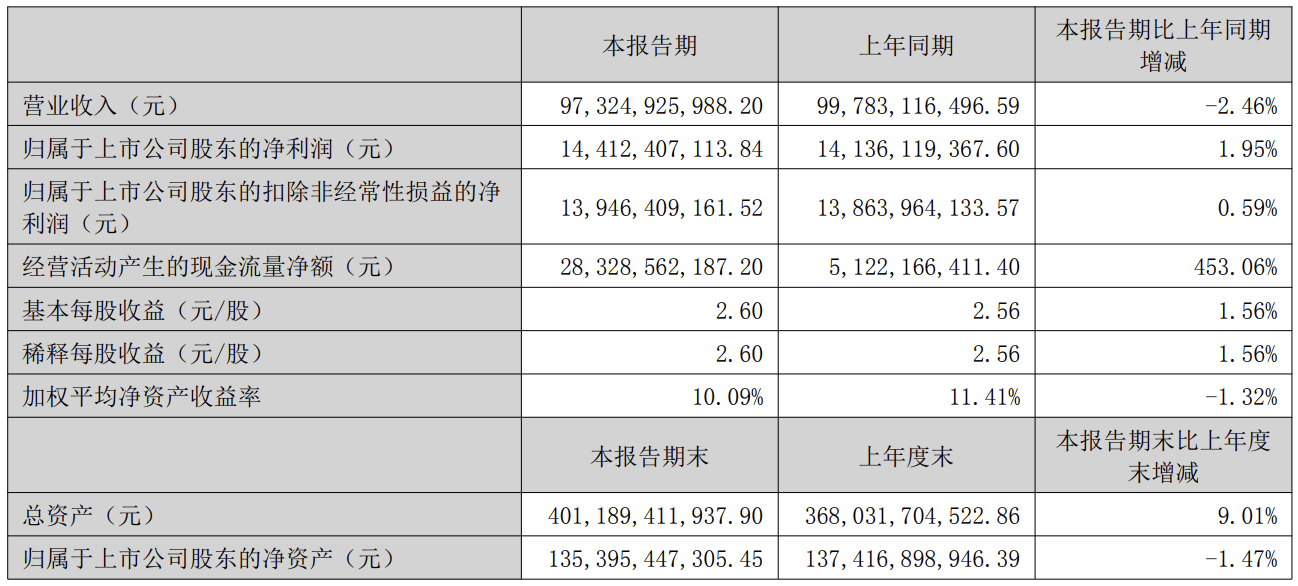
Core Viewpoint - Gree Electric's diversification strategy has not been as successful as that of its competitors, Midea and Haier, with manufacturing revenue accounting for 89.9% of total revenue, and only 10.1% from other businesses [1] Financial Performance - For the first half of 2025, Gree Electric reported revenue of 97.33 billion yuan, a year-on-year decrease of 2.46%, while net profit attributable to shareholders was 14.41 billion yuan, an increase of 1.95% [3] - In Q2 2025, total revenue was 59.98 billion yuan, down 12.11% year-on-year, and net profit was 8.51 billion yuan, down 10.07% [3][5] - The company announced no cash dividends or stock bonuses due to declining performance, leading to a 5.88% drop in stock price the following day [5] Market Competition - Gree Electric faces intense competition in the air conditioning market, particularly from Xiaomi, which aims to become a top player by 2030 [6] - Gree's market share in the online air conditioning market was 23.62%, a decrease of 0.17%, while Xiaomi's market share increased to 15.32%, a growth of 4.78% [7] Diversification Challenges - Gree Electric has struggled with diversification efforts, with investments in sectors like new energy and small appliances not yielding significant results [8] - In contrast, Midea and Haier have successfully diversified their revenue streams, with Midea generating 66.85% of its revenue from smart home products and Haier having a more balanced revenue structure across various appliances [9] Future Outlook - Analysts suggest that Gree Electric must pursue diversification to overcome market challenges, recommending a reduction in dividend payouts and a focus on expanding into small appliances and related new energy markets [10]
“多元化+全球化”支撑家电三巨头业绩显韧性
Zheng Quan Ri Bao Zhi Sheng· 2025-08-31 17:08
Core Viewpoint - The home appliance industry in China demonstrates strong resilience and vitality amid a complex global economic environment, with the performance of the three major players serving as a key indicator of industry development [1] Group 1: Financial Performance - Midea Group achieved revenue of 252.3 billion yuan and a net profit of 26 billion yuan in the first half of the year, representing year-on-year growth of 15.7% and 25% respectively [1] - Haier Smart Home reported revenue of 156.49 billion yuan and a net profit of 12.03 billion yuan, with year-on-year growth of 10.22% and 15.59%, both reaching historical highs [1] - Gree Electric's revenue decreased by 2.46% to 97.33 billion yuan, but net profit increased by 1.95% to 14.41 billion yuan [1] Group 2: Business Diversification - Midea Group's smart home business revenue grew by 13.31% to 167.2 billion yuan, accounting for 66.58% of total revenue; its new energy and industrial technology businesses generated 64.5 billion yuan, up nearly 21%, making up 25.7% of total revenue [2] - Gree Electric's diversified business expansion led to industrial products and green energy revenue of 9.59 billion yuan and smart equipment revenue of 314 million yuan, with year-on-year growth of 17.13% and 20.9%, respectively, accounting for about 10.17% of total revenue [2] - Haier Smart Home's equipment and channel service revenue reached 18.72 billion yuan, growing nearly 35% and representing about 12% of total revenue [3] Group 3: International Expansion - Midea Group's overseas revenue was 107.19 billion yuan, Haier Smart Home's overseas revenue was 79.08 billion yuan, and Gree Electric's overseas revenue was 16.34 billion yuan, with year-on-year growth of 17.70%, 11.70%, and 10.19% respectively [3] Group 4: R&D Investment - Midea Group invested 8.76 billion yuan in R&D, an increase of 14.41% year-on-year; Haier Smart Home's R&D investment was 5.79 billion yuan, up 11.73%; Gree Electric's R&D investment reached 3.89 billion yuan, growing by 7.05% [3] Group 5: Strategic Focus - The home appliance giants are initiating a "value war" centered on technological innovation, scenario experience, and global layout, expanding their scale advantages while solidifying profit foundations and advancing channel transformation [4]
中国家电板块_估值具吸引力,等待基本面转机
2025-08-31 16:21
Summary of the Conference Call on China Home Appliance Sector Industry Overview - The China home appliance sector is favored due to its diversified product and geographic exposure, high and stable profitability, and strong management and execution [2][25] - It is one of the most cyclical sectors within the China consumer universe, alongside agrifood, luxury, and durables [2][25] Key Financial Metrics - Year-to-date, the share prices of the big and small home appliance sectors have increased by 1% and 41% respectively, compared to the SHSZ300 index which is up 13% [2] - Retail sales for the home appliance sector increased by 30.4% year-over-year (yoy) for the first seven months of 2025, significantly outpacing overall retail sales growth of 4.8% yoy [5][9] - The sector is projected to trade at 11.8x and 23.3x 2025E P/E for big and small appliances respectively, and 10.5x and 19.5x for 2026E P/E [2] Sales and Subsidy Insights - Approximately 90% of total sales are attributed to consumer purchases benefiting from trade-in subsidies, with an estimated total trade-in sales of RMB 272 billion and total subsidies paid of RMB 54 billion [10][11] - The full-year subsidy budget for 2025 is estimated to be between RMB 80-100 billion, which is expected to support strong sales through the end of 2025, although growth may slow to single-digit or negative rates [5][11] Production Adjustments - Brands are beginning to cut production plans in anticipation of slowing demand, with air-conditioning production plans lowered to 8.1% yoy for July and -11.9% yoy for August [5][16][17] - This trend is also observed in other categories such as refrigerators and washing machines [17] Future Outlook - The fourth quarter of 2025 is expected to be the worst for the sector, with deteriorating industry data likely to pressure share prices [26] - A normalization of domestic demand, an increase in overseas sales, an extension of stimulus policies, and recovery in the property and macroeconomic sectors are anticipated to lead to a fundamental improvement and valuation re-rating for the sector [26] Company Ratings and Price Targets - **Haier Smart Home Co Ltd - H**: Outperform (OW) with a price target of HKD 32.00 [3] - **Roborock Technology - A**: OW with a price target of CNY 270.00, showing a turnaround story with significant growth expected [11] - **Midea Group - A**: Neutral (N) with a price target of CNY 80.00, reflecting strong fundamentals [11] - **Gree Electric Appliances - A**: N with a price target of CNY 50.00, facing market share loss [11] - **Ecovacs Robotics - A**: N with a price target of CNY 82.00, valuation considered stretched [11] Additional Insights - The historical performance of the home appliance sector indicates that after periods of strong growth, sales can decline significantly, as seen in past trade-in subsidy programs [22] - Major players are proactively expanding overseas to support long-term sustainable growth despite domestic challenges [22] This summary encapsulates the key points from the conference call regarding the China home appliance sector, highlighting its current performance, challenges, and future outlook.


格力电器_2025 年第二季度销售额下降 12%,营业利润下降 22%
2025-08-31 16:21
Summary of Gree Electric Appliances (000651.SZ) Conference Call Company Overview - **Company**: Gree Electric Appliances - **Ticker**: 000651.SZ - **Date of Report**: 28 August 2025 Key Industry Insights - **Industry**: Air Conditioning and Consumer Appliances - **Market Dynamics**: Increased competition, particularly in the low-priced segment of the air conditioning market, has impacted sales performance. The commercial air conditioning segment has also shown weakness, with industry sales declining by 5.5% YoY in the first half of 2025 [1][2]. Financial Performance Highlights - **2Q25 Results**: - Operating profit (OP) declined by 22% YoY, attributed to a 12% YoY decrease in sales, contrasting with a 14% YoY growth in 1Q25 [1]. - Net profit (NP) fell by 10% YoY, supported by a 51% YoY increase in net financial income [1]. - Operating cash flow (CF) reached Rmb28.3 billion in 1H25, significantly higher than Rmb5.1 billion in 1H24 but lower than Rmb30.9 billion in 1H23 [1][2]. - **Sales Breakdown**: - Total sales in 1H25 decreased by 3% YoY to Rmb97.6 billion. - Consumer appliance sales (mainly air conditioning) fell by 5% YoY to Rmb76 billion, representing 78% of total sales [2]. - Sales in the China market declined by 5% YoY to Rmb71 billion, while overseas sales increased by 10% YoY to Rmb16 billion [2]. - **Margin Analysis**: - Group gross profit (GP) margin decreased by 1.0 percentage point YoY to 28.7%, primarily due to a shift towards lower-margin business [3]. - The gross profit margin for consumer appliances dropped by 29 basis points YoY to 33.2% [3]. - Operating profit margin (OPM) contracted by 90 basis points YoY to 14.1% in 1H25 [3]. Future Outlook - **Market Reaction**: The company is expected to face negative market reactions due to weaker-than-expected 2Q25 results, particularly the decline in topline sales [1][9]. - **Valuation**: The target price for Gree is set at Rmb64.5, based on an 11x 2025E target P/E, reflecting a 40% discount to Haier's target P/E of 19x due to higher business uncertainties in the air conditioning segment [12]. Risks - **Key Risks**: - Prolonged channel de-stocking in air conditioning. - Weaker-than-expected performance in the Chinese property market. - Rising raw material prices could further impact profitability [13]. Additional Insights - **Cost Management**: Selling expenses decreased by 11% YoY, and the selling-to-sales ratio fell by 60 basis points YoY to 6.4% in 1H25, indicating improved cost management despite declining sales [3]. - **Investment Income**: The company reported a significant increase in net financial income, which helped cushion the impact of declining operational profits [1][10]. This summary encapsulates the critical financial and operational insights from Gree Electric Appliances' recent conference call, highlighting the challenges and opportunities within the air conditioning and consumer appliance industry.
空调价格战下的半年报:格力小米吵架,美的海尔得利
Di Yi Cai Jing· 2025-08-31 10:11
Core Viewpoint - The recent price war in the air conditioning market has led to a dispute between Gree and Xiaomi, while benefiting competitors like Midea and Haier. Industry experts suggest that diversification and flexibility are key to maintaining growth in this competitive landscape [2][3][5]. Company Performance - Gree Electric's stock fell by 5.88% to 42.6 CNY per share following its half-year report, which indicated revenue of 97.325 billion CNY, a 2.46% year-on-year decline, and a net profit of 14.412 billion CNY, a 1.95% increase. However, the net profit for Q2 dropped by 10% year-on-year [3][4]. - Gree's air conditioning revenue, which constitutes nearly 80% of its total revenue, decreased by 5.09% to 76.279 billion CNY in the first half of the year, despite an overall increase in domestic household air conditioning sales [3][4]. - Xiaomi's air conditioning shipments exceeded 5.4 million units in Q2, reflecting a growth rate of over 60% [5][7]. Market Dynamics - The online air conditioning market saw Midea's market share increase by 4.9 percentage points to 22.63% in May, while Gree's share decreased by 1.53 percentage points to 17.08%, and Xiaomi's share rose by 2.83 percentage points to 18.02% [4][5]. - The average price of Gree air conditioners was 3,425 CNY in May, compared to Xiaomi's average of 2,418 CNY, highlighting the price competition in the market [4][5]. - The air conditioning industry is entering a new competitive phase, with companies needing flexible pricing and multi-brand strategies to adapt to consumer segmentation [8]. Strategic Initiatives - Gree is reducing supply prices for mid-range air conditioners by approximately 10% to enhance competitiveness and is also planning to expand its overseas sales operations [8]. - Midea and Haier are also increasing their market presence by lowering prices and launching new products under sub-brands to counter Xiaomi's market share gains [5][7]. - The air conditioning market is expected to see continued growth, with Midea reporting a 15.57% increase in revenue to 251.1 billion CNY and a 25.04% increase in net profit to 26.014 billion CNY in the first half of the year [7].