
ZGXT(000831)

Search documents
澳洲经济学家:美澳稀土交易只是开始,很快动摇中国稀土主导地位
Sou Hu Cai Jing· 2025-10-22 22:46
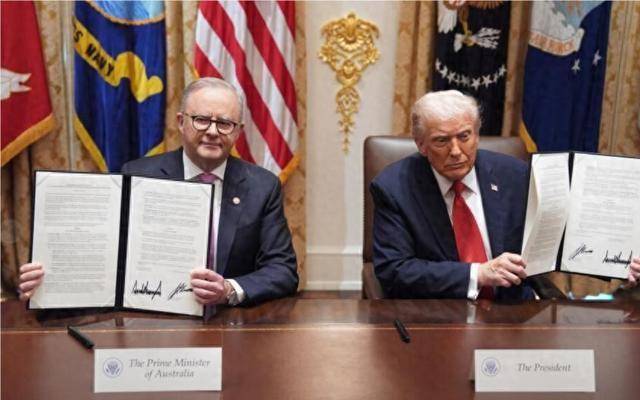
Core Points - The United States and Australia have signed a crucial mineral agreement to support rare earth mining and processing, addressing the critical issue of independent supply chains for developed countries [1][4] - This agreement is expected to sever Australia's ties with China regarding rare earths and promote cooperation in refining technologies between Australia and the U.S., aiming to establish a Western rare earth system within 1-2 years [1][8] - China's low-priced exports have previously suppressed Western industries, but recent export control policies are pushing China to provide guaranteed prices and accelerate investments in rare earth enterprises [1][4] Summary by Sections Agreement Details - The U.S. and Australia have committed a total of $3 billion in government funding to set price floors for rare earth mining and processing projects [4] - Financial institutions from the U.S. and the U.K. are providing $10 billion and £5 billion in credit to support the rare earth enterprises involved in this agreement [6] - The U.S. Export-Import Bank has sent seven letters of intent to Australian rare earth companies, totaling over $2.2 billion [6] Economic Impact - The agreement is projected to unlock $53 billion in value from critical mineral deposits, sufficient to meet the demand for rare earth elements in developed countries for decades [6] - The deal is expected to significantly increase the value of Australian minerals due to U.S. demand, as Australia is a mining nation with abundant resources [14][16] Supply Chain Independence - The cooperation between the U.S. and Australia is seen as a key step in establishing an independent rare earth supply chain free from Chinese influence [8][12] - The agreement will facilitate the development of midstream and downstream segments of the rare earth supply chain, including refining technologies [9][11] Historical Context - The article highlights the historical context of the rare earth industry, noting that the U.S. once monopolized the global supply chain before China emerged as a dominant player [3][18] - The lack of progress in establishing an independent supply chain over the past decade is attributed to the absence of pressure on developed countries, as China's low export prices made domestic production unprofitable [18][19]


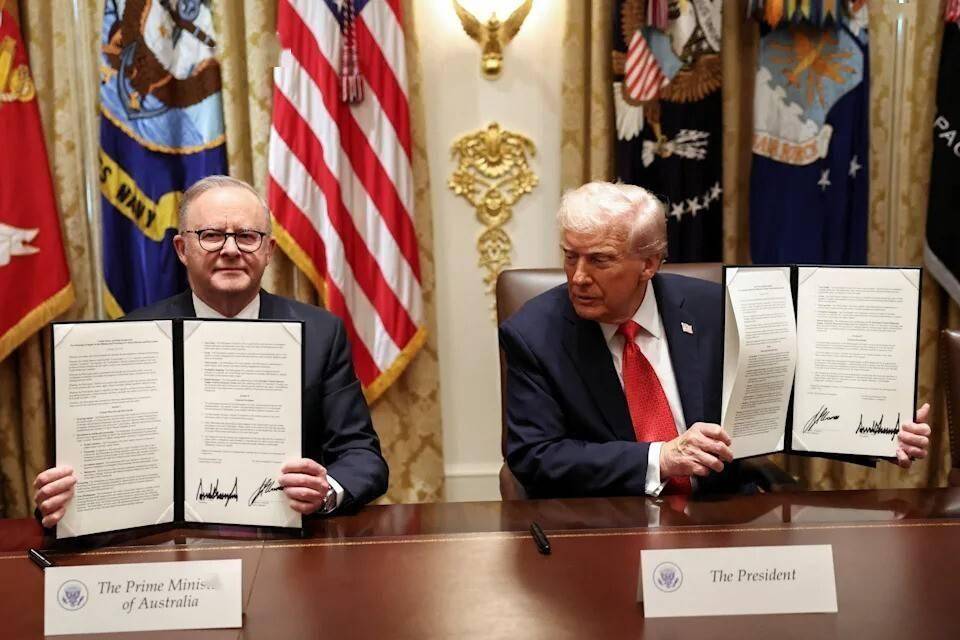
简直痴心妄想,西方应战中国稀土管制,妄图一举改变全球稀土格局
Sou Hu Cai Jing· 2025-10-22 17:30
Core Points - The US and Australia signed an $8.5 billion Critical Minerals Framework Agreement on October 20, 2023, aiming to reduce dependence on Chinese rare earths, indicating a strategic political move rather than a purely market-driven initiative [1][3] - The agreement includes commitments from both governments to invest $1 billion each within six months and attract $5 billion in private capital, highlighting the significant role of government support in the initiative [3][5] - The rare earth industry is characterized by high technical barriers and long development timelines, making it challenging for Western countries to quickly alter the existing global supply chain dominated by China [5][7] Industry Analysis - China's rare earth extraction technology, using "cascade extraction," achieves a purity of 99.99%, while Western companies primarily use traditional methods with a maximum purity of 99.5%, indicating a significant technological gap [9] - China's rare earth refining capacity is highly concentrated, with 92% of the global market share, while Australia, despite having the fourth-largest reserves, faces challenges in moving from mining to production [9][11] - The average time for Western projects to go from construction to production is about five years, compared to one to two years for Chinese companies, which raises concerns about the ability of Western initiatives to meet global demand by 2030 [9][11] Cost Considerations - The cost of extracting rare earths in Australia is $80 per kilogram, significantly higher than China's $35, and the cost of building a separation plant in the US is 2.3 times that of China, indicating a systemic cost disadvantage for Western countries [11] - Even with technological advancements and mining rights, Western companies may still struggle to compete with China's lower costs, which are not solely based on technology but also on overall system efficiency [11] Policy and Strategic Implications - China has implemented strict regulations on rare earth resources, including the 2024 Rare Earth Management Regulations, which emphasize state ownership and controlled extraction, effectively tightening its grip on the industry [11][13] - The Chinese government has a history of using rare earth resources as a strategic asset, with past export quotas and recent export controls on technologies containing Chinese components, reinforcing its influence in the global market [13][15] - The geopolitical landscape surrounding rare earths is complex, with historical tensions and strategic maneuvers indicating that the competition is not merely about supply but also about control and influence [15][19] Conclusion - The US-Australia agreement, while ambitious, faces numerous challenges rooted in technological, cost, and regulatory factors, suggesting that the path to reducing reliance on Chinese rare earths is fraught with difficulties [19] - The competition in the rare earth sector is not just a matter of financial investment but requires a deep understanding of the industry dynamics, technological capabilities, and geopolitical strategies [19]
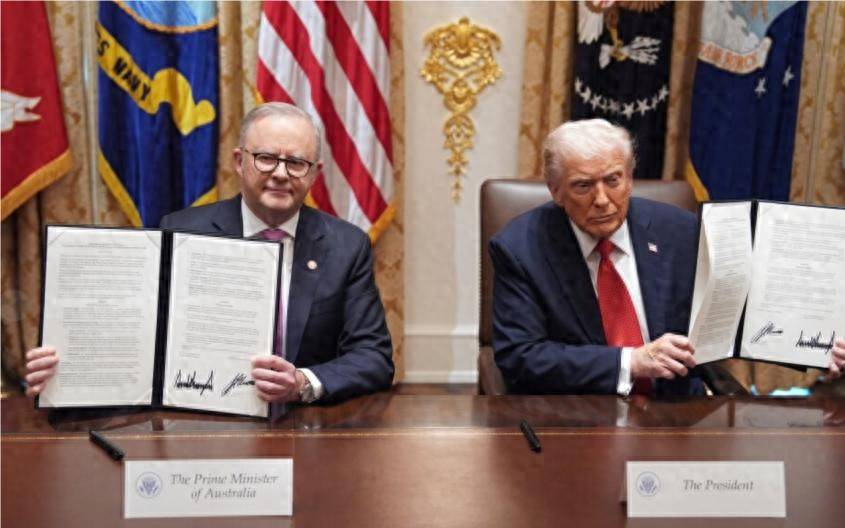
冲中国稀土地位?美澳85亿稀土协议落地,特朗普:量多到用不完
Sou Hu Cai Jing· 2025-10-22 15:51
Core Viewpoint - The article discusses the strategic importance of rare earth elements in technology and military applications, highlighting the U.S. efforts to reduce dependence on China for these critical materials through a new agreement with Australia [2][3]. Group 1: U.S.-Australia Rare Earth Agreement - The U.S. and Australia have established an $8.5 billion rare earth supply framework agreement, with plans for both governments to invest over $1 billion each in the next six months, totaling over $3 billion for Australian mining projects [2][3]. - The agreement includes a $2.2 billion financing commitment from the U.S. Export-Import Bank to seven Australian companies, focusing on key projects like a gallium metal refinery in Western Australia [3]. - The collaboration aims to create a supply chain independent of China, with potential joint projects involving Japan [3]. Group 2: China's Dominance in Rare Earths - China holds approximately 37% of global rare earth reserves, with a production share exceeding 69%, making it the dominant player in the industry [5][6]. - The country has a complete supply chain for rare earths, from mining to refining, and controls 85% of domestic mining quotas and 90% of refining capacity [5]. - China's technological advancements in rare earth processing, including a high purity separation technology, give it a significant competitive edge [5]. Group 3: Challenges for U.S.-Australia Cooperation - Despite the agreement, experts suggest that it will be challenging for the U.S. and Australia to significantly reduce China's dominance in the short term due to the latter's extensive resources and established supply chain [6]. - Australia’s processing capabilities still rely heavily on China, and building independent processing facilities will take years and face environmental and technical hurdles [6]. - The initial market reaction to the agreement has been positive, with Australian rare earth stocks seeing a rise, but long-term production increases will take years to materialize [6]. Group 4: Geopolitical Context - The agreement is part of a broader strategy by the U.S. to counter China's influence amid escalating geopolitical competition, with the U.S. also increasing tariffs on Chinese imports [8]. - Australia’s strategic position as an ally is enhanced by its involvement in the AUKUS nuclear submarine agreement, which further solidifies its role in U.S. supply chain strategies [8]. Group 5: Future Implications - The agreement may encourage other countries to develop their rare earth resources, with nations like Pakistan, Kazakhstan, and Uzbekistan exploring new mining opportunities [10]. - The rising global demand for rare earths, driven by electric vehicles and green energy, is expected to increase the importance of these materials in the coming years [10].
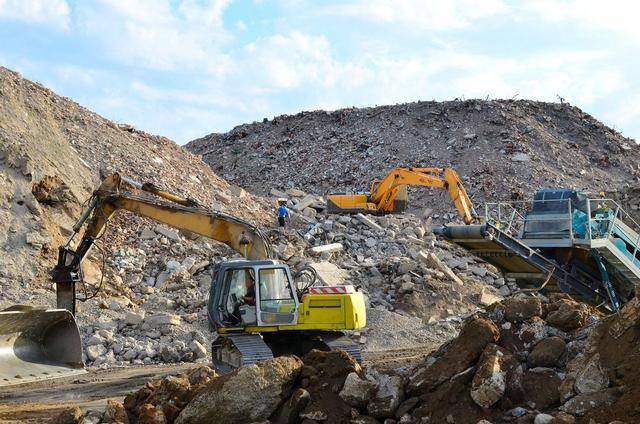
冲中国稀土地位?一觉醒来,美澳85亿稀土协议落地,特朗普夸口:一年后将有好多稀土,都用不完
Sou Hu Cai Jing· 2025-10-22 09:23
Core Viewpoint - The recent $8.5 billion rare earth cooperation agreement between the US and Australia aims to reduce dependence on China, which currently dominates the rare earth market with over 80% of processing capabilities and nearly half of global reserves [1][3][9] Group 1: Importance of Rare Earths - Rare earth elements are crucial for high-tech industries, including mobile chips, military equipment, and electric vehicles [1] - China possesses a complete industrial chain for rare earths, from mining to processing, making it a formidable player in the market [1][3] Group 2: US-Australia Cooperation Agreement - The agreement involves both countries investing $1 billion each over the next six months, along with financing from the US Export-Import Bank, to support rare earth projects in Australia [3] - A gallium refining plant is planned in Australia, as gallium is essential for radar technology [3] - A dedicated task force will monitor rare earth supply, and both governments will gain partial ownership of related mining facilities [3] Group 3: Challenges and Limitations - Australia lacks the processing capabilities and infrastructure that China has developed over decades, making large-scale production challenging [4][6] - Environmental concerns in Australia may hinder the development of high-pollution rare earth projects, facing opposition from local communities and environmental groups [4] - Experts suggest that even with national project status, it could take at least five years for Australia to catch up to China's processing capabilities [6] Group 4: Political Context and Reactions - The agreement is intertwined with military cooperation, as Australia seeks to purchase nuclear-powered submarines from the US [6] - Domestic reactions in Australia are mixed, with some supporting the agreement for strengthening ties with the US, while others fear loss of pricing power and autonomy in rare earth exports [6][7] - The Australian government has been criticized for its approach to China, with recent incidents perceived as attempts to curry favor with the US [7] Group 5: US-China Relations - The US is attempting to negotiate with China by offering to lower tariffs in exchange for concessions on rare earth controls and other issues [9] - The overall sentiment is that the US-Australia agreement, while significant, faces substantial hurdles and is unlikely to disrupt China's dominant position in the rare earth sector in the short term [9]
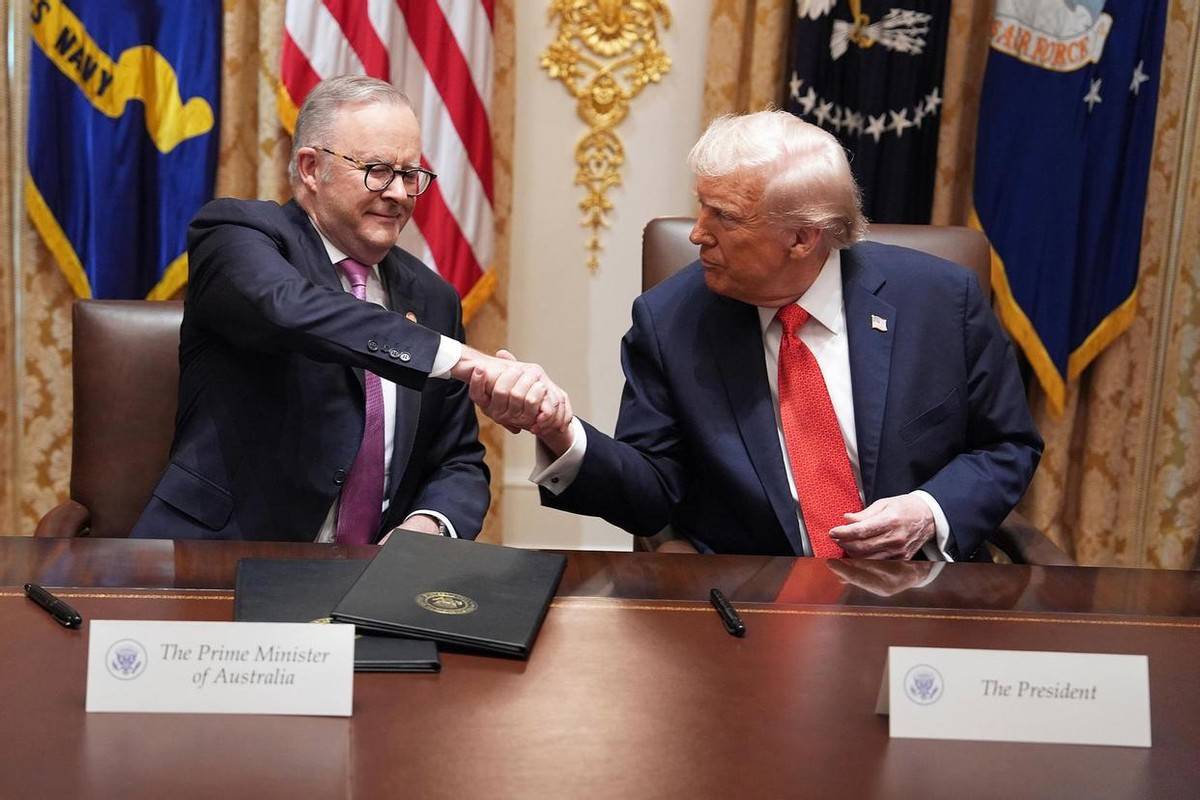
美澳联手迎战,特朗普要废掉中国稀土底牌:一年后稀土多到用不完
Sou Hu Cai Jing· 2025-10-22 08:20
Core Points - The article discusses a significant $8.5 billion agreement between Australia and the U.S. aimed at securing rare earth minerals, particularly in the context of countering China's dominance in this sector [1][3]. - The agreement includes a commitment from both governments to invest $1 billion each in mining and initial processing over the next six months, focusing on projects in Western Australia [3][5]. - The strategic goal is to enhance resource security while reducing reliance on China, especially in critical industries such as high-end manufacturing, military, and clean energy [5][7]. Investment and Economic Implications - The U.S. and Australia are looking to stabilize rare earth prices by setting price floors, indicating a market intervention strategy to prevent price wars [3][32]. - The collaboration is seen as a political advantage for Trump, providing a narrative for his campaign while addressing supply risks from China's export controls [7][20]. - Australia’s rare earth reserves are primarily light rare earths, with limited high-value heavy rare earths, posing challenges for the country to catch up in processing capabilities [9][14]. Industry Challenges - China controls approximately one-third of global rare earth reserves but dominates nearly 90% of refining capacity, creating a significant competitive barrier for the U.S. and Australia [9][11]. - The complete rare earth industry chain in China, from mining to manufacturing, presents a formidable challenge for other countries attempting to replicate this model [11][28]. - Establishing a high-purity rare earth processing facility can take three to eight years, with costs estimated to be 30%-40% higher than in China, complicating the competitiveness of U.S. and Australian operations [20][22][24]. Long-term Strategic Outlook - The article emphasizes that the real competition lies in the ability to convert resources into added value, with China currently excelling in this area [28][32]. - The U.S. and Australia’s efforts appear to be more of a contingency plan rather than a fully developed strategy, raising questions about their ability to execute effectively [30][34]. - The ongoing geopolitical tension and strategic anxiety regarding resource independence highlight the importance of who can sustain their operations and adapt quickly in this evolving landscape [34][35].
中欧将讨论中国稀土出口管制问题
Xin Lang Cai Jing· 2025-10-22 07:56
"中方有关部门已经发布了相关的消息稿,你可以查阅。"郭嘉昆强调,中欧经贸关系的本质是优势互 补、互利共赢。希望欧方恪守支持自由贸易、反对贸易保护主义的承诺,为各国企业提供公平透明、非 歧视的营商环境,以实际行动维护市场经济和世贸组织规则,坚持通过对话协商妥善解决贸易分歧。 10月22日,外交部发言人郭嘉昆主持例行记者会。法新社记者提问,在与中国商务部部长王文涛会谈之 后,欧盟委员会贸易和经济安全委员谢夫乔维奇表示,欧盟和中国官员已同意在布鲁塞尔举行紧急会 谈,讨论中国针对稀土的出口管制问题。外交部能否确认这一会谈并提供更多信息? 来源:智通财经 ...
中国风电锚定“50亿千瓦”新目标,央企现代能源ETF(561790)备受关注,石化油服涨停
Xin Lang Cai Jing· 2025-10-22 05:54
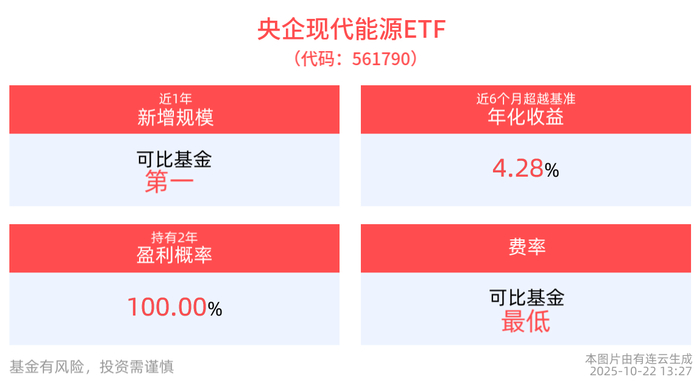
Core Insights - The China Securities National New State-Owned Enterprises Modern Energy Index has seen a slight decline of 0.13% as of October 22, 2025, with mixed performance among constituent stocks [3] - The "Wind Energy Beijing Declaration 2.0" was released on October 20, 2025, at the International Wind Energy Conference, setting ambitious targets for wind power installation during the 14th and 15th Five-Year Plans [3] Group 1: Market Performance - The top-performing stocks include PetroChina Oilfield Services, which rose by 10.00%, and China Nuclear Engineering, which increased by 4.10% [3] - The recent trading volume for the National Modern Energy ETF was 161.57 million yuan, with a turnover rate of 3.62% [3] - Over the past year, the National Modern Energy ETF has seen an average daily trading volume of 615.35 million yuan [3] Group 2: Policy Changes - Starting November 1, 2025, the 50% VAT refund policy for onshore wind power will be canceled, while the policy for offshore wind power will continue until the end of 2027 [4] - The cancellation of tax incentives for onshore wind power is expected to impact net profits by approximately 19%, creating short-term pressure on profitability [4] Group 3: Industry Outlook - Despite the short-term challenges, the long-term outlook for the wind power industry remains robust due to China's commitment to its "dual carbon" strategy [4] - The wind power supply chain is anticipated to enter a recovery phase, with a focus on leading turbine manufacturers and offshore expansion [4] - The "Two Seas" strategy for wind power equipment is expected to enhance market share and overall profitability for companies in the sector [4] Group 4: Index Composition - As of September 30, 2025, the top ten weighted stocks in the index include Changjiang Electric Power and China Nuclear Power, accounting for 47.72% of the index [6]



西方应战中国稀土管制,想要一举改变全球稀土格局
Sou Hu Cai Jing· 2025-10-22 05:46
Core Viewpoint - The primary objective of the recent agreement between the US and Australia is to secure the rare earth supply chain and reduce dependence on China, which has become a significant concern for both countries [1][3]. Group 1: Investment and Financial Commitment - The US and Australia plan to invest $3 billion within six months, with the potential to unlock a $53 billion mining market [3]. - The US Export-Import Bank has issued seven financing letters totaling over $2.2 billion, indicating a strong financial commitment to this initiative [3]. - A price floor of $110 per kilogram for neodymium-praseodymium magnets has been set, which is higher than the market price, aimed at encouraging Australian mining companies to invest [3]. Group 2: Technological Challenges - The critical challenge for the West is the technology required for rare earth separation and purification, which is not easily achievable despite financial investments [5][9]. - China holds a significant technological advantage with 439 exclusive extraction patents and accounts for 82% of new global rare earth patents expected by 2025, compared to the US's 7% [5][9]. - The US's largest rare earth company, MP Materials, struggles with heavy rare earth separation and relies on China for the purification of 92% of its concentrate [7]. Group 3: Supply Chain Dynamics - China dominates the global rare earth supply chain, producing nearly 70% of the world's rare earths and 92% of refining capacity, making it difficult for the West to establish an independent supply chain [7][9]. - The recent geopolitical tensions have heightened the sensitivity around rare earths, prompting the West to accelerate efforts to create alternative supply chains [9][11]. - China's recent export controls on rare earth technologies further complicate the West's efforts to reduce reliance on Chinese resources and expertise [7][11]. Group 4: Future Outlook - The West's attempts to establish a "de-China" supply chain are still in the early stages, with significant challenges ahead in terms of technology and industry chain development [9][11]. - The competition for rare earths is evolving into a contest of technology and industry chain control, with China's decades of accumulation providing a substantial advantage [11]. - The future dynamics of the rare earth market will depend on which side can advance their technology and industry chain capabilities more rapidly [11].
美国打算拉G7当外援,抱团应对中国稀土反制,已注定了必败的结局
Sou Hu Cai Jing· 2025-10-22 04:38
Core Viewpoint - The article discusses the challenges faced by the G7 and its allies in countering China's dominance in the rare earth market, highlighting the limitations of political alliances against market realities [3][10]. Group 1: G7's Response to China's Rare Earth Regulations - Following China's new rare earth export regulations, the U.S. led a coalition of G7, EU, India, and Australia to discuss joint measures [3]. - The G7's plan includes setting a price floor for rare earths to stimulate domestic mining, which contradicts basic resource trade logic [5]. - The U.S. claims that it will communicate with other "democratic countries" in Asia, but historical attempts at similar alliances have failed to resolve resource challenges [3][10]. Group 2: Structural Advantages of China - China controls 92% of the processing capacity for rare earths, giving it a structural advantage in price setting [5]. - The timeline for developing domestic rare earth mines in the U.S. is approximately 29 years, making it impractical to meet current demands [5]. - G7's goal to achieve 50% self-sufficiency in critical minerals by 2030 is unrealistic given the current 60% shortfall faced by European automakers [5]. Group 3: Global Economic Shifts - Major mining CEOs in the West acknowledge that China's technological and pricing advantages in rare earths are irreplaceable [7]. - There is a noticeable shift in global trade practices, with countries like India and Chile increasing their use of the Chinese yuan for resource transactions, indicating a weakening of the dollar's dominance [7]. - Companies like Tesla and BMW continue to invest in China, while Apple’s CEO has committed to expanding investments in the Chinese market despite U.S. pressures [7]. Group 4: Implications for G7 Allies - G7 allies face a dilemma: aligning with U.S. pressure on China could jeopardize their own industries reliant on rare earths, risking cost disadvantages and potential relocation [9]. - The article suggests that G7 countries must make rational decisions in light of their dependencies on rare earths [9]. Group 5: Conclusion on Market Dynamics - The G7's collective response to China's rare earth regulations reflects a Cold War mentality that fails to address market realities [10]. - Historical evidence shows that alliances without shared interests are likely to disintegrate, and interventions that contradict market principles are destined to fail [10]. - The core of the rare earth competition lies in who controls the entire supply chain and market influence, rather than political alignments [10].

中国稀土战略地位进一步强化,稀土ETF嘉实(516150)近5日“吸金”22.51亿元,机构:稀土价格有望进一步上涨
Xin Lang Cai Jing· 2025-10-22 02:23
Core Insights - The China Rare Earth Industry Index has decreased by 1.58% as of October 22, 2025, with mixed performance among constituent stocks, led by Shengxin Lithium Energy with a rise of 1.81% [1] - The recent tightening of rare earth export controls by the Ministry of Commerce is expected to strengthen China's strategic position in the rare earth market, potentially leading to increased prices [3] Group 1: Market Performance - The rare earth ETF, Jiashi, has seen a turnover of 1.52% and a transaction volume of 1.61 billion yuan, with its latest scale reaching 10.875 billion yuan, marking a new high since its inception [2] - Over the past week, Jiashi's shares increased by 5.76 million, leading the comparable funds in terms of new share growth [2] - In the last five trading days, Jiashi has experienced net inflows on four occasions, totaling 2.251 billion yuan [2] Group 2: Fund Performance - As of October 21, 2025, Jiashi's net value has increased by 91.40% over the past two years, ranking 79th out of 2,358 index equity funds, placing it in the top 3.35% [2] - The highest monthly return since inception for Jiashi was 41.25%, with the longest consecutive monthly gain being four months and a maximum increase of 83.89% [2] Group 3: Industry Dynamics - The recent policy changes include increased export controls on five categories of medium and heavy rare earths, as well as restrictions on equipment, technology, and raw materials across the entire industry chain [3] - These measures are expected to complicate the establishment of independent rare earth supply chains overseas, thereby enhancing China's competitive advantage in the long term [3] - The limitations on overseas supply of rare earth magnetic materials are anticipated to boost demand for high-performance ferrite permanent magnets, leading to a significant increase in orders [3] Group 4: Key Stocks - The top ten weighted stocks in the China Rare Earth Industry Index account for 61.96% of the index, with notable performers including Northern Rare Earth and China Rare Earth, which saw declines of 2.69% and 1.81% respectively [2][5]
