NATA OPTO-ELECT(300346)

Search documents
南大光电:宁波南大光电主要从事中高端光刻胶的研发和产业化,核心原材料由公司自主开发
Mei Ri Jing Ji Xin Wen· 2025-12-30 04:00
Group 1 - The core viewpoint of the article revolves around the potential impact of stricter export approvals for photoresists from Japan on leading companies in the sector, such as Strongly New Materials and Jiu Ri New Materials [1] - The company, Nanda Optoelectronics, focuses on the research and industrialization of mid-to-high-end photoresists, specifically ArF and KrF photoresists, and is currently concentrating on product validation and process stability [1] - The core raw materials for the company's products are developed in-house, indicating a level of self-sufficiency in their supply chain [1]

氟化工概念下跌1.61%,10股主力资金净流出超亿元
Zheng Quan Shi Bao Wang· 2025-12-29 09:28
Group 1 - The fluorochemical sector experienced a decline of 1.61%, ranking among the top losers in concept sectors, with major declines seen in companies like Hongyuan Pharmaceutical, Duofluoride, and Shenzhen New Star [1] - The top gainers in the fluorochemical sector included Hainan Mining, Shangwei Co., and Ankao Intelligent Electric, with respective increases of 3.09%, 3.06%, and 1.36% [1] - The overall market saw significant net outflows from the fluorochemical sector, totaling 4.951 billion yuan, with 50 stocks experiencing net outflows, and 10 stocks seeing outflows exceeding 100 million yuan [1] Group 2 - Duofluoride led the net outflow with 1.114 billion yuan, followed by Tianji Co., Tianqi Materials, and Nanda Optoelectronics with outflows of 1.045 billion yuan, 565 million yuan, and 382 million yuan respectively [1] - The stocks with the highest net inflows included Yuntianhua, Huabang Health, and Zhongmi Holdings, with net inflows of 123 million yuan, 2.05 million yuan, and 800,900 yuan respectively [1] - The fluorochemical sector's outflow leaderboard featured Duofluoride with a decline of 8.06%, Tianji Co. with a slight increase of 0.40%, and Tianqi Materials with a decrease of 3.80% [2]


半导体设备ETF(561980)盘中拉升,下游存储、晶圆涨价持续,AI驱动超级周期
Jin Rong Jie· 2025-12-29 03:01
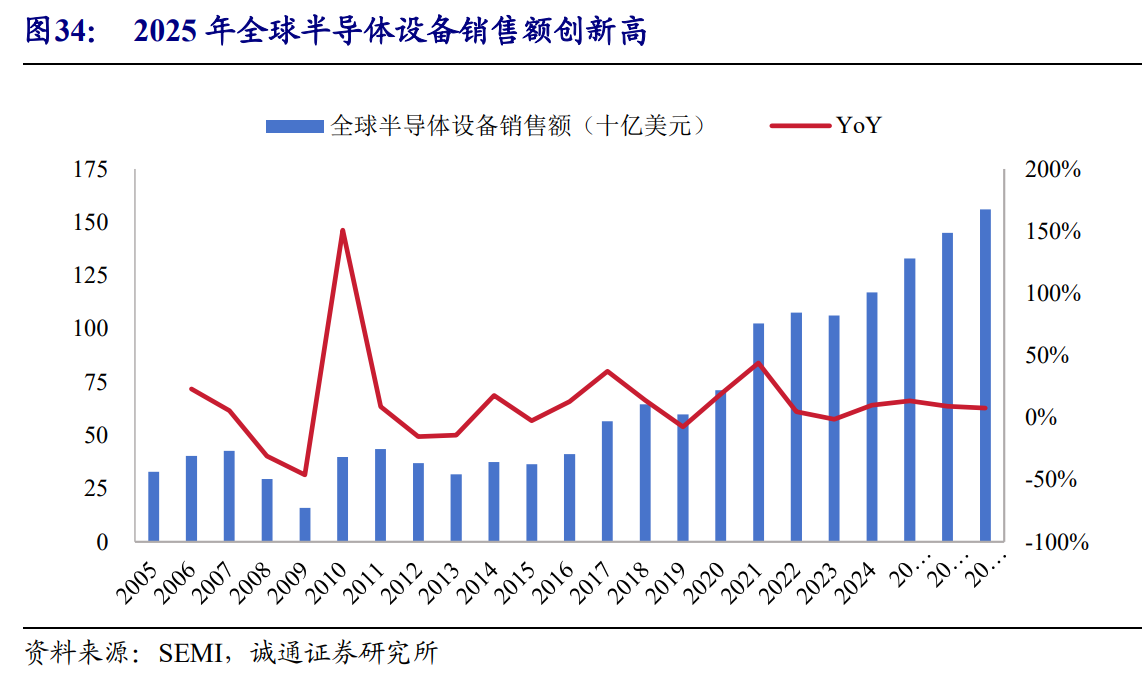
Group 1 - The Shanghai Composite Index opened lower but rose to challenge a nine-day winning streak, with strength in computing chip sectors. The semiconductor equipment ETF (561980) increased by 0.29%, with stocks like Cambricon and Liandong Technology rising over 4% [1] - The semiconductor equipment ETF (561980) has seen continuous capital inflow, with over 47 million yuan net inflow for two consecutive trading days [1] - According to a report by Chengtong Securities, semiconductor investments driven by AI should focus on two main lines: high-end logic chips and memory (HBM) that directly benefit from the surge in computing demand, and opportunities for domestic substitution in the semiconductor equipment sector [1] Group 2 - The storage market is experiencing price increases, with NAND flash wafer prices rising over 10% in December, and SSD prices increasing by 15% to 20%. Major suppliers like Samsung and SK Hynix have raised HBM3E prices by nearly 20% for 2026 [2] - Foundries are also raising prices, with SMIC implementing price increases of about 10% on some capacities [3] - The duration and magnitude of the storage price increase cycle have exceeded expectations, with projections for accelerated growth in domestic semiconductor equipment orders by 2026 due to AI demand driving global storage and advanced process capacity expansion [4] Group 3 - The global semiconductor equipment market is expected to grow significantly, with total sales projected to reach $133 billion by 2025, a 13.7% increase year-on-year, and further growth anticipated in the following years [5] - The domestic semiconductor equipment industry is seeing improvements in process coverage and market share, with domestic rates exceeding 50% in certain areas like etching and cleaning, while core high-end segments remain below 10%, indicating substantial room for domestic substitution [7] Group 4 - The semiconductor equipment ETF (561980) tracks the CSI semiconductor index, with nearly 60% of its components in "equipment" and over 90% in upstream sectors of the chip industry, highlighting significant domestic substitution potential [11] - The index focuses on leading companies in the sector, with the top ten holdings accounting for nearly 80% of the index, showing high elasticity characteristics. As of December 24, the CSI semiconductor index has seen a year-to-date increase of over 63% [11]






南大光电涨2.29%,成交额18.07亿元,主力资金净流出3048.24万元
Xin Lang Zheng Quan· 2025-12-24 05:30
Core Viewpoint - Nanda Optoelectronics has shown a significant stock price increase of 47.14% year-to-date, with a recent trading volume indicating active market participation, despite a slight decline in the last five trading days [1] Group 1: Stock Performance - As of December 24, Nanda Optoelectronics' stock price rose by 2.29% to 46.93 CNY per share, with a trading volume of 1.807 billion CNY and a turnover rate of 6.02%, resulting in a total market capitalization of 32.436 billion CNY [1] - The stock has experienced a 0.61% decline over the last five trading days, but has increased by 20.30% over the past 20 days and 22.95% over the last 60 days [1] Group 2: Financial Performance - For the period from January to September 2025, Nanda Optoelectronics reported a revenue of 1.884 billion CNY, reflecting a year-on-year growth of 6.83%, and a net profit attributable to shareholders of 301 million CNY, which is a 13.24% increase compared to the previous year [2] Group 3: Shareholder Information - As of November 30, the number of shareholders for Nanda Optoelectronics reached 123,300, an increase of 4.56% from the previous period, while the average number of tradable shares per shareholder decreased by 4.36% to 5,321 shares [2] - The company has distributed a total of 507 million CNY in dividends since its A-share listing, with 293 million CNY distributed over the last three years [3] Group 4: Institutional Holdings - As of September 30, 2025, notable institutional shareholders include E Fund's ChiNext ETF, holding 12.5014 million shares, and Southern CSI 500 ETF, holding 10.0607 million shares, both of which have seen a reduction in holdings [3] - New institutional shareholders include Guotai Junan's semiconductor materials and equipment theme ETF, holding 7.2704 million shares, and Guolian An's semiconductor ETF, holding 4.7250 million shares [3]
存储和逻辑产能持续扩张,全球半导体设备规模新高,机构:产业链或迎新一轮高速增长机遇
Sou Hu Cai Jing· 2025-12-23 02:25
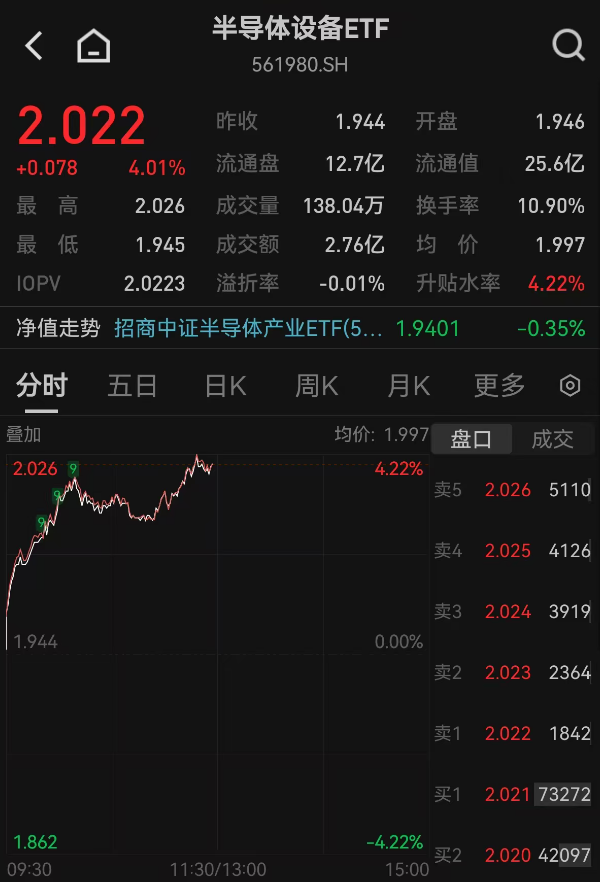
Core Viewpoint - The semiconductor industry is experiencing significant growth driven by advancements in AI and related technologies, with a notable increase in demand for semiconductor manufacturing equipment and storage solutions [1][2][9]. Industry Performance - Major indices showed upward movement, with the semiconductor equipment ETF rising by 4.22%, reaching a scale of 2.454 billion yuan, and several component stocks hitting new highs [1]. - The global semiconductor manufacturing equipment sales are projected to reach $133 billion in 2025, marking a 13.7% year-on-year increase, with further growth expected in 2026 and 2027 [9][10]. Technological Advancements - Researchers at Shanghai Jiao Tong University have achieved a breakthrough in optical computing chips, creating the "Light" chip that supports large-scale semantic media generation models, positioning China as a leader in the optical chip sector [5]. - The demand for high-bandwidth memory (HBM) is expected to rise significantly due to AI deployment and ongoing technological migration, leading to increased capital expenditure in the memory sector [1][2]. Market Trends - The prices of embedded NAND and DRAM are forecasted to increase by 30% and 45% respectively in Q4, with further substantial increases anticipated in Q1 [7]. - The global semiconductor sales are expected to reach $772.2 billion in 2025, reflecting a 22.5% year-on-year growth, with an upward revision for 2026 to $975.4 billion, indicating a 26.3% increase [8]. Investment Opportunities - The semiconductor equipment sector is seen as a cornerstone of the semiconductor industry, with significant potential for domestic substitution and growth driven by AI-related investments [2][3]. - Companies with strong positions in storage equipment are expected to benefit from the ongoing expansion of advanced storage and logic production capacities [17].


光刻胶概念涨2.91%,主力资金净流入这些股
Zheng Quan Shi Bao Wang· 2025-12-22 08:39
Group 1 - The photoresist concept sector rose by 2.91%, ranking 10th among concept sectors, with 62 stocks increasing in value, including Xingye Co., which hit the daily limit, and Aisen Co., Andar Intelligent, and Shanghai Xinyang, which rose by 18.65%, 17.61%, and 15.88% respectively [1][2] - The photoresist sector saw a net inflow of 1.524 billion yuan from main funds, with 46 stocks receiving net inflows, and 8 stocks exceeding 50 million yuan in net inflow. Dongcai Technology led with a net inflow of 557 million yuan, followed by Guofeng New Materials, Nanda Optoelectronics, and Xingye Co. with net inflows of 365 million yuan, 185 million yuan, and 110 million yuan respectively [2][3] Group 2 - In terms of net inflow ratios, Xingye Co., Dongcai Technology, and Guofeng New Materials had the highest ratios at 37.06%, 20.11%, and 18.23% respectively [3] - The top stocks in the photoresist concept by net inflow included Dongcai Technology with a daily increase of 9.95% and a turnover rate of 11.51%, Guofeng New Materials with a 6.79% increase and a turnover rate of 23.44%, and Nanda Optoelectronics with a 5.25% increase and a turnover rate of 11.52% [3][4]


机构指向强确定性和弹性兼备的科技主线!半导体设备大涨4%
Jin Rong Jie· 2025-12-22 06:09
Group 1 - The semiconductor chip market is experiencing significant activity, with Kema Technology hitting the daily limit up, and the semiconductor equipment ETF (561980) rising over 4% this week, with a trading volume of 276 million yuan [1][11] - Major stocks in the semiconductor equipment sector, including Kema Technology, Shanghai Xinyang, and Aisen Co., have shown strong performance, with Kema Technology reaching the daily limit and others like Shanghai Xinyang and Aisen Co. increasing by over 17% and 16% respectively [1][14] - The semiconductor equipment ETF (561980) tracks the CSI semiconductor index, with nearly 60% of its components being equipment-related, and it has achieved a year-to-date increase of 54.82%, ranking first among major semiconductor indices [1][11][14] Group 2 - The rapid development of Chinese chip technology is expected to disrupt companies like Nvidia by 2026 or 2027, as highlighted by Bloomberg and supported by analysts from major financial institutions [3] - The ongoing AI infrastructure boom is driving demand for advanced chips, with a focus on 3nm and below processes, indicating a robust long-term bull market for semiconductor equipment [3][11] - Domestic chip companies are accelerating their globalization and capitalization processes, with significant IPOs such as Moore Threads and Muxi Technology marking a notable trend in the industry [4][5] Group 3 - The storage chip sector is also seeing a surge in IPO activities, with companies like Changxin Technology and Yangtze Memory Technologies planning to go public, which is expected to enhance capacity construction [5][6] - According to CFM's market outlook, there is a projected supply shortage for server eSSD and DDR5 RDIMM, with prices expected to rise significantly, indicating strong demand driven by AI [6][8] - The global semiconductor sales forecast for 2026 has been revised upwards to $975.4 billion, reflecting a recovery driven by sustained AI demand [8][11]


南大光电股价涨5.14%,国泰基金旗下1只基金重仓,持有727.04万股浮盈赚取1621.29万元
Xin Lang Cai Jing· 2025-12-22 02:36
Group 1 - Nanda Optoelectronics experienced a stock price increase of 5.14%, reaching 45.65 CNY per share, with a trading volume of 1.179 billion CNY and a turnover rate of 4.07%, resulting in a total market capitalization of 31.551 billion CNY [1] - The company, Jiangsu Nanda Optoelectronics Materials Co., Ltd., was established on December 28, 2000, and went public on August 7, 2012. It specializes in the production, research, and sales of advanced electronic materials, with applications in integrated circuits, flat panel displays, LEDs, third-generation semiconductors, photovoltaics, and semiconductor lasers [1] - The revenue composition of Nanda Optoelectronics includes specialty gas products at 60.95%, precursor materials (including MO sources) at 27.80%, other products at 7.02%, and additional items at 4.23% [1] Group 2 - The Guotai Fund's Guotai Zhongzheng Semiconductor Materials and Equipment Theme ETF (159516) entered the top ten circulating shareholders of Nanda Optoelectronics in the third quarter, holding 7.2704 million shares, which is 1.11% of the circulating shares, with an estimated floating profit of approximately 16.2129 million CNY [2] - The Guotai Zhongzheng Semiconductor Materials and Equipment Theme ETF (159516) was established on July 19, 2023, with a current scale of 8.299 billion CNY. It has achieved a year-to-date return of 47.6%, ranking 530 out of 4,197 in its category, and a one-year return of 40.75%, ranking 651 out of 4,152 [2] - The fund manager of the Guotai Zhongzheng Semiconductor Materials and Equipment Theme ETF is Ai Xiaojun, who has a total tenure of 11 years and 347 days, managing assets totaling 169.029 billion CNY, with the best fund return during his tenure being 276.01% and the worst being -46.54% [3] Group 3 - The Guotai Zhongzheng Semiconductor Materials and Equipment Theme ETF (159516) increased its holdings in Nanda Optoelectronics by 4.1154 million shares in the third quarter, bringing the total to 7.2704 million shares, which constitutes 3.8% of the fund's net value, making it the seventh-largest holding [4]
国家大基金持股概念下跌0.56% 主力资金净流出29股
Zheng Quan Shi Bao Wang· 2025-12-19 09:39
Group 1 - The National Big Fund holding concept declined by 0.56%, ranking among the top declines in concept sectors, with stocks like Jiangbolong, Nanda Optoelectronics, and Saiwei Electronics experiencing significant drops [1][2] - Among the 23 stocks that rose, Beidouxingtong, Sitwei, and Robot saw increases of 2.06%, 1.94%, and 1.49% respectively [1][2] - The National Big Fund holding concept experienced a net outflow of 1.604 billion yuan, with 29 stocks seeing net outflows, and 5 stocks exceeding 100 million yuan in outflows, led by Saiwei Electronics with a net outflow of 692.86 million yuan [2][3] Group 2 - The top net inflow stocks included ShenNan Circuit, SMIC, and Northern Huachuang, with net inflows of 147 million yuan, 125 million yuan, and 108 million yuan respectively [2][4] - The stocks with the highest net outflows included Saiwei Electronics (-3.49%), Jiangbolong (-5.64%), and Nanda Optoelectronics (-3.53%) [3][4] - The trading activity showed that the turnover rates for these stocks varied, with Saiwei Electronics at 17.14% and Jiangbolong at 6.72% [3]


存储芯片概念下跌0.64% 10股主力资金净流出超亿元
Zheng Quan Shi Bao Wang· 2025-12-19 09:39
资金面上看,今日存储芯片概念板块获主力资金净流出27.15亿元,其中,103股获主力资金净流出,10 股主力资金净流出超亿元,净流出资金居首的是香农芯创,今日主力资金净流出4.50亿元,净流出资金 居前的还有江波龙、南大光电、德明利等,主力资金分别净流出4.35亿元、3.37亿元、2.45亿元。今日 主力资金净流入居前的概念股有澜起科技、深南电路、中芯国际等,主力资金分别净流入2.21亿元、 1.47亿元、1.25亿元。(数据宝) 存储芯片概念资金流出榜 截至12月19日收盘,存储芯片概念下跌0.64%,位居概念板块跌幅榜前列,板块内,神工股份、德明 利、德福科技等跌幅居前,股价上涨的有69只,涨幅居前的有航天智装、杭氧股份、精智达等,分别上 涨6.23%、5.41%、5.27%。 今日涨跌幅居前的概念板块 | 概念 | 今日涨跌幅(%) | 概念 | 今日涨跌幅(%) | | --- | --- | --- | --- | | 海南自贸区 | 5.33 | 光刻机 | -0.73 | | 乳业 | 3.73 | 存储芯片 | -0.64 | | 免税店 | 3.35 | 国家大基金持股 | -0.56 | ...