
NATA OPTO-ELECT(300346)

Search documents
AI驱动存储大周期,半导体设备确定性凸显,半导体设备ETF(561980)5日吸金2.2亿元
Sou Hu Cai Jing· 2026-01-05 01:21
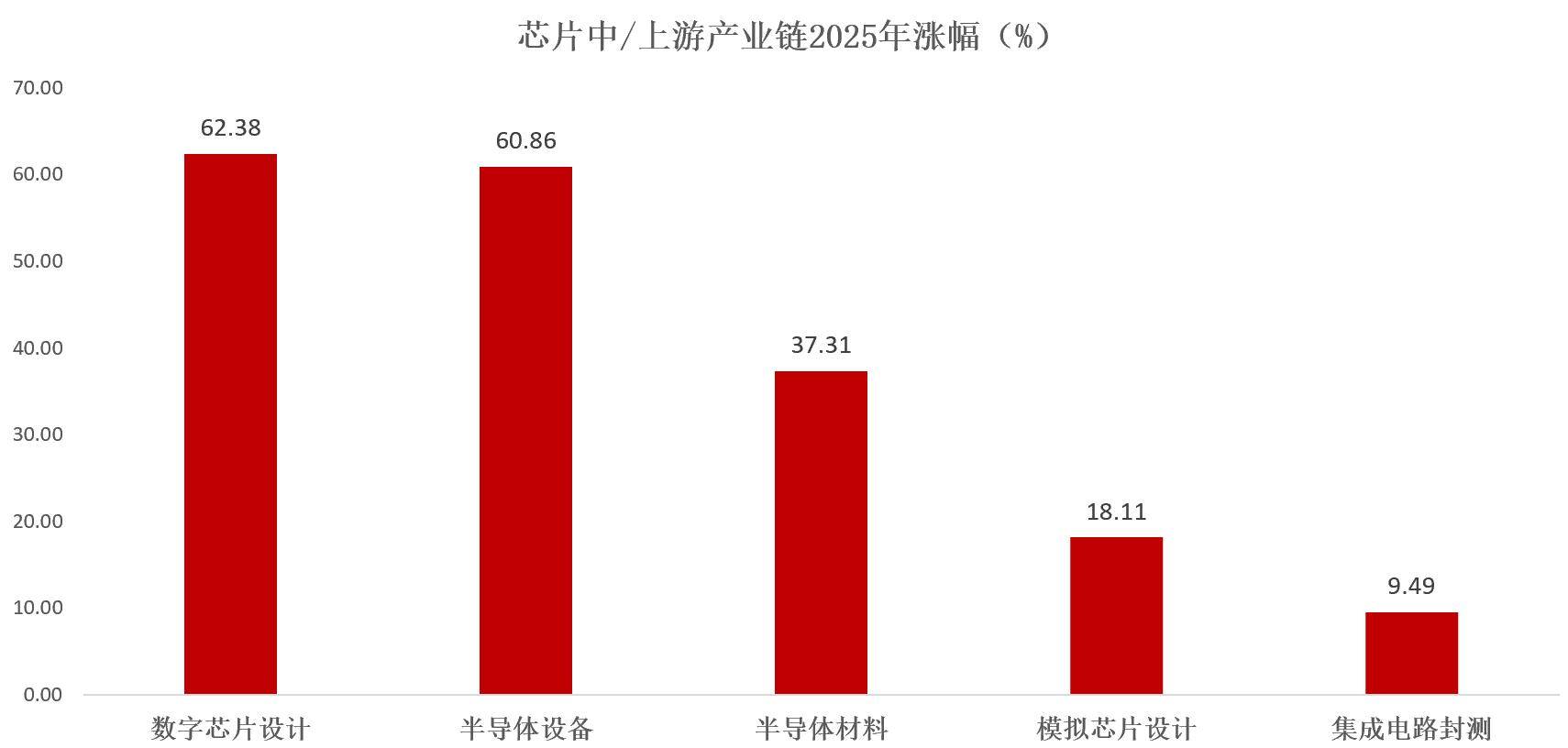
Group 1 - The semiconductor industry is expected to see significant growth, with chip design, semiconductor equipment, and materials projected to rise by 62.38%, 60.86%, and 37.31% respectively by 2025 [2] - The semiconductor theme index, focusing on the aforementioned three sectors, is anticipated to achieve a growth rate of 62.33% in 2025, with the semiconductor equipment ETF (561980) experiencing a net inflow of over 220 million yuan in the last five trading days [2] - The demand for semiconductor equipment is driven by advancements in AI and domestic substitution, particularly in the storage chip sector, which is reshaping the global pricing cycle [4][5] Group 2 - The storage chip segment accounts for approximately 30% of the integrated circuit market, making it a significant area for semiconductor equipment demand [5] - The global storage industry is entering a new upcycle, with DRAM and NAND prices rising since September 2024, and this trend is expected to continue through 2026 [5] - The shift towards 3D architecture in DRAM and NAND is projected to increase the service market for related equipment by approximately 1.7 times and 1.8 times respectively [6] Group 3 - The semiconductor equipment ETF (561980) tracks the CSI semiconductor index, which has a high concentration of leading companies in the semiconductor supply chain, with the top five companies accounting for over 50% of the index [6][8] - The CSI semiconductor index has shown a maximum increase of over 570% since the last upcycle, with a notable 63.92% increase in 2025, outperforming other semiconductor indices [7][8] - The high concentration of equipment, materials, and design sectors in the CSI semiconductor index indicates a strong potential for domestic substitution and ongoing market and policy support [8]






大国基座2025:新材料三重战线的突破与2026年体系化决战
材料汇· 2025-12-31 11:27
Core Viewpoint - The article discusses the strategic transformation of China's new materials industry by 2025, emphasizing a "three-dimensional war" approach that includes "fortress materials" for national security, "sovereign materials" for technological independence, and "fusion materials" for future industry definition [3]. Group 1: Fortress Materials - The development of safety dimension materials is closely tied to national core interests, focusing on absolute reliability and performance under extreme conditions rather than cost-effectiveness [5]. - A significant breakthrough in 2025 is the mass production of the fourth-generation single crystal high-temperature alloy turbine blades, which can withstand temperatures above 1200°C and have a lifespan increased by nearly 50% compared to previous generations [8][10]. - Continuous silicon carbide fibers have transitioned from laboratory preparation to stable engineering mass production, with a production capacity of hundreds of tons, marking a strategic leap in the aerospace sector [14][15]. Group 2: Sovereign Materials - Sovereign materials focus on achieving "self-control" and enhancing industrial competitiveness, particularly in strategic sectors like semiconductors and high-end manufacturing [40]. - In the semiconductor sector, the production of 12-inch silicon wafers has reached a milestone with over 500,000 monthly shipments, and significant advancements in low-oxygen high-resistivity silicon wafer technology have been made [44]. - The domestic supply ratio of 300mm semiconductor silicon wafers is expected to increase from 15% to 40% by the end of 2025, significantly reducing reliance on imports [45]. Group 3: Fusion Materials - The fusion materials dimension represents a shift towards creating new demands and defining new products, characterized by the integration of materials science with cutting-edge fields like artificial intelligence and synthetic biology [72]. - AI-driven platforms for materials research have emerged, enabling rapid property prediction and screening, significantly reducing development cycles for critical materials [74]. - The integration of intelligent materials in robotics is evolving, allowing materials to interact with their environment and make autonomous decisions, marking a shift from passive components to intelligent structures [77].







盘点全球145家光刻胶企业清单及业务进展(附7张大图表)
材料汇· 2025-12-30 14:50
Key Points - The article discusses the dominance of Japanese companies in the global photoresist market, highlighting key players such as JSR, Tokyo Ohka, Shin-Etsu Chemical, and others, which cover a wide range of semiconductor, display panel, and PCB applications [2][3][4][6]. - It emphasizes the significant market shares held by these companies, with JSR leading in EUV photoresist, Tokyo Ohka excelling in various types of photoresists, and Shin-Etsu being a major supplier of semiconductor materials [2][3][4]. - The article also outlines the competitive landscape in Europe, the US, and South Korea, where companies like DuPont and Merck are noted for their technological advancements in the photoresist sector [5][6]. - Taiwanese companies are highlighted for their strong presence in the PCB and display sectors, with firms like Chang Hsing and Chi Mei leading in market share [7][8]. - The article concludes with an overview of mainland Chinese companies entering the photoresist market, focusing on their production capabilities and market strategies [10][14]. Group 1: Japanese Companies - JSR is a leading supplier of EUV photoresist, with a market share of 24% in ArF photoresist and significant revenue from its semiconductor and life sciences business [2]. - Tokyo Ohka has a comprehensive product line covering all semiconductor process nodes, with a market share of 22.8% in g/i line, 36.6% in KrF, and 38% in EUV photoresist [2]. - Shin-Etsu Chemical holds approximately 20% of the global semiconductor photoresist market and has a diverse range of semiconductor materials [2][3]. Group 2: European and American Companies - DuPont reported a net sales of $12.386 billion in 2024, with a significant portion from its electronic and industrial business, making it one of the top five semiconductor photoresist suppliers [4]. - Merck is recognized for its leadership in the TFT-LCD positive photoresist market and is advancing its EUV photoresist production capabilities [4]. - South Korean companies like Dongjin Semichem and LG Chem are focusing on domestic production of photoresists, leveraging support from major semiconductor firms like Samsung and SK Hynix [5][6]. Group 3: Taiwanese Companies - Chang Hsing is the global leader in PCB dry film photoresist, with a total revenue of approximately 10.2 billion RMB in 2024 [7]. - Chi Mei focuses on TFT-LCD color photoresist and has a market share of 20% in this segment, supported by its mainland subsidiary [7]. - Other notable Taiwanese firms include Eternal Materials and Daxin, which are expanding their product offerings in the semiconductor and display sectors [8]. Group 4: Mainland Chinese Companies - Companies like Jiangsu Nanda and Shanghai Xinyang are developing ArF and KrF photoresists, with Jiangsu Nanda achieving sales of over 10 million RMB from its ArF products [10][14]. - The article notes that while domestic companies are making strides in the photoresist market, they still rely heavily on imports for high-end products like EUV photoresists [14]. - The growth of these companies is supported by increasing demand in the semiconductor and display industries, with many firms actively pursuing R&D and validation processes [10][14].


南大光电:控股子公司宁波南大光电主要从事中高端光刻胶的研发和产业化
Zheng Quan Ri Bao Wang· 2025-12-30 13:42
Core Viewpoint - Nanda Optoelectronics (300346) is focusing on the research and industrialization of mid-to-high-end photoresists, specifically ArF and KrF photoresists, with an emphasis on product validation and process stability [1] Company Summary - The company's subsidiary, Ningbo Nanda Optoelectronics, is primarily engaged in the development and industrialization of mid-to-high-end photoresists [1] - The core raw materials for the products are developed independently by the company [1]
南大光电:主要从事先进前驱体、电子特气、光刻胶及配套材料等三类关键半导体材料的研发、生产和销售
Zheng Quan Ri Bao· 2025-12-30 08:41
Core Viewpoint - Nanda Optoelectronics focuses on the research, production, and sales of three key semiconductor materials: advanced precursors, electronic specialty gases, and photoresists along with supporting materials [2] Group 1: Company Overview - The company primarily engages in the development and production of advanced precursors, electronic specialty gases, and photoresists [2] - The electronic specialty gas segment includes hydrogen-based electronic specialty gas products such as phosphine, arsine, and safety sources, as well as fluorine-containing electronic specialty gas products like nitrogen trifluoride and sulfur hexafluoride [2]
南大光电:公司2024年度ArF光刻胶收入突破千万元,2025年保持连续稳定供货
Zheng Quan Ri Bao· 2025-12-30 08:41
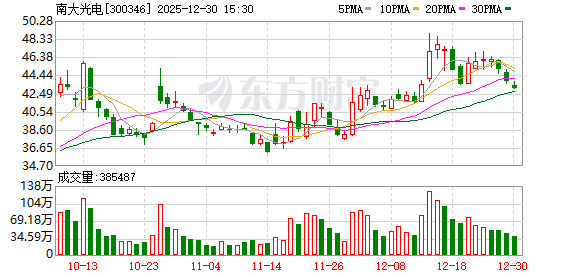
Group 1 - The company expects its ArF photoresist revenue to exceed 10 million in 2024, with stable supply continuing into 2025 [2] - Currently, the focus of the photoresist segment is on product validation and process stability, contributing minimally to the overall performance of the company [2]
南大光电(300346) - 关于对外担保额度预计的进展公告
2025-12-30 08:28
证券代码:300346 证券简称:南大光电 公告编号:2025-070 江苏南大光电材料股份有限公司 关于对外担保额度预计的进展公告 本公司及董事会全体成员保证公告内容的真实、准确和完整,没 有虚假记载、误导性陈述或重大遗漏。 一、担保额度预计的情况概述 江苏南大光电材料股份有限公司(以下简称"公司")于 2025 年 4 月 1 日召开 第九届董事会第十一次会议,2025 年 4 月 24 日召开 2024 年度股东大会,审议通过 了《关于向金融机构申请综合授信额度及对控股子公司担保额度预计的议案》,同意 公司及全资、控股子公司向银行等金融机构申请综合授信,总额不超过人民币 15 亿元, 上述融资可以公司及子公司的自有资产进行抵押、质押担保。同时,同意公 司及子公司为合并报表范围内的子公司就上述综合授信额度内的融资提供总计不超 过人民币 7 亿元的担保额度。股东会授权公司管理层在不超过已审批担保总额度的 情况下,可根据实际经营情况适度调整各子公司(含授权期限内新设立或纳入合并 范围的子公司)的担保额度。 具体内容详见公司刊登在中国证监会指定创业板信息披露网站的《关于向金融 机构申请综合授信额度及对控股子公司 ...
南大光电(300346.SZ):2024年度ArF光刻胶收入突破千万,2025年保持连续稳定供货
Ge Long Hui· 2025-12-30 06:41
Group 1 - The core viewpoint of the article is that Nanda Optoelectronics (300346.SZ) expects its ArF photoresist revenue to exceed 10 million in 2024 and aims to maintain stable supply in 2025, indicating strong growth potential in the semiconductor materials sector [1] Group 2 - The company has stated that it is currently not operating at full capacity, suggesting room for increased production and revenue growth in the future [1]
南大光电:现阶段光刻胶对公司整体业绩贡献低
Mei Ri Jing Ji Xin Wen· 2025-12-30 04:18
Group 1 - The core viewpoint of the article is that Nanda Optoelectronics (300346.SZ) is focusing on the development and stability of its ArF photoresist products, which currently contribute minimally to the company's overall performance [2] - In 2024, the company expects its ArF photoresist revenue to exceed 10 million [2] - The company plans to maintain stable supply of ArF photoresist in 2025 [2]
南大光电:公司2024年度ArF光刻胶收入突破千万,2025年保持连续稳定供货,目前尚未满产
Mei Ri Jing Ji Xin Wen· 2025-12-30 04:18
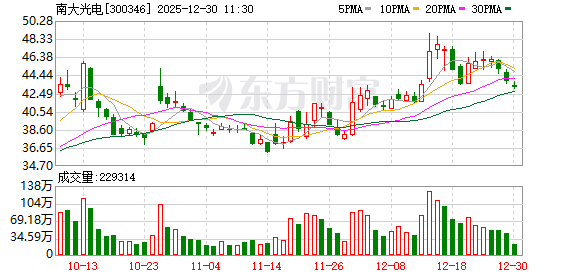
Group 1 - The company has confirmed that its ArF photoresist orders of 50 tons per year are not yet at full production capacity [2] - The company anticipates that its revenue from ArF photoresist will exceed 10 million in 2024 and will maintain stable supply in 2025 [2] - There has been an inquiry regarding whether the supply price for ArF photoresist has increased, but the company did not provide a specific response on this matter [2]