
BGI Genomics(300676)

Search documents
华大基因(300676) - 关于控股股东部分股份解除质押及再质押的公告
2026-01-22 10:24
深圳华大基因股份有限公司 关于控股股东部分股份解除质押及再质押的公告 本公司及董事会全体成员保证信息披露的内容真实、准确、完整,没有虚假记 载、误导性陈述或重大遗漏。 深圳华大基因股份有限公司(以下简称公司或上市公司)近日收到公司控股股 东深圳华大基因科技有限公司(以下简称华大控股)的通知,获悉华大控股将其持 有的部分公司股份办理了解除质押及再质押。现将具体情况公告如下: 一、控股股东及其一致行动人部分股份解除质押及再质押的基本情况 证券代码:300676 证券简称:华大基因 公告编号:2026-002 (一)本次股份解除质押的基本情况 | | 是否为控股 股东或第一 | 本次解除质 押股份数量 | 占其所持股 | 占公司 总股本 | 质押起始 | 质押解除日 | | | --- | --- | --- | --- | --- | --- | --- | --- | | 股东名称 | 大股东及其 | | 份比例 | | 日期 | 期 | 质权人 | | | 一致行动人 | (股) | | 比例 | | | | | 深圳华大基因 科技有限公司 | 是 | 5,200,000 | 4.17% | 1.24% | ...
华大基因:截至2025年9月30日普通股股东总数为67903户
Zheng Quan Ri Bao Wang· 2026-01-22 09:44
Group 1 - The core point of the article is that BGI Genomics (300676) provided an update on the number of ordinary shareholders as of September 30, 2025, which stands at 67,903 households [1] Group 2 - The company encourages investors to pay attention to future updates regarding shareholder information, which will be published in its regular reports on the Giant Tide Information Network [1]
华大基因:公司的CEO为赵立见先生
Zheng Quan Ri Bao· 2026-01-22 08:37
Core Viewpoint - BGI Genomics' CEO is Zhao Lijian, and the company focuses on providing research services and precision medical testing solutions through multi-omics big data technologies, without involvement in probiotic production [2]. Group 1 - BGI Genomics' main business includes gene testing, mass spectrometry testing, and bioinformatics analysis [2]. - The company serves research institutions, enterprises, medical institutions, and public health organizations [2]. - Currently, BGI Genomics has not engaged in the production and manufacturing of probiotics [2].

华大基因(300676.SZ):未涉足航天领域
Ge Long Hui· 2026-01-22 06:50
Core Viewpoint - The company, BGI Genomics (华大基因), focuses on providing research services and precision medical testing solutions through multi-omics big data technologies, including gene testing, mass spectrometry, and bioinformatics analysis, and has not ventured into the aerospace sector [1]. Group 1 - The main business of the company involves offering comprehensive solutions for research and precision medicine testing [1]. - The company serves various clients, including research institutions, enterprises, medical organizations, and public health organizations [1]. - The company clarifies that it has not engaged in the aerospace field [1].
医疗服务板块1月21日涨0.18%,南模生物领涨,主力资金净流入5050.97万元
Zheng Xing Xing Ye Ri Bao· 2026-01-21 08:53
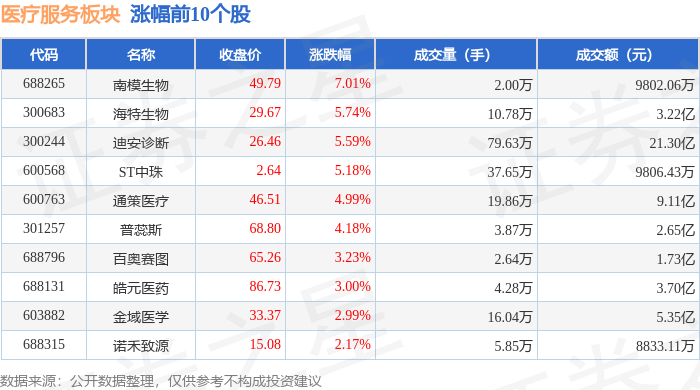
Market Overview - The medical services sector increased by 0.18% on January 21, with Nanmo Biology leading the gains [1] - The Shanghai Composite Index closed at 4116.94, up 0.08%, while the Shenzhen Component Index closed at 14255.12, up 0.7% [1] Top Gainers in Medical Services - Nanmo Biology (688265) closed at 49.79, up 7.01% with a trading volume of 20,000 shares and a transaction value of 98.02 million [1] - Hite Biology (300683) closed at 29.67, up 5.74% with a trading volume of 107,800 shares and a transaction value of 32.2 million [1] - Dean Diagnostics (300244) closed at 26.46, up 5.59% with a trading volume of 796,300 shares and a transaction value of 2.13 billion [1] - ST Zhongzhu (600568) closed at 2.64, up 5.18% with a trading volume of 376,500 shares and a transaction value of 9.81 million [1] - Tongce Medical (600763) closed at 46.51, up 4.99% with a trading volume of 198,600 shares and a transaction value of 911 million [1] Top Losers in Medical Services - Digital Human (920670) closed at 18.72, down 4.44% with a trading volume of 74,500 shares and a transaction value of 143 million [2] - Hongbo Pharmaceutical (301230) closed at 46.36, down 1.88% with a trading volume of 131,200 shares and a transaction value of 614 million [2] - Chengda Pharmaceutical (301201) closed at 41.39, down 1.76% with a trading volume of 36,600 shares and a transaction value of 153 million [2] Capital Flow in Medical Services - The medical services sector saw a net inflow of 50.51 million from institutional investors, while retail investors experienced a net outflow of 375 million [2] - The sector's overall capital flow indicates a strong interest from institutional and speculative investors, with retail investors pulling back [2][3] Notable Capital Inflows - Sanbo Brain Science (301293) had a net inflow of 91.48 million, representing 9.03% of its total capital [3] - Tongce Medical (600763) saw a net inflow of 83.46 million, accounting for 9.16% of its total capital [3] - BGI Genomics (300676) recorded a net inflow of 51.81 million, which is 8.37% of its total capital [3]



医保局规定手术机器人定价!器械出海空间广阔,医疗器械 ETF(562600)涨近1%
Sou Hu Cai Jing· 2026-01-21 06:02
Group 1 - The core viewpoint of the news highlights the positive performance of the medical device sector, with significant stock price increases for various companies and a favorable market outlook driven by new pricing policies and international trade initiatives [1][2][3] Group 2 - As of January 21, the Shanghai Composite Index rose by 0.22%, while the medical device index increased by 0.69%, with notable stock performances from Tianzhihang-U (+13%), Sanyou Medical (+7%), and others [1] - The medical device ETF (562600) saw a 0.77% increase, with a trading volume of 254.268 billion yuan and a turnover rate of 4.15%. Over the past six months, the fund has gained 4.80%, and 11.30% over the past year [1] Group 3 - On January 20, the National Healthcare Security Administration issued guidelines for pricing medical services related to surgical robots and remote surgeries, establishing a structured pricing system to enhance innovation returns and improve accessibility to precision medicine [2] - A special seminar was held on January 17 to discuss how to leverage the medical device procurement and pricing platform to support the international expansion of Chinese medical devices, with plans for a cross-border channel based on procurement platforms in Guangxi and Tianjin [2] Group 4 - Multiple authoritative institutions have expressed optimism about the medical device sector, with expectations for a turning point in operations by 2026 due to optimized procurement rules and significant growth potential in domestic and international markets for surgical robots and AI medical technologies [3] - The medical device ETF (562600) tracks the CSI All Index for medical devices, with the top ten weighted stocks accounting for 45.04% of the total, including major players like Mindray Medical and United Imaging [3]






医药行业周报(26/1/12-26/1/16):美股肿瘤基因检测行业加速发展,积极关注国内机会-20260119
Hua Yuan Zheng Quan· 2026-01-19 04:35
Investment Rating - The investment rating for the pharmaceutical industry is "Positive" (maintained) [4] Core Viewpoints - The US tumor gene testing industry is accelerating, and there are positive domestic opportunities. The market for gene testing has low penetration rates but high growth potential, particularly in colorectal cancer early screening, treatment selection, and minimal residual disease (MRD) testing, which are all billion-dollar markets [3][8] - The report emphasizes the importance of innovation in the pharmaceutical sector, highlighting that the Chinese pharmaceutical industry has completed a transition from old to new growth drivers, particularly in innovative drugs. Companies like Heng Rui Medicine and Han Sen Pharmaceutical have made significant strides in innovation [5][41] - The report suggests that the aging population and the increasing demand for healthcare services will continue to drive growth in the pharmaceutical industry, supported by a multi-layered payment system and advancements in technology such as AI and brain-computer interfaces [41][42] Summary by Sections Market Performance - From January 12 to January 16, the pharmaceutical index fell by 0.68%, with 202 stocks rising and 261 falling. The top gainers included Baolait (up 48.76%) and Hualan Biological (up 32.72%), while the biggest losers were Sunflower (down 37.48%) and *ST Changyao (down 33.33%) [5][25][27] Gene Testing Industry - The report highlights the rapid development of the US tumor gene testing industry, with companies like Natera and Guardant Health showing impressive revenue growth. Natera's Q4 2025 revenue reached $660 million, a 39% year-on-year increase, while Guardant Health's revenue for the same period was $280 million, also up 39% [8][9] - The report notes that the domestic gene testing market is expected to grow rapidly, with companies like BGI and Edan Diagnostics actively positioning themselves in the MRD and early screening sectors [24][22] Investment Recommendations - The report recommends focusing on strong fundamentals and undervalued stocks in the innovative drug sector, including companies like Xinyi Tai, Zecjin Pharmaceutical, and Shanghai Yizhong. It also suggests monitoring emerging technologies in healthcare, such as AI and brain-computer interfaces, which are expected to see significant advancements in 2026 [5][45][44] - Specific investment combinations for January include Xinyi Tai, China Biologic Products, and Sanofi Pharmaceutical, among others [45]





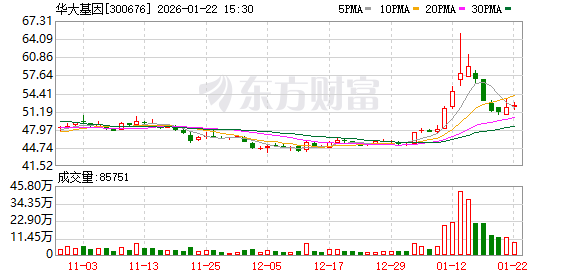
华大基因1月16日获融资买入1.07亿元,融资余额11.27亿元
Xin Lang Cai Jing· 2026-01-19 01:39
Core Viewpoint - On January 16, BGI Genomics experienced a decline of 6.85% in stock price, with a trading volume of 1.168 billion yuan, indicating significant market activity and investor sentiment concerns [1]. Financing and Trading Activity - On January 16, BGI Genomics had a financing buy-in amount of 107 million yuan and a financing repayment of 242 million yuan, resulting in a net financing outflow of 136 million yuan [1]. - As of January 16, the total financing and securities lending balance for BGI Genomics was 1.131 billion yuan, with the financing balance of 1.127 billion yuan accounting for 5.09% of the circulating market value, which is above the 90th percentile of the past year [1]. - The company repaid 33,700 shares in securities lending on January 16, with a sell amount of 17,490 yuan, while the remaining securities lending volume was 60,500 shares, with a balance of 3.2065 million yuan, indicating a low position compared to the 30th percentile of the past year [1]. Company Overview - BGI Genomics, established on July 9, 2010, and listed on July 14, 2017, is located in Shenzhen, Guangdong Province, and specializes in providing research services and precision medical testing solutions through multi-omics big data technologies [2]. - The company's main business revenue composition includes: 42.67% from precision medical testing solutions, 26.12% from reproductive health research and clinical application services, 17.08% from multi-omics big data services, 11.00% from tumor and chronic disease prevention and translational medicine services, 2.36% from infection prevention research and clinical application services, and 0.78% from other services [2]. - As of September 30, 2025, BGI Genomics had 67,900 shareholders, an increase of 5.58% from the previous period, with an average of 6,127 circulating shares per person, a decrease of 5.28% [2]. Financial Performance - For the period from January to September 2025, BGI Genomics reported a revenue of 2.674 billion yuan, a year-on-year decrease of 5.39%, while the net profit attributable to the parent company was -21.387 million yuan, reflecting an increase of 82.78% year-on-year [2]. Dividend Distribution - Since its A-share listing, BGI Genomics has distributed a total of 1.024 billion yuan in dividends, with 455 million yuan distributed over the past three years [3]. Institutional Holdings - As of September 30, 2025, among the top ten circulating shareholders of BGI Genomics, Huabao Zhongzheng Medical ETF ranked third with 7.1098 million shares, a decrease of 1.2088 million shares from the previous period [3]. - E Fund's Growth Enterprise Board ETF ranked fourth with 5.2957 million shares, down by 816,600 shares, while Southern Zhongzheng 500 ETF ranked sixth with 3.7411 million shares, an increase of 13,700 shares [3]. - Hong Kong Central Clearing Limited ranked seventh with 2.6059 million shares, an increase of 26,200 shares, while the招商优势企业混合A fund exited the top ten circulating shareholders list [3].
多款试剂已投入临床应用,“滴血测痴呆”时代来临
Di Yi Cai Jing· 2026-01-16 07:19
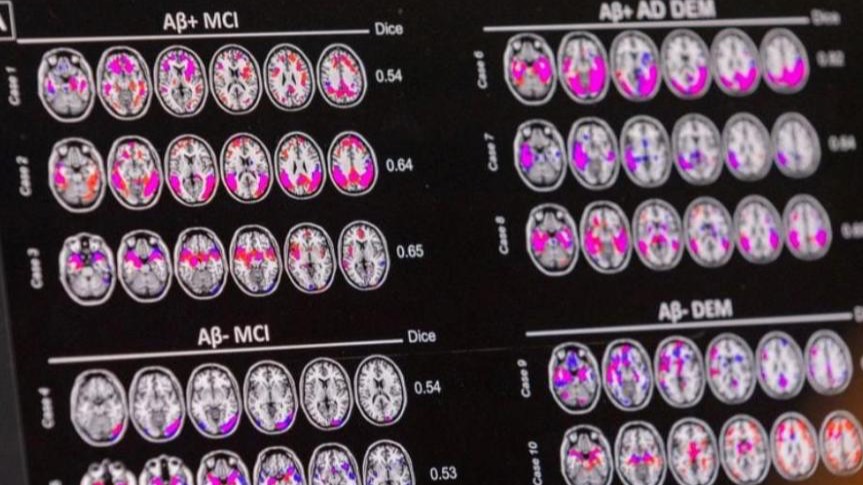
Core Viewpoint - The adoption of blood testing methods for Alzheimer's disease (AD) will facilitate early diagnosis and screening, allowing patients to receive treatment sooner. Current AD drugs on the market are effective only for early-stage patients [1][4]. Group 1: Blood Testing Developments - Roche Diagnostics' blood test for Alzheimer's disease has received approval from the Hainan Provincial Drug Administration for clinical use, achieving a diagnostic accuracy of 97.9% in a trial involving 312 participants [3]. - Fujirebio's blood test for Alzheimer's disease was also approved by the FDA in May 2022, with plans to introduce it to China in collaboration with partners [3]. - BGI's Alzheimer's blood test product is expected to receive approval from Chinese regulatory authorities in April 2024 and is already being promoted as an auxiliary detection tool in multiple cities [3]. Group 2: Clinical Implications and Challenges - Alzheimer's disease accounts for 60% to 80% of all dementia cases globally, highlighting the need for effective early detection methods [4]. - Traditional detection methods, such as lumbar puncture and PET scans, are expensive and uncomfortable, posing challenges for large-scale clinical testing [4]. - New blood testing methods can be combined with other diagnostic approaches, providing a cost-effective means for early screening and ongoing monitoring, especially in the elderly population [4]. Group 3: Clinical Utility of Blood Biomarkers - According to the latest guidelines from the International Alzheimer's Association, blood biomarkers serve two main clinical purposes: as a triage tool to determine the need for further PET scans or cerebrospinal fluid tests, and for direct pathological identification of amyloid proteins [5]. - A blood biomarker with sensitivity ≥90% and specificity ≥75% can be used as a triage test, while those meeting or exceeding 90% for both can replace PET imaging or cerebrospinal fluid tests for pathological identification [5]. Group 4: Current Application and Limitations - Blood testing for Alzheimer's disease is being deployed as an auxiliary method in several hospitals across China, although it cannot yet serve as an independent diagnostic criterion [6].
中邮证券:政策与热点共振,AI+医疗或迎加速,关注华大智造等标的
Xin Lang Cai Jing· 2026-01-15 05:04
炒股就看金麒麟分析师研报,权威,专业,及时,全面,助您挖掘潜力主题机会! 责任编辑:宋雅芳 炒股就看金麒麟分析师研报,权威,专业,及时,全面,助您挖掘潜力主题机会! 近日,中邮证券发布研究报告,维持对"AI+医疗"行业"强于大市"的评级,认为该行业在政策与产业共 振下正迎来加速发展。华大智造、华大基因、晶泰控股、英矽智能、联影智能、鹰瞳科技等多家行业内 企业获关注。 近日,中邮证券发布研究报告,维持对"AI+医疗"行业"强于大市"的评级,认为该行业在政策与产业共 振下正迎来加速发展。华大智造、华大基因、晶泰控股、英矽智能、联影智能、鹰瞳科技等多家行业内 企业获关注。 研报指出,全球AI医疗市场预计将从2022年的137亿美元迅猛增长至2030年的1553亿美元。政策层面, 国家多部门联合推动"人工智能+制造",重点鼓励AI在高端医疗装备等场景的应用,为行业注入强心 剂。同时,海外领先企业如TempusAI业绩高增、英伟达与礼来巨额投资共建AI实验室等动向,也强化 了全球产业高景气度的预期。 报告分析,AI技术已在制药、辅助诊断、影像手术及医疗服务等多个医疗细分领域步入成熟。在辅助 诊断方向,具备高质量数据与技 ...
