
YKA(300999)

Search documents
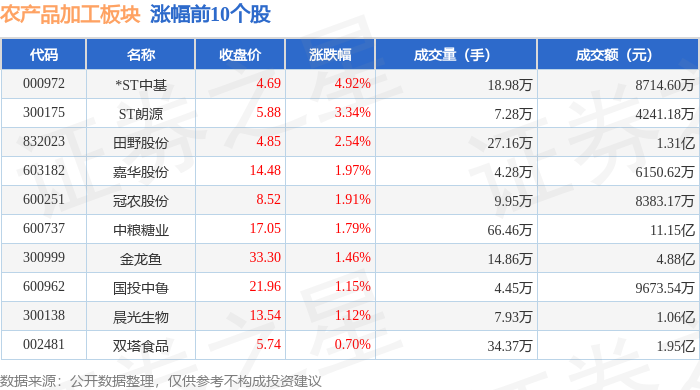
农产品加工板块9月5日涨1.02%,*ST中基领涨,主力资金净流出7368.22万元
Zheng Xing Xing Ye Ri Bao· 2025-09-05 08:50
Market Performance - The agricultural processing sector increased by 1.02% on September 5, with *ST Zhongji leading the gains [1] - The Shanghai Composite Index closed at 3812.51, up 1.24%, while the Shenzhen Component Index closed at 12590.56, up 3.89% [1] Individual Stock Performance - *ST Zhongji (000972) closed at 4.69, with a rise of 4.92% and a trading volume of 189,800 shares, totaling a transaction value of 87.146 million yuan [1] - ST Langyuan (300175) closed at 5.88, up 3.34%, with a trading volume of 72,800 shares and a transaction value of 42.4118 million yuan [1] - Tianye Co., Ltd. (832023) closed at 4.85, increasing by 2.54%, with a trading volume of 271,600 shares and a transaction value of 131 million yuan [1] - Xihang Co., Ltd. (603182) closed at 14.48, up 1.97%, with a trading volume of 42,800 shares and a transaction value of 61.5062 million yuan [1] - Guanyi Co., Ltd. (600251) closed at 8.52, increasing by 1.91%, with a trading volume of 99,500 shares and a transaction value of 83.8317 million yuan [1] - COFCO Sugar (600737) closed at 17.05, up 1.79%, with a trading volume of 664,600 shares and a transaction value of 1.115 billion yuan [1] - Jinlongyu (300999) closed at 33.30, increasing by 1.46%, with a trading volume of 148,600 shares and a transaction value of 488 million yuan [1] - Yuantou Zhonglu (600962) closed at 21.96, up 1.15%, with a trading volume of 44,500 shares and a transaction value of 96.7354 million yuan [1] - Chenguang Biological (300138) closed at 13.54, increasing by 1.12%, with a trading volume of 79,300 shares and a transaction value of 106 million yuan [1] - Shuangta Food (002481) closed at 5.74, up 0.70%, with a trading volume of 343,700 shares and a transaction value of 195 million yuan [1] Capital Flow - The agricultural processing sector experienced a net outflow of 73.6822 million yuan from institutional investors, while retail investors saw a net inflow of 28.2299 million yuan [2] - The sector's overall capital flow indicates a mixed sentiment among different investor types, with institutional investors withdrawing funds while retail investors increased their positions [2][3]




2025成都绿色食品精深加工产业链融合对接采购大会现场签约近2亿元
Xin Hua Cai Jing· 2025-09-05 06:59
Group 1 - The 11th Sichuan Agricultural Expo opened in Chengdu, attracting over 300 representatives from the food deep processing industry, leading enterprises, and well-known buyers, with a procurement amount nearing 200 million yuan [1] - The Chengdu Agricultural Product Supply Chain Association released a "procurement list" totaling 2.95 billion yuan, covering 15 major product categories, including vegetables, aquatic products, beef and lamb, pork, poultry, and flour, with vegetable procurement reaching 220,000 tons and pork procurement at 30,000 tons [1] - Strategic cooperation agreements were signed with 15 leading enterprises, including Yihai Kerry and Inner Mongolia Yili Industrial Group, focusing on deep processing, supply chain collaboration, regional cooperation, and brand building for Chengdu's quality specialty agricultural products [1] Group 2 - Major deep processing enterprises such as COFCO, Yihai Kerry, New Hope, and others participated in the event, alongside modern agricultural parks, leading agricultural enterprises, and various agricultural operating entities [2] - The event featured participation from major wholesale markets and large state-owned enterprises, as well as online and offline engagement from e-commerce platforms like Taobao and JD.com [2]

金龙鱼间接参股公司2.06亿元项目环评获同意
Mei Ri Jing Ji Xin Wen· 2025-09-04 15:53
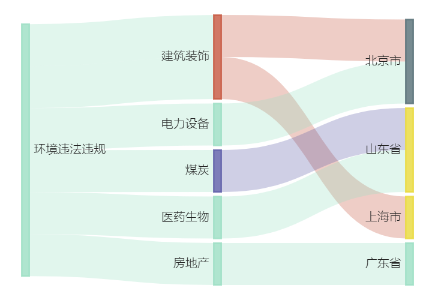
Group 1 - The core viewpoint of the news is that Jinlongyu (SZ300999) has received environmental approval for its subsidiary's yeast production project, which has a total investment of 206 million yuan [1] - The "A-share Green Report" project aims to enhance transparency in environmental information of listed companies, utilizing authoritative environmental regulatory data from 31 provinces and 337 cities [1] - The latest A-share Green Weekly Report indicated that six listed companies recently exposed environmental risks [1] Group 2 - Jinlongyu's main business is in the agricultural and sideline food processing industry, accounting for 100% of its revenue [3] - The company's market capitalization is approximately 177.94 billion yuan, with projected revenues of 2,515.24 million yuan for 2023, decreasing to 2,388.66 million yuan for 2024 [4] - The net profit attributable to the parent company is expected to decline from 28.48 million yuan in 2023 to 25.02 million yuan in 2024 [4]
养鸡概念涨1.89%,主力资金净流入11股
Zheng Quan Shi Bao Wang· 2025-09-04 10:37
Core Viewpoint - The poultry sector has shown a positive performance with a 1.89% increase, ranking fifth among concept sectors, driven by notable gains in stocks such as Xiaoming Co., Chunsue Food, and Yisheng Co. [1][2] Group 1: Sector Performance - The poultry concept sector experienced a 1.89% increase, with 22 stocks rising, including Xiaoming Co. (+8.19%), Chunsue Food (+3.30%), and Yisheng Co. (+3.26%) [1][2] - Other notable concept sectors include dairy (+2.95%), duty-free shops (+2.57%), and prepared dishes (+2.36%) [2] Group 2: Capital Flow - The poultry sector saw a net inflow of 0.32 billion yuan, with 11 stocks receiving main capital inflows, led by Wens Foodstuffs with a net inflow of 88.13 million yuan [2][3] - Other companies with significant net inflows include Jinlongyu (12.56 million yuan), New Hope (8.43 million yuan), and Huazhong (7.64 million yuan) [2][3] Group 3: Stock Performance - Wens Foodstuffs had a net inflow rate of 7.73%, followed by Huazhong (2.46%) and Jinlongyu (2.41%) [3] - Xiaoming Co. led the gains with an 8.19% increase, while other stocks like Chunsue Food and Yisheng Co. also performed well [4]


农产品加工板块9月2日跌0.88%,一致魔芋领跌,主力资金净流出8355.93万元
Zheng Xing Xing Ye Ri Bao· 2025-09-02 08:55
Market Overview - The agricultural processing sector experienced a decline of 0.88% on September 2, with the Shanghai Composite Index closing at 3858.13, down 0.45%, and the Shenzhen Component Index at 12553.84, down 2.14% [1] Individual Stock Performance - The leading decliner in the agricultural processing sector was Yicheng Magic Hand (一致魔手), which fell by 4.54% to a closing price of 43.90, with a trading volume of 61,200 shares and a transaction value of 277 million yuan [1] - Other notable declines included: - Morning Light Biological (晨光生物) down 4.40% to 13.24, with a transaction value of 238 million yuan - Huazi Industry (华资实业) down 3.63% to 7.69, with a transaction value of 165 million yuan - Daodaoquan (道道全) down 2.44% to 11.18, with a transaction value of 104 million yuan [1] Capital Flow Analysis - The agricultural processing sector saw a net outflow of 83.56 million yuan from institutional investors and 13.15 million yuan from retail investors, while individual investors contributed a net inflow of 96.71 million yuan [1] - Specific stock capital flows included: - COFCO Sugar Industry (中粮糖业) with a net inflow of 175 million yuan from institutional investors, but a net outflow of 22.44 million yuan from retail investors [2] - Double Tower Food (双塔食品) had a net inflow of 1.54 million yuan from institutional investors and a net inflow of 3.16 million yuan from retail investors [2] - ST Langyuan (ST朗源) experienced a net outflow of 774,900 yuan from institutional investors but a net inflow of 310,300 yuan from retail investors [2]




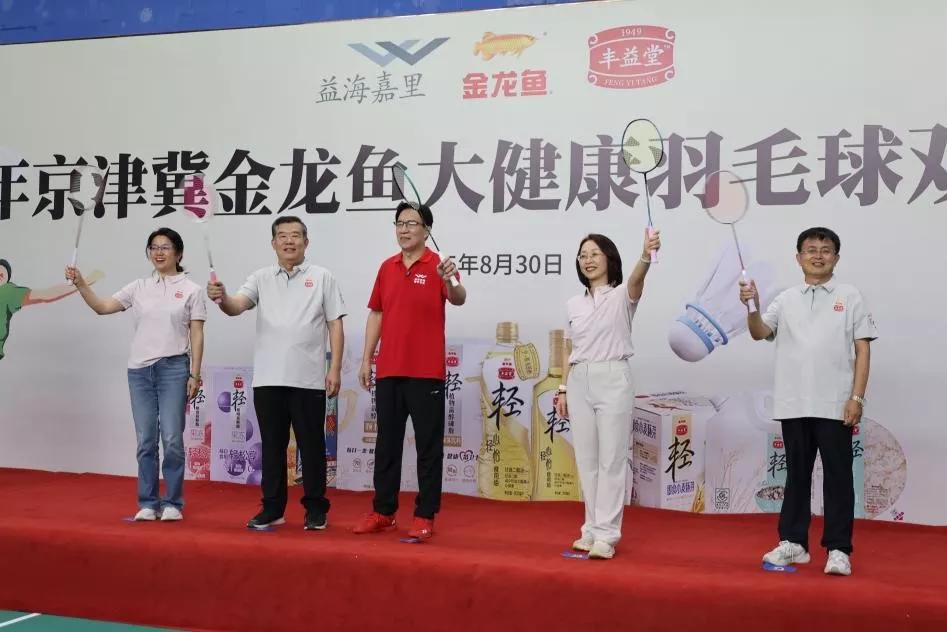
开启全民健康生活方式宣传 金龙鱼大健康杯羽毛球邀请赛石家庄开打
Cai Jing Wang· 2025-09-01 05:00
Group 1 - The "Golden Dragon Fish Health Cup Badminton Invitation Tournament" marks the launch of the "Yihai Kerry Golden Dragon Fish Health Month Series Promotion" in September, responding to the 2025 National Health Lifestyle Promotion Month [1][3] - The event attracted badminton enthusiasts from various regions, including Beijing and Shijiazhuang, and featured a performance by provincial champions from CCTV's "I Am Champion" program, enhancing the competitive atmosphere [1][3] - The tournament serves as a platform for promoting healthy lifestyles, aligning with the national initiative "Healthy China 2030" and injecting vitality into urban health development [3][4] Group 2 - The event emphasized the importance of combining scientific exercise with healthy eating, promoting the idea that a healthy lifestyle is a multifaceted choice [4][6] - Participants engaged in interactive sessions that included product tastings, allowing them to learn about the health benefits of whole grain products in a fun and engaging manner [4][6] - The company showcased its whole grain products, such as black quinoa buckwheat noodles and glycerol diester oil, which received positive attention from participants [3][7] Group 3 - The "Golden Dragon Fish Health Cup Badminton Invitation Tournament" is a key part of the company's experiential marketing strategy, directly reaching consumers through sports [9] - The combination of healthy eating and exercise aims to transform the abstract concept of "preventing diseases before they occur" into tangible daily experiences [9] - The company plans to continue hosting similar health-themed events to explore innovative ways to integrate healthy lifestyles with high-quality products, contributing to the "Healthy China" initiative [9]
避险“大军”扩容:衍生品工具助力上市公司稳定经营
Zhong Guo Zheng Quan Bao· 2025-08-30 02:21
Core Viewpoint - The increasing volatility in global financial markets has led to a heightened focus on risk management through hedging strategies among listed companies, with a notable rise in the number of companies utilizing derivative instruments for risk management [1][2]. Summary by Relevant Sections Growth in Hedging Activities - In the first seven months of 2025, 1,383 A-share listed companies issued announcements related to hedging, representing a year-on-year increase of 15.7% [2]. - Companies addressing exchange rate, interest rate, and commodity price risks saw respective increases of 13%, 16%, and 13% in the number of announcements [2]. Types of Risks Managed - Exchange rate risk is a significant concern, with 80% of A-share companies mentioning it in their hedging announcements [2]. - The focus on interest rate risk has been increasing, reflecting a growing awareness among companies during the global interest rate decline [2][3]. Commodity Hedging Trends - Common commodities for hedging include copper, aluminum, steel, lithium carbonate, and silver, with a notable increase in companies mentioning lithium carbonate futures [2]. - New commodity futures listed in 2024 have also been included in hedging strategies, with six companies explicitly hedging bottle chip futures in the first half of 2025 [2]. Industry Participation - Manufacturing companies, particularly in the chemical and agricultural processing sectors, are the primary participants in hedging activities [3]. - There has been a shift in how companies evaluate the effectiveness of hedging, moving from a focus solely on profit and loss to a more comprehensive assessment of fair value changes [3]. Successful Hedging Examples - Companies like Jinlongyu, Zhejiang Zhongtuo, Daodaquan, and Nangang have reported significant profits from their hedging activities, with Jinlongyu achieving a profit of 5.8 billion yuan from its hedging tools [4][5]. - Supply chain companies such as Wucai Zhongda and Xiamen Xiangyu also reported substantial gains from their hedging strategies, with reported amounts of 2.062 billion yuan and 614 million yuan, respectively [5]. Transparency and Regulation - New guidelines from the Shanghai and Shenzhen Stock Exchanges require companies to disclose the combined profits and losses from hedging tools and underlying projects starting in 2024, enhancing transparency in hedging activities [5]. - Increased transparency in hedging disclosures is expected to improve investor understanding and confidence in company operations [5]. Recommendations for Companies - Companies are advised to adopt a systematic approach to hedging, starting with top-level design and team establishment, and gradually implementing hedging strategies [7]. - It is recommended that companies engage external experts to guide them through the complexities of hedging and to learn from industry best practices [7]. - A phased approach to hedging, beginning with small-scale pilots, is suggested to refine processes and build expertise [7].


天津益海嘉里:智能制造铸就北方粮油枢纽
Zhong Guo Fa Zhan Wang· 2025-08-29 12:45
Core Insights - Yihai Kerry Group has established a significant presence in Tianjin over the past 20 years, investing 3.25 billion yuan to create a northern grain and oil hub that supports a supply chain network covering multiple regions in China [1] - The company has developed a comprehensive product range including brands like "Golden Dragon Fish" and "OliViva," redefining the breadth and depth of the grain and oil industry [1] Group 1: Investment and Infrastructure - The Tianjin enterprise group occupies 398 acres with a registered capital of 8 million USD and employs nearly 1,000 people, making it the largest domestic investment base for the group [1] - The facility has become a key processing base for oil and a regional center for trade, transit, and international operations [1] Group 2: Smart Manufacturing - The enterprise group has implemented a highly intelligent production system utilizing digital technologies such as APS for advanced scheduling and PCM for packaging management [2] - The company holds several patents for proprietary technologies in storage and transportation, enhancing operational efficiency [2] Group 3: Management and Quality Control - Yihai Kerry Group follows a "Four Full and One New" management model, ensuring full traceability from farm to table and investing 15 million yuan in a state-of-the-art testing center [3] - The group has received multiple accolades for its quality and sustainability efforts, including recognition as a national "Green Factory" [3] Group 4: ESG Practices - The company has integrated ESG practices into its operations, achieving significant environmental benefits such as recycling 340,000 cubic meters of biogas annually [4] - Socially, the company has invested over 10 million yuan in charitable initiatives and has been recognized for its contributions to food safety during major events like the Olympics [4] Group 5: Performance and Development - The enterprise group has been awarded for its democratic management practices and has established a platform for government-enterprise collaboration [5] - The focus on talent development and a culture of accountability has contributed to the company's ongoing growth and commitment to high-quality development in the grain and oil sector [5]
粮食ETF(159698)上涨近1%,机构称种业竞争格局有望优化
Xin Lang Cai Jing· 2025-08-29 03:43
Group 1 - The core viewpoint of the articles highlights the positive performance of agricultural stocks and the grain industry index, with specific stocks like Agricultural Products (000061) and Cangge Mining (000408) showing significant increases in value [1][2] - As of August 29, 2025, the National Grain Industry Index (399365) has seen a rise in its component stocks, with a notable increase of 9.96% for Agricultural Products and 6.00% for Cangge Mining [1] - The total early rice production in China for 2025 is projected to be 28.513 million tons (570.3 billion jin), reflecting a year-on-year increase of 339,000 tons (6.8 billion jin), or 1.2% [1] Group 2 - The National Grain Industry Index (399365) closely tracks the performance of listed companies related to the grain industry on the Shanghai and Shenzhen stock exchanges [2] - As of July 31, 2025, the top ten weighted stocks in the National Grain Industry Index account for 50.43% of the index, with major companies including Dabeinong (002385) and Longping High-Tech (000998) [2] - The industry is expected to benefit from ongoing support policies for seed industry and the maturation of new biological breeding technologies, which may optimize the competitive landscape [1]


金龙鱼、牧原等投资成立食品销售公司
Xin Lang Cai Jing· 2025-08-29 03:36
Core Insights - A new company, Shangshui Xingzhou Jufeng Food Sales Co., Ltd., has been established, focusing on the wholesale and retail of fresh vegetables and fruits, as well as the processing and acquisition of agricultural products [1] Company Structure - The company is co-owned by Shangshui Xingshang Management Co., Ltd., Henan Juyuan Digital Technology Co., Ltd. (a subsidiary of Muyuan Industrial Group), and Fengchu (Shanghai) Supply Chain Management Co., Ltd. (a subsidiary of Jinlongyu) [1]
