AMD(AMD)

Search documents
苏妈和李飞飞炸场CES,AMD AI全栈野心显露:从云端到个人PC,AI芯片性能四年要飙1000倍
3 6 Ke· 2026-01-07 02:55
今年的 CES 真可谓是八仙过海,黄仁勋、苏姿丰、陈力武等"经典面孔"齐亮相; 不过台上谈的已不只限于显卡、算力和制程,还在于 AI 接下来要被带 去哪里。 在 AMD 的专场演讲中,苏妈甩出一个大胆判断: "未来五年内,将有 50 亿人每天使用 AI,超过世界人口的一半。" ——什么概念?就是这个增长速度将远超互联网早期阶段,自 ChatGPT 在 2022 年底发布以来,AI 活跃用户已从 100 万暴涨至 10 亿 +。 值得一提的是,这场演讲还请来了"AI 教母"李飞飞。 李飞飞并不是来站台新品的,她和苏妈主要探讨空间智能和世界模型,这也是她已耕深 20 余年的领域。 对于云端,基于下一代 MI455 GPU 的 Helios 机架级平台成为全场焦点:单机架集成 72 块 AI GPU,算力高达 2.9 ExaFLOPS,可通过成千上万个机架拼接 成超大训练集群,直指千亿参数大模型的核心战场。 谈到云端算力的未来,苏姿丰毫不掩饰 AMD 的野心: "全球人工智能运行在云端,而云端运行在 AMD 平台上。" 另外,她还指出,下一代 Instinct 数据中心 AI 加速器平台 MI500 系列,将在 2 ...


AMD苏姿丰:联想是Helios AI架构的首批系统供应商|直击CES
Xin Lang Cai Jing· 2026-01-07 02:40
Core Viewpoint - AMD and Lenovo are collaborating to launch AI inference servers based on AMD's Helios rack-level AI architecture, addressing the growing demand for AI solutions in enterprises [1][2][3]. Group 1: Collaboration and Product Launch - Lenovo will be one of the first system suppliers to adopt AMD's Helios rack-level AI architecture [1][4]. - AMD and Lenovo will introduce the ThinkSystem SR675i AI inference server powered by AMD EPYC processors, aimed at enhancing local AI inference capabilities for enterprises [1][3]. Group 2: Market Demand and Infrastructure - There is an increasing need for larger models and higher throughput systems as inference demand accelerates, making rack-level AI infrastructure crucial [2][4]. - Companies are seeking to deploy AI flexibly across cloud, on-premises, and edge environments, allowing them to choose the best combination of CPU, GPU, and software based on their specific business needs [1][3].

AMD苏姿丰:目前全球算力远远不足,未来5年需要提升100倍
Ge Long Hui· 2026-01-07 02:17
Core Insights - AMD's CEO, Lisa Su, emphasized the ongoing evolution of AI from a tool to a foundational infrastructure, highlighting the significant growth in global computing power demand over the next five years [1] - The company introduced several AI chips, including the MI450 and Helios workstation, at CES, indicating a strong commitment to advancing AI technology [1] - The computing power is expected to increase from the current Zetta level to 10 YottaFLOPS, representing a tenfold increase compared to 2022, driven by breakthroughs in system architecture and manufacturing technology [1] Product Development - The MI500 series processors are projected to be released in 2027, with performance expected to be 1000 times greater than the MI300 series launched in 2023 [2]
硬刚黄仁勋,AMD祭出「千倍算力大杀器」,「反黄联盟」崛起
3 6 Ke· 2026-01-07 01:59
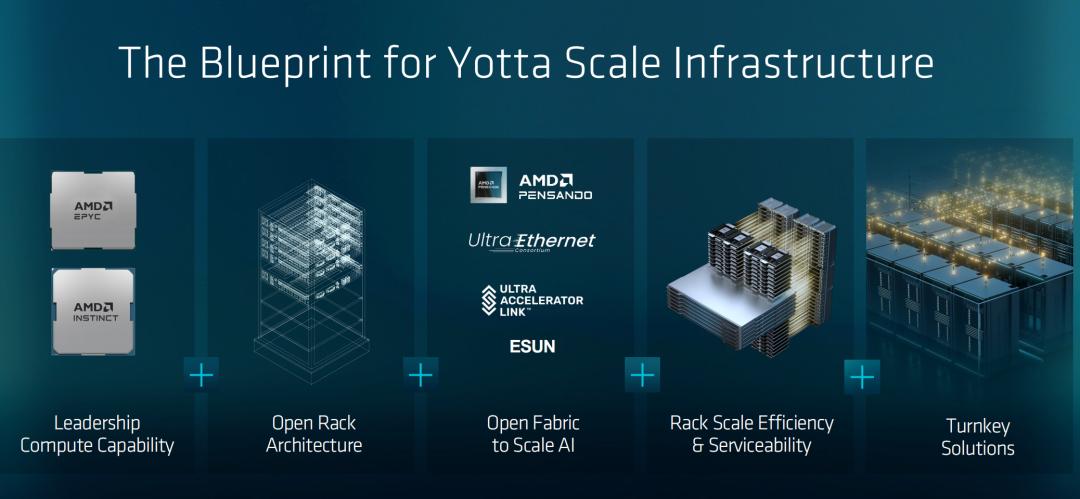
Core Insights - AMD's CEO Lisa Su announced a significant leap in AI computing power, projecting a 1000-fold increase in AI performance over the next four years, challenging Nvidia's dominance in the market [1][36][88] - The CES event showcased AMD's Helios AI Rack and MI455X chip, which promise a tenfold performance increase compared to previous generations, positioning AMD as a formidable competitor against Nvidia's Vera Rubin platform [1][15][33] AMD's Strategic Positioning - AMD aims to disrupt Nvidia's monopoly by promoting an open architecture and forming alliances with major tech companies like OpenAI, Microsoft, and Meta, contrasting Nvidia's closed ecosystem [1][24][86] - The concept of Yotta Scale Compute was introduced, representing a target of achieving 10²⁴ FLOPS, significantly surpassing current capabilities [19][21] Nvidia's Competitive Edge - Nvidia's Vera Rubin platform was highlighted as a powerful competitor, featuring advanced components like the Rubin GPU with HBM4 memory, which addresses critical challenges in AI model training [5][6][8] - The platform's architecture is designed to create a tightly integrated system that minimizes the need for compatibility with other brands, reinforcing Nvidia's market position [12][13] Technical Innovations - AMD's Helios AI Rack features 72 MI455X GPUs and 4,600 Zen 6 CPU cores, emphasizing a modular design that allows for easy upgrades without replacing entire systems [28][30][33] - The introduction of UALink technology aims to provide a competitive alternative to Nvidia's NVLink, enabling better memory pooling and interconnectivity among GPUs [41][42] Market Dynamics - The demand for AI computing power is projected to grow exponentially, with AMD estimating a 10,000-fold increase in AI compute needs [21][25][75] - AMD's Ryzen AI Max processor, capable of running large models locally, positions the company to compete directly with Apple's M-series chips and Nvidia's offerings [50][56] Developer Ecosystem - AMD is focusing on enhancing its software ecosystem with the ROCm platform, aiming to attract developers away from Nvidia's CUDA by supporting popular frameworks like PyTorch [69][72] - The collaboration with OpenAI and other tech giants signifies a strategic move to ensure a diverse and competitive AI infrastructure [64][68]

CES2026半导体杀疯了,四大巨头齐出AI王炸,PC、机器人赛道全面开火
3 6 Ke· 2026-01-07 01:59
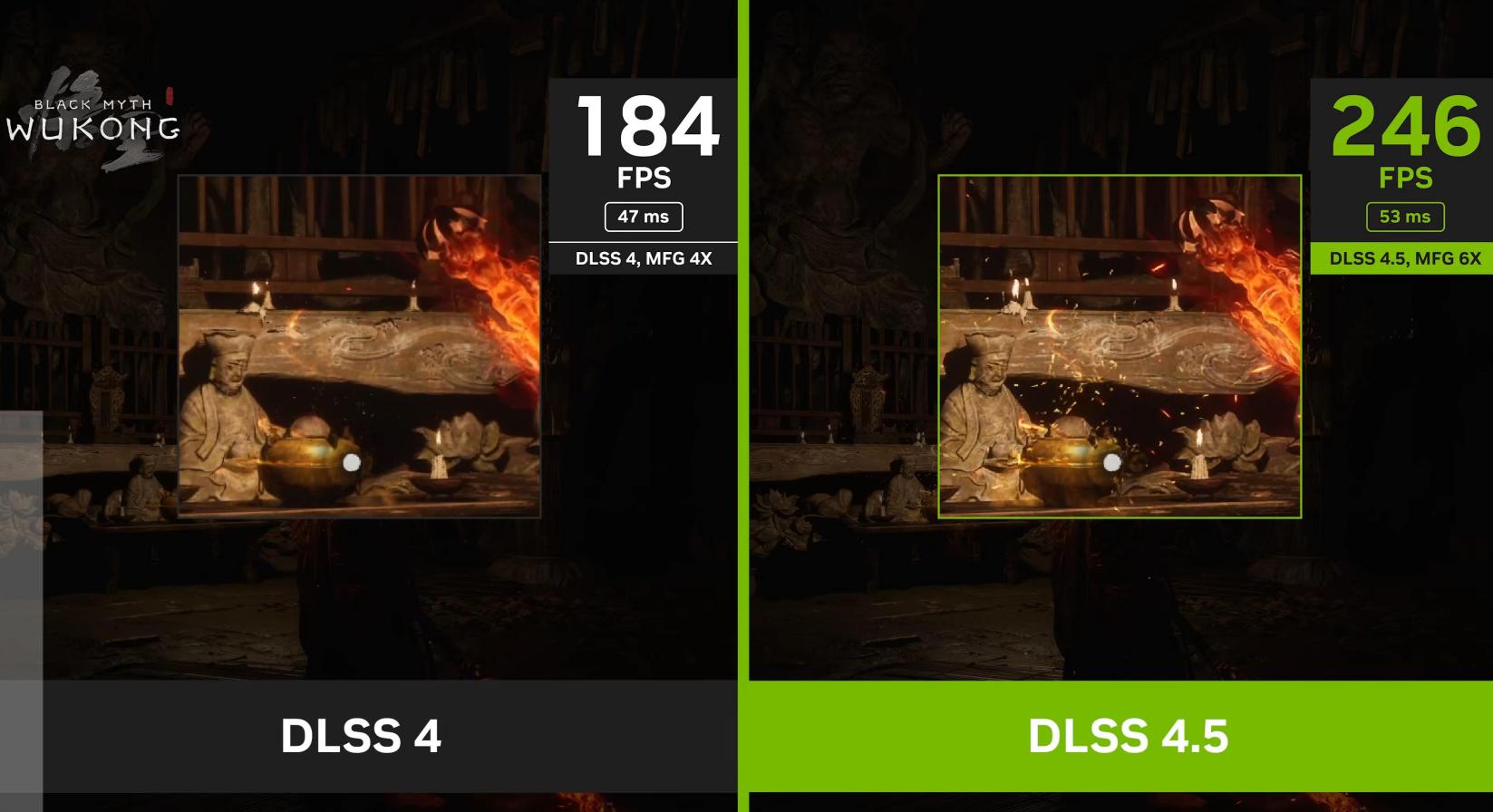
Core Insights - The CES 2026 showcased a shift in focus among semiconductor companies towards AI, with hardware innovations taking a backseat to AI advancements [1][26]. Nvidia - Nvidia's RTX 50 Super series was notably absent from CES 2026, disappointing gamers who had anticipated its release [2]. - The company introduced DLSS 4.5, enhancing frame generation capabilities from 4 to 6 frames, providing a 50% performance boost for RTX 50 series users [2][4]. - The Vera Rubin platform was highlighted as a significant advancement, featuring a CPU with 88 cores and a GPU with 336 billion transistors, achieving a 5x increase in FP4 inference performance [6][4]. - The platform aims to reduce AI inference costs by 90%, making AI applications more accessible [6][4]. Qualcomm - Qualcomm launched the Snapdragon X2 Plus, designed for mid-range markets, featuring a 43% reduction in power consumption and a 35% increase in single-core performance [7][9]. - The Dragonwing IQ10, a new high-performance processor for robotics, was introduced, boasting a 30% improvement in energy efficiency compared to competitors [11][12]. Intel - Intel unveiled the third-generation Core Ultra processors, utilizing the new Intel 18A process technology, which offers a 15% performance increase per watt and a 30% increase in chip density [13][16]. - The new processors demonstrate a 60% performance boost over the previous generation and significantly lower power consumption during 4K video playback [16][20]. - Intel's advancements in AI capabilities allow for the deployment of large AI models directly on devices, enhancing its competitive position in the AI PC market [20][21]. AMD - AMD introduced the Ryzen AI 400 series, featuring seven new processors with AI capabilities up to 60 TOPS, targeting lightweight AI PCs [21][23]. - The Ryzen AI Max+ series was updated to include more GPU cores, enhancing performance for portable AI applications [23][24]. - The Ryzen 7 9850X3D was launched as a gaming-focused processor, offering a balance of performance and efficiency, outperforming competitors in gaming benchmarks [24][25]. Industry Trends - The semiconductor industry is increasingly prioritizing AI capabilities, with a focus on making computing power more efficient and cost-effective [26]. - The CES 2026 highlighted a clear direction towards high-efficiency, long-lasting AI PCs, indicating a significant shift in the PC ecosystem [26].


CES2026:AMD发布新一代P100嵌入式处理器
Xin Lang Cai Jing· 2026-01-07 01:51
Core Insights - AMD introduced two new product lines at CES: the Ryzen AI Embedded P100 series and the Ryzen AI Embedded X100 series, targeting the edge AI market across various sectors including AI, automotive, healthcare, and robotics [1][5] Product Specifications - The Ryzen AI Embedded P100 series features a 4nm process technology, offering 4-6 CPU cores with 1MB L2 and 8MB L3 cache, supporting AVX-512 instruction set and VNN1/BF16 for AI computations, with a power consumption of 15-54W [1][6] - The CPU architecture is based on Zen 5, achieving over 2x performance improvement in single-threaded and multi-threaded tasks compared to the previous generation, suitable for automotive, industrial, and client applications [6][5] GPU and NPU Features - The GPU in the P100 series utilizes RDNA 3.5 architecture, providing a 35% increase in rendering performance, supporting 4K-8K high-fidelity displays and low-latency streaming [2][6] - The series includes an NPU core based on XDNA2 architecture, delivering 30-50 TOPS of dedicated AI computing power, compatible with applications like visual converters, CNN, and speech-to-text, and supports the open-source TensorFlow framework [2][6] Production Timeline - Mass production of the Ryzen AI Embedded P100 series is scheduled to begin in Q2 2026, with reference board production following in the second half of 2026 [5][8] Software Ecosystem - AMD's software ecosystem is built on open-source principles, supporting Yocto, Ubuntu, and other operating systems, while providing AI optimization libraries and tools to reduce customization costs for clients [4][7] Application Cases - In the automotive sector, AMD's embedded products will manage control logic with Zen 5 CPU cores, support dual 4K displays with GPU, and enable real-time voice and gesture interaction through the NPU [4][7] - For industrial applications, the Zen 5 CPU ensures deterministic performance, while the GPU supports 4K-8K visualization and the NPU provides device fault prediction and health status summaries [4][7]
从入门到旗舰:上班族装机不可错过的五大CPU
Xin Lang Cai Jing· 2026-01-07 01:45
Core Insights - The article emphasizes the importance of selecting a suitable CPU for enhancing productivity in office environments, particularly for tasks involving long hours of software use, large file handling, and content creation [1][5]. Group 1: Recommended CPUs - Intel Core i5-10400F is priced at 880 yuan, featuring a 6-core, 12-thread design, suitable for multitasking in office applications and light image processing, with a good energy efficiency ratio due to its 14nm process and 65W low power consumption [1][5]. - Intel Core i5-13490F is priced at 1599 yuan, positioned as a mid-range model with 10 cores (6 performance and 4 efficiency) and a maximum turbo frequency of 4.8GHz, ideal for professionals engaged in office work and light design tasks [2][6]. - Intel Core i3-12100 is available for 990 yuan, offering 4 cores and 8 threads, with a base frequency of 3.3GHz, making it suitable for basic office tasks and small businesses [2][6]. - AMD Ryzen 9 9950X3D, although its price is not yet announced, is expected to be a flagship product for 2025, featuring 16 cores and 32 threads, with a maximum boost frequency of 5.7GHz, tailored for high-intensity tasks like video rendering and 3D modeling [4][7]. - Intel Core i9-14900K is priced at 4999 yuan, boasting 24 cores and 32 threads, with a peak frequency of 6.0GHz, designed for demanding applications such as large presentations and multi-track video editing [4][7]. Group 2: Market Positioning - Each CPU is strategically positioned to meet specific user needs, from budget-friendly options for entry-level users to high-end processors for professionals requiring maximum performance [4][7]. - The article highlights the significance of matching CPU performance with user requirements and budget to create an efficient work platform [4][7].
游戏玩家的性价比之选:AMD APU全系推荐
Xin Lang Cai Jing· 2026-01-07 01:45
综合来看,这些APU产品覆盖了从百元入门到近四百元进阶的不同需求层级,既有适合收藏玩家的老平 台经典,也有具备现代兼容性的高效能型号。对于不愿投入高昂显卡成本的用户来说,它们提供了实实 在在的游戏与生产力解决方案,让每一分预算都落到实处。 深夜屏幕微光闪烁,键盘轻响间角色跃动于虚拟战场——对许多预算有限却渴望流畅体验的玩家而言, 一块性能均衡、自带核显的处理器,往往是开启数字世界的钥匙。无需额外购置独立显卡,既能应对日 常学习工作,又能在闲暇时运行主流网游,这正是AMD APU的独特魅力。它们以出色的集成图形性能 和亲民价格,成为学生族、入门玩家和家庭用户的理想选择。尤其在构建低成本HTPC或小型办公娱乐 一体机时,这类处理器展现出极高的实用性与灵活性。 首先登场的是AMD APU A6-9400,虽然当前标价为0.0元,但其作为AM4平台早期产品仍具参考价值。 基于28nm工艺打造,配备双核双线程设计,基础频率3.0GHz,加速可达3.2GHz,搭载Radeon R5核 显,拥有384个流处理器,在720MHz默认频率下可提升至1029MHz。配合DDR4-2400内存,足以支撑 1080p分辨率下的《英雄 ...
AMD最强的两颗芯片,首次曝光
半导体行业观察· 2026-01-07 01:43
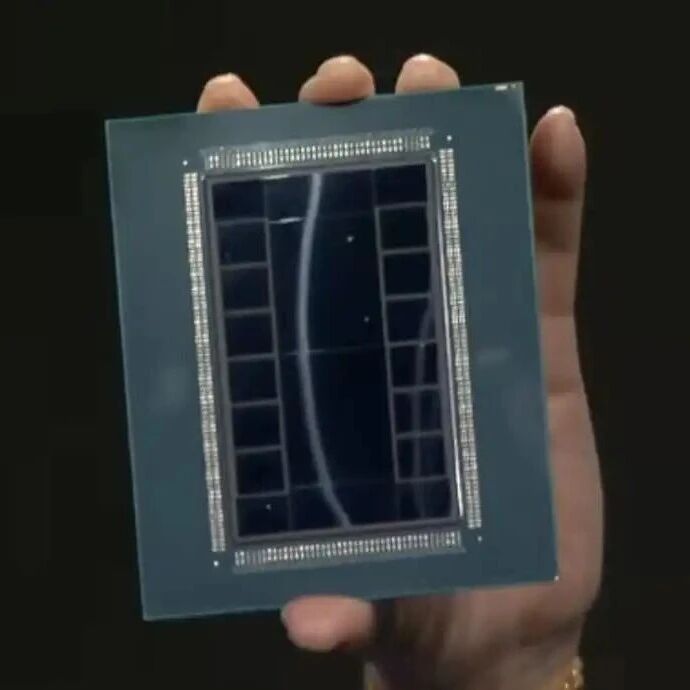
公众号记得加星标⭐️,第一时间看推送不会错过。 在2026年国际消费电子展(CES)上,AMD展示了即将推出的Venice系列服务器CPU和MI400系列 数据中心加 速器。AMD 曾在 2025年6月的"Advancing AI" 活动上介绍过 Venice 和MI400系列的规 格,但此次是AMD首次公开展示这两个产品线的芯片。 首先,Venice 处理器最显著的变化在于其 CCD 与 I/O 芯片的封装方式有所不同。AMD 自 EPYC Rome 以来一直使用封装的有机基板来连接 CCD 和 I/O 芯片,而 Venice 似乎采用了一种更先进的 封装方式,类似于 Strix Halo 或 MI250X。另一个变化是,Venice 似乎配备了两个 I/O 芯片,而不 是之前 EPYC CPU 的单个 I/O 芯片。 Venice 芯片包含 8 个 CCD,每个 CCD 有 32 个核心,因此每个 Venice 封装最多可容纳 256 个核 心。对每个芯片进行测量后发现,每个 CCD 的 N2 硅面积约为 165 平方毫米。如果 AMD 坚持每个 核心配备 4MB 的 L3 缓存,那么每个 CCD 就包含 ...
今年CES,芯片厂商又开始“神仙打架”
3 6 Ke· 2026-01-07 00:42
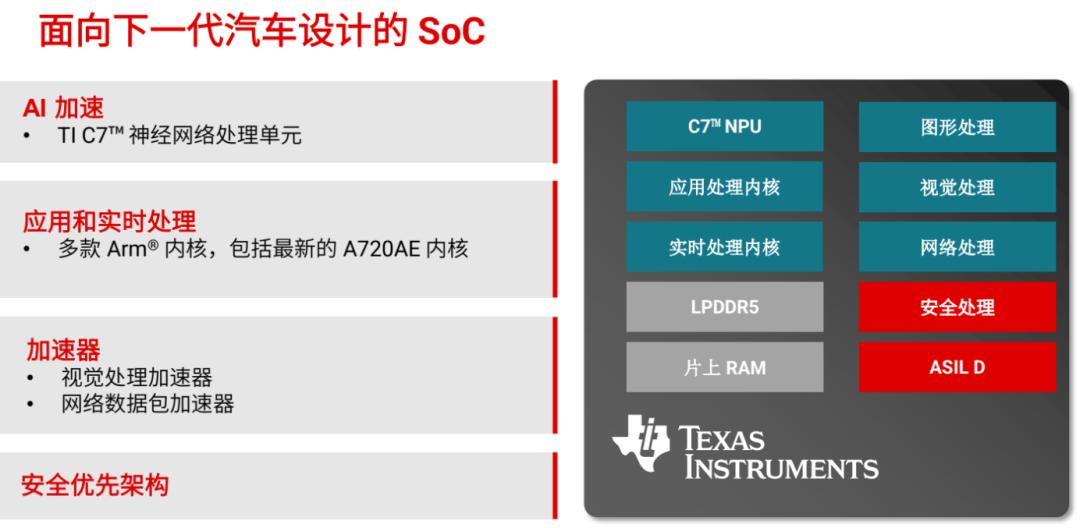
Group 1: TI's Automotive Innovations - TI launched three powerful automotive products at CES: the TDA5 series SoC, AWR2188 radar transmitter, and DP83TD555J-Q1 Ethernet PHY [1][4][7] - The TDA5 SoC features a maximum performance of 1200 TOPS and an energy efficiency of over 24 TOPS/W, with a 12-fold increase in AI computing power compared to previous generations [1] - AWR2188 is the industry's first single-chip 8x8 radar solution, enhancing performance by 30% and achieving high-precision detection for targets over 350m [4] - The DP83TD555J-Q1 Ethernet PHY supports nanosecond-level time synchronization and can transmit power and data over the same line, reducing cable design complexity and costs [7] Group 2: ADI's Diverse Solutions - ADI showcased various solutions in automotive, consumer, and robotics sectors, highlighting the A²B 2.0 solution with four times the bandwidth of its predecessor [10] - The automotive solutions include advanced lighting control and ADAS systems utilizing machine vision inputs [10][11] Group 3: NXP's High-Integration Processor - NXP introduced the S32N7 processor series, which integrates multiple vehicle functions on a single chip, potentially reducing total cost of ownership (TCO) by up to 20% [12][15] Group 4: Microchip's Demonstrations - Microchip presented demos including the ASA Motion Link for Qualcomm's Ride platform and a software-free intelligent headlight system using 10BASE-T1S technology [17][18] Group 5: Silicon Labs' New SDK - Silicon Labs launched a new Simplicity SDK for Zephyr, enhancing support for embedded systems and showcasing advancements in Bluetooth wireless technology [19] Group 6: Infineon's Development Kit - Infineon and Flex unveiled a modular development kit for regional control units, aimed at accelerating the development of software-defined vehicle architectures [20] Group 7: ST's Automotive Gateway - ST displayed the Osdyne Automotive Gateway, which enhances vehicle communication and security while reducing wiring complexity [22] Group 8: Ambarella's AI Vision Chip - Ambarella released the CV7 AI vision SoC, built on a 4nm process, achieving over 20% power reduction and more than 2.5 times the AI performance of its predecessor [25] Group 9: NVIDIA's Revolutionary Products - NVIDIA introduced the Rubin platform with six new chips and launched the Alpamayo series for AI-assisted driving development [26][28] Group 10: AMD's AI Innovations - AMD announced several new products, including the MI455X GPU and Ryzen AI 400 series processors, emphasizing its comprehensive AI capabilities [29][30] Group 11: Arm's Technology Trends - Arm focused on five key technology trends at CES, including advancements in autonomous driving, robotics, and smart home devices [31][32] Group 12: Industry Trends - The CES highlighted three major trends: the penetration of AI across all technology layers, the shift towards centralized and software-defined automotive electronics, and the importance of ecosystem collaboration over isolated technology competition [33]