BANK OF CHINA(BACHY)

Search documents
头部农商行再添一员,中国银行业格局生变
2 1 Shi Ji Jing Ji Bao Dao· 2026-01-22 23:18
Core Viewpoint - A new force characterized by regional deepening is rapidly rising in China's banking industry, with Chengdu Rural Commercial Bank becoming the fifth rural commercial bank to surpass an asset scale of 1 trillion yuan, joining the ranks of other major urban rural commercial banks [1][2]. Group 1: Growth of Rural Commercial Banks - The five rural commercial banks that have crossed the 1 trillion yuan mark are all based in major national cities, which are characterized by high urbanization levels and strong economic radiation capabilities [1][2]. - These banks have successfully achieved leapfrog development by deeply understanding and closely binding with the regional economy, creating a growth path centered on localized services [1][2]. Group 2: Strategic Focus on Local Markets - The success of these banks is attributed to their strategic focus on local markets, aligning their development with regional economic growth, which is consistent with regulatory guidance emphasizing local service [2][3]. - Regulatory bodies have encouraged rural financial institutions to focus on serving local communities and the agricultural sector, reinforcing the importance of localized banking [2]. Group 3: Unique Development Models - Each of the trillion-yuan rural commercial banks has developed unique models based on local characteristics, such as Beijing Rural Commercial Bank focusing on "three rural" services and Shanghai Rural Commercial Bank developing technology and pension finance [3]. - Chengdu Rural Commercial Bank aims to be a bank that understands rural revitalization and local industries, optimizing its branch layout to enhance service breadth and depth [3][4]. Group 4: Financial Performance - Chengdu Rural Commercial Bank's asset scale has grown from less than 500 billion yuan in 2019 to over 1 trillion yuan in early 2026, with an annual growth rate significantly higher than the industry average [4]. - The bank maintains a stable asset quality, with a non-performing loan ratio of 1.02% and a provision coverage ratio of 441.83%, indicating strong financial health compared to peers [4]. Group 5: Challenges and Transformation - Surpassing the 1 trillion yuan mark signifies a new development stage for these banks, necessitating a restructuring of their development models and management capabilities [6]. - The banks face three core challenges: pressure on profit growth due to narrowing net interest margins, accelerated capital consumption, and increased difficulty in risk management amid regional economic adjustments [6][7]. Group 6: Pathways for Transformation - Transformation strategies should focus on capital replenishment through both internal and external means, diversifying income sources beyond traditional lending, and enhancing risk management capabilities [7]. - Chengdu Rural Commercial Bank's approach includes innovating products in green finance and technology finance, with its green loan balance nearing 50 billion yuan, reflecting a significant growth engine [7][8]. Group 7: Digitalization and Local Service - The bank's strategy to address digital challenges involves focusing on local scenarios and enhancing digital platforms, with over 4 million mobile banking users and a community service platform linking 110 communities [8]. - The emergence of trillion-yuan rural commercial banks indicates that impactful financial institutions can be cultivated in the regional economic service sector, emphasizing the importance of local roots and sustainable development [8].

头部农商行再添一员 中国银行业格局生变
2 1 Shi Ji Jing Ji Bao Dao· 2026-01-22 23:10
Core Viewpoint - A new force characterized by regional deepening is rapidly emerging in China's banking industry, with Chengdu Rural Commercial Bank becoming the fifth rural commercial bank to surpass 1 trillion yuan in assets, highlighting a structural change in the industry towards localized service models [1][2]. Group 1: Emergence of Regional Banks - Chengdu Rural Commercial Bank officially announced its asset scale surpassed 1 trillion yuan on January 1, 2026, joining the ranks of four other major rural commercial banks [1]. - The five banks that have reached this milestone are all urban rural commercial banks headquartered in national central cities, which have high urbanization levels and strong economic radiation capabilities [1]. - The success of these banks is attributed to their deep understanding of local economies and a strategic focus on localized services, aligning with regulatory guidance emphasizing support for local communities and agriculture [2]. Group 2: Development Strategies - Each of the trillion-yuan rural commercial banks has developed unique advantages based on local characteristics, such as Beijing Rural Commercial Bank focusing on "three rural" services and Shanghai Rural Commercial Bank developing technology and elderly finance [3]. - Chengdu Rural Commercial Bank aims to be a bank that understands rural revitalization and local industries, optimizing its branch layout to enhance service breadth and depth [3]. - The bank has achieved over 80% account opening rates for new agricultural operators and over 72% credit coverage for major grain producers, demonstrating its effective local engagement [3][4]. Group 3: Financial Performance - Since the end of 2019, Chengdu Rural Commercial Bank's asset scale has grown from less than 500 billion yuan to over 1 trillion yuan by early 2026, with an annual growth rate significantly above the industry average [4]. - The bank maintains a stable asset quality, with a non-performing loan ratio of 1.02% and a provision coverage ratio of 441.83% as of mid-2025, indicating strong financial health compared to peers [4]. Group 4: Challenges and Transformation - Surpassing the 1 trillion yuan mark signifies a new development stage for these regional banks, necessitating a restructuring of their development models and management capabilities [6]. - The banks face three core challenges: pressure on profit growth due to narrowing net interest margins, accelerated capital consumption from risk-weighted asset expansion, and increased difficulty in risk management amid economic adjustments [6][7]. - To address these challenges, banks must diversify their income structures, enhance capital accumulation, and strengthen risk management through digital means [7][8]. Group 5: Digitalization and Future Outlook - Chengdu Rural Commercial Bank is focusing on digitalization by enhancing mobile banking and online service platforms, with over 4 million mobile banking users and a community service platform linking 110 communities [8]. - The emergence of trillion-yuan rural commercial banks indicates that impactful financial institutions can be cultivated in regional economies, emphasizing the importance of local engagement for sustainable development [8].
中国银行股份有限公司深圳市分行与中国信达资产管理股份有限公司深圳市分公司债权转让通知暨债务催收联合公告
Jing Ji Ri Bao· 2026-01-22 22:19
Core Viewpoint - China Bank has signed a bulk asset transfer agreement with China Cinda Asset Management, transferring its rights to certain debt claims to the latter, effective from September 22, 2025 [1]. Group 1: Agreement Details - The agreement involves the transfer of principal debt claims and all rights under the relevant guarantee contracts to China Cinda Shenzhen Branch [1]. - Borrowers and guarantors listed in the announcement are required to fulfill their repayment obligations immediately upon the announcement [1]. Group 2: Debt Information - The announcement includes a list of borrowers with their respective debt amounts, with the principal balances as of the transfer benchmark date of August 6, 2025 [1]. - The total principal amounts for some of the borrowers include: - Shenzhen Xin Hai Wei Cloud Computing Co., Ltd: 4,561,480.35 RMB [4] - Shenzhen Jing Shi Construction Repair Waterproof Engineering Co., Ltd: 3,119,978.37 RMB [4] - Shenzhen Mi Tu Technology Co., Ltd: 2,349,541.00 RMB [4] - Shenzhen Ai Mei Commercial Management Co., Ltd: 9,999,773.33 RMB [4]. Group 3: Contact Information - Contact details for inquiries are provided for both China Bank and China Cinda Asset Management, including phone numbers and addresses [3][4].
Maaden kicks off dollar sukuk issuance
ArgaamPlus· 2026-01-22 10:59
Core Viewpoint - Saudi Arabian Mining Company (Maaden) has initiated the issuance of USD-denominated sukuk under its International Sukuk Issuance Program to meet its general corporate needs [2][6]. Group 1: Sukuk Issuance Details - The sukuk will be offered to qualified investors both inside and outside Saudi Arabia, with the size and terms of the issuance to be determined based on market conditions [3]. - The minimum subscription for the sukuk is set at $200,000, with increments of $1,000 [5]. - The issuance is scheduled to start on January 22, 2026, and end on January 29, 2026 [5]. Group 2: Management and Structure - The sukuk issuance will be managed by a consortium of financial institutions including Albilad Capital, AlJazira Capital, and others, with joint lead managers such as BNP Paribas, Citigroup Global, and Goldman Sachs International [5]. - The issue price and return of the sukuk will also be determined based on market conditions [5]. Group 3: Program Background - Maaden's International Sukuk Issuance Program was established on February 4, 2025, following a board decision made on December 15, 2025 [6].


十五五期间,中国银行业如何处置房地产不良资产
Sou Hu Cai Jing· 2026-01-22 08:20
Core Viewpoint - The article emphasizes the need for a comprehensive system to address non-performing real estate assets in China's banking sector during the 14th Five-Year Plan period (2026-2030), focusing on market-oriented, professional, legal, and social approaches, while drawing lessons from successful experiences in the US, Japan, South Korea, and Ireland [1]. Group 1: Policy Recommendations for Asset Disposal - Establish a national joint conference for the disposal of real estate non-performing assets, led by the Ministry of Finance, involving key financial and regulatory bodies, with a mandate for the four major Asset Management Companies (AMCs) to acquire and manage these assets [1]. - The Ministry of Finance will inject 500 billion yuan into each of the four major AMCs to facilitate the acquisition of non-performing real estate assets, with a target of acquiring at least 3 million units within three years [1]. - Create a cooperative mechanism between AMCs and local governments, establishing a special fund of approximately 2 trillion yuan to support the "guarantee delivery" of housing projects and the revitalization of quality assets [1]. Group 2: Legal and Policy Framework - Introduce a specific legislative framework for the disposal of non-performing real estate assets, including clear pricing rules and streamlined judicial processes to reduce disposal time from 18-24 months to 6-8 months [3]. - Implement differentiated tax incentives, including a 50%-100% reduction in taxes related to the disposal of non-performing assets, to lower costs and attract market participation [3]. - Establish a unified national real estate mortgage registration platform to enhance transparency and simplify property transfer processes [3]. Group 3: Market-Oriented Disposal Tools - Promote bulk transfers and asset securitization, expanding the scale of real estate asset securitization to attract long-term capital from insurance and pension funds [4]. - Develop a combination model of "debt restructuring + asset development" to support quality developers and revive stalled projects [4]. - Introduce international advanced disposal tools and experiences, including a fixed price plus performance sharing model to incentivize asset value enhancement [4]. Group 4: Targeted Risk Mitigation Strategies - Differentiate disposal strategies for developers based on risk levels, employing rapid recovery methods for high-risk assets and supportive measures for medium-risk assets [5]. - Implement humane solutions for individual housing loan defaults, prioritizing non-judicial methods and providing debt relief options for families in distress [5]. - Enhance the value of commercial real estate through transformation and professional management, utilizing asset securitization for efficient exits [5]. Group 5: Risk Prevention and Long-term Mechanisms - Establish a comprehensive risk management system for real estate loans, limiting concentration ratios for banks to prevent excessive risk accumulation [6]. - Encourage financial innovation in real estate, such as developing Real Estate Investment Trusts (REITs) to reduce reliance on bank credit [6]. - Create a monitoring and early warning mechanism for real estate market risks, including a risk indicator system to prevent risk accumulation [6]. Group 6: Balancing Financial Stability and Social Welfare - Prioritize the "guarantee delivery" of housing projects, establishing a collaborative mechanism among government, banks, developers, and contractors to protect buyers' rights [7]. - Guide the banking sector towards supporting affordable housing and new real estate development models, reducing reliance on traditional development loans [7]. - Allocate 30% of net proceeds from the disposal of non-performing assets to a housing security fund to support affordable rental housing and subsidies for struggling families [7].
强支撑 筑生态 破堵点 中国银行广东省分行党建领航 护航科创“破茧成蝶”
Jin Rong Shi Bao· 2026-01-22 02:03
Core Viewpoint - The Guangdong branch of the Bank of China is actively promoting the development of technology finance to support the transformation of scientific research into production, creating a comprehensive financial ecosystem for technology enterprises [1][2]. Group 1: Institutional and Organizational Developments - The Bank of China Guangdong branch has revised its guidelines to ensure compliance without moral risk, integrating technology finance into core assessments and forming dedicated approval teams to address lending challenges [2]. - The establishment of a primary technology finance center and five secondary centers in key innovation cities aims to enhance the bank's service capabilities for technology enterprises [2]. - A total of 34 technology branches have been set up in innovation zones to provide specialized services, with 9 branches recognized as "commitment-based technology branches" [2]. Group 2: Technological Empowerment - The bank has developed an intelligent service system based on data and models, launching the "Innovation Credit Loan" product to create precise credit assessments based on technological capabilities [2]. - As of September 2025, the credit balance for technology enterprises exceeded 270 billion, serving approximately 19,000 companies with a non-performing loan rate of less than 1% [2]. Group 3: Collaborative Ecosystem Building - The "Bank of China Innovation Ecosystem Partner Program" aims to create a collaborative financial service system involving government, research institutions, and investment entities, transitioning from isolated efforts to coordinated actions [3]. - A memorandum of cooperation was signed with the Guangdong Productivity Promotion Center to provide comprehensive lifecycle services for technology enterprises [3]. - Initiatives include a provincial technology credit risk compensation fund and tailored services for innovation hotspots like Dongguan and Zhuhai [3]. Group 4: Dual-Driven Financing Model - The bank has introduced a "production investment + credit" dual-driven model to provide long-term, low-cost capital for technology enterprises [4]. - A 14 billion equity investment fund has been established to support advanced manufacturing, with over 1 billion already invested in technology enterprises [4]. - A specialized service plan for pilot testing platforms has been launched, with significant loans approved for semiconductor research projects and related enterprises [4].
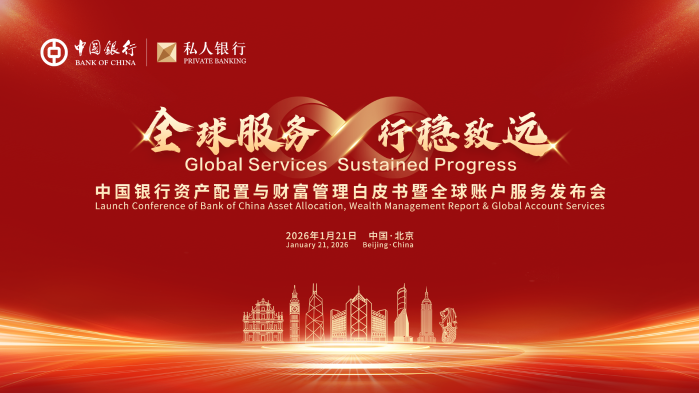
中国银行推出个人金融全球账户服务
Ge Long Hui A P P· 2026-01-21 11:08
Core Viewpoint - Bank of China has launched a personal financial global service plan in Beijing and Hong Kong, focusing on cross-border customer needs and offering various core services [1] Group 1: Service Features - The global service plan includes five core services: global account overview, asset allocation, convenient remittance, payroll convenience, and exclusive rights [1] - The plan enables mobile banking cross-border visibility, multi-currency asset allocation, and efficient remittance functions [1] Group 2: Supporting Documents - The bank released the "2026 Bank of China Personal Financial Global Asset Allocation White Paper" and the "2026 China High Net Worth Wealth Management White Paper" to provide professional support for customers' global asset layout [1] Group 3: Future Plans - Bank of China aims to continue optimizing global services to assist customers in realizing value [1]
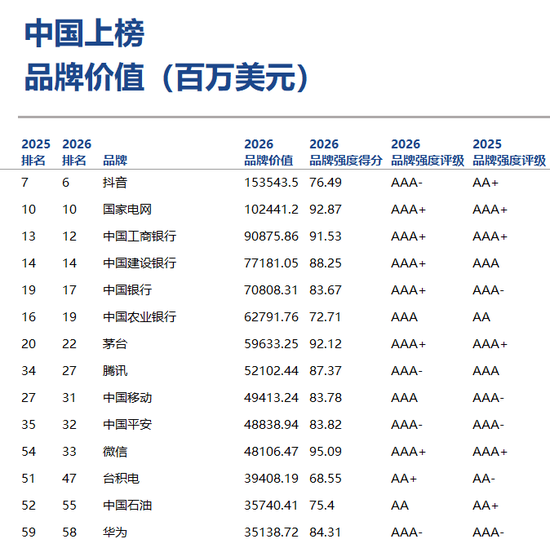
《Brand Finance 2026年全球品牌价值500强》榜单发布:13家中国银行业品牌上榜,工行建行中行农行位列前20
Xin Lang Cai Jing· 2026-01-21 10:48
1月21日金融一线消息,当地时间1月20日,《Brand Finance 2026年全球品牌价值500强榜单报告》在瑞 士达沃斯正式发布。 《Brand Finance 2026年全球品牌价值500强榜单报告》显示,银行业凭借79个品牌,为总价值贡献了 12.5%。其中,13家中国银行品牌以4170亿美元总价值占据行业鳌头,同比增长1.4%。 中国工商银行在榜单中的排名为第12名,凭借908.8亿美元的品牌价值和91.5分的品牌强度指数稳居全球 银行品牌榜首,获得AAA+评级。 上榜的中国银行品牌还有中国建设银行(排名14)、中国银行(排名17)、中国农业银行(排名19)、 招商银行(排名74)、中信银行(排名128)、中国邮政储蓄银行(排名134)、交通银行(排名 167)、上海浦东发展银行(排名272)、兴业银行(排名274)、中国民生银行(排名404)、中国光大 银行(排名461)、恒生银行(排名462)。 | 2025 2026 | | | 2026 2026 | 2026 | 2025 | | --- | --- | --- | --- | --- | --- | | 排名 | 排名 品牌 | | ...



五大核心功能! 中国银行推出个人金融全球账户服务
Sou Hu Cai Jing· 2026-01-21 10:37
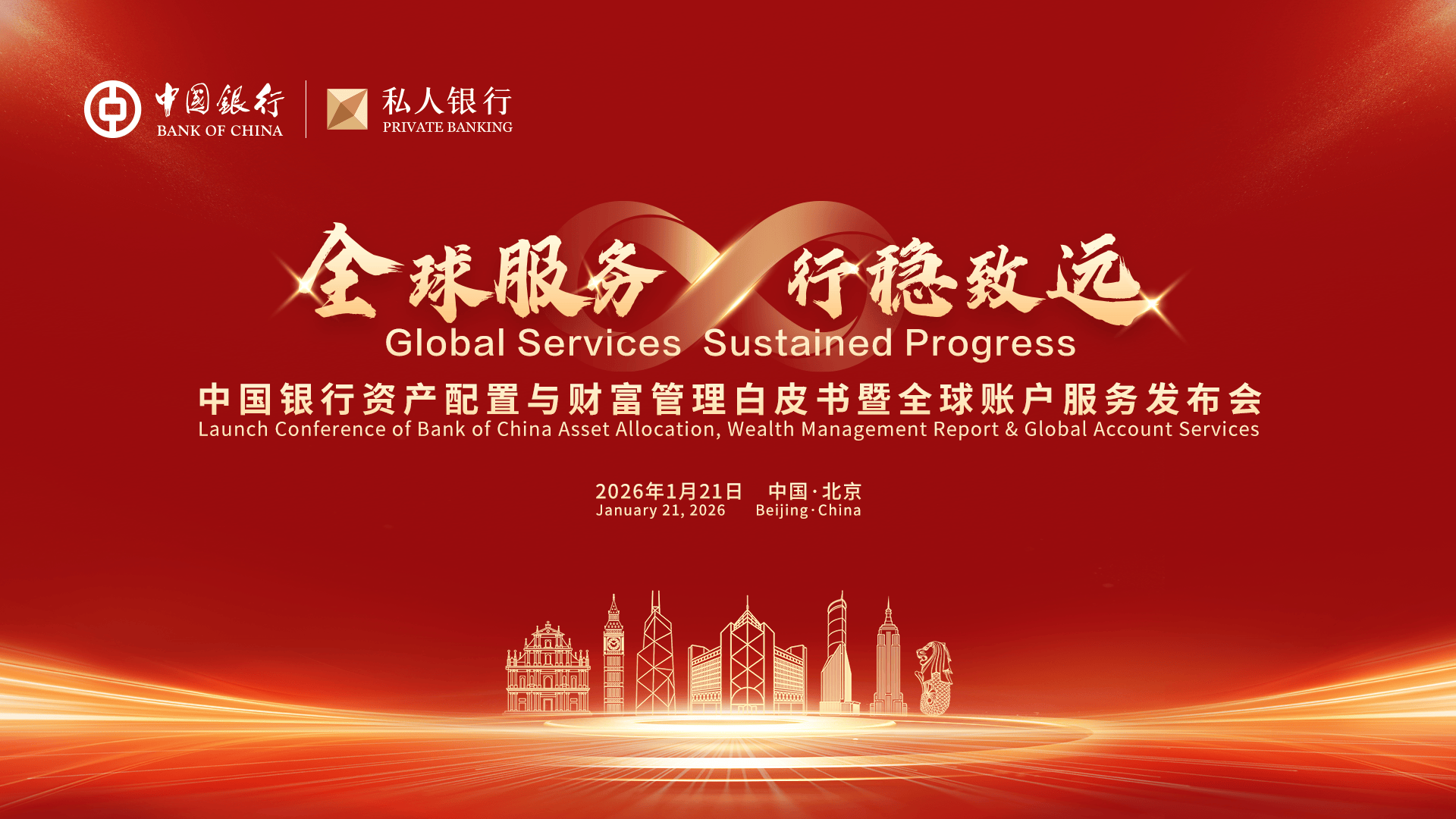
Core Viewpoint - The Bank of China has launched a global financial service plan focused on cross-border clients, enhancing its global service capabilities and addressing the increasing demand for comprehensive financial solutions [1][3]. Group 1: Service Features - The service plan includes five core functions: global account overview, global asset allocation, global convenient remittance, global payroll convenience, and global premium rights [3]. - The integration of the Bank of China's mainland and Hong Kong mobile banking allows for a seamless experience where clients can initiate transactions from one end and view them on both ends [3]. - A specialized strategy system offers a full market, multi-strategy, and multi-currency global product shelf, enabling tailored global asset allocation solutions [3]. Group 2: Cost and Convenience - The service emphasizes four key features: more economical costs, faster remittance, enhanced security, and greater operational convenience for global remittance services [4]. - The "Bank of China Global Payroll" service provides a comprehensive financial ecosystem from enterprises to employees and from individuals to families [5]. Group 3: Global Reach and Publications - Clients can open local Bank of China or Bank of China Hong Kong accounts in over ten countries or regions, enjoying corresponding tiered services with a single identity [5]. - The Bank of China also released the "2026 China Bank Personal Financial Global Asset Allocation White Paper" and the "2026 China High Net Worth Wealth Management White Paper," continuing its commitment to meet client asset allocation needs [5].
五大核心功能 中国银行推出个人金融全球账户服务
Zhong Guo Xin Wen Wang· 2026-01-21 10:29
Core Insights - The Bank of China has launched a personal financial global service plan based on the "global account" feature, aiming to enhance cross-border financial services and meet the higher demands of cross-border clients [1][3] - The service plan includes five core functions: global account overview, global asset allocation, global convenient remittance, global payroll convenience, and global premium rights [3] - The bank has also released two white papers focused on global asset allocation and wealth management for high-net-worth individuals, continuing its commitment to respond to client asset allocation needs [3] Group 1 - The launch of the global service plan is part of the Bank of China's efforts to optimize cross-border trade and investment facilitation measures [3] - The service aims to provide a one-stop, full-cycle support for cross-border clients, enhancing the accessibility and convenience of financial services [3] - The bank has integrated its mainland and Hong Kong mobile banking services, allowing for a seamless experience where clients can initiate transactions from one end and view them on both ends [3] Group 2 - The bank emphasizes four key features of its global remittance services: cost-effectiveness, speed, security, and convenience [3] - The "Bank of China Global Payroll" service supports a comprehensive financial ecosystem from enterprises to employees and individuals to families [3] - Clients can open local accounts in over ten countries or regions and enjoy corresponding tiered services with a single identity [3] Group 3 - The Bank of China aims to enhance its global service layout with a broader vision, practical measures, and superior services to accompany global clients in creating value [4]