Citi(C)

Search documents
X @Decrypt
Decrypt· 2025-10-10 20:01
Bank of America, Citi and Goldman Sachs Among Banks Exploring Joint Stablecoin► https://t.co/lIfwDZTnjC https://t.co/lIfwDZTnjC ...


Ten Banks Explore G7 Stablecoins, But Will It Work? The Good, Bad, and Ugly
Yahoo Finance· 2025-10-10 19:24
Group 1 - Ten major global banks, including Citi, Deutsche Bank, and Bank of America, are exploring the launch of stablecoins pegged to G7 currencies, aiming for a network of interoperable digital tokens backed 1:1 by fiat reserves [1][2] - This initiative represents the first significant effort by the banking sector to enter the stablecoin market, which is currently dominated by Tether and Circle, potentially redefining cross-border settlements and digital asset management [2][3] - The proposed G7 stablecoin network could legitimize stablecoins as a trusted financial instrument, bringing credibility and oversight to a market valued over $300 billion [3][4] Group 2 - Blockchain-based tokens could modernize global settlements, enabling instant foreign exchange swaps that currently take days to process through traditional systems like SWIFT [4] - The project is seen as a bridge between traditional finance and tokenized assets, such as digital bonds or securities [4][5] - However, the plan faces execution challenges, including the risk of fragmentation due to separate national regulations governing each G7 stablecoin, which could hinder interoperability [5][6] Group 3 - Regulators need to determine whether these stablecoins will be classified as deposits or off-balance-sheet liabilities, a decision that could significantly impact bank capital rules [6] - Concerns exist regarding the potential systemic and geopolitical fallout, particularly the risk of accelerated capital flight from emerging markets that struggle with dollarization [7]


Goldman Sachs, Deutsche Bank Lead Nine-Bank Blockchain Money Initiative
Yahoo Finance· 2025-10-10 19:11
Core Insights - A coalition of nine banks, including Goldman Sachs, Deutsche Bank, and Bank of America, is exploring the creation of blockchain-based digital money, marking a significant step for traditional financial institutions to integrate cryptocurrency into global payment systems [1][3] - The consortium aims to issue a 1:1 reserve-backed digital currency on public blockchains, initially focusing on G7 currencies [2] - The initiative is part of a broader trend in the banking sector towards blockchain adoption, with stablecoins gaining traction for their potential in payment efficiency and liquidity management [4] Group 1 - The coalition consists of major banks such as BNP Paribas, Citigroup, MUFG, TD Bank, and UBS, indicating a strong interest in digital currency solutions [2] - The project is in active discussions with regulators to ensure compliance and facilitate the development of a new class of digital money [3] - The global stablecoin sector has seen significant growth, with a valuation reaching $303 billion, reflecting increased corporate demand [5] Group 2 - The signing of the Genius Act by US President Donald Trump has accelerated global digital currency adoption, enhancing regulatory clarity and institutional involvement [6] - A similar initiative in Europe aims to develop a euro-denominated stablecoin compliant with the EU's MiCAR framework, set to launch in the second half of 2026 [7] - North Dakota has announced plans for a state-backed "Roughrider Coin" for interbank payments, showcasing local government interest in digital currency solutions [8]
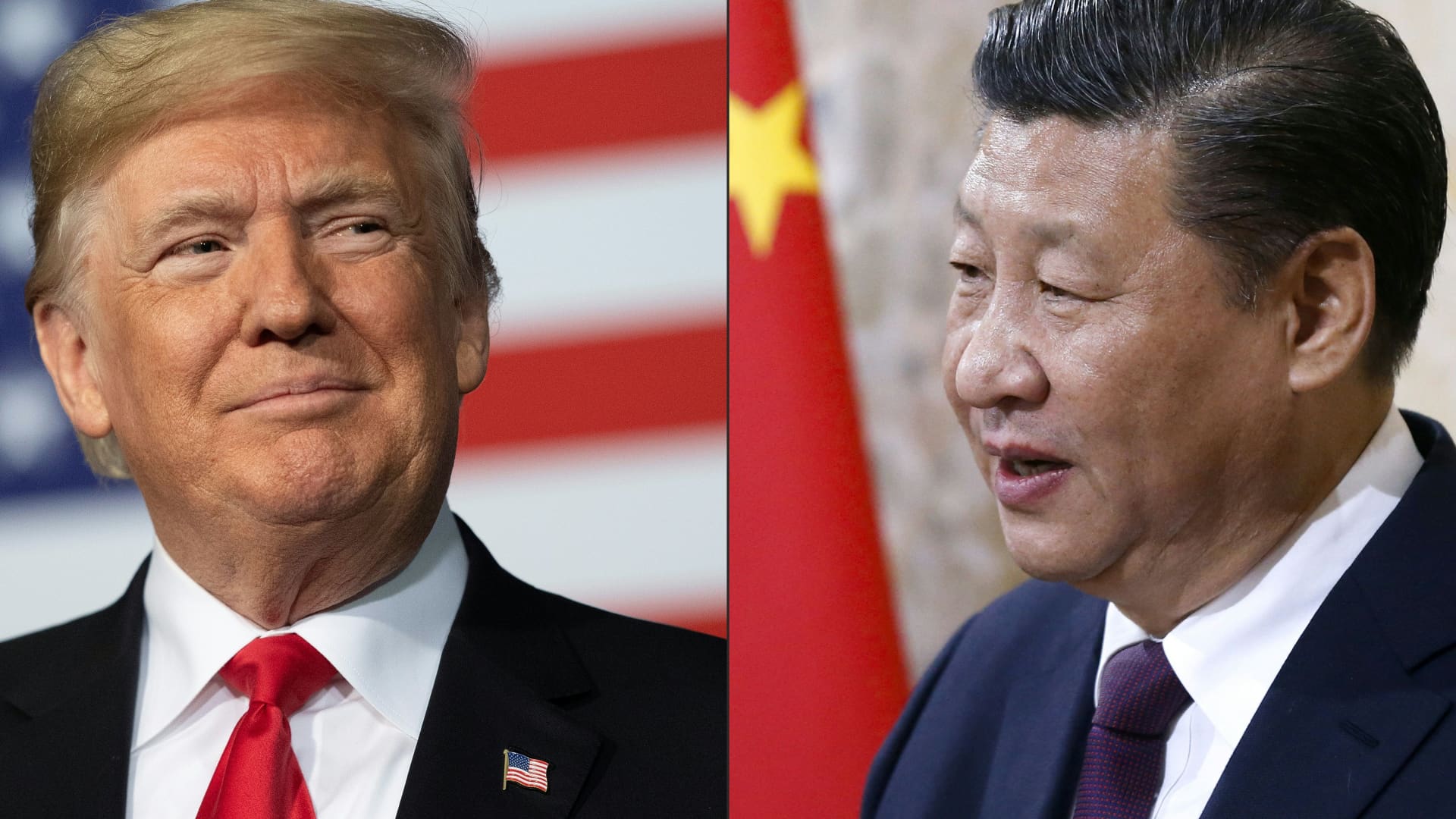
Trump's China threat slams stocks — plus, our best and worst of the 3-year bull market
CNBC· 2025-10-10 18:47
Market Overview - Stocks experienced a sell-off as President Trump threatened a "massive" tariff increase on China, particularly concerning rare earth minerals, which surprised the market given recent improvements in trade relations [1] - The S&P 500 index was down 1.9% and the Nasdaq fell approximately 2.6%, marking the first 1% drop for the S&P 500 since August 1 [1] Company Performance - Nvidia emerged as the best performer in the Investing Club portfolio, soaring approximately 1,527% over the three-year bull market [1] - Other top performers included Broadcom, which increased more than 665%, Meta Platforms with a gain of almost 458%, and CrowdStrike, which rose over 224% [1] - The bottom performers included Bristol Myers Squibb, down more than 36%, Nike, down nearly 26%, and both Danaher and Starbucks, each down nearly 9% [1] Upcoming Earnings - The third-quarter earnings season is set to begin, with over 30 S&P 500 companies scheduled to report next week [1] - Major banks such as Goldman Sachs, Wells Fargo, JPMorgan, and Citigroup will kick off earnings reports on Tuesday, along with BlackRock and Johnson & Johnson [1] - Other notable companies reporting next week include Abbott Laboratories, Bank of America, Morgan Stanley, American Express, CSX, Charles Schwab, SLB, and Prologis [1]


Forget Bitcoin & Ethereum — Citi's Stablecoin Bet Could Spark A $1.9 Trillion Boom By 2030
Yahoo Finance· 2025-10-10 18:00
Core Insights - Citigroup Inc. has entered the stablecoin market by investing in U.K.-based BVNK, anticipating a potential $1.9 trillion market for tokenized dollars [1][2] - The investment was made through Citi Ventures, with BVNK processing over $20 billion in annual transactions for notable clients [2] - The GENIUS Act, effective since July, allows U.S. banks to issue and manage payment stablecoins under Treasury oversight, prompting banks like Citi to accelerate their involvement in the regulated stablecoin sector [3][6] Company Developments - Citi's strategy reflects a shift from speculative crypto trading to practical applications of dollar tokenization, with plans for a Citi-branded stablecoin aimed at enhancing global settlement and digital custody services [4] - The in-house research division of Citi has raised its 2030 forecast for stablecoin issuance to $1.9 trillion, indicating significant potential for institutional adoption [5] - Competitors like JPMorgan and Goldman Sachs are also advancing in the stablecoin space, with JPMorgan's JPM Coin facilitating billions in daily transfers and Goldman developing tokenized cash settlement tools [5][6] Regulatory Environment - The GENIUS Act is considered a pivotal U.S. financial law for digital assets, formalizing the issuance, backing, and supervision of stablecoins by insured depository institutions [6][7] - The Treasury Department is currently in a public consultation phase to establish implementation guidelines, which could integrate stablecoins into the U.S. payments system by 2026 [7]
Larrea Bows Out After Citi Rejection in Banamex ‘Telenovela’
MINT· 2025-10-10 17:01
(Bloomberg) -- Mining magnate German Larrea’s conglomerate, Grupo Mexico SAB, said it accepts Citigroup Inc.’s decision to reject its $9.3 billion offer for the US bank’s Grupo Financiero Banamex business.“Grupo Mexico respects Citi’s determination and wishes it success in the transaction it has opted for and in the fate it has chosen for Banamex,” the company said in a statement Friday, adding that it hopes the move “will result in stability and growth for the Mexican financial sector.”Citi said on Thursda ...

Decoding Bank ETF Prospects Ahead of Q3 Earnings Releases
ZACKS· 2025-10-10 16:21
Core Insights - The U.S. stock market is experiencing a critical moment, with concerns over a government shutdown and recession fears juxtaposed against AI-driven growth propelling major indices to record highs [1] - The upcoming third-quarter earnings reports from major banks will serve as a vital indicator of the U.S. economy's health and influence the trajectory of Bank exchange-traded funds (ETFs) [2] Banking Sector Fundamentals - Key factors influencing bank profitability include loan demand and asset quality, shaped by interest rates and economic anxieties [3] - The Federal Reserve's latest report indicates a robust loan growth, with "Loans and Leases in bank credit" increasing at an annual rate of 5.2% in August and 6.1% in July [4] - The Commercial and Industrial (C&I) loan segment showed significant growth, with an annual rate of 13.3% in July, down to 4.5% in August, but still strong compared to the previous quarter [5] Asset Quality Concerns - While a moderate stabilization in asset quality is expected, there are concerns regarding consumer loans and commercial real estate, with investors watching for increases in net charge-offs and loan loss provisions [6] Investment Banking and Market Activity - A rebound in investment banking has led to increased merger and acquisition (M&A) activities, which are anticipated to enhance the profitability of major banks [7] - Growth in capital markets activity, driven by more initial public offerings (IPOs) and debt issuance, is expected to act as a catalyst for banking companies [7] Interest Rate Impact - The Federal Reserve's interest rate reduction in September may impact the net interest margin for major banks, but effective management of deposit costs and lending yields could mitigate negative effects [8] Earnings Expectations - The total third-quarter earnings for the banking sector are projected to rise by 10.7% with a 6.1% increase in revenues [9] - Specific earnings expectations for major banks include: - JPMorgan Chase & Co.: $4.83 per share on $44.86 billion in revenues, with year-over-year growth of 10.5% and 5.2% respectively [9] - Citigroup Inc.: $1.91 per share on $21.01 billion in revenues, with year-over-year growth of 26.5% and 3.4% respectively [10] - Goldman Sachs Group: $10.93 per share on $13.99 billion in revenues, with year-over-year growth of 30.1% and 10.2% respectively [10] - Wells Fargo & Company: $1.54 per share on $21.17 billion in revenues, with year-over-year growth of 1.3% and 4% respectively [10] - Bank of America: $0.94 per share on $27.12 billion in revenues, with year-over-year growth of 16.1% and 7% respectively [11] - Morgan Stanley: $2.07 per share on $16.25 billion in revenues, with year-over-year growth of 10.1% and 5.6% respectively [11] Overall Sector Outlook - The banking sector appears moderately sound, facing challenges such as interest margin pressure and asset quality concerns, but recent lending and investment banking rebounds suggest a stabilized growth trend for major Financial ETFs [12]


Big Banks Gear Up to Report Q3 Earnings
ZACKS· 2025-10-10 16:11
Market Overview - Pre-market futures are up but on a downward trajectory, following new all-time-high closes for the S&P 500 and Nasdaq, with market participants purging some positions [1] - The current bull market has lasted three years, significantly driven by NVIDIA, which has seen a 1500% increase, alongside other major players like Broadcom (+650%), Meta (+450%), and Alphabet (+150%) [3] Upcoming Earnings Reports - Major banks including JPMorgan, Citigroup, Wells Fargo, and Goldman Sachs are set to report earnings next week, which will represent a significant portion of the S&P market cap [2] - Other companies such as Johnson & Johnson and Domino's Pizza will also release earnings on the same day [2] Consumer Sentiment and Economic Indicators - A preliminary Consumer Sentiment survey from the University of Michigan is expected to show a decline to 53.5 in October from 55.1 in September, indicating ongoing consumer uncertainty [4] - Inflation expectations among consumers have slightly decreased, suggesting that the impact of tariffs may not be as severe as previously thought [5] Government Budget and Economic Data - Monthly U.S. Federal Budget figures for September will not be released due to the ongoing federal government shutdown, which is affecting the availability of key economic data such as CPI and PPI [6]
Goldman Sachs, Citi, Bank Of America To Walk Through The Door Opened By Trump-Backed GENIUS Act - Goldman Sachs Group (NYSE:GS)
Benzinga· 2025-10-10 15:17
Core Insights - A consortium of major banks, including Goldman Sachs, Citigroup, UBS, Deutsche Bank, and Bank of America, is exploring blockchain-based assets pegged to G7 currencies, marking a significant collaborative effort in the banking sector [1][2] Group 1: Blockchain and Stablecoin Initiatives - The initiative aims to develop tokenized settlement systems backed by major currencies like the U.S. dollar and euro, targeting regulated financial institutions [2] - Citigroup has made a strategic investment in BVNK, a stablecoin infrastructure company, highlighting Wall Street's confidence in stablecoins as part of global payment modernization [4][5] - The global stablecoin market has reached a record capitalization of $314 billion, with significant transaction volumes indicating robust growth [6] Group 2: Market Dynamics and Predictions - Analysts at JPMorgan estimate that dollar-backed stablecoins could create an additional $1.4 trillion demand for U.S. dollars by 2027, suggesting a strengthening of the dollar's role in global finance [7] - Standard Chartered warns that emerging market banks could lose up to $1 trillion in deposits as savers shift towards digital dollar alternatives, driven by inflation and currency instability [8] Group 3: Regulatory Environment - The GENIUS Act has clarified regulatory frameworks, allowing U.S. banks to issue and hold blockchain-backed currencies, which is seen as a turning point for Wall Street's digital strategy [3][10] - The act prohibits yield-bearing stablecoins but is expected to accelerate adoption in developing regions as users seek stability from local monetary volatility [9] Group 4: Future Implications - The entry of major banks into the stablecoin market signals a potential challenge to fintech firms and aims to ensure compliance within a regulated framework [11] - Stablecoins are evolving from utility tokens to foundational elements of a new financial order, with the potential to rival traditional payment systems like SWIFT and Visa [12] - If stablecoins capture a portion of the $100 trillion payments market, it could significantly reshape global finance [13]

Goldman, Santander Among Banks Exploring Blockchain-Based Money
MINT· 2025-10-10 14:44
Group 1 - A consortium of international banks, including Goldman Sachs, Deutsche Bank, Bank of America, and Banco Santander, is exploring the issuance of "digital money" on public blockchains, indicating a significant interest in leveraging blockchain technology for payments [1][2] - The consortium aims to create a 1:1 reserve-backed form of digital money that serves as a stable payment asset on public blockchains, focusing on G7 currencies [2] - The coalition is in contact with regulators and is assessing whether this offering could enhance competition and provide benefits associated with digital assets [3] Group 2 - There is a growing focus among banks on utilizing blockchain technology for payments, with stablecoins gaining traction as a faster and cheaper alternative to traditional payment systems [4] - Recent regulatory developments in the US and the European Union have provided a clearer framework for established companies to operate within, driving increased activity from large firms in the digital money space [5]