Workflow
salesforce(CRM)
icon
Search documents
Stock Of The Day: Is This The Bottom For Salesforce?
Benzinga· 2026-01-20 16:52
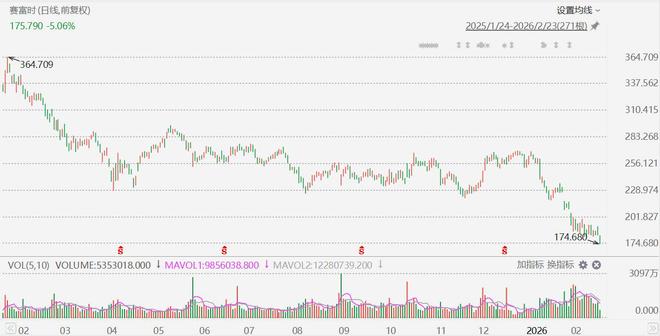
Core Viewpoint - Salesforce, Inc. shares have experienced a decline of over 15% in value over the past two weeks, but the stock may be poised for a rebound as it approaches a historical support level of $225 [1]. Price Movement - Salesforce shares have dropped to approximately $225, a price that previously served as support in August and November [2]. Support Levels - Historical support levels often attract remorseful sellers who regret their previous sales, leading to increased buying interest when the stock returns to these levels [4]. - When Salesforce fell back to around $225 in November, many remorseful sellers placed buy orders, creating significant support at this price point [5]. Potential for Rebound - As the stock returns to $225, disappointed traders who sold at this level in November are likely to place buy orders, which could establish support once again [6]. - The last two instances when Salesforce found support at $225 resulted in subsequent rallies, indicating a potential for upward movement if buying pressure increases [6][7]. Market Dynamics - The dynamics of anxious buyers and sellers can lead to a bidding war, potentially driving the stock into an uptrend, similar to previous occurrences when the stock hit the $225 mark [7].
Claude抢生意,美国软件股暴跌
3 6 Ke· 2026-01-20 07:22
Core Viewpoint - The software sector is experiencing its worst start to the year since 2022, with a 15% decline following an 11% drop last year, raising concerns about future growth prospects due to emerging AI competition [1][3]. Group 1: Market Performance - A group of Software as a Service (SaaS) stocks tracked by Morgan Stanley has seen a significant downturn, marking the worst annual opening since 2022 [1]. - Intuit Inc., the parent company of TurboTax, experienced a 16% drop, while Adobe and Salesforce saw declines exceeding 11% [3]. - The Nasdaq 100 index is nearing historical highs, yet companies like ServiceNow Inc. are at multi-year lows, highlighting a widening gap in performance within the tech sector [9]. Group 2: AI Competition - The launch of Anthropic's AI collaboration tool "Claude Cowork" has intensified fears of disruptive competition in the software market, reminiscent of concerns from 2025 [3][8]. - Claude Cowork allows users to automate tasks such as creating spreadsheets and generating reports, significantly enhancing productivity for both programmers and non-programmers [4][6]. - The tool's rapid adoption has led to a notable increase in its user base, with a 12% rise in global daily active users since last month [7]. Group 3: Investor Sentiment - Many investors are losing confidence in holding software stocks, believing there are no catalysts for valuation recovery despite lower price multiples [8]. - Concerns about the attractiveness of AI products from established software companies are growing, as many have not demonstrated significant revenue impact from their AI offerings [9]. - The expected profit growth for software and services companies in the S&P 500 is projected to slow to 14% in 2026, down from an estimated 19% in 2025 [9]. Group 4: Valuation Trends - Software companies are seeing their valuations decline, with a forward price-to-earnings ratio of 18 times, the lowest in history compared to an average of over 55 times in the past decade [10]. - The traditional high valuation of software companies, based on subscription models and recurring revenue, is being challenged by the emergence of AI agents capable of performing tasks more efficiently [13].
开年最惨!美国软件股崩了,因为Claude Code太火了
华尔街见闻· 2026-01-19 09:46
Core Viewpoint - The release of Claude Code has reignited concerns about the disruption of the software industry by AI, leading to the worst annual start for U.S. software stocks in years, with a 15% decline in a basket of SaaS stocks tracked by Morgan Stanley since the beginning of the year [1][4]. Group 1: Market Performance - Software stocks have experienced a significant downturn, with a 15% drop since the start of the year, following an 11% decline in 2025, marking the worst opening performance since 2022 [1]. - Current valuations for software stocks are at a record low, trading at 18 times expected earnings for the next 12 months, significantly below the average of over 55 times in the past decade [1]. Group 2: Impact of AI Developments - The panic in the market was triggered by Anthropic's release of "Claude Cowork," which showcased capabilities that alarmed investors about the future of software companies [5][6]. - Users reported completing complex projects in a week that would typically take a year, highlighting the disruptive potential of AI tools [2]. Group 3: Analyst Perspectives - Many buy-side institutions believe there is currently "no reason to hold" software stocks due to the uncertainty brought by AI, with no catalysts for valuation recovery in the short term [4][6]. - Analysts note that existing software companies have not demonstrated significant appeal in their AI products, with Salesforce and Adobe showing limited revenue impact from their AI initiatives [8]. Group 4: Comparative Sector Performance - The earnings growth forecast for software and services companies in the S&P 500 is expected to slow from approximately 19% in 2025 to 14% in 2026, contrasting with the semiconductor sector, which is projected to see profit growth of nearly 45% in 2025 and accelerate to 59% in 2026 [8][9]. - Major tech companies like Microsoft, Amazon, Alphabet, and Meta Platforms are expected to invest heavily in AI infrastructure, providing clearer visibility for revenue growth compared to software firms [8]. Group 5: Valuation Discrepancies - Despite low valuations, there is a divide in market sentiment regarding the future of software stocks, with some analysts optimistic about a rebound by 2026 due to stable customer spending and attractive valuations [10][11]. - Concerns remain about how software companies will compete against AI agents capable of completing tasks rapidly, complicating the assessment of appropriate valuation multiples [11].
开年最惨!美国软件股崩了,因为Claude Code太火了
Hua Er Jie Jian Wen· 2026-01-19 00:23
Core Viewpoint - The release of Claude Code has reignited concerns about the disruption of the software industry by AI, leading to a significant decline in U.S. software stocks, marking one of the worst starts to the year in recent history [1][5]. Group 1: Market Performance - Since the beginning of the year, a basket of SaaS stocks tracked by Morgan Stanley has dropped by 15%, following an 11% decline in 2025, marking the worst opening performance since 2022 [1]. - Software stocks are currently trading at a record low valuation of 18 times expected earnings for the next 12 months, significantly below the past decade's average of over 55 times [1]. - Companies like ServiceNow Inc. have seen their stock prices fall to multi-year lows, while Intuit Inc. experienced a 16% drop, the largest weekly decline since 2022 [2]. Group 2: Investor Sentiment - Many buy-side institutions believe there is "no reason to hold" software stocks amid the disruptive uncertainty brought by AI, with no visible catalysts for valuation recovery in the short term [4][6]. - The release of the "Claude Cowork" service by Anthropic has intensified fears among investors regarding the future growth prospects of software companies [5][6]. Group 3: AI Integration Challenges - Most software manufacturers have not demonstrated significant appeal in their AI products, with Salesforce and Adobe struggling to show revenue impact from their AI initiatives [7]. - Existing software companies need to exhibit accelerated growth to drive stock price rebounds, which appears unlikely in the short term [7]. - In contrast, other tech sectors, particularly semiconductor companies, are expected to see substantial profit growth, with projections of nearly 45% profit growth in 2025 and 59% in 2026 [7][8]. Group 4: Valuation Discrepancies - Despite low valuations, there remains a divide in market sentiment regarding the future of software stocks, with some analysts optimistic about a rebound by 2026 due to stable customer spending and attractive valuations [8]. - Barclays and Goldman Sachs predict that rising AI adoption will expand the total addressable market for software companies, potentially benefiting them in the long run [8]. - Wealthspire's chief market strategist notes that while the sector is not yet a clear buy opportunity, it is approaching a more attractive point for investment [9].
机构称“没有理由持有”!美股软件股陷入“AI焦虑”,板块估值跌至多年低位
智通财经网· 2026-01-19 00:04
Core Viewpoint - The software sector in the U.S. stock market is experiencing its worst start in years, with a 15% decline in software-as-a-service stocks tracked by Morgan Stanley, contrary to earlier expectations of a 11% drop by 2025 [1][4]. Group 1: Market Performance - The stock prices of major software companies like Intuit, Adobe, and Salesforce have seen significant declines, with Intuit dropping 16%, Adobe and Salesforce both falling over 11% [1]. - Despite the Nasdaq 100 index nearing historical highs, companies like ServiceNow have reached multi-year lows, indicating a disconnect between overall market performance and software stock valuations [5]. Group 2: AI Innovations and Concerns - Anthropic's launch of the Claude Cowork service has raised concerns about disruptive innovations in AI, which could further impact software manufacturers' growth prospects [4]. - The rapid development of AI tools has created unprecedented uncertainty regarding future growth, as highlighted by investment managers [4]. Group 3: Earnings and Valuation Trends - Earnings growth for software and service companies in the S&P 500 is expected to slow to 14% in 2026, down from an anticipated 19% in 2025, contrasting with more optimistic fundamentals in other tech sectors [6]. - The price-to-earnings ratio for Morgan Stanley's software company portfolio has dropped to 18 times expected earnings, a historical low compared to an average of over 55 times in the past decade [6][7]. Group 4: Future Outlook - Some analysts believe that the current low valuations of software stocks could lead to a rebound by 2026, driven by stable customer spending and the potential benefits of AI [7][8]. - There is a cautious optimism about the software sector's attractiveness, although it is not yet deemed a definitive buy opportunity [8].
Software Stocks Are in Turmoil. Here Are 5 to Buy Right Now.
The Motley Fool· 2026-01-18 23:45
Core Viewpoint - The software-as-a-service (SaaS) sector is experiencing significant turmoil due to fears of disruption from artificial intelligence (AI), but these fears may be exaggerated, presenting potential investment opportunities in select software stocks. Group 1: AppLovin - AppLovin has seen a stock price increase of 71% over the past year, yet it currently trades nearly 22% below its 52-week high [2][3] - The company is experiencing rapid revenue growth, particularly from its AI-powered Axon-2 adtech platform, which grew 68% year over year last quarter, enhancing gross margins and profitability [3] - Management plans to expand the platform beyond mobile gaming and introduce a self-serve ad manager, which are expected to be growth catalysts [3] Group 2: Salesforce - Salesforce aims to lead in agentic AI by launching Data Cloud (now Data 360) and acquiring Informatica, positioning itself as the master record of organizational data [4][5] - The stock has decreased by about 28% over the past year, attributed to concerns over slowing core growth and increased competition, making it relatively cheap with a forward P/S multiple below 5 and a forward P/E ratio of 18 [5] Group 3: Workday - Workday claims to have the "largest and cleanest" human resource and finance database, which is crucial in the AI era [6] - The company is introducing AI agents and tools for finance, legal, and HR, and has acquired Paradox to enhance its hiring process [7] - Workday's stock has fallen nearly 24% over the past year, but it is trading at a forward P/S ratio below 5 and a forward P/E of 18, indicating it is undervalued [7] Group 4: GitLab - GitLab operates a DevSecOps platform and has seen its stock decline about 45% over the past year due to fears that AI may reduce the need for coders [9] - Despite these concerns, the company has consistently grown its revenue by 25% or more, driven by an increasing enterprise customer count [10] - The launch of its Duo Agent solution and a new hybrid pricing model could serve as growth catalysts, with the stock trading at a forward P/S multiple under 5.5 [10] Group 5: UiPath - UiPath's stock has decreased about 24% from its 52-week high, but the company is transitioning to become an AI orchestration platform [11] - The Maestro platform is designed to manage AI agents and software bots, addressing the need for governance and compliance as AI agents proliferate [13] - The stock is attractively valued, with a forward P/S multiple below 5 and a forward P/E around 20 [14]
Vulcan Value Partners Q4 2025 Letter
Seeking Alpha· 2026-01-18 19:12
Core Viewpoint - The investment strategies have shown positive returns for the year, with a focus on long-term performance over short-term results [2][5]. Performance Summary - Large Cap Composite (Gross) returned -1.4% QTD, 8.5% YTD, and 10.4% annualized since inception [3][22]. - Small Cap Composite (Gross) returned 3.4% QTD, 10.3% YTD, and 8.3% annualized since inception [3][31]. - Focus Composite (Gross) returned 0.2% QTD, 7.5% YTD, and 14.3% annualized since inception [3][36]. - All Cap Composite (Gross) returned 1.5% QTD, 11.5% YTD, and 11.1% annualized since inception [3][53]. Market Environment - The current market resembles the late 1990s, with concerns about overvaluation and a focus on AI-related stocks [5][6][7]. - AI is seen as a transformative technology, similar to the Internet, but caution is advised regarding valuations [7][9]. Investment Strategy - The company emphasizes buying only those companies with stable values, often waiting for them to become discounted enough for investment [10][12]. - The portfolio has shifted towards more healthcare and insurance-related businesses, with a focus on smaller companies outside the top 10 largest market capitalizations [11][12]. Notable Holdings - Medpace (MEDP) has shown significant growth, with a stock price increase of over 73% for the year, driven by strong free cash flow and share repurchases [13][14]. - Ryan Specialty Holdings Inc. is highlighted for its robust growth and stable margins, despite facing a short-term pricing cycle [24][25][38]. - TransUnion is recognized for its strong operating margins and successful diversification beyond credit reports [26][38]. Performance Contributors and Detractors - Alphabet Inc. and Salesforce Inc. were significant contributors to performance, while CoStar Group and Microsoft Corporation were notable detractors [37][46]. - Fiserv Inc. was a material detractor due to downward guidance and strategic shifts in its business model [30][46]. Market Trends - The small-cap sector has lagged behind large-cap returns, presenting potential opportunities for investment as it is often overlooked [15]. - The dominance of large-cap stocks in market returns continues, with the top 10 S&P 500 stocks accounting for over 50% of its return in 2025 [16].
3 Stocks to Avoid as Software Sector Stumbles
Yahoo Finance· 2026-01-17 15:04
Core Viewpoint - The software sector, particularly Software as a Service (SaaS) companies, is facing significant challenges due to the emergence of AI tools like Claude Code, which can drastically reduce the time required for software development and potentially disrupt traditional revenue models based on annual licensing [2][5][4]. Group 1: Impact of AI on Software Companies - Claude Code has demonstrated the ability to recreate a year's worth of work in just one hour, raising concerns for SaaS firms that rely heavily on yearly licensing for revenue [2]. - The introduction of Claude Code has shifted the perception of software from being an AI beneficiary to an AI victim, as it automates entire workflows and reduces the need for expensive software licenses [5][4]. - Major software companies, including Salesforce, DocuSign, and Atlassian, are at risk of losing revenue due to the capabilities of AI tools like Claude Code [4][5]. Group 2: Company-Specific Challenges - Salesforce, the original SaaS company, faces the risk of losing high-margin license revenue as AI agents can perform the work of hundreds of human representatives [6][5]. - DocuSign, which thrived during the pandemic, is now at risk of obsolescence as e-signature solutions are increasingly bundled into larger platforms like Microsoft 365, and AI agents may bypass its offerings entirely [8][9]. - Atlassian, known for its workflow tools, risks redundancy of its platforms as AI agents simplify workflow integration, potentially impacting its bottom line significantly [11]. Group 3: Stock Performance and Market Sentiment - Adobe shares have declined over 25% in the last 12 months, reflecting broader struggles within the software sector [1]. - Salesforce shares dropped 7% in a single session following negative news about Adobe and Claude Code, indicating heightened selling pressure [7]. - DocuSign shares have reached a new 52-week low, with strong resistance at the 50-day simple moving average, suggesting ongoing challenges in regaining investor confidence [10]. - Atlassian shares have lost more than 15% in the last ten days, with a bearish MACD crossover indicating a potential continuation of the downtrend [12].
Wolfe Research Sees Strong AI Momentum at Salesforce, Inc. (CRM)
Yahoo Finance· 2026-01-17 11:45
Group 1 - Salesforce, Inc. (NYSE:CRM) is projected to have strong earnings growth over the next 5 years, with Wolfe Research maintaining an 'Outperform' rating and a price target of $350, indicating a potential upside of approximately 50% [1] - The company's AI portfolio is gaining positive momentum, with Agentforce becoming more integrated into the user interface, offering proactive agent-powered suggestions within workflows [2] - Early deployments of Agentforce focus on internal use cases such as meeting setup, CRM data entry, enterprise search, customer service chatbots, and sales development functions [3] Group 2 - Barclays raised the price target for Salesforce, Inc. to $338 from $330, maintaining an 'Overweight' rating, which is slightly above the consensus 1-year median price target of $335, suggesting an upside potential of about 44% [4] - Salesforce is a California-based provider of customer relationship management (CRM) technology, connecting companies and customers through offerings like Agentforce, Data Cloud, Industries AI, and Slack [5]
Cognitive Analytics Market to Surpass USD 81.46 Billion by 2033, Driven by AI Adoption and Real-Time Decision Intelligence | SNS Insider
Globenewswire· 2026-01-16 07:30
Market Overview - The global Cognitive Analytics Market was valued at USD 7.90 billion in 2025 and is projected to reach USD 81.46 billion by 2033, with a CAGR of 33.99% from 2026 to 2033 [1] - The U.S. Cognitive Analytics Market was valued at USD 2.17 billion in 2025 and is expected to grow to USD 22.03 billion by 2033, with a CAGR of 33.61% from 2026 to 2033 [3] Growth Drivers - The market is expanding due to increasing demand for data-driven decision-making, real-time insights, and the growing acceptance of AI and machine learning across various industries [1][3] - Factors contributing to the U.S. market growth include high AI adoption, advanced digital infrastructure, robust business expenditures, and cloud integration [3] Segmentation Analysis By Enterprise Type - Large Enterprises held a 61% market share in 2025, driven by large data volumes and complex business processes, while small and medium enterprises are expected to grow the fastest from 2026 to 2033 due to lower entry barriers from cloud-based solutions [4] By Application - Customer Management accounted for 31% of the market share in 2025, focusing on enhancing customer experience and retention, while Fraud Detection and Security is anticipated to grow the fastest from 2026 to 2033 due to increasing cyber threats [5] By End-User - The BFSI sector dominated with a 28% share in 2025, relying heavily on advanced analytics for fraud prevention and risk assessment, while Retail is expected to experience the fastest growth from 2026 to 2033 as companies leverage cognitive analytics for demand forecasting and personalized promotions [6][7] By Deployment - Cloud deployment led with a 64% market share in 2025 and is projected to grow at the fastest rate from 2026 to 2033, attributed to its scalability and cost efficiency [8] Regional Insights - North America held the largest revenue share of approximately 38% in 2025, benefiting from early AI adoption and a strong presence of major technology providers [9] - The Asia Pacific region is expected to grow at the fastest CAGR of about 15.22% from 2026 to 2033, driven by rapid digital transformation and increasing AI investments [10] Market Trends - There is a rising enterprise focus on data-driven decision-making using AI-powered insights, which enhances operational efficiency and competitive advantage through real-time analysis of consumer behavior and market trends [11] Key Players - Major companies in the cognitive analytics market include Google LLC, Oracle Corporation, IBM Corporation, Microsoft Corporation, and Amazon Web Services, among others [13]