GM(GM)

Search documents
牵手Momenta 上汽通用加码智驾 卢晓:技术分歧在所难免,关键是找到最优解
Mei Ri Jing Ji Xin Wen· 2025-08-19 11:24
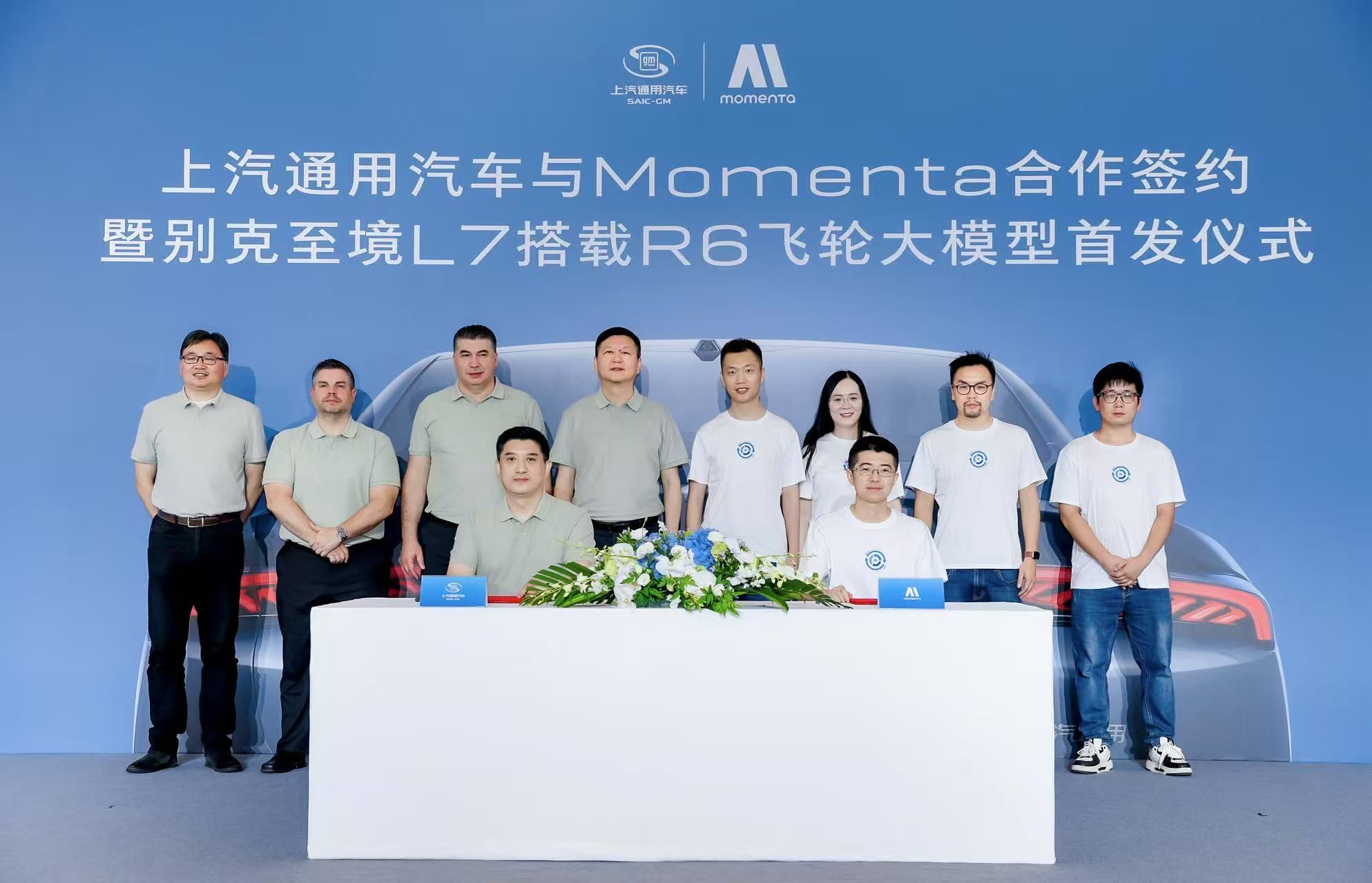
Core Viewpoint - SAIC-GM and Momenta have entered a strategic partnership focused on enhancing safety and developing advanced driver assistance systems (ADAS) through complementary strengths in technology [1][2][4] Group 1: Partnership Overview - The collaboration between SAIC-GM and Momenta began in April 2023, aiming to innovate in urban driving assistance [4] - A strategic cooperation agreement was signed on August 18, 2023, to deepen collaboration in the ADAS field [2] - The partnership is characterized by a synergy where Momenta provides advanced AI models while SAIC-GM contributes expertise in vehicle performance [2][5] Group 2: Technological Integration - The first vehicle from SAIC-GM's Buick high-end electric sub-brand, the Zhijing L7, was launched on August 18, 2023, featuring Momenta's R6 model, which includes comprehensive urban NOA and advanced parking capabilities [5] - The implementation of ADAS requires a coordinated response from various vehicle systems, including body structure, electronic architecture, and power systems [6] - SAIC-GM's new "Xiaoyao" super fusion vehicle architecture will be the foundation for all domestic electric models starting in 2025, facilitating the partnership [8] Group 3: Data and Testing - Momenta plays a crucial role in the partnership by leveraging extensive data from over 300,000 vehicles and 3 billion kilometers of driving data to create realistic simulation testing scenarios [8] - The collaboration emphasizes the importance of real-world data and simulation in the calibration of ADAS systems [8] Group 4: Safety and Market Adaptation - The partnership adopts a multi-sensor fusion approach to ensure safety, particularly in the context of local market conditions [9] - SAIC-GM's executives highlight the necessity of using diverse sensor configurations, including LiDAR, to maintain safety standards [9][11] - The ultimate goal of the partnership is to create a safer, more comfortable, and efficient intelligent driving experience for customers [11]


韦德布什上调通用汽车目标价至65美元
Ge Long Hui A P P· 2025-08-19 10:08
格隆汇8月19日|韦德布什:将通用汽车(GM.US)目标价上调至65美元,此前为55美元。 ...
【快讯】每日快讯(2025年8月19日)
乘联分会· 2025-08-19 08:40
Domestic News - Beijing is accelerating the expansion of hydrogen fuel vehicles and enhancing hydrogen energy infrastructure, including applications in bicycles and drones [2] - Chongqing has announced an adjustment to its 2025 vehicle replacement subsidy policy, allocating an additional 300 million yuan for the third quarter, with specific subsidy standards for new energy and fuel vehicles [3] - The "Thousand Counties and Ten Thousand Towns" new energy vehicle consumption season has been launched in Hubei, with 100 million yuan in consumer vouchers to stimulate local demand [4] - SAIC-GM has signed a cooperation agreement with Momenta to integrate advanced autonomous driving technology into its Buick models [5][6] - XPeng Motors has reached a strategic cooperation agreement with CITIC Bank, securing a credit line of 10 billion yuan to support its operations and development [7] - Beijing Benz's Yizhuang plant is set to produce the new all-electric CLA model, which will feature advanced driving assistance technologies and a range of 866 km [8] - Tesla has launched its first batch of V4 supercharging stations in Fujian, expanding its charging network to cover major cities [9] - NIO plans to expand into Singapore, Uzbekistan, and Costa Rica between 2025 and 2026, introducing new models in these markets [10] International News - In the Philippines, July car sales decreased by 2.6% year-on-year, with total sales for the first seven months showing a slight increase of over 1% [11] - Hyundai plans to establish an assembly plant in Algeria to enhance its presence in the Middle East and Africa [12] - Canada's zero-emission vehicle sales fell by 35.2% in June, while overall vehicle sales increased by 6.2% [13] - Maruti Suzuki is expanding its SUV lineup to address declining demand for small cars, with a new model set to launch soon [14] Commercial Vehicles - The new energy Chenglong cargo truck has been launched in Hangzhou, designed for logistics and cold chain transportation [16] - Isuzu aims to make South Africa a hub for truck production in Africa, increasing local component sourcing [17] - TuDatong and DeepWay have upgraded their strategic cooperation, enhancing the perception capabilities of DeepWay's new models with advanced lidar technology [18][19] - Ford plans to unveil a new electric pickup truck in 2027, promising competitive performance and lower total ownership costs compared to existing models [20]



观车 · 论势 || 跨国车企的利润去哪儿了
Zhong Guo Qi Che Bao Wang· 2025-08-18 10:12
Core Viewpoint - The global automotive industry is experiencing a significant decline in profits across major multinational companies, attributed to various external and internal factors, including new U.S. tariff policies and the transition to electric vehicles [1][2][4]. Group 1: Financial Performance - Major automotive companies reported either revenue growth without profit increase or declines in both revenue and profit, with substantial profit drops noted [1]. - German automakers saw drastic profit reductions: Volkswagen Group's operating profit fell by 33%, Mercedes-Benz's net profit dropped by 56%, and BMW's net profit decreased by 29% [1]. - U.S. automakers also faced challenges, with General Motors' net profit down 21%, Ford's net profit shrinking from $3.2 billion to $400 million, and Stellantis reporting a net loss of €2.256 billion [1]. - Japanese automakers like Toyota and Honda reported net profit declines of 37% and 50%, respectively, while Nissan continued to incur losses [1]. Group 2: Impact of Tariff Policies - The new U.S. tariff policies have significantly impacted all automotive companies, leading to increased costs and reduced profit margins [2]. - Toyota reported a loss of ¥450 billion due to tariffs in Q2, with an estimated total loss of ¥1.4 trillion for the fiscal year [2]. - Hyundai indicated a loss of ₩828 billion in Q2 due to tariffs, with expectations of greater impacts in Q3 [2]. - Volkswagen, BMW, and Mercedes-Benz also cited tariff impacts on their profit declines, with Volkswagen reporting a loss of €1.3 billion due to tariffs [2]. Group 3: Strategic Adjustments - Many automotive companies are adjusting their strategies in response to tariff pressures, including shifting production to the U.S. to mitigate costs, although this may lead to increased production expenses [3]. - The transition to electric vehicles presents structural challenges, as current electric vehicle sales do not yet match the profitability of traditional fuel vehicles, necessitating high R&D expenditures [3]. - Volkswagen's electric vehicle sales grew by 47% in H1, but profitability remains lower than that of fuel vehicles, impacting overall profit levels [3]. - Companies like Stellantis and Nissan are undergoing leadership changes and implementing cost-cutting measures, including workforce reductions and factory closures, to address financial pressures [4]. Group 4: Future Outlook - The collective profit pressure on global automotive companies results from a combination of external factors like tariffs and internal challenges such as market positioning and strategic adjustments [4]. - The industry faces the critical task of balancing profitability from traditional vehicles while investing in electric vehicle development amidst changing global trade environments and geopolitical factors [4].


凯迪拉克任命新全球设计总监
Cai Jing Wang· 2025-08-18 02:37
凯迪拉克近日已任命Dominic Najafi担任品牌下一任全球设计执行总监。Dominic在欧洲豪华及超豪华汽 车制造商拥有丰富的工作经验,此前在捷豹路虎工作了11年,一路晋升至首席外饰设计师。他还曾在宾 利汽车工作逾8年,担任汽车内饰和外饰设计师。(中国汽车报) ...
X @TylerD 🧙♂️
TylerD 🧙♂️· 2025-08-17 12:24
Some nice Sunday morning greenGM https://t.co/2UoB9Pgfqa ...
3 Reasons General Motors Stock Is a Screaming Buy
The Motley Fool· 2025-08-16 13:23
Core Viewpoint - General Motors is emerging as a strong automotive investment due to its strategic share buybacks, significant investments in brands and products, and a successful turnaround in the Chinese market [1][13]. Group 1: Share Buybacks - General Motors has focused heavily on share buybacks, trading at a low price-to-earnings ratio of eight [2]. - The company has spent nearly $25 billion on share repurchases over the past three years, reducing shares outstanding from 1.5 billion to 950 million [5]. - This aggressive buyback strategy is beneficial for investors as long as the stock remains undervalued [5]. Group 2: Investment in Brands and Products - General Motors has invested billions in its portfolio of brands and vehicles, leading to strong performance for Chevrolet and GMC in 2025 [6][10]. - The company has launched updated crossovers, SUVs, and electric vehicles (EVs), with profitable trucks set to follow [8]. - Chevrolet has become the second-largest EV brand in the U.S., with the Equinox EV achieving record sales in July [9]. Group 3: Turnaround in China - General Motors faced challenges in China due to a price war with domestic brands, prompting a $4 billion restructuring strategy [11][12]. - The company has recently reported two consecutive quarters of sales increases, with a 20% rise in Q2 [12]. - GM's focus on local innovations and customer choices is driving profitable growth in the Chinese market [12].
【重磅深度】谁在坚持买油车?
东吴汽车黄细里团队· 2025-08-15 15:40
Core Viewpoint - The article discusses the reasons why car owners prefer gasoline vehicles over electric vehicles, highlighting factors such as cost-effectiveness, charging infrastructure, and concerns about battery technology and long-distance travel anxiety [4][5][29]. Group 1: Research Methodology - The research is based on a sample of 26 car owners from 7 major brands and 13 models, focusing on popular gasoline vehicles in various price ranges [3][11]. - The sample includes owners of Audi (A6L, Q5L), BMW (3 Series, 5 Series), Mercedes-Benz (GLC), Volkswagen (Sagitar, Passat, Tiguan L), Toyota (Corolla, RAV4, Camry), Nissan (Sylphy), and General Motors (Envision) [3][11]. Group 2: Reasons for Choosing Gasoline Vehicles - Nearly all interviewed car owners agree that gasoline vehicles offer high cost-performance, with many expressing a strong preference for them [4][11]. - Concerns about the long-term costs of electric vehicles, particularly regarding battery replacement after ten years, lead to skepticism about their overall affordability [4][11]. - Approximately 50% of respondents lack the conditions to install dedicated charging stations [4][11]. - Many owners believe that electric vehicle battery technology is not yet mature, contributing to their hesitance [4][11]. - Long-distance travel anxiety remains a significant concern for potential electric vehicle buyers [4][11]. Group 3: Perception of Electric Vehicle Advantages - While owners acknowledge that the per-kilometer cost of electric vehicles is lower, this advantage diminishes for those who drive less than 10,000 kilometers annually [5][11]. - Features such as aesthetics, smart driving, and additional comforts are seen as secondary benefits that do not outweigh the fundamental acceptance of electric vehicles [5][11]. Group 4: Preference for Luxury Brands (BBA) - Owners define luxury vehicles by their social attributes and trust in high-quality brands, with BBA (BMW, Benz, Audi) being recognized for their long-standing reputation [6][11]. - The willingness to consider electric vehicles from luxury brands often stems from previous experiences with BBA, where buyers may prioritize family needs or a change of taste [6][11]. Group 5: Factors Influencing Purchase Decisions - The primary factors influencing the purchase of gasoline vehicles include brand reputation, price, and practicality, with aesthetics and advanced driving features being less significant [28][29]. - The lack of charging infrastructure is the most cited reason for not purchasing electric vehicles, with 42% of respondents indicating this as a barrier [29][30]. - Concerns about battery technology and long-distance travel capabilities are also significant factors, with 15% and 12% of respondents citing these issues, respectively [33][35]. Group 6: Future Considerations for Electric Vehicle Purchases - Many respondents express a willingness to consider electric vehicles in the future, contingent upon improvements in charging infrastructure and vehicle quality [36][37]. - A common sentiment among respondents is to wait until electric vehicles have proven reliability and cost-effectiveness compared to gasoline vehicles [36][37].