
全新纯电CLA

Search documents
奔驰2025业绩沟通会:进入技术、产品关键周期,中国市场或成关键变量
Xin Lang Cai Jing· 2026-02-12 12:20
Core Viewpoint - Mercedes-Benz is signaling a new phase of growth through a significant scale of product and technology initiatives amidst global market fluctuations, intensified competition, and peak technological investments [1] Financial Performance - For the fiscal year 2025, the adjusted EBIT is projected at €8.2 billion (approximately ¥64 billion), showing a notable decline compared to the previous year - Revenue is expected to reach €132.2 billion (approximately ¥1.03 trillion) - The industrial business free cash flow is estimated at €5.4 billion (approximately ¥42.1 billion) - The adjusted sales profit margin for the passenger car business is 5.0%, or 6.1% when excluding tariff factors, remaining within the management's guidance range [1] Strategic Focus - The new strategic cycle starting in 2025 is defined as the largest scale of technology and product initiatives in Mercedes-Benz's history, with a focus on high-end luxury and core luxury models [2] - High-end luxury models are expected to account for 15% of passenger car sales by 2025, serving as a key pillar for stable profits [2] Product Development - Over the next three years, Mercedes-Benz plans to launch more than 40 new models globally, covering entry-level luxury, core luxury, and high-end luxury segments [4] - The new S-Class will undergo the most comprehensive update in its history, with upgrades in powertrains, electronic architecture, and intelligent systems [2][4] Technological Advancements - The MB.OS operating system and the new generation electronic architecture will serve as the technological foundation for this product cycle, integrating smart cockpit, driver assistance, and vehicle control functions into a unified platform [7] - The company anticipates that capital expenditures and R&D investments will peak in 2025 and gradually decline thereafter [9] Market Strategy in China - Mercedes-Benz is placing greater strategic emphasis on the Chinese market, adapting its product definitions, R&D pace, and supply chain systems to better align with local demands [11] - Despite a decline in sales in China for 2025, the company maintains a leading market share in the luxury sedan segment priced above ¥400,000, with over 30% in the large luxury sedan market [11] Localization Efforts - The company aims to enhance its operations in China by deepening local investments and optimizing cost structures, focusing on products that meet local market needs [14] - Mercedes-Benz is accelerating its pace in smart and electric vehicle sectors in China, collaborating with local tech firms to integrate local algorithms with its safety standards [16] Future Product Plans - Among the 40 new models planned for launch by 2027, seven will be exclusive to the Chinese market, emphasizing space, comfort, and intelligent features [18] - Starting in 2026, over 15 new and updated products will be introduced in China, covering various market segments with a focus on both fuel and electric models [18] Overall Outlook - The communication from the earnings meeting indicates that Mercedes-Benz is not merely focused on the fluctuations of a single financial cycle but is actively rebuilding momentum for the next growth phase through intensive product launches, unified software architecture, and deepened localization efforts in China [18]

北汽2025年销量突破175万辆,自主品牌成增长引擎
Bei Jing Ri Bao Ke Hu Duan· 2026-01-13 10:33
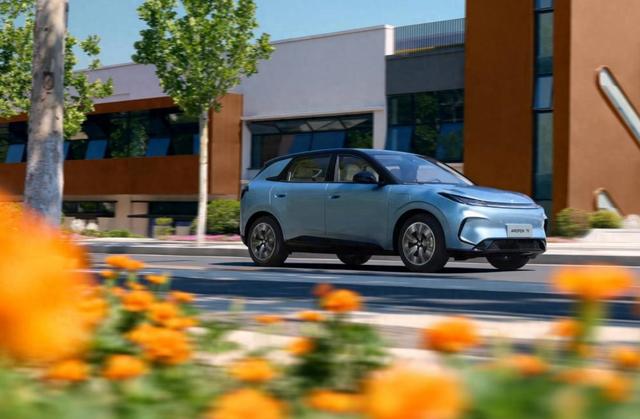
Group 1 - The core objective of the company is to achieve a vehicle sales target of 1.752 million units by 2025, representing a year-on-year growth of 5.6%, with over 60% of sales coming from its own brands [1] - The company's self-owned brands have become the main growth engine, with passenger and commercial vehicles achieving collaborative growth [1] - The electric vehicle brand Arcfox has seen significant growth, with annual sales reaching 163,000 units, doubling year-on-year, and maintaining a growth rate exceeding 100% for two consecutive years [1][3] Group 2 - The company aims for high-quality development, with internationalization and new energy businesses progressing simultaneously, achieving historical highs [3] - The export volume is projected to reach 308,000 units by 2025, a year-on-year increase of 26%, outpacing the industry growth rate by 7.3 percentage points, with products covering over 130 countries and regions [3] - The company sold over 390,000 new energy vehicles in the past year, marking a 95% year-on-year increase, with significant growth in its self-owned brands [3] Group 3 - The company has made advancements in autonomous driving, with two models receiving L3-level conditional autonomous driving product approval, including one from the Arcfox brand [3] - The company has initiated large-scale road trials for L3-level autonomous driving, positioning itself competitively in the key technology race defining future mobility [3] Group 4 - Continuous innovation in the field of intelligence is reflected in the company's efforts to create "technical highlights," such as the launch of the world's first engineering liquid hydrogen heavy truck [4] - The company has successfully developed an electric vehicle drive motor rotor that challenges ultra-high speeds of 55,000 RPM [4]

北汽集团公布2026年目标 计划实现整车销量220万辆
Zhong Guo Zhi Liang Xin Wen Wang· 2026-01-13 07:24
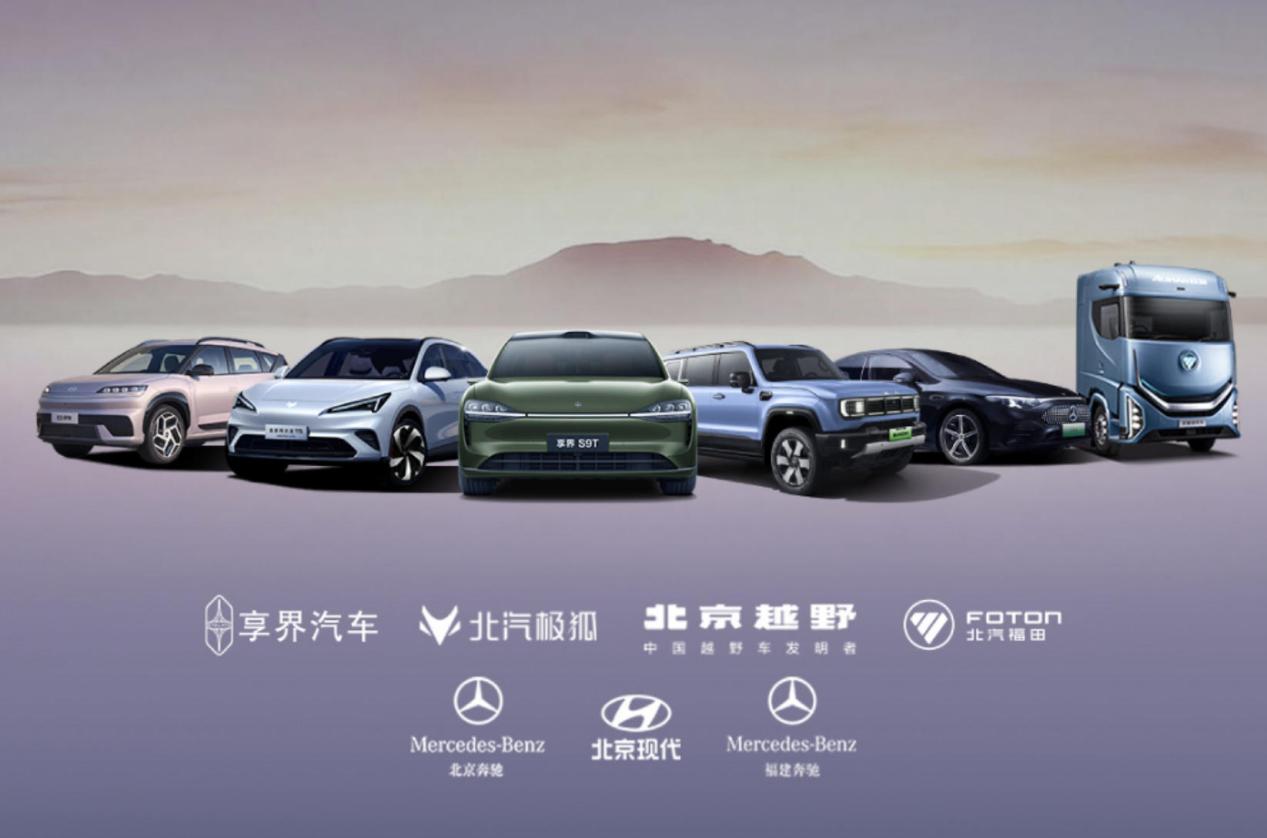
Group 1 - The core viewpoint of the article highlights the significant growth in sales and production for BAIC Group, particularly in the electric vehicle (EV) sector, indicating a strong market position and successful transition to new energy vehicles [2] Group 2 - BAIC Group achieved a total vehicle sales volume of 1.752 million units in 2025, representing a year-on-year increase of 5.6% [2] - The sales of self-owned brands reached 1.07 million units, accounting for 61% of total sales [2] - BAIC Arcfox sold 163,000 units, marking a remarkable year-on-year growth of 101%, with sales doubling for two consecutive years [2] - Beijing Off-road vehicles exceeded 200,000 units in sales, showing a year-on-year increase of 38% [2] - The sales of Xiangjie vehicles surpassed 10,000 units per month, while BAIC Foton achieved annual sales of over 650,000 units [2] - The company exported 308,000 vehicles, setting a historical high with a year-on-year growth of 26% [2] Group 3 - In the new energy sector, BAIC Group's sales of new energy products exceeded 390,000 units, reflecting a year-on-year increase of 95% [2] - The self-owned brands accelerated their transition to new energy, with BAIC Arcfox and Xiangjie achieving significant scale growth [2] - The proportion of new energy sales for Beijing Off-road vehicles approached 40% [2] - The sales of new energy commercial vehicles saw a substantial increase of 82.3%, with significant enhancements in product offerings and network scale [2] Group 4 - In the joint venture segment, Beijing Benz celebrated its 20th anniversary, launching the first model from the MMA platform, the all-new electric CLA [2] - Beijing Hyundai initiated the "Smart Start 2030 Plan," with the launch of its first pure electric platform SUV, EO Yiou [2]
自主乘用车爆发式增长 跃升向上 北汽集团公布年度成绩单
Bei Jing Ri Bao Ke Hu Duan· 2026-01-12 07:31
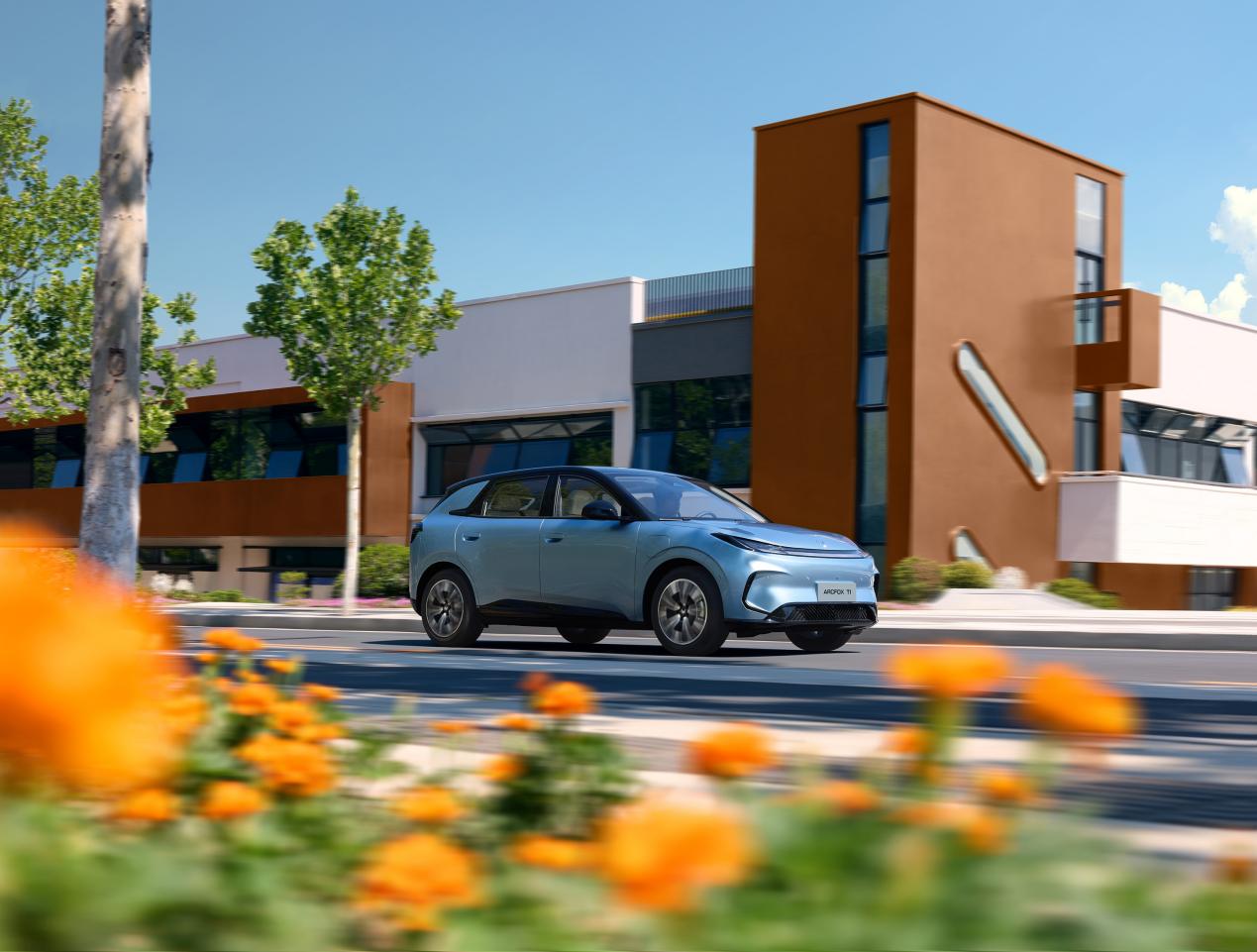
Core Insights - In 2025, BAIC Group achieved a total vehicle sales of 1.752 million units, marking a year-on-year growth of 5.6%, with its self-owned brand sales reaching 1.07 million units, showcasing strong performance in new energy and international business [1][5] Group 1: Sales Performance - BAIC's self-owned passenger vehicle sales experienced explosive growth, with total sales exceeding 1.07 million units, accounting for 61% of total sales, driven by several star models [1] - BAIC Arcfox sold 163,000 units, achieving a remarkable year-on-year growth of 101%, with models like Arcfox T1 and the new Alpha T5 contributing significantly [3] - BAIC Foton maintained its position as the industry leader with over 650,000 units sold, focusing on new energy, internationalization, and heavy trucks [3][5] Group 2: International Expansion - BAIC Group's exports reached a record high of 308,000 units, representing a year-on-year increase of 26%, outpacing the industry growth rate by 7.3 percentage points [5] - The company has established a presence in over 130 countries and regions, with successful launches of new models in various international markets [5] Group 3: New Energy Development - BAIC's new energy vehicle sales surpassed 390,000 units, reflecting a year-on-year growth of 95%, with significant contributions from BAIC Arcfox and Enjoy [7] - The company is accelerating its transition to new energy, with a notable increase in the proportion of new energy vehicles in its product lineup [7][14] Group 4: Technological Innovation - BAIC Group is investing in technological innovation, focusing on core technologies such as power batteries, electric drive, intelligent cockpit, and hydrogen fuel commercial vehicles [11][14] - The company has received approval for L3 conditional autonomous driving vehicle products, marking a significant advancement in intelligent driving technology [12] Group 5: Corporate Responsibility and Community Engagement - BAIC Group is committed to enhancing its corporate image by contributing to the economic and social development of Beijing, including donations and strategic partnerships [16] - The company has engaged in various promotional activities to support the development of the western region of China [16] Group 6: Future Outlook - For 2026, BAIC Group aims to achieve total vehicle sales of 2.2 million units, reinforcing its core strategy of "one main and five transformations" to contribute to high-quality economic development [19]
自主爆发 跃升向上,北汽集团公布年度成绩单
Zhong Guo Qi Che Bao Wang· 2026-01-12 03:07
Core Insights - In 2025, BAIC Group achieved a total vehicle sales of 1.752 million units, marking a year-on-year increase of 5.6%, with its self-owned brand sales reaching 1.07 million units, significantly outperforming the industry in both new energy and international business, setting a historical record [1] - The "Three-Year Leap Action" has initiated a structural transformation and qualitative leap for BAIC Group, entering a new development stage [1] Group 1: Sales Performance - BAIC's self-owned passenger vehicle sales experienced explosive growth, while its commercial vehicle sales maintained the industry lead, with total sales exceeding 1.07 million units, accounting for 61% of total sales [1] - BAIC Arcfox sold 163,000 units in 2025, achieving a year-on-year growth of 101%, with models like Arcfox T1 and the new Alpha T5 contributing to a monthly sales stabilization at 20,000 units [3] - Beijing Off-road vehicles sold over 200,000 units, a 38% increase year-on-year, with the BJ40 model leading the hard-core off-road sales for 11 consecutive months [3] Group 2: International Expansion - BAIC Group exported 308,000 vehicles in 2025, a historical high with a year-on-year growth of 26%, outpacing the industry by 7.3 percentage points, with a presence in over 130 countries and regions [4] - The international strategy for BAIC Foton is advancing, with significant sales growth in Africa, Europe, and Latin America, maintaining the top position in commercial vehicle exports [4] Group 3: New Energy Growth - BAIC Group's new energy vehicle sales surpassed 390,000 units in 2025, reflecting a year-on-year growth of 95%, significantly outpacing the industry average [7] - BAIC Foton's new energy commercial vehicles saw a growth of 82.3%, with a comprehensive acceleration in product and network scale [7] Group 4: Technological Innovation - BAIC Group is focusing on technological innovation, achieving significant progress in core technologies such as power batteries, electric drive, intelligent cockpit, and hydrogen fuel commercial vehicles [10] - BAIC has launched the "Beijing Automotive Yuanjing Intelligent" technology system, enhancing vehicle intelligence through shared data and collaborative multi-agent systems [10] - BAIC Foton unveiled the world's first engineering liquid hydrogen heavy truck, marking a significant achievement in the liquid hydrogen fuel heavy truck sector [12] Group 5: Corporate Responsibility and Community Engagement - BAIC Group is enhancing its corporate image by contributing to the economic and social development of Beijing, participating in significant national events, and supporting local sports teams [15] - The company has established strategic partnerships to promote its products and services, contributing to the modernization of the capital [15] Group 6: Future Outlook - For 2026, BAIC Group aims to achieve total vehicle sales of 2.2 million units, focusing on high-quality development and contributing to the modernization of China [18]
深刻洞察商务人士需求 梅赛德斯-奔驰V级MPV启新程
Xin Lang Cai Jing· 2025-12-26 19:02
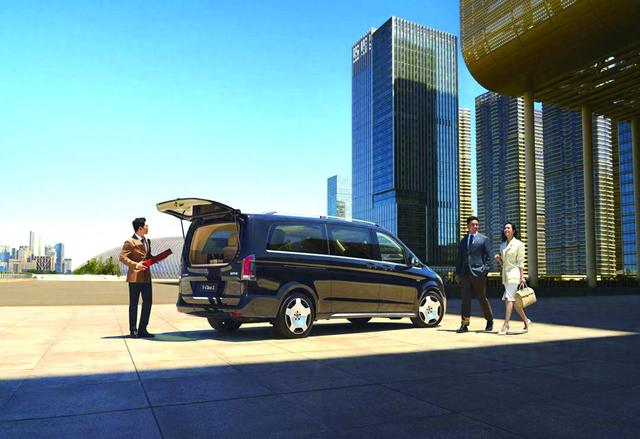
Core Insights - The high-end MPV market in China has experienced a compound annual growth rate of over 10%, significantly outpacing the overall automotive market growth, driven by a collective awakening to the value of mobile space [1] - The Mercedes-Benz V-Class MPV embodies the concept of "luxurious space," which is not merely about size but a precise deconstruction of business travel scenarios, reflecting the importance of both appearance and practical value in Chinese business culture [1][2] - The shift in business culture from "efficiency first" to "effectiveness first" underpins the sustained growth of the luxury MPV market, emphasizing value creation over mere output [4] Market Trends - The Chinese business travel market is undergoing a silent revolution focused on value redefinition rather than speed competition, with sustainability becoming a guiding principle for decision-making and product design [2][6] - The recognition that time is the most scarce resource and space is its container is reshaping the understanding of value in business travel, with the V-Class MPV providing a conducive environment for deep work [4] - The transition towards a green growth paradigm is being established, with carbon emissions becoming a critical indicator of corporate health, as seen in Mercedes-Benz's carbon neutrality practices in China [6][9] Innovation and Localization - Mercedes-Benz's localization of R&D in China signifies a shift from "market for technology" to "market creating technology," with Chinese teams leading global projects [5][11] - The collaboration with local partners, such as Tsinghua University for a localized recycling system, highlights the integration of international experience with Chinese conditions to form sustainable business models [7] - The establishment of a complete network from R&D to digital services in China allows for rapid iteration of new electric and intelligent technologies tailored to local user needs [13][14] Future Outlook - The future of the business travel market in China will see a continued elevation of spatial value, with mobile spaces evolving into multifunctional environments for work, rest, and social interaction [16] - The ongoing green transformation in the automotive industry will redefine competitive logic, with sustainable practices becoming integral to luxury automotive standards [16][18] - The expansion of intelligent boundaries through the commercialization of autonomous driving technology will fundamentally change the relationship between vehicles and users, with Mercedes-Benz's innovations in human-machine interaction setting a benchmark for the industry [16][19]
以技术韧性筑底 以开放创新赋能:梅赛德斯-奔驰与中国经济共赴“活力2026”
Mei Ri Jing Ji Xin Wen· 2025-12-25 09:05
Core Viewpoint - The article emphasizes the importance of resilience and innovation in China's economy by 2026, particularly highlighting the automotive industry as a key pillar undergoing transformation and value redefinition [1] Group 1: Mercedes-Benz's Strategic Focus - Mercedes-Benz is committed to long-term strategies, focusing on technological innovation, deep local collaboration, and sustainable practices to build future competitiveness [1][2] - The company aims to enhance its product offerings and services to meet the evolving demands of Chinese consumers, aligning with a more vibrant and sustainable economic ecosystem [2] Group 2: Technological Innovation and Green Transformation - The core of the industry transformation is driven by technological innovation and green transition, with Mercedes-Benz integrating electric technology and circular economy principles [4] - A new Robotaxi based on the S-Class will be launched in Abu Dhabi in 2026, showcasing advanced safety and comfort features, representing a collaboration between Mercedes-Benz and local partners [4][6] - The new all-electric CLA model features an 800-volt platform, achieving a range of 866 kilometers and an energy consumption of 10.9 kWh per 100 kilometers [4] Group 3: Sustainability Initiatives - Mercedes-Benz's commitment to sustainability is evident in its "2039 Vision," aligning with China's dual carbon goals, and achieving carbon neutrality in its Beijing plant [6][7] - The company has implemented a circular economy approach, recovering approximately 391 tons of scrapped batteries and increasing the use of recycled materials in new vehicles [7] - The Beijing plant has installed a 88.8 MW solar power system, meeting about 80% of its energy needs and reducing emissions by nearly 120,000 tons annually [6][7] Group 4: Local Collaboration and Investment - Mercedes-Benz has invested over 100 billion RMB in China over the past decade, with plans for an additional 14 billion RMB investment in 2024 [9][10] - The company collaborates with local tech firms like Momenta to develop tailored solutions for the Chinese market, exemplifying its strategy of "local innovation + global collaboration" [8][10] Group 5: Corporate Social Responsibility - Mercedes-Benz has invested over 360 million RMB in various social initiatives, including environmental protection and education, demonstrating its commitment to corporate social responsibility [11] - The company has supported over 260,000 children through its "Safe Childhood" project and has partnered with Tsinghua University to cultivate carbon-neutral talent [11] Group 6: Long-term Vision and Market Positioning - Mercedes-Benz's long-term approach is reflected in its product philosophy, focusing on customer needs rather than market trends, ensuring a balance between efficiency and luxury [12] - The integration of "Mercedes standards" with "Chinese speed" positions the company to resonate with the evolving economic landscape, driving towards a resilient and innovative future [12]
硅基革命重构竞争格局:中国智驾的攻与守
Mei Ri Jing Ji Xin Wen· 2025-12-02 09:00
Group 1 - The global automotive industry is facing unprecedented challenges, with over 55,000 jobs lost in the past two years in Germany alone, and more than 100,000 layoffs reported worldwide in the last year [1][2] - In contrast, China's automotive sector is thriving, with significant advancements in smart electric vehicles and a robust supply chain, positioning itself as a global leader in the industry [1][3] Group 2 - 2025 is seen as a critical year for automotive manufacturers, with a focus on survival in the face of electrification and the need for innovation in smart technologies [2][10] - China's automotive industry has rapidly evolved, achieving over 30 million annual vehicle sales and over 50% penetration of new energy vehicles, showcasing its ability to catch up and lead in the electric transformation [3][10] Group 3 - Major automotive companies are balancing tradition and innovation, with firms like Mercedes-Benz adapting to local markets while maintaining high safety and quality standards [4][5] - The innovation paths of foreign and Chinese companies are converging, with a blend of cautious planning and agile execution becoming the norm in the industry [5][6] Group 4 - A significant debate is ongoing regarding the technical routes for intelligent driving, with different approaches such as Tesla's vision-based system and Huawei's lidar-based system highlighting diverse innovation strategies [6][7] - The introduction of mandatory safety standards for L2-level driving assistance in China marks a shift towards a more regulated and safety-focused industry [8][9] Group 5 - The Chinese government is facilitating the development of L3-level autonomous driving, with expectations for standards to be established soon, indicating a strong push towards advanced automated driving technologies [10][11] - The competitive landscape in China's smart driving sector is characterized by a diverse ecosystem of companies, fostering innovation and adaptability across various scenarios [10][11]




从放权到调价,合资品牌在中国“量身”造车
Xin Jing Bao· 2025-11-24 04:52
Core Insights - The Guangzhou Auto Show showcases a significant shift in strategy among multinational automotive companies, emphasizing localization and adaptation to the Chinese market [1][2][4] Group 1: Market Dynamics - Domestic brands hold a 65% retail market share and a 46.7% penetration rate in the new energy vehicle sector, prompting joint ventures to adapt their strategies [1] - Multinational companies are moving away from a "one car sells globally" approach, recognizing the need for deep engagement in the Chinese market [2][4] Group 2: Strategic Changes - Companies like Dongfeng Nissan are adopting a "GLOCAL" model, investing over 10 billion yuan in R&D and empowering local teams with decision-making authority [2] - Toyota has implemented a "China Chief Engineer" system, allowing local teams to make decisions without extensive approval from Japan [3] Group 3: Product Development - Dongfeng Nissan introduced the N6 plug-in hybrid, showcasing the results of its localized R&D efforts [2] - GAC Toyota's new models, including the Platinum 7, are designed specifically for the Chinese market, demonstrating the effectiveness of local team-led development [3] Group 4: Technological Advancements - The auto show highlighted advancements in smart technology, with companies like SAIC Volkswagen and Dongfeng Nissan integrating localized features such as dialect recognition and smart driving systems [5][6] - The focus on user experience is evident as companies aim to enhance product offerings through localized technology [6] Group 5: Pricing and Product Strategy - Many brands are adopting a strategy of increasing product features while lowering prices to better compete with domestic brands [7][9] - Mercedes-Benz and BMW have introduced new models with enhanced features at competitive price points, indicating a shift towards more consumer-friendly pricing strategies [7][8] Group 6: Industry Transformation - The transformation in the automotive industry is driven by the rise of domestic brands and the need for multinational companies to adapt to a changing market landscape [9]
车展观察|从放权到调价 合资品牌在中国“量身”造车
Xin Jing Bao· 2025-11-24 04:52
Core Viewpoint - The Guangzhou Auto Show highlights the shift of multinational automotive companies towards localization and adaptation to the Chinese market, as they face increasing competition from domestic brands. Group 1: Market Dynamics - The Guangzhou Auto Show features 1,085 vehicles, with 629 being new energy models, indicating a strong presence of electric vehicles in the market [1] - Domestic brands hold a 65% retail market share and a 46.7% penetration rate in new energy vehicles over the first ten months [1] - Multinational brands are moving away from a "one-size-fits-all" approach and are instead focusing on localized research and development to better meet Chinese consumer demands [2][4] Group 2: Strategic Changes - Companies like Dongfeng Nissan are adopting a "GLOCAL" model, investing over 10 billion yuan in R&D and expanding their local teams to over 4,000 people [2] - Toyota has implemented a "China Chief Engineer" system, granting local teams full decision-making authority, which has led to successful product adaptations like the new RAV4 [3] - Volkswagen is launching a new product series, ID.ERA, aimed at the Chinese market, with plans to introduce multiple models from 2026 [3] Group 3: Technological Advancements - The auto show showcases advancements in smart technology, with companies like SAIC Volkswagen and Dongfeng Nissan introducing intelligent cockpit systems that cater to local user preferences [5][6] - Dongfeng Nissan's new model features a "scene-based intelligence" concept, integrating local services and real-time updates [6] Group 4: Product and Pricing Strategies - Brands are focusing on creating products tailored to the Chinese market, with competitive pricing strategies that include lowering prices and enhancing configurations [7][9] - Beijing Benz's new electric CLA model is priced competitively within the mid-range of domestic brands, reflecting a shift in luxury brand strategies [7] - BMW and Audi are also enhancing their product offerings with better configurations and competitive pricing, indicating a broader trend among luxury brands to adapt to local market demands [8][9]