Hesai(HSAI)

Search documents
苹果涨近3%,英特尔跌近6%,白银拉升,特朗普宣布对韩国加征关税
21世纪经济报道· 2026-01-26 23:26
Market Performance - The three major U.S. stock indices closed higher on Monday, with the Dow Jones up 0.64% at 49,412.4 points, the S&P 500 up 0.5% at 6,950.23 points, and the Nasdaq up 0.43% at 23,601.36 points [1][2]. Company Updates - Major tech stocks mostly rose, with Apple increasing nearly 3% as it plans to announce a new version of Siri in late February, following a partnership with Google due to internal AI model challenges [2]. - Facebook rose over 2%, Google increased over 1%, while Tesla fell over 3% and Nvidia dropped 0.64% [2]. Earnings Season Insights - Over 90 companies in the S&P 500 are set to report quarterly earnings this week, including major players like Microsoft, Meta, Tesla, and Apple. So far, 76% of the companies that have reported exceeded earnings expectations [3]. - Investors are particularly interested in details regarding AI plans, investment speeds, and expected profits to assess the sustainability of the current bull market [3]. Semiconductor Sector - The Philadelphia Semiconductor Index fell by 0.39%, with Intel dropping over 5.7% after a significant decline of 17.03% the previous week. Intel's projected revenue for Q1 is between $11.7 billion and $12.7 billion, below analyst expectations [3]. Chinese Stocks - The Nasdaq China Golden Dragon Index decreased by 0.63%, with many popular Chinese stocks declining. Notable drops include Hesai down 10.06% and XPeng down 2.39%, while Li Auto rose 1.38% [3]. Commodity Market - Spot gold prices briefly surpassed $5,000 per ounce and then $5,100 per ounce. Long-term forecasts suggest that gold may continue to perform strongly, indicating a need for portfolio diversification [5]. - The cryptocurrency market saw a collective rise, with Bitcoin surpassing $88,000, while Ethereum increased by 4.14% [6]. Federal Reserve Outlook - The Federal Reserve is expected to announce its first policy decision of the year, with a 97.2% probability of maintaining the current overnight rate. Market speculation includes potential rate cuts later in the year [9].



Hesai Ranks No.1 in the World for Lidar Patents by KnowMade
Prnewswire· 2026-01-26 14:00
Core Insights - Hesai is recognized as a leader in the global lidar industry, ranking first in total patent holdings and overall patent strength among lidar companies, and third globally behind Bosch and Waymo [1][2][9] Patent Holdings and Innovation - From 2021 to 2025, Hesai has led the industry with a total of 2,071 granted patents and pending applications, establishing a multi-country patent network across key technologies [2] - Since July 2021, Hesai has filed over 920 patent applications, forming 558 patent families, including 400 new invention patents, reflecting a systematic approach to technological innovation [3] Anti-Interference Technology - Hesai is recognized as the industry leader in anti-interference patents, holding 33 patent families that enhance lidar reliability in complex environments [4] - The company's Intelligent Processing Engine (IPE) significantly improves perception accuracy by filtering over 99.9% of environmental noise [4] Core Component Development - Hesai ranks first globally in patent holdings for core lidar components, including SPAD/SiPM detectors, VCSEL emitters, and APD detectors, with its SPAD/SiPM patent portfolio being twice that of Bosch [6] - The company has developed all seven core components in-house, achieving AEC-Q automotive qualification for 16 ASICs and delivering 185 million units, leading the lidar industry [7] Patent Strength Metrics - Hesai's patent portfolio has a strength index of 2,549, an average family strength of 4.57, and a technological impact factor of 0.20, ranking third globally [9] Market Performance - In 2025, Hesai delivered over 1.6 million lidar units, including 1.4 million for ADAS and over 200,000 for robotics, becoming the first lidar company to surpass 2 million cumulative deliveries [10] Future Plans - At CES 2026, Hesai announced plans to double its annual production capacity to 4 million units and build a new factory in Thailand, alongside a strategic partnership with Nvidia for L4 autonomous driving [11] - The company aims to continue focusing on automotive and robotics markets, enhancing global smart mobility and perception capabilities [12]


Hesai Group to Hold Extraordinary General Meeting on March 3, 2026
Globenewswire· 2026-01-26 13:00
Core Viewpoint - Hesai Group, a leader in lidar solutions, is convening an extraordinary general meeting (EGM) on March 3, 2026, to consider proposed resolutions supported by the board of directors [1] Company Information - Hesai Technology is recognized as a global leader in lidar solutions, providing products for various applications including advanced driver-assistance systems (ADAS), autonomous vehicles, and robotics [4] - The company integrates in-house manufacturing with lidar research and development, ensuring rapid product iteration and maintaining high performance and quality [4] - Hesai has established offices in Shanghai, Palo Alto, and Stuttgart, serving customers in over 40 countries [4] Meeting Details - The EGM will take place at 3:00 p.m. Beijing time, following class meetings for holders of Class A and Class B ordinary shares, which will occur earlier on the same day [1][2] - Shareholders of record as of February 2, 2026, are entitled to attend and vote at the EGM [3]
中国汽车行业:2026 年 GCC 会议总结-当市场普遍追求卓越增长-China Auto Sector_ 2026 GCC Wrap_ When everyone targets superior growth
2026-01-26 02:50
Summary of Key Points from the 2026 Greater China Conference on the Auto Sector Industry Overview - The auto sector is experiencing a cooling in domestic demand while companies are setting ambitious growth targets, leading to a cautious outlook for the near term [1][2] - Key growth drivers identified include overseas expansion and intelligence transformation [1][3] Core Insights and Arguments Growth Projections - A bottom-up analysis indicates a projected 19% growth for the auto sector in 2026, contrasting with nearly zero growth in the market based on top-down forecasts [2] - Companies like LeapMotor are targeting significant growth, aiming to increase sales from 600,000 to 1 million units, primarily through new model launches [2] Overseas Expansion - Recent developments, such as tariff agreements between China and the EU, are expected to facilitate overseas growth for Chinese automakers [3] - Companies like Sinotruk and CFMoto are focusing on expanding their export markets, particularly in Europe and North America [3][36][65] Intelligence Transformation - Companies like Pony AI and WeRide are expanding their robotaxi fleets, with Pony targeting 3,000 units by 2026 [22][26] - The adoption of advanced technologies, such as LiDAR and AI, is expected to drive growth in the intelligence segment of the auto industry [3] Company-Specific Highlights Guangzhou Automobile (GAC) - GAC aims for robust volume growth through new model launches and exports, targeting 200,000-300,000 units overseas in 2026 [7][8] - The company plans to reduce costs by an additional 15% in 2026, building on a 10% reduction achieved in 2025 [9] Great Wall Motor - Management has set a sales target of approximately 1.8 million units for 2026, with a focus on new models and exports [10] - The company anticipates a challenging market environment, with a 10% month-over-month decline in orders noted early in 2026 [11] Nio - Nio expects to achieve non-GAAP breakeven in FY26, supported by a strong cash position of RMB 37 billion [13] - The company plans to launch three new models in 2026 to drive growth [14] Xpeng - Xpeng is focusing on cost optimization and technology leadership, with plans to launch new models in 2026 [16][17] - The company expects international sales to grow significantly, targeting over 20% of total revenue from overseas markets [18] Leapmotor - Leapmotor anticipates weak demand in the mass market but plans to launch new models to enhance competitiveness [19][20] - The company aims for overseas sales of 100,000-150,000 units in 2026, with a significant contribution expected from Europe [21] Pony AI - Pony AI is expanding its robotaxi fleet and expects to achieve breakeven in unit economics in Guangzhou [22][24] WeRide - WeRide plans to expand its robotaxi fleet to 2,000-3,000 units, with a focus on markets in the Middle East and Europe [26][27] Sinotruk - Sinotruk forecasts over 10% volume growth in 2026, primarily driven by truck exports [36] - The company is exploring new export markets, including Brazil and Europe, with plans for an assembly plant in Brazil [37] Loncin Motor - Loncin aims to increase its market share in Europe and is targeting growth in motorcycle exports [39][40] Yadea Group - Yadea expects a decline in the electric two-wheeler market but maintains a growth target of 10% for its sales volume in 2026 [43] Other Important Insights - The overall sentiment in the auto sector is cautious due to rising commodity prices, purchase taxes, and a retreating stimulus environment [4] - Companies focusing on intelligence and export themes are preferred for investment, including BYD, GWM, and Hesai [4] This summary encapsulates the key points discussed during the conference, highlighting the challenges and opportunities within the auto sector as companies navigate a changing market landscape.





马斯克:将推动特斯拉转型为估值25万亿美元的机器人公司;安克创新与飞书发布AI录音豆;黄仁勋称AI时代蓝领更吃香丨AI周报
创业邦· 2026-01-25 03:07
Core Insights - The article highlights significant developments in the AI industry, including new product launches, funding rounds, and strategic partnerships, reflecting the rapid evolution and investment in AI technologies globally. Group 1: AI Product Developments - Baidu's Wenxin App is introducing a social feature with "multi-agent group chat" capabilities, aiming to enhance user interaction without directly competing with WeChat [8] - Anker Innovation and Feishu launched the AI hardware product "Anker AI Recording Bean," which features advanced audio recording capabilities and integrates with Feishu's AI functionalities [9] - Baidu released the official version of Wenxin Model 5.0, which supports multi-modal understanding and has 2.4 trillion parameters [17] - Baichuan Intelligence launched the M3 Plus model, which significantly reduces factual hallucinations to 2.6% [19] - Alibaba Health introduced the AI product "Hydrogen Ion," aimed at clinical and research applications with a focus on low hallucination rates [27] Group 2: AI Company Funding and Valuation - OpenEvidence, a medical AI startup, completed a $250 million Series D funding round, valuing the company at $12 billion [22] - OpenAI's CFO announced that the company's annual revenue for 2025 is projected to exceed $20 billion, a significant increase from $6 billion in 2024 [38] - ElevenLabs is negotiating new funding that could raise its valuation to $11 billion [29] - The AI startup Anthropic is seeking to raise at least $25 billion, with Sequoia Capital expected to participate [28] Group 3: AI Industry Trends and Insights - Nvidia's CEO highlighted the increasing demand for skilled tradespeople, suggesting that roles like plumbers and electricians could see six-figure salaries due to the AI-driven infrastructure boom [11] - The global AI financing events decreased by 13 compared to the previous period, with a total disclosed financing amount of 9.57 billion RMB [42] - The distribution of AI funding in China is concentrated in Guangdong and Jiangsu provinces, indicating regional investment trends [47] Group 4: AI Market Competition and Strategic Moves - Google DeepMind's CEO praised ByteDance as a leading AI company in China, suggesting they are only six months behind the cutting edge [11] - Apple plans to significantly revamp Siri into an AI chatbot, aiming to enhance its competitive position in the AI market [36] - Tesla's CEO Elon Musk is pushing for a transformation into a robotics company, with the Optimus robot as a key focus, despite production challenges [8]





达沃斯“捕获”中国企业家:出海不当“搬运工”,主导全球汽车充电规则,牵手英伟达不被“低估”|一探
Di Yi Cai Jing· 2026-01-23 01:17
Core Viewpoint - The article highlights the current state of Chinese companies going global, emphasizing the importance of effectively communicating their technological advancements and innovation stories to the world [1] Group 1: Company Insights - BYD's Executive Vice President, Li Ke, stated that the company's plug-in hybrid technology can replace traditional fuel vehicles on a one-to-one basis, and its fast-charging technology allows electric vehicles to charge at speeds comparable to refueling [1] - Li Yifan, CEO of Hesai Technology, noted that hard tech companies often struggle with external communication, leading to an underestimation of China's technological capabilities by international partners [1] - Longi Green Energy's Vice President and North America President, Luo Xin, emphasized that the company's competitive edge lies not only in solar technology but also in creating a comprehensive clean energy system that includes photovoltaics, energy storage, and hydrogen energy [1] Group 2: Industry Trends - The "wild capture" interviews reveal a common challenge for Chinese companies: how to better narrate their innovation stories to the world while possessing strong technological advantages [1] - The shift from being "underestimated" to "actively communicating" reflects a new phase for Chinese companies in technology export, focusing on value dissemination rather than just product output [1] - Chinese enterprises are learning to articulate their core strengths in a language that resonates globally, marking a significant evolution in their international engagement strategies [1]



李一帆:破解真实世界痛点,机器人技术解锁物理世界新可能
Di Yi Cai Jing· 2026-01-22 12:36
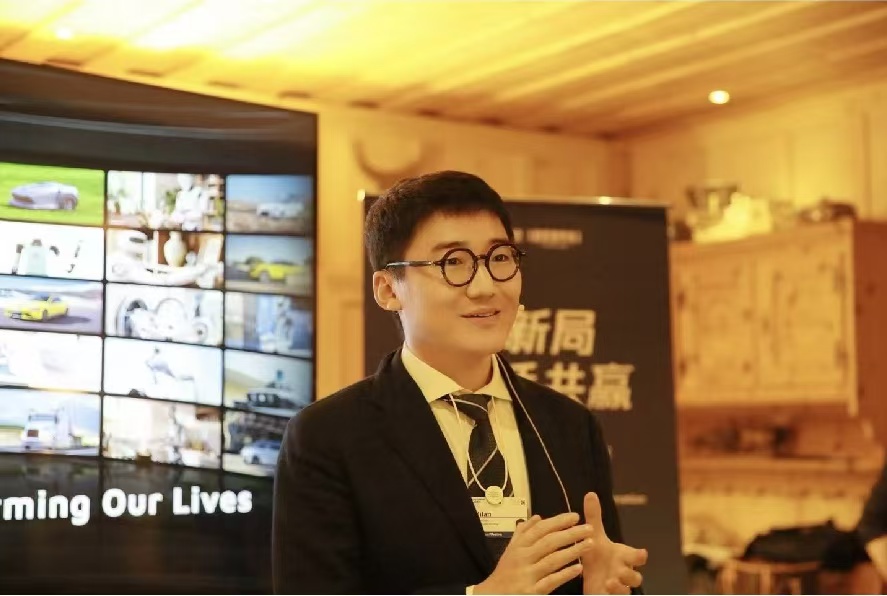
禾赛科技首席执行官李一帆受邀出席,并围绕"速度与底线:智能时代的全球基础设施新对话"主题发表演讲。 瑞士时间1月21日,在达沃斯举办的世界经济论坛2026年年会召开期间,由腾讯新闻、腾讯财经主办、第一财经Yicai Global作 为独家英文合作媒体的2026冬季达沃斯愿景晚宴在达沃斯当地举行。来自国内外30余位著名学者、商业精英和政界人士,围 绕"智绘新局,对话共赢"这一主题,共同探讨人工智能(AI)发展新趋势,寻找经济发展新动能。 李一帆以自身创业经历为切入点,用激光雷达的国产化突围案例,印证了中国科技企业的核心竞争力。他回忆,十几年前从 硅谷回国创业时,激光雷达行业被美国完全垄断,单台价格高达5万美元的"天价壁垒"。而在量产领域,尤其是在中国客户也 领先的领域,中国企业做这种技术就会变得非常的有优势。这种优势不仅因为制造业强,而且归功于企业面向的客户也厉 害,是从供应链到需求都占据优势。结合国内新能源汽车产业的领先优势与头部车企的庞大需求,禾赛科技在去年将激光雷 达价格压缩至200美元、降幅达99.7%,量产规模实现跨越式增长。 谈及禾赛在全球市场突围后的困境,李一帆坦言,2020年公司产品覆盖全球,却 ...

今天,全球母基金组团去达沃斯,第四届达沃斯全球母基金峰会圆满落幕
母基金研究中心· 2026-01-22 08:56
瑞士当地时间 2 0 2 6年1月1 9日,主题为"A Sp irit o f Di a l o g u e "的2 0 2 6年世界经济论坛年会在 达沃斯盛大开幕。1月2 0日,中共中央政治局委员、国务院副总理何立峰在瑞士达沃斯出席世 界经济论坛2 0 2 6年年会并发表致辞。何立峰表示,2 0 1 7年1月,习近平主席在达沃斯论坛发表 重要讲话,中国认真落实,坚定支持多边主义和自由贸易。近年来,习近平主席相继提出四大 全球倡议,为解决世界面临的共同问题提供了中国方案。何立峰在论坛致辞中提出四点看法: 一要坚定支持自由贸易,携手推动普惠包容的经济全球化。二要坚定维护多边主义,推动完善 更加公正合理的国际经贸秩序。三要坚持合作共赢,致力共同做大合作蛋糕,合力破解发展难 题。四要坚持相互尊重、平等协商,善用对话妥善管控分歧、解决问题。何立峰还介绍了中共 二十届四中全会情况,强调中国发展将为世界带来重要机遇,并与国际工商界人士深入交流。 瑞士当地时间 2 0 2 6年1月2 1日下午,第四届达沃斯全球母基金峰会在瑞士达沃斯的Ho t e l Str e l a酒店成功举办。本届峰会由全球母基金协会、中国国际科技促 ...


美联邦自驾法案破冰,Robotaxi提速
HTSC· 2026-01-20 09:35
Investment Rating - The report maintains a "Buy" rating for key companies in the autonomous driving sector, including Horizon Robotics, Hesai Technology, Pony.ai, WeRide, Xiaopeng Motors, and Suda Technology [6][8]. Core Insights - The U.S. House of Representatives is reviewing the "SELF DRIVE Act of 2026," which proposes to increase the exemption limit for manufacturers from 2,500 vehicles to 90,000 vehicles, significantly enhancing the potential for Robotaxi mass production [1][2]. - The legislation aims to resolve core obstacles to the scaling of Robotaxi deployment, including the introduction of a "deemed approval" mechanism for exemption applications and establishing federal regulations as a priority over state laws [2][3]. - 2026 is projected to be a pivotal year for the global L4 autonomous driving industry, with the U.S. federal legislative framework becoming clearer and China accelerating its L3 pilot projects and L4 commercialization [1][4]. Summary by Sections Legislative Developments - The "SELF DRIVE Act of 2026" is expected to break a decade-long legislative deadlock, with bipartisan support leading to a clearer timeline for implementation [3]. - Key milestones include committee markup meetings in Q1 2026 and potential integration with the 2026 Surface Transportation Reauthorization Act [3]. Market Expansion - The U.S. Robotaxi market is transitioning from technology validation to large-scale expansion, with companies like Waymo and Tesla ramping up operations [4]. - Waymo's weekly paid orders reached 450,000 by December 2025, with plans to expand operations from 10 to 30 cities [4]. - Tesla's Cybercab is expected to begin mass production in April 2026, further contributing to market growth [4]. Investment Recommendations - The report emphasizes the synchronized development of L4 autonomous driving in both the U.S. and China, suggesting that this convergence will drive significant industry growth [5]. - Companies such as WeRide and Pony.ai are highlighted for their international expansion efforts, while other L4 applications like Robovan and Robotruck are also gaining traction [5].

【行业深度】洞察2025:中国激光雷达行业竞争格局及市场份额(附市场集中度、企业竞争力评价等)
Qian Zhan Wang· 2026-01-20 07:21
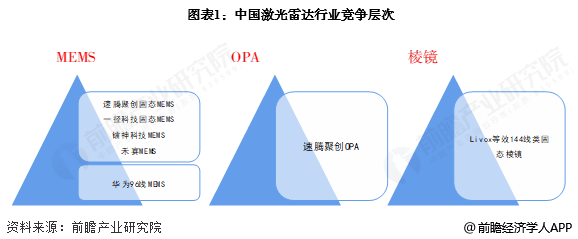
Core Insights - The Chinese LiDAR industry is experiencing rapid growth, with a market size projected to reach 13.96 billion yuan in 2024, indicating a high market concentration with a CR5 of 40.6% [10] Group 1: Industry Competition Landscape - The main companies producing LiDAR in China include Suteng Juchuang, Yijing Technology, Hesai Technology, Raysun Intelligent, and Livox, with different technological approaches such as OPA and MEMS [1] - The leading revenue-generating companies in the LiDAR sector for the first three quarters of 2025 are Hesai Technology, followed by Suteng Juchuang with a revenue of 1.19 billion yuan [8] Group 2: Regional Distribution of Companies - The majority of LiDAR companies in China are concentrated in the southeastern coastal regions, particularly in Guangdong with over 500 companies and Jiangsu with more than 400 companies as of November 2025 [2] - Representative companies are also distributed in regions such as Shanghai, Beijing, Anhui, and Hubei, with a notable presence in Shaanxi [5] Group 3: Competitive Dynamics - The LiDAR industry is characterized by a high level of competition, especially in the mid to low-end product segments where many competitors exist and product differentiation is minimal [14] - The bargaining power of upstream suppliers, particularly for core components, is strong, while the bargaining power of downstream consumers in sectors like surveying and automotive is relatively weak [14] - The threat of new entrants is low due to the technical intensity of the LiDAR industry, which is crucial for the development of autonomous driving and smart manufacturing [14]