Hesai(HSAI)

Search documents
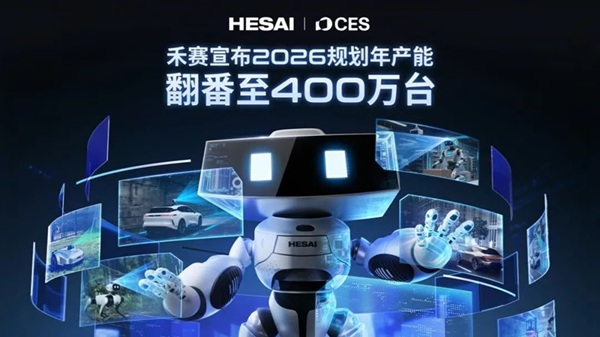
禾赛科技:2026 年产能同比翻倍至 400 万套,而我们的销售目标为 367 万套
2026-01-09 05:13
Summary of Hesai Group Conference Call Company Overview - **Company Name**: Hesai Technology - **Ticker**: HSAI.O / 2525.HK - **Industry**: LiDAR solutions for automotive and robotics applications - **Established**: 2014 - **Market Cap**: Approximately HK$ 31.88 billion (US$ 3.52 billion) as of January 7, 2026 [5][5] Key Points Industry Dynamics - The robotics industry is rapidly growing, driven by advancements in AI, necessitating stable and accurate environmental perception, which LiDAR provides as the "AI eye" of the physical world [2][2]. - Hesai's LiDAR technology is positioned to empower the next wave of physical AI applications [2][2]. Production Capacity and Innovations - Hesai announced a significant capacity expansion plan at CES 2026, doubling its annual production capacity from 2 million units in 2025 to 4 million units in 2026 [2][2]. - The company showcased several upgraded core products at CES, including: 1. Updated ATX LiDAR with Fermi C500 chip and photonic isolation technology 2. A full range of solutions for next-generation L3 automotive-grade applications, including long-range LiDAR ETX and short-range blind-spot LiDAR FTX 3. Miniature, high-performance 3D LiDAR JT series designed for robotics [1][1][1]. Market Demand and Orders - The updated ATX LiDAR is highly anticipated, with orders exceeding 4 million units from leading global OEMs, with mass production and delivery set to begin in April 2026 [1][1]. - The JT robotics LiDAR has achieved over 200,000 units delivered within one year of its launch [1][1]. Financial Outlook - Analysts maintain a "Buy" rating for Hesai, forecasting sales of 3.68 million units in 2026, with potential for the share price to double by FY26 due to five identified catalysts [3][3]. - The target price for Hesai's HK-listed shares is set at HK$ 296.90, implying a P/E ratio of 43x for 2026E and 30x for 2027E [12][12]. Risks - Potential risks that could hinder achieving the target price include: 1. Rising competition in the LiDAR market 2. Product defects affecting market adoption 3. Increases in raw material costs 4. Lower-than-expected penetration of LiDAR/ADAS technologies 5. Price wars impacting average selling prices (ASP) 6. Technology and intellectual property risks 7. Regulatory risks [13][19]. Investment Strategy - Hesai is positioned to benefit from the growth momentum in the LiDAR sector, supported by its technological advantages and stronger financial status compared to peers [11][17]. Conclusion Hesai Technology is strategically expanding its production capacity and innovating its product offerings to meet the growing demand in the robotics and automotive sectors. The company is well-positioned for future growth, although it faces several risks that could impact its market performance.

割草机器人市场禾赛3D激光雷达出货量第一
Ge Long Hui· 2026-01-09 02:46
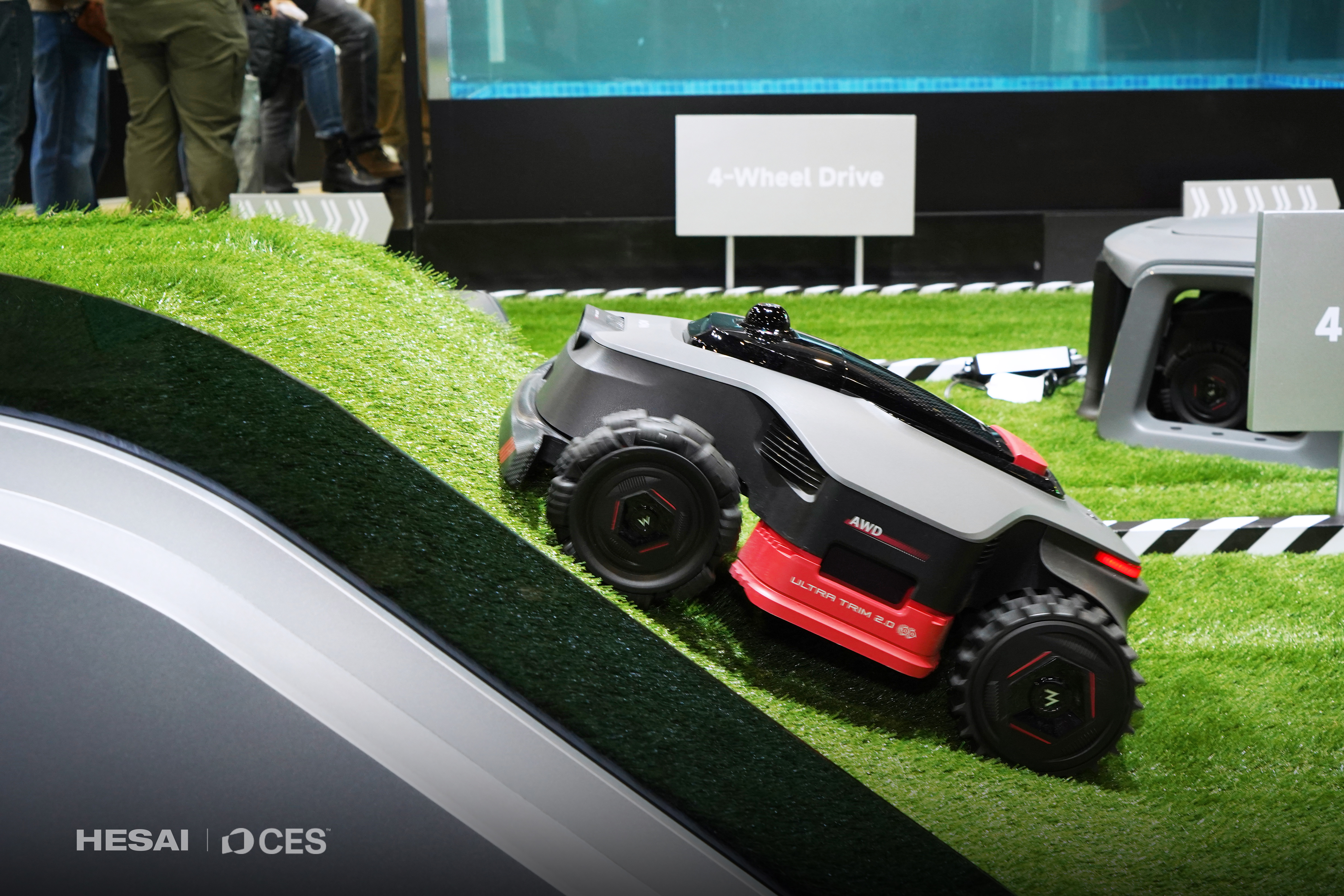
Core Viewpoint - Hesai Technology, a global leader in LiDAR, announced that it will lead in the shipment of 3D LiDAR for robotic lawn mowers in 2025 and will also have the highest number of new models showcased at CES 2026 [1] Group 1: Company Performance - Hesai's JT series 3D LiDAR was officially launched at CES 2025 and has delivered over 200,000 units within a year [1] - According to GGII data, Hesai has consistently led the global market for 3D LiDAR in robotic lawn mowers, achieving the highest quarterly shipment volumes in the first three quarters of 2025 [1] Group 2: Industry Impact - At CES 2026, approximately ten new robotic lawn mower models featuring Hesai's JT series 3D LiDAR were prominently displayed, marking the highest number of new models in the industry [1] - Hesai Technology continues to reshape the future of smart gardens with its 360° high-definition three-dimensional perception technology [1]

CES 2026 | 割草机器人市场禾赛 3D 激光雷达出货量第一
Jin Rong Jie· 2026-01-08 10:01
Core Insights - Hesai Technology (NASDAQ: HSAI; HKEX: 2525) announced it is the leader in global 3D LiDAR shipments for robotic lawn mowers in 2025, with the highest number of new models showcased at CES 2026 [1] - The JT series 3D LiDAR has been delivered over 200,000 units within a year, maintaining the top position in the global market for robotic lawn mower LiDARs [1] - The JT series offers 360° wide field of view and can cover over 10,000 square meters in a single frame, enhancing the capabilities of robotic lawn mowers in navigation and obstacle avoidance [1] Group 1: Product Launches and Features - MOVA, a leading brand in smart gardening, launched two series of robotic lawn mowers at CES 2026, both equipped with Hesai's JT series LiDAR, maintaining its top position in the European market [2] - Dreame showcased its entire range of LiDAR robotic lawn mowers, leveraging Hesai's technology for comprehensive environmental perception, particularly suited for complex terrains [8] - Nexlawn introduced three new models at CES, utilizing Hesai's JT series for high-precision mapping and obstacle detection, capable of navigating narrow passages and uneven ground [14] Group 2: Market Growth and Trends - The global smart robotic lawn mower market is projected to grow from $1.5 billion in 2024 to $4.5 billion by 2034, with a compound annual growth rate (CAGR) of 11.5% [26] - Hesai's JT series LiDAR meets critical consumer demands for robotic lawn mowers, including no need for boundary wires, precise positioning, and dynamic obstacle avoidance, making it a preferred choice among leading manufacturers [26]

禾赛规划2026年产能将翻番至400万台 ADAS与机器人业务同步推进
Yang Shi Wang· 2026-01-08 09:58
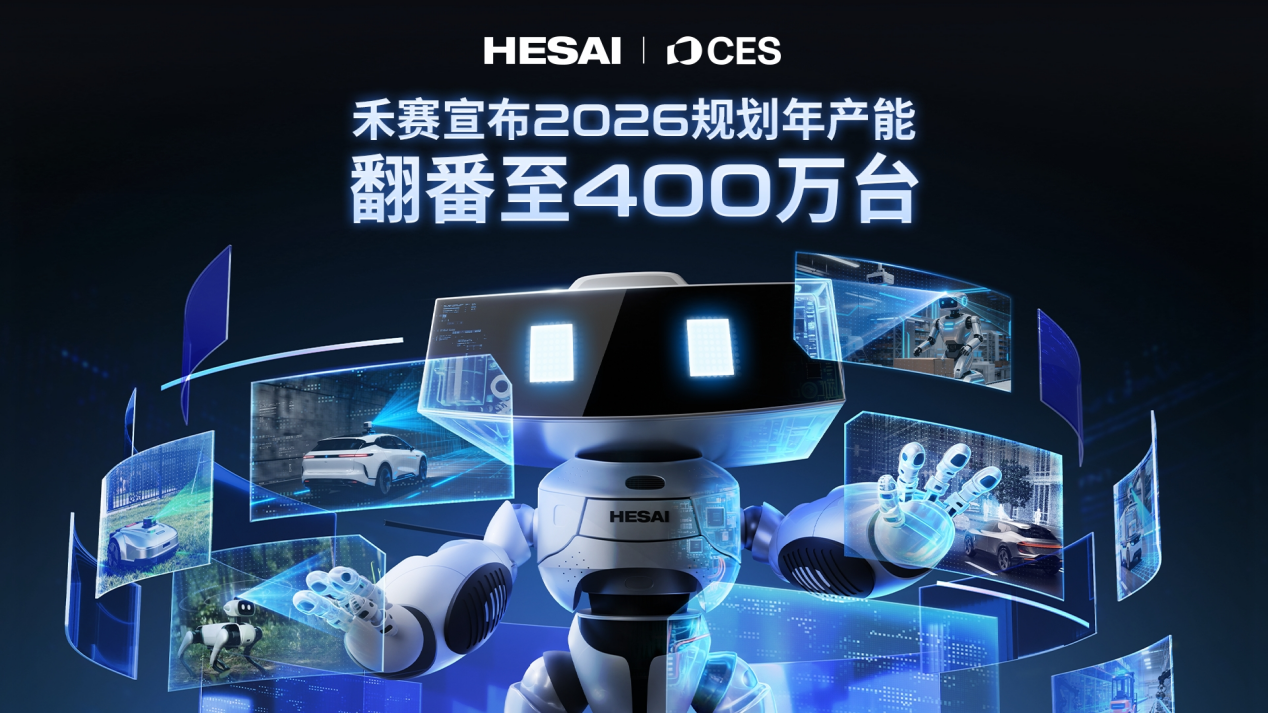
Core Insights - Hesai Technology announced plans to double its annual production capacity from 2 million units in 2025 to 4 million units in 2026 to meet the growing demand for LiDAR in ADAS and robotics [1][3] Group 1: Company Achievements - Hesai is the first global company to achieve an annual production of over 1 million units and cumulative deliveries exceeding 2 million units of LiDAR [3] - In 2025, Hesai delivered over 1.6 million units, with the highest monthly delivery exceeding 200,000 units [3] - The company has seen its annual delivery volume double for five consecutive years, with ADAS products accounting for approximately 1.4 million units and robotics products over 200,000 units in 2025 [3] Group 2: Production Capabilities - The company’s self-developed manufacturing capabilities are a key factor in its planned production capacity increase [3] - Hesai has established a comprehensive center integrating R&D and manufacturing, which supports large-scale production [3] - The fully automated production line can produce one LiDAR unit every 10 seconds, enhancing efficiency [3] Group 3: New Developments and Partnerships - At CES, Hesai showcased its new generation L3 automotive-grade LiDAR solutions, including the ETX and FTX models, which are designed for flexible integration into vehicles [5] - The company has secured production contracts with 24 OEMs for over 120 vehicle models, including major brands like Li Auto, Xiaomi, and Toyota [5] - Hesai's latest ATX model has received over 4 million orders and is set to begin mass production in April 2026 [5] Group 4: Market Trends - The robotics industry is experiencing rapid growth driven by AI, with stable and precise environmental perception becoming essential [6] - Hesai's LiDAR technology is being utilized in various autonomous driving applications, including Robotaxi and autonomous trucks, with some vehicles planning to use up to 8 LiDAR units [6] - The JT series of mini 360° LiDAR has been widely validated in the market, with over 200,000 units shipped since its launch [6]
禾赛科技:2025年割草机器人3D激光雷达出货量第一
Zheng Quan Shi Bao Wang· 2026-01-08 09:27
Core Insights - Hesai Technology announced that it will be the leading supplier of 3D LiDAR for lawn mowing robots in 2025 [1] - The JT series 3D LiDAR was officially launched at CES 2025 and has delivered over 200,000 units in the past year [1]
商络电子:公司为禾赛科技激光雷达产品供应阻容感、电源芯片、FPGA等产品
Xin Lang Cai Jing· 2026-01-08 07:13
Core Viewpoint - The company has not yet become an agent for products from Hynix, SanDisk, or Micron, and is currently supplying components such as blocking capacitors, power chips, and FPGAs for Hesai Technology's LiDAR products [1] Group 1 - The company is not acting as an agent for Hynix, SanDisk, or Micron products [1] - The company supplies blocking capacitors, power chips, and FPGAs for Hesai Technology's LiDAR products [1]
美股黄金、白银股大跌
Di Yi Cai Jing Zi Xun· 2026-01-07 15:14
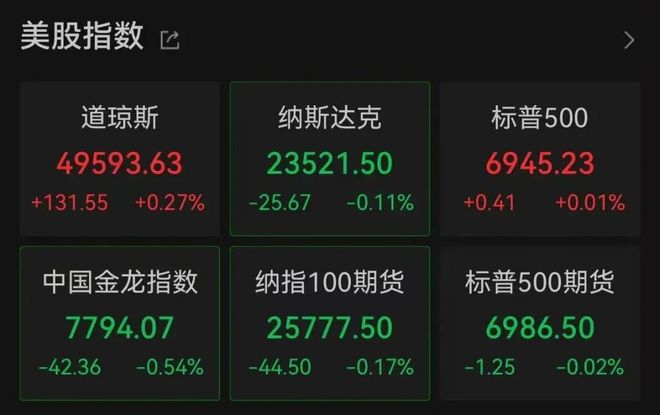
Market Overview - As of January 7, U.S. stock indices showed mixed performance, with the Dow Jones up by 0.27%, the S&P 500 slightly up by 0.01%, and the Nasdaq down by 0.11% [1]. - The Dow Jones index reached 49,593.63, gaining 131.55 points [2]. - The S&P 500 index stood at 6,945.23, with a minor increase of 0.41 points [2]. - The Nasdaq index was at 23,521.50, decreasing by 25.67 points [2]. Sector Performance - Gold and silver stocks experienced significant declines, with Hecla Mining and First Majestic Silver dropping over 5%, and Pan American Silver and Kinross Gold falling more than 4% [2]. - Barrick Gold saw a decline of over 2% [2]. - Spot gold prices fell by 1%, while spot silver prices dropped nearly 5% [2]. Technology Sector - The technology sector faced a majority of declines, with Western Digital falling over 5% and AMD down by more than 2% [2]. Chinese Stocks - Chinese stocks showed mixed results, with Zai Lab increasing by over 5% and Century Internet rising by more than 4% [2]. - However, Hesai Technology and NetEase both experienced declines of over 2% [2].


禾赛科技:成为英伟达 DRIVE AGX Hyperion 10 平台激光雷达合作伙伴 共推 L4 级自动驾驶规模化落地
Zhong Guo Qi Che Bao Wang· 2026-01-07 09:38
Group 1 - Hesai Technology has been selected by NVIDIA as a laser radar partner for the "NVIDIA DRIVE AGX Hyperion 10 platform," aimed at supporting L4-level autonomous driving [1][3] - The DRIVE Hyperion architecture is expanding its sensor ecosystem, covering cameras, millimeter-wave radar, laser radar, and ultrasonic technology, providing full-stack support for L4-level autonomous driving perception systems [3] - The DRIVE AGX Hyperion 10 platform features two NVIDIA DRIVE AGX Thor system-on-chip units, delivering over 2000 FP4 TFLOPS of computing power, sufficient for real-time data fusion from 360-degree sensors [3] Group 2 - NVIDIA's automotive VP emphasized that the DRIVE Hyperion platform is crucial for the transition to autonomous driving, integrating computing, sensors, and safety features into a unified open platform [4] - Hesai Technology will use its ETX laser radar as the core product for this collaboration, designed for L3 and L4 autonomous driving scenarios, featuring high resolution and long-range detection capabilities [4] - This partnership marks a significant milestone in the long-term collaboration between Hesai Technology and NVIDIA, reinforcing Hesai's position as a trusted core partner within NVIDIA's ecosystem [4] Group 3 - Looking ahead, Hesai Technology aims to collaborate with global automotive manufacturers to accelerate the marketization of next-generation autonomous driving technology, contributing to the upgrade of the global smart mobility industry [5]

【快讯】每日快讯(2026年1月7日)
乘联分会· 2026-01-07 08:41
Domestic News - The Ministry of Commerce announced that China aims to achieve 18.3 million vehicle trade-ins from 2024 to 2025, with nearly 60% being new energy vehicles, contributing to a consumer sales increase of 3.92 trillion yuan, benefiting 494 million consumers [3] - Shanghai has issued measures to encourage foreign investment enterprises to reinvest domestically, allowing various methods for reinvestment, including using undistributed profits [4] - Beijing plans to implement a "no-cost first aid" policy for traffic accident victims, ensuring they receive immediate medical care without upfront costs [5] - Guangdong is optimizing insurance services for new energy vehicles and exploring the development of smart driving liability insurance products to support the growth of the new energy vehicle industry [6] - NIO has officially rolled out its one millionth production vehicle, a new ES8, and has signed a five-year strategic cooperation agreement with CATL to enhance technology and market collaboration [8] - Qianli Zhijia and Geely have jointly launched a new smart driving brand, G-ASD, which covers intelligent driving capabilities from L2 to L4 levels, with the first version already installed in 16 models [9] - Chery Group has set a sales target of 3.2 million vehicles for 2026, representing a year-on-year increase of 14.03% [10] - Hesai Technology announced plans to double its lidar production capacity to 4 million units by 2026 to meet the growing demand in ADAS and robotics [11] International News - Canadian automotive sales are projected to rebound to pre-pandemic levels by 2025, with an estimated 1.9 million light vehicle sales, a 2% increase from 2024 [12] - NVIDIA plans to test its L4 autonomous taxi service in 2027, following initial road tests in 2026 [13] - Sony and Honda's joint venture will launch its first electric vehicle, "AFEELA1," in Japan in the first half of 2027 [14] - Hyundai Motor Group intends to deploy Boston Dynamics' humanoid robots in its U.S. factories starting in 2028 [15] Commercial Vehicles - Proton Motors aims to sell 13,000 vehicles in 2026, following a successful year where it sold over 8,000 vehicles [16][17] - FAW Jiefang has initiated public road demonstrations for its liquid hydrogen heavy truck, marking a significant step in commercializing hydrogen technology [18] - BYD's T4 electric truck has received a recommendation award from industry opinion leaders for its performance and customer recognition [19] - Shaanxi Automobile's X6000 tractor has received EU certification, allowing it to enter the European market, showcasing its compliance with stringent safety and emissions standards [20]






禾赛科技:CES 2026重磅官宣:年产能翻倍至400万台泰国新工厂加码全球布局
Zhong Guo Qi Che Bao Wang· 2026-01-07 03:46
Core Insights - Hesai Technology announced a significant capacity expansion plan at CES 2026, aiming to double its annual production capacity from 2 million units in 2025 to 4 million units in 2026 to meet the surging demand in the ADAS and robotics sectors [1][3] - The new "Galileo" factory in Bangkok, Thailand, is progressing steadily and is expected to commence production in early 2027, enhancing the company's global capacity layout [1] Production and Delivery Milestones - Hesai has achieved several industry milestones, including the production of its 1 millionth lidar unit in September 2025 and cumulative deliveries exceeding 2.4 million units to date [3] - The company has maintained a consistent annual delivery growth rate, with over 1.6 million units delivered in 2025 and a peak monthly delivery exceeding 200,000 units [3] - The ADAS product line accounted for approximately 1.4 million units, while the robotics segment contributed over 200,000 units, with the ATX product achieving over 1 million units in its first year [3] Manufacturing Capabilities - The core support for Hesai's capacity doubling is its strong in-house manufacturing capabilities, featuring a fully automated production line that can produce a lidar unit every 10 seconds [3] - The company has developed proprietary ASIC chips, enabling rapid product iteration and high reliability, which are essential for large-scale production [3] New Product Launches - At CES, Hesai launched a new L3-level automotive lidar solution, including the ETX long-range lidar and the FTX solid-state near-range lidar, designed to enhance vehicle safety and simplify integration [4] - The ETX lidar can be flexibly installed behind the windshield or inside the vehicle, while the FTX lidar is specifically designed for short-range blind spot monitoring, together creating a comprehensive 360° safety perception network [4] Market Penetration and Client Base - The safety value of lidar technology is recognized in the market, with vehicles equipped with lidar reducing the risk of fatal accidents by 90% and conventional traffic accidents by 30% [5] - Hesai has secured over 120 model production contracts with 24 major OEMs, including top European manufacturers and leading domestic brands such as Li Auto, Xiaomi, Changan, and Geely [5] - The company has locked in partnerships with its top two ADAS clients for 2026, ensuring 100% standardization across their entire model range [5] Expansion into Robotics and AI - Beyond the ADAS market, Hesai's lidar technology is empowering the AI-driven robotics industry, providing stable and precise environmental perception for robots transitioning from controlled to diverse real-world scenarios [6] - In the Robotaxi and autonomous trucking sectors, Hesai has become a key player, with several innovative companies selecting its lidar products for their fleets, some models planning to use up to 8 units [6] - The JT series mini 360° lidar has seen widespread adoption in various applications, with cumulative shipments exceeding 200,000 units, showcasing its utility in lawn mowing robots, companion robots, and 3D spatial digitization devices [6]