
Hesai(HSAI)

Search documents
晚点独家丨禾赛科技三位创始人再创新公司 Sharpa,目标是造通用机器人
晚点LatePost· 2026-01-20 06:09
Core Viewpoint - The article discusses the establishment of a new robotics company, Sharpa, by the co-founders of Hesai Technology, highlighting the significant potential and challenges in the robotics industry compared to the electric vehicle sector [4][10]. Company Overview - Sharpa was founded by Hesai's co-founders, including CTO Xiang Shaoqing and CEO Li Yifan, focusing on developing general-purpose robots and core components [4][6]. - The company operates independently from Hesai, with a team of over 100 members primarily recruited externally [4]. Market Potential - The general robotics market is estimated to have a trillion-dollar potential, with the founders aiming to create a world-class AI company [7]. - The founders believe that the AI era presents opportunities similar to those seen in the internet and new energy sectors, potentially leading to the creation of companies with valuations in the hundreds of billions [7]. Product Development - Sharpa's first product, the SharpaWave dexterous hand, is set to be mass-produced by October 2025, featuring 22 degrees of freedom and priced at several tens of thousands of dollars [8]. - The second product will be a general humanoid robot named Sharpa North, with a focus on versatility and operational capabilities [8][9]. Industry Challenges - The founders acknowledge that while the opportunity in robotics is ten times greater than in new energy vehicles, the difficulty of development is a hundred times higher [10]. - The robotics industry is still in its exploratory phase, with over 300 startups working on various applications and technologies [9]. Strategic Vision - The founders intend for the AI company to enhance Hesai's market reach and capabilities, potentially increasing its market ceiling by tenfold [8]. - They emphasize the importance of creating robots that can handle complex tasks and adapt to changing environments, bridging the gap between human capabilities and automation [9].



2026 中国新能源汽车与动力电池手册_从自动驾驶到人工智能-2026 China EV & EV Battery Handbook_ From Autonomous Driving to AI
2026-01-20 01:50
Summary of Key Points from the Conference Call Industry Overview: Greater China Auto, EV, and EV Battery Industry Forecasts - **China's Auto Industry**: Expected to face challenges in 2026 with a forecasted decline in auto wholesales by **1.6% YoY** compared to a **10% YoY** increase in 2025. This decline is attributed to front-loaded demand in 2025 [1] - **Domestic EV Sales**: Anticipated to grow only **7% YoY** in 2026 due to a **5% increase in purchase tax** and reduced trade-in subsidies [1] - **Export Sales**: Projected to increase by **12% YoY**, reaching **7.9 million units** in 2026, with EV exports expected to surge by **40% YoY** [1] - **Competition Dynamics**: Shift from price competition to configuration-based competition, necessitating more investment in autonomous driving (AD) and smart cabin technologies [1] Key Automotive/EV Themes for 2026 Theme 1: Export Growth - **Export Growth**: Companies like Chery and BYD are expected to benefit significantly from exports, especially with the EU's minimum EV price replacing tariffs [2] Theme 2: Autonomous Driving Development - **ADAS to AD Transition**: L3 permits issued to Changan and BAIC, with highway/city NOA penetration expected to exceed **40%** in 2026 and **85%** by 2030. L4/L5 penetration is projected to reach **8%** by 2030 [3] Theme 3: Cost Concerns - **Battery and Memory Costs**: Rising costs and supply stability of memory are key concerns for auto OEMs [3] Key Battery Themes for 2026 Theme 1: Energy Storage Systems (ESS) - **ESS Demand**: Global battery ESS installations expected to grow by **33% YoY** in 2026, with shipments increasing by **41% YoY** [4] Theme 2: Global Expansion - **Overseas Capacity Expansion**: Chinese battery manufacturers are accelerating their overseas capacity expansion, particularly in Europe and Southeast Asia, in response to rising tariffs and trade tensions [4] Theme 3: VAT Rebate Changes - **Export VAT Rebate Cut**: Anticipated to lead to a rush in battery production and shipment in Q1 2026, potentially increasing raw material prices and exerting cost pressure on battery makers and auto OEMs [5] Theme 4: Technological Innovation - **Sodium-Ion Battery**: Launch of Gen-2 sodium-ion battery expected, with ASSB (all-solid-state battery) small-batch production anticipated to start in 2027 and scale up significantly post-2029 [5] Investment Recommendations - **Top Picks**: - **XPeng**: Launch of Mona SUV and HR in 2H26, with a focus on AI-related businesses [6] - **CATL**: Growth driven by CEV, ESS, and overseas capacity despite short-term cost pressures [6] - **Tuopu**: Major supplier for humanoid robots with overseas expansion [6] - **Minth**: Resilient earnings growth supported by high overseas market exposure [6] - **Hesai**: Increased LiDAR adoption in China alongside L3 ADAS development [6] Additional Insights - **Market Dynamics**: The shift in competition and the focus on technological advancements highlight the evolving landscape of the automotive and EV sectors in China, emphasizing the need for companies to adapt to changing consumer preferences and regulatory environments [1][3][4][5]






禾赛科技创始人团队入局通用机器人
Di Yi Cai Jing· 2026-01-19 10:57
Group 1 - Hesai Technology and Sharpa operate as independent companies without any equity or business control relationship [1] - The AI company Sharpa is expected to broaden the team's perspective and provide feedback to Hesai [1] - The future market for robotic LiDAR may surpass that of automotive applications, and Hesai plans to develop other components needed for robotics beyond LiDAR [1] Group 2 - The founders of Hesai Technology, including Xie Shaoqing, Li Yifan, and Sun Kai, have jointly established Sharpa [2] - Sharpa focuses on developing general-purpose robots and their core components [2]

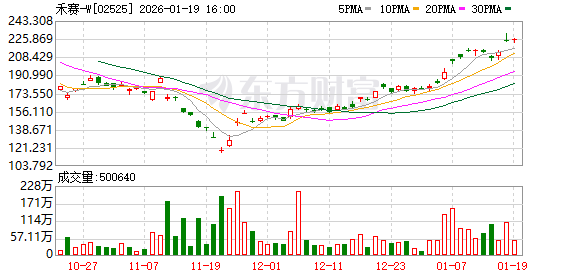
禾赛科技三位创始人再创新公司Sharpa 目标是造通用机器人
Xin Lang Cai Jing· 2026-01-19 07:43
Core Insights - Hesai Technology's co-founders, including CTO Xiang Qiang and CEO Li Yifan, have established a new robotics company named Sharpa, focusing on the development of general-purpose robots and core components [1] - The three co-founders of Sharpa are responsible for strategic guidance and planning but do not hold operational roles within the company [1] - Sharpa operates independently from Hesai, with no equity or business control relationship, and has recruited most of its core team externally, currently employing over 100 people [1]
独家丨禾赛科技三位创始人再创新公司 Sharpa,目标是造通用机器人
晚点Auto· 2026-01-19 07:12
Core Viewpoint - The founders of Hesai Technology have established a new robotics company, Sharpa, which aims to develop general-purpose robots and core components, indicating a significant shift in focus from automotive lidar technology to robotics, which they believe has a much larger market potential [2][3][5]. Company Overview - Sharpa was founded by Hesai's co-founders, who will not hold operational roles but will guide the strategic direction. The company operates independently and has over 100 employees, primarily recruited externally [3][5]. - The first product, SharpaWave, is set to launch in October 2025 and features 22 degrees of freedom, allowing it to perform tasks like playing table tennis and origami, with a price tag of several tens of thousands of dollars [6][7]. Market Potential - The general robotics market is projected to have a trillion-dollar potential, with the founders aiming to create a world-class AI company. They believe that the opportunities in robotics are ten times greater than those in the electric vehicle sector, but the challenges are also significantly higher [5][8]. - The founders anticipate that the robotics lidar market could surpass the automotive lidar market, and they plan to develop additional components needed for robotics beyond just lidar [6]. Industry Landscape - There are over 100 startups in China focused on humanoid robots, with at least 300 entrepreneurs exploring various key components and applications in robotics [7]. - The technology roadmap for general-purpose robots is still evolving, with many companies exploring commercial applications [7]. Future Outlook - The first generation of Sharpa's products will primarily target research and experimental applications, with plans to enter service-oriented scenarios and eventually the household market, aiming for a cost below $5,000 for consumer models [7]. - The founders believe that the current moment in the robotics industry lacks a transformative breakthrough akin to the emergence of ChatGPT in the tech sector [8].

汽车智能化月报系列三十一:工信部许可两款L3级自动驾驶车型产品,希迪智驾、图达通港交所上市【国信汽车】
车中旭霞· 2026-01-18 13:43
Core Insights - The article discusses the latest developments in the automotive intelligence sector, highlighting advancements in L3 autonomous driving technology and the increasing penetration rates of various intelligent features in vehicles. Group 1: L3 Autonomous Driving Developments - The Ministry of Industry and Information Technology has approved two L3 autonomous driving vehicle models, marking a significant step towards commercial application in China [10]. - Tesla's Full Self-Driving (FSD) technology is expected to receive full approval in China by early 2026, indicating progress in regulatory acceptance [11]. - Xiaopeng Motors has obtained a road testing license for L3 autonomous driving in Guangzhou, furthering its testing capabilities [12]. Group 2: Market Penetration Rates - As of October 2025, the penetration rate of passenger vehicles with L2 and above features reached 33%, a year-on-year increase of 19 percentage points [8]. - The penetration rates for advanced driver-assistance systems (ADAS) such as highway NOA and urban NOA are 33.8% and 16.2%, respectively, with year-on-year increases of 21 and 8 percentage points [8]. - The penetration of 800 million pixel cameras in passenger vehicles has reached 49.7%, up 31% year-on-year [6]. Group 3: Industry Collaborations and Innovations - WeRide's Robotaxi service has successfully launched in over 10 cities globally, demonstrating the commercial viability of autonomous driving technology [13]. - Hiydi Zhijia has become the first company focused on commercial vehicle intelligent driving to be listed on the Hong Kong Stock Exchange, raising approximately 1.422 billion HKD [15]. - RoboSense has secured a contract with Dongfeng Nissan for nearly one million units of digital lidar products, set to begin mass production in 2026 [17]. Group 4: Sensor and Technology Advancements - The penetration rate of laser radar in passenger vehicles has reached 14.3%, with a year-on-year increase of 7.9 percentage points [6]. - The market share of NVIDIA chips in passenger vehicle driving domain controllers has increased to 58%, reflecting a 22.2% year-on-year growth [6]. - The cumulative shipment of Huayang Group's HUD products has surpassed 3.5 million units, solidifying its position as a leading supplier in the global market [16].

一季度整车有望反弹,零部件聚焦新产业投资:汽车行业周报(20260112-20260118)-20260118
Huachuang Securities· 2026-01-18 12:26
Investment Rating - The report maintains a positive outlook for the automotive industry, expecting a rebound in vehicle sales in Q1 and focusing on investments in intelligent driving, robotics, and liquid cooling technologies [3]. Core Insights - The automotive sector is experiencing significant dynamics, including sales, pricing, exports, and robotics developments [2]. - The report highlights that January's early sales data shows a substantial year-on-year decline, primarily due to subsidy reductions and rising vehicle prices, leading to consumer hesitation [5]. - The report anticipates that the pressure on vehicle prices will be managed through strict enforcement of anti-competitive practices, aiming to stabilize prices and profit margins [5]. - The export market is expected to grow rapidly, supported by agreements that lower trade barriers for electric vehicles, enhancing profitability for manufacturers and dealers [5]. - The robotics sector is gaining traction, with the Optimus V3 generating market excitement and expectations for product launches [5]. Data Tracking - In early January, the average discount rate remained stable, with a 9.6% increase year-on-year, and the average discount amount reached 22,259 yuan, up by 2,192 yuan year-on-year [4]. - December's wholesale vehicle sales were reported at 2.85 million units, reflecting a year-on-year decline of 8.7% and a month-on-month decline of 6.3% [4]. - Notable sales performance in December included significant year-on-year growth for new energy vehicle manufacturers like NIO and Li Auto, while traditional automakers like SAIC and Changan showed mixed results [6]. Industry News - The report discusses various industry developments, including the price commitments for electric vehicles between China and Europe, which aim to facilitate trade [27]. - The Ministry of Industry and Information Technology is focusing on enhancing the competitiveness of the new energy vehicle sector and regulating market practices to prevent price wars [27]. - Recent data indicates a significant drop in retail sales of passenger vehicles in early January, with a 32% year-on-year decline [27]. Market Performance - The automotive sector saw a weekly increase of 0.71%, ranking 8th out of 29 sectors, while the overall market indices showed mixed results [10].




异动盘点0116 | 机器人概念股早盘普涨,商业航天概念今早回暖;部分核电概念股走强,英伟达持仓概念股普涨
贝塔投资智库· 2026-01-16 04:01
Group 1: Robotics Sector - The robotics concept stocks experienced a broad increase, with notable gains from companies like XAG (02590) up 5.93%, Yunji (02670) up 5.10%, and Blues Technology (06613) up 4.82%. According to an Omdia report, the global annual installation of humanoid robots is expected to add approximately 16,000 units by 2025, with Zhiyuan Robotics leading the market in installations [1][2] - Tianyue Advanced (02631) surged over 15.8% as a report from Zheshang Securities highlighted its active expansion into silicon carbide applications in emerging fields, indicating long-term growth potential [1] - WeRide (00800) rose over 3.4% as it announced that its global Robotaxi fleet will reach 1,000 vehicles by January 12, 2026, with successful commercial operations in cities like Guangzhou, Beijing, and Abu Dhabi [1] - Cao Cao Mobility (02643) increased nearly 8% following its announcement of two strategic acquisitions, including a full acquisition of Weixing Technology and plans to acquire Geely Business Travel [1] Group 2: Energy and Materials Sector - Oil and gas stocks saw significant declines, with Shandong Molong (00568) dropping over 8.1% due to a sharp decrease in international oil prices, with Brent crude futures falling by $2.76 or 4.15% to $63.76 per barrel [2] - Innovation Industry (02788) rose nearly 8% as aluminum prices have surged significantly since 2026, with Huatai Securities indicating that the overall supply-demand tightness will continue, supporting a long-term profit increase in the aluminum sector [2] Group 3: Aerospace and Technology Sector - The commercial aerospace sector showed signs of recovery, with companies like Asia Pacific Satellite (01045) and JunDa Co. (02865) both rising by 5.02%. This follows Elon Musk's announcement that SpaceX aims to increase Starship launch frequency to over once per hour within three years [2] - Weichai Power (02338) increased over 4.9% as it announced advancements in solid-state battery research and strong demand for its power generation products [3] - Zhaoyi Innovation (03986) rose over 6.2% as a Counterpoint Research report indicated that the memory market has entered a "super bull market," surpassing historical highs from 2018 [4] Group 4: US Market Highlights - Nuclear power stocks strengthened, with Talen Energy (TLN.US) up 11.8% and Vistra Energy (VST.US) up 6.63%, following news of a new bipartisan bill proposing a $2.5 billion Strategic Resilience Reserve to secure key minerals domestically [5] - Morgan Stanley (MS.US) rose 5.78% after reporting Q4 revenue growth of 10% to $17.89 billion, exceeding market expectations [5] - The weight loss drug sector faced pressure, with Eli Lilly (LLY.US) down 3.76% as its weight loss drug was placed under FDA review, delaying a decision until April 2026 [6] - Dell Technologies (DELL.US) increased by 0.82% as Omdia reported a significant recovery in the global PC market, with a projected 9.2% increase in total shipments for 2025 [8]





美股异动 | 禾赛(HSAI.US)涨逾5% 自动驾驶进入全面商业部署阶段 激光雷达出货有望持续走高
智通财经网· 2026-01-15 15:07
Core Viewpoint - The article highlights the significant growth potential in the autonomous driving industry, particularly focusing on the increasing demand for lidar technology and computational power, which are essential for the advancement of self-driving vehicles [1] Industry Summary - The autonomous driving industry has been experiencing high growth rates, driven by advancements in technology and increasing vehicle capabilities [1] - Lidar, a key hardware component for distance measurement, has seen a rise in shipment volumes, with entry-level lidar prices dropping to around 1,000 to 3,000 yuan [1] - The demand for computational power is also critical, with expectations that the rollout of Level 3 (L3) autonomous driving will significantly boost market growth, potentially expanding the scale of demand by over ten times [1] - The year 2026 is anticipated to be a pivotal point for the transition of autonomous driving from the "technology validation phase" to broader commercial applications, presenting growth opportunities for component manufacturers in the related supply chain [1] - Analysts from Deutsche Bank predict that autonomous vehicles will move beyond pilot phases into full commercial deployment [1]
禾赛(HSAI.US)涨逾5% 自动驾驶进入全面商业部署阶段 激光雷达出货有望持续走高
Zhi Tong Cai Jing· 2026-01-15 15:07
Core Viewpoint - The article highlights the growth potential of the autonomous driving industry, particularly focusing on the increasing demand for lidar technology and computational power, which are essential for the advancement of self-driving vehicles [1] Group 1: Market Trends - The sales volume of lidar, a key hardware component for distance measurement in autonomous vehicles, has been steadily increasing as prices for entry-level lidar units have dropped to lower levels, now available for around 1,000 to 3,000 yuan [1] - The market anticipates that 2026 will be a pivotal year for the transition of autonomous driving from the "technology validation phase" to "wider commercial application," presenting growth opportunities for component manufacturers in the related supply chain [1] Group 2: Technological Advancements - The demand for computational power is critical, with expectations that the rollout of Level 3 (L3) autonomous driving will significantly boost market growth, potentially expanding the scale of demand by more than tenfold [1] - Analysts from Deutsche Bank predict that autonomous vehicles will move beyond pilot phases into full commercial deployment, indicating a significant shift in the industry landscape [1]