iQIYI(IQ)
Search documents
Investing In iQIYI: A Contrarian Bet With Big Upside
Seeking Alpha· 2025-04-10 10:50
Core Insights - The stock market is currently experiencing significant turmoil due to tariff-induced crashes, marking an unprecedented situation for investors [1]. Group 1: Market Analysis - The recent market crash has left investors confused, indicating a volatile environment that may affect investment strategies [1]. Group 2: Analyst Background - Muslim Farooque is a recognized financial journalist and market analyst with over five years of experience in stock and cryptocurrency markets, contributing to various platforms and reaching over 200,000 readers monthly [1]. - He is a Chartered Certified Accountant (ACCA) and holds a Bachelor of Science in Applied Accounting and Finance from Oxford Brookes University, UK [1].
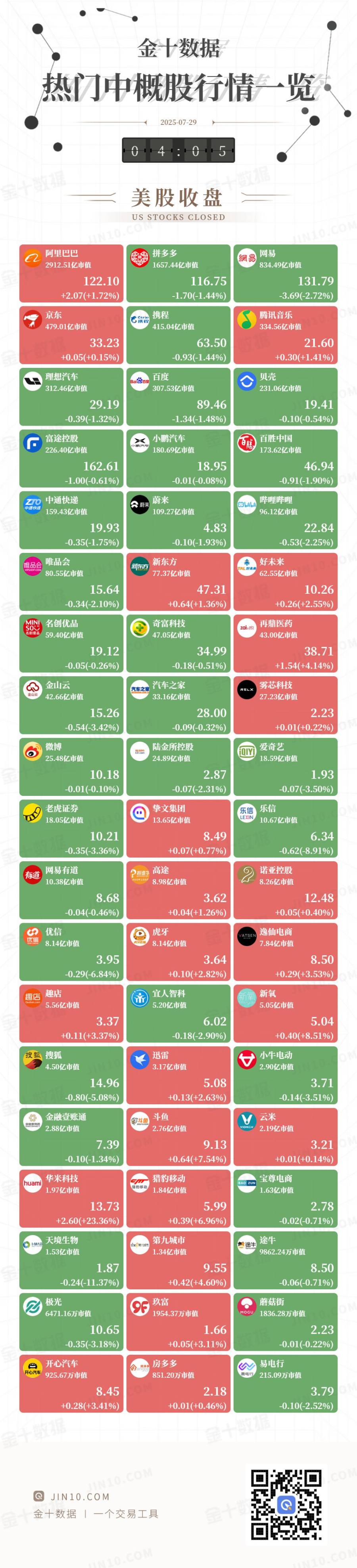
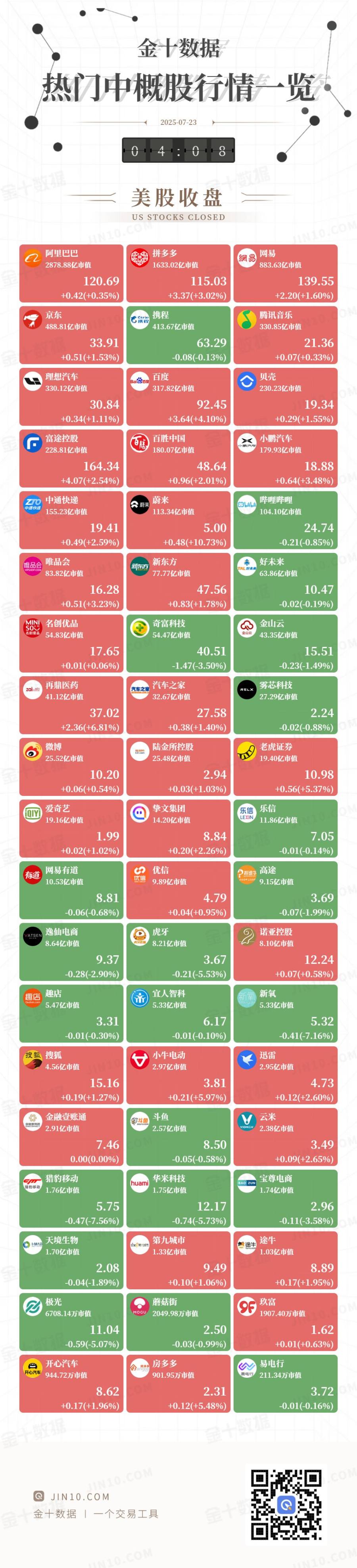
金十图示:2025年04月08日(周二)热门中概股行情一览(美股盘中)


news flash· 2025-04-08 16:33
Market Capitalization Summary - The market capitalization of various companies is highlighted, with notable figures such as 71.94 billion for an unnamed company and 69.52 billion for another [2]. - Companies like Bilibili and TAL Education have market capitalizations of 64.03 billion and 61.59 billion respectively [2]. - The lowest market capitalizations listed include 0.90672 million for Happy Car and 0.17235 million for Easy Electric [3]. Stock Performance - Stock performance shows fluctuations, with companies like Zai Lab experiencing a decrease of 0.36 (-2.72%) and 0.13 (-3.87%) for another unnamed company [2]. - Positive movements are noted for companies such as 51Talk, which increased by 0.99 (+2.74%) [2]. - The performance of companies like Huya and Xunlei shows declines of 0.11 (-4.00%) and 0.10 (-3.11%) respectively [3]. Company Highlights - Notable companies include JD.com with a market cap of 71.94 billion and TAL Education at 61.59 billion, indicating strong positions in the market [2]. - Other companies like 9F Inc. and Yatsen Global have market caps of 4.98 billion and 3.28 billion respectively, showcasing a diverse range of market sizes [2]. - The report also mentions companies with smaller market caps, such as 1.34 million for Baozun and 1.07 million for Leopard Mobile, indicating a broad spectrum of company valuations [3].
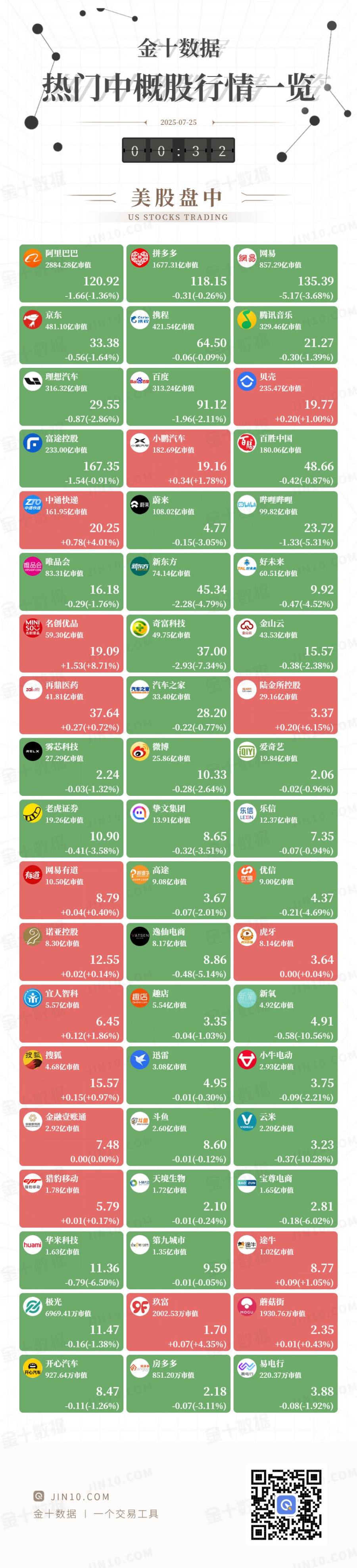
金十图示:2025年04月08日(周二)热门中概股行情一览(美股盘初)
news flash· 2025-04-08 13:40
Market Capitalization Summary - The market capitalizations of various companies are listed, with notable values including 70.93 billion, 68.75 billion, and 66.79 billion [2] - Companies such as SOU, 奇富科技, and 再鼎医药 show significant market values of 47.99 billion, 66.05 billion, and 32.90 billion respectively [2] - The market performance of companies like 陆金所控股 and 雾芯科技 reflects increases of +3.70% and +0.99% respectively [2] Stock Performance Highlights - Notable stock price changes include +0.80 (+1.87%) for one company and +2.10 (+5.82%) for another [2] - Companies like 乐信 and iQiyi show stock price changes of -1.16% and +2.91% respectively [2] - The stock performance of companies such as 优信 and 宜人智科 indicates increases of +1.07% and +5.64% respectively [2] Emerging Companies - Newer companies like 新氧 and 天境生物 have market capitalizations of 827.85 million and 561.38 million respectively, with stock price increases of +3.99% and +11.10% [3] - Companies like 华米科技 and 开心汽车 show market values of 36.39 million and 9.20 million, with stock price changes of +9.61% and -1.18% respectively [3]
美股暴跌引发全球震荡,关税阴霾笼罩市场


Sou Hu Cai Jing· 2025-04-04 17:41
Market Overview - The U.S. stock market experienced a significant drop on April 2, with major indices suffering their largest single-day declines in years, triggered by the Trump administration's announcement of a new round of tariff policies [2][3] - The Dow Jones Industrial Average fell by 1,679.39 points, a decline of 3.98%, closing at 40,545.93 points, marking the highest drop since June 2020 [2] - The S&P 500 index decreased by 4.84%, closing at 5,396.52 points, while the Nasdaq Composite index plummeted by 5.97%, closing at 16,550.61 points, both setting records for their largest single-day declines since June 2020 [2] Sector Impact - Major technology stocks were heavily impacted, with Apple shares dropping by 9.25%, resulting in a market value loss of approximately $310.9 billion [4] - Other tech giants like Amazon, Nvidia, Tesla, Google, and Microsoft also saw significant declines, with Amazon falling over 8% and Nvidia dropping over 7% [4] - Financial stocks also faced severe losses, with JPMorgan Chase down nearly 7%, Goldman Sachs down over 9%, and Citigroup down over 12% [4] - The semiconductor sector was not spared, with the Philadelphia Semiconductor Index falling by 9.88% and individual stocks like Micron Technology and Microchip Technology dropping over 16% [4] Global Market Reaction - The panic in the U.S. market led to a ripple effect globally, with European indices such as the STOXX 50 and the UK FTSE 100 also experiencing declines of 3.59% and 1.55%, respectively [7] - Asian markets followed suit, with Japan's Nikkei 225 index dropping 2.26% and South Korea's KOSPI index down 0.48% [7] Economic Outlook - Analysts expressed a pessimistic outlook regarding the new tariff policies, suggesting that they could lead to a significant increase in the average tariff rate on U.S. imports, potentially impacting inflation [6] - Barclays Bank projected that U.S. GDP growth could shrink to 0.1% by 2025 due to the escalating trade tensions [6] - The market is increasingly concerned about retaliatory tariffs from other countries, which could exacerbate the economic downturn [6] Federal Reserve Response - Following the market turmoil, expectations for a Federal Reserve interest rate cut surged, with traders anticipating a 25 basis point cut as early as June [8] - Analysts believe that the current economic "growth shock" may prompt the Fed to adopt a more accommodative monetary policy sooner than previously expected [8]
黑色星期五!美股全线暴跌,道指重挫超1400点,英伟达市值蒸发超1万亿元!油价暴跌超7%,黄金、白银也跌了
Mei Ri Jing Ji Xin Wen· 2025-04-04 14:50
Market Overview - The US stock market opened with all three major indices declining significantly, with the Dow Jones dropping over 1400 points, a decrease of 3.48%, the Nasdaq falling by 4.47%, and the S&P 500 down by 4.10% [1] - Major technology stocks experienced substantial declines, with Tesla down over 9%, Nvidia down over 7%, resulting in a market capitalization loss of $176.9 billion (approximately 1.28 trillion RMB) [2] - Chip stocks collectively fell, with AMD, Intel, and Broadcom each dropping over 6%, and TSMC down over 4% [3] Chinese Stocks - Popular Chinese stocks also saw significant declines, with Bilibili down over 9%, Alibaba, JD.com, and iQIYI down over 8%, and Xpeng and NIO down over 7% [5] Commodity Prices - Spot gold prices fell by over 1%, while silver prices dropped by over 4% [6] - International crude oil prices plummeted, with both Brent and WTI crude oil down over 7% [7][9] European Market - European stock markets experienced rapid declines, with Germany's DAX index down over 4%, France's CAC40 down 3.90%, the UK's FTSE index down 4.36%, Italy's FTSE MIB index down over 6%, and Spain's IBEX35 down over 5% [10] Employment Data - The US non-farm payrolls report for March showed an increase of 228,000 jobs, surpassing expectations of 140,000, while the unemployment rate rose to 4.2%, above the expected 4.1% [10][11] - Average hourly earnings increased by 0.3% month-over-month, matching expectations, while year-over-year growth was reported at 3.8%, slightly below the expected 4.0% [10] Trade Policies - The US government announced a 34% tariff on all imports from the US starting April 10, which may lead to increased layoffs in the private sector [11][12] - President Trump signed an executive order imposing a 10% "minimum baseline tariff" on trade partners, with higher tariffs for countries with significant trade deficits with the US [11][12]
QuestMobile2024年中国营销市场年度报告·市场篇:三大特征催生两大变革,情感共鸣成了终极之争
QuestMobile· 2025-04-01 01:59
Core Insights - The article emphasizes the resilience of domestic consumption in 2024, driven by government policies and the emergence of experience-based consumption as a key trend [2][9][12]. Group 1: Market Changes - The marketing landscape is witnessing three significant changes: diversification of marketing touchpoints, continued dominance of IP and event marketing in capturing user traffic, and the rise of experiential consumption as a means to break through marketing barriers [2][3][4]. - Government policies, such as subsidies and trade-in programs, are significantly activating the market, particularly in durable goods like automobiles and home appliances [12][9]. - The 2024 consumption growth is characterized by a reliance on promotions, with notable growth disparities between high-elasticity and essential goods [11][12]. Group 2: Consumer Characteristics - The mobile internet user base continues to grow, leading to a shift from traffic competition to stock operation and value reconstruction in marketing [15][19]. - There is an increase in the usage of decision-making apps, indicating a trend towards multi-platform price comparison for optimal decision-making [17][19]. - Female consumers dominate high-value purchases, while male consumers are increasingly focused on self-satisfaction, particularly in technology-related categories [21][23]. Group 3: Marketing Strategies - AI is being widely adopted in content creation, enhancing efficiency and quality, while also raising concerns about copyright and content details [25][27]. - Brands are focusing on integrating marketing resources at key points to enhance conversion rates and improve return on investment (ROI) [56][61]. - The marketing approach is evolving towards a multi-faceted strategy that balances brand exposure with asset accumulation, leveraging both hard advertising and content marketing [49][51]. Group 4: Media Ecosystem - The media landscape is entering a phase of value deepening, with short videos, social media, and e-commerce leading marketing growth [5][37]. - The content and scene value of media are crucial for capturing user attention, with significant growth in advertising capacity for video and social media platforms [37][40]. - Marketing resources are increasingly concentrating on top-tier and e-commerce media, indicating a trend towards commercializing high-traffic platforms [44][46]. Group 5: Future Trends - The marketing core is shifting from traffic to user engagement, with a focus on multi-touchpoint coverage and deep content to enhance user loyalty [48][86]. - Brands are expected to continue leveraging experiential marketing and cultural IPs to create deeper emotional connections with consumers [76][81].
iQIYI(IQ) - 2024 Q4 - Annual Report
2025-03-27 10:06
[Key Information](index=6&type=section&id=ITEM%203.%20KEY%20INFORMATION) [Holding Company Structure and VIEs](index=6&type=section&id=Our%20Holding%20Company%20Structure%20and%20Contractual%20Arrangements%20with%20the%20Variable%20Interest%20Entities) iQIYI, a Cayman Islands holding company, operates in China via VIEs due to foreign ownership restrictions, a structure critical to revenue but with legal uncertainties - iQIYI, Inc. is a Cayman Islands holding company that does not directly operate in China, conducting business through PRC subsidiaries and Variable Interest Entities (VIEs) via contractual arrangements[28](index=28&type=chunk) - Revenues from VIEs accounted for **92%**, **92%**, and **93%** of total revenues for fiscal years 2022, 2023, and 2024, respectively, underscoring the structure's critical importance[30](index=30&type=chunk) - The VIE structure is necessary due to PRC restrictions on foreign investment in key sectors like value-added telecommunication services and internet audio-video program services[30](index=30&type=chunk) - The enforceability of VIE contractual arrangements has not been tested in a PRC court and faces legal uncertainties, particularly under the PRC Foreign Investment Law, potentially impacting control[36](index=36&type=chunk)[40](index=40&type=chunk) [Cash Flows and Dividend Policy](index=14&type=section&id=Cash%20Flows%20through%20Our%20Organization) Dividend payments depend on PRC subsidiary distributions, subject to regulations and currency controls, with the company prioritizing earnings retention for business expansion - The ability to pay dividends to shareholders depends on payments from PRC subsidiaries, which are restricted by PRC regulations requiring statutory reserves of at least **10%** of after-tax profits until the reserve reaches **50%** of registered capital[44](index=44&type=chunk)[255](index=255&type=chunk) - Cash transfers from PRC entities are subject to government controls on currency conversion, potentially limiting funds available for operations or other uses outside of China[46](index=46&type=chunk)[48](index=48&type=chunk)[262](index=262&type=chunk) Cash Flow Summary (RMB millions) | Flow Direction | 2022 (RMB millions) | 2023 (RMB millions) | 2024 (RMB millions) | | :--- | :--- | :--- | :--- | | Capital Contributions to Subsidiaries | 2,314.5 | 235.0 | 0 | | Loans from Holding Co. to Subsidiaries | 3,577.6 | 4,955.8 | 17,406.6 | | Repayments from Subsidiaries to Holding Co. | 3,398.5 | 5,428.8 | 20,791.1 | | Dividends from Subsidiaries to Holding Co. | 0 | 0 | 186.2 | - The company intends to retain most, if not all, available funds and future earnings to operate and expand the business, with no current plans for paying cash dividends[45](index=45&type=chunk)[758](index=758&type=chunk) [PRC Regulatory Permissions](index=18&type=section&id=Permissions%20Required%20from%20the%20PRC%20Authorities%20for%20Our%20Operations) The company holds necessary PRC operating permissions, but future overseas offerings require CSRC filing, with potential uncertainties regarding CAC cybersecurity reviews - The company has obtained all requisite permissions for its current business operations in mainland China, such as the Value-added Telecommunications Business Operation License (VATS License) and the Permit for Internet Audio-video Program Service[49](index=49&type=chunk) - Future overseas securities offerings and listings will require filing with the China Securities Regulatory Commission (CSRC) under the Overseas Listing Measures, effective March 31, 2023[53](index=53&type=chunk) - The company is not currently required to obtain permission from the CSRC or undergo a cybersecurity review by the Cyberspace Administration of China (CAC) for its past securities issuances to foreign investors[54](index=54&type=chunk) [Selected Financial Data](index=20&type=section&id=Selected%20Consolidated%20Financial%20Data) Financial performance shifted to net income in 2023-2024, though 2024 saw decreased total revenues and operating income, with positive but reduced operating cash flow Consolidated Statements of Operations Data (RMB thousands) | Metric (RMB thousands) | 2022 | 2023 | 2024 | | :--- | :--- | :--- | :--- | | Total Revenues | 28,997,548 | 31,872,651 | 29,225,238 | | Operating Income | 1,312,421 | 2,989,479 | 1,811,203 | | Net (Loss)/Income | (117,776) | 1,952,554 | 790,589 | | Net Cash from Operating Activities | (70,569) | 3,351,600 | 2,110,057 | Consolidated Balance Sheet Data (RMB thousands) | Metric (RMB thousands) | 2023 | 2024 | | :--- | :--- | :--- | | Total Assets | 44,594,374 | 45,760,525 | | Total Liabilities | 32,409,459 | 32,386,761 | | Total Shareholders' Equity | 12,184,915 | 13,373,764 | - Revenues from VIEs and their subsidiaries accounted for **92.4%**, **92.3%**, and **93.1%** of total consolidated revenues in 2022, 2023, and 2024, respectively[610](index=610&type=chunk) [Risk Factors](index=27&type=section&id=D.%20RISK%20FACTORS) The company faces extensive risks, including business competition, VIE structure legal uncertainties, Baidu relationship conflicts, PRC regulatory challenges, and ADS price volatility [Risks Related to Business and Industry](index=30&type=section&id=Risks%20Related%20to%20Our%20Business%20and%20Industry) Key business risks include potential future losses, high content costs, intense competition, substantial debt, evolving cybersecurity laws, and volatile advertising revenue - The company incurred net losses from its inception until 2022 and may incur losses again due to high content costs and other factors, with cost of revenues at **RMB 22.0 billion** (US$3.0 billion) in 2024[83](index=83&type=chunk)[86](index=86&type=chunk) - The business is highly dependent on retaining and attracting members and advertising customers, with online advertising revenue decreasing by **8.2%** in 2024 after a **16.7%** increase in 2023[90](index=90&type=chunk)[92](index=92&type=chunk) - The company has substantial indebtedness, totaling **RMB 13.6 billion** (US$1.9 billion) as of December 31, 2024, including several series of convertible senior notes with various maturity and repurchase dates[108](index=108&type=chunk)[110](index=110&type=chunk)[111](index=111&type=chunk) - The business is subject to complex and evolving PRC and international laws on cybersecurity and data protection, with non-compliance potentially resulting in significant penalties, including fines or operational suspension[95](index=95&type=chunk)[97](index=97&type=chunk)[99](index=99&type=chunk) [Risks Related to Corporate Structure (VIE)](index=77&type=section&id=Risks%20Related%20to%20Our%20Corporate%20Structure) The VIE structure carries risks of PRC non-compliance, leading to severe penalties, and may offer less effective operational control than direct ownership - The VIE structure is used to comply with PRC restrictions on foreign ownership in sectors like internet video services; if deemed non-compliant by the PRC government, it could lead to severe penalties, including forced relinquishment of interests[219](index=219&type=chunk)[220](index=220&type=chunk)[221](index=221&type=chunk) - Contractual arrangements may not be as effective as direct ownership for operational control, and their enforcement relies on the PRC legal system, which has significant uncertainties[229](index=229&type=chunk)[230](index=230&type=chunk) - Shareholders of the VIEs, some of whom are not company directors or executive officers, may have potential conflicts of interest that could adversely affect the business[233](index=233&type=chunk) [Risks Related to Relationship with Baidu](index=73&type=section&id=Risks%20Related%20to%20Our%20Relationship%20with%20Baidu) As a Baidu-controlled company, iQIYI faces potential conflicts of interest, with Baidu's majority voting power influencing strategic decisions and limiting iQIYI's competitive scope - Baidu is the controlling shareholder, holding approximately **45.2%** of ordinary shares and **89.2%** of total voting power as of February 28, 2025, giving it decisive influence over corporate matters[215](index=215&type=chunk) - Potential conflicts of interest exist, as Baidu's strategic decisions may not always align with the interests of iQIYI's other shareholders, and the master business cooperation agreement limits iQIYI from competing with Baidu's core businesses[211](index=211&type=chunk)[213](index=213&type=chunk) - iQIYI is a "controlled company" under Nasdaq rules, allowing it to rely on exemptions from certain corporate governance requirements, such as having a majority-independent board of directors[218](index=218&type=chunk) [Risks Related to Doing Business in China](index=84&type=section&id=Risks%20Related%20to%20Doing%20Business%20in%20Mainland%20China) Operating in China poses significant risks, including potential ADS delisting under HFCAA, PRC legal system uncertainties, and extensive government oversight on capital and operations - ADSs may be prohibited from trading in the U.S. under the HFCAA if the PCAOB is unable to inspect the company's auditor for two consecutive years; while the PCAOB vacated its previous negative determination in December 2022, future access is not guaranteed[240](index=240&type=chunk)[241](index=241&type=chunk)[242](index=242&type=chunk) - Future offshore listings and capital raising activities may require approval or filing with the CSRC and other PRC authorities, with non-compliance potentially resulting in sanctions, including fines and operational restrictions[244](index=244&type=chunk)[246](index=246&type=chunk) - The PRC government has significant oversight over the business, and changes in economic, political, or social conditions, as well as enhanced enforcement of anti-monopoly laws, could materially affect operations[249](index=249&type=chunk)[253](index=253&type=chunk)[283](index=283&type=chunk) - PRC regulations restrict the ability of mainland subsidiaries to transfer funds and pay dividends to the offshore holding company, and cash may not be freely available for use outside of China[255](index=255&type=chunk)[260](index=260&type=chunk)[262](index=262&type=chunk) [Risks Related to ADSs](index=103&type=section&id=Risks%20Related%20to%20Our%20ADSs) ADS holders face stock price volatility, no expected dividends, limited voting rights, and differing shareholder protections due to Cayman Islands incorporation and dual-class structure - The trading price of our ADSs has been and is likely to continue to be volatile[292](index=292&type=chunk) - The company does not expect to pay dividends in the foreseeable future, so returns for investors will likely depend entirely on any future price appreciation of the ADSs[301](index=301&type=chunk) - The dual-class voting structure (Class A: **1 vote**, Class B: **10 votes**) gives Baidu decisive control, limiting the ability of ADS holders to influence corporate matters[313](index=313&type=chunk)[314](index=314&type=chunk) - As a Cayman Islands company and a foreign private issuer, shareholder protections and disclosure requirements may be less stringent than for U.S. domestic companies[307](index=307&type=chunk)[316](index=316&type=chunk) [Company Information](index=115&type=section&id=ITEM%204.%20INFORMATION%20ON%20THE%20COMPANY) [Business Overview](index=117&type=section&id=B.%20BUSINESS%20OVERVIEW) iQIYI is a leading Chinese online entertainment video service, offering extensive original and licensed content, diversified monetization, and expanding overseas with AI integration - The platform features a comprehensive content library with over **40,000** professionally produced long-form titles and approximately **10,000** mini-dramas as of December 31, 2024[333](index=333&type=chunk) - Original drama series are a key driver of premium content, accounting for **90%** of newly released dramas with an iQIYI popularity index score over **9,000** in 2024[333](index=333&type=chunk) - The company's diversified monetization model includes membership services, online advertising (both brand and performance-based), content distribution, online games, and IP licensing[334](index=334&type=chunk)[353](index=353&type=chunk)[356](index=356&type=chunk) - The company is expanding its overseas business through its multilingual iQIYI app, aiming to become a home for popular Asian content, and is enhancing its content offerings by strategically integrating mini and short dramas[350](index=350&type=chunk)[343](index=343&type=chunk) [Organizational Structure](index=166&type=section&id=C.%20ORGANIZATIONAL%20STRUCTURE) The corporate structure involves a Cayman holding company, PRC subsidiaries, and VIEs, controlled through contractual arrangements for financial consolidation and PRC compliance - The corporate structure consists of the Cayman holding company (iQIYI, Inc.), its wholly-owned PRC subsidiaries (WFOEs like Beijing QIYI Century), and the VIEs (like Beijing iQIYI and Shanghai Zhong Yuan)[499](index=499&type=chunk)[503](index=503&type=chunk) - A series of contractual arrangements, including loan agreements, share pledge agreements, exclusive purchase options, and voting rights trust agreements, are used to provide the company with effective control over the VIEs[503](index=503&type=chunk)[504](index=504&type=chunk) - In October 2024, a third-party invested in Beijing iQIYI for a **1%** stake; this third party is not part of the contractual arrangements, but the company believes it still maintains primary beneficiary status for accounting purposes[505](index=505&type=chunk) [Property, Plants and Equipment](index=173&type=section&id=D.%20PROPERTY%2C%20PLANTS%20AND%20EQUIPMENT) The company's physical assets include leased Beijing offices, owned Shanghai offices, land in Zhejiang, and reliance on leased IDCs and mixed CDNs for IT infrastructure - The company leases its principal executive offices in Beijing (**29,803** square meters) and owns office space in Shanghai (**19,458** square meters)[526](index=526&type=chunk) - IT infrastructure relies on leased Internet Data Centers (IDCs) from major providers like China Telecom, China Unicom, and China Mobile, and a mix of self-built and commercial Content Delivery Networks (CDNs)[528](index=528&type=chunk) [Operating and Financial Review and Prospects](index=175&type=section&id=ITEM%205.%20OPERATING%20AND%20FINANCIAL%20REVIEW%20AND%20PROSPECTS) [Operating Results](index=175&type=section&id=A.%20OPERATING%20RESULTS) In 2024, total revenues decreased by 8.3% to RMB 29.2 billion, driven by declines in membership and brand advertising, resulting in lower but still positive net income Revenue Stream (RMB thousands) | Revenue Stream (RMB thousands) | 2023 | 2024 | % Change | | :--- | :--- | :--- | :--- | | Membership services | 20,314,216 | 17,762,814 | -12.6% | | Online advertising services | 6,223,903 | 5,714,243 | -8.2% | | Content distribution | 2,458,610 | 2,846,854 | +15.8% | | Others | 2,875,922 | 2,901,327 | +0.9% | | **Total revenues** | **31,872,651** | **29,225,238** | **-8.3%** | - The decrease in membership revenue in 2024 was primarily due to a lighter content slate[555](index=555&type=chunk) - The decrease in online advertising revenue in 2024 was due to a decline in the brand advertising business, partially offset by growth in performance-based advertising[556](index=556&type=chunk) - Cost of revenues decreased by **5.0%** in 2024 to **RMB 22.0 billion**, mainly due to a **4.8%** decrease in content cost, also attributed to a lighter content slate[558](index=558&type=chunk) - Net income for 2024 was **RMB 790.6 million**, a decrease from the **RMB 1,952.6 million** net income recorded in 2023[565](index=565&type=chunk) [Liquidity and Capital Resources](index=181&type=section&id=B.%20LIQUIDITY%20AND%20CAPITAL%20RESOURCES) As of Dec 31, 2024, the company had RMB 3.5 billion in cash and a RMB 12.0 billion working capital deficit, relying on financing activities despite positive operating cash flow - As of December 31, 2024, the company had **RMB 3.53 billion** in cash and cash equivalents, **RMB 0.94 billion** in short-term investments, and a working capital deficit of **RMB 12.0 billion**[568](index=568&type=chunk) - The company generated net cash from operating activities of **RMB 2.11 billion** in 2024, compared to **RMB 3.35 billion** in 2023 and a net cash usage of **RMB 70.6 million** in 2022[586](index=586&type=chunk)[587](index=587&type=chunk)[588](index=588&type=chunk) - The company has conducted significant financing activities, including issuing US$550 million in PAG Notes (2022-23), a US$500 million follow-on offering (2023), US$600 million in 2028 Notes (2023), and US$350 million in 2030 Notes (2025)[575](index=575&type=chunk)[573](index=573&type=chunk) - **69.4%** of cash, cash equivalents, and short-term investments were held in mainland China as of December 31, 2024, with transfers subject to PRC regulations[577](index=577&type=chunk) [Critical Accounting Policies and Estimates](index=195&type=section&id=E.%20CRITICAL%20ACCOUNTING%20ESTIMATES) Financial statements rely on critical estimates for content asset amortization and impairment, VIE consolidation, and revenue recognition, involving subjective judgments - Amortization of content assets is a critical estimate, using an accelerated method based on historical and estimated future viewership patterns over the shorter of the contractual period or useful life (up to **10 years**)[622](index=622&type=chunk)[643](index=643&type=chunk) - Impairment of content assets is assessed when events indicate that the fair value may be less than the unamortized cost, with fair value determined using a discounted cash flow approach involving significant unobservable inputs (Level 3)[644](index=644&type=chunk)[646](index=646&type=chunk) - The consolidation of VIEs is a critical judgment based on contractual arrangements that give the company effective control and economic benefits, despite lacking equity ownership[624](index=624&type=chunk)[625](index=625&type=chunk) - Revenue recognition requires judgment, particularly in allocating transaction prices to multiple performance obligations in bundled advertising or membership contracts and determining the fair value of non-monetary content exchanges[629](index=629&type=chunk)[633](index=633&type=chunk) [Directors, Senior Management and Employees](index=203&type=section&id=ITEM%206.%20DIRECTORS%2C%20SENIOR%20MANAGEMENT%20AND%20EMPLOYEES) [Directors and Senior Management](index=203&type=section&id=A.%20DIRECTORS%20AND%20SENIOR%20MANAGEMENT) The section lists key directors and senior management, including Chairman Junjie He and CEO Dr. Yu Gong, noting several directors' affiliations with controlling shareholder Baidu - The board is led by Chairman Junjie He, who is also the Interim CFO of Baidu[648](index=648&type=chunk) - Dr. Yu Gong is the founder, CEO, and a director of the company, overseeing overall strategy and operations[649](index=649&type=chunk) - Several directors, including Junjie He, Dr. Dou Shen, Fei Qi, and Shanshan Cui, are also employees or executives of the controlling shareholder, Baidu[648](index=648&type=chunk)[650](index=650&type=chunk)[651](index=651&type=chunk)[652](index=652&type=chunk) [Compensation](index=207&type=section&id=B.%20COMPENSATION) In FY2024, aggregate cash compensation for executives and directors was RMB 28.4 million, supplemented by multiple share incentive plans to align interests with shareholders - Aggregate cash compensation for directors and executive officers was **RMB 28.4 million** (US$3.9 million) for FY2024[660](index=660&type=chunk) - The company has multiple share incentive plans; as of February 28, 2025, **326.6 million** options were outstanding under the 2010 Plan and **248.2 million** options were outstanding under the 2021 Plan, with a new 2024 Plan adopted with a pool of **350 million** shares[666](index=666&type=chunk)[677](index=677&type=chunk)[684](index=684&type=chunk) [Board Practices](index=213&type=section&id=C.%20BOARD%20PRACTICES) The eight-director board, as a Baidu-controlled foreign private issuer, utilizes Nasdaq exemptions, operating with an audit and compensation committee that may not be fully independent - The board has **eight** directors; Baidu has the right to appoint a majority of directors as long as it holds over **50%** of the voting power[693](index=693&type=chunk) - The company has an audit committee and a compensation committee, relying on foreign private issuer and controlled company exemptions, so not all committee members are independent[694](index=694&type=chunk)[695](index=695&type=chunk)[696](index=696&type=chunk) - Directors are not subject to a term of office and hold their positions until removed by shareholders or the board[699](index=699&type=chunk) [Employees](index=215&type=section&id=D.%20EMPLOYEES) As of December 31, 2024, iQIYI had 4,673 employees, a slight decrease from 2023, with the largest segments in R&D and content production, and participates in required social benefit plans Number of Employees by Function (as of Dec 31, 2024) | Function | Number of Employees (as of Dec 31, 2024) | | :--- | :--- | | Research and development | 1,836 | | Content production and operation | 1,747 | | Sales and marketing | 705 | | General and administrative | 385 | | **Total** | **4,673** | - Total employee count decreased from **4,788** at the end of 2023 to **4,673** at the end of 2024[701](index=701&type=chunk) [Major Shareholders and Related Party Transactions](index=220&type=section&id=ITEM%207.%20MAJOR%20SHAREHOLDERS%20AND%20RELATED%20PARTY%20TRANSACTIONS) [Major Shareholders](index=215&type=section&id=A.%20MAJOR%20SHAREHOLDERS) As of February 28, 2025, Baidu held 89.2% of total voting power through Class B shares, with PAG as another major Class A shareholder, concentrating control with Baidu Shareholder Ownership (as of Feb 28, 2025) | Shareholder | Class A Shares (%) | Class B Shares (%) | Total Voting Power (%) | | :--- | :--- | :--- | :--- | | Baidu | * | 100.0 | 89.2 | | PAG | 18.1 | — | 2.3 | | Dr. Yu Gong (CEO) | 3.9 | — | * | *Less than 1% - The calculations are based on **6,740,711,936** ordinary shares outstanding as of February 28, 2025[705](index=705&type=chunk) [Related Party Transactions](index=220&type=section&id=B.%20RELATED%20PARTY%20TRANSACTIONS) The company conducts significant transactions with Baidu under a master cooperation agreement, including technology and cloud services, and has complex financing with PAG - A master business cooperation agreement with Baidu, effective until January 2026, covers AI technology, cloud services, advertising, and traffic[724](index=724&type=chunk)[726](index=726&type=chunk)[729](index=729&type=chunk) Transactions with Baidu (RMB millions) | Transaction with Baidu (RMB millions) | 2022 | 2023 | 2024 | | :--- | :--- | :--- | :--- | | Bandwidth and cloud services cost | 653.0 | 550.7 | 575.3 | | Advertising services cost | 47.6 | 116.1 | 112.7 | - The company has complex financing arrangements with PAG, including convertible notes and loan facilities; as of December 31, 2024, the amount due from PAG was **RMB 3.85 billion**[737](index=737&type=chunk)[738](index=738&type=chunk)[739](index=739&type=chunk)[740](index=740&type=chunk) - In 2024, the company purchased content from its equity investees for **RMB 1.75 billion** and generated content distribution revenue of **RMB 231.8 million** from them[741](index=741&type=chunk) [Financial Information](index=226&type=section&id=ITEM%208.%20FINANCIAL%20INFORMATION) [Legal Proceedings](index=226&type=section&id=Legal%20Proceedings) A significant securities class action lawsuit filed against the company in 2020 was dismissed with prejudice in September 2024; as of December 31, 2024, the company was involved in 103 pending lawsuits in China, primarily for alleged copyright infringement, with aggregate damages sought of RMB 223.9 million - A securities class action lawsuit initiated in 2020 was dismissed with prejudice on September 30, 2024[753](index=753&type=chunk) - As of December 31, 2024, **103** cases were pending against the company in China, with damages sought totaling **RMB 223.9 million** (US$30.7 million), mostly related to copyright infringement[755](index=755&type=chunk) - The company has also brought **615** cases against others for copyright infringement and other disputes, seeking damages of approximately **RMB 688.3 million** (US$94.3 million)[756](index=756&type=chunk) [Dividend Policy](index=228&type=section&id=Dividend%20Policy) The company has no current plans to pay cash dividends, intending to retain all future earnings for business growth, with any future payments at the board's discretion and subject to PRC regulations - The company does not have any present plan to pay cash dividends and intends to retain earnings for business growth[758](index=758&type=chunk) - The ability to pay dividends is also restricted by PRC regulations on the company's mainland China subsidiaries[759](index=759&type=chunk) [Additional Information](index=229&type=section&id=ITEM%2010.%20ADDITIONAL%20INFORMATION) [Memorandum and Articles of Association](index=229&type=section&id=B.%20MEMORANDUM%20AND%20ARTICLES%20OF%20ASSOCIATION) This section outlines the company's Cayman Islands governance, including its dual-class share structure, dividend rights, and differences in shareholder protections compared to U.S. law - The company has a dual-class share structure: Class A shares have **one vote** per share, while Class B shares have **ten votes** per share and are convertible into Class A shares[775](index=775&type=chunk)[777](index=777&type=chunk) - As a Cayman Islands exempted company, it is not obligated by law to hold annual general meetings, and shareholder rights to inspect records or requisition meetings are more limited than under U.S. standards[786](index=786&type=chunk)[790](index=790&type=chunk)[791](index=791&type=chunk) - The board of directors has the power to issue preferred shares without shareholder approval, which could be used as an anti-takeover measure[315](index=315&type=chunk)[807](index=807&type=chunk) [Taxation](index=245&type=section&id=E.%20TAXATION) Tax considerations include no corporate tax in the Cayman Islands, a 25% PRC EIT (with some 15% preferential rates), and the potential for adverse U.S. PFIC tax consequences for U.S. holders - The company is not subject to profit tax in its jurisdiction of incorporation, the Cayman Islands[832](index=832&type=chunk) - In China, the standard EIT rate is **25%**, but certain entities qualify for a preferential **15%** rate for being a High and New Technology Enterprise (HNTE)[1197](index=1197&type=chunk)[1198](index=1198&type=chunk) - The company believes it was not a Passive Foreign Investment Company (PFIC) for the 2024 taxable year, but its status is a factual determination made annually and is subject to change based on income, assets, and market price[320](index=320&type=chunk)[851](index=851&type=chunk) - If the company were treated as a PFIC, U.S. holders would face adverse tax consequences on "excess distributions" and gains from share sales, which would be taxed at higher ordinary income rates plus an interest charge[853](index=853&type=chunk) [Market Risk Disclosures](index=254&type=section&id=ITEM%2011.%20QUANTITATIVE%20AND%20QUALITATIVE%20DISCLOSURES%20ABOUT%20MARKET%20RISK) The company faces significant foreign exchange risk from US dollar-denominated debt against RMB revenues, with a 10% USD/RMB increase impacting debt by RMB 859.3 million, and no material hedging - The company faces significant foreign exchange risk due to its substantial U.S. dollar-denominated convertible senior notes versus its primarily Renminbi-denominated revenues[868](index=868&type=chunk) - As of December 31, 2024, a hypothetical **10%** increase in the USD/RMB exchange rate would have resulted in an increase of **RMB 859.3 million** in the value of its U.S. dollar-denominated convertible senior notes[868](index=868&type=chunk) - The company has not entered into any material hedging transactions to mitigate foreign currency exchange risk[871](index=871&type=chunk) [Controls and Procedures](index=258&type=section&id=ITEM%2015.%20CONTROLS%20AND%20PROCEDURES) [Internal Control over Financial Reporting](index=258&type=section&id=Management%27s%20Annual%20Report%20on%20Internal%20Control%20over%20Financial%20Reporting) Management and the independent auditor concluded that the company's internal control over financial reporting was effective as of December 31, 2024, based on the COSO 2013 framework - Management concluded that as of December 31, 2024, the company's disclosure controls and procedures were effective[887](index=887&type=chunk) - Based on the criteria in the "Internal Control-Integrated Framework (2013)" by COSO, management concluded that the company's internal control over financial reporting was effective as of December 31, 2024[891](index=891&type=chunk) - The independent registered public accounting firm, Ernst & Young Hua Ming LLP, provided an unqualified attestation report on the effectiveness of the company's internal control over financial reporting[892](index=892&type=chunk) [Cybersecurity](index=262&type=section&id=ITEM%2016K.%20CYBERSECURITY) iQIYI employs a multi-layered cybersecurity defense, integrating it into enterprise risk management with board oversight and a dedicated committee, reporting no material incidents to date - The company has implemented a multi-layered cybersecurity defense system and integrated cybersecurity risk management into its overall enterprise risk management system[910](index=910&type=chunk)[911](index=911&type=chunk) - Governance includes board-level oversight and a management-level cybersecurity committee responsible for risk assessment and incident response[914](index=914&type=chunk)[915](index=915&type=chunk) - As of the report date, no material cybersecurity incidents have been identified that have affected or are reasonably likely to materially affect the company[913](index=913&type=chunk) [Financial Statements and Notes](index=276&type=section&id=ITEM%2018.%20FINANCIAL%20STATEMENTS) [Report of Independent Registered Public Accounting Firm](index=277&type=section&id=Report%20of%20Independent%20Registered%20Public%20Accounting%20Firm) Ernst & Young Hua Ming LLP issued an unqualified opinion on the financial statements and internal controls, identifying content asset amortization as a critical audit matter - The auditor, Ernst & Young Hua Ming LLP, issued an unqualified opinion on the consolidated financial statements and the effectiveness of internal control over financial reporting as of December 31, 2024[937](index=937&type=chunk)[938](index=938&type=chunk)[947](index=947&type=chunk) - The amortization of content assets was identified as a Critical Audit Matter due to the complex and subjective management judgment required to estimate future viewership consumption patterns for different content categories[941](index=941&type=chunk)[943](index=943&type=chunk)[944](index=944&type=chunk) [Consolidated Financial Statements](index=281&type=section&id=Consolidated%20Financial%20Statements) The statements present the company's financial position and results for the three years ended December 31, 2024, showing total assets of RMB 45.8 billion and net income of RMB 790.6 million in 2024 Consolidated Balance Sheet (RMB thousands) | Item (RMB thousands) | As of Dec 31, 2023 | As of Dec 31, 2024 | | :--- | :--- | :--- | | Total Current Assets | 12,635,229 | 9,527,236 | | Total Assets | 44,594,374 | 45,760,525 | | Total Current Liabilities | 22,341,534 | 21,477,333 | | Total Liabilities | 32,409,459 | 32,386,761 | | Total Shareholders' Equity | 12,184,915 | 13,373,764 | Consolidated Statements of Operations (RMB thousands) | Item (RMB thousands) | FY 2022 | FY 2023 | FY 2024 | | :--- | :--- | :--- | :--- | | Total Revenues | 28,997,548 | 31,872,651 | 29,225,238 | | Operating Income | 1,312,421 | 2,989,479 | 1,811,203 | | Net (Loss)/Income | (117,776) | 1,952,554 | 790,589 | [Notes to Consolidated Financial Statements](index=288&type=section&id=Notes%20to%20Consolidated%20Financial%20Statements) Notes provide detailed disclosures on the VIE structure, accounting policies, content assets, various convertible notes, and related party transactions with Baidu and PAG - Note 1 details the VIE structure and the contractual arrangements that allow iQIYI to consolidate the VIEs, which are crucial for its PRC operations due to foreign ownership restrictions[978](index=978&type=chunk)[982](index=982&type=chunk) - Note 2 outlines significant accounting policies, including revenue recognition methods for membership, advertising, and content distribution, as well as policies for content asset amortization and impairment testing, which involve significant management estimates[1021](index=1021&type=chunk)[1024](index=1024&type=chunk) - Note 14 provides extensive details on the various series of convertible senior notes (2025, 2026, PAG, 2028), including their terms, conversion features, and repurchase obligations[1168](index=1168&type=chunk)[1172](index=1172&type=chunk)[1177](index=1177&type=chunk)[1180](index=1180&type=chunk) - Note 22 details transactions with related parties, primarily controlling shareholder Baidu and significant investor PAG, highlighting significant costs for services from Baidu and complex financing arrangements with PAG[1244](index=1244&type=chunk)[1245](index=1245&type=chunk)
iQIYI hosts Glittering Night to drive high-quality development in mini and short drama industry
Prnewswire· 2025-03-19 02:50
Core Insights - iQIYI is transitioning the mini and short drama industry from quantity-driven output to premium content creation, as endorsed by industry leaders at the Glittering Night ceremony [1][2][5] Company Strategy - iQIYI's strategy includes enhancing the aesthetics and value of mini and short drama content by utilizing artificial intelligence and virtual production technology [3] - The company has structured its mini/short drama ecosystem into two standardized formats: the vertical-screen "Mini-Drama Theater" (1-5 minutes/episode) and the horizontal "Short-Drama Theater" (5-20 minutes/episode) [4] - iQIYI aims to establish an open content ecosystem to encourage collaboration among creators, refining user segmentation through its main app and iQIYI Lite app [6] Production Pipeline - The forum launched 47 new titles across various genres, including fantasy, costume, and comedy, with a focus on youthful, internet culture-infused content [7] - iQIYI introduced the "Hundred Hong Kong Mini-Dramas Initiative" to solicit IP adaptations and productions from upstream partners, aiming to recreate the popularity of classic Hong Kong films [8] Marketing and Commercialization - The rollout of high-quality content is expected to boost traffic for premium mini and short dramas, enhancing commercialization opportunities and improving advertising monetization [9] Awards and Recognition - At the Glittering Night 2025 ceremony, 30 short dramas and 42 actors received 16 honors, with notable awards going to "First Marriage," "Blind Woman," and "The Great Nobody" [10] - In the mini drama category, 12 dramas and 47 actors received 18 honors, with "Deng Feng Tai" and "Palace of Schemes" recognized as outstanding mini dramas [11]
China's ‘Netflix' iQiyi is set to open a theme park with virtual reality based on its own shows
CNBC· 2025-03-14 04:41
Core Viewpoint - iQiyi is set to open its first full-fledged theme park, "iQiyi Land," in Yangzhou, Jiangsu province, later this year, focusing on characters from its own shows and aiming to capitalize on the growing consumer spending on experiences in China [2][3]. Company Developments - The theme park will feature seven types of attractions, including immersive theater and virtual reality experiences, primarily based on iQiyi's films and television dramas [3]. - iQiyi has successfully developed VR-specific attractions, with over 40 locations opened in at least 20 Chinese cities since launching its first dedicated VR experience two years ago [5][6]. - The company’s shares rose nearly 3% in U.S. trading, reflecting positive market sentiment, with a year-to-date increase of 14% [8]. Industry Trends - The theme park revenue in mainland China is projected to exceed 480 billion yuan (approximately $67 billion) this year, with over 500 million visitors, a significant increase from 30.39 billion yuan in 2023 [9]. - The integration of virtual reality and AI tools in theme parks is becoming more prevalent, enhancing guest engagement and crowd management [10]. - The experience economy is a focus for China's consumption growth strategy, with tourism showing resilience in a challenging consumer market [12]. Competitive Landscape - Other companies, such as Legoland and Warner Bros. Discovery, are also expanding their presence in China, indicating a competitive environment for theme parks [4][13]. - iQiyi reported an 8% decline in revenue for 2024, highlighting the competitive pressures in the content space, despite the anticipated growth in the theme park sector [13].
iQIYI announces the groundbreaking of its first comprehensive theme park, leveraging IP-driven offline experiences to boost growth
Prnewswire· 2025-03-14 04:04
Core Insights - iQIYI is set to develop its first comprehensive theme park, iQIYI LAND, in Yangzhou, Jiangsu Province, focusing on its film and drama IPs to create immersive experiences for visitors [1][2] - The park will feature seven unique entertainment sectors, including immersive theater and interactive performance areas, aimed at boosting local tourism and community engagement [2][4] - The strategic location in Yangzhou is part of a broader initiative to revitalize the Grand Canal Cultural Belt, enhancing the area's appeal as a cultural landmark [5][4] Company Strategy - The development of iQIYI LAND represents a significant milestone in the company's offline experience business strategy, integrating technology with its IP portfolio to create immersive entertainment [3][6] - iQIYI has a proven track record in offline entertainment, having successfully operated immersive theaters in over 20 cities in China, attracting substantial visitor numbers [6][8] - The synergy between offline experiences and online content engagement is evident, with a 206% increase in visitor numbers for immersive theater experiences following the Chinese New Year holiday [8] Market Positioning - iQIYI LAND is strategically located within a couple of hours' drive from major cities like Shanghai, Nanjing, and Suzhou, ensuring accessibility for both domestic and international visitors [4][5] - The park will also include themed dining options and IP merchandise, catering to diverse visitor interests and enhancing the overall experience [2][6] - The company aims to deepen family engagement with its content through immersive experiences, as demonstrated by the success of its first parent-child theme park, iQIYI QiBubble Space [7]