
JP MORGAN CHASE(JPM)

Search documents
JPMorgan Chase Cuts Ties With Proxy Advisors: Report
Barrons· 2026-01-07 12:41
The bank's asset-management unit will ditch proxy advisors and use an internal AI tool to help with shareholder votes. ...



JPMorgan Chase cuts ties with proxy advisory firms, WSJ reports
Reuters· 2026-01-07 12:19
JPMorgan Chase's asset-management unit is cutting all ties with proxy advisory firms effective immediately, the Wall Street Journal reported on Wednesday, citing an internal memo. ...

The Zacks Analyst Blog JPMorgan, RTX, Applied Materials, Park Aerospace and AgEagle Aerial Systems
ZACKS· 2026-01-07 11:36
Core Insights - The Zacks Equity Research team has highlighted several stocks, including JPMorgan Chase & Co., RTX Corp., Applied Materials, Park Aerospace Corp., and AgEagle Aerial Systems, in their Analyst Blog, focusing on their recent performance and market outlook [1][2]. JPMorgan Chase & Co. - JPMorgan's shares have increased by 15% over the past six months, compared to a 20.6% gain in the Zacks Financial - Investment Bank industry, driven by operational strength despite cost concerns and weak asset quality [4]. - The company is expected to see net interest income (NII) grow at a CAGR of 3.3% by 2027, supported by business expansion efforts and loan demand [4]. - However, capital markets volatility and elevated mortgage rates may negatively impact fee income, with non-interest income showing an unfavorable trend for 2025 [5]. RTX Corp. - RTX's shares have outperformed the Zacks Aerospace - Defense industry, gaining 30.1% compared to 12.6%, due to strong orders for defense products and improving global commercial air traffic [7]. - The company reported a backlog of $251 billion as of September 30, 2025, indicating strong demand and a solid solvency position [9]. - Risks include uncertainties from U.S. government import tariffs and ongoing supply-chain challenges affecting the aerospace sector [9]. Applied Materials, Inc. - Applied Materials has seen a 49.7% increase in shares over the past six months, outperforming the Zacks Electronics - Semiconductors industry, benefiting from a rebound in the semiconductor industry [10]. - The company is projected to achieve a sales CAGR of 6.3% through fiscal 2026-2028, supported by strength in its diversified portfolio [11]. - However, increasing U.S.-China tensions and export restrictions on semiconductor manufacturing equipment pose risks to its near-term growth [12]. Park Aerospace Corp. - Park Aerospace's shares have increased by 49.8% over the past six months, outperforming the Zacks Aerospace - Defense Equipment industry, with a strong history of dividend payments [12]. - The company targets high-complexity, low-volume applications, which provide margin upside and reduce competition, while its proprietary products enhance its technical edge [13]. - Challenges include rising SG&A expenses, negative operating cash flow, and customer concentration risks [14]. AgEagle Aerial Systems, Inc. - AgEagle Aerial Systems has outperformed the Zacks Agriculture - Operations industry with a 27.9% increase in shares, supported by a growing defense pipeline and FAA certifications [15]. - The company has a strong cash position of $16.6 million as of September 30, 2025, aiding its execution and commercialization efforts [16]. - Key risks include limited operating leverage, customer volatility, and geographic revenue concentration [17].





大规模云和分布式应用:摩根大通的教训与策略:摩根大通的教训与策略
Xin Lang Cai Jing· 2026-01-07 10:52
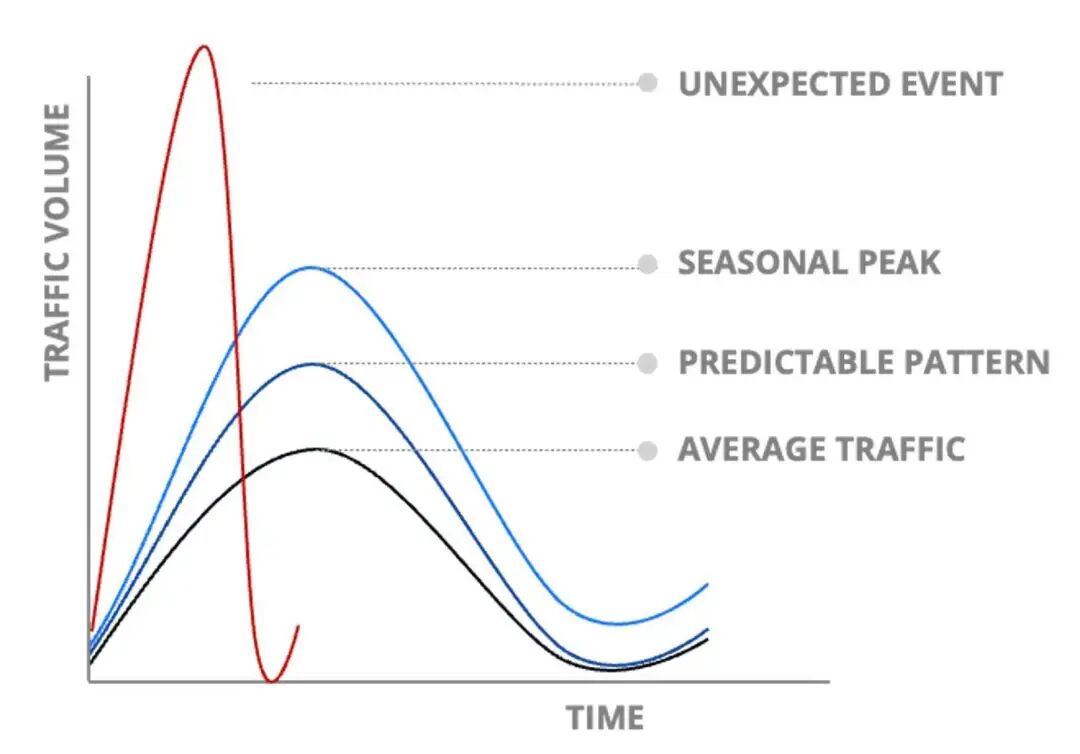
Core Objectives - The cloud migration focuses on three core objectives: cost-effective and efficient elastic scaling, achieving high resiliency (especially important for financial institutions), and providing excellent performance to prevent users from switching to other services [2][47]. Efficient Scaling - Achieving efficiency requires analyzing customer usage patterns and behaviors, while developing predictive capabilities alongside maintaining elastic scaling [2][48]. - Traffic shaping provides a methodology to identify high-frequency functionalities, allowing targeted scaling of critical applications [2][48]. - Overall capacity management is crucial; simply adding servers does not guarantee success and requires careful cost considerations [3][49]. Traffic Patterns and Capacity Planning - Traffic patterns are foundational for efficient scaling, with average traffic representing the baseline level of daily processing [5][51]. - Predictable patterns exist, such as payroll deposits prompting account balance inquiries, while seasonal peaks require advance planning [5][51]. - Sudden events, like DDoS attacks, can generate traffic exceeding normal loads by ten times or more, necessitating measures to block such attacks while ensuring legitimate transactions meet service level agreements (SLAs) [5][51]. Resiliency - Resiliency requires preparation for inevitable system failures, with early detection and execution of failover procedures being critical [8][55]. - Infrastructure can be categorized into four levels based on criticality, with critical components needing to be as close to 100% availability as possible [9][56]. - Manageable components aim for 99.99% availability, allowing for approximately 52 minutes of downtime per year [10][57]. Performance - Performance significantly impacts user experience and infrastructure costs, with deployment of Points of Presence (PoP) enhancing user experience by reducing latency [11][59]. - A comprehensive performance strategy has led to a 71% reduction in system latency from initial deployment to full architecture implementation [12][59]. Five Core Strategies - Architectural approaches focus on five key areas: multi-region deployment, high-performance optimization, comprehensive automation, self-healing observability, and robust security [13][59]. Multi-Region Deployment - Multi-region architecture achieves functional decoupling through isolation and segmentation, helping manage regional, availability zone, and network failures while limiting the blast radius of failures [14][60]. - DNS management is essential for coordinating independent load balancers across different regions [14][60]. Automation - Automation is a key strategic element, providing significant benefits across all stages of the pipeline, including deployment, infrastructure provisioning, environment configuration, and overall traffic management [28][73]. - Infrastructure repaving is an efficient practice involving systematic rebuilding of infrastructure during each iteration cycle to enhance security and performance [31][76]. Migration - Cultural transformation is fundamental for successful migration, as cloud operations differ fundamentally from traditional on-premises systems [85][86]. - Testing methods vary, with tools like Chaos Monkey enabling reactive testing by injecting faults into running systems, while Failure Mode and Effects Analysis (FMEA) allows for predictive analysis [87][88]. Results - Implementation of these strategies has led to measurable outcomes, including significant cost reductions and improved performance metrics, with platforms ranking highly in comparative analyses [91][92].
Citi, JPMorgan opt Out of $1.4 billion SBI Funds IPO on fees
BusinessLine· 2026-01-07 10:47
Core Viewpoint - Major Wall Street banks have opted out of advising on the $1.4 billion IPO of India's SBI Funds Management due to low fees offered by shareholders [1][2]. Group 1: IPO Details - The IPO is expected to raise approximately $1.4 billion, valuing SBI Funds Management at around $14 billion [7]. - Shareholders, including the State Bank of India and France's Amundi SA, have offered fees of about 0.01% of the issue size, which is considered extremely low by bankers [3]. Group 2: Bank Participation - Citigroup withdrew from the advisory role due to fee concerns and was replaced by Jefferies Financial Group [2]. - JPMorgan Chase also decided not to pursue the transaction for similar reasons [2]. - Other banks selected for the IPO include Kotak Mahindra Capital, Axis Bank, SBI Capital Markets, and several others [4]. Group 3: Fee Trends and Market Context - The average fee for IPOs last year was 1.86% of the issue size, an increase from 1.67% in 2024, highlighting the low fee structure of this particular IPO [3]. - There is a trend of banks accepting symbolic fees in government-linked deals to gain prestige and long-term relationships, as seen in a previous share sale by State Bank [5]. - With over 200 private-sector firms expected to enter the IPO market this year, investment banks are becoming more selective in their engagements [5][6].



JPMorganChase Survey: U.S. Business Leaders Signal Optimism and Growth Plans for 2026 Despite Economic Uncertainty
Businesswire· 2026-01-07 10:03
Core Insights - Strong optimism among U.S. business leaders is anticipated to drive an active 2026, as indicated by JPMorgan Chase's annual Business Leaders Outlook survey focusing on small and midsize companies [1] Group 1: Economic Outlook - Business leaders are navigating through persistent economic and geopolitical challenges from the previous year [1] - There is a clear focus on pursuing growth opportunities and embracing emerging technologies [1] Group 2: Strategic Initiatives - Companies are forming new strategic partnerships to enhance their growth prospects [1] - The overall sentiment reflects a proactive approach to overcoming challenges and capitalizing on potential market opportunities [1]

JPMorgan Chase & Co. (NYSE:JPM) Quarterly Earnings Preview
Financial Modeling Prep· 2026-01-07 10:00
Core Viewpoint - JPMorgan Chase & Co. is positioned positively for its upcoming quarterly earnings report, with strong estimates for EPS and revenue, supported by favorable credit metrics and macroeconomic conditions [2][3][6] Group 1: Earnings Outlook - The company is set to release its quarterly earnings on January 13, 2026, with analysts estimating an EPS of $4.97 and revenue of approximately $46 billion [2][6] - Strong economic and company-specific outlooks contribute to a positive assessment, with stabilizing delinquency and charge-off rates outperforming industry averages [2][6] Group 2: Financial Metrics - Key financial metrics include a P/E ratio of approximately 16.08, indicating investors are willing to pay $16.08 for every dollar of earnings [4][6] - The price-to-sales ratio is about 3.28, reflecting the market's valuation of its revenue [4][6] - The enterprise value to operating cash flow ratio is negative at -9.22, suggesting potential challenges in cash flow generation [4][6] Group 3: Investor Sentiment - The upcoming earnings report will be crucial for determining JPMorgan's immediate price movement and future earnings outlook [5] - Analysts are particularly interested in the company's ability to deliver a positive EPS surprise, which will significantly shape investor sentiment [5]

Jamie Dimon rejects Jeff Bezos’ playbook and hoards his JPMorgan shares. He’ll see $770 million in gains for 2025
Yahoo Finance· 2026-01-07 08:23
Core Insights - The stock growth of mega banks has increased nearly 30% due to a market rebound, leading to expectations of record compensation and bonuses for executives [1] Company-Specific Insights - Jamie Dimon, CEO of JPMorgan Chase, has been a significant figure in navigating various financial challenges over the past two decades, including the 2008 financial crisis and the AI boom [2] - Dimon holds approximately 7.3 million shares of JPMorgan, valued at around $1.8 billion at the beginning of 2025, with the stock price rising to $322.22 by the end of 2025, increasing his stake's value to about $2.4 billion [3] - Dimon is expected to receive around $770 million in total compensation for 2025, which includes stock value gains, dividends, and a special one-time award [3][4] Compensation Insights - Dimon's compensation figures have shown significant growth, with "compensation actually paid" calculated at approximately $227 million in 2024, $105 million in 2023, and $38 million in 2022 [5] - The increase in stock value has benefited all shareholders of JPMorgan, including Dimon, who has accumulated equity through various means [4][5] Industry Insights - The overall profits in the securities industry are on track to reach record levels, indicating a positive trend for financial institutions [7]
摩根大通获批中国银行间债市一般主承销商 全球顶尖承销实力赋能中国市场高质量发展
Xin Lang Cai Jing· 2026-01-07 03:30
Core Viewpoint - Morgan Stanley (China) Co., Ltd. has officially obtained the qualification of general lead underwriter for non-financial corporate debt financing instruments from the China Interbank Market Dealers Association, marking a significant milestone in its bond business in China and promoting its deep participation in the innovative development and high-level opening of the Chinese bond market [1][3] Group 1: Company Achievements - Since 2004, Morgan Stanley has witnessed and participated in the continuous high-level opening of the Chinese bond market, achieving various qualifications over the years, including market maker in 2008, settlement agent in 2017, and becoming a market maker for Bond Connect in 2018 [1][3] - The approval of the general lead underwriter qualification will further broaden the company's service scope for domestic and foreign issuers and investors, leveraging its dual advantages of "global resources + local expertise" [1][3] Group 2: Market Position - Morgan Stanley has maintained a leading position in the bond underwriting field, with an international bond underwriting scale of nearly $1.7 trillion and a market share of nearly 6% from 2021 to 2025, serving over 9,000 issuance transactions globally [1][3] - The company ranks among the top in the international sovereign and quasi-sovereign bond underwriting field with over 7% market share [1][3] Group 3: Industry Context - The Chinese bond market continues to expand, with a custody balance reaching 196.3 trillion RMB by the end of November 2025, ranking second in the world, and achieving significant growth in both scale and quality [2][4] - As of the end of November 2025, the scale of bonds held by foreign institutions reached 3.61 trillion RMB, with 1,187 foreign institutions entering the market, making the Chinese bond market an important destination for global capital allocation [2][4]

摩根大通交易部门:2026年初开始采取战术性看涨立场:原因及四大首选交易
摩根· 2026-01-07 03:05
Investment Rating - The report indicates a tactical bullish stance for 2026, with a focus on both bullish and bearish factors [2][20]. Core Insights - The macroeconomic environment is improving, characterized by strong earnings growth and a de-escalation of trade tensions [2][16]. - Consumer cash reserves have increased significantly, with the top 40% of income earners holding more cash than at the end of 2019, contributing to higher retail spending [3][6]. - The labor market shows signs of stability, although there are concerns about rising unemployment rates and potential economic slowdowns [10][12]. - Earnings growth is projected to continue, with expectations of a 7.2% revenue increase and a 15.0% rise in earnings per share for the fiscal year 2026 [11][13]. Summary by Sections Macroeconomic Overview - The overall economic outlook is positive, with strong earnings growth and a reduction in trade tensions expected to support market performance [2][16]. Consumer Insights - Adjusted for inflation, the cash reserves of the top 40% of income earners have increased, leading to a significant rise in retail spending, which is a key driver of GDP growth [3][6]. Labor Market Analysis - The labor market is stabilizing, with a slight increase in unemployment rates and a potential for economic slowdown if costs cannot be passed on to consumers [10][12]. Earnings Outlook - Projections for Q4 2025 indicate a revenue growth of 7.6% and an 8.3% increase in earnings per share, with a net profit margin of 12.8% [11][13]. Trade Relations - Improvements in trade relations, particularly between the U.S. and China, are expected to positively impact the market, with a decrease in effective tariff rates [16][35]. Technical Factors - The report highlights that stock buybacks are expected to reach approximately $1 trillion in fiscal year 2026, indicating strong corporate confidence [19][20]. Investment Themes - The report identifies key investment themes, including technology, media, and communications (TMT), as well as international markets, particularly in Asia and Latin America [48].