
云迁移

Search documents
Comtech 2026 Watchlist for Investors: EDIM, Modems, and NG911 Cloud
ZACKS· 2026-03-27 16:11
Core Insights - Comtech Telecommunications Corp. (CMTL) is undergoing a strategic transition towards higher-margin products, including modems, digital ground infrastructure, and Allerium cloud software, despite expectations of GAAP losses in fiscal 2026 and 2027 [1][2] Group 1: Business Transition and Performance - The company is focused on converting multi-year visibility into effective execution, with recent margin expansion indicating that the shift in product mix is effective [2] - A significant milestone was achieved with the delivery of Enterprise Digital Intermediate Frequency Multicarrier modems to the U.S. Army under a $48.6 million contract, marking a key point in backlog conversion [3][4] - The transition from low-margin legacy work to higher-volume production is expected to enhance gross margins and improve cash flow [5][6] Group 2: Growth Areas and Revenue Visibility - Government satellite communications modernization and digital ground infrastructure are identified as core growth areas, with longer cycle times that can lead to variable near-term revenue but stable long-term planning [7] - Funded backlog was reported at $731.6 million as of January 31, 2026, with total revenue visibility estimated at approximately $1.1 billion, indicating strong multi-year award support [8] Group 3: Software and Innovation - Allerium is positioned as a key software component aimed at increasing recurring revenue through cloud migration, with strong bookings in the fiscal second quarter [9][10] - Product innovation, including the upcoming launch of the Mira platform, is expected to broaden adoption and extend growth beyond initial upgrades [11] Group 4: Execution Metrics and Future Outlook - The fiscal second quarter of 2026 showed a consolidated book-to-bill ratio of 1.64x, with notable divergence between segments, indicating potential different growth trajectories [12][13] - Key execution milestones for 2026 include the ramp-up of next-generation modems, progress on EDIM deliveries, backlog conversion pace, and maintaining gross margin and operating cash flow durability [14][15][16]



Guidewire’s Buyback Could Be the Clue the Sell-Off Is Ending
Yahoo Finance· 2026-01-16 18:28
Core Insights - Guidewire Software has announced a $500 million share buyback program, reflecting managerial confidence in growth and cash flow, which is 3.4% of the company's market cap [3] - Despite the share buybacks not reducing the share count, the company's financial health is improving, with a 1.5% increase in share count due to share-based compensation [4] - Institutional selling in late 2025 has transitioned to accumulation in early 2026, indicating a potential rebound after a significant price correction [6] Share Buyback Program - The $500 million share buyback is an extension of a previous program and is significant for investor sentiment and equity leverage [3] - The share buybacks have not reduced the overall share count, with a 0.6% increase noted in Q1 FY2026 [4] Market Dynamics - Guidewire's stock experienced a 30% price correction in Q4 2025, primarily driven by institutional profit-taking, with hedge funds owning over 90% of the market [4] - Early 2026 has seen institutional investors beginning to accumulate GWRE stock, suggesting a shift in market sentiment [5] Valuation and Growth Outlook - The stock was trading at a high valuation of 65x current-year earnings at its peak in 2025 and remains at 58x in early 2026, indicating strong growth expectations [5] - Analyst sentiment remains bullish with a Moderate Buy consensus, driven by factors such as cloud migration, AI integration, and product expansion [6]

海得控制(002184) - 002184海得控制投资者关系活动记录表20260115-20260116
2026-01-16 07:26
Group 1: Energy Storage Business Insights - The energy storage industry is currently in a low-price competition phase, with a disconnect between market expansion and profitability [3] - The turning point for the energy storage sector is anticipated to be the comprehensive promotion of electricity market transactions, with European market mechanisms being more mature compared to domestic ones [3] - The company is cautiously advancing centralized energy storage while focusing on higher-margin commercial storage business and actively participating in domestic electricity trading pilots [3] Group 2: Industrial Software and Digital Transformation - The company's industrial information technology services cater to sectors such as transportation, electricity, chemicals, metallurgy, mining, pharmaceuticals, and municipal services, representing a strong profit-generating segment [4] - The second-generation industrial intelligent network management software provides a reliable monitoring solution for industrial control networks, addressing issues of disparate maintenance and data interoperability [4] - The company is exploring the integration of AI with edge computing to enhance existing edge controllers, aiming to develop intelligent controllers with autonomous decision-making capabilities [4] Group 3: International Expansion of Energy Storage - The company's international expansion focuses on Europe, facing challenges such as varying grid access standards and long certification cycles [5] - The company is also exploring business opportunities in Southeast Asia, where there is a significant electricity gap suitable for microgrid project development [5]

大规模云和分布式应用:摩根大通的教训与策略:摩根大通的教训与策略
Xin Lang Cai Jing· 2026-01-07 10:52
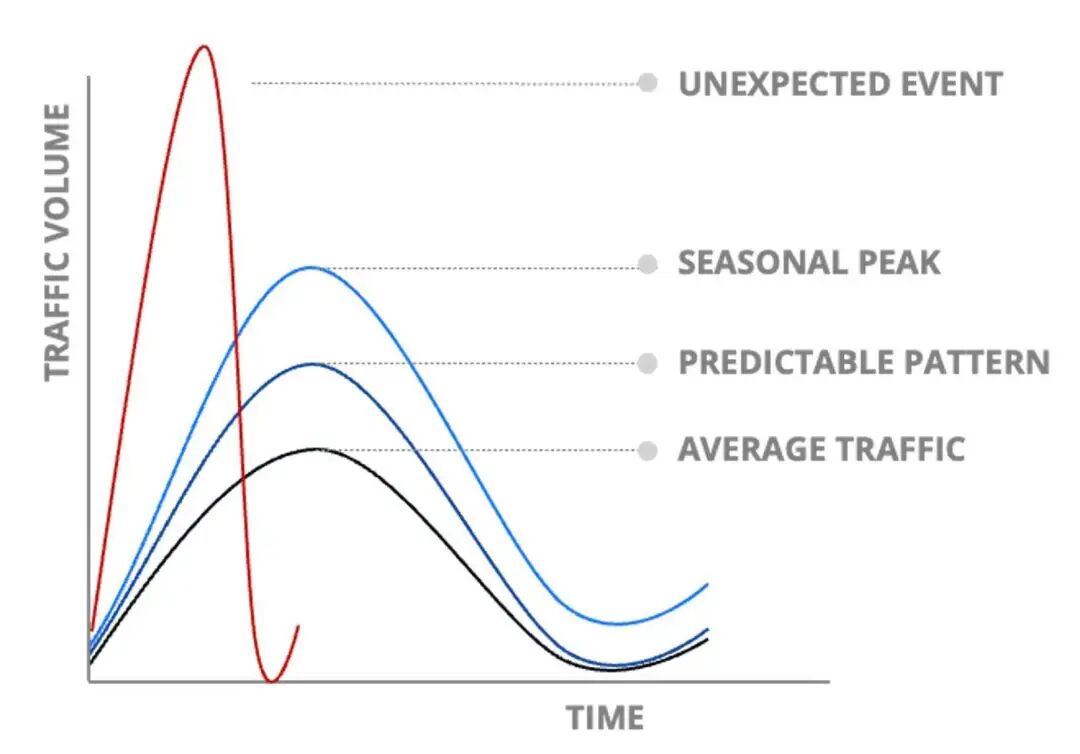
Core Objectives - The cloud migration focuses on three core objectives: cost-effective and efficient elastic scaling, achieving high resiliency (especially important for financial institutions), and providing excellent performance to prevent users from switching to other services [2][47]. Efficient Scaling - Achieving efficiency requires analyzing customer usage patterns and behaviors, while developing predictive capabilities alongside maintaining elastic scaling [2][48]. - Traffic shaping provides a methodology to identify high-frequency functionalities, allowing targeted scaling of critical applications [2][48]. - Overall capacity management is crucial; simply adding servers does not guarantee success and requires careful cost considerations [3][49]. Traffic Patterns and Capacity Planning - Traffic patterns are foundational for efficient scaling, with average traffic representing the baseline level of daily processing [5][51]. - Predictable patterns exist, such as payroll deposits prompting account balance inquiries, while seasonal peaks require advance planning [5][51]. - Sudden events, like DDoS attacks, can generate traffic exceeding normal loads by ten times or more, necessitating measures to block such attacks while ensuring legitimate transactions meet service level agreements (SLAs) [5][51]. Resiliency - Resiliency requires preparation for inevitable system failures, with early detection and execution of failover procedures being critical [8][55]. - Infrastructure can be categorized into four levels based on criticality, with critical components needing to be as close to 100% availability as possible [9][56]. - Manageable components aim for 99.99% availability, allowing for approximately 52 minutes of downtime per year [10][57]. Performance - Performance significantly impacts user experience and infrastructure costs, with deployment of Points of Presence (PoP) enhancing user experience by reducing latency [11][59]. - A comprehensive performance strategy has led to a 71% reduction in system latency from initial deployment to full architecture implementation [12][59]. Five Core Strategies - Architectural approaches focus on five key areas: multi-region deployment, high-performance optimization, comprehensive automation, self-healing observability, and robust security [13][59]. Multi-Region Deployment - Multi-region architecture achieves functional decoupling through isolation and segmentation, helping manage regional, availability zone, and network failures while limiting the blast radius of failures [14][60]. - DNS management is essential for coordinating independent load balancers across different regions [14][60]. Automation - Automation is a key strategic element, providing significant benefits across all stages of the pipeline, including deployment, infrastructure provisioning, environment configuration, and overall traffic management [28][73]. - Infrastructure repaving is an efficient practice involving systematic rebuilding of infrastructure during each iteration cycle to enhance security and performance [31][76]. Migration - Cultural transformation is fundamental for successful migration, as cloud operations differ fundamentally from traditional on-premises systems [85][86]. - Testing methods vary, with tools like Chaos Monkey enabling reactive testing by injecting faults into running systems, while Failure Mode and Effects Analysis (FMEA) allows for predictive analysis [87][88]. Results - Implementation of these strategies has led to measurable outcomes, including significant cost reductions and improved performance metrics, with platforms ranking highly in comparative analyses [91][92].

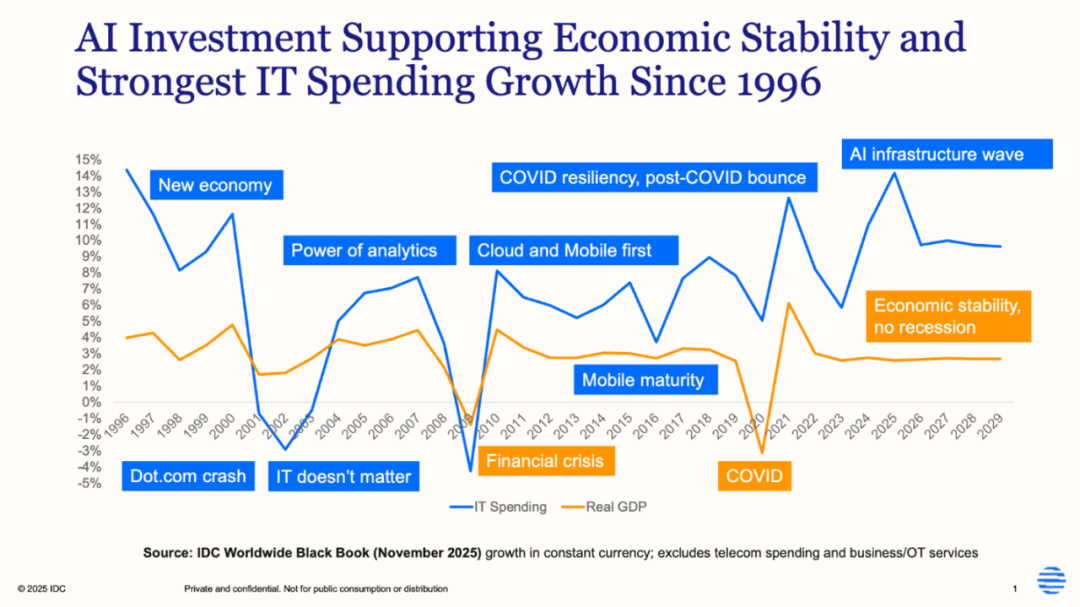
IDC:预计2025年IT支出增长14% 创近30年新高 AI基础设施投资成主要驱动力
Zhi Tong Cai Jing· 2025-12-12 06:08
Core Insights - Global IT spending is projected to grow by 14% in 2025, marking the fastest growth since 1996, driven by a surge in AI infrastructure investments [1][3] - Total global IT spending is expected to reach $4.25 trillion (approximately 30 trillion RMB) by 2025, and when including telecommunications and business services, total ICT spending will approach $7 trillion (approximately 50 trillion RMB) [1] - The forecast for IT spending in 2025 has been revised upward for seven consecutive months, reflecting stronger-than-expected investments in AI infrastructure by service providers [3] Group 1 - AI is identified as the core theme for the IT market in 2025, with most investments currently focused on infrastructure development by service providers [3] - Enterprise software spending is expected to grow by 14%, driven by ongoing digital transformation and cloud migration efforts [3] - In Q1 2025, global IT spending increased by 16%, the highest quarterly growth in nearly 29 years, partly due to preemptive PC shipments ahead of potential tariffs [3] Group 2 - IT spending by enterprises grew by 11% in Q1 and 10% in Q2 of 2025, indicating strong demand [3] - Spending on data center infrastructure by service providers is expected to surge by 86% in 2025, nearing $0.5 trillion (approximately 3.5 trillion RMB) [3] - Despite discussions about the duration of the current growth cycle, there are no signs of a slowdown, with many companies planning to increase IT budgets in 2026 [7] Group 3 - IDC forecasts a 10% growth in global IT spending for 2026, which, while lower than 2025, will still be one of the strongest years since the 1990s [7] - Challenges for 2026 include potential shortages in memory components, which could raise PC costs [7] - The current technology demand remains resilient despite economic uncertainties, with ongoing AI investments expected to provide support [7]

SailPoint price target lowered to $23 from $24 at Mizuho
Yahoo Finance· 2025-12-11 13:16
Core Viewpoint - Mizuho has lowered the price target for SailPoint (SAIL) to $23 from $24 while maintaining a Neutral rating on the shares, reflecting a cautious outlook despite strong quarterly performance [1] Financial Performance - SailPoint reported a robust Q3 with a total annual recurring revenue (ARR) growth of 28% and a SaaS ARR growth of 38%, both slightly exceeding expectations [1] - The strong performance is attributed to broad demand and solid cloud-migration activity [1] Strategic Positioning - The company's Identity Governance and Administration (IGA) platform, along with its transition to SaaS, positions it well for long-term average revenue per user (ARPU) expansion [1] - However, the extent of future cross-selling traction remains uncertain, indicating potential challenges in maximizing revenue growth [1]

NICE (NasdaqGS:NICE) FY Conference Transcript
2025-12-10 16:32
Summary of NICE's Conference Call Company Overview - **Company**: NICE - **Industry**: Cloud Communications and Customer Experience as a Service (CCaaS) Key Points and Arguments AI as a Growth Driver - NICE identifies AI as a significant growth driver, with AI revenue embedded in cloud platforms increasing by over 40% year-to-date [3][6] - The acquisition of Cognigy, a leader in agentic AI, is expected to enhance NICE's capabilities in customer experience (CX) [3][4] Performance Metrics - NICE has consistently outperformed guidance, expecting a 12% growth in cloud revenue quarter-over-quarter [6] - Year-over-year cloud backlog has increased by 13%, indicating strong future growth potential [6] Market Position and Strategy - NICE's CCaaS business is underpenetrated, with only about 40% of organizations having migrated to the cloud [9] - The company is focusing on strategic partnerships with major players like Salesforce, ServiceNow, and AWS to enhance market presence [9][10] Future Revenue Growth Plans - NICE aims to double cloud revenue over the next four years, targeting 17%-19% growth by 2028 [11] - Key growth catalysts include AI capabilities, depth of offerings, and international momentum [12][13] Investment Strategy - NICE plans to invest an additional $160 million in 2026 across delivery costs, R&D, and go-to-market strategies [16][17] - Investments will focus on enhancing international infrastructure and embedding Cognigy into the CX platform [17][18] Total Addressable Market (TAM) Expansion - NICE's TAM is projected to expand to between $31 billion and $72 billion, driven by moving into mid and back office operations and proactive customer engagement [19][20] - The company is leveraging its existing capabilities to transition from inbound to outbound customer interactions [21][22] Acquisition of Cognigy - Cognigy was chosen for its strong technology and ability to scale, particularly in large enterprises [25][26] - Cross-selling opportunities exist between NICE and Cognigy, with minimal customer overlap [28] Financial Performance - AI and self-service ARR reached $268 million in Q3, growing 49% year-over-year [30] - NICE expects AI to represent 30% of cloud revenue by 2028, supported by a robust financial model and strong pipeline [30][31] Partnership Ecosystem - NICE has expanded its partnership ecosystem significantly, with expected near-term impacts from collaborations, particularly with AWS [34][35] - Long-term growth is anticipated as partnerships mature and sales teams are trained [35] Financial Crimes and Compliance (FCC) Business - NICE's FCC business remains core, contributing to overall profitability, despite CX being the primary focus [36][37] - The FCC segment operates independently and continues to attract long-term global financial institutions as clients [36] Additional Important Insights - The company emphasizes the importance of real-time capabilities in its platform, which are unmatched in the market [10] - NICE's leadership transition, particularly with the new CEO Scott Russell, is seen as a positive factor for future growth [8]

高盛依然看好Snowflake:增速放缓不足为虑,核心指标健康,AI势头依然很猛
美股IPO· 2025-12-05 11:56
Core Viewpoint - Goldman Sachs maintains a "Buy" rating on Snowflake and raises the target price to $275, believing that market concerns over slowing revenue growth overshadow the company's robust core business and accelerated AI monetization [1][3]. Revenue Performance - Snowflake's latest earnings report shows a 29% year-over-year increase in product revenue, slightly exceeding market expectations, although the growth rate has slowed compared to the first half of the year [3][8]. - The company achieved a milestone by reaching an annualized AI revenue of $100 million a quarter ahead of schedule, with AI-related product adoption rates rising sharply [6][8]. Customer Retention and Growth Potential - The core customer retention rate (NER) remains healthy at 125%, indicating strong customer loyalty [5][8]. - Record new contract obligations (RPO) reached $949 million in the third quarter, with 615 new customers added, significantly surpassing the previous quarter's 343 [8]. AI as a Growth Catalyst - AI is viewed as a "force multiplier" for Snowflake's business, with over 1,200 customers currently using Snowflake Intelligence, the fastest adopted new product in the company's history [6]. - 50% of new bookings in the quarter were influenced by AI factors, and 58% of customers are using Snowflake's AI features weekly [6]. Market Sentiment and Valuation Discrepancies - While Goldman Sachs is optimistic about Snowflake's long-term prospects, Nomura expresses caution, suggesting that the current valuation reflects optimistic growth expectations and may face pressure if AI adoption slows [5][9]. - Nomura maintains a "Hold" rating with a target price of $238, arguing that the market has priced in perfect conditions for AI-driven growth, while also raising concerns about potential shifts in data analysis paradigms due to advancements in AI [9].


美股异动丨Datadog盘前大涨超20%,Q3营收及调整后EPS均超预期
Ge Long Hui· 2025-11-06 14:02
Core Insights - Datadog's stock surged over 20% in pre-market trading, reaching $186.48 [1] - The company reported Q3 revenue growth of 28% year-over-year, totaling $886 million, exceeding analyst expectations of $853 million [1] - Adjusted earnings per share (EPS) were $0.55, also surpassing the forecast of $0.47 [1] - For Q4, Datadog forecasts revenue between $912 million and $916 million, above the analyst estimate of $887 million [1] - The adjusted EPS for Q4 is projected to be between $0.54 and $0.56, higher than the expected $0.46 [1] - Growth in artificial intelligence applications and cloud migration has driven demand for Datadog's monitoring and security tools [1]

Axon(AXON) - 2025 Q3 - Earnings Call Transcript
2025-11-04 23:02
Financial Data and Key Metrics Changes - The company reported Q3 revenue of $711 million, a 31% year-over-year increase, marking the seventh consecutive quarter of 30% or greater growth [34] - Adjusted gross margin was 62.7%, a decrease of 50 basis points year-over-year, primarily due to tariffs [36] - Annual recurring revenue (ARR) grew 41% to $1.3 billion [35] - Adjusted EBITDA margin was 24.9%, reflecting the impact from tariffs and planned increased R&D investments [37] Business Line Data and Key Metrics Changes - Software and services revenue increased 41% year-over-year to $305 million, driven by new and existing customers expanding their use of the platform [34] - Connected devices revenue grew 24% year-over-year to $405 million [35] - TASER product line grew 17%, led by TASER 10, while personal sensors grew 20% driven by Axon Body 4 [35] Market Data and Key Metrics Changes - Year-to-date bookings were up in excess of 30% and accelerating from last year [32] - Corrections contributed two of the top 10 deals in Q3, with year-to-date bookings up more than 2x from last year [29] - International bookings also delivered two of the top 10 deals, including a nine-figure cloud deal in Europe [29][30] Company Strategy and Development Direction - The company is focused on expanding its ecosystem, particularly through the integration of Prepared and Carbyne, which are expected to enhance the 911 response system [20][34] - The strategy includes leveraging AI to improve communication and response times in emergency situations [19][49] - The company aims to innovate faster by moving away from legacy systems and focusing on cloud-based solutions [16][17] Management's Comments on Operating Environment and Future Outlook - Management expressed confidence in delivering another record year in 2026, with expectations for continued strong performance driven by AI tools and efficient decentralized ownership [33] - The management highlighted the importance of investing in sales and product development to sustain long-term growth [95] - There is optimism regarding the international market, with consistent bookings from Canada, Australia, and South America [71] Other Important Information - The company is raising its Q4 revenue guidance to between $750-$755 million, implying full-year revenue of about $2.74 billion [40] - The company is also focused on addressing the challenges posed by tariffs, which have impacted gross margins [110] Q&A Session Summary Question: AI's contribution to total bookings and any delayed contract decisions - Management confirmed that bookings growth is expected to remain strong, with a belief in high 30s% year-over-year growth for Q4 [44] Question: Rationale behind acquiring Prepared and Carbyne - Management explained that these acquisitions enhance the company's ability to innovate in the 911 space and integrate with existing systems [46][48] Question: Interplay between software and services, and connected devices - Management indicated that software and services are expected to continue growing at a higher-than-average rate, driven by increased user count and upselling [58][60] Question: International deals and pipeline - Management provided insights into the successful cloud opportunities in Europe and consistent bookings from other international markets [70][71] Question: Competitive landscape regarding body cameras - Management emphasized their focus on customer needs and confidence in their product offerings despite competition [90] Question: Gross margin outlook and tariff impacts - Management discussed the one-time adjustment from tariffs and the expectation of improved gross margins as the software business continues to grow [110][112]
